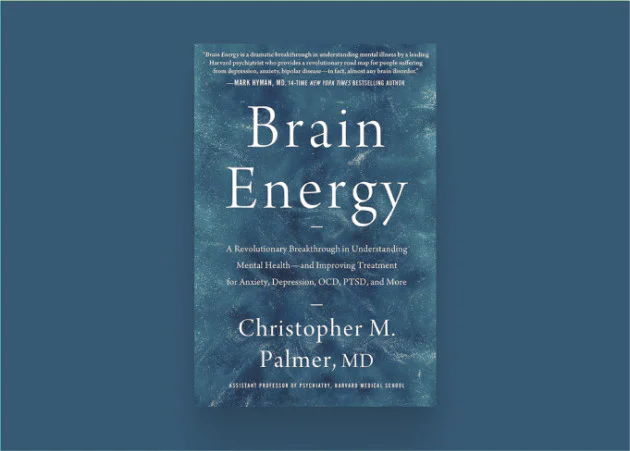
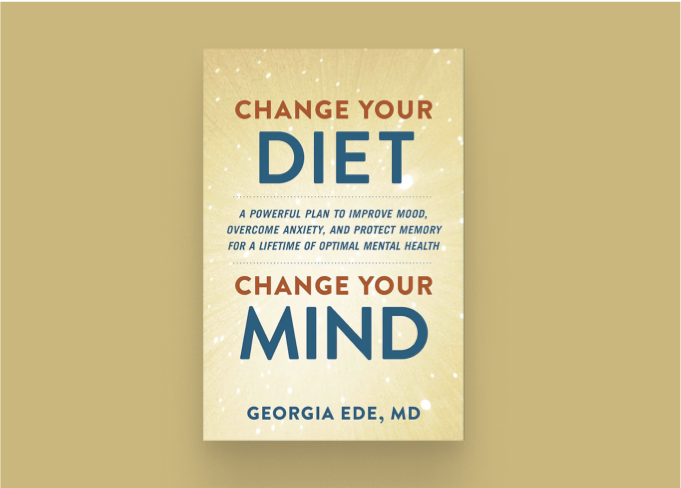
Early Explorations
1921: The Ketogenic Diet is Discovered for Pediatric Epilepsy
1965: First Ketogenic Diet Exploration for Serious Mental Illness


Depression is increasingly understood as a condition with deep metabolic roots, shaped by how well the brain’s cells can use energy. In people with depression, research has shown signs of impaired glucose metabolism, insulin resistance, inflammation, and disrupted neurotransmitter balance, all factors that can interfere with brain function and emotional regulation.
Ketogenic therapy offers a targeted way to address these challenges by shifting the body’s primary fuel from glucose to ketones. A ketogenic diet can improve brain energy availability, reduce oxidative stress, stabilize key neurotransmitters, and lower inflammation—all mechanisms thought to play a role in major depressive disorder and depression symptoms.
Learn about the emerging evidence of keto for depression and how it’s being used in clinical practice.
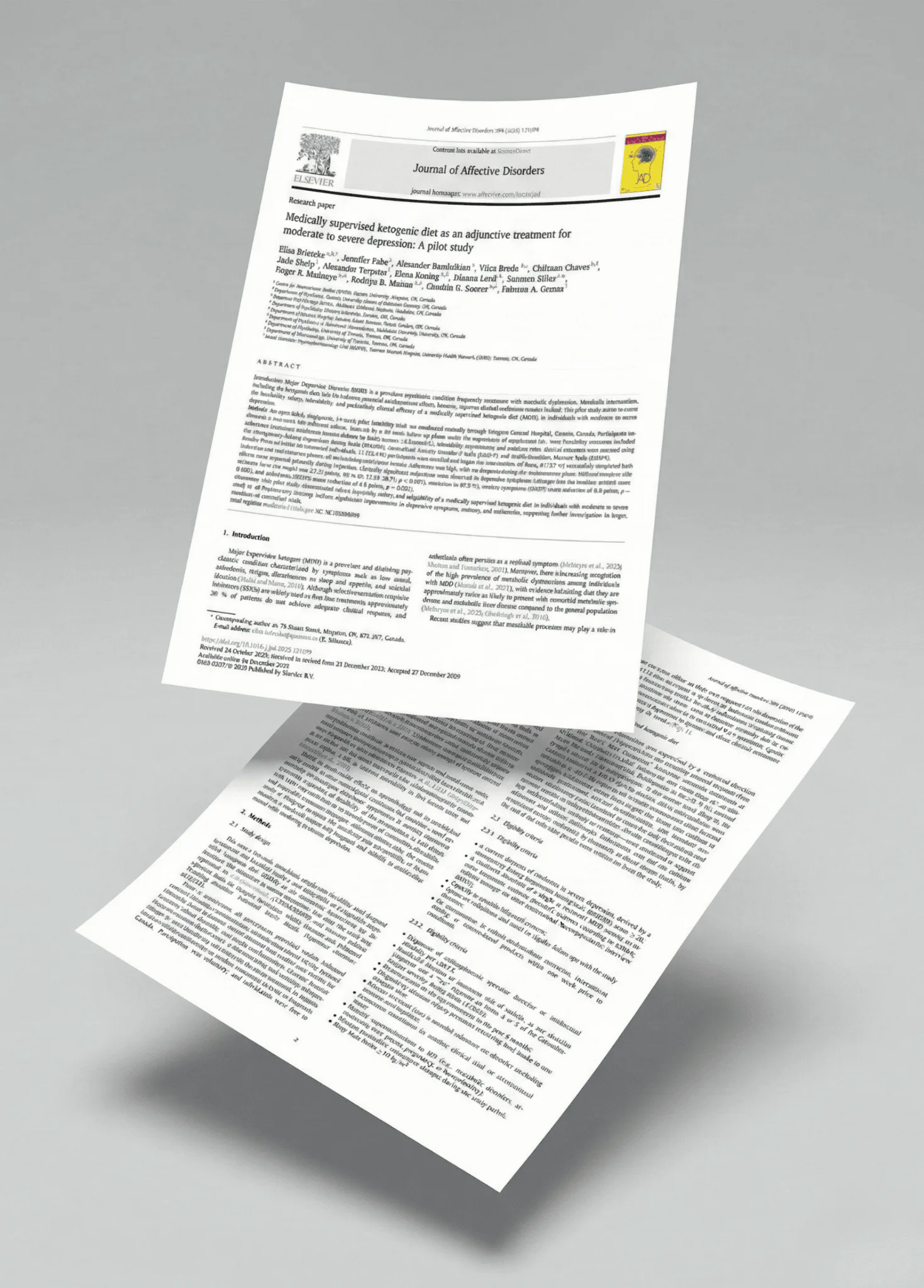
A recent feasibility study found that a medically supervised ketogenic diet may offer meaningful relief for individuals with moderate to severe depression. Among the participants who completed the 14-week intervention, 7 out of 8 reached full remission; a response rate that surpasses what’s typically seen in standard antidepressant trials.
Participants followed a ketogenic diet under the guidance of a registered dietitian and maintained consistent nutritional ketosis throughout the study. Adherence was high, with no dropouts during the 12-week maintenance phase, suggesting the diet was both practical and sustainable when appropriate support was in place. In addition to significant reductions in depressive symptoms (an average 22.7-point drop on the MADRS scale – a clinician-rated tool used to assess depression severity), participants also experienced improvements in anxiety and loss of interest or pleasure, two secondary depression symptoms that can be especially difficult to treat.
These results offer early but encouraging evidence that ketogenic therapy may be a safe, well-tolerated intervention for people living with depression, and highlight the need for continued research in this area.

Depression affects many young people, from elementary and middle school to college campuses. In a recent survey, nearly half of full-time college students reported struggling with mental health issues like depression or anxiety, even without a formal diagnosis. Almost 30% rated their mental health as fair or poor, and more than half called mental health challenges a major problem among their peers. Depression is now the leading barrier to academic success, surpassing both financial stress and coursework.
Yet too often, youth are prescribed psychiatric medications before safer, foundational interventions are explored, leaving many still searching for real relief.
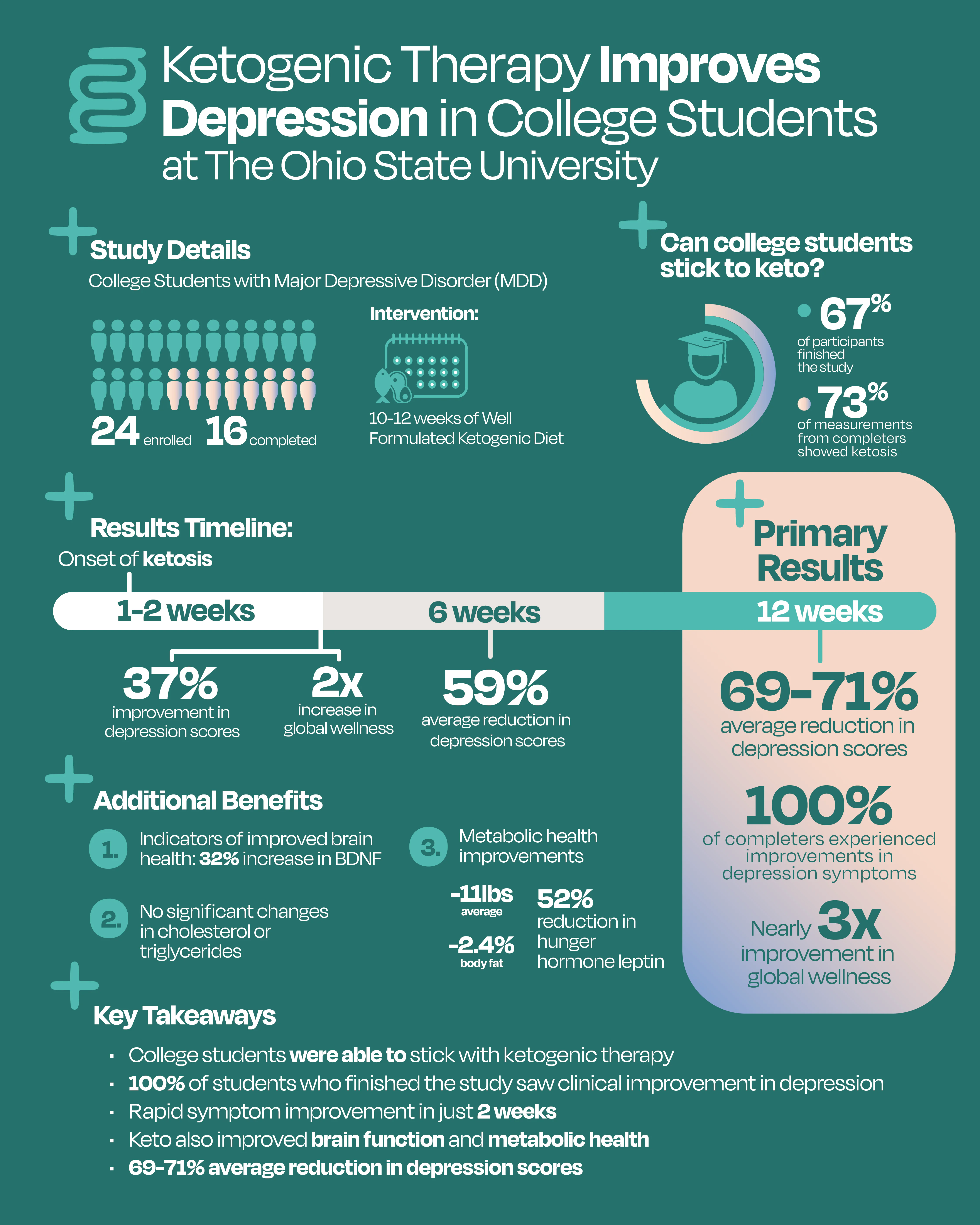
The KIND Study, a pilot trial led by researchers at The Ohio State University, explored the effects of a well-formulated ketogenic diet on college students with major depressive disorder. Over 10-12 weeks, participants followed the diet alongside their usual care.
The results were striking: all sixteen students who completed the study saw significant improvements in depression symptoms—averaging a 69-71% reduction in scores. Many also experienced better cognitive function, energy, metabolic health, and body composition.

Kiara L'Herpiniere
recovering-from
Major depression, treatment resistant depression, generalized anxiety, panic disorder, cPTSD, auADHD, bulimia, POTS, hEDS, MCAS

Robyn Dobbins
in-remission-from
Bipolar, Depression, OCD
Topics: Bipolar 1, OCD, depression

Lori Graham
recovering-from
Major Depression & Generalized Anxiety
Topics: depression, anxiety

Kelsey S.
managing
Depression, OCD, Trichotillomania, & PTSD
Topics: depression, OCD, PTSD, Trichotillomania

Michelle Hurn
in-remission-from
Anorexia, Depression & Anxiety
Topics: Anorexia Nervosa, depression, anxiety

Jenny Mitich
recovered-from
Depression, Anxiety & Addiction
Topics: depression, anxiety, Addiction

Kristina Cook
in-remission-from
Anxiety, PTSD, OCD & Depression
Topics: OCD, PTSD, anxiety, depression

Michele Happe
in-remission-from
Anxiety, depression, Autism, and anorexia
Topics: depression, anxiety, Anorexia Nervosa, Autism

Ally Houston
recovered-from
ADHD, seasonal depression, and anxiety
Topics: depression, anxiety, ADHD

Heather Flood
recovered-from
Anxiety and Depression
Topics: depression, anxiety

Lisa Blackstone
treating
PTSD, major depression, and anxiety
Topics: depression, anxiety, PTSD

Leslie Woods
in-remission-from
Anxiety and depression
Topics: depression, anxiety

Stephanie Lincoln
recovered-from
Anxiety, depression, and panic attacks
Topics: depression, anxiety
Kiara L'Herpiniere
recovering-from
Major depression, treatment resistant depression, generalized anxiety, panic disorder, cPTSD, auADHD, bulimia, POTS, hEDS, MCAS
Topics: depression, Bipolar 1