Share your story. Help someone else start theirs. Share Now


Listen, Watch & Subscribe on:



Psychiatrist Transforms His Practice with Keto and Metabolic Treatments
Listen
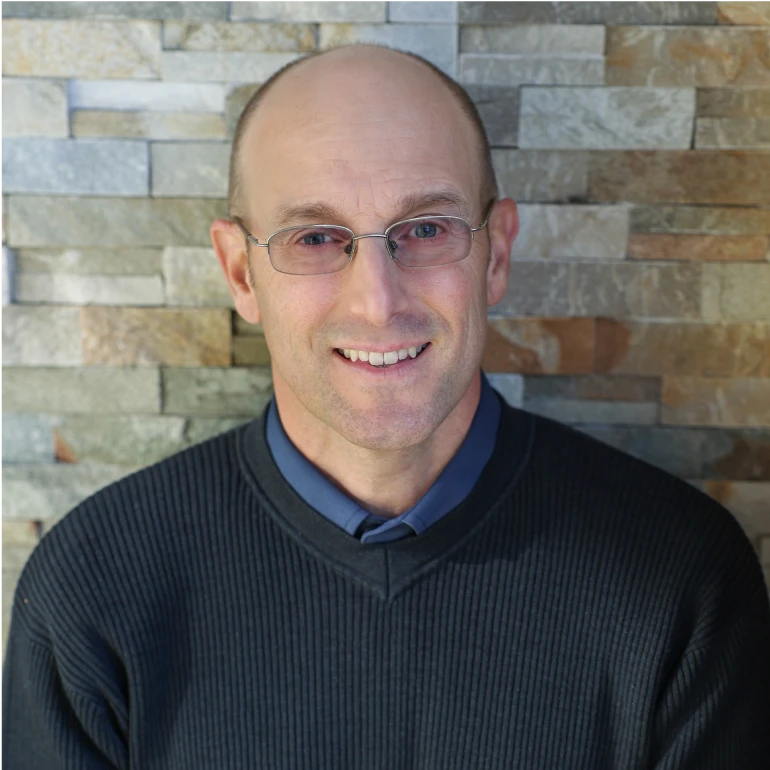
About the host
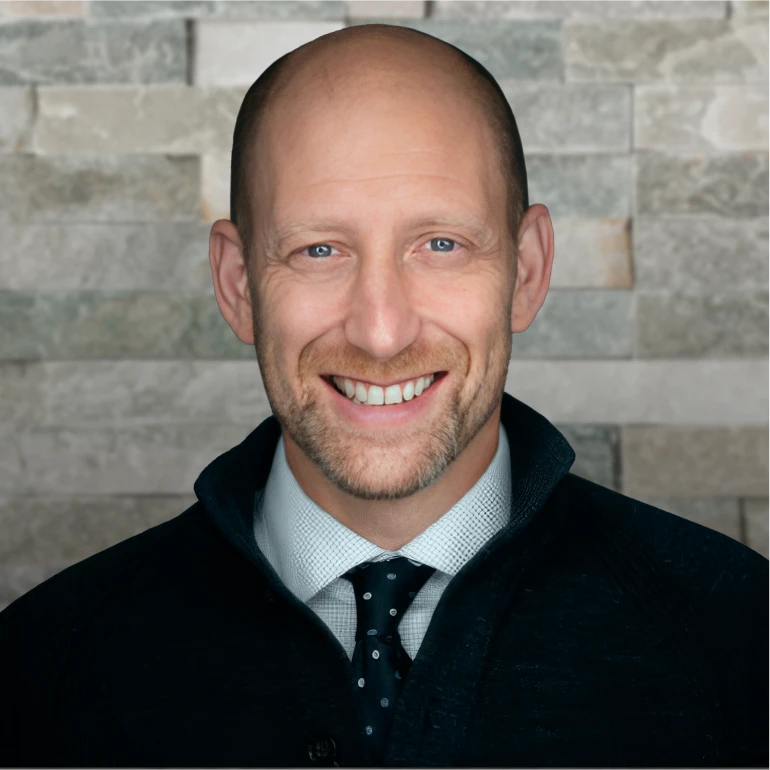
About the guest

Bret:
Welcome to the Metabolic Mind Podcast. I’m your host, Dr. Bret Scher. Metabolic Mind is a nonprofit initiative of Baszucki Group where we’re providing information about the intersection of metabolic health and mental health and metabolic therapies, such as nutritional ketosis as therapies for mental illness.
Thank you for joining us. Although our podcast is for informational purposes only and we aren’t giving medical advice, we hope you will learn from our content and it will help facilitate discussions with your healthcare providers to see if you could benefit from exploring the connection between metabolic and mental health.
Welcome back to Metabolic Minds, a nonprofit initiative of Baszucki Group where we’re sharing information at resources at the intersection of metabolic health and mental health. I’m your host, Dr. Bret Scher. Today, we’re going to talk with Dr. Matt Bernstein, who is a psychiatrist who had a transformation in himself and his practice, to now start using nutritional therapies, metabolic therapies, nutritional ketosis, and has seen dramatic changes in his practice and in his patients.
Now, Matt is a very well trained psychiatrist. He did a psychiatry residency at Harvard and McLean Hospital where he was the Chief Resident. And he worked on staff for many years at McLean in the schizophrenia and bipolar in-patient program as the Director of the Substance Abuse Residential Treatment Program. And he has a lot of experience, both as what he says in the pharmacology and psychotherapy aspects of psychiatric care. And then, transitioned into private practice. And he’s now the Medical Director and psychiatrist at Ellenhorn.
And as you’ll hear, he’s organizing a conference as part of Ellenhorn and really has tried to focus on sort of alternative therapies, beyond the traditional psychiatric care. And as part of that, he’s used metabolic therapies, nutritional ketosis, and as I said, has really transformed his practice.
So, I really like stories like this because it shows the personal nature. Frequently we hear personal nature from the patient standpoint, but to hear the personal stories from the clinician standpoint is really inspiring. And I hope other clinicians will hear this message and think, I want to try that, too, because I want to transform my practice and transform the lives of my patients in a similar way.
Before we get to the interview, though, please remember our channel is for informational purposes only. We’re not giving group healthcare or medical or individual healthcare or medical advice. Before you change any of your medications or your lifestyle or treatment for a psychiatric condition, please consult with your healthcare provider. Alright, but now let’s get on with the interview with Dr. Matt Bernstein.
Dr. Matt Bernstein, thanks so much for joining us on Metabolic Mind today.
Matthew:
Oh, it’s my pleasure. Thanks for having me.
Bret:
We’ve already heard your introduction. So. We already know a little bit about you. But tell us in your own words, tell us more about you and your psychiatry practice, and your role as a psychiatrist.
Matthew:
Sure, I think the best way to describe me is I’m really a clinician at heart. Meaning since I’ve been trained, I really have dedicated my career to focusing on taking care of clients, individuals, patients. And really doing everything I can to figure out how to improve their lives and improve their functioning.
That’s the thing that I keep my eye on the most, because that’s what people care about the most is, can they get back to functioning at the level that they were before all this happened? So, I’ve really dedicated my life to that. I take care of all kinds of different diagnoses. And I do both medications and therapy and all types of other interventions.
Whatever we can do to try to get people back to their highest level of functioning.
Bret:
Yeah, I like the way you say that, getting people back to their highest level of functioning. And it seems like sometimes psychiatry can be at odds with itself in terms of protection and safety versus highest level of functioning. So, you’ve seen a lot in your career, right?
Working at McLean Hospital working in the in-patient, the schizophrenia and bipolar in-patient unit, the substance abuse program. I’m sure you’ve seen some sort of people with very severe illnesses who have not responded well and some who have responded well. So, tell us what you think traditional psychiatry care gets right.
What it does well, and where there’s a lot of area for improvement where maybe it doesn’t do so well.
Matthew:
Yeah, it’s a great question. I think similar to the rest of medicine, psychiatry is really good at managing acute crises. If someone has a very severe depression and is suicidal, or if they become manic and psychotic or some other real difficult crisis, we have medications that can stabilize those situations and other treatments, even things like ECT and TMS.
These things can be absolutely lifesaving. And that’s the kind of work I used to do for many years at McLean on the in-patient unit. And I do feel like we save a lot of lives with that kind of care. So I think, like medicine, like the rest of medicine, treating pneumonia with antibiotics, really helpful, right?
But maybe not as good at treating the chronic conditions that might occur in the medical setting. Psychiatry has that same problem. So for example, thinking about someone who may have an acute depression. They get stabilized on the in-patient unit, they come back out, and now they’re getting outpatient treatment with medications and maybe psychotherapy.
I don’t think our treatments generally do a good job at completely getting someone back to the way they were before those episodes. The medications have never really been demonstrated in scientific studies to be really good at getting people back to previous levels of functioning. They’ve been shown to reduce symptoms, and they’re really good at that.
But then, there’s also the problem of side effects, and people end up reaching what I call these plateaus.
Bret:
Yeah, so I’m sure you saw that a lot in your practice that it must get frustrating when you’re really trying to dedicate yourself to helping these people. And you see these plateaus, you see them not progressing.
And is that part of what sort of stimulated you to start looking for alternative means of care?
Matthew:
Yeah, that’s always been something that I’ve been concerned about for many years. And I’ve always tried to think about all the ways we can extend ourselves as clinicians and mental health professionals to try to help people in other ways, beyond the traditional medications and psychotherapy.
So, in that regard, I think a lot about social factors and physical health factors, and I’ve been doing that for many years. So, maybe it’s the getting back to school or the job or the relationship that’s going to be the thing that allows someone to get through that plateau? Or maybe it’s an exercise program?
And I’ve seen that get people through plateaus many times. Whatever we can think of, maybe it’s a mind body practice, maybe it’s a spiritual experience? Things that can get people through these plateaus, I’ve always been thinking about that throughout my career.
Bret:
Yeah, and so at Metabolic Mind, we talk a lot about the connection between metabolic health and mental health.
And I’m curious, in your training and all your years of practice, had you ever heard people talking really about this connection of metabolic health and mental health?
Matthew:
I had, yeah, the first time I was exposed to it was, I saw grand rounds at McLean Hospital with Dr. Chris Palmer, who I’m sure you know really well.
And he talked about some cases of reversing schizoaffective disorder and schizophrenia with a ketogenic diet. And this is about four years ago. And some of the cases were absolutely mind blowing to me because he was describing people who had sometimes been psychotic, chronically for decades, on the strongest anti-psychotic medications, still psychotic. And yet, he was reversing those symptoms with food.
It blew my mind. I couldn’t believe it, and I probably wouldn’t have completely believed it if I didn’t know chris from residency. We’ve known each other for 20 years. And I know he’s a really good clinician, and he wouldn’t be talking about cases if it wasn’t a genuine thing that was happening. And so, I was really excited about it at the time.
I thought about it, I thought, how can I apply this to people? I figured I’d try it on myself, see if I could do a ketogenic diet and what kind of effects I would have. And so, I did at the time, and I probably did it for about three or four months. And I felt fantastic as a lot of people do when they adapt to a ketogenic diet.
I also felt that it was hard to sustain for myself. I had a lot of stress going on in my family, and a lot of things that I needed to attend to. And I couldn’t see sustaining it myself, and therefore, I felt, I’m not sure how some of my very compromised clients were going to be able to sustain this, if I felt like I couldn’t sustain it.
And so, I put it on the shelf for a while.
Bret:
Yeah, so tell us a little bit more about your journey though. What helped bring it back off the shelf to start using with your patients and change your practice around?
Matthew:
Yeah, so that’s where the story gets personal, if that’s okay?
I’m married to a psychologist, and we have three boys. And we live in suburban Boston, and we were living a great life. We had our careers and our kids were doing academics and sports and summer camp, and we used to travel. And then about six years ago, all of a sudden, two of my three boys became acutely ill with neuropsychiatric symptoms out of the blue. Literally, almost like overnight.
And it was incredibly shocking to us, but it was almost like it wasn’t real. It was so dramatic. So, they went from happy adjusted young boys at age 12 and 14 to literally overnight being severely depressed with severe OCD symptoms, suicidal, unable to attend school. And we just were absolutely devastated.
So, in that process, and at first we got the best psychiatric treatment we could access, which was very good, obviously, given where we are in our fields and in Boston. And they literally got no benefit from psychiatric treatment, including expert psychotherapy for the conditions that they had.
And in fact, what was really hard for me to admit at the time, but I certainly see now in retrospect, the psychiatric medications actually were making them worse, which does sometimes happen. And patients and families complain about that. And sometimes psychiatrists, I think even myself before this happened, don’t really fully listen to that and appreciate that. But it does sometimes happen.
And we were devastated. It was like a bomb went off in our life. So, I credit my wife, who asked us to look deeper about what might else be going on here. And we found some other experts, and our kids got diagnosed with this condition that’s not that well known, called PANDAS or PANS, which is an acute psychiatric syndrome in kids with which is really an autoimmune process.
So, it was originally thought of as an autoimmune process based on streptococcal infections. Later on, they’ve expanded that to be an autoimmune process in response to any infection or other infections. And both our kids were diagnosed with that based on lab work and by some experts, and they got treatments for that.
And, unfortunately, even those treatments didn’t help them. So, we’re really stuck at this point. And very fortunately, I was able to learn a lot myself and go to a bunch of conferences and meet some of the people in this world. And we were able to access some experts that are really outside of the mainstream of medicine, I would say. People in the functional medicine world, the environmental medicine world.
People who apply systems, biology perspectives, to complex chronic situations and understand the science behind all that. And sometimes can come up with really helpful treatments that are really quite outside the mainstream of medicine. And we felt very lucky that we were able to access all of that, and we got a lot of help. But then, I started turning to, what about my patients?
I started thinking about my own patients and all the other people with psychiatric conditions that weren’t getting better, who are on psychiatric units or in outpatient clinics and weren’t improving. And I was thinking to myself, how many of them had infections or autoimmune processes or toxicities or metabolic disturbances underlying all of that hormonal imbalances?
All of these possible things that can affect things that look just like a psychiatric condition. There’s a lot of evidence in the literature that many people do, in fact, have those things if you go looking at, looking for them very deeply. But it’s not really the common practice in psychiatry to look deeply for those things.
Bret:
Yeah, I can only, so sorry to interrupt, but I can only imagine how helpless and frustrated you were going through this process. And here with all your resources and all your knowledge, to have a hard time finding a treatment for your kids and to helplessly watch. But then to realize what about all these patients who don’t have the resources? Who don’t have the knowledge?
Who don’t have the same starting point that you have? It’s even harder for them. So, I can imagine you probably felt a bit of responsibility or a bit like you have to step up and do this. So, how was that transition for you?
Matthew:
Yeah, that’s very perceptive of you. Absolutely, we were so in our own crisis for a number of years that I really couldn’t think about applying these things to my own clients and patients.
But I always knew, in my mind, I knew that as we started making progress and I had more resources, myself, to dedicate towards other people, that I was vowing to do that. That was going to be something that I was going to take out of all of this traumatic experience that our family went through. That I need to make something of this.
So, that was always in my mind. And then, in the last couple of years, we have made enough progress. I felt like I have the opportunity to apply all of this, in, in my own, life for myself and, for my own patients. That it’s not just all about what, I can find for my kids.
Bret:
So, initially, you said your initial experience with ketosis was very good. In the beginning you started feeling really good, but had a hard time maintaining it. So fast forward now to working with your patients and the role that nutritional ketosis has played for you as a. Clinician and what you see now about the sustainability of it as a medical treatment?
Matthew:
Yeah, that’s also a great question. Part of this process is, I just kept learning, and I was learning a lot about things in the longevity and health span literature. And a lot of the things I was learning there, included things like intermittent fasting and the mechanisms by which those processes work.
Things like autophagy and reducing insulin resistance and helping with some metabolic switching, metabolic flexibility. I started thinking that there’s a huge overlap there with what I learned from Dr. Palmer about ketogenic diets. And there’s incredible, essentially a lot of these mechanisms are pretty much the same.
It’s about activating these cellular pathways that are about survival and hormesis and improving the health of all the cells. And so, the key insight that I feel like I had for myself was when I realized that ketones and ketosis, it’s not just about an alternative fuel source for the brain, which it certainly is. And for some people, I think that gives some immediate benefit, but it’s really about this cascade of signaling that occurs from ketones that causes all these other things to occur that we know are good for the brain and good for overall health.
The things like autophagy, and things that are good for the microbiome and reducing inflammation, and a whole host of other things that a lot of your other guests have talked about that are all active, even just with low levels of ketones, that they will signal the cells to do all of these things, if we give it time.
Bret:
So, you did the research, you had the knowledge. But sometimes, there’s still that barrier of trying it with your first patient. Can I really do this? Am I putting myself or my patient at risk? What’s going to happen? Did you have some of those feelings for starting it?
Matthew:
I did. I knew it wasn’t really high risk.
Based on my research, I could tell that this was safe. And not only safe, it’s almost like the opposite of the treatments that I usually give and the medications I usually prescribe. The side effects are all positive. These are all the side effects of this, are things that are good for one’s overall health.
And so, I felt very confident in the safety part. My biggest concern was actually just sustainability and viability. Can I get people to do this? How can I get people to do this? And again, I experimented on myself to try to come up with a program that I felt like most people could easily do.
And what I came up with for myself, and when I started applying to patients, is this idea of starting with, trying to eat as healthy as possible. As many fruits and vegetables and whole foods, maybe not the high sugar fruits, healthy proteins, healthy fats, and then thinking about doing some intermittent fasting.
So, I started myself doing some 16-8 intermittent fasting. Occasionally, I would do some longer fasts. And I could see myself, my metabolism was improving tremendously. I was losing weight, I was building muscle. I was able to do way more in my workouts and in my sports than I ever could do. And so, I could tell this is really powerful for a small amount of effort for me.
And then I thought, maybe that’s the trick? Let’s start with something that’s low effort or fairly easy to accomplish. Maybe even something that makes someone’s life a little easier, that will give them some immediate benefit and that will spark the interest to maybe go further and do more?
So, that was my reasoning. And generally, that’s what I do. I start people on some 16-8 fasting. I usually use some MCT oil, if they’re willing just to get some ketones going right away and make that fasting transition easy and comfortable. And then, once people are comfortable fasting, then we can have a whole conversation about what kind of benefits are they seeing so far?
What more benefits do they want to get? And what else might be willing to do? Are they willing to go to a low glycemic index diet? Are they really, or do they want to even go further? Do they want to go to a fully ketogenic, deep ketogenic diet? Do they want to exercise more?
Do they want to exercise while they’re fasting? All these things that can improve metabolism in concert together. And so, we create the plan depending on someone’s preference that way.
Bret:
Yeah. All really good points that you make. That the person’s preference make a difference.
The last thing you want to do is tell somebody who’s not ready to hear it, to get rid of all their carbs and start a keto diet. And then, if they’re not ready to hear it, it’s not going to happen. So, they’ve got to be ready. Yeah, so I think that’s a really good point.
And the stepwise approach to maybe go slower and ease them into it as they adjust, I think, can also be a good approach, especially in certain patient populations, which people who have disruptions of their neurocognitive ability are probably going to have a little bit harder time than just someone who’s thinking more clearly and completely revamping their diet.
So, have you found that as a particular challenge? Or maybe in some other way, an opportunity to help people?
Matthew:
It is a challenge, yeah. That was my whole orientation from the beginning was, how can I come up with something that, you know, people who are already stressed and already having trouble with their mood and their anxiety and cognition, something that people can actually wrap their minds around and feel like they can do and sign up for?
I don’t want to give people a plan that they feel like they’re going to fail at, and have yet another failure. And ,so I’m always trying to meet the person with a plan that they feel they can do. And what I find is something like 16-8 fasting generally makes people’s life easier, not harder. They don’t have to shop and cook and clean up for one of the meals per day.
Instead, they’re just having maybe some MCT oil instead. So, if that’s all they want to do to start, maybe that’s all we’ll start with? And some people don’t want to eat a lot of vegetables and whole foods and healthy proteins and fats. They just can’t do that. And we’ll find a way to get to metabolic improvement without that.
But I really encourage people to do that. Because I think the benefits accrue even faster when one does that.
Bret:
Yeah, and it’s clear you’ve had, it’s clear you’ve had some successes. We recently saw a bipolar cast episode, hosted by Matt Baszucki and Dr. Iain Campbell, with your patient, Michael, who is very open about his experience, and him working with you .And just the tremendous benefits he saw, which he couldn’t find in other treatments.
He didn’t get that type of benefit until he started nutritional ketosis. So, tell us your perspective about just some of the things you’ve seen with this type of nutritional intervention that you’ve never seen before or never thought you might see as a psychiatrist.
Do you have examples of that?
Matthew:
I do. In fact, I have a lot of examples of that. It’s been the most powerful intervention that I’ve seen in my career. it’s really
Bret:
Wait, say that again. Say that again. You’ve used all the medications. You’ve used every medication out there, psychotherapy.
And what did you just say again?
Matthew:
It’s the most powerful because everyone who’s done it has had benefits. I can’t say that about any medication. Everyone who has actually gotten some ketones going and done these approaches on a consistent basis, has had significant benefits and some dramatically significant benefits.
So, a couple of examples. The person you described, he was someone who, not the norm for me, but just wanted to go right into ketosis. And he had the ability to do that pretty much on his own. So that was a little unusual, but he had really dramatic benefits for his mood disorder, his bipolar mood disorder right off the bat from this.
And he’s having continued improvements as he goes. I have a couple of other people who had very severe suicidal depressions, who had been on every medication in the book. And both of whom had ECT in the past. And these people both had, and one did a jump right into a ketogenic diet, like a deep ketogenic diet.
The other one actually didn’t. He only did the intermittent fasting, low carb approach and has a low level of ketones. But both of those people’s suicidal depressions really changed dramatically, very dramatically, to the point where they’re back functioning.
Still early, they’re starting the process now of doing some other things to build their life back up. People have been depressed for long periods of time. Just because they have a metabolic change and a biological improvement, their life still needs a lot of help. And they need a lot of help reintegrating back into life.
So, they’re now in the beginning stages of that process. As a clinician, I can see a change that’s the equivalent of a change of an antidepressant working really well, or ECT working really well. But instead of having side effects along with that, the side effects are things like their lab work looks better, and they’re losing weight. And they have more energy, and all of those things that we might expect.
Bret:
Yeah, and that’s so encouraging and inspiring to hear, but you bring up a really good point. Just because they’re feeling better and they’re getting healthier, doesn’t mean everything in their life suddenly falls into place. So, there’s still going to be hurdles and challenges, and I don’t know, I guess there’s not one answer. But how do you help people through that like to say, look, the nutritional change is working.
It’s giving you these benefits. Now, it’s time to focus on the rest of your life while maintaining that nutritional change. Because we know the time when people are most likely to fall off a diet or to not be able to adhere well to their nutritional regimen is when the rest of life goes to pot, when everything else is falling apart.
And if that’s happening for a lot of these people, that presents that extra challenge. So, what are some of your strategies or tips for helping people deal with that?
Matthew:
Yeah, I think the first thing is to recognize that this diet is the thing that gave them this huge boost that sort of got them off of the plateau that they were on, or out of the hole that they were in.
And let’s first recognize that, and have some insight that the diet is the thing that really helped move the needle in this huge way. And then recognizing, of course, that there’s still all this work to do. There’s going to be work to do in psychotherapy, and there’s going to be work to do out there in the world with job and career and relationships and school or whatever it might be. And that we’re going to be together along the way.
We’re working on those things. In the meanwhile, it’s a conversation that I’m familiar having over the course of my career. If a medication really helps someone, we don’t just stop the medication. We say, okay, now the medication’s working. Now, let’s put all these other things into place in your life.
And maybe at that point when everything’s going well in your life, then we might think about tapering off the medication. So, it’s very similar with this. The nice thing though is that we often can start tapering off of some of the psychiatric medication. And I do think it’s important to think about starting to do that as someone starts to get the benefits from the metabolic approach.
Bret:
Yeah, so let’s talk more about that. Let’s talk more about this combination therapy of the nutrition, metabolic intervention and traditional psychiatric medications, and how they can work together. And how maybe the ketosis can help with weaning off the medications. And how do you approach that?
We have an entire video dedicated specifically to this topic, but I’m curious to get your perspective as well about that intersection of medications plus ketosis and the weaning off medications.
Matthew:
Yeah, it’s a really, it’s a tough one. I think I’m fortunate in that I have a lot of experience taking people off of medications.
And I do think that, unfortunately, in our field, we don’t take people off of medications enough. What I see often, unfortunately, is that people get started on a medication, it has a partial benefit. They get started on another medication from a different class, it has a partial benefit. And they get started on another medication from a different class, it has a partial benefit.
And people end up sometimes on five or six psychotropic medications, especially people who are not getting better. And I understand why that happens because it’s hard to stop a medication if someone’s really not doing well and suffering. It’s tough. However, I do really worry about this idea that the medications themselves are an impediment to functional recovery sometimes.
So, I talked about this a little bit before about reaching a plateau. The medications can reduce symptoms to a certain level, although they’re usually not reducing the symptoms down to nothing. And yet, they’re also causing side effects. And the side effects are also an impediment to full functionings, full psychosocial recovery.
in many ways, we know with antipsychotic medications, which by the way, are being used in all kinds of psychiatric illnesses that don’t include psychosis necessarily. These days, they’re used as adjuncts in bipolar, or even sometimes, the main treatment in bipolar. They’re used as adjuncts in major depressive disorder.
They’re used as adjuncts in severe anxiety disorder. So, these medications are being used a lot, and they block dopamine signaling in the brain, which is the thing that gives people their motivation. It gives people their oomph and their drive. And so, when we block those dopamine receptors on a chronic basis, people don’t have that same resiliency and drive sometimes that they might have otherwise, especially on high doses of those medications.
So, I do worry that people get stuck on medications that themselves, even though they’re life saving and we wouldn’t want to just stop them of course, but they can at times feel like they’re getting in the way of that full recovery process. And so, sometimes as a psychiatrist, I feel like I need to take a risk. I need to be bold.
And when someone’s already getting this huge boost from a metabolic therapy, it gives me the impetus to say, absolutely, this is the time to reduce that medication because we have this other thing that has been taking the place of that medication, in terms of reducing your symptoms, giving you more energy and allowing you to start doing these other things in life that also take the place of medications.
A good job or a good relationship can also take the place of a good medication, too.
Bret:
Yeah, that’s so well said about how. It is a therapeutic intervention, just like having a good relationship, getting a job, getting your life back together.
And that can help, and that’s the time to start to think about tapering medications. But of course, under guidance of someone who does it on a regular basis. Someone who knows how to do it, like yourself. And I appreciate the way you’re saying that. It seems risky to do in some situations if, especially if, they’re not doing well. Or if they are doing well, are they going to get worse if I taper this medication?
And so, the sort of the easy out is to say, no, I’ll just leave it, just in case they’re going to get worse. Rather than say, maybe they’re going to get some benefit by tapering it because of the side effects they may be having without getting worse? So, doing it in a controlled and safe manner is so important.
So, would you say that of the patients that you’ve seen and have started on nutritional ketosis, that when the timing is right and in the right setting, that most or all have been able to taper some of their medications?
Matthew:
Yes, I have.
I’ve seen that over and over again. I’m probably new to this still. I just have been doing it for a little over a year. And the way I do it, as I’ve described, is a little bit slow and subtle for some people in terms of easing into it. So, sometimes these huge benefits I’m seeing are three months into a change in eating, or a gradual change in eating, that deepens over the course of a few months.
And then, we start seeing benefits. And then, we start seeing the improvements in people’s lives. And then, we start saying, now it’s time to start tapering some medications. But there are certain circumstances where we may have to start tapering medications before we start seeing the improvements in people’s lives because the medication, themselves, as I said, might be getting in the way of being able to go out and do those things.
And that’s a hard call. But that’s, I feel, that’s part of my job as a psychiatrist who’s really with someone, that we’re going to think about what the risks are together, maybe of lowering medications.
And we’ll have to take some risks together. I think we don’t take risks enough in medicine, in general. That not doing something is also a risk. And we have to think about that, too. It’s just keeping it the way it is. There’s a big risk for that sometimes as well.
Bret:
It seems like there isn’t though.
Like you’re not changing anything. So, it’s not my fault. But the act of not changing something is still a conscious act, very important point. Yeah, now you said you’ve been doing this for about a year, and it sounds like it’s really changed your practice. And the way you can benefit your patients and maybe even like the enjoyment of your practice.
But it’s clear that there are so many people out there who are looking for this type of care, who are looking for a metabolic and nutritional intervention to help their psychiatric symptoms. But there just aren’t enough clinicians right now, not enough psychiatrists willing to try it. So, what advice can you give to your fellow psychiatrists who don’t know about this or maybe heard about it or maybe are a little curious about it across that spectrum?
What kind of advice can you give them based on your experiences and your knowledge and what you’ve seen?
Matthew:
Yeah, it’s a great question. I think some easy things to say to start is, if they’re watching this podcast, watch the rest of these podcasts. Because I think, Metabolic Mind is doing a great job in bringing out the power of this and talking to the experts, the people who have done the research, who know what the benefits are.
I think the other way to think about this is just really thinking about risk benefit ratios. Really thinking hard about that. If you do learn more about it, you can see that there’s some good clinical evidence that we’re seeing. It’s early. It’s case series, case reports, but they’re really dramatic.
A lot of them, they’re really impressive at that level. We can also see there’s translational research going from the basic science part that we know a lot about by how ketogenic diets help the brain in epilepsy. So, there’s this huge body of basic science about that, and now some translational stuff showing the connections between the basic science and the clinical.
And so, looking at that really is impressive. And so, when you see all the stuff going in the same direction, that’s something to pay attention to. So, with the potential of dramatic benefits and the risks being really not there as far as I can tell. Yeah, there’s some, but it’s pretty minimal amount of risk compared to medications.
In my view, and the side effects, like I said, are almost all really positive side effects. And so when you think about all that together, to me it feels like a no-brainer to be learning more about this and trying this. I can’t imagine, from where I sit with what I’ve been through, I can’t imagine not doing it.
Now, I know other people have had whole different experiences. But I do think it’s important for people who think are skeptical to read some of the science, learn some more. There’s really some impressive stuff out there that, as someone trained to read research articles, really starts to get our attention.
Bret:
Yeah, and one thing we like to say at Metabolic Mind is, you don’t have to do this alone. If you’re a patient, you certainly shouldn’t be doing this alone. And if you’re a physician or clinician, you don’t have to do this alone either. Build a team, whether it’s a health coach, whether it’s a licensed mental health counselor, like Nicole Laurent, or dieticians, like Denise Potter and Beth Zupec-Kania, or use the resources from Georgie Ede and Chris Palmer that they’ve got out there.
There is a lot out there that people can draw from to learn and help them because let’s face it, a busy psychiatrist doesn’t have time to sit down and go over meal plans and go over shopping lists and go over recipes. I get that. That’s not going to happen. But that’s where we really encourage people to work as a team.
And again, we need more trained clinicians. We need more people helping. But examples like yours, of your journey, how you got to this point, how it wasn’t necessarily easy or automatic for you to start using nutritional ketosis, but the benefits you’re seeing. Both for you as a clinician and for your patients and for your family and personally, it just it just snowballs it.
It’s just so inspiring and I hope people hear your story and think, huh, I could do that too. Maybe I should try that and. You know that we all get motivated by different things, and some of it is hearing other people’s stories. So I really appreciate you taking the time to come on today and, share your story and share your journey with us.
And I’d love to hear if you have any last thoughts for our listeners or other things to say.
Matthew:
Sure, yeah. The one thing that I thought of, too, is that I feel so strongly about this that i’m organizing a conference about metabolic psychiatry coming up in the fall. So you know, I invite any clinician or any individual, it doesn’t have to be a clinician who’s interested more to learn about this.
We’re going to have all kinds of expert speakers coming and talking about these topics for two days in Boston, and it’s going to be broadcast online as well for people who can’t travel. A lot of the science is going to be presented. A lot of stories are going to be presented. And the clinical rationales and approaches are going to be presented.
So, it’s a space where a lot of people can learn more, if they’re interested.
Bret:
That’s great. I look forward to that. And that’s early November, is that right?
Matthew:
November 3rd and 4th in Boston. Yeah, and it’s going to be a joint conference between Ellenhorn, where I work, and I hope Metabolic Mind. That’s what we’re looking to create.
Yeah.
Bret:
Yeah, we look forward to helping you however you can in that conference because we want to help spread the message spread the word that you are, all the work that you are doing. And all the work that others are doing, and the science and the clinical applications to really help people who are looking for this and who need this to help get better.
And as you said in the very beginning, to get back to their functional life as best they can, their best functioning life, which right now so many people aren’t doing. So yeah, the more we can do to support that and with people like you, I think we’re well on our way on this journey. So. Thank you again for all your work and for taking the time here at Metabolic Mind.
Matthew:
My pleasure, Bret. Thank you for inviting me. It’s been an honor to be part of this.
Bret:
I hope you find that as inspiring as I do. As I said in the introduction, to hear someone’s personal journey as a clinician, how it affected his family himself, and then his clinical practice and his patients, like all those aspects of impact.
By focusing on metabolic health, by focusing on nutrition, by focusing on ketosis, has really made a dramatic change in Matt’s life and his patient’s life. And I love that example of Michael, who we recently heard on the Bipolar Cast. If you haven’t heard that, I recommend that you go to Bipolar Cast on YouTube and check that out.
But as I mentioned, we do need more clinicians, who are at least willing to give nutritional ketosis a try as part of a treatment team. So, please, share this video with them. Let them see and hear the experiences that other clinicians have had. And if it was helpful for you, please click the thumbs up, and subscribe button so you won’t miss any of our other content here at Metabolic Mind.
And leave a comment because we want to hear from you and we know it is sometimes it’s hard to reach clinicians, but we want to hear about your successes. We want to hear what you think about Dr. Bernstein’s journey. So thank you, again, for joining us at Metabolic Mind. I’m your host, Dr. Bret Scher, and we’ll see you here next time.
Thanks for listening to the Metabolic Mind Podcast. If you found this episode helpful, please leave a rating and comment as we’d love to hear from you. And please click the subscribe button so you won’t miss any of our future episodes. And you can see full video episodes on our YouTube page at Metabolic Mind.
Lastly, if you know someone who may benefit from this information, please share it as our goal is to spread this information to help as many people as possible. Thanks again for listening, and we’ll see you here next time at The Metabolic Mind Podcast.
Listen, Watch & Subscribe on:
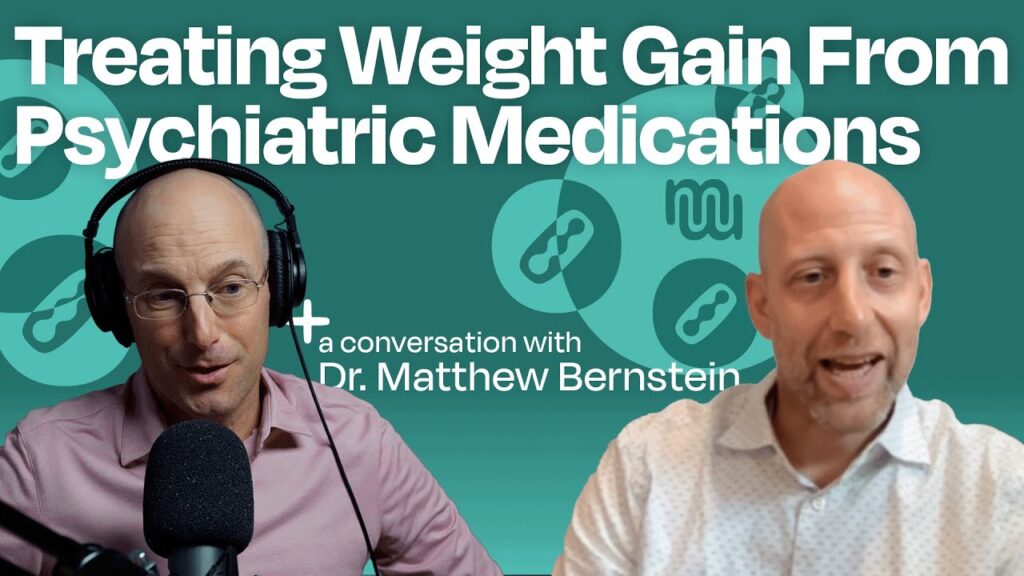
Psychiatric medications can save lives—but for many people they also trigger rapid weight gain and serious metabolic side effects. In this Metabolic Mind episode, psychiatrist Dr. Matthew Bernstein joins Dr. Bret Scher to unpack what actually works for medication-induced weight gain. They discuss why standard tools like metformin and generic “diet and exercise” advice often fall short, where GLP-1 receptor agonists (Wegovy, Ozempic) and dual GLP-1/GIP drugs (tirzepatide) can fit, and the under-recognized risk of losing precious lean mass and regaining fat when these drugs are stopped. Dr. Bernstein shares how clinician-guided ketogenic therapy can deliver a true “win-win,” improving mood, cognition, and metabolic health together. You’ll hear practical strategies for protein targets, resistance training, CGM and ketone monitoring, and building a coordinated care team so medications support—not replace—sustainable lifestyle changes. If you or your patients are struggling with antipsychotic-related weight gain, this conversation offers a balanced, science-literate roadmap to protect metabolic health without sacrificing psychiatric stability.
Read more
Each year on March 30th, World Bipolar Day brings together individuals, families, and professionals to raise awareness and foster understanding of bipolar disorder. This day is dedicated to…
Learn more
ACCORD is proud to announce that the Baszucki Group has awarded more than $600,000 in research funding to support a groundbreaking study on metabolic psychiatry in partnership with…
Learn more
An online community lead by Lauren Kennedy West for people using metabolic therapies to treat their mental disorders.
Learn more
Psychiatric medications can save lives—but for many people they also trigger rapid weight gain and serious metabolic side effects. In this Metabolic Mind episode, psychiatrist Dr. Matthew Bernstein joins Dr. Bret Scher to unpack what actually works for medication-induced weight gain. They discuss why standard tools like metformin and generic “diet and exercise” advice often fall short, where GLP-1 receptor agonists (Wegovy, Ozempic) and dual GLP-1/GIP drugs (tirzepatide) can fit, and the under-recognized risk of losing precious lean mass and regaining fat when these drugs are stopped. Dr. Bernstein shares how clinician-guided ketogenic therapy can deliver a true “win-win,” improving mood, cognition, and metabolic health together. You’ll hear practical strategies for protein targets, resistance training, CGM and ketone monitoring, and building a coordinated care team so medications support—not replace—sustainable lifestyle changes. If you or your patients are struggling with antipsychotic-related weight gain, this conversation offers a balanced, science-literate roadmap to protect metabolic health without sacrificing psychiatric stability.
Read more
Each year on March 30th, World Bipolar Day brings together individuals, families, and professionals to raise awareness and foster understanding of bipolar disorder. This day is dedicated to…
Learn more
ACCORD is proud to announce that the Baszucki Group has awarded more than $600,000 in research funding to support a groundbreaking study on metabolic psychiatry in partnership with…
Learn more
An online community lead by Lauren Kennedy West for people using metabolic therapies to treat their mental disorders.
Learn more