Get the latest on metabolic psychiatry. Subscribe.


Listen, Watch & Subscribe on:



What Doctors Really Think About the ‘Miracle’ Weight Loss Drugs
Listen
About the host
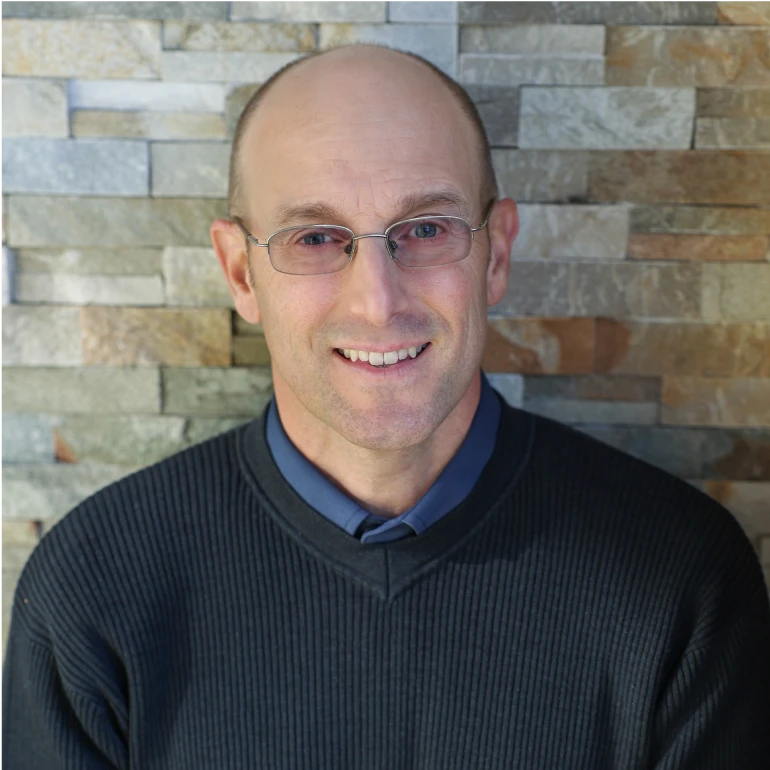
About the guest
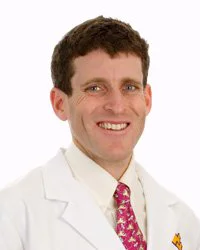
About the guest
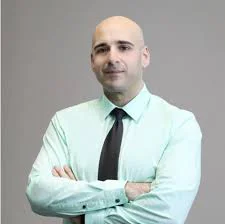
About the host
About the guest
About the guest

Tro:
So, I don’t think it’s fair to say just do it. It’s easier. It’s like, what do you mean easier? $800 a month is not a sustainable way to approach medicine. It’s going to bankrupt our country if we spend $10,000 on obesity, drugs, and $50,000 on fatty liver drugs. When even if 10% of those people were motivated and interested in lifestyle change, they need to be offered a way out.
Bret:
Welcome to the Metabolic Mind Podcast. I’m your host, Dr. Bret Scher. Metabolic Mind is a nonprofit initiative of Baszucki Group where we’re providing information about the intersection of metabolic health and mental health and metabolic therapies, such as nutritional ketosis as therapies for mental illness.
Thank you for joining us. Although our podcast is for informational purposes only and we aren’t giving medical advice, we hope you will learn from our content and it will help facilitate discussions with your healthcare providers to see if you could benefit from exploring the connection between metabolic and mental health.
If you’ve ever struggled with weight gain, with cravings, with this food addiction or this food noise, and felt like your body was working against you and you couldn’t conTrol it. One, you’re not alone. And two, you’ve probably heard of the GLP-1 medications, Ozempic, Wegovy, Mounjaro, that they’re the revolutionizing weight loss, and that they’re the cure for obesity.
Maybe you’re already on one? Maybe you’re thinking about starting one? Maybe you’re a little skeptical about it? Clearly, we need a more nuanced discussion and a more detailed discussion about these medications to better understand how to use them responsibly and successfully for the individual.
And so today I’m joined by Dr. Mark Cucuzzella, who’s a practicing family medicine physician, and Dr. Tro Kalayjian, who’s board certified in internal medicine and obesity medicine. And they’re, I guess you could say, they’re on maybe the skeptical side of GLP-1 medications. But they’re very thoughtful about the use, and they understand that there is a clear use for them.
But maybe not the broad use that we’re all talking about or that so many people think. So, here’s this discussion to really help everybody from individuals thinking about the medications, on the medications, or doctors thinking about how to prescribe the medications. Everybody will benefit from this discussion about GLP-1 medications.
Many of the interventions we discuss can have potentially dangerous effects if done without proper supervision. Consult your healthcare provider before changing your lifestyle or medications. In addition, it’s important to note that people may respond differently to ketosis, and there isn’t one recognized universal response.
Mark and Tro, thank you both so much for joining me today at Metabolic Mind. It’s great to see both.
Mark:
Oh, absolutely. Great to see you. Two of my favorite people in the space. So, having happy hour with you today.
Tro:
It’s an absolute pleasure.
Bret:
Let’s just open it up. And Mark, who is the best patient, the best type of patient, that you think would benefit from a GLP-1 medication?
Mark:
Yeah, so it’s a great question. I think it doesn’t have one simple answer, but it goes back to that full evaluation of why they’re there. So, in my practice, I actually have a clinic protocol. Before we would even bring up the medication, let’s make a diagnosis about what they have, right?
So, that would include basic lab work. Do they have sleep apnea? What’s their fasting insulin? You can calculate a HOMA-IR. What’s their stress level like? Are they a night shift worker? What’s their family history? So, what is going on to create whatever they might need or want that medication for?
These are just the basics we would do even before we had GLP-1s. This was what we would do before we would refer someone to bariatric surgery. Are they food addicted? And that’s, it takes time. I think if you’re thinking you can do that in 15 minutes or over the internet with a telehealth GLP-1 house that’s basically giving you the med with, what’s your BMI? Here’s the med.
I think that’s the wrong direction. But they need a good doctor. They need a doctor with experience, a clinician with experience. And, I think, we’re all learning from every patient that comes in, but see where they’re at. And then, everything is shared decision making from there.
Tro:
Yeah. So, what you’re describing, and what I love is, that we’re talking about good comprehensive care.
Good comprehensive care first. And that’s not really something that’s done in modern medicine, in my opinion, on a systemic basis. And again, you hit the nail on the head. It takes time. Does that patient have a health coach? Does that health coach have empathy? Do they know what it’s like to lose weight and keep it off?
Do they understand the journey or are they a dogmatic sort of person with dogmatic recommendations? So, I think what you’re describing is not necessarily the drug. It’s are people getting proper care before even turning to the drug. And this is what we’ve talked about before. It’s my opinion that most people aren’t getting the care they deserve before they’re even offered a drug.
They’re offered a drug maybe because it’s easier for the doctor. It takes less time. It has a very concrete and known efficacy profile. So, it’s very easy for the doctor, and it’s very easy for the patient. There’s just something they can do without necessarily having to address food or address exercise or address movement or address sleep apnea even.
They can just take this drug. So, I think, the problem is the way our medical system is set up and not necessarily the drug.
Bret:
That makes total sense the way you explain it. But just to play devil’s advocate here, the pushback is whether you have sleep apnea, GLP-1s are going to help you lose weight and help your sleep apnea.
If you have food addiction, GLP-1s might be able to help with that, right? If you have obesity and have failed other diet attempts before, GLP-1s are going to help with that, right? So, people take the approach that GLP-1s can address all this. So, just give the GLP-1. It’s just so much easier.
So what’s wrong with that? Are is the patient still going to benefit?
Tro:
So look, we published on this, right? We published on this earlier this year in February in Frontiers of Nutrition. We basically looked at our one year weight loss results in one corporation, and the first corporate wellness program that we had.
And the average participant lost just as much as the GLP-1, and they didn’t have any need for any medication. And in fact, we took four patients, sorry, five patients off GLP-1s, and they kept losing weight. So, it’s not that it’s not easier. Look, it defined easy, right? That’s an $800 to a $1000, per month.
Whereas, our program is a fraction of that. I’m not saying that one is right or one is wrong. There are some patients that truly cannot take the time., Don’t have the insight or the ability to implement a lifestyle change. But I don’t think most patients out there have access to a program like ours have access to a program like Virta or Owna.
They never even gotten the basics right. They have, they’re used to waiting two hours in a waiting room, and seeing a doctor for seven minutes and being given a prescription. So, I don’t think it’s fair to say just do it. It’s easier. It’s like, what do you mean easier? $800 a month is not a sustainable way to approach medicine.
It’s going to bankrupt our country if we spend $10,000 on obesity drugs, and $50,000 on fatty liver drugs. When even if 10% of those people were motivated and interested in lifestyle change, they need to be offered a way out. Here’s the last point I’ll make, and I’ll keep quiet. There was a recent study showing the real world results.
Our study was a real world sample, right? This is what happened in the real world. When you look at the real world results for the GLP-1s, they’re half as effective. It’s about a 10% weight loss. It’s not the 20% from the clinical trials. So, if you compare apples to apples, we’re double as effective for a fraction of the cost.
Now, the last point here, and I promise I’ll be quiet, is so many people can’t tolerate these medications due to nausea, vomiting, diarrhea, constipation. So, we have to understand that these are easy In the short term, these are easier, quote unquote, in the short term.
And all of these issues we’re seeing it in our clinic every day. The quote unquote, people don’t respond or couldn’t tolerate medication. So, you know, if we’re just kicking the can down the curb, these are amazing drugs. I’m not going to deny that, but I think we have to think bigger picture if we’re really talking about making America healthy.
Mark:
Yeah. Now, just to tag on Tro, you made a couple really important points. So, all of the clinical efficacy trials for other comorbidities, whether it’s cardiovascular, sleep apnea, osteoarthritis, the patients who achieve those benefits have lost significant weight loss, 10 plus. So, we can’t say it’s a direct medication effect.
if you lose 10% of your body weight, your sleep apnea gets better. And we knew that before GLP-1s. But just to frame it like this, I think the world now is always by, it’s in this by direction, bipartisan, we’re always either/or, but it’s yes and type of phenomenon.
So let’s take medical-assisted therapy or treatment for alcoholism, right? So, we have medications that help those conditions, help people stay clean, stay on track, but that is not the treatment. The treatment is what Tro does. The treatment is the support. The treatment is treating the food addiction.
If we gave someone Suboxone for their opiate use disorder, we don’t expect that. We don’t give that out in the ER without a support system thinking, it works for that. No, they need a comprehensive program, whatever that is tailored to them. In some patients, we see some patients come off of Suboxone.
We see some patients come off of Naltrexone for alcohol use disorder. Some need to stay on it forever. Some don’t need it at all once they get in the program. So, it has to be the foundation of the treatment. The med is not the treatment. The treatment is the treatment. The comprehensive care that they get that’s tailored to them, which takes time and takes the right team to do that.
And yes, the medication in the right person can be a very powerful adjunct if those other things are in place.
Tro:
I want to answer the question because I think we’re in a 100% agreement. When we look at medicine, historically, doctors are so terrible at prescribing medications.
We need insurance companies to tell us, prescribe this, don’t prescribe that. We need antibiotic stewardship programs so we don’t abuse antibiotics. If there’s anything that tells you something about the doctor culture, it’s that we turn to medications too often and too quickly and too soon, and without enough thought and consideration.
If you look at what’s happening with the controversies over long-term SSRI use, right? And withdrawals that they lead to these are all topics that we need to address. And the main issue that, I think, that’s coming out with this GLP-1 is not the drug, per se, because all the drugs I mentioned have the right patient, which was Bret’s question.
There is somebody who will benefit from, somebody with severe depression and suicidal thoughts ,that may benefit from SSRIs. There’s somebody with sepsis who will benefit from antibiotics. There’s somebody with intractable food addiction with risk of heart attack or risk of limb amputation with roaring diabetes that’s going to benefit from a GLP-1 drug.
I think that is the beauty of medicine and beauty of science is that we have these tools. So, the issue is not the drug. It’s the culture, right? And it’s our culture. It’s the physician’s culture. So, I think, and we’ve just started this in our clinic. We need stewardship programs over these medications because it’s not appropriate to have ro advertising on Super Bowl that this is the cure to obesity, and this is the fight that every patient needs to make.
I don’t think that’s appropriate at all. And literally, these companies have thousands of patients within 15 minutes getting a prescription. And just as a point to make, I went on Weight Watchers clinic, and I put in that I had a family history of pancreatic cancer, pancreatitis, and thyroid cancer.
And they said to me that I was a candidate for a injection. You lost medication. And now, they’re going through bankruptcy and I don’t, but this is the problem. But to answer Bret’s question, who’s the right patient? Somebody I just described. Maybe somebody who’s facing, who is high risk of a 20% 10-year cardiovascular risk? Somebody with diabetes on insulin therapy unable to come off insulin therapy. Somebody who’s made a good faith effort in a comprehensive program to make lifestyle change possible.
Somebody who’s engaged in a program and life has thrown them lemons. I think, those are the people that need to consider it, if the risk is high and the patient wants it. The patient understands the unknown unknowns of long-term side effects. So, that’s the answer.
And I’d love to hear Mark, who you think, you know, is that right patient in my, in your opinion?
Mark:
Yeah. And I’ve shared some of our handouts that we use in the clinic. So, six months of full on lifestyle therapy. Treat the sleep apnea, treat the stress. So, fix the diets, get them on low carb, high protein, all the things we knew to be true.
We still know to be true pre-GLP-1. So, do that. Just like you wouldn’t refer someone for a gastric bypass at your first visit, right? You’re going to do everything you can to help them. Get them the right comprehensive care. Treat their food addiction. Now, some people struggle like we, and I see it like this in my clinic. It’s a third of people.
It’s, oh, I love meat. They weren’t obese at age 18. So, I think there’s a huge genetic factor or epigenetic, these kids who were 400 pounds at the end of high school. They’re and Ben Bikman talks about the adipocyte hyperplasia. These folks are in a different world. So, that history is like critically important.
And then who’s gained the weight? After the 30th birthday, when they went through a divorce, and they started working night shift. They know all the bullet that’s that came at them, and they can reverse that. So, six months full comprehensive care. How are they doing? I love meat. I love eggs.
They never look back. And Tro and I have both seen people lose a hundred pounds, and they never look back. And they feel like a million bucks. They drop all their meds, but that’s not everybody. And then, you have a third that are going through a divorce. Lost their job during the pandemic. Kid just got in trouble with the law, financial, and they’re just like quitting smoking.
They’re not ready yet. They can’t, and they’re not ready yet. Then ,you have the third that struggle, right? And, true. You’ve probably seen these folks. Like they understand the diet,. They understand every bullet coming at them, but they just can’t. They have a lapse and a relapse. Like they’re constantly struggling.
They can’t get the food noise out of their mind. But they understand it, and they’re struggling. They’re not weak. They’re not lazy. They’re not gluttonous. They are trying. And in every other medical condition that involves human behavior, we never blame the victim. No, we have treatment for that. And you think alcoholism or substance use disorder?
No, this is your own moral weakness. Just get over it, and get off this stuff. No, we have a duty to treat those people. No, it doesn’t need to be GLP-1. We have other weight loss meds. We have naltrexone. We have Bupropion. We have phentermine. We have other things that aren’t quite as potent in the big picture research-wise.
But yeah, so you can start people. We’ve tended to forget about other obesity meds, and there was a very interesting study on/off-ramping GLP-1s by colleagues in Vanderbilt that showed that you can off-ramp the GLP-1s once they’ve fixed all that insulin resistance with that year of GLP-1.
Now, let’s get them onto another lower cost generic, any obesity med, and they continue to lose weight. So, sometimes, you got to go go in early hard, right? It’s like Atkins induction. You got to fix the problem hard early to fix the insulin resistance, and then you can back down versus trickling into it and always fighting upstream, right?
So, we know historically that works. But so, that’s the approach is that middle third that need help. And I’ve seen it in plenty of patients, who give them minimum effective dose of GLP-1. Not just crank the dose on autopilot, minimum effective dose. Keep doing what you’re doing. And I’ve seen people, you see their weight curves boom.
And they’re like, doc, something happened. I shut it off. And it works. Have you seen some patients like that? Individual results may vary with everything we do, but have you seen some of those, Tro? That like really are doing it right, and they’re just struggling and you get them on a little bit?
Something works.
Tro:
I’m seeing, unfortunately, I’m seeing the opposite, which is, I have a clinic full of people who’ve been on the compounded version for a year, for over a year. Yet, I’m seeing people who’ve been, I’m seeing the quote unquote, failures and non-responders. I have a clinic full of failures and non-responders. So, I’m, I see the efficacy.
I see the, I’ll tell you, we’ve seen the patients come off in, so I’ve had some people with severe lymphopenia who are on insulin for 20 years. Just need a tiny bit of metformin, and a tiny bit of GLP, and they’re off insulin. And they’re doing the diet great. So. I’ve seen some amazing, amazing cases, but a lot of these patients have already been set up to fail.
They had bariatric surgery. They had the LAP band. Now they’re on the GLP-1, and unfortunately, I think you and I know this all too well, they’ll be set up to fail. They are, they’re not like. We know that one-third of the weight loss with these medications is muscle, right?
How many of the people being given a prescription have their doctor helping them or have somebody helping them preserve muscle? How many people? It’s a known side effect. Every single doctor out there knows that 25 to 35, maybe 40%, of the weight, Ben Bikman says 50%, of the weight is muscle. How many people have protected against this known issue?
By helping their patients get a minimum amount of resistance training, how many have, you know? And look, we know that when this medication stops, that their rate of weight regain is twice as quick as diet and lifestyle. So, how many are saying this to their patients? That, hey, I’m starting you on this medication, but if it’s no longer effective or if you know you can’t tolerate it, the rate of weight regain. Think about the psychologic impact of failing the miracle drug.
Or being set up to fail.
Mark:
Yeah. You’re talking about medical ethics, right? There’s no shared decision making, informed consent.
Bret:
Yeah. How can you have informed consent when someone comes in because they saw the commercial and they say, I want that drug and I just want it. I don’t care. I just want it.
Yeah. Yeah. But, okay, so we’ve talked a lot about the concerns about the drugs, and the downfalls of the drugs, which are many. But despite that, there’s still, even for doctors who believe in lifestyle, there is a clinical use for it, it seems. So, Mark, you talked about starting at a lower dose to help people in that way rather than give them the highest dose.
So, just give us an example. What are some of the low doses? Not that you’re telling anybody to try this, and this isn’t medical advice. But just in your clinic, what are some of the low doses that you’ve seen and what’s the number one effect that you see from that?
Mark:
Yeah, so I would use, I’m using FDA prescribed medication. So starting dose of semaglutide is 0.25 injected once a week. Of Tirzepatide is 2.5, and they come in pens, auto-inject pens. So, stay there for four weeks, maybe even longer. Now, the patients that struggle with the low dose, we know that hyperglycemic patients, it blunts the effect of GLP-1.
So, the more metabolically broken someone is, they’re probably going to need a heavier push. So, someone who’s got an A1C of eight. Say they’re on insulin therapy. It’s likely going to take a little dial up, but you have to work through the side effects. But in that first four weeks, you can because we don’t, you don’t titrate the dose quicker than any four weeks.
Four weeks for side effects. So, you can do a lot to their brain in that four weeks. You can do a lot to their gut. Fix the gut microbiome. I have a handout sitting right here, a gram of protein per pound of ideal body weight. Hit the gym. Maintain, preserve your muscle mass. Treat your sleep apnea.
How are they doing? And the goal was just to keep them there. We never really thought about cranking that dose up. But just like any pharmacologic product ,you develop tolerance. I saw a prelim study of 7.2 milligrams of semaglutide in a study. You’re like, what the heck? You just keep cranking it up. And then, they become almost, we talk about more insulin, more resistance, more semaglutide.
You’re going to become semaglutide resistant, right? And then, you come off it and you’ve been holding this beach ball underwater, so to speak. It’s going to be much harder to off-ramp someone from 2.4 than someone who was on 0.25. That person’s an easier off-ramp because they’ve already made the change. And they’re only on just a little bit of the med to maybe affect that central system, which we know that GLP-1 is produced in your brain. But the GLP-1 injections are long half-life.
Where the GLP-1 produced in our gut is a very short half-life. So, that’s the magic is this long half life that can control their appetite.
Bret:
Just because you’re labeled with treatment-resistant depression doesn’t mean throw your hands up and there’s nothing to do. There are actually quite a lot of options.
Georgia:
What if most of what you’ve been told about depression, what causes it, how to treat it, what to expect from recovery was only part of the story? I’m Dr. Georgia Ede. I’m a psychiatrist, who’s been treating depression for over 25 years, and I want to tell you about one of the most misunderstood realities in modern psychiatry.
Treatment-resistant depression sounds like a worse kind of depression than regular major depression. But actually, treatment-resistant depression is the norm. Most people don’t respond to first line antidepressants, not because their depression is somehow different or tougher to treat, but because antidepressants simply don’t address the root causes of depression.
Bret:
And if we assume everybody’s in the same bucket about what is contributing to their depression, we’re going to treat them all the same. But it’s clear that doesn’t work.
Georgia: So what comes next when you’ve already tried everything you were told to try? In our new upcoming three-part series from Metabolic Mind, we’ll explore why antidepressants usually fail, and the powerful new options offering real relief that most people never hear about. Things like transcranial magnetic stimulation, ketamine and psychedelics, and how they stack up against things like lifestyle changes, nutrition, exercise, and sleep.
Bret:
So as a psychiatrist, if you were going to rank them in terms of maximum impact, how would you rank it?
Georgia: So, if you’ve tried multiple different antidepressants, and still haven’t found relief. You’re not alone. You’re not broken, and there is hope. Discover the truth about treatment-resistant depression, a three part series from Metabolic Mind premiering August 13th on YouTube or on your favorite podcast platform.
Bret:
All right, from your, what is it? From your lips to God’s ears or something like that.
Let, let me transition.
Mark:
But that’s how I use that.
Bret:
Yeah. So let me transition to you then, Tro. So, you talk a lot about food addiction and food noise, and that’s come up a couple times already. Do you see a role for these medications in helping to address that specific component of obesity?
Tro:
Undeniably, they improve food addiction and binge eating, okay. Undeniably, I’d say they’re probably the most potent, single most potent, medication out there. Even more potent than the amphetamines used in binge eating, like Vyvanse. And it’s much more potent than even gastric bypass. Just of note, when you’re doing a sort of a systemic analysis of all the different therapies out there for food addiction, a caloric reduced diet results in no improvement in binge eating or food addiction.
Absolutely none. And we just published today, maybe when this is out, it’ll be, in the past we just published a roughly a 40% reduction in symptom severity with a ketogenic diet, and a social support network, which is just slight, like on par with the amphetamines and slightly less than the GLP-1 drugs.
So absolutely, they help on the brain, right? A 100%. But you don’t need a high of a dose as Mark said, right? You can, if you have the ozempic pen, you can titrate the clicks. Like you can, you can do 1/10th of the dose with two clicks, right? Just to see how does this thing affect my brain?
You may need just two clicks, right? So, there’s no harm in doing less of a dose and seeing if you get, and if he doesn’t work, of course, you titrate up. And I think we’re going to find out soon, and this is just my guess. This is me making clear my assumptions. Just like with bisphosphonate drugs, when we take people, we put people on holidays, right?
Because of the side effects, I’m fairly certain we’re going to do the same thing with these. I would be, if I had to predict, I’d say after two years, taper and stop, take a holiday. And then, reconsider use later on. I think the lowest dose possible, or if the stakes are high, I like to ramp up quick and then ramp down quick.
Bret:
And what do you mean by stakes are high? Give us an example.
Tro:
Yeah. Somebody who’s going to face an amputation or took a wound that didn’t heal or has a significant soft plaque and hard plaque burden in their heart. We know their cardiovascular risk is through the roof. Somebody where the stakes are really high.
If the risk is high, I think you’re more, I’m more, apt to crank the dose up, and then taper off quickly. Because I’m using it, it’s like with sepsis, right? Like you, you throw somebody, if somebody’s severe sepsis, you want to get them antibiotics early, an effective dose. Make sure you do comprehensive care. Give the fluids. Monitor the pressure. And then you figure out everything later on, and take them off drugs later on.
I suspect it’s something, that’s the way I use it. When I use it, I’ll start like gently. See how the body reacts. And then if I really need it, because the stakes are high and that patient is at high risk, I am going to go to high dose fairly quickly.
Bret:
Fellow mental health clinicians and healthcare providers.
You now have access to a suite of free CME lectures on metabolic psychiatry and metabolic health. Each of these CME sessions provide insight on incorporating metabolic therapies for mental illnesses into your practice. These CME sessions are approved for a MA category one credits, CNE nursing credit hours and continuing education credit for psychologists, and they’re completely free of charge on mycme.com. Now back to the video.
That makes sense now. Now, so you’ve also talked about coming off the drug eventually at a year, whatever the case may be, coming off the drug or tapering off it. So, for both of you, what if someone comes to your office, they’re a new patient. Oh yeah. I’ve been on this, I’ve been on Mounjaro for six months.
I felt great. I’ve lost weight. Super easy. Love it. What do you do? What are the three things? What, for each of you, what are the top three things that you will say to that patient to say, maybe we eventually want to get you off, and we can do that by doing X, Y, and Z. What’s on your list?
Mark:
Yeah, my first one is, are they healthy?
So, if they’re back to, I don’t, BMI could be varied depending on their muscle mass. So, are they healthy? Yes or no? So, if they’re healthy, that’s a good start point, right? Like Tro saying, someone who’s not, they’re still diabetic and about to lose their foot. They’re not ready to come off.
But if they’re healthy by every parameter that we would say. Their blood pressure’s better, they still have cardiovascular disease, but it’s stable. They’re fit. They’re strong. Then, what’s their confidence? Do you want to do this? Shared decision making. Look, I think you’re ready to come off this med.
You have fixed your metabolism. You have fixed your brain. So, get them, get their buy-in. They’re captain of the ship. Patient’s autonomy, right of refusal. Yeah, I would like to, and I would suggest certainly like coming off any medication that is not a lifelong medication. So, we’ve been told that these are lifelong medications, but that’s not true.
So, you fix the problem. And just like we know, diabetes meds are not lifelong meds. Now, even though we were taught in medical school, they were. We know that’s not true. And then, what non-negotiable things are you going to do as we, you can spread the dose, right? So, say they’re on a low dose. Just space it out.
Take a holiday. Let’s do this, there’s no harm in holding the med. But they have to have kind of ownership, and they have to want to do it. And if they have confidence to do it, and we give them confidence, yeah, you can do this. You’re just their coach. Look, I know you can win this game. And they have good odds of winning the game.
If we say there’s no way, Tro, your kid’s team’s going to get crushed today. And you tell the kid that in the car as you’re driving to the game, what are the odds of winning the game? It’s like zero. The human brain is so powerful when it wants to do something, and I don’t never discount that if they want to do it.
But that’s, I don’t know. That was about three things.
Bret:
No, those were three things. Really important to make sure they’re healthy. Not just that they’ve lost weight, but that they’re healthy, and that they can come off. And that they’re ready for it, and that they can buy in. And then, and that they really think they can succeed.
And those are three really important things. Assuming we have all those, Tro, what are the practical next steps to say? Here’s what you got to do.
Tro:
I’m going to reemphasize, I so much agree with Mark here. Does the patient want it? Like I, one of the biggest concerns I have is, I may have values, right?
I want to de-prescribe the world. I want to get the entire United States off drugs that they don’t need, right? But at what point do I draw the line? Am I imposing my values on the patients? So, assessing readiness to change is huge, pragmatically speaking, which I think was the question you were asking.
It’s the best data for de-prescription and safe tapering of these medications is exercise, right? Resistance training and low carb diets. Using biofeedback. Using a coach can they maintain a diet, if they can. If they’re still struggling with these drugs. If this, if there’s a glycemic variability on the drug. And they’re stressed out, and you know there’s a hurricane. And they lost their job, and they’re having a divorce. And they’re not ready for change, and you were dogmatic in your approach because you have a glorious ideal of taking on/off a drug.
I think this is a setup for failure, right? So, I think, it’s so important to be introspective as doctors and make sure that we’re not implying, putting our values on the patient. That they’re ready for change, and they understand the stakes. I’m taking away this crutch. Are you ready for this crutch to be taken away?
And, like Mark said, if the vision is there with them, and it’s their vision that you’re executing on. Then, it’s going to be a success. But if it’s not their vision, and it’s our dogma. This is a setup for failure.
Bret:
Yeah, I think that’s a good point. And one of the, one of the amazing things about you, you chose is how you publish your practice results.
And these are people who may be ready, may not be ready. But they go through your program, and they achieve amazing results with the coaching and with the keto diets. But I would imagine that the majority of those people seek you out for that reason. So, Mark, you have the opposite of that.
You see anybody who walks in the door for any reason. They’re not coming specifically to see you for a low carb intervention. So, if you’re going to use a ketogenic diet and exercise to help people get off the medications, how successful is that in this, in just a general population of primary?
Mark:
We’re about to publish our VA data for 12 months. So, about 90% of the patients that were on diabetes meds, we were able to reduce them.
So, that’s pretty good in the real world setting. I feel there’s an important message there, like primary care. This has to happen in the family doctor’s office. Now, if we had a million of Tro out there, the world would be good. But he’s a unicorn, he is. People got to find him, but like everyone has a GP or family doc almost around the world.
And so, if we don’t have enough obesity specialists to deal with the 40% of the population with obesity in the 60 plus percent with pre-diabetes and diabetes, right? So, we can’t refer these people out. Most of the time, when we refer them out as primary care, they go to the medical model, right? So, they’ll go to pretty much traditional medical care.
And that has not been shown to reverse disease. I want to teach primary care doctors that they can do this, and it brings them joy. So, when I see someone come back, and they’re feeling better. That makes me want to go to work. It’s like that’s a good visit. If they come back, and it’s your cholesterol is worse and your diabetes is worse.
We need to increase your insulin. We need to add a statin. We need to add two more blood pressure medicines. All the admins are happy because you’re meeting all the check boxes. But I’m not happy. The patient’s miserable, and like we failed. But the system’s happy that everyone’s getting paid.
I hate to put it that way, but in Western medicine, we get paid by the more we do. So, we have to turn the model upside down, which is what Tro is doing with Toward Health. It’s let’s value getting people better, and let’s get paid for that value, right? So, you’re saving the system money. Hire the right people to make this happen.
But yeah, go ahead, Tro, on your thoughts.
Tro:
Yeah, I’m like, I’m just, so many thoughts happened here. One of the biggest ones is, Bret, I thought the only reason, my only value, is because patients are ready. And they’re coming to me because they know what I’m doing. And it was a lot of patient self-selection when we went out.
Now, we’ve done 10 different corporate environments, and what I found is it’s has nothing to do with that selection. Well, I shouldn’t say that. It has to do with dual self-selection, right? They don’t know Tro in Louisiana, right? But what we’re doing is we’re screening them, and they’re screening us.
So we’re saying, hey, do you want to get healthy? Do you want to come off medications? Do you want to reclaim your life? And they’re choosing to enroll in a program. What it’s doing is it’s directing resources to the people who are ready to implement lifestyle change. And then, our goal as a practice is to keep that and to maintain that over the number of years.
Bret:
So with the steward it, the stewardship of GLP-1s, it sounds if you’re going to start the medicine, a plan should also be in place on how to get off the medicine, but to have that sort of baked into the prescription almost. And so is that sort of what you mean by stewardship to have that? So say, all right, here’s how we’re going to use it.
We’re going to use it judiciously, and we’re going to put lifestyle plan in place that is going to make it hopefully unnecessary in the future.
Tro:
Look, look, if you just gave them a hand down, right? We know that low carb diets, exercise, community, and support work, right? We know that community support work.
We know that biofeedback works. We know that the continuous care model, access to coaches works.
Mark:
Stewardship, Bret and Tro. So, I’ve talked about these meds should be in some way controlled substances. So, it all went rogue when they became obesity meds. And somewhere along the line, like 30% of people getting these drugs now don’t even meet FDA criteria, right?
Like in West Virginia, everything has to go completely off the rails before we step back and say we have to try to put the genie back in the bottle. These meds are being used, and they’re being used wrong. So, if there’s an audit, and here’s Dr. Sher in California with his practice, and he’s giving out GLP-1s, dozens and dozens of prescriptions a day.
Like that was happening with opiates. People were giving out 120 prescriptions a day. Wait, how is that? Who are these people? Yes, I know it’s, but it was happening right there. They were coming in. So, somewhere because it’s breaking the bank of the economy for one, but it’s also harming a lot of patients.
So, if you are getting a medication that can cause harm by a doctor, and it’s not FDA-approved. And there’s not informed consent and shared decision making. And I prescribed that, I should not. I took an oath. I should not be allowed to do that. But it was happening a lot and might still be happening, but I think now that the compounding is shut down a bit. That it’s not happening quite as much, but there’s not any check and balance on like, how many prescriptions have I given this month.
I get a report every month from the DEA about my opiate use. So, if I was red flagging, they would be on me in a minute.
Bret:
No, but, that’s a great point though because if the discussion is these drugs are miracle drugs, right?
Think about the terms people have used for these medications. They’re miracle drugs. They’re the solution to obesity, right? They’re going to, they’re going to cure the obesity epidemic. These are the messages that we read on a regular basis. So, you can see why people would just be prescribing them, and people wouldn’t question it if that’s what’s in our brain.
So these, I think, these are the discussions people need to hear more of. They need to hear you, Mark. They need to hear you, Tro. They need to hear the responsible use of these medications and what their options are there. So, hopefully, this interview, this discussion here will help further that movement so that we can change our perspective around these medications.
Not that we want to throw them out and not use them, but if they can be used appropriately, we can really focus on what’s going to make people healthier in a sustainable way for the individual, for the country, for the world. Anyway, that’s my soapbox, but thank you both for joining me. And I’ll give you actually each a moment to let us know where we can follow you to learn more about you.
So, Mark, why don’t you start?
Mark:
Yeah. I’m not on social media much. I’m a hermit working up here in Maine right now, but I have a website, DrMarksDesk. If you’re in my hometown in West Virginia, I have a little running store. So, it is called Two Rivers Treads. So, you can start walking. Walking is magical medicine for every part of our health and running, too. But just get yourself outside in the parks.
Bret:
Great, Tro.
Tro:
Yeah. Toward Health is our clinic.
There’s a free app, Toward Health. Podcast is Low-Carb MD Podcast. Look, we are trying to help every company out there. We certainly care about individuals as well, but we are really focused on the companies because we can offer our services for free through company-sponsored programs. When we save the company money and get their employees healthy, they’re paying for it.
So that’s, hopefully, you’ll find me in your HR department. So hopefully, where you can find me. And it’s just an honor to be here with two people that I really look up to. So, just want to put that out there.
Bret:
Thank you. Thank you both so much. Thank you both.
Mark:
Back at you. Appreciate what both of you’re doing.
Lot of respect.
Bret:
All right. Yeah.
Thanks for listening to the Metabolic Mind Podcast. If you found this episode helpful, please leave a rating and comment as we’d love to hear from you. And please click the subscribe button so you won’t miss any of our future episodes. And you can see full video episodes on our YouTube page at Metabolic Mind.
Lastly, if you know someone who may benefit from this information, please share it as our goal is to spread this information to help as many people as possible. Thanks again for listening, and we’ll see you here next time at The Metabolic Mind Podcast.
Listen, Watch & Subscribe on:
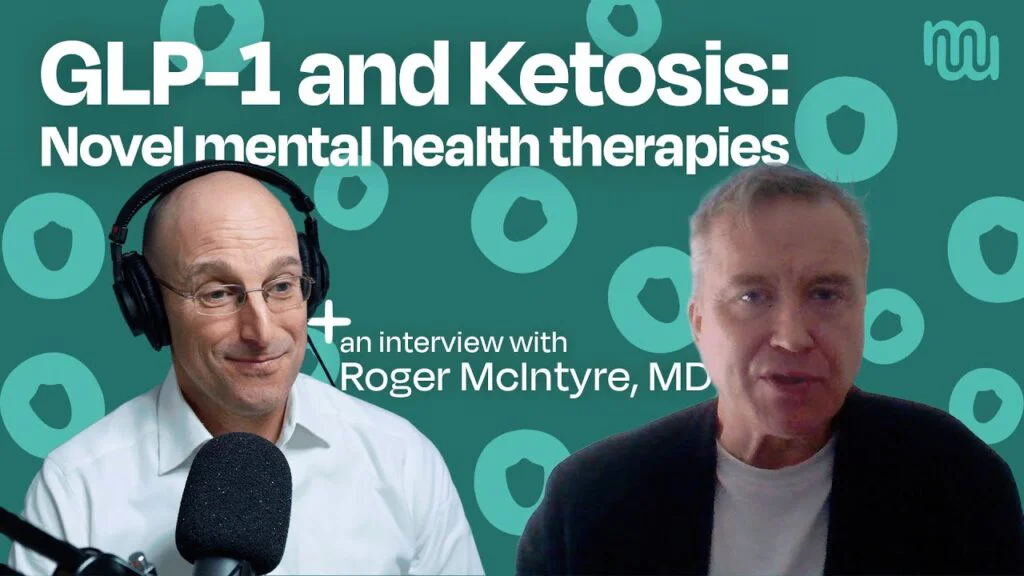
Can weight-loss drugs help the brain? In this Metabolic Mind episode, Dr. Bret Scher interviews Dr. Roger McIntyre—Professor of Psychiatry and Pharmacology at the University of Toronto—about GLP-1 receptor agonists (e.g., Wegovy, Ozempic) and ketogenic therapy in mood disorders. Dr. McIntyre explains why psychiatry’s spotlight is moving from simple neurotransmitter theories to brain energy and cellular metabolism, and how GLP-1s might aid mood both indirectly (better metabolic health) and directly (GLP-1 action in brain circuits). He draws parallels with nutritional ketosis, noting overlapping effects on inflammation, insulin signaling, mitochondria, and neural networks. While optimistic, he stresses staying within current GLP-1 indications and building high-quality clinical trials for both medications and keto before broad psychiatric adoption. The takeaway: a future of “brain-protective” care that integrates meds, diet, sleep, exercise, and psychotherapy—shifting treatment toward resilience and offering real hope for people with depression and bipolar disorder.
Read more

In this wrap-up episode, Dr. Bret Scher compares GLP-1 medications such as Wegovy and Ozempic with ketogenic therapy for metabolic and mental health. Experts discuss benefits, risks, and why lifestyle interventions—especially ketogenic diets—should come first, with GLP-1s serving as short-term bridges to lasting wellness.
Learn more
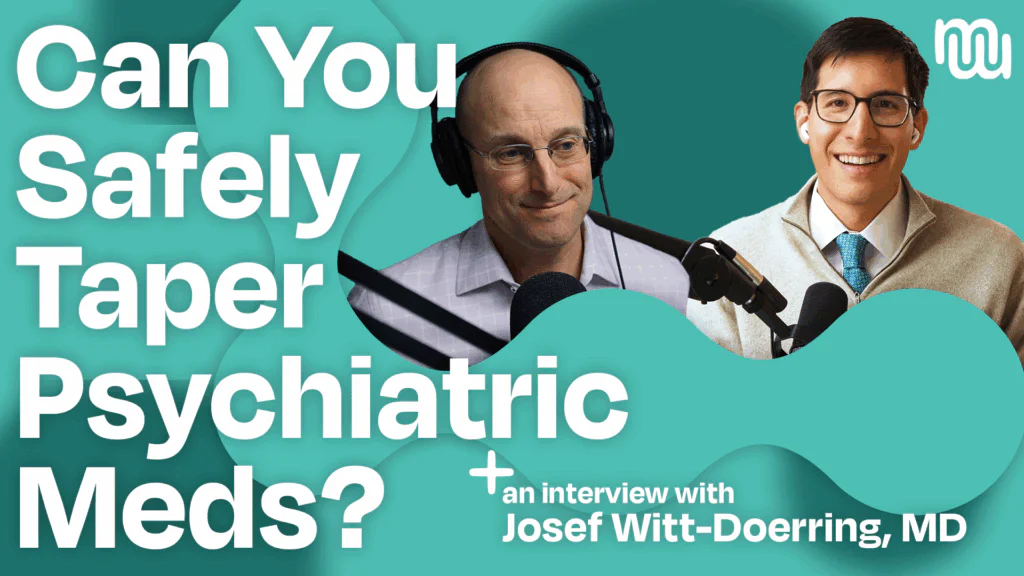
Psychiatrist and former FDA insider Dr. Josef joins Dr. Bret Scher to unpack deprescribing psychiatric medications—how to taper SSRIs, antipsychotics, and mood stabilizers safely (5–10% monthly, patient-led, often with liquid/compounded doses), avoid withdrawal, and address root causes with metabolic and ketogenic therapies. Real patient stories, practical taper protocols, and a fresh look at antidepressant “chemical imbalance” myths make this a must-hear for anyone navigating psychiatric meds and metabolic mental health.
Learn more
Psychiatrist and former FDA insider Dr. Josef joins Dr. Bret Scher to unpack deprescribing psychiatric medications—how to taper SSRIs, antipsychotics, and mood stabilizers safely (5–10% monthly, patient-led, often with liquid/compounded doses), avoid withdrawal, and address root causes with metabolic and ketogenic therapies. Real patient stories, practical taper protocols, and a fresh look at antidepressant “chemical imbalance” myths make this a must-hear for anyone navigating psychiatric meds and metabolic mental health.
Learn more
Can weight-loss drugs help the brain? In this Metabolic Mind episode, Dr. Bret Scher interviews Dr. Roger McIntyre—Professor of Psychiatry and Pharmacology at the University of Toronto—about GLP-1 receptor agonists (e.g., Wegovy, Ozempic) and ketogenic therapy in mood disorders. Dr. McIntyre explains why psychiatry’s spotlight is moving from simple neurotransmitter theories to brain energy and cellular metabolism, and how GLP-1s might aid mood both indirectly (better metabolic health) and directly (GLP-1 action in brain circuits). He draws parallels with nutritional ketosis, noting overlapping effects on inflammation, insulin signaling, mitochondria, and neural networks. While optimistic, he stresses staying within current GLP-1 indications and building high-quality clinical trials for both medications and keto before broad psychiatric adoption. The takeaway: a future of “brain-protective” care that integrates meds, diet, sleep, exercise, and psychotherapy—shifting treatment toward resilience and offering real hope for people with depression and bipolar disorder.
Read more
In this wrap-up episode, Dr. Bret Scher compares GLP-1 medications such as Wegovy and Ozempic with ketogenic therapy for metabolic and mental health. Experts discuss benefits, risks, and why lifestyle interventions—especially ketogenic diets—should come first, with GLP-1s serving as short-term bridges to lasting wellness.
Learn more
Psychiatrist and former FDA insider Dr. Josef joins Dr. Bret Scher to unpack deprescribing psychiatric medications—how to taper SSRIs, antipsychotics, and mood stabilizers safely (5–10% monthly, patient-led, often with liquid/compounded doses), avoid withdrawal, and address root causes with metabolic and ketogenic therapies. Real patient stories, practical taper protocols, and a fresh look at antidepressant “chemical imbalance” myths make this a must-hear for anyone navigating psychiatric meds and metabolic mental health.
Learn more
Psychiatrist and former FDA insider Dr. Josef joins Dr. Bret Scher to unpack deprescribing psychiatric medications—how to taper SSRIs, antipsychotics, and mood stabilizers safely (5–10% monthly, patient-led, often with liquid/compounded doses), avoid withdrawal, and address root causes with metabolic and ketogenic therapies. Real patient stories, practical taper protocols, and a fresh look at antidepressant “chemical imbalance” myths make this a must-hear for anyone navigating psychiatric meds and metabolic mental health.
Learn more