Get the latest on metabolic psychiatry. Subscribe.


Listen, Watch & Subscribe on:



The Truth About Treatment-Resistant Depression: Part Two (TMS and Psychedelics)
Listen
About the host
About the guest

Bret:
Yeah, that’s what’s so remarkable. Within one day, when you’re talking about SSRIs and other antidepressant medications, you have to give it weeks or months to really see the benefit. And this is one day. So dramatic.
Welcome to the Metabolic Mind Podcast. I’m your host, Dr. Bret Scher. Metabolic Mind is a nonprofit initiative of Baszucki Group where we’re providing information about the intersection of metabolic health and mental health and metabolic therapies, such as nutritional ketosis as therapies for mental illness.
Thank you for joining us. Although our podcast is for informational purposes only and we aren’t giving medical advice, we hope you will learn from our content and it will help facilitate discussions with your healthcare providers to see if you could benefit from exploring the connection between metabolic and mental health.
Many of the interventions we discuss can have potentially dangerous effects of done without proper supervision. Consult your healthcare provider before changing your lifestyle or medications. In addition, it’s important to note that people may respond differently to ketosis and there isn’t one recognized universal response.
Hey, Georgia, welcome back for part two of our three-part series of treatment-resistant depression. Thanks for joining me again.
Georgia:
Thank you for having me back.
Bret:
Yeah, so as a reminder, in our first episode, we talked a lot about what treatment-resistant depression is, what it means for the individual, and really, what it means for kind of the whole diagnosis and maybe the etiology of what’s causing the depression.
And so surprising that as much as we think antidepressants are the mainstay of treatment, they really don’t work for so many people. And that’s why so many people get labeled with this treatment-resistant depression diagnosis. But there’s hope because there are so many treatment options that are available.
So, to get started, what do you see as like the main categories of next step treatment for someone who is diagnosed as having treatment-resistant depression?
Georgia:
Yeah, there are a lot of good options for people to explore. If you’re watching the visual, the video version of the podcast, you’ll see a slide that lists them all.
But they basically fall into four general categories. One category is psychotherapy. So, if you’re not already in psychotherapy, adding psychotherapy to your existing treatment can be very helpful. We’re not going to talk more about that particular option in our episode today because we really want to focus on these really interesting biological treatments that have come along that have sparked a lot of interest.
So, the other three broad categories are, one is standard psychiatric medication management, which is lengthening or switching or combining antidepressants or adding an antipsychotic or some other medication to the antidepressant. And honestly, that’s how most psychiatrists spend most of their time.
They spend most of their time trying to help people with depression by mixing and matching and switching medications hoping to find a combination that is going to work well for you. But the good news is that you don’t have to stay in that realm anymore. There are other options, which are really worth exploring.
And these other two categories that go beyond standard psychiatric medication. One is neurostimulation techniques. These are ECT, electroconvulsive therapy, vagus nerve stimulation, and TMS, transcranial magnetic stimulation. We can talk more about those individually, but those are all using electricity or magnets to stimulate brain activity.
And then the other category is the sort of rapid-acting alternative drugs, esketamine, ketamine and psilocybin. And we can talk more about those individually, too. \But there’s a lot of research going on in all of these areas.
Bret:
Yeah. So, the four main buckets, like you’re saying, are the are psychotherapy, brain stimulation.
Then, these sort of faster acting medications, like ketamine and esketamine and psychedelic-type medication. So, those are the four main buckets. Now, let’s start with the brain stimulation because I find that so interesting. The general concept is basically like shocking the brain to have it release more chemicals, which I think a lot of people might have an image of ECT that’s barbaric.
You put the bite block in and the person like seizes, and it’s dramatic. At least that’s how it was or how it’s portrayed in movies, probably not so much in reality. So, give us an overview of ECT, what it is now ,and how that’s similar or different to the other brain stimulation techniques.
Georgia:
Exactly. So, when you say, when you use this term ECT, or electroconvulsive therapy, what used to be called electric shock therapy, you have these really horrific images. And the many of which come from the movie, One Flew Over a Cuckoo’s Nest. And because the entire, this electrical stimulation of the brain, created not just a burst of activity in the brain, but also throughout the body creating a whole body seizure.
And that’s not the way it’s done in most modern settings nowadays. We use what’s called modified ECT where a general anesthesia is used and also muscle relaxant to prevent the body from having a seizure. But there are still places in the world where the unmodified version is still used. ECT has been, it’s been in use since 1938. So, some of this, some of the history is very, very unpleasant and unfortunate.
But these days, modern ECT is actually one of the most effective, for better, for worse, one of the most effective treatments we have for treatment-resistant depression. Even though it’s, there’s a lot of stigma around, a lot of fear and concern about using, it’s not very appealing. So, it’s often used as a treatment of last resort.
Bret:
Yeah. So let’s compare that then to TMS because that seems, I don’t know, it’s got this bit of an aura around it as being more sophisticated and very targeted.
And I can’t drive down the freeway without seeing a couple billboards about TMS for where I live. So, it’s becoming more in vogue a little bit. So, tell us about TMS.
Georgia:
That’s really interesting that you see billboards for it. I haven’t in my area, but that is really interesting.
It’s much more, it’s much more acceptable to people to undergo TMS, which is trans cranial magnetic stimulation. It’s using magnets to generate an electromagnetic current. Usually it’s targeted into one specific area of the brain, and there is no seizure involved. There is no anesthesia required.
It’s painless. And it can be done, you sit in a chair that looks like a dentist chair. And the magnetic field is applied to the brain, and it’s very well tolerated, very few side effects. And it doesn’t work as well as ECT does, and you do need more treatments than you will with ECT. But it’s a much more acceptable treatment for most people.
Bret:
Yeah. And I guess the one part I left out is actually RTMS, right? For repetitive transcranial magnetic stimulation, the repetitive meaning, like Monday through Friday for multiple weeks in a row. So, it’s a commitment to get this done, isn’t it?
Georgia:
It is. For ECT, the electrical stimulation, you still will need 6 to 12 sessions.
But with RTMS, it’s generally 30 to 36 sessions on average for a full-course of treatment. And you may need to have that repeated down the road as well. Same with ECT. ECT, some people do go on to have maintenance ECT treatments, kind of refresher treatments. So, none of these treatments are necessarily going to help with your depression long term.
Bret:
And when it comes to mechanism of how this works, right? We’re not talking about a SSRI inhibitor or inhibiting a couple different chemicals in the brain. Instead, we’re really stimulating the brain. And I know there’s a still a lot of research about the exact mechanisms, but what are some of the theories or hypotheses about how it works, which may tell us why and how it’s different from the medications?
Georgia:
Yeah so, we actually know very little. We really understand how ECT works. We really don’t understand very well how it works, and which is fascinating given that it’s been in use for almost a hundred years. And that’s because the brain is really difficult to study, and it’s complicated.
And when you induce a seizure in the brain, a lot of different things are happening. But some of the theories, some of the more popular theories, are that you’re stimulating GABA activity of the brain. GABA is the brain’s calming neurotransmitter. So, you can think of GABA as the brain’s brake pedal.
It’s the brain’s primary calming neurotransmitter. it helps regulate GABA levels in the brain. That’s one thing that you can see. And another thing, another theory about how ECT may be helpful is that it increases levels of that growth factor we were talking about before in the first episode.
Brain growth is called BDNF, brain derived neurotrophic factor, and that’s a molecule that the brain needs in order to sprout new connections and create new circuits, which is really important for learning and memory, and for rewiring your brain and being able to think about things in different ways.
Bret:
And then the third sort of stimulating-type treatment that we haven’t discussed yet is the vagus nerve stimulation, which I think is one that a lot of people haven’t heard as much about. So, quickly tell us about that one.
Georgia:
The reason why a lot of people may not have heard of vagus nerve stimulation is because it’s a surgical procedure, and it’s very expensive.
it has been FDA-approved since 2005, but in order to qualify for this treatment, you have to have quote failed or four antidepressants have to have failed you. So, if you’ve tried four different antidepressants and haven’t had a good response, then you are eligible for vagus nerve stimulation.
And what that is, there’s a device that’s surgically implanted in the chest that will, that then stimulates the vagus nerve. And the vagus nerve is this large bundle of nerves that connects the brain with many other organs in the body. It’s kind of the super highway between the brain and the body.
And so, this electrical stimulation goes up the vagus nerve to the brain and stimulates the brain that way. So, it is still electrical stimulation, and essentially, this device that gets implanted is set, it’s programmed to deliver pulses of electricity at specific intervals throughout the day and night.
It’s very, it’s at least $25,000 without insurance. So, of course, this would have to be for most people approved by your insurance company.
Bret:
Yeah. So, we can see why it’s not talked about very often. But ones that are talked about quite frequently are, is this category of the fast-acting medication.
So, ketamine and esketamine and even some of the psychedelics. We hear so much I think about ketamine and esketamine, and it’s become so popular, not just for treatment-resistant depression, but certainly in this category of treatment-resistant depression. So, tell us about those. How they work and what they might mean for the mechanism and how effective they are?
Georgia:
Yeah, so we’ll start with ketamine because that, because that’s, it’s a very old drug. It’s actually was approved by the FDA back in 1970 as anesthetic for surgical procedures. So, it is an anesthesia medication, and it can induce a feeling of dissociation, out of body experiences, floating or disconnection.
And so it’s called the dissociative anesthetic. It’s not technically, it’s not technically as psychedelic. So, approved a long time ago as a form of anesthesia. It’s never been FDA-approved for any, the treatment of any psychiatric condition. However, once a drug is FDA-approved for anything, doctors are then allowed to use that drug for other purposes if there’s good reason to do so.
And it’s been known for a long time that people who receive ketamine, who have depression, often will see their depression improve very quickly. And ketamine, particularly IV intravenous ketamine, which is the most effective form of ketamine, that has been shown in many studies and in clinical practice to be rapidly effective for treatment-resistant depression, 30% remission rate within one day, after the first treatment.
Bret:
Yeah. That’s what’s so remarkable. Within one day, when you’re talking about SSRIs and other antidepressant medications, you have to give it weeks or months to really see the benefit. And this is one day. So dramatic. But so why hasn’t it been FDA-approved for depression then?
Georgia:
Because the process of applying for FDA approval is extremely expensive and difficult.
And so, a pharmaceutical company is not going to go through that time and expense if there’s not a big enough profit margin.
Bret:
Just because you’re labeled with treatment-resistant depression doesn’t mean throw your hands up and there’s nothing to do. There are actually quite a lot of options.
Georgia:
What if most of what you’ve been told about depression, what causes it, how to treat it, what to expect from recovery was only part of the story.
I’m Dr. Georgia Ede. I’m a psychiatrist, who’s been treating depression for over 25 years, and I want to tell you about one of the most misunderstood realities and modern psychiatry. Treatment-resistant depression sounds like a worse kind of depression than regular major depression, but actually treatment-resistant depression is the norm.
Most people don’t respond to first line antidepressants, not because their depression is somehow different or tougher to treat, but because antidepressants simply don’t address the root causes of depression.
Bret:
And if we assume everybody’s in the same bucket about what is contributing to their depression, we’re going to treat them all the same.
But it’s clear that doesn’t work.
Georgia:
So, what comes next when you’ve already tried everything you were told to try in our new upcoming three-part series from Metabolic Mind. We’ll explore why antidepressants usually fail, and the powerful new options offering real relief that most people never hear about things, like transcranial magnetic stimulation, ketamine and psychedelics, and how they stack up against things like lifestyle changes, nutrition, exercise, and sleep.
Bret:
So as a psychiatrist, if you were going to rank them in terms of maximum impact, how would you rank it?
Georgia:
So if you’ve tried multiple different antidepressants and still haven’t found relief, you’re not alone, you’re not broken, and there is hope.
Discover the truth about treatment-resistant depression, a three-part series from Metabolic Mind, premiering August 13th on YouTube or on your favorite podcast platform.
Bret:
All right, from your, what is it? From your lips to God’s ears or something like that.
Georgia:
And ketamine is a generic drug. It’s inexpensive, and you can’t brand it. You can’t patent it and make it your own. And so, once a drug is inexpensive and generic, it usually will not, most pharmaceutical companies will not go through the time and expense of trying to make it their own and brand it. And there’s really no incentive to get it FDA-approved because it’s available.
People can go and get ketamine treatments even though it’s not FDA-approved. This is called off-label treatment. It’s perfectly legal. And it’s, there are many drugs, which psychiatrists use off-label quite safely. Yeah. So, it’s not a major priority.
Bret:
But now the one that is approved is esketamine. And that is FDA-approved and could be potentially covered by insurance. So, tell us about that one.
Georgia:
So, one trick, I’ll use that word, that pharmaceutical companies use to try to get around this problem of generic medications not being brandable and profitable, is to modify the drug in some special way that then creates a new molecule that they then can brand and submit for FDA approval. So, that’s the case with esketamine. So, regular ketamine, that’s been around forever, is a mixture of two molecules, an R version and an S version. We won’t get into that, but they’re two different, two different molecules in that drug.
And what the pharmaceutical company did was they just took one of those molecules out. They separated out one, it just the S version of the molecule, esketamine is that one molecule. And they branded that under the name Spravato, and Spravato has been FDA-approved. It’s a nasal spray.
It’s not an intravenous so it makes it a lot more accessible. Easy for people to use, and easier for clinicians to administer compared to IV-treatment. And so, it’s a nasal spray. It’s been FDA-approved since 2019 as an add-on treatment for treatment-resistant depression. And then, just this year in 2025, it, received approval as a standalone treatment for treatment-resistant depression.
Bret:
And how effective is esketamine compared to ketamine or compared to antidepressants?
Georgia:
Yeah, esketamine seems not to be quite as effective as R/S Ketamine, which is the original generic version of ketamine, but it’s still pretty good. One-third to one-half remission rate in some studies. It has the same side effect profile.
You might have a dissociative experience. You might at some, in some cases, have hallucinations, but it’s generally well tolerated. It’s very expensive without insurance, but with the FDA approval, the benefit of FDA approval is that insurance companies then are more likely to reimburse for the treatment.
So, that’s the big plus because without insurance reimbursement, esketamine would cost you $1,500 per appointment.
Bret:
And then, to finish out this sort of alternative medication options are the psychedelics or things like psilocybin, which come with a lot of stigma, and really variable approvals or even legality for being able to use it.
So, tell us about psilocybin.
Georgia:
People are very intrigued and excited about psilocybin and rightly so. it’s been around a long time. It’s a molecule that’s isolated from various types of mushrooms, and it is a hallucinogen. And therefore, a psychedelic. And the way it works is it stimulates a certain type of serotonin receptor called a 5-HT2A receptor.
And that’s when you stimulate that receptor very strongly, you can have a hallucinogenic reaction. What’s interesting about psilocybin, so many things, but one is that the FDA has categorized it as a Schedule I controlled substance. So, it’s in the same category as heroin or LSD. So, it’s technically illegal on a federal level. But there are certain states, Oregon, Colorado, most recently Iowa, and then certain districts of California, where they have legalized it.
And the other interesting thing about this is that the FDA has awarded psilocybin a breakthrough therapy status, which means that if it gets, that it’s more likely to be fast tracked if it jumps through all the right hoops for FDA approval, may be more likely to come through more quickly.
Because the FDA views psilocybin as a very promising treatment that could help so many people who are suffering now.
Bret:
Yeah. Every psychiatrist probably has a little bit of a different protocol and different comfort level. But for yourself as a psychiatrist, do you recommend or prescribe ketamine or psychedelics to your patients?
Georgia:
No, it’s definitely not part of my practice. Most psychiatrists who use these treatments, any of these treatments that we’ve been talking about most recently, things like ketamine and psilocybin in certain states, and ECT and TMS, and all of these special treatments for depression, you usually do have to have some specialized skill and experience using them in order to administer them.
So, if I had a patient who was interested in one of these treatments, I would refer them to a center or a psychiatrist who had skill and experience using these treatments. So, I don’t use them, personally, myself.
Bret:
Yeah. So, just in this brief discussion, we’ve seen there are a lot of options for someone with treatment-resistant depression.
So, it certainly doesn’t mean, put up your hands and give up because there’s no other options, which is really good. But are there certain characteristics that you look for or a psychiatrist might look for to say, this person will respond better to ketamine, or this person would respond better to TMS or ECT?
Is there some way at all to help differentiate that?
Georgia:
I love that question because the answer is no. We still, I mean there are many hopeful options for people with depression, but we still have no way of knowing which treatment is going to work best for particular individuals.
So, we still are largely practicing in the dark.
Bret:
Which is, of course, very frustrating to hear. So very encouraging that there are lots of different options, but a little frustrating that is hard to know ahead of time who’s going to respond best to what. But I think what we’ve been able to uncover so far in these first two episodes is that treatment-resistant depression doesn’t mean there’s something, you know, more wrong with your brain.
It probably means that our, the way we look at depression and the way we approach it with standard treatment just isn’t correct for a number of different etiologies, and that there are a lot of different options for treatments.
Fellow mental health clinicians and healthcare providers, you now have access to a suite of free CME lectures on metabolic psychiatry and metabolic health. Each of these CME sessions provide insight on incorporating metabolic therapies for mental illnesses into your practice. These CME sessions are approved for a MA category one credits, CNE nursing credit hours, and continuing education credit for psychologists. And they’re completely free of charge on mycme.com.
Now, back to the video. But what we haven’t covered yet, and that we will cover in our next episode, is not all of these treatments are medications or need approval by the FDA because so much of it has to do with just how we live our lives, and how that impacts our metabolism. So, what are we going to cover?
What do you want to cover in the next episode about these options.
Georgia:
Right, we’re going to go low tech. So, we’re going to talk about really accessible, really fundamental and straightforward lifestyle interventions for treatment-resistant depression, and the good news about all of these treatments mean we’re going to be talking about things like exercise, and diet and exercise.
You know, that’s the mantra for if you want to be healthy, diet and exercise is the way right. When all else fails, try diet and exercise. So, we’re going to talk about those treatments and how well they work, and how you can use those treatments, either alone or in combination with these other treatments, to help yourself feel better.
Bret:
Yeah, and I think, even like you said at diet and exercise, right? We hear it so often diet and exercise, that it just becomes like don’t even register as a treatment. Or maybe it’ll help, but really not that much. But actually, there’s emerging evidence that nutrition and metabolic therapies with lifestyle can be as impactful, or even more impactful, than most of the treatments we’ve already discussed. So, I think a lot of people will find that surprising, don’t you?
Georgia:
Yes, we think of these things as, okay, I’ll try diet and exercise.
Sure, that might help a little bit. What I think, as you’re saying, most people don’t realize is how powerful these interventions are. And they really are. They get to the root cause. So, many of the root causes of what’s making your cells unhappy in the first place, rather than just targeting one particular aspect of your chemistry or overstimulating your entire system with the risk of side effects and lots of expense.
These are really accessible, affordable, safe treatments that are also incredibly powerful.
Bret:
Great. I look forward to exploring those with you in the next segment. So, thank you. Thanks for listening to the Metabolic Mind Podcast. If you found this episode helpful, please leave a rating and comment as we’d love to hear from you.
And please click this subscribe button so you won’t miss any of our future episodes. And you can see full video episodes on our YouTube page at Metabolic Mind. Lastly, if you know someone who may benefit from this information, please share it as our goal is to spread this information to help as many people as possible.
Thanks again for listening, and we’ll see you here next time at the Metabolic Mind Podcast.
Listen, Watch & Subscribe on:
In this episode of The Metabolic Mind Podcast, Dr. Bret Scher and Harvard trained psychiatrist Dr. Georgia Ede explore the realities of treatment resistant depression and why it is often the norm rather than the exception. They examine the limits of the chemical imbalance theory, the results of the landmark STAR D trial, and why antidepressants frequently fail to deliver lasting relief. The discussion highlights overlooked contributors such as brain inflammation, low brain derived neurotrophic factor, and metabolic dysfunction, while previewing emerging treatments including transcranial magnetic stimulation, ketamine, psychedelic assisted therapy, and lifestyle and metabolic interventions. This three part series offers a hopeful and science based look at new options for people struggling with depression.
Read more
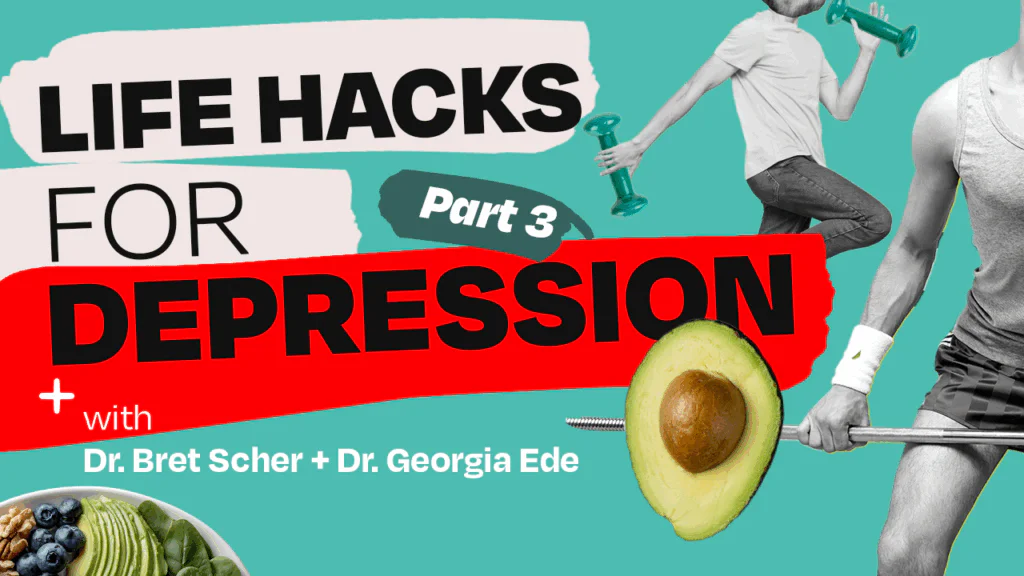
In Part 3 of Metabolic Mind’s series on treatment-resistant depression, psychiatrist Dr. Georgia Ede and host Dr. Bret Scher explore how lifestyle interventions, especially nutrition, can powerfully affect mood and brain function. They discuss the connection between metabolic health and depression, why brain glucose processing may be impaired in treatment-resistant cases, and how ketogenic therapy can provide ketones as an alternative fuel for the brain. Learn practical strategies for exercise, sleep and circadian rhythm support, and the key medical tests that can help identify insulin resistance, plus why addressing potentially reversible root causes can restore hope and expand treatment options.
Learn more
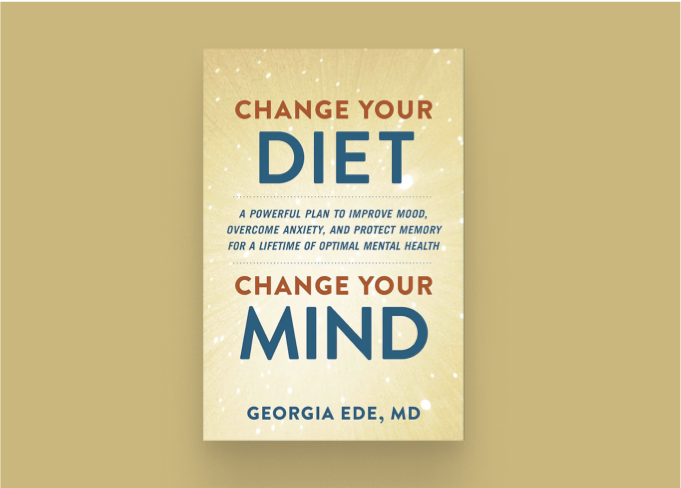
A powerful plan to improve mood, overcome anxiety, and protect memory for a lifetime of optimal mental health.
Learn more
Visit Dr. Georgia Ede's website to help you discover the powerful connection between your psychiatric or medical diagnosis and your diet.
Learn more
In this episode of The Metabolic Mind Podcast, Dr. Bret Scher and Harvard trained psychiatrist Dr. Georgia Ede explore the realities of treatment resistant depression and why it is often the norm rather than the exception. They examine the limits of the chemical imbalance theory, the results of the landmark STAR D trial, and why antidepressants frequently fail to deliver lasting relief. The discussion highlights overlooked contributors such as brain inflammation, low brain derived neurotrophic factor, and metabolic dysfunction, while previewing emerging treatments including transcranial magnetic stimulation, ketamine, psychedelic assisted therapy, and lifestyle and metabolic interventions. This three part series offers a hopeful and science based look at new options for people struggling with depression.
Read more
In Part 3 of Metabolic Mind’s series on treatment-resistant depression, psychiatrist Dr. Georgia Ede and host Dr. Bret Scher explore how lifestyle interventions, especially nutrition, can powerfully affect mood and brain function. They discuss the connection between metabolic health and depression, why brain glucose processing may be impaired in treatment-resistant cases, and how ketogenic therapy can provide ketones as an alternative fuel for the brain. Learn practical strategies for exercise, sleep and circadian rhythm support, and the key medical tests that can help identify insulin resistance, plus why addressing potentially reversible root causes can restore hope and expand treatment options.
Learn more
A powerful plan to improve mood, overcome anxiety, and protect memory for a lifetime of optimal mental health.
Learn more
Visit Dr. Georgia Ede's website to help you discover the powerful connection between your psychiatric or medical diagnosis and your diet.
Learn more