New Results: First RCT for Schizophrenia & Bipolar Disorder. Learn more.


Listen, Watch & Subscribe on:



The Truth About Treatment Resistant Depression: Part One (Breaking the Myth)
Listen
About the host

About the guest


Georgia:
One of the reasons why we’re having this series is we can show people all of the different options that they have available to them that they might not be aware of. Most people when they go in to see the psychiatrist for depression, spend most of their time trying antidepressant after antidepressant, and may not know about all of the other options that are available to them.
Bret:
Welcome to The Metabolic Mind Podcast. I’m your host, Dr. Bret Scher. Metabolic Mind is a nonprofit initiative of Baszucki Group where we’re providing information about the intersection of metabolic health and mental health and metabolic therapies, such as nutritional ketosis as therapies for mental illness.
Thank you for joining us. Although our podcast is for informational purposes only and we aren’t giving medical advice, we hope you will learn from our content and it will help facilitate discussions with your healthcare providers to see if you could benefit from exploring the connection between metabolic and mental health.
Treatment-resistant depression, just the term, itself, is so hopeless, right? And it seems like everything’s not working, and there are no other options. But that’s not the case at all. In fact, treatment-resistant depression doesn’t really say anything about you or about your brain, but probably says more about the treatments that we’re trying just being the wrong treatments.
But there are so many options for people to consider with treatment-resistant depression that can help them feel better. And I’m joined by Dr. Georgia Ede, a Harvard trained board certified psychiatrist, to go over the many different aspects of treatment-resistant depression, what it is, what it means for you, and what are all the treatment options, including medications, including neurostimulation and including very impactful lifestyle interventions, like what we eat and how impactful that can be.
Thank you so much for joining me. I’m Dr. Bret Sher. I’m a cardiologist and metabolic health expert with an interest in ketogenic interventions as medical treatment. And I’m the Medical Director at Metabolic Mind and Baszucki Group. We’re a nonprofit that wants to really focus on this intersection of metabolic health and mental health, but more importantly, giving hope to individuals that there are more treatments out there beyond what are the standard treatments.
And in this three-part series of treatment-resistant depression, we are going to cover that for you. Many of the interventions we discuss can have potentially dangerous effects of done without proper supervision. Consult your healthcare provider before changing your lifestyle or medications. In addition, it’s important to note that people may respond differently to ketosis, and there isn’t one recognized universal response.
Well, Georgia, welcome back to more Bret and Georgia podcasts and discussions here. I’m really excited to do more of this. So, thanks for joining me again.
Georgia:
Me, too. Thank you very much, Bret.
Bret:
Yeah, so as a reminder for everybody. We’re going to be meeting a lot more to explore so many different topics, whether it’s a specific article or specific topics or Q&As.
And today, we’re kicking off a three-part series of treatment-resistant depression, which I think is so important because so many people get labeled with this, or even labeled with major depression, and maybe don’t know what it means or what the options are. And there are so many questions around it.
So, just as an intro, we’re going to talk about today, what is treatment-resistant depression and depression, in general? How’s it defined and maybe what are some of the pitfalls of the definition. In session two, we’re going to talk about a lot of the treatment options, and there are a lot of them, the different medications and sort of intervention treatments.
And then, in episode three, we’re going to talk about the metabolic and lifestyle interventions, which I think maybe is going to be the most impactful. But we’ll see as we wind through this and what everybody takes away with it. But, so for starters though, let’s talk about what is treatment-resistant depression, and what does it mean for an individual when they’re diagnosed with it?
Georgia:
So treatment-resistant depression sounds like a worse kind of depression than regular major depression, but actually, treatment-resistant depression is the norm. It is more common not to respond to standard antidepressants than it is to respond to them. So, regular sort of major depression is a condition that’s defined by a certain collection of symptoms.
And treatment-resistant depression means that you have not had a good response to at least two standard antidepressants.
Bret:
Yeah. So, some shocking statements right away that treatment-resistance is the norm. But you referenced that depression is a constellation of symptoms. And in medical school, we all learn the SIG-E-CAPS nomenclature to outline these symptoms.
But this is what’s so interesting, right? It’s not, depression is one thing. It’s not, it’s one mechanism. It’s not, it’s one cause. But it’s symptoms. So, tell us a little bit about that, and how that impacts maybe the diagnosis and treatment.
Georgia:
Exactly. So, to have a diagnosis of, to reach the criteria for, to have a diagnosis of major depressive disorder, you just need to have a certain collection of symptoms.
And this is what the DSM-5, which is the diagnostic statistical manual that psychiatrists use to diagnose disorders use to figure out whether your depression, whether your symptoms fit into this category. Like you were saying, in medical school, we learned SIG-E-CAPS, S-I-G-E-C-A-P-S, that is an acronym that helps us keep track of the different types of symptoms you can have, that you look for if someone comes in saying that they’re depressed.
So, you don’t, you can’t, it’s not just about having a depressed mood. You have to have a depressed mood or loss of interest or loss of pleasure combined with at least four other symptoms in the SIG-E-CAPS. Sleep interest, guilt, energy concentration, appetite, psychomotor changes, which are changes in activity level, either more or less active, and suicidal thinking.
So, if you have a certain number of those symptoms, you have major depressive disorder. But the problem with that definition is it doesn’t tell you anything about why you have those symptoms or how to treat it. So, most psychiatrists, when people come in, it’s very easy to diagnose major depression. You can do, you can diagnose your own major depression at home.
You don’t need a psychiatrist to do that. The problem is what is the next step? How do you actually progress beyond the diagnosis? What happens next?
Bret:
Yeah. And so you already mentioned that treatment-resistant depression by definition means you haven’t responded to two of the standard treatments.
So, let’s talk about briefly what are the standard treatments? And actually, we have a slide here that goes, that lists a number of the antidepressants. So, tell us about how we see these first choice antidepressants.
Georgia:
Yeah, so the first choice antidepressants have been first choice for a long time.
And so, it’s really because about 75 years ago, when the first antidepressants were stumbled upon, it was noticed that these medicines that helped some people with depression. They had some things in common, which is that they targeted certain chemicals in the brain. Three in particular, serotonin, dopamine, and norepinephrine.
So, all of the medicines that we think of as antidepressants, and there are a lot of them, as you can, if you’re watching this in the video form of this podcast, you can see the slide, how many there are the medicines that we think of as antidepressants. They all work on one or more of those three molecules in the brain, and that’s where we get our chemical imbalance theory of depression.
For a long time, we have thought of these chemical imbalances in these three chemicals as really a root biological cause of major depressive disorder.
Bret:
So, if someone goes to see their doctor, and they’re diagnosed with depression, and they’re started on an antidepressant. It seems like a very simple and logical question though.
Is there some way that the doctor can test you to see if there’s a chemical imbalance so they know which drug to start?
Georgia:
So, even now, in 2025, we have, there’s no test that I can give you. So, if you come in, Bret, to me saying that you have depression, and you meet the criteria. You’ve, we’ve checked enough boxes of the right symptoms.
Say you have major depressive disorder, then there actually is no test that I can offer you in the office to look at your brain chemistry. So, I can’t tell whether or not you have an imbalance in any of those chemicals. And yet, still in 2025, I’m going to reach for one of these medicines, these antidepressants.
Assuming or hoping that’s what the issue is, and that’s where I’m going to start. So, even in 2025, it’s a trial-and-error approach of treating major depressive disorder.
Bret:
Yeah. And then one thing though is that we know there are lots of other things that can create, contribute to depression, right?
And maybe there is a chemical imbalance, but maybe there are a lot of other things as well? So, as a psychiatrist, when you find one of your patients isn’t experiencing relief from an antidepressant as you had hoped, what is the first approach that you take?
Georgia:
Yeah, so ideally, if you’re getting a really good, thorough evaluation, a thoughtful evaluation, it won’t just start with reaching for an antidepressant.
It will start with looking a little deeper to try to find out if there are any potentially reversible, easily treatable causes, usually medical causes of depression. So, these can be things like, for example, a hormonal disorder, like hypothyroidism, or a nutrient deficiency, like B12 deficiency or iron deficiency could be side effects of another medication you’re taking.
Quite a few medicines have depression listed as a potential side effect, and even other mental health conditions, particularly substance abuse. Things like alcohol use can cause depression symptoms. So, major depressive disorder isn’t one thing. It’s just a list of symptoms, and there can be many different root causes.
Bret:
Yeah, and you already alluded to once that treatment-resistant depression is the norm, which is so surprising to hear just like that. So, what does that mean for how well these antidepressants actually work and help people?
Georgia:
So, even though these are the first choice, they’re considered first line therapy, first choice for treatment, that biological treatment for major depression is, one of these many antidepressant medications.
But they actually, unfortunately, don’t work as well as we wish they did. And I think a lot of people don’t realize how poorly they work. So, there was a, the best trial that’s ever been done, the most comprehensive and largest trial that’s ever been done to try to understand how well these medicines work, is a famous study called the STAR*D Study.
And it was a multicenter trial with more than 4,000 patients. All of them had major depressive disorder. And they took all of these people, and they’d started them all on the very same antidepressant, which is CELEXA, citalopram, and they gave them a full course of citalopram at the dose that you would, in a therapeutic range.
How many people responded to this first line antidepressant? Thirty percent. So that, again, the majority of people did not respond to that medicine, and it’s probably important to say that there was no placebo. There was nothing to compare the CELEXA to, but when you look at placebo trials, like placebo actually works very well for major depression.
About a third of people respond to placebo, meaning that they’re just responding to the intervention, that people paying attention to the depression and caring for their symptoms and meeting with them. That alone often will help people with depression. So, it doesn’t really work that much better than placebo for some people.
So, then the rest of the people, the 70% that’s left over, they then went through another round of treatment where they switched. They took non-responders, and they switched them to a different antidepressant. And these were either Wellbutrin, Effexor, or Zoloft.
And only if you were a non-responder to CELEXA, your chances of responding to one of these second antidepressants was only one in four. So, that still leaves after two rounds of treatment, more than half of people without
Bret:
Just because you’re labeled with treatment-resistant depression, doesn’t mean throw your hands up and there’s nothing to do. There are actually quite a lot of options.
Georgia:
What if most of what you’ve been told about depression, what causes it, how to treat it, what to expect from recovery was only part of the story? I’m Dr. Georgia Ede. I’m a psychiatrist, who’s been treating depression for over 25 years, and I want to tell you about one of the most misunderstood realities in modern psychiatry.
Treatment-resistant depression sounds like a worse kind of depression than regular major depression. But actually, treatment-resistant depression is the norm. Most people don’t respond to first line antidepressants, not because their depression is somehow different or tougher to treat, but because antidepressants simply don’t address the root causes of depression.
Bret:
And if we assume everybody’s in the same bucket about what is contributing to their depression, we’re going to treat them all the same. But it’s clear, that doesn’t work.
Georgia:
So, what comes next when you’ve already tried everything you were told to try? In our new upcoming three-part series from Metabolic Mind, we’ll explore why antidepressants usually fail, and the powerful new options offering real relief that most people never hear about.
Things like transcranial magnetic stimulation, ketamine and psychedelics, and how they stack up against things like lifestyle changes, nutrition, exercise, and sleep.
Bret:
So, as a psychiatrist, if you were going to rank them in terms of maximum impact, how would you rank it?
Georgia:
So, if you’ve tried multiple different antidepressants and still haven’t found relief, you’re not alone. You’re not broken, and there is hope.
Discover the truth about treatment-resistant depression, a three-part series from Metabolic Mind, premiering August 13th on YouTube or on your favorite podcast platform.
Bret:
All right, from your, what is it? From your lips to God’s ears or something like that
Georgia:
relief.
Bret:
Yeah, and so if someone has this label of treatment-resistant depression, which you said means not responding to two different treatments, it is implies that there’s, this is worse, right? It, the name itself implies that this is a worse case of depression or someone’s brain is broken or something, right?
I hate to even say that, but I think a lot of people might get that feeling. So, how do you make sense of that perception?
Georgia:
Yeah, you’re right, Bret, because this term treatment-resistant depression makes it sound like the depression is somehow stubbornly resisting treatment.
That there’s something different about this depression that makes it worse. That it’s biologically different. And, I’ve never used this term with my own patients because I think it just gives people a sense of hopelessness that, I don’t think it’s a useful term, but I also think it’s not quite the way to describe it.
I really think that it’s the medicines that are failing to treat the depression rather than the depression failing to respond to the treatment. The medicines simply don’t work very well. They certainly do help some people, and I’ve seen it. I’ve been prescribing medicines for over 25 years.
I have seen antidepressants help people, but they just don’t help most people well enough. And I think this term is unfortunate, and one of the things, one of the reasons why we’re having this series is we can show people all of the different options that they have available to them that they might not be aware of.
Most people when they go in to see the psychiatrist for depression, spend most of their time trying antidepressant after antidepressant, and may not know about all of the other options that are available to them. It applies to a lot of people. More than a hundred million people in the world that we know of fall into this category.
Bret:
Yeah. And if we take the approach that we know how to treat depression. And our treatment isn’t working. And therefore, this is treatment-resistant, then it’s likely not going to get better unless we think of some other way to treat it, and say, okay, maybe our treatments aren’t addressing the real cause of the depression so we need other treatments.
So, I look forward to getting into a lot of those other treatment options in future episodes here with you. But we already reviewed one article about this recently that said, okay, if you don’t respond to two antidepressants, we’re either going to add a third antidepressant or an antipsychotic.
And so, it seems like it’s really rooted In drug therapy. So is there, as you keep layering more and more on, is there an improved response for some people or do we just really see not much of an improved response over time?
Georgia:
There is for some people. In that STAR*D trial that we were talking about just a little while ago, they actually did four rounds of therapy.
So, they kept taking non-responders and trying different things, like adding antipsychotics, adding other medicines, switching. And when you got to the end of the, of this took over a year of treatment, about two thirds of people, and after about over a year responded to those rounds of of treatment.
But oftentimes, the depression would come back when they followed people after that year. Many, I think something like 75%, of the people who had initially responded to those various courses of treatment, their depression relapsed. And so, even when the medicines work, sometimes they don’t work for very long.
And so there it’s not a lasting relief.
Bret:
Yeah. And let’s talk for a second about what this means for the person or how the person responds to this because it’s so demoralizing to say your treatment-resistant. It’s almost like throwing your hands up in the air and saying, sorry, not much we can do for your treatment-resistant.
Like how do people us or have you seen people respond to that? Or in the literature, how do people respond? Do they just get despondent and give up or what happens there?
Georgia:
It depends. People with depression are already vulnerable to feeling hopeless. They’re already vulnerable to feeling unmotivated and down on themselves.
And they’re already, they already have a negative worldview, often already quite pessimistic in many cases. And so ,this is not help. It does not help to say to somebody, your depression is an extra tough case. And it is just going to be a lot more difficult to treat. But when we look to see, when researchers look to see, are these cases biologically different?
Is there something different about the brain or the body of people with treatment-resistant depression that makes it harder to treat? And it’s been very difficult to find much in common in these cases, but there are some clues that, and very hopeful clues, that there are some things that are more common.
You see more commonly in people with treatment-resistant depression that you can do something about.
Bret:
Interesting. So, what are the top three clues that you look at that tells you a new approach is needed?
Georgia:
So one is inflammation. Inflammation of the brain has been a relatively new focus of research.
We know that people with depression are much more likely to have inflammation in the brain, and we also know that people with treatment-resistant depression are more likely to have lower levels of a particular chemical in the brain. Not serotonin. It’s a growth factor, a brain growth factor, called BDNF, brain derived neurotrophic factor.
And that is a molecule that the brain needs to grow and nurture new connections. Build new circuits, new pathways, very important. That’s called neuroplasticity. And then, the third thing that you see more often in people with treatment-resistant depression is higher blood glucose levels. Slower brain glucose processing. So, I want to stick a pin in those for later.
Bret:
Yeah, I think that’s a super fascinating discussion though. Because if there’s some way that we can identify these individuals ahead of time and by identifying them, maybe figure out different mechanisms or causation as well of what’s contributing to their depression, it can lead to a different treatment, right?
Not instead of the usual protocol, we say, oh, this person fits this, either this metabolic category or this low neuroplasticity category, in which case we need to maybe try a different approach. So, I, gosh, I think that’s where so much of that research and focus probably should be. So, are there people studying that?
Are people approaching it that way that you’re aware of?
Georgia:
Yes, there’ve been lots of different studies looking at anti-inflammatory medications for depression, and some of those have shown some promise. There have been many studies within the field of metabolic psychiatry, which is the field that you and I spend so much time thinking about, looking at this relationship between metabolic health, glucose levels, insulin levels, brain glucose, processing speed, and depression, and many other psychiatric conditions.
And this low BDNF, this brain growth factor, this will become important when we talk not just about metabolic therapies like ketogenic diets, but also about these really interesting alternative fast acting antidepressant treatments, such as ketamine and psilocybin.
Bret:
Yeah. So, I think the broader concept that we’ve discussed a couple times that just we need to reemphasize is that we don’t know everything about what causes depression.
And and if we assume everybody’s in the same bucket about what is contributing to their depression, we’re going to treat them all the same. But it’s clear that doesn’t work. It doesn’t work for the majority of people, which is scary. I could get it if it didn’t work for a small minority, but it doesn’t work for the majority.
So, it seems like we really do have to broaden our scope about what some of the underlying causes are. And therefore, what some of the treatments can be. So in our next episode, we’re really going to get into some of the next options for treatments. So, can you give us a preview of some of the alternative treatments we’re going to talk about in episode two of this treatment-resistant depression series?
Georgia:
Yeah, so all of the other treatments that we’re going to talk about, most of them, look at brain chemistry a little differently and use different methods, different techniques to try to change brain chemistry.
So, not just antidepressant medications and antipsychotic medications, but also what’s called neurostimulation techniques. Things like electrical currents and magnetic currents, and even psychedelic assisted therapy, such as psilocybin and ketamine and esketamine, which are, they’re not technically psychedelics, but it’s a form of anesthesia that has been shown to provide rapid relief for depression.
So, really the frontier of understanding depression. The landscape is changing rapidly because there are these really interesting and fast acting new treatments. People are able to access in some cases with really profound results that they haven’t been able to achieve with standard psychiatric medications.
Bret:
Yeah. So I really look forward to exploring those in the next episode. And, really the message that there is hope, right? Just because you’re labeled with treatment-resistant depression doesn’t mean throw your hands up and there’s nothing to do. There are actually quite a lot of options. I look forward to exploring those with you in the next session. So, thank you.
Thanks for listening to the Metabolic Mind Podcast. If you found this episode helpful, please leave a rating and comment as we’d love to hear from you. And please click the subscribe button so you won’t miss any of our future episodes. And you can see full video episodes on our YouTube page at Metabolic Mind.
Lastly, if you know someone who may benefit from this information, please share it as our goal is to spread this information to help as many people as possible. Thanks again for listening, and we’ll see you here next time at The Metabolic Mind Podcast.
Listen, Watch & Subscribe on:
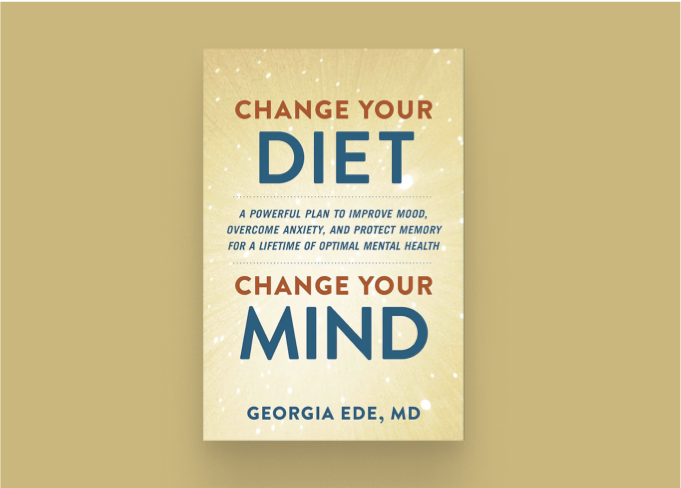
A powerful plan to improve mood, overcome anxiety, and protect memory for a lifetime of optimal mental health.
Read more
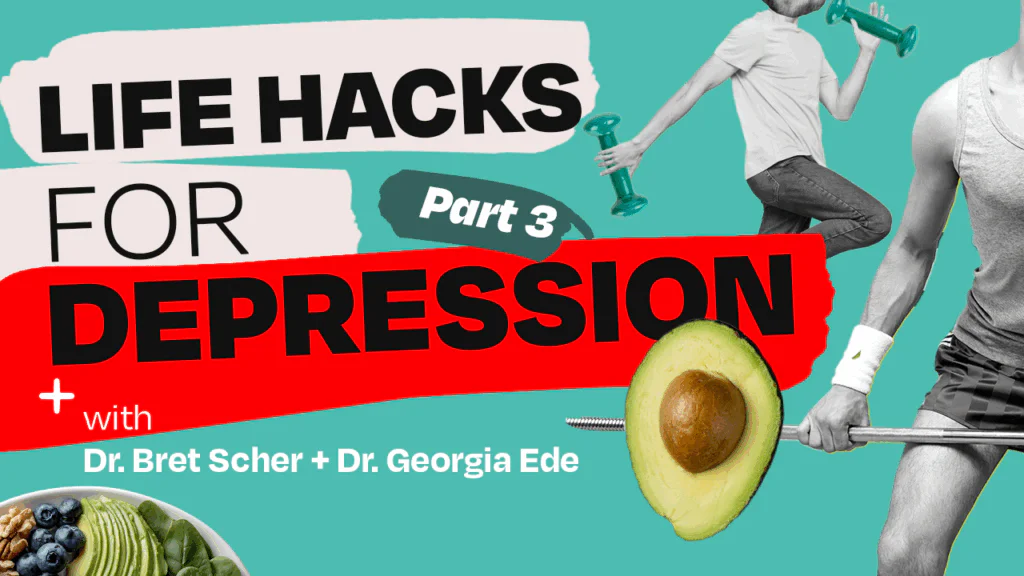
In Part 3 of Metabolic Mind’s series on treatment-resistant depression, psychiatrist Dr. Georgia Ede and host Dr. Bret Scher explore how lifestyle interventions, especially nutrition, can powerfully affect mood and brain function. They discuss the connection between metabolic health and depression, why brain glucose processing may be impaired in treatment-resistant cases, and how ketogenic therapy can provide ketones as an alternative fuel for the brain. Learn practical strategies for exercise, sleep and circadian rhythm support, and the key medical tests that can help identify insulin resistance, plus why addressing potentially reversible root causes can restore hope and expand treatment options.
Learn more

Visit Dr. Georgia Ede's website to help you discover the powerful connection between your psychiatric or medical diagnosis and your diet.
Learn more
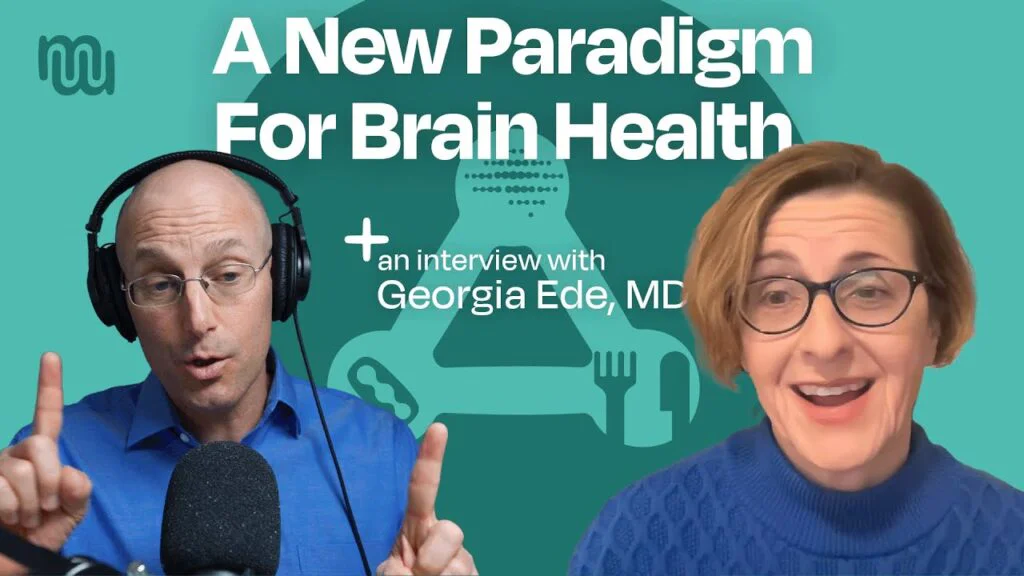
Harvard-trained psychiatrist Dr. Georgia Ede joins Dr. Bret Scher to cut through “brain superfood” hype and lay out a science-first framework for eating to improve mood, reduce anxiety, and protect memory. Drawing on clinical experience and rigorous evidence, Ede explains how unstable blood sugar and chronically high insulin drive brain inflammation and oxidative stress—and why restoring healthy metabolism (sometimes with lower-carb or ketogenic strategies) can sharpen thinking and stabilize emotions. She clarifies common nutrition myths, from the limits of observational food studies to the debate over seed oils and saturated fat, and makes the case for whole-food patterns—including some animal foods—to supply essential brain nutrients. Practical takeaways include using continuous glucose monitors, simple labs, and symptom tracking to personalize your plan. If you want clear, actionable guidance for lifelong brain health—beyond clickbait and diet wars—this episode is your roadmap.
Learn more
A powerful plan to improve mood, overcome anxiety, and protect memory for a lifetime of optimal mental health.
Read more
In Part 3 of Metabolic Mind’s series on treatment-resistant depression, psychiatrist Dr. Georgia Ede and host Dr. Bret Scher explore how lifestyle interventions, especially nutrition, can powerfully affect mood and brain function. They discuss the connection between metabolic health and depression, why brain glucose processing may be impaired in treatment-resistant cases, and how ketogenic therapy can provide ketones as an alternative fuel for the brain. Learn practical strategies for exercise, sleep and circadian rhythm support, and the key medical tests that can help identify insulin resistance, plus why addressing potentially reversible root causes can restore hope and expand treatment options.
Learn more
Visit Dr. Georgia Ede's website to help you discover the powerful connection between your psychiatric or medical diagnosis and your diet.
Learn more
Harvard-trained psychiatrist Dr. Georgia Ede joins Dr. Bret Scher to cut through “brain superfood” hype and lay out a science-first framework for eating to improve mood, reduce anxiety, and protect memory. Drawing on clinical experience and rigorous evidence, Ede explains how unstable blood sugar and chronically high insulin drive brain inflammation and oxidative stress—and why restoring healthy metabolism (sometimes with lower-carb or ketogenic strategies) can sharpen thinking and stabilize emotions. She clarifies common nutrition myths, from the limits of observational food studies to the debate over seed oils and saturated fat, and makes the case for whole-food patterns—including some animal foods—to supply essential brain nutrients. Practical takeaways include using continuous glucose monitors, simple labs, and symptom tracking to personalize your plan. If you want clear, actionable guidance for lifelong brain health—beyond clickbait and diet wars—this episode is your roadmap.
Learn more