Get the latest on metabolic psychiatry. Subscribe.


Listen, Watch & Subscribe on:



Metformin, Insulin Resistance and Bipolar depression: From research to clinical care
Listen
About the host
About the guest


Bret:
Welcome back to Metabolic Mind, where we’re working to revolutionize the treatment of mental illness by providing information and resources at the intersection of metabolic health and mental health. I’m your host, Dr. Bret Scher. Today, I’m being joined by Dr. Cindy Calkin. Now, Dr. Calkin is an Associate Professor in the Department of Psychiatry and the Department of Medical Neurosciences at Dalhousie University.
I’ve mispronounced that so many times. Dalhousie University in Nova Scotia. Now, what’s interesting about Cindy is that she started off as a family physician and transitioned into psychiatry. So, in this episode, we’re going to talk about that transition, and why she did that. And actually, how this helped her see this connection between metabolic health and mental health, and why that was such an important step.
And now, she’s not just a clinician psychiatrist, which she certainly is, but she’s also a researcher. And she’s done some of the most impactful studies to really sort of help change this paradigm of psychiatry, and say, wait a second. There is this dramatic connection between metabolic health and mental health and treating metabolic dysfunction.
Treating insulin resistance can directly impact and improve the symptoms and lives of people living with mental illness. Now, in her case, specifically bipolar disorder. So, her TRIO-BD Study was one of those really impactful studies that we’re going to get into. So, in this episode, we’ll talk about the study, talk about the rationale behind it, talk about the findings.
But most importantly, talk about what that means for this field of metabolic psychiatry. What this means for how she treats people, and how people may want to look to be treated, if they fit these certain criteria. So really, really impactful study and such a wonderful example of how research can impact clinical care, kind of the very next day.
But it hasn’t been as smooth as she thought, right? It hasn’t been so widely accepted. So, we talk about why that is, and if it may be, it should be so. So, I hope you enjoy this interview with Dr. Cynthia Calkin.
Well, Dr. Calkin, thanks so much for joining me today. It’s a pleasure to have you on the Metabolic Mind Podcast.
Cynthia:
Thank you. It’s my pleasure.
Bret:
Now, I want to start with your history as a physician because you are a psychiatrist at the University of Dalhousie. Dalhousie. Dalhousie, I got to get it right. Okay, Dalhousie. But you started off in family medicine, and then transitioned into psychiatry. So, I want to go back and sort of hear more about that transition, and what it was in your practice that sort of led you to make that transition, and what you’ve seen since you’ve done that.
Cynthia:
Okay, well, I started off doing family medicine because I was really drawn to the concept of treating the whole patient. And whenever I thought of a specialty, I thought, you know, I just can’t focus on one body part because, you know, you’re talking about a person, and everything is connected. And so that just didn’t make sense to me.
So, I did family medicine for 10 years. When you’re looking for psychiatric illness, you’ll find that half of your patients have it, if you’re looking for it. And you ask and you recognize that some people, who keep coming back with recurrent sleep problems and various other things, chronic pain, I mean, they actually have underlying psychiatric illness.
I worked alongside an endocrinologist. I rented space from him, Bruce Wilson, in the Tri-Cities Washington State, and he was sending me all kinds of his diabetic patients saying, I can’t get good A1C control. This patient is depressed. Can you help treat the depression so we can get the A1C better and get the diabetes under better control?
And so, you know, this relationship between metabolism and psychiatric illness sort of goes back even to my family medicine days. After 10 years of practicing, doing family medicine, I was seeing more and more complex patients with psychiatric, very severe psychiatric illness. There weren’t enough psychiatrists in the area, and I was very fortunate to have two or three psychiatrists, who I could pick up the phone and call, and they would walk me through, you know, how do you start lithium?
How do you know, what do you monitor these things? And so, I ended up doing a lot of psychiatry within my family medicine practice. And after 10 years of family medicine, and seeing the top 20 problems again and again and again, you know, you get very confident with that. But I needed a new challenge, and the really sick patients with psychiatric illness, I was still referring on to psychiatry, and I wanted to be the one to treat those patients.
So, I knew I needed to go back to a residency and psychiatry. I was very focused at the time. I wanted, specifically, to see and treat patients with bipolar disorder. It was the disorder that fascinated me the most. You know, you see three completely different people. When someone is well, they look a particular way.
When they’re manic, they look completely different. When they’re depressed, they look like a completely different person. And I didn’t help, you know, what’s going on in the brain that’s doing this, that allows a patient to present this way? The other thing about going into psychiatry, for me, was psychiatric illnesses where I saw the greatest suffering. And I did a lot of palliative care and I was referred patients from oncology who had three months left to live. And I cared for them. I did house calls. But the greatest suffering I saw reported by patients was depression and psychiatric illness.
And often they have both. And they said the cancer was nothing. The depression is unbearable.
Bret:
Wow.
Cynthia:
And this is somewhere where I could make the greatest difference. If I could study psychiatry and really treat the sickest of the sick, then that was what I wanted to focus on.
Bret:
That’s so interesting to hear you say that.
Because I think within the medical community, we probably focus so much on heart disease and cancer, and that those are sort of the most common causes of death. And those are the things we focus on so much, and we think that caused the most suffering. But I think you’re so right. I mean, when it, we don’t, there seems to be this disconnect, right, between psychiatry and the rest of medicine?
But no, there isn’t that disconnect, and that’s what you found in your family medicine practice that then led you to psychiatry. And I think that’s such a powerful example that you gave. And if the, you know, the greatest cause of disability is psychiatric diagnoses, psychiatric conditions.
So, I think you’re right about being able to make the biggest impact now. Not only have you made an impact by treating patients, but you’ve made an enormous impact with your research. And your research has really focused on the metabolic, the connection between metabolic disease and psychiatric illness, and how treating one can help the other.
So, before we get into the studies, which I want to get into because you’ve done a couple fascinating studies, tell us the background of why you really wanted to focus on that area? Because it is a bit of a paradigm shift in psychiatry. So what led you down that path?
Cynthia:
Well, I think I was lucky that I wasn’t sort of confined by the current paradigm.
I’ve been one of those sort of people that I’m okay with thinking a bit differently. And I know that it’s not always popular, but that’s okay. I’m a bit of a loner that way. So, it wasn’t anything special, you know? I don’t have a research background. I don’t have a PhD. I don’t have, you know, I’m a clinician, and I was being referred the sickest of the sick patients, who had been ill for decades on.
You know, 8, 10 treatments that had failed. They come from all over the maritime provinces, some from Ontario and Quebec, and they’d already seen four or five psychiatrists ,and no one could get them better. And so, I was the end of the line. And if I could not get these people better, then they weren’t going to get better.
And that was a very distressing notion for me when I started practicing and seeing one patient after another who was that sick. And that’s what happens when you work in a tertiary center where you’re highly sub-specialized in a clinic that treats bipolar disorder only. And so, one of the things, as you know, a family doc, you know, I just can’t change as a person because I’ve become a psychiatrist.
And so, I always was interested in what medical comorbid conditions the patients had. And what I saw was that there are really high rates of metabolic syndrome, really high rates of heart disease, stroke, obesity. So, the first study I did as a resident, was looking at obesity and outcomes in bipolar disorder, and we found that patients who were overweight had a partial response to lithium.
Those who were obese had no response to lithium. And they also had patients, who were overweight or obese had poor outcomes from a psychiatric standpoint. So, it didn’t make sense to me, you know, why a patient would not respond to lithium because of their weight. It’s not a fat soluble drug. You titrate it to blood levels.
I knew there was something more that I was missing that was impacting outcomes. And that’s when I thought, you know, it’s sitting right in front of me. What, you know, what could it be? What could it be? And we knew about the high rates of type II diabetes, and we knew about the high rates of obesity.
So ,what sits in between there that we don’t test for? Insulin resistance. So, in a way, it was right in front of me. It was kind of a no-brainer in a way. And then, it was like, okay, well, I need to test for this. I need to systematically test for this. And what we found is that 54% of all patients with bipolar disorder have either type II diabetes or insulin resistance.
And it is found at three times the rates compared to the general population. So very high, metabolic dysregulation in our patients. And of those with type II diabetes, in the cohort, I diagnosed 40% of them. So that, this is the other problem is that these, this metabolic dysregulation is missed.
That’s fine that no one knew to test for insulin resistance, but we know about type II diabetes and even that’s missed? And patients tend not to present, and it’s not something necessarily screened for, in medicine, certainly not in Canada, where we’re very, very conservative about screening type of tests that we do.
And so, you know, those who are already diabetic, well, they needed to be treated for their diabetes, clearly.
Bret:
Sure.
Cynthia:
You know, it’s a contributor to heart disease, brain disease and and whatnot. And those were the patients who had more chronic course of illness and poor response to mood stabilizing treatment.
And so the question, the logical question for me was, well, if we treat insulin resistance, then do we get the patients better? It made sense that insulin resistance, we know it affects the brain, so why would it not be affecting a brain disorder, like bipolar disorder? And I don’t think that the work that I’ve done is specific to bipolar disorder.
I have specifically looked at bipolar disorder because these are the patients I work with. But we’re now finding that we see it in, you know, treatment-resistant PTSD, treatment-resistant major depressive disorder, treatment-resistant OCD, generalized anxiety disorder.
So, I think it is something that we see in psychiatry, major psychiatric illness, in general.
Bret:
Wow, there’s so much there to discuss because I love the way you described that. But the way, you sort of, connect the dots between the increased prevalence of insulin resistance and type II diabetes, and the thought that then we should probably treat it to see if we can better someone’s mental health.
It sounds so simple the way you say it. Yet, it’s a complete paradigm shift to think that treating a metabolic condition is going to help the brain. That is a big paradigm shift within psychiatry. So, I’m curious when you started to go this route where there are people who thought like, what are you doing there?
You can’t do that. Like treating insulin resistance isn’t going to do it. It’s a neurotransmitter problem, right? It’s a brain problem. You need to treat the brain, not the body. Did you get that kind of pushback?
Cynthia:
Yeah, I mean, yeah. A lot of people just kind of thought I was, you know, crazy and off in left field.
I was very fortunate. The Stanley Medical Research Institute, they leapt on this. I mean, you know, sometimes, it’s how you write a grant, but I mean, when you tell the story. You know, they found themselves the same place I found myself, which is leading to this question of, if we treat it, do we get people better?
And it made, it was so logical. And so it’s not like I was coming up with some really esoteric kind of notion. I mean, if you walk down the path leading you to this question, it all made perfect sense. And yes, it might be a bit of a paradigm shift. But I mean, look what happened with peptic ulcer disease, and h pylori bacterial infection in the gut.
I mean, we used to think it was a stress and whatnot cause ulcers. And then, we realized that no, it’s actually an infection in the gut in many people that cause it. And if you don’t treat the underlying infection, the patients don’t get better. I view it very much in the same way. We need to go after looking for insulin resistance in every psychiatric patient. And then, we need to go after treating it, if they’re unwell and not responding to usual psychotropic medications, right?
Bret:
Now, people will say though, look, not everybody with a psychiatric diagnosis has insulin resistance. So, if it doesn’t happen in everybody, how can it be the cause, right? That could be one sort of pushback. And how do you, how do you respond to that?
Cynthia:
I don’t think it’s the cause of psychiatric illness, per se.
You know, I get kids who come out of the child and adolescent system, and I test them. Some of them are insulin-resistant right away, but many of them are not. They tend to develop it. So, I have patients who may be responded to lithium for 20 years, referred to as lithium responders, perfectly well, you know, and then they hit their forties, and they stop responding to lithium.
Other drugs are tried, everything fails, you know. And then, they end up in my clinic, and then I test for insulin resistance, and they’re insulin-resistant. We treat the insulin resistance. That’s how we get them better. So yeah, it’s a paradigm shift, but I don’t know that my view is that insulin resistance modifies the course of bipolar disorder.
So, we talk about this neuroprogressive form of bipolar disorder, which is the most severe form. It causes cognitive impairment, functional impairment as a result. And these patients tend not to go on remission. They’re chronically unwell. They’re very, very sick. And these are the kind of patients who end up in my office.
And these are the patients we need to be, number one thing, thinking of insulin resistance and looking at potentially treating that. I think people should be screened from onset of diagnosis. And we may find that there are still higher rates of insulin resistance, and especially, if people are on atypical antipsychotics, that’s going to contribute.
And I have to admit, you know, I don’t treat patients, who have schizophrenia where you really, you’ve got to use an antipsychotic to get them better. I do have some patients who have psychosis, mood episodes, and yes, I use an antipsychotic. But as soon as they’re well, I get them off it because I know, in the long term, it’s going to contribute to this metabolic dysregulation. And they’re going to become worse.
They’re going to become chronically ill.
Bret:
Yeah, that’s sort of like this juxtaposition of it. The antipsychotics can be so beneficial, certainly, in the acute phase. But they frequently will worsen insulin resistance. So, not only does the patient become unhealthy from that standpoint, but it could be this feedback mechanism to then worsen their mental illness as well.
So I mean, I guess that’s what you’re leading to, that that’s something you see regularly. And therefore, need to address the insulin resistance. So, now let’s get into your study because I think this is a great lead in to the TRIO-BD Study, which is where you took patients with bipolar 1 or bipolar 2 and insulin resistance, and they were treatment-resistant.
So, like you’re saying, they’re the sort of the sick of the sick, right? They’ve been tried on many different medications, and haven’t responded. And in 20 of them, you gave them metformin. And on 25 of them, you gave them placebo. So, tell us about why you picked this population, specifically, to study, and why you picked metformin?
Cynthia:
Metformin is a cheap drug. We’ve had it 50, 60 years. It’s safe. We even use it in pregnancy. It was a drug, you know, there’s a study looking at weight gain on Olanzapine and using metformin and in the psychiatric literature. And I thought, there’s no point in my using a drug, there’s no way psychiatrists are going to be willing to use, I mean, I really wanted to use semaglutide or liraglutide or one of these other drugs.
But I just thought, there’s no way they’re going to go for that. So let’s go for something simple, cheap, accessible, affordable, and something that might actually get used. So, that’s how I chose metformin in terms of, you know, as a family doc, metformin would treat type II diabetes as a starting drug all of the time.
And one of the things that really surprised me in the TRIO-BD Study is that metformin only reversed insulin resistance 50% of the time.
Bret:
Mm-hmm.
Cynthia:
And so we started off with this as a metformin placebo, although our hypothesis was whether reversing insulin resistance would improve outcome. But we expected everyone in the metformin group would be, you know, have their insulin resistance reversed.
And we were blinded. The patients were blinded. The study assessors were blind. The statistician was blinded. Everyone was blinded. So, it was one of these sort of gold standard studies in that regard. But the shocking thing for me was, gee, it only worked 50% of the time. Once I learned that, I started using other mood sensitizers or insulin sensitizers, like semaglutide, like pioglitazone, in my mood metabolism program.
I work with an endocrinologist. We see the patients together, and we sort of, use what we need to, including diet, exercise to get the insulin resistance turned around. But that was sort of, you know, metformin was the, you know, I was crossing my fingers that that would be something that would be acceptable to people. But it’s interesting because, you know, now I’m taking a bit of time away from clinical work for a few months. And the same family doctors who referred me these patients, who were so sick and wanted me to get them better, I don’t know what they were thinking because what we currently were using wasn’t working.
So, of course, we’re going to come up with something new and something different and maybe something people aren’t used to, but they’re not willing to prescribe these drugs while I’m off. And it’s really surprising because these drugs are drugs that family doctors are incredibly comfortable with. But you know, their sort of argument is, well, there’s no indication to be doing this.
And so I have to send them a copy of the TRIO-BD Study. You know, I say, yeah, there is actually. It would be really helpful if you did this because what we find is if the patients come off, if they become insulin-resistant again, they become sick again.
Bret:
Yeah, well, so I really want to get into that a little bit more about sort of the reaction to the trial, and how it’s changed, or not changed practice.
But first, let’s get into the results. So, you mentioned that metformin reversed insulin resistance in half the patients. So, of the 20, 10 reversed or insulin-resistant. And then, you compared outcome measures for those who reversed their insulin resistance to those who didn’t. So, tell us what measures you used, and what you found. And what you think the, you know, what the implications were for these patients.
Cynthia:
Okay, well one thing I just wanted to add is one person in the placebo group reversed insulin resistance on their own. So, they were kind of inspired by the study, and they started eating more protein throughout the day and decreased their simple carbohydrate intake and started exercising. So, they managed to get their HOMA-IR below 1.8.
And so, they were in that group of what we call converters. They convert it to being insulin sensitive. So, those who converted improved by week six. And these are patients who’d been ill. The mean duration of illness was 25 years.
Bret:
Twenty-five years.
Cynthia:
Twenty-five years.
Bret:
And they were improving within six weeks?
Cynthia:
Yes. And almost 90% of those had not had a remission in those 25 years.
Bret:
Wow.
Cynthia:
They had come to us, on average, on two to three failed drugs that they were currently on, failed psychotropic drugs. They had failed eight or nine psychotropic drugs in their lifetime, including things like, psychotherapy, CBT and things like that. So, this was really truly a treatment-resistant population.
We didn’t go into it insisting they be treatment-resistant, and I don’t know why I didn’t think of it ahead of time. Because when I look back to our outcome study, it was the patients who had comorbid insulin resistance, who were the really, really sick patients. So, we had an entrance criteria of MADRS or Montgomery Asberg Depression Rating Scale score of 15. But the mean MADRS coming in was 28, which is moderate to markedly depressed. So, much more, you know, severe depression for much longer duration. They had to be in a depression, failing current medications for four weeks, and they had come to me on these drugs for months or years and way more depressed.
So, we saw this improvement in MADRS. And our effect sizes for just about every measure was above one, which is a very, very big effect size, we never see in psychiatry. And we looked at HAM-A so their anxiety improved over the 26, week period. We used 14 weeks as our sort of primary outcome endpoint.
And then, we followed patients through just to see what happened, sort of in the intermediate term, whether patients remained well or not. And that was the case for MADRS, so depression, HAM-A, anxiety global assessment of functioning. So, their overall ability to function, the CGI-BP, which is a clinical global impression, you know, overall based on clinical experience. Has the patient improved or not improved? And it’s very hard to see those numbers budge.
But we did see improvement in that. We saw reduction in suicide. We had no emergence of mania. And so, you know, it looks like a very safe, rapid way to get people better. And I think it’s because it’s mechanism-driven. You know, like we’re going after an underlying aberrant mechanism and we’re sort of correcting that, and that’s why people are getting better, faster now.
Now the first fellow coming out of TRIO-BD was sure he was on placebo and none of us knew, of course, and I couldn’t unblind until we were through the study. But he really, really wanted to be given Metformin. And because he didn’t respond in the study, I said, why not? You know, he had tried everything else, and he’d been sick for five, six years in this depressive episode. And he got better within six weeks on Metformin.
He’s been on it now almost seven years, and he’s remained in remission the whole time.
Bret:
Wow. Yeah, so you used a whole bunch of different scores. And you know, the average person or even the average physician, who’s not a psychiatrist, isn’t going to know what they mean. And if a score increases or decreases by a few points, what does it really mean?
So, but I think it’s important to emphasize that this really was a significant change in quality of life for these individuals. It wasn’t just a mild change in score. Is that something that is now sort of being recognized by psychiatrists, by doctors in this field? To say, wow, that’s a really significant result by using metformin, something we don’t usually use to treat bipolar disorder.
So, this is something I need to take note of. Is that the reaction you’ve seen? Because I’m sure that’s the reaction we would all hope for with a study like this.
Cynthia:
Mm-hmm. It’s been very slow to catch on, and I think that anything where there’s a paradigm shift that changes your field in the way that maybe we conceptualize psychiatry, that slow to catch on.
And we’re asking people who have been away from, you know, you discussed earlier, how psychiatry is sort of out on its own and the rest of medicine. And I constantly am saying, you know, psychiatry is a subspecialty of medicine, you know, to try and bring people back to that. But I think that it’s challenging for people who have been out doing psychiatry for a number of decades to ask them to be thinking medically again and to be treating the whole patient and to be using drugs that they’re unfamiliar with.
So, I think it’s going to take time. Now, patients are on it, and patients are petrified, you know, because currently here, where I’m living, I’m the only one, you know, prescribing these drugs. The family doctors won’t do it because they believe there’s no indication. Other psychiatrists won’t do it. They may, I’ve heard from family doctors, who tell me that other people in mood disorders recommend metformin.
But they want the family doctor prescribe it. And then they won’t because they don’t know what the indication is, you know? So, I’m trying to get the TRIO-BD Study paper out there. I had paid to have it open access. So, it’s free to anyone around the world. You know, people who live in countries where it costs a month’s salary to normally purchase a paper, a report, a study like that. I wanted it accessible to everyone, patients, and clinicians around the world.
So, it should be accessible for people. But again, I think anything where there’s a paradigm shift, it’s going to take time. And I feel the sense of urgency because I see these really sick patients, and I see them get better rapidly with this type of treatment. And so, of course, I want everybody doing it, you know, like the more patients, the better.
And then, the more patients, who can be referred to me, the better because we’ll get them on this treatment. The patients are completely sold on it because they’ve been sick for so long, and they’re finally better.
As well as they felt prior to them developing bipolar disorder so they’ve never had this quality of remission with any other treatment. And so that’s impressive. Interesting to me, too, because I think we are, again, we’re getting at this sort of metabolic dysregulation in the body that’s affecting the brain.
And so, if you can figure out these mechanisms, you know, and I think blood-brain barrier leakage is another one of these mechanisms possibly related to insulin resistance, or at least, insulin resistance may be a contributing factor. But there’s ways we can use vascular protective agents, or drugs, to repair the blood-brain barrier potentially.
So now, we have these mechanisms where we can go after insulin resistance with multiple different treatments and strategies, like diet and exercise. We can go after repairing blood-brain barrier with drugs, like telmisartan and losartan. Studies need to be done, like you know, formal studies, you know, large studies, multi-center and whatnot.
But as a physician, you can justify what you’re doing, you know, if you have a rationale and you can justify what you’re doing. So, if someone has high blood pressure, I’m going to choose telmisartan, you know, and as a family doctor, I’m comfortable, you know, prescribing these drugs. You know, I haven’t done family medicine in a number of years, but I’ve maintained my credential, and I continue to stay on top of this stuff.
I just wish I could convince more people. I do have residents, who choose to work with me for electives. But coming through mood disorders is not, or the mood metabolism program that I run, it’s not part of the core program. And when I look at how impactful it is in terms of psychiatric illness, in general.
You know, I’ve sort of put forth to our program that I really think it needs to be part, they need to come and spend a couple of months at least, to learn how to test for insulin resistance, how to use the different drugs, and to actually witness the improvement. You know, once you see that, you know, then you understand that what it is you’re doing, this is clearly what you need to be doing.
Bret:
Yeah, so I want to get into a little bit more about the blood-brain barrier, and then, of course, talk about other things we can do to treat insulin resistance besides metformin. But just a quick mention about that, the high blood pressure, I mean. I remember when being taught how to treat high blood pressure.
One aspect is you look for other things that are going on. So, if the patient has kidney disease, and you pick a certain class of medication. If they have heart disease, you pick a certain class. If they have migraines, you pick a certain class. So, you can kind of get more bang for your buck, so to speak, with your high blood pressure medicine.
But never ever was it mentioned if they have a psychiatric illness, that you pick a certain kind. Now, that was never discussed, but that’s so interesting to hear. You bring up, but now you’ve brought up the blood-brain barrier. So, the blood-brain barrier is just a normal thing we have in our body that prevents, I guess you could say, toxins or inflammatory markers or even sort of infections from going from your blood into your brain.
It’s a normal barrier, blood-brain barrier. So, what you found in one of your studies was that the worst, the insulin resistance, the more leakage there was in this blood-brain barrier, and then that correlated to the degree of bipolar symptoms. So, tell us about sort of the implications of this study, and how that also was sort of a revolutionary new finding.
Cynthia:
Yeah, I just want to make one small distinction that’s a little bit different from how you worded it.
Bret:
Oh, please. Yeah.
Cynthia:
Yeah, so.
Bret:
You did the study. I should probably be let you explain instead of me trying to explain it. Yeah.
Cynthia:
What you explained is what I was expecting to find, but what we found was that patients with bipolar disorder and extensive blood-brain barrier leakage, they were a certain sort of phenotype.
The patients that had normal blood-brain barrier permeability were a very heterogeneous group. Some had bipolar disorder with insulin resistance. Some had bipolar without insulin resistance.
Some were healthy control. Some were insulin-resistant controls. But the group that had extensive leakage, they were all bipolar patients with insulin resistance. So they had worse, metabolic parameters. They had higher body mass indices. They had older heart age on Framingham scores. We looked at some heart markers.
They had higher scores on the depression and anxiety rating scale. So, more severe depression, anxiety, and poor overall functioning. And when we looked at their course of illness, they had a chronic course that tended to be treatment-resistant. And so, I think that blood-brain barrier leakage is a marker for more severe psychiatric illness that insulin resistance contributes to that severity.
Now, why some bipolar patients with insulin resistance didn’t have extensive blood-brain barrier leakage might have to do with the severity of insulin resistance, the duration of insulin resistance. We’re not sure. It might, and there may be other factors that we need to still learn about that are contributing to that.
But what we have seen, the first patient that I told you wanted to be on metformin coming out of the TRIO=BD Study, we imaged his brain before and after treatment with metformin, blood-brain barrier imaging with dynamic contrast-enhanced using gadolinium. He had extensive blood-brain barrier leakage.
He had severe depression on the MADRS scale, and he was insulin-resistant. And 12, 14 weeks later, he was no longer insulin-resistant. His blood-brain barrier had completely healed and his depression remitted for the first time in five years. And so, it’s really powerful. And recently, a colleague sent me a treatment-resistant patient with PTSD, and he said to me, well, should I test for insulin resistance?
And I said, yeah, sure. You know, why not? And so, he did, and he was insulin-resistant. And he said, I don’t know what to do. Like there’s no study. There’s no precedence. I said, you know what? Based on the bipolar study, let’s just apply this now to other psychiatric illness. Go ahead and treat him with metformin. It’s safe.
Explain to him this is off-label, like most things we use in psychiatry, right? Explain the risks and benefits. Patient was more than happy. He was very interested in research. So, he wanted his brain scan, and we did the same thing. And he had extensive leakage. He was insulin-resistant, and he had very high scores, in terms of the PTSD rating scales.
And again, 12, 14 weeks later, blood-brain barrier healed, no longer insulin-resistant, and he’s well. So, it’s really powerful. And these, it’s not like this is one out of 10 patients. This is the very first bipolar patient we looked at. The very first patient with PTSD we’ve looked at. And so, I suspect we’ll see it with the first treatment-resistant GAD patient or the first, you know, treatment-resistant patient with OCD.
Like, I think we’re going to see this with all major psychiatric illness.
Bret:
Yeah, that is so fascinating because, you know, because of the DSM criteria of how psychiatric illnesses are diagnosed, encoded, we think of them as separate buckets. Bipolar is different from depression, is different from schizophrenia, is different from anxiety.
It’s different from PTSD, but not necessarily, right? They’re all sort of like on the same spectrum, and this brings up a potential mechanism for how that could be. Maybe it has something to do with the blood-brain barrier? Maybe it has something to do with insulin resistance unifying these diagnoses? And that’s why treatments for one can help treatments for another?
And that’s sort of another concept that I think is maybe a little foreign is that you can have one treatment for many different disorders. And so, that leads me to talking about what we can do to treat insulin resistance? I mean, you, we’ve spent a lot of time talking about metformin because that’s what you used in your study.
But as you said, it worked in 50% of the subjects in the TRIO-BD Study.
Cynthia:
Mm-hmm.
Bret:
And we don’t want to just help 50% of the patients, right? So, there are other things that we can do. So, what do you see as the other interventions that we can, and maybe should, be doing for people with mental illness and insulin resistance?
Cynthia:
Yeah, so what I do in my program is they get a trial of 12 weeks or so, or even eight weeks on metformin. And if they don’t respond to that, because we know from the TRIO-BD Study, they should be responding by six weeks, eight. Ten weeks is plenty of time, if they’re not responding, or if they get a partial response and their HOMA-IR comes down partly.
You know, then we have been adding semaglutide. So, that’s the once weekly injectable that you slowly increase the dosage. It typically reverses insulin resistance through weight loss. And so obesity, which is a medical term body mass index above 30, that is the sort of the mean body mass index in patients in the clinic.
And so, they really struggle with their weight. And once you’re insulin-resistant, it’s very difficult to lose weight. And so, using a drug, like semaglutide, they may lose 40 pounds, and it’ll reverse the insulin resistance that way. So, I’ve been able to get another 50% of patients better using semaglutide.
Then I’m left with 25% that I haven’t gotten better. And we’ve started to use pioglitazone. And in a couple of those patients for whom none of these drugs have reversed their insulin resistance and they’ve remained insulin-resistant, if they have extensive blood-brain barrier leakage, we’re looking to use telmisartan as another medication, as their blood pressure tolerates, to see if we can heal the blood-brain barrier leakage and get them better that way.
Bret:
Now, using epilepsy as an example. Patients who have treatment-resistant seizures with epilepsy are frequently tried on a number of different medications in a certain order. And then if they’re not responding, then they can be prescribed a ketogenic diet. So then, the focus is on lifestyle and there’s, I guess, a frustration you could say within the metabolic health community that why is nutrition and lifestyle reserved for treatment failures or treatment-resistant patients?
So when you approach a patient, and you’ve listed a number of different medications, which have specific uses and which seem like they are benefiting the patients in this subset, how do you address lifestyle with them in addition to the medications?
Cynthia:
Yeah, so, you know, in family medicine, when I was treating things like type II diabetes, we start with diet and exercise before starting medications. Typically, the patients that I treat are so sick, they can barely go from the bed to the couch. So, in terms of focusing on diet, they may order a pizza once a day that comes to their door, and that’s all they can manage.
And this is why we chose, you know, otherwise, it’s sort of like diet and exercise would be the mainstay for me in terms of the initial approach. But they’re too sick for that initial approach. So, what we do is we get them onto metformin, you know. In six weeks, they’re feeling significantly better.
Then, we start talking about diet and exercise. And this is where I think adding ketogenic diet, potentially, might be something. And it could be that then ketogenic diet and lifestyle change, you know, the increase in exercise, because exercise also helps mood, in addition, to things like insulin resistance. Maybe patients could stay well with that and maybe they could even be tapered off the metabolic drugs, like metformin?
The difficulty that we see with metabolic dysregulation is it tends to march on over time, and I think, in a lot of ways, that’s genetic. And so, we can stave off the development of type II diabetes with diet, exercise, things like metformin and other medications. But eventually, people often need two medications for their diabetes or three medications and some end up on insulin for type II diabetes.
And some of, you know, and it’s not the patient’s fault, you know, it just, this is one of the things that happens. You know, I had patients who were diet-treated type II diabetics for, you know, 10 years, you know, perfect A1C. And then, all of a sudden, they start needing a bit of metformin and it wasn’t due to change in their diet. They were doing nothing wrong.
It’s just that part of this metabolic dysregulation, I think, is genetic.
Bret:
Yeah, I think that’s a really interesting point you bring up, though, about the timing of nutritional intervention. You know, I’ve interviewed a number of people who have had success with ketogenic diets for their mental illness.
But I think it’s clear you need a lot of support, and you need to be open to it, and in a place where you can implement it, certainly, in the beginning. And so, I think that’s a really important picture that you sort of drew that like, they may just be sitting at home ordering a pizza once a day.
That’s all they can do. That person doesn’t have the support, and doesn’t have the ability to really upend their whole nutrition. But six weeks later, you’re dealing with a whole new person. And that’s what I think is a good marker for someone like you, who has this experience, who knows the stepwise approach, who knows when the right time to approach somebody to discuss a nutrition intervention might be.
So, have you seen patients adopt a ketogenic diet, and have you seen that significantly improve their symptoms as well above and beyond what the medications have done?
Cynthia:
I haven’t seen, you know, I’ve discussed this with Tom Ransom, who’s the endocrinologist, who works in the mood metabolism program with me.
And prior to studying medicine, he was a dietician and nutritionist. And, you know, he was saying to me that there’s no specific sort of ketogenic diet. Like, one of the things that would, might be helpful, is that there was something specific to prescribe. He does sort of dietary intervention, which I think sort of parallels the ketogenic diet somewhat, in terms of increasing the protein, decreasing the simple carbohydrates, but it’s not in a structured fashion.
Yeah, and I think what would help us and our program, would be for us to adopt a structured program that could provide the support that people need to implement something like the ketogenic diet ,and see how that works for them in terms of, yeah, and it may be that we can get rid of some of the drugs.
I think it’s difficult to treat, at least the kind of patients that I see and treat. I think that they’re probably always going to need a mood stabilizer, but that being able to manage the metabolic dysregulation. The healthiest way, of course, I think, is diet and exercise. If you can, you know, like, yeah, for heart disease, for diabetes, for, you know, any of these things.
High blood pressure, I mean, dyslipidemia, you know, diet and exercise would be the mainstay approach. So I think that that would be something, because I think people need to. Support and direction and structure. And so, this is something that would be really helpful for us to add, be able to add that kind of support and whatnot.
And I think Tom is open to it in terms of, okay, how, how might, might we, incorporate this into part of the treatment regime, and then potential. It’s. It’s like treating type G diabetes as well. You know, you use medications, but once people have their A1C under control, sometimes you can back off the meds because they’ve been able to then make the dietary change and it needs to be a lifestyle change, not sort of going on a diet per se.
I think it’s a mindset where it’s a lifestyle change.
Bret:
Yeah.
Cynthia:
In terms of, you know, it’s something you have to maintain and it has to be doable for you.
Bret:
And such a good point about the combination of medications and lifestyle and you know, with type two diabetes you can go off your diabetes medications and then your blood sugar might start creeping up if you need your medications again.
But with bipolar, you may end up manic and psychotic in the hospital. So, that you have to be much more careful from that standpoint. And that’s why we always talk about nutrition as an additional intervention. Mm-hmm. As an additional treatment with conventional medications. And sure, de-prescription, or reducing doses, may be possible in the future.
Mm-hmm. But certainly in the beginning, definitely not recommended. And I think that’s a really important point you brought up. Now, you sort of alluded to this before, but you know, the adoption with one paper like this for something that changes a paradigm is slow. So, what do you hope to see in the future?
What do you think it will take in the future to get this, you know, more commonly adopted for people to realize, yes, this is something relatively simple and relatively effective, I can do with some very sick patients who need help?
Cynthia:
Well, I have some patients who sort of volunteered to act as spokespeople sort of for this type of research.
And one patient, I know, she won’t mind my saying because she’s very sort of vocal. She’s been on television with me, on CBC news in Canada, Kelly, who talks about her experience and coming through the TRIO-BD Study. She did respond, and how it’s just completely changed her life. She’s got her life back, and it’s not just her life back, but it’s even better, you know, like.
Bret:
Yeah, yeah.
Cynthia:
And I think that that’s really powerful, and I think in a lot of ways, we listen to patients and we should. You know, like they’re the ones who tell us what helps them and what doesn’t. And so, I’m really hoping that the more patients talk about it and I’ll have family doctors call me, and say, you know, I see this patient of yours, and I know you do this thing with metformin.
And he’s been really well ever since. And I have another patient, you know, has psychiatric illness. What’s your opinion on that and what should I do? And you know, so I’m trying to get them to test, you know, do HOMA-IRs, and look for insulin resistance and just trying to support them. But I’m sort of one person, you know, like, so this sort of metabolic, like a group that’s now starting to come together with the help of the Baszucki family, like, I think this is really helpful because it’s way more powerful than, you know, one person in my little corner of the world trying to totally make these changes.
You know, with this one study, I have some colleagues who are hoping to get funding to replicate the TRIO-BD Study and to add a few sort of other tests to look at mechanism more deeply. I think that will be great. You know, our outcome study was replicated, and then that really helped in terms of people starting to realize that metabolic dysregulation has an impact on psychiatric clinical outcomes.
But yeah, so replication would help. I do talks with family docs because I really thought I could get family docs on site easier than I could get the psychiatrist on site. I talked to the young psychiatrists and a lot of them, you know, they have to do research projects as part of their program. And a lot of them, you know, I teach R2s, I give lecture to R2s, and I talk about metabolic psychiatry with them. They’re close enough to their medical training that they’re sort of more accepting of it, and they think it’s kind of cool to, well, there is this underlying thing we can go after.
And so, I’m hoping that as they graduate, they will be incorporating it into their practice. But again, it’s not kind of a core part of our program to have residents come through and learn about metabolic psychiatry. Yet, it’s this sort of, I think, massive kind of new approach based on better understanding of mechanisms underlying severe psychiatric illness.
Bret:
Yeah. Well, goodness. Thank you for all the work you’ve done to try and change this, and try and move this field forward. And present the different hypothesis that people really should sit up and take note of and do for further studies, like you’re saying, and start incorporating it into their treatment practice.
But it takes education, education, education because the needle tends to move slowly. But you’re doing fantastic work to help move that needle. So, thank you so much for all your work, and thanks for joining us today on Metabolic Mind.
Cynthia:
Well, thank you, and I hope that this will help in terms of your listeners. And maybe if any of them are patients, we’ll talk to their doctors and take them a copy of the TRIO paper?
Bret:
Yes.
Cynthia:
That’s what I tell people. Arm yourself with this paper. You can access it, and take it with you. And you know, often it’s the first time the doctors had seen it. Family doctors, in particular, are super busy. So, just being able to maybe see that it’ll change, and change slowly, I hope.
Thank you so much.
Bret:
Thank you for joining us on The Metabolic Mind Podcast. Now, please remember, though, our channels for informational purposes only. We’re not providing individual or group or medical or healthcare advice or establishing a provider patient relationship. Many of the interventions we discuss can have dramatic, or potentially dangerous, effects of done without proper supervision.
Consult your healthcare provider before changing your lifestyle or your medications. And please join us again next time on The Metabolic Mind Podcast where we will explore more about this connection between metabolic health and mental health and metabolic therapies as mental health therapies.
Together, we can help change the face of psychiatry, and help so many people who are looking for help find information and resources that may help them on their path to wellness.
Listen, Watch & Subscribe on:
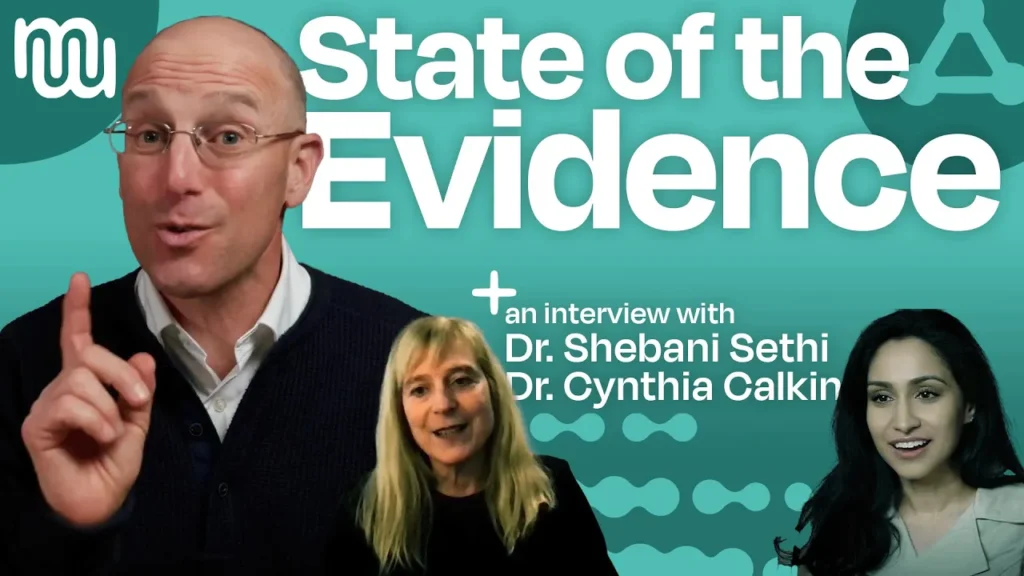
This Metabolic Mind episode features Stanford psychiatrist Dr. Shebani Sethi and leading bipolar disorder researcher Dr. Cynthia Calkin as they break down the scientific evidence behind metabolic psychiatry and ketogenic therapies for serious mental illness. The conversation explores why metabolic dysfunction often precedes psychiatric diagnoses, how nutritional ketosis may improve symptoms of bipolar disorder, schizophrenia, depression, and anxiety, and what current pilot studies and clinical trials reveal about this emerging field. The episode also examines the difference between evidence needed for clinical guidelines versus evidence needed for treating a real patient in crisis, highlighting how nutritional ketosis may offer a safe, powerful therapeutic option when standard psychiatric treatments fail. This is a comprehensive, science-based discussion for clinicians, researchers, and families exploring metabolic interventions for mental health.
Read more
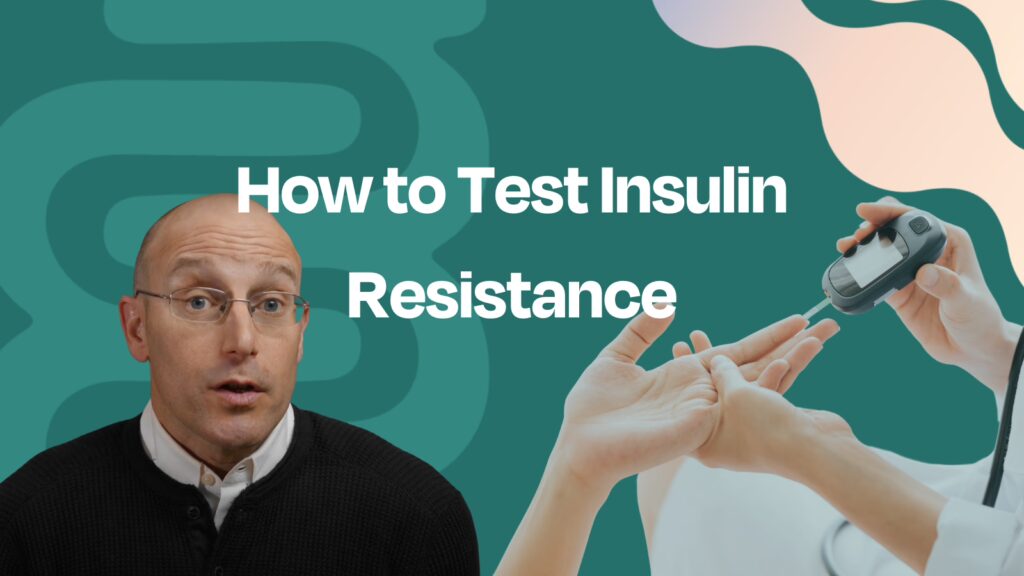
Read this article to learn what insulin resistance is and how to test for it. Insulin resistance has long been associated with metabolic health conditions, including type-2 diabetes,…
Learn more
Many “brain-healthy food” lists for bipolar disorder are based on poor evidence. In this Metabolic Mind episode, Dr. Bret Scher reviews Healthline’s claims about grains, fish, nuts, and chocolate, explaining why these foods aren’t proven to help bipolar disorder and how ketogenic therapy offers a far more powerful, evidence-backed way to improve brain metabolism and mental health.
Learn more

Subscribe to this YouTube podcast where Dr. Iain Campbell and Matthew Baszucki host peers and experts on the use of ketogenic therapy for bipolar disorder. View Channel
Learn more
This Metabolic Mind episode features Stanford psychiatrist Dr. Shebani Sethi and leading bipolar disorder researcher Dr. Cynthia Calkin as they break down the scientific evidence behind metabolic psychiatry and ketogenic therapies for serious mental illness. The conversation explores why metabolic dysfunction often precedes psychiatric diagnoses, how nutritional ketosis may improve symptoms of bipolar disorder, schizophrenia, depression, and anxiety, and what current pilot studies and clinical trials reveal about this emerging field. The episode also examines the difference between evidence needed for clinical guidelines versus evidence needed for treating a real patient in crisis, highlighting how nutritional ketosis may offer a safe, powerful therapeutic option when standard psychiatric treatments fail. This is a comprehensive, science-based discussion for clinicians, researchers, and families exploring metabolic interventions for mental health.
Read more
Read this article to learn what insulin resistance is and how to test for it. Insulin resistance has long been associated with metabolic health conditions, including type-2 diabetes,…
Learn more
Many “brain-healthy food” lists for bipolar disorder are based on poor evidence. In this Metabolic Mind episode, Dr. Bret Scher reviews Healthline’s claims about grains, fish, nuts, and chocolate, explaining why these foods aren’t proven to help bipolar disorder and how ketogenic therapy offers a far more powerful, evidence-backed way to improve brain metabolism and mental health.
Learn more
Subscribe to this YouTube podcast where Dr. Iain Campbell and Matthew Baszucki host peers and experts on the use of ketogenic therapy for bipolar disorder. View Channel
Learn more