Get the latest on metabolic psychiatry. Subscribe.


Listen, Watch & Subscribe on:



Keto for Brain Health – A Dramatic Personal Journey
Listen
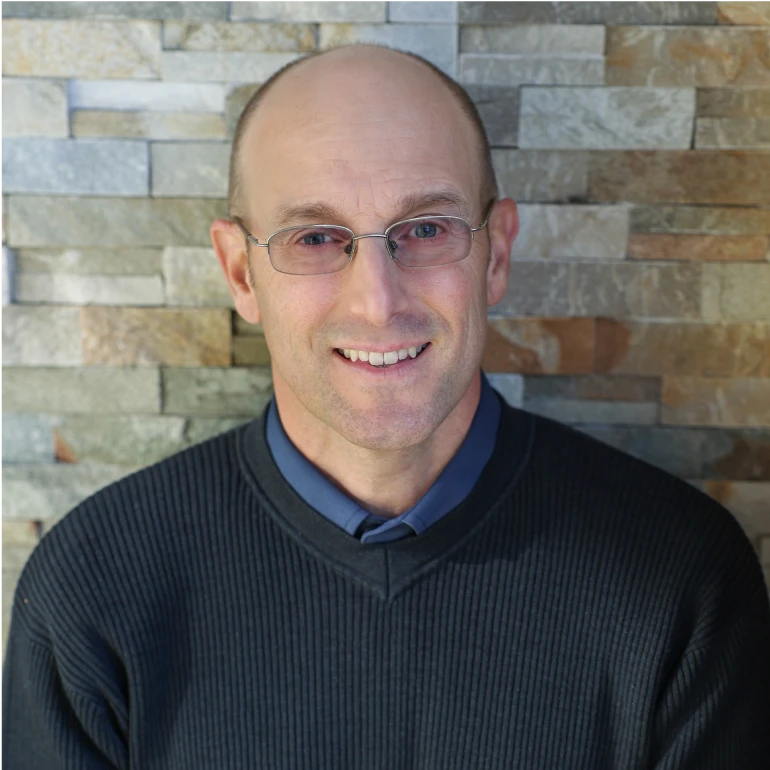
About the host
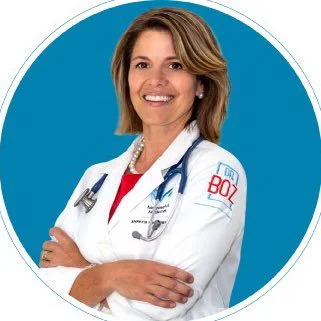
About the guest

Bret:
Welcome to the Metabolic Mind Podcast. I’m your host, Dr. Bret Scher. Metabolic Mind is a nonprofit initiative of Baszucki Group where we’re providing information about the intersection of metabolic health and mental health and metabolic therapies, such as nutritional ketosis as therapies for mental illness.
Thank you for joining us. Although our podcast is for informational purposes only and we aren’t giving medical advice, we hope you will learn from our content and it will help facilitate discussions with your healthcare providers to see if you could benefit from exploring the connection between metabolic and mental health.
Welcome back to Metabolic Mind Podcast. I’m your host, Dr. Bret Scher. Today, we have a real treat. An inspiring story of one family getting their daughter and their lives back from the cognitive decline that comes with an Alzheimer’s disease diagnosis. But this is so much more than that.
For starters, Susie, the daughter, was diagnosed with Alzheimer’s at the young age of 43, and Susie was already at a cognitive disadvantage as she was born with Down’s Syndrome. But having Down’s Syndrome wasn’t a barrier to Susie and her family living a full and enjoyable life. That is, until the cognitive decline of dementia, and the associated seizures, started then Susie’s and her family’s quality of life quickly eroded.
But thanks partly to a connection with Dr. Annette Bosworth, Mary, and her daughter, Susie, experienced a complete turnaround for their health, and subsequently, their quality of life, simply by starting a ketogenic diet. So, is this episode all about saying how a keto diet cures Alzheimer’s or even Down’s Syndrome?
No, of course not. That’s far too lofty of an expectation. But instead, it serves as an example of how therapeutic ketosis can improve brain function. And I’m purposely vague about the term brain function or brain health because, as you’ll hear in this episode, ketosis doesn’t treat a specific diagnosis like seizures or OCD or anxiety or even cognitive function.
Rather, ketosis can potentially improve the brain’s overall function, which can then impact all these conditions. And that is what appears to have happened for Susie. So, it’s a pleasure today to share interviews with Susie’s mom, Mary, with Dr. Bosworth. And the real treat near the end, you’re going to hear an interview with Susie, herself, and get to meet Susie, and see a demonstration of the clear love and affection between a daughter and her mom, something that probably wasn’t able to be demonstrated before starting this keto diet.
But let me set the stage before we share this heartfelt and incredible interview. So first, please remember, our channel is for informational purposes only. We’re not providing individual or group medical or healthcare advice or establishing a provider patient relationship. Many of the interventions we discuss can have dramatic or potentially dangerous effects if done without proper supervision.
So, always consult your healthcare provider before changing your lifestyle or your medications. Now, here’s the backstory. Susie was born with Down’s Syndrome and the associated cognitive delay, but that didn’t slow her down. She was always very involved in church, and she participated in the Christmas play every year.
And she rode horses, and even did some barrel racing. Perhaps, more importantly, she had a very loving and interactive relationship with her mother, with her sister, with her family. But at the age of 43, Susie experienced a significant neurologic and cognitive decline, as you’ll hear her mother describe, which dramatically changed her life and that of her family members. She also had severe obesity with a body mass index of 46.
So she and her mom started a whole foods, Paleo-style diet, and Susie lost a significant amount of weight, dropping to a body mass index of 27, which is a remarkable weight loss. But her neurologic function continued to worsen. Then her mom, Mary, and I apologize for any confusion, but in the published case report, they chose to refer to Susie by your mom’s name, Mary, for privacy.
And in Dr. Bosworth’s interview, she also refers to her as, Mary, a little bit. But since the publication, Mary and Susie have decided to use Susie’s real name. So, I apologize if there’s any confusion. But hopefully, it becomes clearer throughout the interviews. So then, Mary discovered nutritional ketosis with multiple health benefits. And with the help of Dr. Annette Bosworth, she took the leap to start Susie on a keto diet as well.
She was ready for it to be a challenge, and it was. But the results will speak for themselves with a radical transformation in their lives. Mary got her daughter back, and Susie got her life back. So let’s hear from Susie’s mom, Mary.
Mary:
It really started from both of us being very sick. A decade ago, we were both very, very heavy. Susie weighed almost twice what she weighs now. And I was, 120 pounds overweight, and I was very sick. I really didn’t, I had all the things that come along with being, very heavy. And honestly, I probably had mild cognitive impairment as well. And someone told me that about nutrition and some things that might help.
And I went on a whole foods diet and that really helped us very quickly, as far as physical health and everything. But, it didn’t really change her mental state. And at that point, she was fairly normal for having Down’s Syndrome And with her history and everything. But in, I think it was, yeah, about 2015, I started noticing some changes with her. And, we had, she had lost quite a bit of weight, but she was still a little bit overweight.
And I noticed some changes in her judgment. And she had gone from being able to be in Special Olympics and swimming and track, and she used to take care of the horses. So we used to have that on the property and the dogs. And she didn’t ever have a job, but she always had lots of activities in her lifetime.
She had, she used to barrel race on her on the horse. And the crowd used to often say, Susie, go the other way, because she would sometimes go the wrong way. So, it wasn’t like a real, with a lot of proficiency, but she really had a good time, and that sort of thing. And she would volunteer at church and that sort of thing.
But at one point, she started having strange judgment choices of things that like going out in the middle of a thunderstorm to do yard work, raining and thunder. And I didn’t know she was outside, and my neighbor called me. Did you know that Susie’s outside picking up yard debris?
I was like, oh my goodness. And then, so at first, it was just a matter of her doing, her behavior was changing. It wasn’t like she was forgetting things, but she would just, her judgment would be impaired. And then she started taking things from the store that was, she didn’t pay for because. And she had never done anything like that before.
That was just, and she didn’t seem to understand that was anything wrong with it. She was proud of it. She said, look what I got. And that was, and she would’ve previously not done anything like that. And then, we started having problems with food, and she’s always been obsessed with food. But she started eating things that were not cooked that should have been cooked, like meat, and getting things out of the trash can, and that sort of thing.
It was very, very upsetting, and I had to keep an eye on her. She didn’t, she got to where she went from being able to take care of her personal hygiene to my having to do be with her during most of the, most of her hygiene activities. And she didn’t like the shower any longer unless I was there with her.
It was scary. Water was scary for her, and that sort of thing. And just everything was, she was anxious about everything. She started losing skills. She started losing words. Or she couldn’t really always tell me what she was trying to say, and even though she’s got a speech impediment, and it is difficult to understand her a lot. But I could usually understand her, and she would sometimes say something that sounded like she was trying to say a word, but it just didn’t even, it wasn’t even comprehensible by me or any of those that, of us, that knew her really well.
And so, that was that, those kind of things. And so, it became, we went from her being able to be left at home for a few hours while we went someplace and to not being able to. She nearly burned the house down one day, and we went, okay, this is not going to work. So life got pretty scary for a while.
We, eventually, found a resource where somebody, where there was a daycare from a memory care place that had another woman with Down’s Syndrome that we knew. And so, she was there for, I think, close to nine months. Yeah.
Bret:
It’s heartbreaking to hear the story of Susie’s decline, and its impact on Susie, on Mary, and on their whole family.
Susie went from relatively independent to almost burning down the house and to eating food out of the trash can and having to be placed in a memory care daycare center. And all this, despite eating better and losing a significant amount of weight. So it’s truly heartbreaking. And the response Mary got from Susie’s doctors was to make sure she didn’t have any vitamin or nutrient deficiencies and then to start me medications.
But unfortunately, they didn’t see any improvements. But they were able to connect with Dr. Annette Bosworth, and Dr. Bosworth’s free keto seminar she held in the local bowling alley party room every Tuesday morning. And I got to say, this is a lot about Dr. Bosworth. She’s creative and she’s scrappy.
How many doctors do you know who run a free keto training seminar in a bowling alley’s party room on a Tuesday morning? Dr. Boz does, and thank goodness she does, and here’s Mary again.
Mary:
I started having symptoms again of my illness. And I had been diagnosed with myasthenia gravis and I was actually using a wheelchair for quite a few years, back in 2012.
And so, I’ve started to feel like I was getting sick again. And so, I started looking for new dietary changes to make. And so, I went online and found out about more about the ketogenic diet. And so, I started doing that .And after I had been doing it for a few months, I ran across her YouTube videos. And then, so I was thrilled when I found out that she had moved from South Dakota to Florida.
And I was willing to drive all the way across the state to go and see her because I had learned so much from her on her YouTube videos, and the thought of being able to ask her questions and hear what other people were asking her as well. And then, after I had been going there for a few weeks, I decided, I don’t know if I can do this for my daughter or not, because I didn’t know if she would tolerate getting rid of all those, even the few carbs that she had left in her diet, that were a problem. I wasn’t sure if she would be able to tolerate that or not.
And she encouraged me to test or make sure she was in ketosis, and to measure her food to make sure that she was getting enough fat for her brain health. And very quickly, we saw some changes, very quickly.
Bret:
And now here’s Dr. Bosworth with her perspective.
Annette:
So, Mary shows up, she drives two hours in the state of Florida to be at this eight o’clock meeting, and actually, Mary’s mom does.
And so she shows up, and she has had success watching the YouTube videos, read the books, followed the worksheets that I put out there. And now, she wants to come to the support group because she has some questions, and she has good questions. Like these are good advanced questions about brains and healing.
And the second week she’s asking questions about Down’s Syndrome. And the third week, which today is the 25th, right? Yeah, so this would’ve been a year ago last week, she asked me, my daughter has Down’s Syndrome. And we followed this low carb diet for the last four and a half years because her memory started to go like many people with Down’s Syndrome.
And she got officially diagnosed four years ago. And the first person that asked us to lose weight was using a low carb with a hundred carbohydrates in the diet. A while, we only, we plateaued, and she wasn’t losing any more weight. And then, I read a little more. And so then, we went down to 70 carbohydrates per day.
And then about a year ago ,when I was watching your stuff, I started doing, the mother started doing, 20 total carbohydrates or less. But that’s just awful restrictive for my daughter. So, I kept her on 50, and she did lose a little more weight. And I said, but I hear you. So, I was answering questions about brains, answering questions about brain repair, about how to get best peak performance about anxieties and depressions.
And by this time, her daughter has lost all this weight. But she looks, she looks gray. She looks ashen in the pictures, if you look at them closely. And she’s lost the weight, but her mental health has gone in the wrong direction. Her obsessions, which had been difficult in her life, were back in full force that she couldn’t change the outfit anymore.
She had one outfit that followed the criteria that she could follow. She had lost control of bowel and bladder by this point. Frontal lobe was now affected because she couldn’t reason through that the food in the garbage wasn’t edible. That’s not okay. She just couldn’t follow that rule, and lots of other things.
Now, they’ve got 24 hour care, seven days a week, where they used to leave her home for hours because she was pretty functional.
Bret:
That, already, it’s a gripping story, but I don’t want to gloss over the weight loss part because you said she lost the weight.
But in the case study, it says she went from a body mass index of 46 down to 27.
Annette:
Yes.
Bret:
And then when she reduced her carbs further down to 25. So ,that is a dramatic weight loss.
Annette:
If you’re going to go through the pain of limiting her life and having to push back against the social issues that I’ve seen over and over again in other disabled journeys, you just have to document that you’re doing it for a worthy cause, which means she’s actually in ketosis.
And praise be she did it, and I had no expectations that she would have such an improvement. But because you’re like, there’s no case studies about this. I’ve got several Down’s patients. She’s already lost the weight. And then, she doesn’t miss, two hours one way, doesn’t miss a visit for the next two months because she’s like, you got to help me. You got to see this. You got to see this. And she’s very excited about what she’s seeing at home because within, so by the time she’s four years in, she’s now having what is diagnosed as absence seizures and has these times where she stares off into space. And then has, incontinence.
And then, they have to, but it’s probably about three or four a day, I think it was happening at that point. So pretty frequently. And they were on, she was on, some Lamictal at the time. The Lamictal might have decreased the frequency to two a day, but they weren’t gone. And so, the first thing that she notices is she’s not doing that anymore, and she goes to the toilet.
This is something she used to do. I haven’t seen her do that in a couple years. So within 10 days of being in a ketogenic state, and mom’s brilliant. She has the cupboard lock. She has everything. she knows exactly how many carbs she’s having. And she hits a really strong numbers of glucose, was not terrible, but maybe in that nineties for morning fasting. And over the course of these next six weeks, the sugars come down into the like eighties.
And the ketones are pretty solid.
Bret:
So, with nutritional ketosis, the improvements started rapidly and dramatically. Now, here’s Mary, again, discussing the improvements she started to see in Susie.
Mary:
She became more alert and more focused within days, and it just seemed like it happened so fast. I think it was, at least within two weeks, I saw no signs of her, she was having night time seizure-type activity. She would, her hand, she would wake up, and tell me that her hands were shaking and her head was shaking.
And I just, we just, she had previously, she had partial complex seizures years ago. And so, I was familiar with the different things that she had used to say whenever she was having seizures. And she had been having absence seizures, and where she would just go off into the zone and then she would lose continence. And that just stopped.
It just stopped. Just almost immediately as soon as I put her on ketogenic diet. That was just like walking, and so that was a real game changer for us.
Bret:
So, you can see why I mentioned this earlier. Nutritional ketosis doesn’t just treat a diagnosis. It treats the whole brain, and that’s part of the exciting potential for therapeutic ketosis for brain health.
And again, I use that non-specific term, brain health, because it can decrease neuro excitability by balancing GABA and glutamate levels. It can decrease neuroinflammation. It can allow more efficient energy production and improve cellular health, including mitochondrial health for our energy production.
And these mechanisms all have the potential to improve brain health in ways that can impact seizures and cognitive function and mental illness, OCD and more. And in this case, it helps Susie improve in all those ways.
Mary:
Say the only thing is that she still has some obsessive compulsive behaviors. But instead of it taking, Instead of it taking us 45 minutes to go, to get out of the house, from the time we start trying to leave because of her obsessions with checking and ordering and everything has to be, it takes us 15 minutes or 10 minutes to get out of the house, which is pretty good for someone with Down’s Syndrome, I think, anyway.
But actually, she went back through her baseline in a lot of ways. She’s back to doing her volunteer activities and different things like that. But she actually went back even better in her verbal skills. I had never, she was never using three syllable words prior to the dementia.
And after she had been, I think, I don’t know whether it was like four or six weeks, something like that, after she had been on ketogenic diet, she said something, I, told her something and I said, you got it? And she says, I understand. And I just I almost, I said you what? You understand?
I don’t understand. I didn’t understand how she could be saying a word like that because I didn’t think she’d ever say a word like that.
Bret:
That’s such a great example of recovery. As you heard, Susie’s OCD wasn’t gone, but it was dramatically improved to a degree that directly impacted the family’s quality of life.
And there’s more.
Mary:
Taking her to church and having her be involved in church activities. And some of those things were, I had to be right next to her all the time and had to be guarding her to make sure that she wasn’t going to do things that were inappropriate, or go some go into a room or she wasn’t supposed to go.
And she got to be in the church play again this year. Whereas previous to this, she was not able to go back into the church play because she couldn’t cope with the stress of the practices and all the people and having to be, do a certain thing and remember what it was she was supposed to do and everything like that.
And so, this year, she got to be back in the church play, and she actually was able to help another young woman with Down’s Syndrome, to help her to know where she was supposed to be. So, she actually became a mentor, and that’s a big deal. We got to go back to doing some of the things that we normally would do.
And I do have a lot more freedom. And as a result, I’ve been, I started a ketogenic support group in my house. it doesn’t have anything to do with Down’s Syndrome, for the most part, but we do have another parent who of a special needs son, who has seizures. And so he, the two of them, went on ketogenic diet and so that’s been a really exciting journey as well.
But I would not be able to do have a support group in my house. the way it was before because it was all about caregiving. It was just all about caregiving. And so now I can, I was able to go to Boca to the low carb event. And I was gone for four days and she was happy while I was gone. I have not been able to leave her for that long for many years.
So, it was exciting.
Bret:
And that’s one of my favorite examples. Susie wasn’t just in the play. Now, she was helping others serving as a mentor to another participant living with Down’s Syndrome. Such an amazing recovery. So now, let’s hear Dr. Bosworth’s perspective on Susie’s response.
Annette:
I can remember the tears of the mother when she said, I’ve cared for her.
She’s now 48 years old, and I know this child. But as much as I know myself, she’s never used a three syllable word. It’s just not possible for her to use a three syllable word. And the other day, I gave her instructions. Let me just explain one story that she’ll do if she comes on. But if you’ve ever had to mark people for where their memory is on whether they should be able to drive a car, the ability to navigate is one of those skills that it fades so slowly that sometimes you don’t realize you’re not navigating very well.
And if you’re going to drive a car, that’s a really bad thing. So, they find themselves lost. When you have a Downs patient, the navigation is ambulatory. And so mother would say, bring me the potato salad or bring me something from the, and she said she would walk up to the table, and clearly you cannot walk through a table, but she would then get really frustrated that something was in her way.
And she could not process to move your body around the table. And I’m like, how long ago did that start? And it’s been going on at over a year at that point, might’ve been a year and a half, that that one were just, it was not present. And she said within about a week, she was, she didn’t do that anymore. And then, she was able to say the words. She said, do you, she was giving her instructions and she said, do you get it? Do you get it? And the daughter replied, I understand.
And mother just started bawling.
Bret:
I understand, three syllables. Yeah, she hadn’t used before.
Annette:
Yeah, not just, that is, she’s back to baseline. This is better than we ever got her brain to work. And she’s 49 years old now. That is, it’s such an incredible story.
Bret:
It shows there is something about ketones, and we know this from a chemical basis, from a physiologic basis.
We know ketones are a different fuel for the brain. We know the brain can function differently on ketones. But it’s one thing to study it and know it scientifically, and another thing to see how it can change someone’s life so dramatically. And that’s the power of this story.
Annette:
Yeah, last year, at the Christmas holiday season, they had to have 24-hour/seven observation for their daughter to go to Christmas celebration. This year, not only did they get to take their daughter to the Christmas pageant, she was on stage as the angel. That she could regulate her social anxiety is one of her top things. So, to get on stage and to be able to be the angel in the Christmas pageant, you’re like from having to have a chaperone to you can’t be left alone to getting on stage in one year.
And I think what really pushes me to try, and there was several times where I’m writing this story, and I’m just like, I can’t do this, oh my goodness. I look at all these records, and I got to call that doctor, get these, there was a lot. And I had other things I was trying to do, too.
And so, but I kept pushing through for this story. Every time I would think of a statement the mom did, because after a while, all of her questions did get answered. And then she started coming, like a couple times a month or maybe once a month, that she comes to our little support group. But she got mad.
She got just so angry that nobody offered this to her. She goes, do you know what it did to our family for our daughter? They’ve got other children, but when you have high needs in your family, and then the high needs falls off the brackets, and now needs an intense amount of resources in caregivers that are already on the brink of caregiver fatigue.
And they couldn’t travel because, and you couldn’t, her obsessions were so tight that you couldn’t do anything flexible. They went on an RV trip this summer because they could. They took her with them and they had this, and they so showed family members that not only did she lose all that weight, but she didn’t look gray.
And she was social again. She was back to this, the version of her that had been alive before dementia set in.
Bret:
Did you catch that? They were angry nobody offered nutritional ketosis. No one even thought of it as a potential treatment, which is definitely at odds. But the rapid and incredible improvement Susie saw.
Here’s Dr. Bosworth again.
Annette:
You don’t need me to do this. You don’t need to go to a doctor to get into ketosis. There’s a few simple rules that patient didn’t have to go to the specialty clinic and fly across the country to see a specialty keto doctor. No, it was a mother, who cared a lot about her daughter, and said, okay, you’re telling me the rule is I got to keep ketones around for my daughter?
Okay, let’s try that. And do you know how many other crazy things we’ve talked patients into doing that didn’t have the upside of saying you’re going to lose some weight? Your brain’s going to work a little better. You might reverse some age in the way you look. You can find lots of bumper sticker reasons to do the ketogenic diet.
What they were looking at was, if it wasn’t even talked about as an option, and as poor Mary almost, Mary and her family, become shackled with. I’ve been telling people to do keto, and she now runs into that same thing of, if I have to explain what a ketone is one more time. But in her lane, what she sees is, they think that I’m exaggerating.
And they know our daughter. And they take one look at her, and they don’t say what you say, which is, oh, it’s too hard. That must be awful. They say, how do I, if this disabled person can do this? And you should hear the mother talk. I hope she gets, you get to have an interview with her because to hear, she’s she doesn’t act deprived.
She’s the happiest I’ve ever seen her. I didn’t get to see a smile on her face for all of those years where that memory and mental health and that kind of the entrapment that happens in patients with dementia and that freedom. She’s she’s the happiest she’s been in years.
Bret:
She doesn’t act deprived. She’s the happiest she’s ever been, and she’s back with a smile on her face. So, how do you place some value on those improvements? And that’s part of the hope of spreading their message, right? No, it’s not a randomized controlled trial, but Susie needed help now. She couldn’t wait for a trial.
But we have to admit, we’re left with some uncomfortable questions like, will this work for others? And how do we balance the perception of deprivation and the challenge of changing someone’s diet with a relatively unstudied potential benefit?
Here’s Mary, again, on what she hopes might come next.
Mary:
A big burden I have is for, of course, other parents of people with Down’s Syndrome because once, it is very hard, once they’ve got their habits developed. So, to change how they’re eating and then the whole family has to change because that is huge, having a family.
I have a supportive family. I have a very supportive family. We have nothing in this house that she couldn’t eat. There’s nothing. Everything, we’re really, and everybody helps to take care of her. But I would say, I would love to see not just people with Down’s Syndrome, but especially people with Down’s Syndrome family members, learn about this so that when their family member is young, they can learn to eat in ways that’s going to protect their brain.
And maybe that all people with Down’s Syndrome won’t have to say, okay, that’s likely where we’re going when we get to a certain age. I did want to say that one of my, one of my strongest desires is to is to help other people to prevent dementia in any way.
I’m 68 years old. I have a lot of friends, who have cognitive impairment, and I hate it. And I, and when I feel like in many cases, it’s unnecessary. And my desire is to help that not to be the case.
Bret:
It’s so interesting to hear Mary take that next step, right? She saw firsthand the effect nutritional ketosis had on her daughter.
So, it’s only logical for her to wonder like, what if we started this earlier, right? If someone starts this earlier, could they prevent the decline that they saw in Susie? And we don’t have the data to answer that question. But many scientists, such as Dr. Stephen Cunnane and Dr. Matthew Phillips and others are interested in studying this topic.
But what about the naysayers who question whether nutritional ketosis is sustainable? Or is it even practical to ask in this situation?
Mary:
A lot of people say that’s not, it is not sustainable. I could never do that and that, and I can say that there were some challenges, and there are some things that you have to educate yourself on.
But wow, we love our food. She loves eating bacon and eggs for breakfast, and she loves to have, she has what I call naked hamburgers. They don’t have buns on them, but she has her hamburgers with her. It is very doable once you get past the initial culture shock. And then, just have to remind them that soda pops are poison, and we say stuff like that, which sometimes makes her a little bit bossy with other people telling them that they’re drinking poison.
But, so anyway, but it’s very doable. But there, you do, the caregiver has to be in charge, that is something we are super disciplined around food. And for someone with Down’s Syndrome, that’s just how it has to be.
Bret:
Those are great lessons from her experience, right?
There were challenges, sure. But with support, with clear lines of who’s in charge and with the end goal in mind, it was well worth the effort. Now, by no means is this a guarantee, right? But it’s a possibility, and it’s a possibility that Mary and Susie couldn’t find elsewhere. But now, let’s get to the real gem of this interview.
We get to meet Susie, and we get to hear from Susie, herself.
Susie:
You want to give me hamburgers.
Mary:
Oh, that was for lunch.
Susie:
Lunch.
Mary:
Yeah, for breakfast you had egg dec once. Pork rinds, that’s for snack.
Susie:
Snack, yeah.
Mary:
Yeah, so for breakfast you had eggs.
Susie:
Eggs in the morning, sausage in morning, avocado.
Mary:
Avocado, yeah. Uhhuh.
Susie:
Yeah.
Mary:
Yeah, and we have a home.
Susie:
Waffles.
Mary:
Oh yeah, we, she has these.
Susie:
There’s a green here.
Mary:
There’s these little waffles that my, that her sister makes, that she makes out of some avocado mayonnaise. I have no idea. I don’t know what the ingredients are. I don’t want to learn how to make them because then I’ll have to make them, too.
But anyway, so she has, there’s a looks, they look like waffles, but they’re made out of a lot of fat.
Susie:
Don’t call me fat.
Mary:
Oh, you don’t want, you don’t, not this kind of fat. We’re talking about the fat that you eat.
Susie:
Gross.
Bret:
Yeah, so it sounds like you eat some good foods. Sounds like you eat some really good stuff during the day.
That’s great.
Mary:
Yeah, we eat good food. We eat good food, don’t we?
Susie:
Yeah.
Mary:
Yes, she likes her bacon and sausage.
Susie:
Bacon and sausage.
Mary:
Sausage, yes. That’s right.
Bret:
Wow. Well, good. Thank you for coming on and saying hi. I really appreciate it. It was very nice to meet you.
Mary:
You say goodbye?
Susie:
Bye.
Bret:
Bye. Wow, Susie’s ability to socialize, to answer questions and discuss her enjoyment of her food.
That would’ve all been impossible a few years ago. But most important, for me, is the interaction between Susie and her mom, that the love and the caring between them. Like when Susie, when she rested her head on her mom’s shoulder and she smiled. That’s the real magic of the life that Susie and her mom got back.
So with that in mind, is nutritional ketosis too hard? Was it too restrictive? Certainly not for Susie and Mary, and I think it’s clear. All the effort and the challenges were well worth it. It’s likely the most impactful intervention they’ve ever had. And that’s a lesson for all of us about the hope and the potential for nutritional ketosis and metabolic therapies for global brain health, for cognition, for mental illness.
I’m inspired and emotional by Mary, by Dr. Bosworth, and certainly, by Susie. And I hope you are, too. This is what fuels us at Metabolic Mind to help more people experience this life-changing transformation. So, thank you for joining us, and please join us again as we continue to explore the connection between metabolic and mental health and metabolic treatments as mental health treatments.
And as we share amazing stories like Susie’s and combine that with the science, with the clinical experience, with the practical knowledge. So, all in all, we can help people learn and become educated to see if this might help them transform their lives. So, thank you again, and we’ll see you here next time at Metabolic Mind.
Thanks for listening to the Metabolic Mind Podcast. If you found this episode helpful, please leave a rating and comment as we’d love to hear from you. And please click the subscribe button so you won’t miss any of our future episodes. And you can see full video episodes on our YouTube page at Metabolic Mind.
Lastly, if you know someone who may benefit from this information, please share it as our goal is to spread this information to help as many people as possible. Thanks again for listening, and we’ll see you here next time at The Metabolic Mind Podcast.
Listen, Watch & Subscribe on:
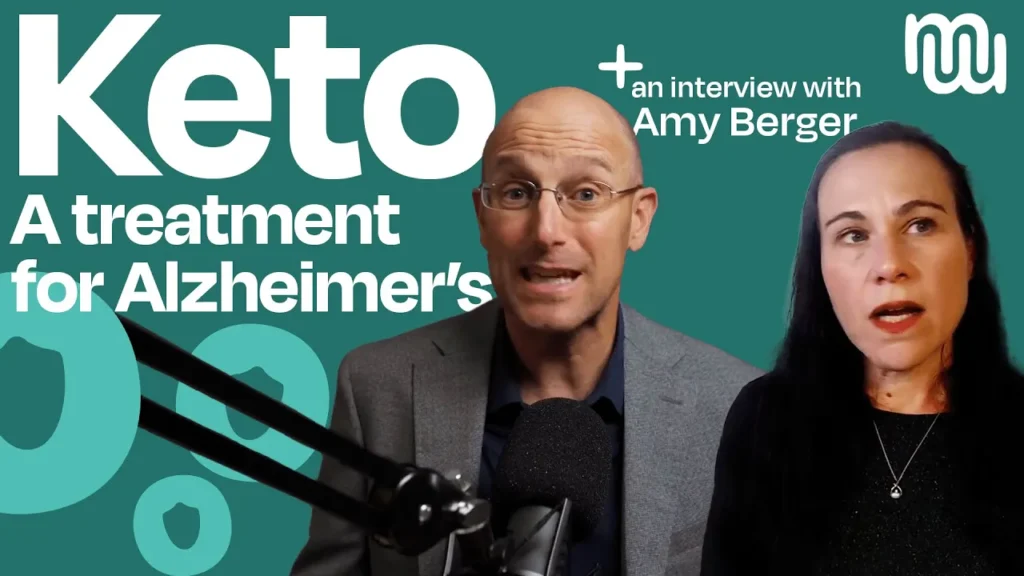
In this Metabolic Mind episode, nutritionist and author Amy Berger (“The Alzheimer’s Antidote”) breaks down why Alzheimer’s is increasingly viewed as “type III diabetes” and a problem of brain energy shortage. She explains how ketogenic diets, MCT oil, and exogenous ketones can help fuel insulin-resistant neurons, support mitochondrial health, and potentially improve cognition in people with mild cognitive impairment or Alzheimer’s disease. Amy also critiques microbiome-focused research, highlights the central role of metabolic health (insulin, triglycerides, weight), and offers practical perspective on using nutritional ketosis as a hopeful, science-based strategy for dementia prevention and treatment.
Read more
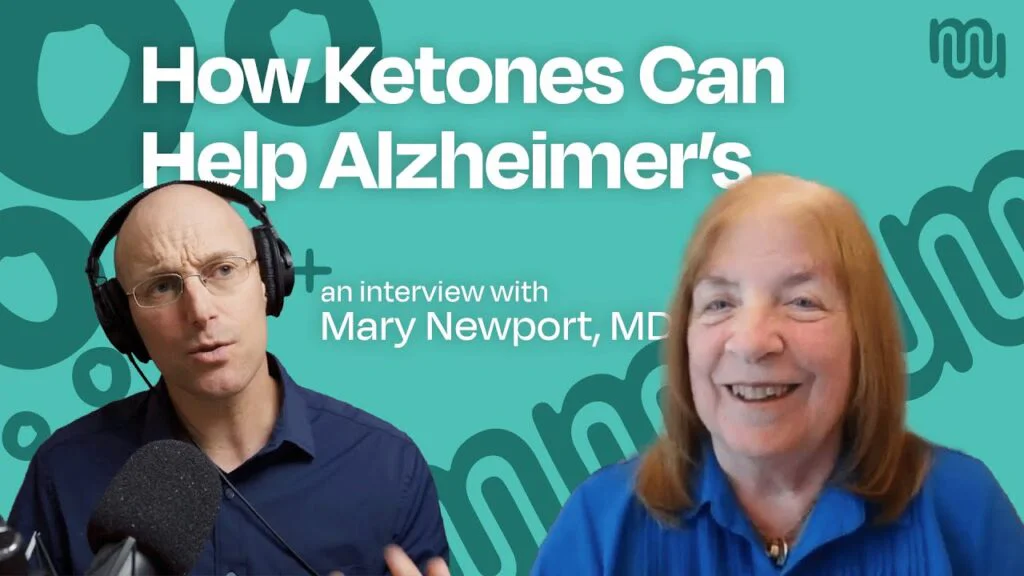
In this powerful Metabolic Mind episode, neonatologist Dr. Mary Newport shares how she used coconut oil, MCT oil, and ketogenic strategies to help her husband with early-onset Alzheimer’s disease. She explains the science of brain insulin resistance, why ketones can act as an alternative fuel in dementia, and how targeted nutritional ketosis led to dramatic—though not curative—improvements in his cognition, mood, and daily function. This inspiring story highlights the emerging role of ketogenic diets and ketone therapies in Alzheimer’s care and healthy brain aging.
Learn more
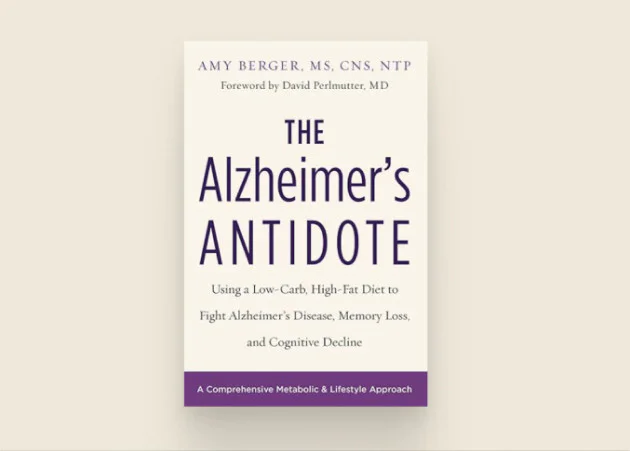
Amy Berger’s research shows that Alzheimer’s results from a fuel shortage in the brain.
Learn more
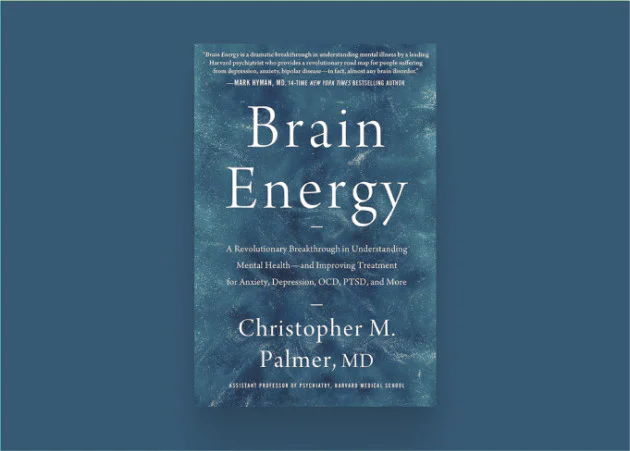
Harvard psychiatrist Dr. Chris Palmer outlines a new understanding that unites our existing knowledge about mental illness within a single framework.
Learn more
In this Metabolic Mind episode, nutritionist and author Amy Berger (“The Alzheimer’s Antidote”) breaks down why Alzheimer’s is increasingly viewed as “type III diabetes” and a problem of brain energy shortage. She explains how ketogenic diets, MCT oil, and exogenous ketones can help fuel insulin-resistant neurons, support mitochondrial health, and potentially improve cognition in people with mild cognitive impairment or Alzheimer’s disease. Amy also critiques microbiome-focused research, highlights the central role of metabolic health (insulin, triglycerides, weight), and offers practical perspective on using nutritional ketosis as a hopeful, science-based strategy for dementia prevention and treatment.
Read more
In this powerful Metabolic Mind episode, neonatologist Dr. Mary Newport shares how she used coconut oil, MCT oil, and ketogenic strategies to help her husband with early-onset Alzheimer’s disease. She explains the science of brain insulin resistance, why ketones can act as an alternative fuel in dementia, and how targeted nutritional ketosis led to dramatic—though not curative—improvements in his cognition, mood, and daily function. This inspiring story highlights the emerging role of ketogenic diets and ketone therapies in Alzheimer’s care and healthy brain aging.
Learn more
Amy Berger’s research shows that Alzheimer’s results from a fuel shortage in the brain.
Learn more
Harvard psychiatrist Dr. Chris Palmer outlines a new understanding that unites our existing knowledge about mental illness within a single framework.
Learn more