New Results: First RCT for Schizophrenia & Bipolar Disorder. Learn more.


Listen, Watch & Subscribe on:



Hundreds Report Dementia Improvement with Ketones: Dr. Mary Newport's Report
Listen
About the host

About the guest
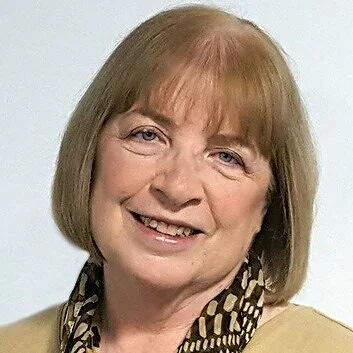

Mary:
When my husband improved, at that time they were saying there were 35 million people in the world who had dementia. And about 60 or 70% of those were Alzheimer’s disease. And I thought, if my husband improved, other people are going to improve. How can I keep this a big secret?
Bret:
Welcome to the Metabolic Mind Podcast. I’m your host, Dr. Bret Scher. Metabolic Mind is a nonprofit initiative of Baszucki Group where we’re providing information about the intersection of metabolic health and mental health and metabolic therapies, such as nutritional ketosis as therapies for mental illness.
Thank you for joining us. Although our podcast is for informational purposes only and we aren’t giving medical advice, we hope you will learn from our content and it will help facilitate discussions with your healthcare providers to see if you could benefit from exploring the connection between metabolic and mental health.
Dr. Mary Newport helped dramatically improve her husband’s symptoms of dementia simply by using coconut oil and MCT oil. And now, she has tirelessly continued to pursue this field making case presentations, poster presentations, and now a new publication talking about 288 reports of caregivers using coconut oil and MCT oil to help their loved ones with dementia.
Let’s hear from Dr. Mary Newport.
Dr. Mary Newport, so wonderful to have you back on Metabolic Mind. Thanks for joining me.
Mary:
Thanks for having me back.
Bret:
Yeah, so it’s a pleasure, and I would direct anybody who didn’t watch our first interview to go back and watch that to really hear your incredible story, the story of you and your husband and, how ketones and coconut oil and MCT oil really changed the course of your lives for years and years.
Mary:
Yes.
Bret:
But that’s wasn’t enough. You weren’t stopping there. So, you’ve moved on, and just continued to give so much to this field of ketosis, ketones, MCT oil, and how it can work for dementia and cognitive impairment. So, I want to jump right in and talk about this really ambitious paper that you published titled, Ketogenic Strategies for Alzheimer’s Disease and Other Memory Impairments, History Rationale and 288 Caregiver Case Reports.
So, tell us a little bit of the background of this paper and how it got started for you.
Mary:
Okay, back when my husband improved so much, I wrote an article, it was intended for the Alzheimer’s Association conference. I was going to distribute it there, and it was a case study about my husband and his response to coconut oil, about the medical food that gave us the idea. It was an MCT oil product that was C8, one of the medium-chain triglycerides, for people that don’t know.
And I actually didn’t get to have a table there. First they said yes, then they said no. I tried to distribute as many copies as I could. I started giving it to health food stores and put it out online. And then a regional newspaper picked up on our story and published at the Tampa Bay Times.
It was called St. Petersburg Times then, but the story started getting out. And I had written this article, had all my contact information on it because I was going to distribute it at the Alzheimer’s conference, and people started writing to me. And the first person that I heard from was, this happened in May of 2008, with my husband the conference was at the end of July of 2008.
And a few months later, I heard from the first person who had gotten my article online. They had seen it online and my email address was on there, my telephone number, cell phone, home phone, everything was on there. And she contacted me and she told me that it took a while, it took a month or two for them to really notice a difference in her mother, but they started adding coconut oil to her diet. And this lady was around 80 years old, and she was in bed.
She wasn’t eating much. She didn’t recognize family members. And she said it was a very slow process, but she slowly started getting up out of bed, and then she started eating better. She started recognizing them, like her little grandchildren, her granddaughter. She spent time, she recognized her, and then one day she was reading the newspaper at the kitchen table, which kind of really surprised them.
And then she got up and she walked to the refrigerator and she asked, where’s that cake that we bought yesterday? So, she started remembering things, and this lady stayed in touch with me for quite a long time, and her mother lived a couple more years. She lived to 83, and she died of an infection. But she knew her grandchildren and her family up to the end.
She didn’t deteriorate again, as far as getting back into deep into Alzheimer’s the way she was. And so this was the next case after my husband. He was the index case, the first case. And after that, I just started regularly getting emails from people after it was published in the St. Petersburg Times. They said it went viral.
It was one of their most popular articles ever. It had gotten out, right? And they had links to somehow get the article. People found it. And so over between 2008 and 2014, I had received, it was about 360 email reports from people who had tried taking coconut oil.
And then, about a quarter of them added MCT oil as they started seeing some improvement. And they were telling me about how their person responded to it, how their loved one responded. And, so I started collecting them. I just I started numbering them, the order that they came in, when I realized I was going to have a number of them.
And then, when I got up to about 40 or 50, I started putting them on an Excel spreadsheet and I would put, I didn’t expect that I was going to do a study like this, but I did think it might be helpful to get funding for studies. And at University of South Florida, the Byrd Alzheimer Institute, they were actually really interested in this, and I had a couple of meetings with them.
At that point, I had been introduced to people there by Dr. Dominic D’Agostino. We had met at a research update. He recognized Steve and I from that newspaper article, and he connected me and with the people at the Byrd Institute. And we had meetings about a study that they might do.
And at that point, I gave them, I think it was 40 something case reports on a spreadsheet, and they were able to get funding for a study. And unfortunately, when they were planning to have about 60 or 65 people in the study where they would use, it was a coconut-MCT oil product versus a placebo.
The people would be on it for three months and then on the placebo for three months or vice versa. And they were going to see whether there was cognitive improvement and if that held up. They were only able to recruit about 10 people. They said that people didn’t want to do it because they knew it was on the shelf, that they could get it, and they didn’t want the placebo.
So, they only had about 10 people, and they didn’t publish it, unfortunately.
Bret:
Yeah. Yeah, but what you were able to do was compile all these, all this correspondence you had with people saying, we tried this and look what happened. Now, obviously, it’s not a randomized-controlled trial.
It’s not an intervention trial. It’s anecdotal reports, but wow, for 288 people to see, it was 89% of them reported significant improvements. And that’s changing their lives, the lives of their loved one and their own lives simply by adding coconut oil and MCT oil.
Mary:
Yeah.
Bret:
That must’ve been so empowering for you to know that you were the tip that kicked this off and started this trend.
Mary:
Yeah, yes, it was. It became an obsession with me when my husband improved. At that time, they were saying there were 35 million people in the world who had dementia.
And about 60 or 70% of those were Alzheimer’s disease. And I thought, if my husband improved, other people are going to improve. How can I keep this a big secret? So, I had already started writing to politicians. It was a presidential election year. I was writing to all the politicians, all the big news outlets.
I wrote to Sandra Day O’Connor, Justice O’Connor. Her husband had been diagnosed with Alzheimer’s, and she was part of an Alzheimer’s study group that was related to the Alzheimer’s Association and kind of government involvement. And and no response. I was getting no response from anybody about it.
It was very frustrating. I basically had my husband’s story, the scientific rationale for it that there was a medical food that was going to come out about a year later, but it was already available on the shelf. Why should people have to wait to try this? And please get your scientific people on this, please study it urgently.
And no, I was getting no response at all. And so the case report, the intention behind writing it in the first place, was to try to get attention for it. And the Alzheimer’s Association, at that time, they had about 5,000 researchers and physicians and dieticians from all over the world attending this. And I thought it was a perfect opportunity, and then I didn’t get to.
I snuck it to about 200 people there with papers on nutrition or insulin or anything related remotely related to this, trying to get somebody interested in ketones. And then, I come back home, and I find out that Dominic D’Agostino’s in my backyard here at USF, and he’s already studying ketogenic diets for Navy Seals.
Divers who dive with a hundred percent oxygen, and he became extremely interested in it. He didn’t know about a ketone ester at that point, that was available.
Bret:
So, actually let’s pause here for a second because I think we need to define what the intervention was because what we talk a lot about at Metabolic Mind is ketogenic therapy usually coming from a ketogenic diet where you dramatically change your diet.
But a lot of these responses in your paper, were they following ketogenic diets or were they simply just adding MCT and coconut oil, which seems like such a simple intervention?
Mary:
Yeah, they were just adding coconut oil. Most of them started just with coconut oil. A few started with MCT, or a year later, when that medical food did come out, it was called Axona. Some people, very few of them though, were taking Axona, and they were reporting, but it was mostly, it was basically almost a hundred percent of the people were taking coconut oil and then about a quarter of them added MCT oil.
At some point, they started mixing it ,and after about six or eight weeks after Steve started the coconut oil, he had already a dramatic improvement during that time. And Dr. Richard Beach at the NIH, I had been talking with him. He really didn’t think the levels would be high enough from coconut or MCT oil, but Steve had drawn two clocks.
There was one at a clinical trial the day before he started the coconut oil, and it was very random. It had a few little circles and a few numbers, very disorganized. And two weeks later, he drew a clock that had a full circle. It had all the numbers. I had a whole bunch of hands on the clock. It was pretty messy, but it was, and it was much more organized.
And Dr. Beach, I faxed those to him, and he was just shocked. He said, this is unexpected. That was the word that he used. And he was developing a ketone ester since the 1990s. He had been studying ketones intensively as therapeutics agents for Alzheimer’s and Parkinson’s and MS and Huntington’s and even congestive heart failure.
He would talk about in his hypothesis papers and recovery from heart attacks.
Bret:
Yeah, but that’s an interesting point that he said he didn’t think the levels would get high enough, right? Because if you’re just doing coconut oil without a ketogenic diet, without exogenous ketones, you’re right. Your liver is going to convert those to ketones, most likely, but not in a real high amount.
It shows that maybe you don’t need much, your brain doesn’t need much to see that small difference. Now, maybe if you had a ketogenic diet on top of that, and add an exogenous ketones, who knows, right? Maybe the higher the concentration, the more improvement? And this is where I’m sure research is happening, but that’s what I think is just so remarkable.
Like why wouldn’t someone try this? Dementia, cognitive impairment, it has so much more morbidity and just changes people’s lives so dramatically. Why wouldn’t someone just try some coconut oil or MCT oil, right?
Mary:
And I couldn’t convince the Alzheimer’s Association to even acknowledge the possibility, even though the MCT oil company had done studies. They had done a pilot study. They had nine out of 20 people, had significant improvement in their cognitive testing. Like 90 minutes after they took the C8, compared to a day when they got placebo, that they had this improvement. And then they did another study.
It was three months long, 152 people. Some of them extended to six months. And again, almost half the people had improvement in cognition. And they had an exhibit at that Alzheimer’s Association conference, and I attended the conference anyway even though they wouldn’t let me have a table. But they were very mysterious about.
What it was, I would ask them, what’s, what is it? What is it? And I knew what it was because I had found their patent application that it was MCT oil. but they weren’t physicians. If they’re gonna prescribe something, they want to know what it is and how it works. Yeah, and there just wasn’t a lot of information that they were giving out about that.
But I knew what it was. Yeah.
Bret:
Yeah, and so, to bring back to this survey paper that you published, the other thing I found remarkable was the various ways in which people improve. So, 65% had improvement in memory and cognition, 32% in social and behavior.
Mary:
And mood.
Bret:
Speech and language in 33 and resumption of self-care in a quarter of the patients. They were being, they were improving in various ways, which I think is so interesting, which just shows it’s not just maybe one mechanism or just one part of the brain. But with ketones, with reduced neuroinflammation, with neurotransmitter balances, whether it’s mitochondrial health, whatever the mechanism may be, it’s affecting so many different aspects of cognition and of brain function.
So, like how do you explain that or discuss that when you’re discussing with people or with clinicians? Like how do you draw the line from the MCT oil to these dramatic improvements?
Mary:
I think that the ketogenic effect is, probably explains the acute changes, the early changes, the immediate. My husband had an improvement in his memory testing just a few hours after he had his first dose of coconut oil, and it was significant. Many mental status exams, he increased by four points from the day before out of 30 points.
And that would be really significant in the clinical trial. And we, at the time, we weren’t sure if we just got lucky or not, but there are also other effects of ketones. The anti-inflammatory effect, and that’s a really prominent feature of Alzheimer’s disease. You don’t have Alzheimer’s without inflammation in the brain, and a lot of these other, all of the other neurodegenerative diseases have that as a problem.
It’s true with many psychiatric illnesses, too, which is how you came into all of this. Bipolar disorder, schizophrenia, epilepsy, they have in common inflammation in the brain. They have areas of the brain that don’t have normal glucose uptake.
It just varies like different diseases. Disorders seem to have different areas of the brain that are affected, which helps explain the symptoms that you see, I think. So, I believe the acute response was ketones. And then MCTs are known to reduce inflammation. One of the papers that I discussed in the article that we’re talking about, talked about C10 to C14. So, these are medium chains, and then there’s a fat called myristic acid. It’s in between medium chain and long chain fatty acids. And its activity, it’s involved with producing myelin, but it’s not in like everyday common oils. But C10 to C14, each of those has an impact on reducing inflammation in the brain. It reduces the presence of pro-inflammatory cytokines. And so it helps reduce inflammation that way. And the other, each of the fatty acids, one other thing about coconut oil, it has C6, a little bit of C6, C8 more of that, more C10, and then 50% C12, which is, it functions mostly like a medium-chain fatty acid.
It’s each, but each one has different properties. And when you add all of those fats up together, it’s about 70% of the saturated fats in coconut oil are these medium-chain fatty acids. But C6 is highly ketogenic. It also tastes really terrible. So, you don’t really see it in products. C8 is very ketogenic.
Very quickly your liver will start converting it to ketones. C10 takes longer, it takes a while before it starts converting to ketones and C12 even longer. And it can go on for several hours later that C12 lauric acid is being converted to ketones. So, when you eat some coconut oil, I am lately thinking about this, that the ketone levels may not be very high, but they may be more available because you’re constantly converting over a number of hours, this oil to ketones and so that could be part of it. Another thing about lauric acid, a company in Japan that was very interested in how my husband could have improved with such low ketone levels. They did studies of astrocyte cultures, astrocytes in culture, and they found that lauric acid potently stimulates ketone production directly in astrocytes.
For people that don’t know, astrocytes are a nutritional link between blood vessels and neurons in the brain. And they have been shown to shuttle ketones to neurons from astrocytes. So, if this oil, the C12 in coconut oil is causing astrocytes to produce ketones and they can shuttle to neurons, that could explain that there’s a more direct effect in the brain.
Bret:
Yeah, wow. So interesting that there’s so many potential mechanisms. And when you get down to the biochemistry and the science, and there is some research that has been done and is being done, whether it’s by Dr. Steven Cunnane or Dr. Matthew Phillips or like Dr. Dom D’Agostino, like you mentioned. But why isn’t this, what in your opinion, why aren’t more people talking about this? Why aren’t more doctors suggesting it? Why aren’t more patients doing this? Because it’s such a simple intervention in the disease that is so devastating?
It seems like a no brainer, so to speak, but yet it isn’t quite popular yet. So, why do you think that is?
Mary:
When I presented the posters at the Alzheimer’s Association conference in Amsterdam last summer, you know that these, I ended up writing the paper because of that.
I basically stood with my posters. I had one day and one the next, and I stood with the posters the whole day. I had so many people that I got to talk to. Researchers, doctors, dieticians, some of them have never, ever heard about the possibility that ketones could help somebody with Alzheimer’s disease.
And others sought me out because they saw that I was having this paper, and they would come and talk to me and some were so interested. I remember one physician, he had not heard a thing about it. He talked to me for 45 minutes and then he kept coming back to talk to me.
He was totally intrigued. Here’s something we might be able to do. Neurologists are horribly frustrated. Many of the disorders that they take care of that people have, that they take care of are neurodegenerative. The people get progressively worse. There are no good treatments for these.
And it’s just that they don’t even know about this, is mind boggling.
Bret:
Yeah, it’s just so ironic that the billions and billions of dollars that have been spent on drug development for dementia, for Alzheimer’s disease, for neurodegenerative diseases and really has not gotten very far at all versus something as simple as this is.
Changing your diet, producing ketones, adding MCT or coconut oil, like something that basic can have such an impact and yet isn’t being talked about nearly as much as the failed medications are being talked about, which is a problem with our medical structure.
But that’s so great that you are out there presenting posters, publishing papers, trying to get the word out there more, and I really appreciate that. So, I’m glad to hear those reports at the Alzheimer’s Association, that you had so many people coming up and talk to you about it. And this is how things change with the grassroots, with people talking about it, with sharing information. And eventually, medicine is going to catch on, so yeah.
Mary:
Yeah, yeah.
Bret:
Thank you for all the work you’re putting into it.
Mary:
Oh, you’re welcome. You’re welcome. Yeah, my frustration with the Alzheimer’s Association is, they actually, to have a poster presentation there is a peer review process, and they accepted it. And they have had sessions on ketones since 2017, and they have funded some of the studies, mainly MCT oil studies, but also some ketogenic diet studies that have been presented at their conference. And yet, when you go to their website, if you, if somebody, say they have a person with Alzheimer’s or a doctor that wants to find out what is their opinion about MCT or coconut oil, you put that in a search. And the most recent thing that you can find on there in 2014, and they said, this hasn’t been studied yet.
Bret:
Oh my goodness. Yet, they’ve had presentations and studies.
Mary:
Even though they have paid for the research, they have featured it at their conferences. It’s like the right hand doesn’t know what the left hand is doing. And I’ve tried to get in touch, and I know Steven Cuccane has had some of his research funded.
He’s done quite a lot of research with using ketone and Glucose PET scans, people with mild cognitive impairment, MCT oil. Now, he’s studying low-carb diets and ketone salts. I know he wants, wanted to study ketone esters. I don’t know if he’s gotten to that point yet, but he and I have both tried to contact their VP of public affairs, who’s a PhD, to say, hey, wait a minute.
Your website isn’t up to date. You’ve been featuring this research at your conference. Could you please at least acknowledge? It’s a food, it’s not a toxic drug. The idea of randomized control trials a big part of that is to find out what adverse effects there might be before you just put it out on the market, and then, potentially, a lot of people could have serious reactions to it.
This is a food that’s been eaten in the tropics for as long as mankind has been around. I was at a conference not too long ago in Asia, where they said that they estimate at least a billion people on earth have coconut as a staple in their diet. These are the tropical parts of the world.
India is well known for, certain areas of India are loaded with coconuts, and it’s a prominent part of their meal.
Bret:
Yeah, it seems like a, just a basic question. Anybody who’s seen a, or the loved one is seeing, a doctor for cognitive impairment dementia, asking the doctor, why wouldn’t I try this?
Why shouldn’t I try? This seems like a very good question. And see what the doctor says because I would be stressed to find an answer to why someone shouldn’t try it. everybody’s individual and they should ask their doctor about it, but I think that’s a great place to start.
Mary:
Yeah, and I do think a lot of people start with coconut or MCT oil or both, and they start, they see some improvement and they’re like, what else can I do?
And then the next step is to clean up their diet. In our case, my husband, we had already gone to a Mediterranean whole food diet about two years before we started doing this, and he had continued to decline during that time. I don’t know if it slowed it down or not, but a lot of people start looking at what they’re eating and realize they’re eating way too much sugar, too much ultra-processed foods and maybe getting back to, trying to get to, a whole food diet and eating better, a healthier diet.
And then other people, they’ll start, they’ll add exercise, they’ll add more exercise, they’ll add overnight fasting, which can increase ketones, and look into exogenous ketone supplements because the levels do get higher. And we talked, I think about in the last podcast, that my husband did get to be the first person with Alzheimer’s to take the ketone ester in a pilot study of one person, Dr. Beach’s ketone nester.
And it dramatically turned him down, turned him around, from some new symptoms he was experiencing about two years after he had started the coconut oil and carried him on for quite a long time after that, that he was stable.
Bret:
It’s really empowering for disease that tends to be very unempowering.
So, I really appreciate that. So, thank you for putting all this work in and putting the publications out, and I’m sure there’s more coming down the road from you, including all the books you’ve published. So, I’m just excited to see more from you in the future. So. Thank you.
Mary:
Oh, you are very welcome. You’re very welcome. And I thank you very much for letting me come on and spread more of this message.
Bret:
Thanks for listening to the Metabolic Mind Podcast. If you found this episode helpful, please leave a rating and comment as we’d love to hear from you. And please click the subscribe button so you won’t miss any of our future episodes. And you can see full video episodes on our YouTube page at Metabolic Mind.
Lastly, if you know someone who may benefit from this information, please share it as our goal is to spread this information to help as many people as possible. Thanks again for listening, and we’ll see you here next time at The Metabolic Mind Podcast.
Listen, Watch & Subscribe on:
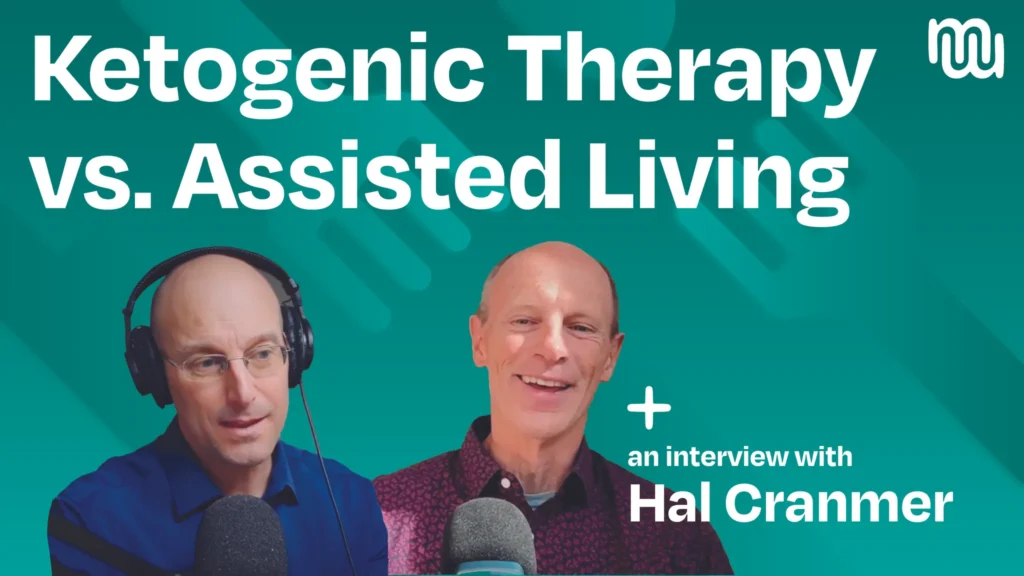
Hal Cranmer, owner of A Paradise for Parents assisted living homes in Arizona, shares how ketogenic and carnivore nutrition, combined with movement, sunlight, and community, are transforming the health of his elderly residents. By shifting away from processed foods toward nutrient-dense meals, residents are lowering blood pressure and blood sugar, regaining strength, improving memory, and even returning home to live independently. In this inspiring Metabolic Mind episode, Hal explains how better food and lifestyle strategies can revolutionize elder care while remaining affordable and practical.
Read more
How Ketosis, Metabolism, and Timing Could Shape Your Brain’s Future Right now, nearly 55 million people around the world are living with dementia. In the U.S., Alzheimer’s disease…
Learn more
An inspiring story of how one family used a ketogenic diet to get their daughter and their lives back from the cognitive decline that comes with Down Syndrome….
Learn more
This episode of the Metabolic Mind Podcast features Dr. Lily Mujica Parodi, a Baszucki Endowed Chair of Metabolic Neuroscience, and Dr. Kirk Nylen, Managing Director of Neuroscience at Baszucki Group. Together with host Dr. Bret Scher, they explore groundbreaking research on insulin resistance in the brain and its link to dementia and cognitive decline. The conversation highlights a critical age window for intervention, the stabilizing role of ketones on brain networks, and the potential of ketogenic diets and lifestyle changes to prevent or slow neurodegeneration. Listeners gain both scientific insight and practical takeaways on how metabolic health influences long-term brain function.
Learn more
Hal Cranmer, owner of A Paradise for Parents assisted living homes in Arizona, shares how ketogenic and carnivore nutrition, combined with movement, sunlight, and community, are transforming the health of his elderly residents. By shifting away from processed foods toward nutrient-dense meals, residents are lowering blood pressure and blood sugar, regaining strength, improving memory, and even returning home to live independently. In this inspiring Metabolic Mind episode, Hal explains how better food and lifestyle strategies can revolutionize elder care while remaining affordable and practical.
Read more
How Ketosis, Metabolism, and Timing Could Shape Your Brain’s Future Right now, nearly 55 million people around the world are living with dementia. In the U.S., Alzheimer’s disease…
Learn more
An inspiring story of how one family used a ketogenic diet to get their daughter and their lives back from the cognitive decline that comes with Down Syndrome….
Learn more
This episode of the Metabolic Mind Podcast features Dr. Lily Mujica Parodi, a Baszucki Endowed Chair of Metabolic Neuroscience, and Dr. Kirk Nylen, Managing Director of Neuroscience at Baszucki Group. Together with host Dr. Bret Scher, they explore groundbreaking research on insulin resistance in the brain and its link to dementia and cognitive decline. The conversation highlights a critical age window for intervention, the stabilizing role of ketones on brain networks, and the potential of ketogenic diets and lifestyle changes to prevent or slow neurodegeneration. Listeners gain both scientific insight and practical takeaways on how metabolic health influences long-term brain function.
Learn more