background logo image

Ketogenic Therapy Feasibility Trial in Anorexia Nervosa Shows Promise in Weight-Normalized Adults

New findings from a first-of-its-kind feasibility trial offer encouraging early evidence for ketogenic therapy in people living with anorexia nervosa.

Diagnosis

Anorexia Nervosa

Principal Investigators

Guido Frank, MD

Institution

UC San Diego School of Medicine

Location

San Diego, California

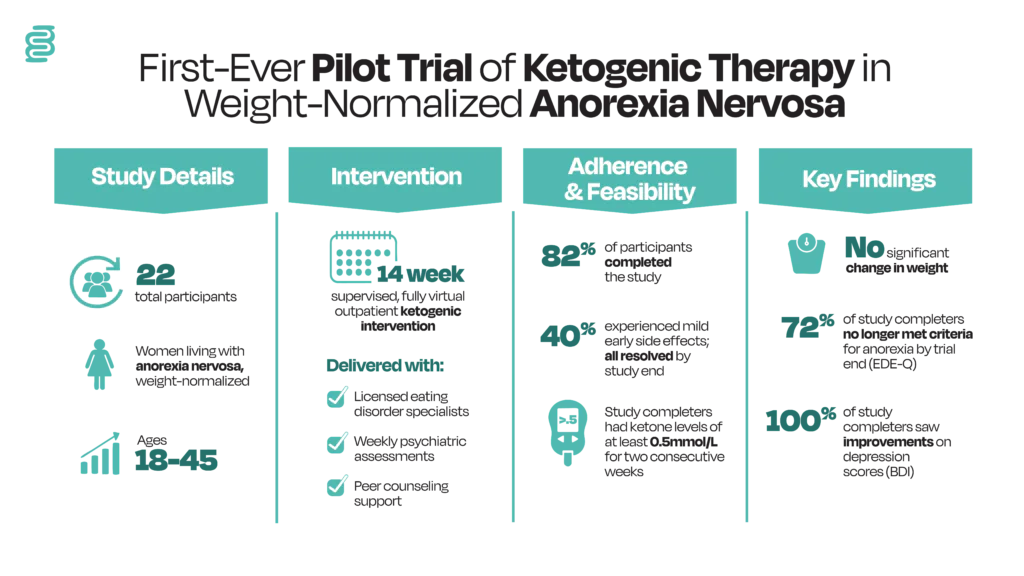
This is the first pilot trial to evaluate ketogenic therapy as an intervention for anorexia nervosa, a condition with one of the highest mortality rates of any psychiatric disorder and limited effective biological treatments. Conducted in a predominantly virtual, supervised outpatient setting, the trial demonstrated high adherence, no significant change in weight, and meaningful improvements in eating disorder and depressive symptoms, suggesting that ketogenic therapy is a feasible adjunctive intervention when delivered with specialized clinical support.


Video loading...

We urgently need new approaches to anorexia nervosa. Our work with ketogenic therapy looks beyond standard therapies and potentially at the underlying physiology of the disorder.”

Guido Frank, MD

Professor of Psychiatry, UC San Diego School of Medicine


Symptom Impact and Safety of Ketogenic Therapy in Adults with Anorexia Nervosa: A Feasibility Trial

A new study out of UC San Diego School of Medicine, published in Communications Medicine and funded by Baszucki Group, looked at the feasibility of ketogenic therapy for individuals living with anorexia nervosa.

The study focused on women with anorexia nervosa who were no longer severely underweight but were still experiencing the psychological symptoms associated with their eating disorder. Weight normalization is one goal for treatment of anorexia nervosa, but for many patients, the psychological symptoms of the disorder persist even after that milestone is reached.

Participants followed a 14-week ketogenic intervention, a high-fat, low-carbohydrate, moderate-protein eating pattern, with close support from licensed eating disorder specialists. The intervention was structured as 70% fat, 20% protein, and 10% carbohydrates, with meals either provided by a meal delivery service or prepared by participants themselves.

Each participant had 14 individual sessions with a licensed dietitian, weekly psychiatric assessments, peer counseling support, submitted post-meal photographs to track consumption, and tested their ketone levels daily for the first two weeks and weekly thereafter. Diets were tailored to each person’s needs, strict safety protocols were in place throughout, and people with dangerously low body weight were excluded.

A common concern about ketogenic therapy is the persistent perception of the diet as primarily a weight-loss intervention. In the context of anorexia nervosa, this concern is especially significant. The goal of this study was to evaluate whether ketogenic therapy could reduce the psychological symptoms of the disorder in people who had already normalized their weight. Weight was monitored closely throughout the study, and participants did not experience significant weight change. These findings are a reminder that ketogenic therapy is a metabolic intervention with potentially far-reaching effects on brain function and psychiatric symptoms, not simply a tool for managing body weight.

Of the 22 women enrolled, 18 (82%) completed the full study. By the end, 72% of completers scored in the recovered range on eating disorder assessments as measured by two validated scales, the Eating Disorder Examination Questionnaire (EDE-Q) and the Eating Disorder Inventory-3 (EDI-3). All completers showed improvement in depression scores as measured by the Beck Depression Inventory (BDI), with 72% falling within the normal range by study end. Study completers also showed significant improvements in self-esteem, anxiety, and functional impairment. Notably, 40% of completers experienced mild side effects early in the intervention, but all fully resolved by the study’s end.

These results add to a growing body of evidence suggesting that metabolic dysfunction may play a role in anorexia nervosa and other psychiatric conditions. Researchers hypothesize that switching the brain’s primary fuel source from glucose to ketones may help regulate neural function and reduce the psychological symptoms associated with the disorder. Larger, controlled studies are needed to confirm these findings. A follow-up study enrolling people with both anorexia nervosa and bulimia nervosa is currently underway and recruiting participants across the country. If you or someone you know may be eligible, speak with your healthcare provider to learn more about participating.

Disclaimer: The diet was delivered under close medical supervision and is not something people should attempt on their own. Anyone with anorexia nervosa considering dietary changes should consult with their care team.


Related Content

Why Would Ketosis Help with Anorexia? With Dr. Guido Frank
Video

Why Would Ketosis Help with Anorexia? With Dr. Guido Frank

Could nutritional ketosis from a keto diet benefit eating disorders such as anorexia nervosa? UCSD psychiatrist and researcher Dr. Guido Frank thinks that it may, but emphasizes that we need more research and need to ensure ketosis is done in a safe and controlled environment. Dr. Frank joins us for a rapid-fire Q&A about the potential for a therapeutic ketogenic intervention to benefit people living with anorexia nervosa.

Treating Anorexia with Keto
Video

Treating Anorexia with Keto

Caroline lived with anorexia for 15 years and got to the point where she gave up hope of ever recovering and living a “normal” life. That is until her aunt, Dr. Barbara Scolnick, helped Caroline start a ketogenic diet and ketamine infusions. The result was dramatic. Caroline says she is now cured of her anorexia and lives the “normal” life she never thought she would.

Silencing the Anorexic Voice: Ketosis and Ketamine for Anorexia
video

Silencing the Anorexic Voice: Ketosis and Ketamine for Anorexia

A published pilot study indicates therapeutic nutritional ketosis, aka a keto diet, combined with ketamine infusions, can dramatically improve anorexia nervosa eating disorder. That’s a surprising statement, as anorexia is seen by many as a contraindication to starting a keto diet. But in this case, it may have been a key to disease remission. However, it may not be right for everyone. Hear from the study’s authors about why they conducted the study and who they think this approach could help.

3 Stories of Recovery from Anorexia with Ketogenic Therapy
video

3 Stories of Recovery from Anorexia with Ketogenic Therapy

Anorexia nervosa is a devastating eating disorder with the highest mortality rate of any psychiatric illness. Restricted diets are considered contraindicated in anorexia. However, emerging evidence suggests that therapeutic nutritional ketosis from a ketogenic diet could be a safe and effective treatment for those battling anorexia.

Is Keto Safe?
topic page

Is Keto Safe?

Get clarity on the safety and sustainability of ketogenic diets. This section features expert reviews, research summaries, and myth-busting content to help you make informed decisions about ketogenic therapy for mental health.

Caroline Beckwith
think+smart

Caroline Beckwith

Learn how Caroline Beckwith spent 15 years cycling through inpatient programs and countless treatments for anorexia nervosa, only to find relief through an unexpected intervention: ketogenic therapy. Her story sheds light on how metabolic health may play a key role in disordered eating and what recovery can look like.