Get the latest on metabolic psychiatry. Subscribe.


Listen, Watch & Subscribe on:



Fasting and Ketosis to treat Dementia With Dr. Matthew Phillips
Listen
About the host

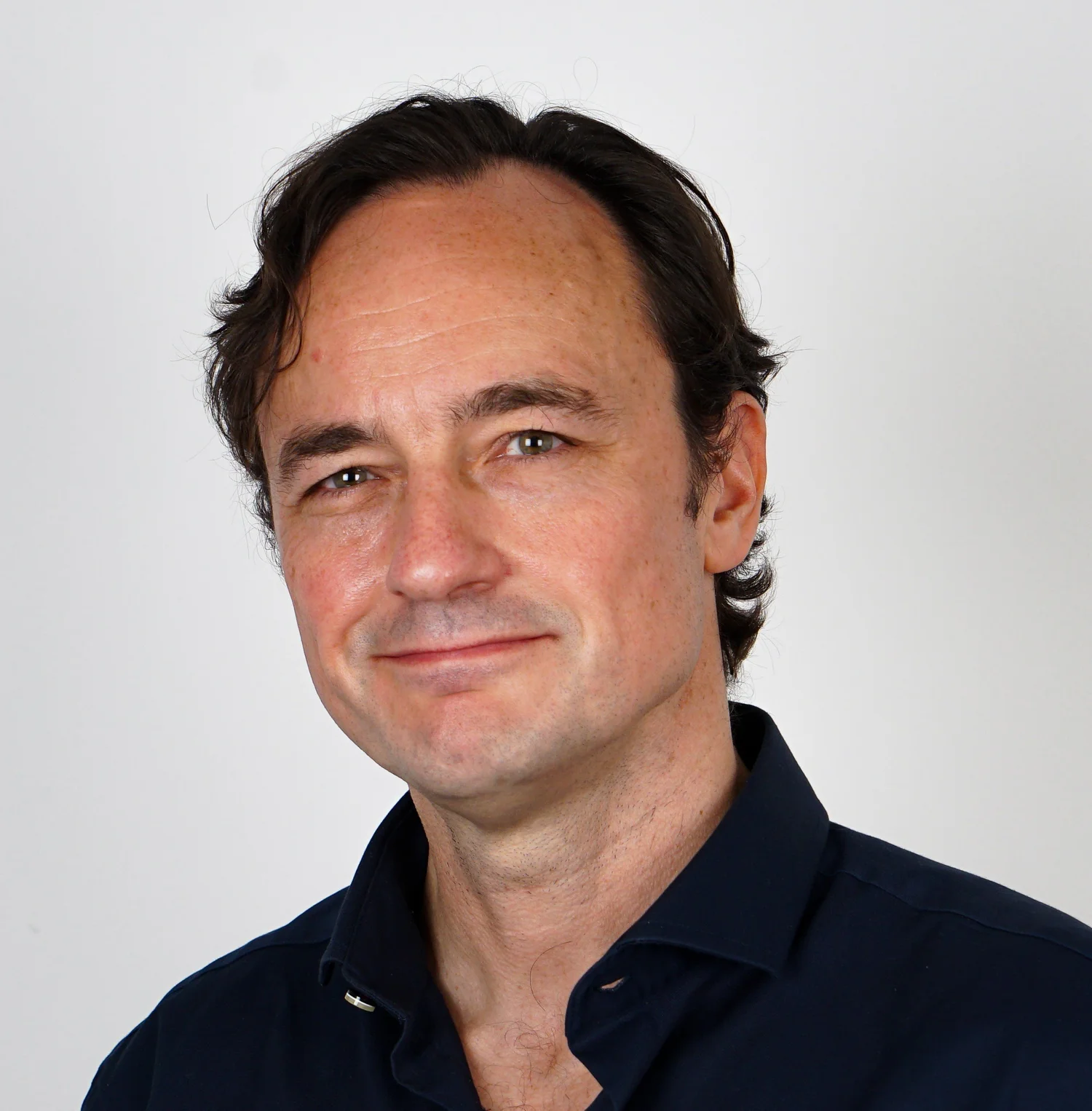
About the guest

Bret:
Welcome to the Metabolic Mind Podcast. I’m your host, Dr. Bret Scher. Metabolic Mind is a nonprofit initiative of Baszucki Group where we’re providing information about the intersection of metabolic health and mental health and metabolic therapies, such as nutritional ketosis as therapies for mental illness.
Thank you for joining us. Although our podcast is for informational purposes only and we aren’t giving medical advice, we hope you will learn from our content, and it will help facilitate discussions with your healthcare providers to see if you could benefit from exploring the connection between metabolic and mental health.
Welcome back to Metabolic Mind. I’m Dr. Bret Scher. At Metabolic Mind, we’re a nonprofit of Baszucki Group where we focus on this intersection of metabolic health and mental health. And today, we’re actually finishing up our three-part series of metabolic health and neurologic health. So, mental health, of course, as part of the brain. So are neurodegenerative diseases, such as Alzheimer’s disease, Parkinson’s. Even brain tumors and things like Huntington’s and ALS, and so many different sort of, you could call them neurodegenerative diseases, are brain diseases, is really what they are.
And that’s part of the concept that we talk about with nutritional ketosis as an intervention, how it can benefit brain health in multiple different areas of what we call brain diseases. So today, I’m joined by Dr. Matthew Phillips, who is the Metabolic Neurologist. You can find him at metabolicneurologist.com, and his website says so much about him.
He is one of the first to really focus on metabolism, metabolic health, and overall neurology and neurologic health. And he’s a clinician and researcher at Waikato hospital, I had to ask him how to pronounce that, Waikato Hospital, in New Zealand. And he’s done a number of different studies looking at nutritional ketosis, one for Alzheimer’s, one for Parkinson’s.
He’s published a case report on Huntington’s. He’s doing a study right now on glioblastoma. So, he’s very active from a research side and from a clinical side. And it’s so interesting to hear him. You’ll hear him say this, that he wants to know how to help his patients. That’s why he’s doing the research for himself, and for the broader field of neurology and medicine as a whole.
And he also has some really interesting concepts about how we approach medicine. So, that’s what we get into in this discussion, both medicine as a whole, like how we approach medical conditions, neurological conditions, and maybe how that’s a little off and we should refocus. And specifically, nutritional ketosis, intermittent fasting, metabolic health for neurodegenerative disorders, like Alzheimer’s disease.
So, I really think this is a nice sort of bookend to this three-part series focusing on metabolic health, nutritional ketosis, and neurodegenerative disorders, like Alzheimer’s. But before the interview, please remember this interview and this content, this channel is for informational purposes only.
We’re not providing individual or group healthcare or medical advice, and we’re not establishing a per provider patient relationship. Much of the things we talk about, whether it’s nutritional ketosis, ketogenic diets, intermittent fasting, they could be potentially dangerous if done in the wrong circumstance in the wrong way.
So please, do not change your lifestyle. Do not change your medications without consulting with your healthcare provider first, alright? But now, with that out of the way, let’s get on with this interview with Dr. Matthew Phillips.
Dr. Phillips, I really appreciate you joining me today to talk about metabolic neurology. And really I want to start at the beginning and hear what kind of inspired you to focus on metabolism and metabolic treatments as treatments for neurologic disorders.
Matthew:
Okay, Bret, thanks for having me. And, yeah, I’d be pleased to. So, it’s always hard to know if one was influenced at a young age, or if at a young age, one’s brain sort of sought out the influences. But I think I was influenced as a kid, the more I dig back into my childhood, about the brain and about metabolism in various ways. Probably mostly by my parents and what they exposed me to back in Canada, where I grew up.
And I guess, it was just, I guess I see the last few decades as this constant process of unraveling one’s interests and rediscovering what I liked as a kid. Because when you get into the teenage years and twenties and thirties, I think you get sidetracked by thinking you’re interested in other things, that you really aren’t as interested as you thought you were.
I always say to young people, go back to when you were less than 10 years old and think about what you liked then. And so, my interest in metabolism in the brain originated from a variety of different sources, is what I’m trying to say. And I guess it wasn’t until I was about 40 years old that I suddenly really put it all together.
Because I had finished my training in neurology at the Royal Melbourne Hospital in Australia at the age of 38. And so after that time, 39, 40 and, well 38, 39 or 40, I basically traveled and worked and volunteered in a few other places in Asia and South America. And it was during that time where I had the time to really think about these childhood interests and things and explore them more.
And then I just started putting the connections together about the brain metabolism, neuroscience, and here we are. I don’t know. It’s so hard to answer your question in five minutes, but I tried.
Bret:
Yeah, that’s always the trick, right? Asking questions that you could spend hours on and trying to distill it down.
But so, let’s talk about this a little bit more ,though. So, we live in a medical society that is so focused on medications to treat your problems, and there have been billions of dollars spent on drugs for Alzheimer’s disease, drugs for Parkinson’s. And, to be frank, they just don’t do very well.
They haven’t had that breakthrough that they’re looking through. But here’s something as simple as diet. As simple as what you eat, what you put in your body that can help treat these neurological disorders, or at least improve the symptoms. Why? How does it work? What’s going on? Give us the background.
Matthew:
Okay. So, the main problem with the medical system today is simply dogma and how the brain works, how we see things. We tend to see our own perceptions rather than reality. And for various reasons, historical reasons, there’s a perception that medicine equals largely prescribing medications, and that is how we target and treat disorders today.
Now that approach has worked well for infectious diseases in the past, but now we’re faced with a tsunami of lifestyle disorders. And we’re still trying to apply that perception, let’s call it germ theory, that germ theory approach to these lifestyle disorders, whereby the idea is to find a target and suppress it or eliminate it.
But what we need to do in these lifestyle disorders, like Alzheimer’s, like Parkinson’s, like cancer and so on, is not actually, I would say, solely target and eliminate. That has a role in cancer, for example. But the main thrust with the, particularly with the neurodegenerative disorders as you mentioned, it should be probably the opposite approach to germ theory, which is to restore things and try to truly heal damaged neurons in the case of the neurodegenerative disorder.
So, Alzheimer’s, Parkinson’s have very damaged neurons. They slowly wither away and die. And a lot of people are trying to target, they build up proteins as they do this process. Different proteins in Alzheimer’s, different proteins in Parkinson’s, Huntington’s, and a motor neuron disease and so on. And people are trying to, a lot of the research is trying to target these proteins. They think the proteins are the bad guys, and they’re trying to target them with various methods and eliminate them, destroy them.
So, it’s a very germ theory way of thinking about it. And it’s not working, as you say. It’s really not working. And we’re, I think, we’re at the point where a lot of people are realizing this, but we keep going anyways because that’s where the funding is and that’s where the dogma is taking us.
There’s got to be something that we can target and eliminate. But diet approach and fasting approaches aim to restore the health of neurons. Neurons benefit the most from these approaches, maybe followed next by muscle cells. Why? Because they’re metabolically active and fasting and ketogenic diets are basically aimed at restoring metabolism and fundamentally mitochondria health.
So, I think the best way to look at fasting and ketogenic diets strategies is as strategies, not as a diet and not as a fasting period. They are methods for inducing a different body state that fundamentally aims to restore neurons and muscles. And that is my interest in exploring the applicability of that to these really difficult disorders, like Alzheimer’s and Parkinson’s.
Bret:
Yeah, I think that’s so important for you to mention how metabolically active neurons are and how dependent they are on metabolic health and mitochondrial health. Because let’s be honest, most people don’t walk around thinking about neurons all day. Most people don’t even know what neurons are probably.
So, we think about maybe muscle cells because we use our muscles all the day. There’s a focus on it, but it seems like there’s less of a focus on brain cells and neurons. And so, I think it’s really important to, bring that to awareness of how metabolically active they are and dependent they are on metabolic health.
So, anything that’s going to improve metabolic health is likely going to improve neuron function. And you talked a bit about, this might be a little bit of a tangent, but you talked a little bit about the current medical strategies of medications, which really treat a symptom versus restoring health for getting back to the health.
And that’s along the lines of the paper you wrote, Metabolic Strategies in Healthcare: A New Era. And I really like how you said that a new era like we should start focusing on metabolic health, on promoting health. And I think it’s the kind of thing where a lot of people might read it and nod their head.
Okay. Okay. And then for physicians do nothing about it. So, I’m curious if you got much feedback on that paper. If people were like, yeah, we should do that. Or if people were like, no, you’re crazy, it’s never going to change. What kind of feedback?
Matthew:
The feedback has generally been very good. It’s just, as you say, it’s easy to read a paper like that and go, yeah, that makes sense.
But if you really think about what the paper’s trying to say, it should trigger a sensation of, holy mackerel, wow. If it doesn’t trigger that thought, you haven’t fully understood the paper or you’re already extremely converted. Because I probably take this further than almost anyone in the metabolic sphere, I would say.
So, if there’s one thing you could do to improve the health of the Western population, I think it would be simply to implement a proper fasting protocol. That to me is the single, that would be the most powerful intervention one could do to improve the diabetes, the obesity issues, the blood pressure issues, and mitigate the chance of atherosclerosis, cancer, neurodegenerative disorders in future, I think.
I might be wrong, but I think that would be the most powerful thing one could do. Yeah, the reception’s been pretty positive. It’s just that I think it’s really hard to see the message in that paper unless you, if you don’t get the aha moment, it’s the kind of thing, like you say, you can just read it and it’ll pass you by.
But it would be so powerful if we could implement a very cost effective therapy that would help so many people. What we do in the medical system is we focus, I like to think of the ancient yang and yin concept. We focus on diet and exercise a lot. We know that focusing on eat less, move more, good diet, it doesn’t really work.
We’ve been advising people of those things for years. And everybody knows, oh yeah, good diet is good, exercise good, but they don’t actually get into specifics. And actually, a diet that everyone thinks is good can be bad. An exercise that everyone thinks is good can be bad.
So that’s the yang. We emphasize yang way too much. We need to emphasize yin, the opposite. So what is the opposite to a diet? It’s not a diet at all. It’s fasting. What is the opposite to exercise? It’s not moving. It’s proper resting protocol. Yes, resting can be done actively with purpose and in a very efficient manner.
And of course, that includes sleep. We don’t focus on those things nearly enough. Fasting is just as important as eating, and resting is just as important as exercise. If you don’t rest properly with exercise, you’re going to do damage to your body. Over the long term, we see that with ultra-high level athletes. They are damaged, and they get a lot of disorders at a young-ish age.
So, the paper is trying to, basically about balance, metabolic strategies, fasting, keto diets are addressing the imbalance of the modern lifestyle by simply introducing a bit of yin where there’s an excess of yang. Sorry to get a little mystical there, or Eastern there, but that’s the way I see it.
Bret:
I like it, but I’ve got to be honest. You bring up the word fasting, and for some people, that is just a big trigger word because it can mean so many things. Is it 12 hours of fasting? Is it 12 days of fasting? Is it three days? Is it five days? What is appropriate fasting? And I know there’s not one answer because it depends on what your goals are and what your situation is.
But when you say one of the best things we can do, one of the most effective things we can do, is implement an effective fasting protocol. What is in your mind in terms of what that looks like?
Matthew:
Yeah, that’s a great question, Bret. So I think it’s important to realize that, as you say, they are different.
Different people, even fasting experts, that disagree a little bit on the definitions. But fasting is simply abstinence from food and or drink for a specified period of time, and it’s controlled by you. So, that’s a different from starvation where you don’t have control. You don’t know when you’re going to eat next.
And starvation is totally a different thing. So, I broadly divide fasting into intermittent fasting and prolonged fasting. And intermittent is there any fast that’s sort of, you could say less than 24 hours or less than 48 hours. We’ll say 48. And prolonged fasting is anything over 48 hours.
Now, when I say implementing a proper fasting protocol, I generally mean intermittent fasting. If you could implement an intermittent fasting protocol of under 48 hours. The minimum is usually accepted as 12 hours. You need to do at least 12 hours. So, 12 to 48, and basically, a daily fast of say 16 to 21 or 23 hours.
If you could implement a 16 to 23 hour fast every day. Make that part of your lifestyle, actually look forward to it. That’s the goal. Not to see it as a chore or as a hindrance. It’s actually a benefit. You’re creating advantages for your neurons, your brain, your muscles, your life. It’s an advantage, fasting.
It adds time to your day. It takes away psychological stress. You don’t have to think about meals and all this thing and helps you sleep. So, if people could realize the sheer impact of just going from three meals a day, plus a couple snacks. Most people eat about five, six times a day, to one or two meals a day.
And you just eat. I do one meal a day, OMAD, religiously. So, one hour a day, one hour to eat the meal, enjoy that meal, big meal, 23 hours fast. Awesome. And you probably do something similar. I’m sure you know that would be, that would be great for a lot of people. I think that would help them a lot.
It would absolutely, help re-equilibrate their metabolic health and diabetes, obesity, blood pressure issues, things like that. Get fixed on their own during that process. So, I always, I advise people if they’re interested in this stuff, not everyone is but most are, to start with a fasting protocol, even over a low carb or keto diet because it’s easier if you can do the psychological flip.
It’s easier to implement for people. And then, what if they can do that? Then we, I might, work on a low keto diet next time. So, that’s my approach.
Bret:
Yeah, so interesting to hear a neurologist talking about that. It’s so contrary to what we think neurologists normally would talk about. But which brings me back to neurology, right?
To neurodegenerative diseases, to Alzheimer’s disease. So, you performed, you and colleagues, performed a randomized controlled trial on 26 patients with Alzheimer’s, dementia, and put them on a ketogenic diet, which you call a modified ketogenic diet, versus a basically low-fat kind of standard heart healthy kind of diet.
And then had a crossover period, and found a significant improvement in activities of daily living and quality of life in the ketogenic group. Now, when you saw the results of this trial, it was randomized, there were significant benefits. And these are big things. People with Alzheimer’s disease, their activities of daily living diminished.
They cannot take care of themselves. Their quality of life diminishes drastically. So, for both of those to go up, while the control diet saw it go down. Did you think this could be like what was needed to change practice? And people were going to see this and say, all right, we need to start thinking more seriously about this.
Like, how did you think the impact was going to be? And what do you think it has been now looking back?
Matthew:
The reason I do these trials, Bret, is I want to see if there’s a better way to treat these disorders, and I want to help people, of course. Also though, I must admit, I want to know the truth myself.
So can this help? Can this help people with Parkinson’s? Can this help people with Alzheimer’s? I’m always trying to conduct these trials as well as I can. And they’re never as good as you hope they would be. There’s always, life always throws things in the way with these trials that you can’t foresee.
Like COVID, for example, got us at the end of the Alzheimer’s trial. That was annoying, to say the least, the lockdowns. But you try to do them the best you can and recognizing Alzheimer’s is probably the most difficult population I’ve done, any keto diet strategy. Well, in a group of people anyways.
These people have cognitive issues, and some of them are not really, they’re really not all there. So yes, it was interesting. The interesting thing about the trial was, so we had 26 people, which may not sound like a lot to some, but for a randomized crossover trial is absolutely ample, statistically.
You need far fewer patients for a crossover design than the typical randomized controlled trial parallel arm group design. So, that was the cool thing about it. It was the most people, but the design was such that it was by far the most statistically powered Intervention, keto diet intervention in any group of Alzheimer’s patients ever. And an interesting thing was we did assessments at baseline, 6 weeks and 12 weeks. So, three months, and you can see a sort of a trend there. So, the ketogenic diet group kind of starts to pull away from the standard of care group a little bit at six weeks, and then at 12 weeks more.
And it was the same in our Parkinson’s trial. You can see this trend, and I always wonder, what if we’d gone longer? Because these strategies, keto diets and fasting, are stresses at the end of the day, right? They stress the body. That’s the point. You stress the body a little bit to make stronger in the long term and more efficient in the long term.
So, you stress the neurons a little bit, stress the muscles a little bit. That’s hormesis, and you want to do that to make people healthier and better in the long term. So, what if we took it to six months or even longer?
We could have, again, various things got me in the end. Funding is always an issue. It’s not an issue so much anymore, but it was a few years ago. So, I was pleased to see the results. I was hoping that there, so we measured three things: cognition, daily function, and quality of life.
Daily function and quality of life showed the trend, and they were statistically better at the 12 weeks. And not only that, more importantly, it was a clinically meaningful improvement, which means you could, it’s an obvious improvement. So, you can get a lot of trials that look at statistically significant improvements, but if you have like hundreds of patients or thousands, you can get that statistical improvement.
But it’s so tiny, you can’t tell the difference. And so in this, we had a decent difference. Now, the cognition showed a trend towards improvement in the keto group, but it didn’t make statistical significance, and it didn’t make the clinically meaningful difference. I wonder if we have more time if it would’ve got there?
But it was going in the right direction. So yes, overall, the results were good. I thought they were good, and I think encouraging. That being said, I would, my brain’s always thinking, what if I did another trial, and introduced a little bit of fasting into that protocol? Made it six months instead?
So, I’m always trying to, I’m always a little, you’re always happy with your success, but always disappointed at the same time. So, that’s the way with every single paper I’ve published, and I think that’s a good thing. If you think you just did an amazing job, you’re probably deluding yourself.
If you think you did an absolute terrible job, you’re being way too hard on yourself. The truth is that you start out with this wonderful idea, this concept. And when you implement it, which is so much harder than thinking about it, life goes, okay, this is how it’s going to be implemented.
And you just have to see what the truth of the matter is and try and adjust and go on and do the next one.
Bret:
So, why wouldn’t someone want to try a ketogenic diet and intermittent fasting if they have Alzheimer’s disease? It’s a diagnosis that changes your life and your family’s life. As we said, the treatments aren’t great.
Why wouldn’t someone try it?
Matthew:
The main reason goes back to what we were discussing earlier. It’s dogma and the way people think. So, people perceive these things as burdens on lifestyle. Why wouldn’t someone try it? Because I want to enjoy my food. I want to eat when I want. Now remember, in the trial, we did measure quality of life as the third out primary outcome, and it drastically improved in the ketogenic diet group.
So, quality of life improved on the lifestyle therapy. So, that kind of is directly contrary to the argument of, I want to enjoy life. if you want to enjoy life, do a bit of fasting. Well, maybe not fasting. We didn’t check that. But I suspect fasting would be good a little bit, and do a ketogenic diet.
But most people are going to, it’s the thought itself, the perception itself, that it’s hard, that gets people. If they actually went and did it, and were pretty stringent and got over the first few weeks where it’s the hardest because these things get better with time. Then they would find, maybe there would be some benefits accruing?
So, I think that’s the reason. And then it’s not just the person’s perception, it’s their family, their friends, their doctors, their GPs. So many people have negative ideas about fasting and ketogenic diets. So, it’s makes no sense, but the brain is not a logical thing. So, I’m having a brain paper I’ve just been writing a year and a half, getting reviewed right now, talking about how the brain works.
Because I realize this is fundamental to getting metabolic strategies implemented in a longer term, in a wider sense, a broader sense. The brain is not logically based. if it was, then I think we’d be looking at these arguments more seriously. And perhaps, implementing these things. But yeah, it’s the perception, negative perception, that gets it.
Last year, nutrition experts, I think in the US World News, ranked 40 diets, which is the best, which is the worst? And I believe the Mediterranean came out number one. Keto was number 38, 39, 40, right at the end, which makes no sense, right?
It’s not logical. Why is that not logical? Because keto iss not a diet. Mediterranean diet is diet. For example, I eat one meal a day. It is a Mediterranean keto diet. So, I’m concurrently on the best diet and the worst diet. How can that be? Because keto is a method, not a diet.
It’s a method for generating ketones. And it can be Mediterranean-based, it can be carnivore-based. A proper carnivore diet should be keto. It can be vegetarian-based. It can be any sort of ethnic cuisine you want. And so, it just shows that the nutrition experts who did the ranking don’t understand the concept of a ketogenic diet, which is that it’s a method.
If they understood that, the ketogenic diet shouldn’t even be in that list. It’s different. It’s a totally different way of looking at things. So, it’s the perception of, it’s the perception that is fundamental to real change. And I’ve realized this. I do all the teaching for neurology at my hospital, Waikato Hospital.
It is the perception. The medical students are trained in this perception. And even as kids, we’re trained in this perception of what is healthy and what is not? And that’s the problem. That’s the main issue. So that’s why I’m getting more, I’m actually getting more and more interested.
I’m continuing my metabolic stuff, of course, but also getting interested in brain processing and how the brain not only perceives reality, but creates it. Because, we create most of our reality, I think. And that is your, if the brain says this is so, then this is so. And you cannot argue with a person, that is their reality.
Bret:
Yeah, I really like how you clarified that. And that’s something I talk about a lot, is that ketosis is an intervention. It’s a metabolic and medical intervention, really, and you can get there with a keto diet. But it’s the end result of ketosis, and not so much the diet itself. And yeah, I think that’s really key.
But now, so when we talk about ketosis as an intervention and how it changes our brain chemistry and how it changes our neuroinflammation. And it almost sounds too good to be true, in a way, because you’ve published papers showing how it can benefit Alzheimer’s, how it can benefit Parkinson’s.
You published a case report about how it can benefit Huntington’s. You’re studying it in glioblastoma. We’ve talked a lot about papers and experience. How it can benefit bipolar disorder and schizophrenia. So, when something works for, I guess you could say, too many things, it almost sounds ah, snake oil. Like how could that be?
So, how could one intervention work for so many different, supposedly different, medical disorders?
Matthew:
Yeah, you’re talking about viewing it as a panache. A one thing that cures all. But I don’t think, I’m definitely not saying that. So now, and I’m going to prelude this by saying we use these in medicine, steroids, for example, prednisone we use for multiple disorders in neurology.
At the end of the day, when, the patient’s on the ward, unless they’re strokes or epilepsy, a lot of them with the weird and wacky autoimmune disorders and lymphomas and things like that, we use steroids. We end up going to steroids or some kind of immunosuppressive thing. So, we’re already using panache. And these are just, as you say, things that control symptoms they make, they can mitigate the process, whatever that bad process is to an extent.
But they certainly don’t cure it. Now, the reason that fasting and keto diet protocols can be applied to so many different disorders, the reason is that these disorders are, although the most of them, most of them I’d say, have existed in humanity for thousands of years, they are much worse now.
They are much more prevalent now. They’re hitting a lot more people now. Alzheimer’s doubling every 20 years, Parkinson’s, something similar. And the reason is they are getting, they’re fundamentally mitochondria disorders, and they’re fundamentally getting worsened by things that hurt mitochondria. And the number one thing hurting our mitochondria now.
But so, the mitochondria are the little batteries, and they’re packed in neurons. And they’re in muscle cells, and they’re in almost all cells in our body. And they do a lot more than just make energy, but they do make energy. I see mitochondria as the fundamental unit of life, by the way.
So the house, the cells are houses. The mitochondria are directing a lot of what goes on inside the cell, and they’re getting damaged more. And again, this is where I differ from most because of excess meals. Not even high carb meals, excess meals, eating too many times a day. Also highly-processed carbs resulting in glucose spikes in the blood throughout the day.
The mitochondria have to deal with all of this constant nutrient influx. And a lot of it, high carb swamping the metabolic pathways that deal with carbohydrates. This goes on day in, day out. And basically, one of the best things about fasting is it allows the mitochondria a break where they can undergo a whole bunch of different processes.
They can renew themselves. The mitochondria pool in the body can renew itself, and we don’t allow ourselves to do that. So, these disorders, that I call the lifestyle style disorders, are mainly heart atherosclerosis leading to most heart attacks and probably most strokes.
Cancer, okay, not all cancers, but the majority of cancer is sporadic, 90%. Ten percent is genetic. I’m talking about sporadic. And then the neurogenic disorders, like Alzheimer’s, Parkinson’s, Huntington’s, as you say, motor neurone disease so ALS. I’m looking at ALS right now, actually, we’re doing a publication writing that up right now.
These are all things that have existed for a long time, but they’re much worse now and there’s a lot more of it. Now, it’s not just because we’re living older. The fundamental reason is that we’re damaging our mitochondria more. I think, again, I could be wrong, Bret, but I think if that’s the case, that explains that.
And, of course, the metabolic syndrome, diabetes, hypertension, being overweight and so on, is all part of this as well. And that’s definitely way more common now than it was 50 years ago. So, these are the disorders that, I think, it’s applicable to now. Was it applicable to something like myasthenia gravis, which is a pure, almost a pure, autoimmune disorder where the immune system attacks itself? Maybe not so much.
Is it applicable to a congenital thing, like cerebral palsy, where someone is born with a brain that didn’t develop quite correctly? Maybe not. I don’t think they, I think they might help by making neurometabolism better, but I don’t see them, I don’t see conceptually how they could help as much.
So, I don’t think it’s a panache for everything. But I do think what the main thing is that the modern lifestyle, eating too many times and highly-processed carbs, is damaging itself. It’s abnormal and very damaging. This is simply yin. It is the counterbalance to the yang that has gone out of control. And so it’s about reestablishing some kind of balance.
The human body evolved to be in this sort of balanced state, going back and forth across a mean, in terms of metabolism, and we’re just trying to restore that.
Bret:
Yeah, that’s a good way to describe it. Now, when I read your randomized control trials and when I read your writings about the mechanisms and I hear you speak, I walk away thinking every neurologist needs this in their toolkit as adjunctive therapy for every patient with Alzheimer’s disease. Like I would say, unequivocally, that should be the case. And do you agree? You’re the one creating the science and speaking about it and practicing it.
Do you agree it should unequivocally be part of initial therapy for everyone with Alzheimer’s?
Matthew:
A hundred percent, yeah. Keep in mind, I’m doing the trials, and I’m trying to see what the answer is. So, it’s really important to try and stay open-minded and not have preconceived notions, oneself. However, even with the results to date that I’ve seen in our trials, and there’s other people doing great work, too, I think a hundred percent it’s necessary to just have this as an option in the toolkit.
One, it seems to work for a lot of things, not just neurological. So, like your diabetes, for example, which is so common. Two, it’s extremely, it seems to be beneficial for life, in terms of other things. Quality of life, for example, in general, sleep and so on.
Three, it’s very self-empowering. A lot of people now, they deep down, they may not be able to conceptualize. They know that they don’t, nobody wants to be on 10 different medications at the age of 50 or 60.
Bret:
I think that was a really good discussion and a really good sort of journey through what motivated you, what you’ve seen, and how you can help your patients, what you’ve done from a research side, and how that can and is, or isn’t, influencing sort of the medical profession.
I think there’s a lot to digest here. And I think it’s pretty clear that, for me, the take home is that nutritional ketosis is not just a diet. It’s a medical intervention, and it can benefit the neurons in so many different ways. And same for intermittent fasting. Same for focusing on metabolic health.
And that’s why I love your website, Metabolic Neurologists, because it really says what it is, and that’s what we need more of. Metabolic Strategies in Healthcare: A New Era, I love the title of that paper. Thank you for joining me, and just want to give you the floor for any sort of last comments to wrap this up.
Matthew:
No, I appreciate the the offer and the discussion. Thank you. I guess I would just say it’s important to realize that, I think, the reason most people are not mass adopting this in the medical system is that it’s difficult to see beyond our own perceptions. if you’ve decided that.
You conceptualize a disorder in a certain way, and how to treat it in a certain way. When someone mentions something that seems very different because it’s an entirely different approach, it is easy to dismiss. And it’s not because people are being obtuse or obstructive. It’s just they can’t see it.
And I didn’t understand that a few years ago. I think I understand that now. They can’t see it. And how do you help people see different perspectives? You’re patient and you do studies that offer results. And eventually, you change, you help that person, other people change that perspective.
So, I think that it’s going to take a long time. But if there’s truth in the matter, I really believe that the truth will get us there. And what people need at the end of the day is hope and a plan. Two things, really, just hope and a plan. And I think metabolic strategies offer hope for people with a lot of really difficult disorders, neurological ones being high amongst those.
But they also offer a plan, and the plan is one that is not in the hands of someone else. It’s in your hands. And if you want to do some good for yourself and for people around you, you can implement these things. And it would appear, with the preliminary evidence to date, gain benefit for not just yourself, but everyone around you. And that is a good thing for everyone.
Yeah, I think I’ll leave it at that.
Bret:
Thanks for listening to the Metabolic Mind Podcast. If you found this episode helpful, please leave a rating and comment as we’d love to hear from you. And please click the subscribe button so you won’t miss any of our future episodes. And you can see full video episodes on our YouTube page at Metabolic Mind.
Lastly, if you know someone who may benefit from this information, please share it, as our goal is to spread this information to help as many people as possible. Thanks again for listening, and we’ll see you here next time at The Metabolic Mind Podcast.
Listen, Watch & Subscribe on:
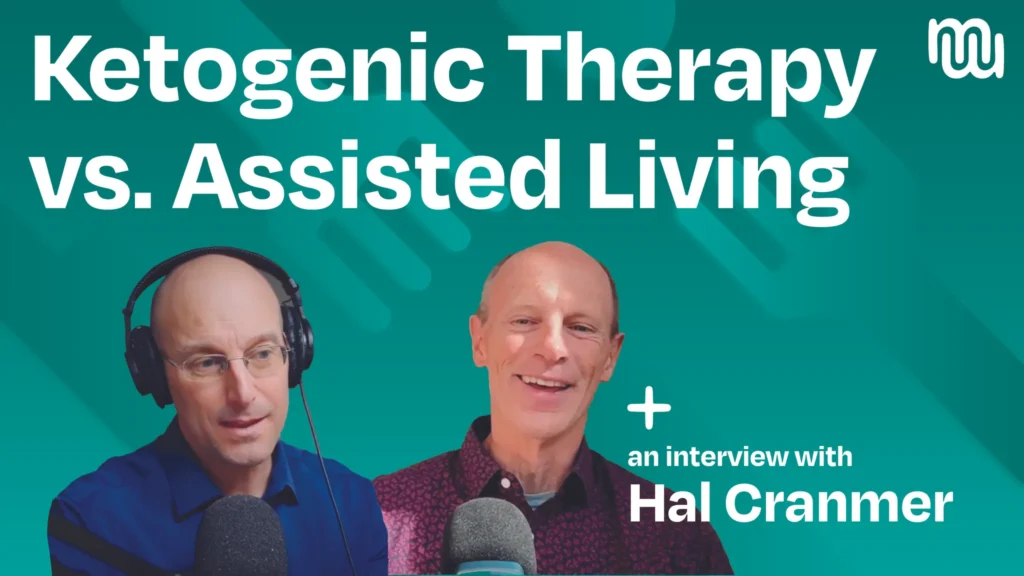
Hal Cranmer, owner of A Paradise for Parents assisted living homes in Arizona, shares how ketogenic and carnivore nutrition, combined with movement, sunlight, and community, are transforming the health of his elderly residents. By shifting away from processed foods toward nutrient-dense meals, residents are lowering blood pressure and blood sugar, regaining strength, improving memory, and even returning home to live independently. In this inspiring Metabolic Mind episode, Hal explains how better food and lifestyle strategies can revolutionize elder care while remaining affordable and practical.
Read more
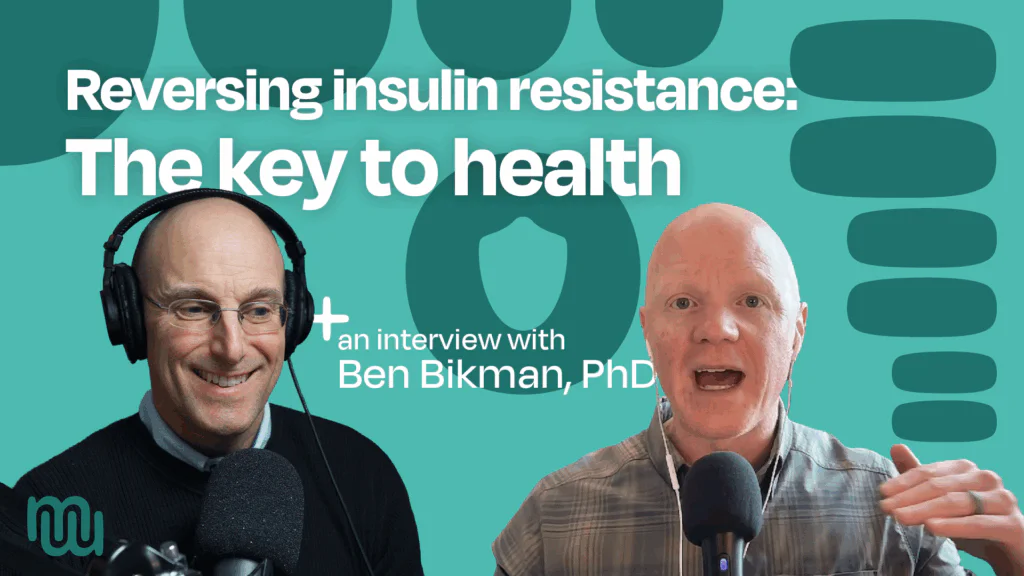
BYU researcher Ben Bikman explains how insulin resistance connects metabolic and mental disorders and how to fix it through nutrition and strength-focused lifestyle changes. Learn how insulin impacts the brain, why carb control matters, and the practical steps to improve insulin sensitivity for both body and mind.
Learn more
We at Metabolic Mind believe that there’s a strong connection between mental and metabolic health. But where did this belief come from? In this article, we’ll answer this…
Learn more
From end-of-life care to personal rebirth: reflections on life, death, and the profound impact of healing through metabolic therapies for mental and neurological health. Death Doula Wisdom In…
Learn more
Hal Cranmer, owner of A Paradise for Parents assisted living homes in Arizona, shares how ketogenic and carnivore nutrition, combined with movement, sunlight, and community, are transforming the health of his elderly residents. By shifting away from processed foods toward nutrient-dense meals, residents are lowering blood pressure and blood sugar, regaining strength, improving memory, and even returning home to live independently. In this inspiring Metabolic Mind episode, Hal explains how better food and lifestyle strategies can revolutionize elder care while remaining affordable and practical.
Read more
BYU researcher Ben Bikman explains how insulin resistance connects metabolic and mental disorders and how to fix it through nutrition and strength-focused lifestyle changes. Learn how insulin impacts the brain, why carb control matters, and the practical steps to improve insulin sensitivity for both body and mind.
Learn more
We at Metabolic Mind believe that there’s a strong connection between mental and metabolic health. But where did this belief come from? In this article, we’ll answer this…
Learn more
From end-of-life care to personal rebirth: reflections on life, death, and the profound impact of healing through metabolic therapies for mental and neurological health. Death Doula Wisdom In…
Learn more