Share your story. Help someone else start theirs. Share Now


Listen, Watch & Subscribe on:



Keto and MCT for Alzheimer's, One Doctor's Family Journey
Listen
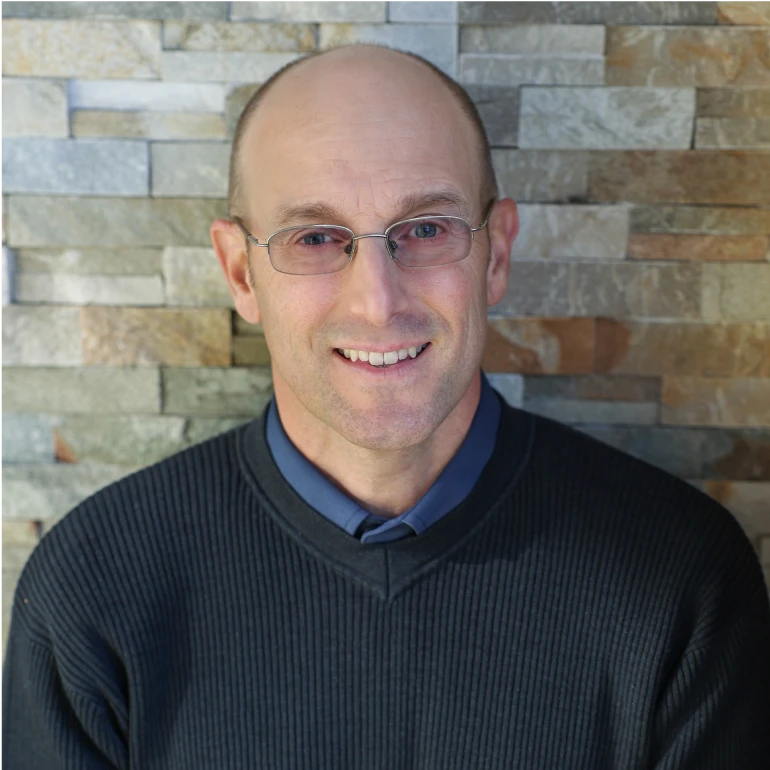
About the host
About the guest


Bret:
Welcome to the Metabolic Mind Podcast. I’m your host, Dr. Bret Scher. Metabolic Mind is a nonprofit initiative of Baszucki Group where we’re providing information about the intersection of metabolic health and mental health and metabolic therapies, such as nutritional ketosis as therapies for mental illness.
Thank you for joining us. Although our podcast is for informational purposes only and we aren’t giving medical advice, we hope you will learn from our content and it will help facilitate discussions with your healthcare providers to see if you could benefit from exploring the connection between metabolic and mental health.
Welcome back to Metabolic Mind. I’m your host, Dr. Bret Scher. Today we’re continuing with our series on metabolic health, metabolic therapies, nutritional ketosis, and dementia or cognitive decline. And today, I am joined by Dr. Mary Newport. Now, Dr. Newport is a neonatologist by training and by over 30 years of practice dealing with the smallest of the patients you can possibly have, the newborn baby.
So, why are we talking to her about dementia? She was thrust into this world of dementia when her husband, Steve, started experiencing symptoms of dementia at age 51. And their story is dramatic. You’ll hear her story about how she started him with medium chain triglycerides with coconut oil, and eventually, went down this whole path of exogenous ketones, nutritional ketosis and saw some really, dramatic benefits.
Benefits that we aren’t really seeing with Alzheimer’s medications. And this is one of those times in medicine where there really is a shift happening. There’s been so much focus on what’s called the plaques and the tangles that are seen in people’s brains with Alzheimer’s. And that’s where all the research and the drug research has focused on with billions of dollars being spent to really no avail with very minimal, if any, progress, and certainly not a cure, but even the treatment of Alzheimer’s symptoms.
Well, Dr. Newport, it feels like she’s onto something, and the research is starting to show this with nutritional ketosis, with exogenous ketones, with MCT or coconut oil.
Giving the brain this alternative fuel of ketones seems to help some people, again, not everybody. But in trials, a statistically significant number of people improve their Alzheimer’s symptoms. So, this is just one of those dramatic stories of one family. The way it impacts not just Steve, the patient, but her as an individual, her family, and how she was able to be an investigative journalist, a detective, a physician, and just a brave caretaker all wrapped into one to really help her husband and to help move this whole field forward.
And you can see how she connected with all these experts in the field to start this discussion. And I’m getting a little worked up here because you can see for all those reasons, I just think this is such an incredible story. And so I hope you enjoy this interview with Dr. Mary Newport.
And if you want to learn more about her, her website is coconutketones.com. And she has a book coming out, or sorry, a book, the third edition now coming out, Alzheimer’s Disease: What If There Was a Cure? And another book, Clearly Keto For Healthy Brain Aging and Alzheimer’s Prevention.
So there’s plenty of stuff out there from Dr. Newport if you’d like to learn more. So, I hope you enjoy this interview with Dr. Mary Newport. But sorry, before we begin, remember our channel is for informational purposes only. We’re not providing individual or group medical or healthcare advice or establishing a provider patient relationship.
Many of the interventions we discuss can have dramatic or potentially dangerous effects If done without proper supervision. You should always consult your healthcare provider before changing your lifestyle or medications. Okay, let’s get on with the interview.
Dr. Marion Newport, I really appreciate you joining me at Metabolic Mind to share your story, your journey, and discuss the science of ketones and as it relates to dementia. So, thank you so much for joining me.
Mary:
Oh, thank you so much for inviting me. I really appreciate it.
Bret:
Now, you’ve been so good about telling the story of your journey along with your husband, but I want you to give us the overview for people who haven’t heard it. Because here you were, a neonatologist, a doctor, working with the youngest of the youngest patients. But all of a sudden, because of your husband being diagnosed with dementia or having symptoms of dementia at age 51, a very young age. All of a sudden, you’re thrust to the other side of care, about memory loss and cognitive decline.
So, tell us a little bit about that journey.
Mary:
Yeah, so my husband was an accountant, and that was perfect for our family because he was able to work from home.
I had a hospital based practice working in newborn ICUs, and he did our billing and accounting and managing and all of that. But when he was 51, he started having some. memory issues, doing some really strange things, and he began forgetting if he’d been to the bank and the post office, which didn’t seem normal to me.
And we had him see a neuropsychiatrist, who mentioned dementia, but he thought more likely it was related to depression. Steve had depression and started him on an antidepressant. But looking back, it was more likely that he was depressed because he knew he was losing function. And he was always aware all throughout, that he had Alzheimer’s from the time he was diagnosed.
He knew it, and he talked about it. And he was very troubled by how much he had lost and his ability to function as an accountant. And it got worse and worse. By 2006, he couldn’t drive anymore. He had been on a computer all day, every day, playing on it or working on it, and he couldn’t even remember how to turn it on at that point.
Bret:
And how old was he?
Mary:
Much less do anything.
Bret:
How old was he at that point?
Mary:
So he was, at this point, he’s 56.
Bret:
Yeah. Okay.
Mary:
He was 56.
Bret:
So this had been going on for five years and just getting worse and worse. Yeah.
Mary:
And symptoms for maybe a year or two before that. He was officially diagnosed with Alzheimer’s, early onset Alzheimer’s, in 2004.
Bret:
Yeah, so you’re in this role now as a doctor and a caregiver. And so what was your assessment of the care he was getting?
Mary:
It was frustrating. We kept hearing, he was put on the traditional Alzheimer’s medications, Aricept and Namenda. A few months later, we got a second opinion from the Byrd Alzheimer Institute in Tampa, which is just a renowned facility.
And they agreed that he most likely had Alzheimer’s. They said he had some unusual symptoms, like tremors, and his gait was weird. He walked slow. they didn’t mention Parkinson’s or Lewy body dementia at that point. I could jump to the end a little bit. He did donate his brain, and we found out that he had predominantly Alzheimer’s. But he also had Lewy bodies and hippocampus, amygdala, regions of the brain that are also affected by Alzheimer’s.
So, it explained many of the symptoms that he had then, and that he ultimately developed. But he, basically in 2008, he was going downhill really fast. He could no longer remember how to even make a sandwich, or anything like that. We had to, we’d get in trouble. Just so many ways of getting in trouble when you have Alzheimer’s.
And I always had to have somebody with him all the time. So, my daughter, one of our daughters, moved back home reluctantly, but she helped us so much. But in 2008, we finally had two clinical trials became available in the area. It was frustrating because the Alzheimer’s Association would say every year, or constantly, they were saying, we’re within five years of a cure.
We heard that for years. We’re within five years of a cure, donate money. But there weren’t any drugs that actually improved Alzheimer’s. The two drugs that he was taking, there was a third one that came along that was similar to the first. It can slow the decline in about half the people that take them for about six months, and that’s the best that they can do.
They don’t really improve anyone, except maybe very briefly. Some people might have a little bit of improved cognition for a few weeks or something, a couple months. But there were two drugs that they were going to be doing clinical trials, and they both aimed at removing beta amyloid plaques from the brain, which are the hallmark, thought to be the hallmark ,and the amyloid theory of Alzheimer’s.
And they would remove plaque from the brain, and they hoped that this would improve someone cognitively. And so, we were really eager to get into this because there hadn’t really been any clinical trials in our area for a while. So, I scheduled him two days in a row to try out for these two clinical trials.
And they were different locations, different facilities. And the night before, I thought, I’m going to look up the risks and benefits of the two drugs as much as I can find out because he might get accepted into both. And then, we might have a choice. So, I wanted to find out as much as I could. While I was searching, I came upon a press release about a medical food that was going to come out about a year later.
And didn’t say exactly what it was or what it did, but it improved cognition in nine of 20 people in a pilot study, that took just one dose and it improved. There was another study, a longer study of 152 people that lasted 90 days, and then was extended for some of the people to six months.
And again, almost half of the people improved.
Bret:
Which is better than any of the current medications out there. And here it is, like a tiny press release. Not big news, but a small press release.
Mary:
Exactly. So, I had to dig deeper, and I was able to find their patent application on free patents online. And it was very long, and it explained that Alzheimer’s is the type of diabetes of the brain.
Some people sometimes call it type III diabetes, and they’ve actually known since the 1980s that there’s a problem with glucose uptake in parts of the brain and Alzheimer’s.
Bret:
Yeah, but this was like revolutionary even in 2009. Like people weren’t really discussing this in 2009. So ,here was this company with a patent that with a product, but still was not even touching the mainstream discussion.
Mary:
Exactly. Exactly. Still isn’t enough. But yeah, they talked about this problem, but that ketones are an alternative fuel for the brain. And that possibly providing ketones to the brain to somebody with Alzheimer’s might bring about some improvement. This was their idea.
And there is an oil, called MCT Oil, medium chain triglyceride oil, that when you consume it, no matter what you eat, at least part of it will be converted to ketones. And the brain eagerly takes up ketones, and, the cells can immediately switch from using glucose to ketones to enter what’s called the TCA cycle that produces ATP every cell.
Basically, nearly all cells need ATP to function.
Bret:
A production of energy. ATP is the energy.
Mary:
Yeah, so basically ketones are an alternative fuel for the brain. And I thought, wow, this is a brilliant idea. Makes sense to me. I remembered about MCT oil being converted, the ketones. I remembered about ketones being alternative fuel during starvation and fasting.
So, I thought this actually makes sense. And one time in the patent application, they mentioned that MCT oil was extracted from coconut oil, and they said coconut and palm oil, but it’s really palm kernel oil. And I thought, oh my God, I might be able to get this. And the crazy thing was that because I’m a neonatologist, I knew what MCT oil was because in the 1980s, early 1980s, when I was doing my training, we used to add it to the feedings of our tiniest preemies.
These were babies under two pounds. And they would grow faster, they’d get home faster. And then the formula manufacturer started adding it directly to these premature infant formulas. And they also refined the formulas for all babies. They were adding coconut oil and/or coconut oil and sometimes also MCT oil to infant formulas.
And they still do today. Almost all of the commercial formulas worldwide because they’re trying to mimic the fatty acids that are in breast milk, and there are MCTs in human breast milk.
Bret:
Interesting that you were just like the perfect person for this to happen to. You don’t wish anybody to have to go through something like this, but if it had to be anybody, you were the perfect person for this to happen to. And with good detective work, the medical knowledge, and the knowledge of the MCTs. Yeah, so how did you then take the step to say, okay, let’s try this, let’s see what happens?
Mary:
Yeah, basically, it’s about 1:00 AM when I find all of this out. And he had, he was scheduled for the screening at 9:00 AM. And this is another remarkable thing that he had a day before, and the day that he started coconut oil testing. It makes you think about fate and all of that. But anyway, there was nothing to give him that had MCT oil in it. Much less, did we have any coconut oil? I thought it was an artery clogging bat. That’s what I was taught in medical school.
Bret:
Right now, you can find MCT oil anywhere, you can find on any shelf. But then, it just didn’t exist.
Mary:
Oh, you could hardly find it. I could hardly find it at the time. And, so we went for the first screening in St. Petersburg, Florida, research institute there. And he had to take a mini mental status exam, which for those who don’t know, is a 30 point test. It’s fairly simple. If you’re normal, you get 29 or 30 points.
It’s unusual to even miss a question on that test if you’re normal. And he scored 14 on the test, which was too low to qualify for the study. He needed at least 16 points. They wanted people with mild to moderate Alzheimer’s, and the doctor had him draw a clock. And I’m going to see if you can see this.
Bret:
So, for those on the audio podcast, she’s holding up her book that has a picture of the clock, okay.
Mary:
There are a few little circles. There’s not a big circle, few little circles, and there are four numbers. And that was it. That was what he came up with for a clock. And the doctor said he’s on the verge of severe Alzheimer’s.
She told me this and it was surprising yet not surprised because of what we were seeing at home. And so on the way home, I knew I had seen coconut oil in a health food store. And we stopped there, picked up some. And when I got home, I looked up information to remind me which are the medium chain triglycerides.
I was able to find the fatty acid composition of the coconut oil on the USDA website, and I figured out how much coconut oil I would need to give him to equal the dose that they were giving in the medical food studies, the pilot studies. And it turned out they were giving 20 grams of MCT, and I figured the medium chains were C6 to C12, so lauric acid.
Some people consider them only C8 and C10. But, which might not mean anything to anybody, but so I figured that he needed 35 grams of coconut oil, which is a little over two tablespoons to equal the 20 ml dose that they were giving of the medical food. So, the next morning, he was scheduled that day in a different location in Tampa at the Bird Institute to have a screening for a different drug, the other drug.
And I gave him 35 grams, a little over two tablespoons of coconut oil, and some oatmeal, and he ate it. This was around 9:00 AM and as he was scheduled for one in the afternoon. It turns out, we found out later, that the levels of ketones are not very high from coconut, but they peak at about three hours.
And another fortunate timing, we went to Tampa and he gained four points from the day before, including where we were, like what city? We were in the floor of the facility. This, the day of the week and the season, which he had gone wrong all four the day before, and we were in a different location.
So, it wasn’t that he learned something.
Bret:
And this is all from one dose. Just one dose.
Mary:
This is from one dose, one single dose, 35 grams of coconut oil. And they, the pilot study, the medical food, one dose people had almost half of improved. And he qualified. He got 18 out of 30 points, and he qualified for the study.
I was like, I don’t know if this is just really good luck or hope and prayers, or if this really happened. I thought we’re going to keep it going. Then, I started immediately getting every cookbook I can get my hands on for coconut oil and learning as much as I could about it as well as ketones. And the next day and every day thereafter, I gave him first thing in the morning. He would get coconut oil with breakfast.
But then, I started also giving it to and throughout the day. Because in the patent application, they talked about that the ketone levels from MCT oil tend to peak around 90 to 120 minutes, so an hour and a half, two hours. But then, by about three hours, the ketone levels are pretty much gone.
I’ve done since then, it seems like I see a pattern where when I’ve tested myself so many times that MCT comes up, it goes down. But then, it can go back up later. The ketone levels, it’s six hours or so.
Bret:
And so was this just on a standard diet though? So, he wasn’t on a low carb diet yet? That was just on a standard diet with coconut oil?
Mary:
He was on a Mediterranean diet. So, it’s lower carb than your average SAD, American diet, but we were doing a whole food, Mediterranean diet for a couple years at this point.
Bret:
At any point, did he transition to a full keto diet with coconut oil or not really?
Mary:
He did because he was getting so much of the oil, and he was reducing the carbohydrates just naturally. Yeah, so we just started, I just started giving it to him at different times of the day because I thought if the ketones are only available three hours a day, what does your brain do the other 21 hours?
And it’s very active even when we sleep. I started giving it to him with each meal. And then we had all kinds of snacks that had coconut and coconut oil and coconut milk and everything became coconut in our house. Luckily, we both really liked it a lot. Not everybody does, but we liked it.
And around the fourth or fifth day, he was improving so much. It was just remarkable. He said it was like a light switch came on in his brain, the day he started coconut. He told me that many times. His mood improved. He had been very depressed. even suicidal, and it was pretty serious.
He was on a couple of antidepressants at that point. But his mood lifted very quickly, and he started talking about having hope for the future that maybe he was not going to die soon after all. And there were just things, like in the morning, he’d be very sluggish when he would come out. He’d walk very slow, not animated.
A lot of people have a dead look on their face when they have Alzheimer’s, that’s what people call it anyway. And he perked up. He was more animated. He started whistling, he started telling jokes. He started being able to finish sentences. There were things like getting utensils out of the drawer.
He’d be so confused. He’d forget which one he was going for, like a spoon or whatever, he could do that. He could get water out of the dispenser from the fridge, which he hadn’t been able to do.
Bret:
So, this is after a continuous decline for years. Now, all of a sudden, within days is wow. It’s so dramatic.
Mary:
Even the first day improving on the mini mental status. And then, over four to five more days, we saw all of these things he had, tremors in his face, his jaw when he would talk, and that stopped right away. He had a hand tremor that he would have in the morning, and after he’d get the coconut oil, within 20 or 30 minutes, it would go away.
And we just talked about that our life had changed. Something had changed. And in the meantime, I had come across the name of Dr. Richard Veech, an MD PhD. He had done his PhD at Oxford, but he had been at the NIH since he finished all of that training for years. And he was in his seventies at this point and still working.
And he had worked with Hans Krebs on the Krebs cycle, working out the Krebs cycle. And he was very familiar with ketones. And in the 1990s, he became interested in what the possible therapeutic benefits of ketones might be. And he had come to the conclusion that it could help diseases like Alzheimer’s, Parkinson’s, ALS, multiple sclerosis, and heart failure, recovery from heart attacks, that the heart also uses ketones as do the kidneys.
And so he had written several hypothesis papers, and I was looking on Wikipedia for him and found him on there. And it actually had his phone number. And I picked up the phone and called him, and he answered himself. And I didn’t tell him what I had done with the coconut oil, but I asked him, theoretically, do you think, I had a whole list of questions, but do you think the ketones from coconut oil could help somebody with Alzheimer’s?
And he said, I don’t think the levels would be high enough to make any difference. And he then he told me about, Sam Henderson, Dr. Sam Henderson, who had invented the MCT oil, that he had called him a few years earlier to ask him the same question about MCT oil. And he said, yeah, I told him that it wouldn’t be high enough.
And Dr. Veech had been working on a ketone ester for quite a while at this point, probably about 12 or 13 years, that would get the levels quite high. Like within 30 minutes, you would have a level comparable to what you would get with starving for 10 or 12 days or a very strict ketogenic diet.
And he sent me his hypothesis papers, and about two weeks after Steve improved, yeah. After he first got the coconut oil, he drew a second clock.
Bret:
It’s a little hard to see, but much better. It’s one clock face with the numbers and the lines. Yeah.
Mary:
A whole bunch of lines.
A whole bunch of lines. He later told me that the lines, he was trying to line up the numbers across from each other. That’s what the lines were for. I thought they were a whole bunch of hands of the clock
Bret:
So clear, dramatic improvements, and you’re onto something, right?
You’re onto something that nobody’s really publishing about. Nobody’s really talking about. So where’d you go from here? Like, how did you process all this and move forward?
Mary:
Wooh, I sent the clocks, the comparison, to Dr. Veech, and he called me. And he said, this is unexpected, and he became very interested.
And then, he connected me with several other researchers, Dr. George Cahill, who was quite up in age, who was the one who discovered that ketones fueled the brain during starvation in the 1960s, he had reported that. He called me. Dr. Theodore Van Itallie, a nutrition researcher who, along with Dr. Stanley Hazen, both of them independently called me. They had, were the ones, who discovered that MCT oils converted the ketones in the 1960s, and they were all involved with Dr. Veech and trying to get this message out. But publishing papers, they were in fairly obscure journals that most physicians wouldn’t even read.
It just became my life, my life’s purpose to get this message out to as many people as possible. And I started writing, first to Justice Sandra Day O’Connor. My sister suggested her because her husband had Alzheimer’s, and she was on the Alzheimer’s study group at that point, which was affiliated with the Alzheimer’s Association.
And I wrote a really long letter, I think it was about seven pages long, talking about the medical food, how my husband had improved. I know he’s only one case, and what I’m asking is for you to get your medical and people and scientists in this group to evaluate this, to look at these results, because this is on the shelf.
Coconut oil was on the shelf. MCT oil had been on the shelf for decades. Not very obvious, but bodybuilders were using it to increase their lean body mass since about the 1970s. So, it was out there. Some people were using it for weight loss, and these were available on the shelf. Why should somebody have to wait another year for this medical food to come out, which was going to be an expensive prescription?
They were going to have to go to a doctor, who all knew about it ,to get it. Basically, to me, it was all very urgent, and got no response from her. And for months, I hounded them. And finally somebody wrote back, Alzheimer’s Association, numerous politicians.
It was an election year, 2008. So, I was writing to everybody, I was writing to all the major stations, everybody, trying to get some kind of attention. Basically, saying this needs to be studied urgently, and people need to know that medium chain triglyceride oil and coconut oil, which happened with my husband, could potentially improve somebody with Alzheimer’s.
And with Steve, Dr. Veech encouraged me to add, he wanted me to stop the coconut oil because of that myth that it is an artery clogging fat, and just use MCT oil. Dr. Van Itallie, who was in his late nineties at that point, he said there might be something else about the coconut oil.
And that was my feeling, too. That’s what my husband improved with. So, maybe there’s something else in coconut oil that facilitates all of this that has something to do with it? And if I just limit it to the medium chains and assume that it’s only ketones that are a factor, that he might lose ground. He might not do so well.
So, I started mixing the two. I just started adding some MCT oil to the coconut oil, and he told me, Dr. Veech said, push it until he has diarrhea and vomits. So I’m like, okay. So, I increased it a little bit at a time and over a few months. He was getting a mixture of coconut and MCT oil, about three tablespoons with each meal, and another two in the evening eventually.
Two tablespoons that was a lot of fat. And he was worried about gaining weight, which was understandable when you add that much oil. And he had already stopped eating. He had been eating massive amounts of fruit before this happened. He cut way back. He was eating some berries, blueberries, strawberries, and already eating a lot of vegetables. But he started leaving behind the bread, the rice, the pasta, anything like that, that we were eating.
And he basically was effectively on a ketogenic diet. We didn’t have a handheld home monitor to prove it, but I’m quite sure that he was. And so, he just steadily improved. He had, by two months after he started the coconut oil, he could tie his shoes again. I had to tie his shoes for him up to then. His gait completely normalized.
He started walking normally, and he could pick up a speed and run again. And around three and a half, four months, he announced that he could read again. He hadn’t been able to read for about a year and a half. But I didn’t know why. And I said, can you tell me why? What was going on?
And he said, the words on the page, it was like they would go into pixels and move all around on the page. And I had a hint of this one time when we were at the Bird Institute. He pointed to a thermostat on the wall, and he said, look at that. It’s shaken all over the place. And I’m like, oh my gosh.
He’s got some kind of visual disturbance going on, and that’s common with Lewy body dementia. They have visual disturbances. So, that’s what was happening when he was reading. And at three and a half months after he started the coconut, he said, I can read again. And he said the shaking stopped.
And so he could actually read, and he did start reading again. And around nine or 10 months, he started remembering what he’d read three, four hours earlier. I have an example of, I had a doctor appointment, and he was in the waiting room. And he read a Scientific American about Albert Einstein. And a few hours later, he told me about it.
Details of this article about Albert Einstein. And he’d remember that a volcano had happened a couple weeks earlier. Just different things like that.
Bret:
Yeah, so the change in his quality of life is night and day, and how that affects your life as a loved one and a caretaker and having your daughter, maybe not having to be around him all the time, for 24 7 care anymore.
Like dramatic changes and.
Mary:
It was dramatic.
Bret:
Yeah, but to bring it back to the real life, right? Not a cure all. It didn’t cure. It wasn’t gone. Tell us the course of how this progressed, and how long it lasted.
Mary:
Basically, he seemed to level off at about like 10 months or so. But he was doing so much better.
He was able to work as a volunteer at the hospital where I worked. He worked in the supply warehouse. He’d put stickers on supplies. He’d help with the deliveries to the different units, and that made him, he was so happy because he felt useful again. He wanted to work and now he was doing something. He was a little dismayed he wasn’t getting a check, but he did really well.
And did get into one of the studies. And tested for the other study again, a couple months later. And he got an MMSE of 20 that time. So, it bumped up even more. And he was accepted into the study, and they knew what we were doing.
We chose the one called Semagacestat, which was an oral medication, and we picked that one because it was a crossover study. We knew he would get it eventually. If he didn’t get it right away, he would get it. And we were very hopeful that this would be it, this would bring them back. And the people there had done a study with the medical food.
They were involved in that particular research. So, they were very familiar with it. And when I told them what we were doing, they said, oh yeah, we actually participated in that study. Even though he was taking all this coconut and MCT oil, they let him in the study, which was amazing. But actually, it was probably a bad thing as it turned out, because we found out later, he was on the placebo for 18 months.
And all of his improvement happened during that time, the 18 months. I didn’t know absolutely for sure. I knew he had proved the first two months before he started the study, he had clearly improved. And after that, I could never be sure until we knew he was on placebo, that’s what had resulted in his improvement.
But then, at 18 months, he switched over to the drug and the reason I knew he had switched over is his hair started growing out, like a gold white color, which was one of the common side effects of the drug. And so, even the people, they said, we have a feeling of who’s on it or not because of this hair color change.
And he was on it for probably six weeks, and he started having all kinds of strange side effects, like wounds that wouldn’t heal. He had an abrasion that wouldn’t heal for a month. He would nick himself shaving. It would bleed for three or four days. And then he fainted. And he had a really high muscle, a CPK enzyme, which could be from brain or muscle.
I actually had to get our own testing to sort that out. It turned out was probably from muscle, but we were worried about his heart, that CPK can become elevated with. This was a concern in this study.
Bret:
Such a sad story because he was doing so well. Then ,gets this new, exciting new drug, and all of a sudden, starts doing worse when he starts the medication.
Mary:
So, the irony is the coconut oil helped him get into the study, but then the study actually, it caused a lot of problem for him. So, he had a really big setback. He started having some new Alzheimer’s symptoms at this point, and reverting back on some, not completely. He regressed, but not to the point of where he was before we started this.
So then, Dr. Veech had, he had, we dropped out of the study. And then later, we were told, a few months later, they called us and they said that this drug had actually accelerated Alzheimer’s. When they analyzed the first 18 months of data, it accelerated it. So, fortunately, we did drop out after about six weeks.
Bret:
And this brings up a really interesting point about the mechanisms, right? Because this was a drug looking at the plaques and the tangles. And Alzheimer’s research is focused on, okay, we see these plaques and tangles in Alzheimer’s brain. So, those must be the problem. So, let’s create drugs to take them away.
But it turns out, maybe that’s not correct at all. And that maybe those are reactionary. Or protective even, and that taking them away could do more harm. But instead, why aren’t we focusing on this concept of mechanism as brain fuel, and the cells not being able to produce energy well and then the ketones?
So, now how has the research started to look at this and progress over the time?
Mary:
It’s just barely making a dent, but it’s starting to improve under Stephen Cunnane, has done a whole lot of the research. He has the ability to do ketone and glucose PET scans, and so he has been studying people.
He began by studying adults of all ages. I think he studied well, the last I heard, well over 300 people. He’s have had these dual scans, healthy young adults, healthy older adults, older people with mild cognitive impairment, with mild to moderate Alzheimer’s. And basically, what he’s found is very interesting.
As we age, we develop what he calls a brain energy gap compared to younger people. And it’s the difference between how much energy your brain needs, and how much it actually gets. And even in cognitively normal, healthy older people in their seventies, the gap is about, it can be like, 7 to 9% gap in energy, which kind of explains some, maybe some, of the age related memory issues, the little fogginess that people report.
But people with mild cognitive impairment, that increases to 10 or 12%. And people with Alzheimer’s, mild at the mildest stage, are about 20% deficit in brain energy. And that just worsens as the disease progresses. So it’s almost like aging, and age is the greatest risk factor for Alzheimer’s.
That this aging process and effect on the brain is, explains Alzheimer’s in many respects. And it’s been found that it’s due to insulin resistance, is a big part of the problem. There’s a problem with getting glucose even into the brain. And, the GLUTs, glucose transporters, that are deficient in Alzheimer’s, GLUT1 and GLUT3. GLUT1 gets glucose into the brain, GLUT3 into neurons. And insulin indirectly is involved directly, or indirectly, with these various glucose transporters. And then there’s another thing, the PDH complex that has to do with converting the fuels glucose to ATP, that’s deficient.
So, it’s almost there’s a conspiracy of getting glucose into the brain.
Bret:
And that’s makes the treatment so interesting, right? You just give ketones to give the alternative fuel. Or do you correct the insulin resistance so the brain can start using the glucose better? Or do you have to do both?
And that’s what I guess a lot of the research is looking at now.
Mary:
Yeah, and that’s what I, that’s what I have come to the conclusion of. And I’ve been writing a lot about this, the various books that I’ve been writing. But trying to tackle both a ketogenic diet, a low carb ketogenic diet, will help reduce insulin resistance.
And this, Dr. Eric Westman, for example, at Duke University, he has helped for over the last couple of decades, more than 4,000 people with type II diabetes get their diabetes under control, get off insulin, off medication, completely normalize their hemoglobin A1C, their fasting blood glucose, fasting insulin levels.
And as long as they stay on the diet, they can sustain that. If they go off it, they’re not cured. If you revert to your old habits, it can come back. But there are also some case reports of people that had diabetes and Alzheimer’s, mild Alzheimer’s, that completely reverse that mini mental status going from 21 or 23 to 28 or 29, almost normal, and reversing all of these other symptoms of diabetes as well.
Approaching this with a low carb diet can be very beneficial. And then, providing the fuel is ketones. A lot of people improve just with that without changing their diet very much. The ketone ester’s been out since 2018. And my husband had a dramatic, it reversed almost all of this. The new symptoms that he had.
When he first started the ketone ester, Dr. Veech, he said, it’s past toxicity testing. Let’s see if we can get him back. And the day he started it, within 24 hours, he was able to do things independently again, like taking. I had to talk him through a shower, talking through shaving, step by step.
He just could do it. He could just do it the next day. And just other symptoms over about six weeks improved, and he felt much better. He said he could do things again, was how he put it.
Bret:
So, you did earlier say, you did sort of fast forward to the end a little bit, and you said he had donated his brain. And they looked at his brain so hinting that he did eventually pass.
But looking back from the time he was diagnosed, from the time he passed, how much time do you think he gained of quality life by your experimentations with coconut oil and everything that followed? What do you think the time gain was?
Mary:
I feel that it was close to four years at least.
Bret:
Wow.
Mary:
Wow because he improved basically for that almost four years after he started the coconut oil. He was better than he was the year before. And the things that he could do. And then, unfortunately, you know what happened with Steve, that he had a seizure for the first time ever.
Even though he had taken the ketone ester, there was an idea that the ketone ester might prevent seizures. But in this case, he had taken it an hour or two before. And I had just gotten to the hospital to work and I had a lady with him, and she called me and she had called 9 1 1. And she said he fell straight back and went into a full blown seizure.
He had a seizure that lasted 20 minutes. And he had stopped breathing. He turned blue. He had a head injury with it. He hit his head. I thought maybe it had a stroke, but it didn’t show. Nothing showed up like that on the CT scan. And he had another seizure on the way to the hospital, I was told later.
And he was really out of it for a few days. And I thought that was going to be the end. I really did. But he got up out of bed, and he started walking again. And I thought, I’m getting him out of here before anything else happens. And he was on an anticonvulsants, and they did a number on him, too.
Very lethargic after he’d been on him for a while, he’d get very lethargic. And people with Lewy body dementia, it turns out, are very sensitive to medications. Like antipsychotics can cause acute Parkinsonism in somebody that has Lewy body dementia. And we had some bad experiences with those types of medications. And so he was never the same after that.
We were worried about letting him walk very much. We would put a gate bill on him to help him walk. I had caregivers by this time in our house, helping with him and spending the night and everything. And he just gradually got worse. he lived for another two and a half years after the seizure.
And so, I think it may even, because we kept the ketone easters going, I did. And giving him the coconut and MCT oil, too, just not quite as much. While he was taking the ketone easter, he stayed on the very healthy diet. He would eat for an hour and 15 minutes, is how long it would take. He’d have to be fed.
And I had the greatest caregivers that were willing to do all of that and help him and me in that way. And his body was from the neck down, he looked perfect.
Bret:
I’m so sorry to hear about the eventual decline and passing, but such an, despite that, such an inspiring story and such a sort of a wonderful example of one family on the cutting edge of what is possible, and what’s followed since in terms of the research and the attention, which still isn’t enough.
And your books, and so I guess as to wrap all this up, with your books, with your writing, with your advocacy, with the research. What do you hope physicians and individuals will walk away from this story and learn?
Mary:
I think, one of the big things is that what you eat does make a difference and makes a big difference.
I had not a clue that nutrition had anything to do with Alzheimer’s. We started a Mediterranean diet when I read that the Mediterranean diet can prolong somebody’s life by four years with Alzheimer’s. I had read a study about that in 2006. It didn’t slow it down for Steve, and I don’t know if, as far as we could tell, he still progressed.
But that they’re providing fuel to the brain. Reversing insulin resistance could make a huge difference. And it doesn’t seem to work for everybody, but many people it does seem to help, at trying this ketogenic approach. And now, there are ketone esters, ketone salts out there that can get, the ketone ester that Steve took can, get the level up quickly within 30 minutes and very high.
And, he was on it for a couple years. No, actually, for the rest of his life, but it kept him stable for about 20 more months after he started taking it. And so there are things like that you can do overnight. Fasting will put you in ketosis in the morning. You can extend that by not eating solid food with carbohydrates right away.
You can add coconut or MCT oil of the coffee. Supplements can, with ketone salts or ketone ester, can boost your levels even further. And then maintaining a healthy, low carb whole food diet is basically what I recommend.
And it’s hard to maintain an extremely strict ketogenic diet, which would be 85 or 90% fat. But people can, I think relatively easily, cut their carbs down to maybe less than 60 grams a day and increase their fat intake and be in mild nutritional ketosis. And if you include coconut and MCT oil as part of that fat, that will help maintain your ketosis.
And then you can build on that with supplements, and exercise also stimulates ketone production.
Bret:
And it’s a different, it’s a completely different world now because you can get coconut oil, MCT oil, at the drop of a hat. You can get ketone monitors at the drop of a hat. So much easier to test and tell.
So, we’ve come a long way, and I thank you for your journey, sharing your journey, something we can all learn from. And I’m encouraged by the research that’s happening. And it’s one of those things, same thing we talk about with serious mental illness, while the research is happening, there are people who are looking for answers now, who are desperate for answers now.
So, it’s almost like, why wouldn’t someone try this? Talk to their doctor about it, talk to a nutritionist about it, talk to a dietician, learn about it and make sure you can safely start on it. But if you’re looking for answers, it could be a potential for people. And your story, I think, will give people that inspiration to do that.
So, thank you so much. I really appreciate you joining us today and sharing your journey with us.
Mary:
You’re welcome. And even the Alzheimer’s Association is funding some of this research now. Not enough, but some of it. So, it’s encouraging. It’s starting to get out there. It’s been mostly a grassroots effort, but it’s starting to get attention, slowly but surely, person by person.
So, thank you for giving me the chance to help spread this message.
Bret:
Of course.
Thanks for listening to the Metabolic Mind Podcast. If you found this episode helpful, please leave a rating and comment as we’d love to hear from you. And please click the subscribe button so you won’t miss any of our future episodes.
And you can see full video episodes on our YouTube page at Metabolic Mind. Lastly, if you know someone who may benefit from this information, please share it as our goal is to spread this information to help as many people as possible. Thanks again for listening, and we’ll see you here next time at The Metabolic Mind Podcast.
Listen, Watch & Subscribe on:
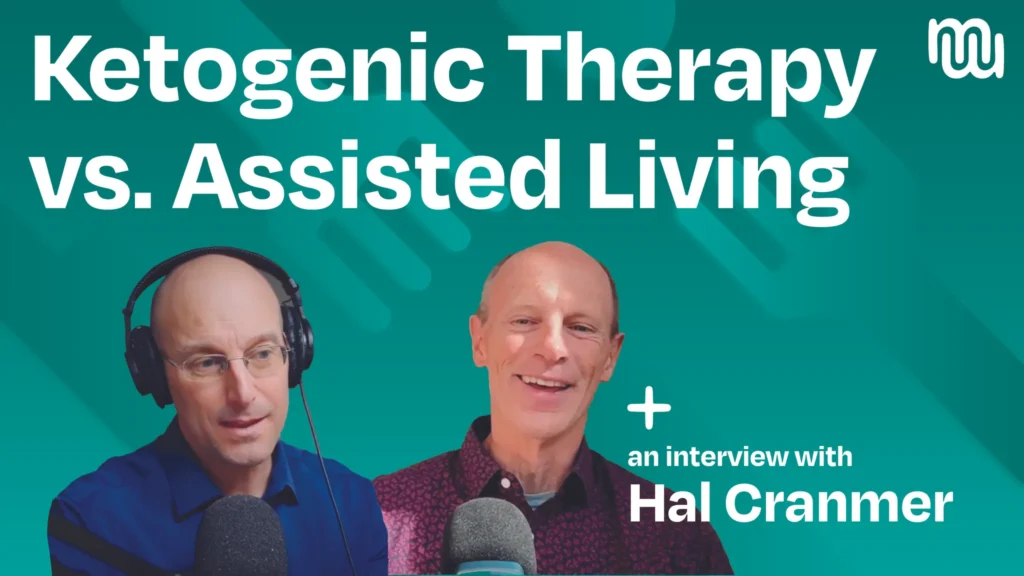
Hal Cranmer, owner of A Paradise for Parents assisted living homes in Arizona, shares how ketogenic and carnivore nutrition, combined with movement, sunlight, and community, are transforming the health of his elderly residents. By shifting away from processed foods toward nutrient-dense meals, residents are lowering blood pressure and blood sugar, regaining strength, improving memory, and even returning home to live independently. In this inspiring Metabolic Mind episode, Hal explains how better food and lifestyle strategies can revolutionize elder care while remaining affordable and practical.
Read more
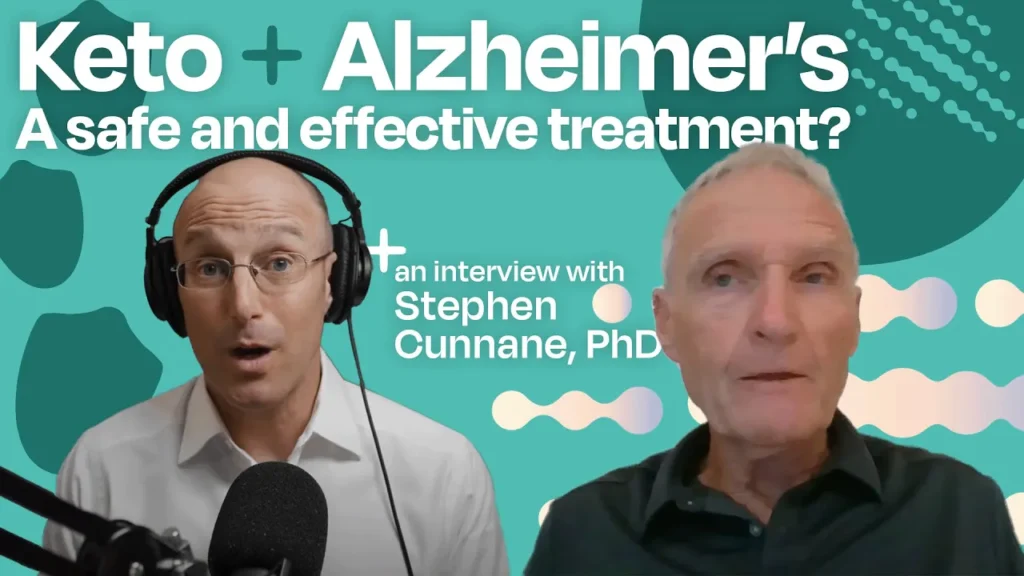
In this Metabolic Mind episode, neurologic researcher Dr. Stephen Cunnane explains how ketones act as an alternative—and often preferred—fuel for the aging and Alzheimer’s brain when glucose uptake falters. He shares PET imaging data, results from a 6-month MCT trial in mild cognitive impairment, and why ketogenic and ketone-based therapies could help preserve cognition in neurodegenerative diseases, especially when combined with exercise and modest carbohydrate restriction.
Learn more
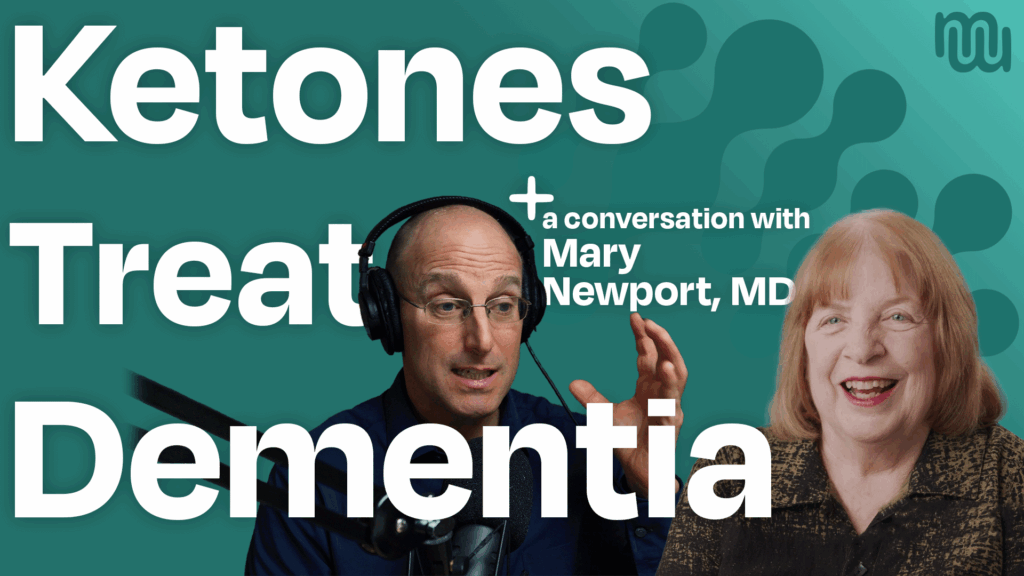
In this episode, Dr. Mary Newport discusses her groundbreaking work using coconut oil and MCT oil to improve dementia and Alzheimer’s symptoms. She and Dr. Bret Scher explore how simple ketogenic strategies may support brain health, reduce inflammation, and offer new hope for patients and caregivers worldwide.
Learn more
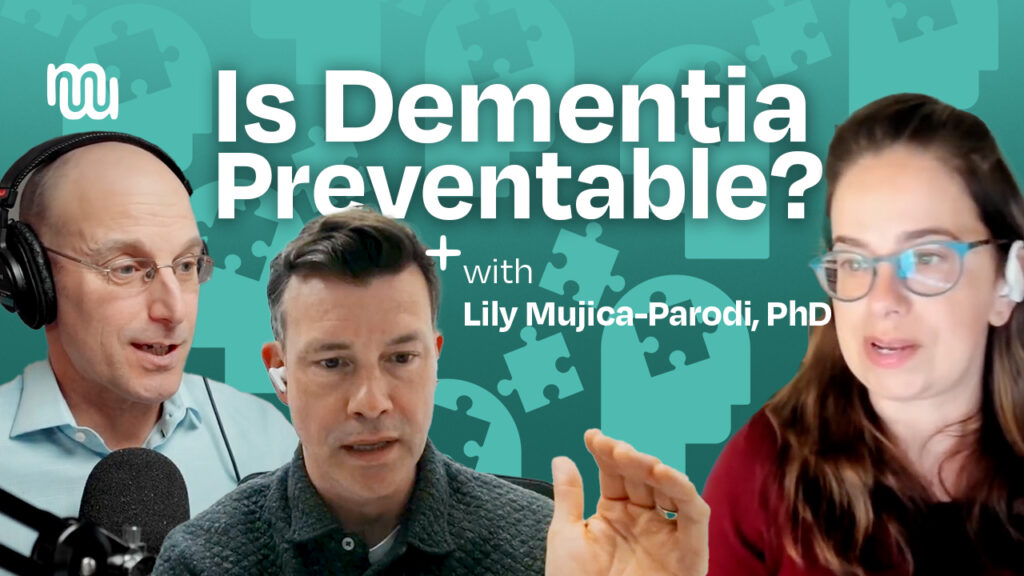
This episode of the Metabolic Mind Podcast features Dr. Lily Mujica Parodi, a Baszucki Endowed Chair of Metabolic Neuroscience, and Dr. Kirk Nylen, Managing Director of Neuroscience at Baszucki Group. Together with host Dr. Bret Scher, they explore groundbreaking research on insulin resistance in the brain and its link to dementia and cognitive decline. The conversation highlights a critical age window for intervention, the stabilizing role of ketones on brain networks, and the potential of ketogenic diets and lifestyle changes to prevent or slow neurodegeneration. Listeners gain both scientific insight and practical takeaways on how metabolic health influences long-term brain function.
Learn more
Hal Cranmer, owner of A Paradise for Parents assisted living homes in Arizona, shares how ketogenic and carnivore nutrition, combined with movement, sunlight, and community, are transforming the health of his elderly residents. By shifting away from processed foods toward nutrient-dense meals, residents are lowering blood pressure and blood sugar, regaining strength, improving memory, and even returning home to live independently. In this inspiring Metabolic Mind episode, Hal explains how better food and lifestyle strategies can revolutionize elder care while remaining affordable and practical.
Read more
In this Metabolic Mind episode, neurologic researcher Dr. Stephen Cunnane explains how ketones act as an alternative—and often preferred—fuel for the aging and Alzheimer’s brain when glucose uptake falters. He shares PET imaging data, results from a 6-month MCT trial in mild cognitive impairment, and why ketogenic and ketone-based therapies could help preserve cognition in neurodegenerative diseases, especially when combined with exercise and modest carbohydrate restriction.
Learn more
In this episode, Dr. Mary Newport discusses her groundbreaking work using coconut oil and MCT oil to improve dementia and Alzheimer’s symptoms. She and Dr. Bret Scher explore how simple ketogenic strategies may support brain health, reduce inflammation, and offer new hope for patients and caregivers worldwide.
Learn more
This episode of the Metabolic Mind Podcast features Dr. Lily Mujica Parodi, a Baszucki Endowed Chair of Metabolic Neuroscience, and Dr. Kirk Nylen, Managing Director of Neuroscience at Baszucki Group. Together with host Dr. Bret Scher, they explore groundbreaking research on insulin resistance in the brain and its link to dementia and cognitive decline. The conversation highlights a critical age window for intervention, the stabilizing role of ketones on brain networks, and the potential of ketogenic diets and lifestyle changes to prevent or slow neurodegeneration. Listeners gain both scientific insight and practical takeaways on how metabolic health influences long-term brain function.
Learn more