Get the latest on metabolic psychiatry. Subscribe.


Listen, Watch & Subscribe on:



When low-carb isn’t enough: A Doctor’s Journey with GLP-1s.
Listen
About the host

About the guest


Shannon:
I think that it’s important that we not just look at GLP-1s as they’re only a transitional object, or they’re only to help people who eat bad. I don’t eat bad. I don’t eat sugar. I don’t eat potatoes or rice or bread. And I needed assistance. You know, I’m not the only one.
Bret:
Welcome to the Metabolic Mind Podcast. I’m your host, Dr. Bret Scher. Metabolic Mind is a nonprofit initiative of Baszucki Group where we’re providing information about the intersection of metabolic health and mental health and metabolic therapies, such as nutritional ketosis as therapies for mental illness.
Thank you for joining us. Although our podcast is for informational purposes only and we aren’t giving medical advice, we hope you will learn from our content and it will help facilitate discussions with your healthcare providers to see if you could benefit from exploring the connection between metabolic and mental health.
Are we talking about GLP-1s all wrong? Wegovy, Ozempic, Tirzepatide, Zepbound, all these new weight loss medications. We’ve done a number of series here at Metabolic Mind about them, about their potential role. But I was approached by Dr. Shannon Robinson at the Low-Carb San Diego, who accosted me, and told me, we’re getting it all wrong.
Just kidding. She did not do that. She very politely approached me and said, maybe there’s a different population that we’re not talking about that we’re ignoring, and hopefully not willfully, that we need to talk about? So, I really appreciate her doing this, and that’s what this conversation is about now.
Now, Dr. Robinson, she’s Board-Certified in Psychiatry and Addiction Medicine, and she has her own personal journey with weight gain, weight loss, metabolic health, eventually GLP-1s, in addition to low carb. So, she really provides this important perspective about the group of individuals, who are doing everything right and still not seeing their results, that maybe they can benefit from GLP-1.
So, really helping to steer the discussion that way. I know there are a lot of people who probably relate to this. So, I hope you enjoy this discussion with Dr. Shannon Robinson. Many of the interventions we discussed can have potentially dangerous effects have done without proper supervision. Consult your healthcare provider before changing your lifestyle or medications. In addition, it’s important to note that people may respond differently to ketosis, and there isn’t one recognized universal response.
Well, Shannon Robinson, thank you so much for joining me on Metabolic Mind.
Shannon:
Glad to be here.
Bret:
Yeah. I want you, I want to set the picture of why we’re here. We heard in the intro how you’re Board-Certified Psychiatrist and Addiction Medicine. And we met at the Low Carb San Diego conference put on by SMHP, and you were very polite.
But came up to me and suggested that maybe we’re phrasing our discussion about GLP-1s in a little too far to one direction. And you had other thoughts and suggestions about ways we should be exploring GLP-1s and wanted to provide a different, a different approach, which I so value. And I’m so glad you came up and approached me, and brought this up. And lo and behold, here we are today.
Before we get into that, because I definitely wanted to hear about your use of GLP-1s as a clinician, what you think their role is, where you think our discussion maybe is off base. But you also have a bit of your own personal journey. So, why don’t we start with your personal journey, and then we can get into all those details?
Shannon:
My weight has fluctuated throughout my life. Up, down, up, down. I’ve had many interventions, Weight Watchers, Jenny Craig, Metafast, low carb for the past 11 years. But even with being low carb, when my mom went into hospice, I gained 20 pounds. And then, after my mom died, I gained another 20 pounds.
Despite the fact that I was eating the same number of calories, the same grams of carbs per day, I was not able to maintain my weight. And so, after a year of not being able to lose that weight, I went on a GLP-1 and was able to then lose the weight and eat fewer calories. Obviously, people on GLP-1s eat fewer calories.
But this is where I’m coming from, in that a lot of what people are talking about with GLP-1s is, they should be used as a way for people to get into ketosis or as a jumpstart. There are people out there eating either no carbs, eating a carnivore diet or eating very low carb, under 20 grams of carbs a day, or whatever their carb limit is, who aren’t where they’d like to be.
And I think that it’s important that we not just look at GLP-1s in our low carb world that we live in, that we not just look at them as they’re only a transitional object or they’re only to help people who, you know, like people who eat bad. I don’t eat bad, I don’t eat sugar. I don’t eat potatoes or rice or bread or nada.
And I needed assistance. I’m not the only one.
Bret:
So, how long have you been on GLP-1s now?
Shannon:
A little over a year.
Bret:
Okay.
Shannon:
A year and three months.
Bret:
Yeah. and how’s the benefit versus the side effect? How have you experienced that personally?
Shannon:
I’m not going to say there aren’t side effects, right?
There are side effects to everything. And even some people experience side effects when they go low carb. I didn’t experience side effects when I went low carb. I did experience side effects from GLP-1s. So, for me, the main side effect has been charley horses. So, muscle spasms in my lower legs and occasionally feet.
So, I’ve had to gradually increase the amount of electrolyte that I’m consuming every day. So, pre-GLP-1, I didn’t have muscle spasms and was not routinely taking extra electrolytes. When I say I don’t eat processed food, I don’t eat processed food. Well, wine. That’s the one processed food I do eat or drink, but I don’t drink or eat things in a box, can.
Things I’ve added, ingredients usually, so I, because a lot of people in the low carb community do take electrolytes every day. Anyway, but I had not been. So, I had to add electrolytes and increase the amount of electrolyte that I’m consuming, in order to not have charley horses.
So, that’s really the only side effect that I experienced, other than a couple of periods when there were dose increases and very significant decreases in appetite, that I didn’t eat enough for a few days. And so, I think it’s also really important to have control over the dose.
Bret:
Did those work themselves out after you increased the dose and then gave it time? Did those that decrease appetite work itself out, or did you have to go back down on the dose?
Shannon:
No, that it worked itself out.
Bret:
Oh, good. Yeah. Okay, yeah.
Shannon:
Yeah. But I don’t like the, like pre-filled autoinjector syringes. I don’t think that’s really the right way.
Bret:
You want to be able to be a little more specific about the dose. That makes sense.
Shannon:
Yes.
Bret:
Yeah, and actually, I’m really curious, have you been checking your ketones? And if so, did those change? No. Okay.
Shannon:
But now, but yeah, when I was able to drop the total amount of protein that I was eating, I was able to get more consistently into ketosis.
I don’t check it routinely anymore. Track the number of carbs or calories, or I don’t track anymore either. Everyone is aware that GLPs has just really decreased the amount that you’re eating, and you’re focused on food and that kind of thing. And so, I don’t find it necessary anymore to be so obsessive about that.
Bret:
Yeah. And then, we’ve talked before. You work out at Tri Systems here in San Diego, and that you do resistance training., And you talked about your protein intake. So, i’m curious if you’ve been monitoring your body composition to see how your lean mass has been doing with this weight loss?
Shannon:
Yes. even without following my body composition, I could have told you that I was losing muscle because I couldn’t lift the same amount of weight that I did pre-GLP, and I’m not yet back to lifting the same amount of weight that I did pre-GLP. And yes, there has been a decrease in skeletal muscle, even with twice a week working out, lifting weights.
However, I did note that there was a decrease in skeletal muscle mass when I wasn’t using a GLP as well. So, if you look at when I first went less than 50 grams of carbs a day, and started working out at Tri Systems, there was a decrease in skeletal muscle mass.
Bret:
Okay. Alright, okay.
We’ve explored your personal journey, and I’m sure there are a number of people, who are listening going, yep, that sounds like me. I’ve had the same experience. I’m sure a lot of people are connecting with it. And without putting words in your mouth, it seems like you would say any trade-off that exists has been well worth, it to take the medication for you, your quality of life, and how you’re living. Is that a true statement?
Shannon:
Long-term will be the tell, right? And this is not a randomized placebo-controlled trial. However, my understanding as a physician is being at a lower weight decreases my risk of cancer.
It decreases my risk of severe infections. And so, I believe the payoff long-term will be worth the cost of the GLP. I am paying for this out of pocket. I am lucky that I can pay for this out of pocket. My insurance set A BMI of 35 if you don’t have diabetes, or 30 if you do have diabetes. Since I didn’t have diabetes, my BMI of 30 didn’t qualify me to have GLPs covered by my insurance. And every insurance company is different. Yeah so, there is a significant out-of-pocket cost at this point in time, at least until they go generic, which will be another decade or so.
Bret:
Yeah. So, certainly by improving metabolic health and reducing visceral fat, the evidence seems clear that you are improving your overall health there. Now, as a clinician, when you see the use of GLP-1s, gosh, let me start over.
A big reason of the way I think I’ve talked about GLP-1s in a certain ways, as a bridge or as a short-term or to help with the cravings or to hopefully taper off, is because of kind of this rampant use of GLP-1s without adequate lifestyle intervention. So, when I come from that perspective, but you are bringing up a very important point that people are hearing that and saying, hang on, I’m doing the lifestyle.
I’m doing the diet. I’m doing it right, and still not getting the result. So ,I see two different populations there that probably need to be addressed differently. Do you, see that similarly as a clinician?
Shannon:
I do see that. Similarly, as a clinician and as an addiction psychiatrist, this is near and dear to my heart because this brings up for me, are 50 years of the way we’ve treated people, say with opioid-use disorder.
And something that came up on a recent podcast, which was another thing that I had talked to you about where a couple of your primary care doctors, who were on the podcast were very focused on methadone or buprenorphine being a way to get into long-term recovery, and not acknowledging that methadone and buprenorphine are the evidence-based intervention for opioid-use disorder.
So, I am a cognitive behavior therapist. It wasn’t my great CBT skills that was able to keep patients with opioid-use disorder alive. if you just have people in psychotherapy, 85% will return to opioid use within a year. I want to give people the greatest chance of survival as possible. And so, with opioid-use disorder, that’s methadone and buprenorphine. And I look at the GLPs in much the same way.
So, I happen to become the Director of the Alcohol and Drug Treatment Program at the San Diego Veterans Administration, where I had trained, because we are, we’re such a big cognitive behavior therapy research institution. We predominantly did abstinence-based treatment for years. And there were many people who I had seen come through treatment more than once.
And when we started providing access to medications, it was game changing for people. Patients who had known me since I was a trainee were like, what do you mean this medication has been available? And I’m not just talking about opioid-use disorder. Now, I’m talking also about alcohol-use disorder. We have FDA-approved medications for alcohol-use disorder as well.
And they’re like, what do you mean this has been available for 20 years and you didn’t give this to me before? And you’ve known me, like I could have been interacting with my family. I could have been working. I could have been living a full life over the last 20 years.
Not been in jail, not been homeless.
Bret:
Wow. That’s got to be hard for you to hear, if they actually say things like that to you. That’s got to feel a little uncomfortable.
Shannon:
They did.
Bret:
Yeah.
Shannon:
They did say those things to me. I can’t believe you didn’t give me those medication before. And so, I see that we’re treating obesity, and we’re treating the GLP-1s in a very similar fashion to what has been experienced in alcohol-use disorder treatment and opioid-use disorder treatment, over the last 40 to 50 years that we’ve had medications available and not necessarily mainstreamed those medications.
That’s been what I’ve really been working on over the last decade is mainstreaming those medications and making sure that people have access to life-saving medications when they have a substance use disorder for the conditions we have life-saving medications for. But this similar, there’s a similarity about people talking about the brain chatter related to food, right?
Okay, what’s my next meal? What am I going to have? And the brain chatter that goes on with resisting the urge to use addictive substances, like alcohol or opioids, and how the medication can quiet all that extra energy that is taken up going on in your brain. And so, I just, I think, that yes, there are people who take medication for substance use disorder or take medication for weight loss, who aren’t in cognitive behavior therapy.
Who aren’t changing their lifestyle, right? It’s the, changes are a little different for substance-use disorder than they are for food-related issues. And I’m, not a proponent of that. I’m not a proponent of eating any Oreos. Not just fewer Oreos.
Bret:
Psychiatrists and even primary care doctors receive extensive training in how to prescribe medications. But almost none on how to safely reduce them. And yet, for millions of people, tapering psychiatric medications is an essential and often overlooked part of their treatment plan.
Georgia:
There is a real art and a science to reducing psychiatric medications. That if you reduced to quickly, then you could have serious withdrawal symptoms on your hands. Sometimes, medications will help at first. And then, they’ll lose some or all of their effectiveness over time.
Bret:
So, in part one of this series, we’ll explore why so many people face this decision, and what risks and misunderstandings surround it. So, this concept of relapse versus withdrawal. Of how do you help people approach that to try and determine is it a recurrence of the symptoms and the diagnosis, or is it a withdraw from the medication? And then in part two, we’ll dive into the how, the principles, the pitfalls, and what it really takes to taper safely.
Tapering psychiatric medications isn’t about rejecting treatment. It’s about redefining success. Because sometimes, fewer medications, or even none at all, can mean a full or healthier life. So join us October 1st for this two-part series on tapering psychiatric medications. An honest conversation clinicians were never taught to have and patients desperately need.
Shannon:
As I’ve said, I try not to eat any processed food at all. Oreos have no nutritional value. However, I think, that we need to acknowledge that there are some people who are going to need to stay on medication for long-term. And I think right now, there’s some shaming going on.
Or there’s an approach that we’re talking about it, which may not be science-based. Now, we have 50 years of science for substance use disorder to show that methadone saves lives. We don’t have 50 years yet with GLP. We’ve got a decade, but we don’t have 50 years yet. However, as an addiction psychiatrist, I see them quite similarly.
Bret:
Yeah, I think that’s a really interesting analogy. And the way you paint that picture between the CBT and the dietary changes, the medicine for addiction, the GLP-1s. And really paint that comparison is super interesting.
But gosh, when I hear the word shaming, I just shudder because I certainly hope nothing we’re doing is shaming. I guess if I were to get defensive, I would say, I think it’s more ignoring than shaming. Almost like ignoring that group exists. That they’re trying to, doing everything right and still need the medications.
When sort of the bigger population, the more obvious population, is those who aren’t doing, aren’t making the necessary lifestyle changes. So, ignoring the one to focus on the other, which I hope doesn’t come across as shaming. But you are absolutely right that we should not be ignoring that first group, who is putting into changes.
But also so interesting about the comparison to addiction in the food chatter. Because now, GLP-1s are being investigated for addiction as well. And Dr. Wiers has been doing studies on alcohol-use disorders, and she, I’m sorry, she’s been doing studies on alcohol-use disorders and keto. And then, there’s been studies on alcohol use disorders and GLP-1s.
So again, like drawing these comparisons. So, as an addiction specialist, how do you see this world of, you know, the medications we have, the CBT, but maybe ketosis? Maybe GLP-1s? Like how do you see that future in addiction medicine?
Shannon:
I’m super excited about it because I do think that being in a keto state can really help.
We have data from Nora Volkow, the queen of addiction research, at National Institutes of Health and National Institutes of Drug Abuse. And so, we know that going on a ketogenic diet during withdrawal means that you use less withdrawal medication. Now, withdrawal and the underlying substance-use disorder are different states.
However, I do think that there is huge benefit, and I’ve tried to talk a few friends into going keto for this reason. They haven’t taken me up on this offer. But I do think that both going on a ketogenic diet and GLP are going to accumulate evidence for substance-use disorders. So we have some small stuff now.
Need to have those, that data, replicated and expanded upon in larger studies. But I think both are extremely promising and not everyone is going to want to take a GLP, right? There are people that are currently underweight, and where going into ketosis may be a more appropriate intervention.
Not that it isn’t easier to get into ketosis if you’re on a GLP. I already said it is. it was for me. It was very difficult without the GLP to be in ketosis given the amount of protein that I ate, but much easier with being on a GLP.
Bret:
Yeah, that’s a very good point about underweight a lot of people, who suffer from or live with substance-use disorder, alcohol-use disorder, are chronically malnourished and maybe chronically underweight. So, for those who certainly would not want to use a GLP-1. Yeah, that’s a very good point.
Shannon:
Those were the main things I just really wanted to talk about. That there is this group of people who are eating right and are still not at their weight goals.
And then, also, the comparison with addiction medicine.
Bret:
Fellow mental health clinicians and healthcare providers, you now have access to a suite of free CME lectures on metabolic psychiatry and metabolic health. Each of these CME sessions provide insight on incorporating metabolic therapies for mental illnesses into your practice.
These CME sessions are approved for AMA category one credits, CNE nursing credit hours, and continuing education credit for psychologists. And they’re completely free of charge on mycme.com. Now, back to the video.
One other point I want to get to about your story and your history, which I think probably reflects a lot of other people’s journeys, is as you described it. What set off your weight gain.
And it was your mother’s health problems when she went into hospice, and when she passed. And life is not a straight line, right? Things happen in life. Sleep gets bad, stress increases, exercise may come and go. And tragedy happens in life. And it’s not uncommon to see somebody struggle during those moments.
And it’s interesting. That sounds like that’s what triggered your weight gain. And I’m sure a lot of people are also shaking their head as they listen to it ,and yeah, I lost my job. I got a divorce. Whatever the case may be, is that trigger. So, as you reflect upon it, do you think that is a reason for a lot of people who are quote, doing things right, but still not seeing the results they want to see?
Shannon:
I think there’s a couple of things about that. We all know that when your cortisol level increases, your glucose can increase. Even if you don’t change what you’re eating, your blood pressure can increase even though you’re not eating more salty foods.
We know that and I also think, though, that it’s not just about like cortisol levels that are really high, right? My cortisol levels were never out of the normal range. That’s a whole other issue about normal lab values for people who eat low carb diets. But right, we’re not going to go longer.
Bret:
That’s a whole kettle fish there. Yeah.
Shannon:
Yeah. But I think that cortisol is one thing. Another thing that I think, that we don’t necessarily talk enough about, we did a good job this year at the conference talking about women in menopause. But as was mentioned a number of times, those of us in medicine for the past 20, 30 years, we haven’t been talking a lot about menopause.
Right? And yes, I was early in menopause when I went on a low carb diet the first time, or went really low carb under 50 grams a day. But then, as you are further as we age, which we all do, you’re further, women are further into menopause. And does that somehow affect your ability to lose weight, even with the same amount of carbs, the same amount of calories?
I don’t have an answer for that, but I think it’s more complex than just decrease your carbs, and life shall be grand.
Bret:
Fair point. Actually, I had an interview with Dr. Madison Kackley from the SHE IS lab in Ohio State, where they are specifically studying women in ketosis and menopause, perimenopause, hormonal changes, are all part of that.
I think we’re going to learn a lot more from them in the near future and see how that plays out. But look, I think this has been a wonderful discussion, and I really appreciate how you brought this up at the conference. And how you shared your experience and really opened our eyes to maybe an area of this discussion we haven’t been having.
But I want to wrap by say, asking you, do you, what advice would you have, right? Because you’ve got both sides of the coin. You’re the clinician. You’re the patient. You have experience in both ways. So ,what advice would you give to someone who’s maybe considering a GLP-1 or newly starting a GLP-1?
What would you tell them?
Shannon:
I just had this conversation this morning with a friend, whose primary care doctor has finally agreed to prescribe a GLP-1. So, my recommendation, and I don’t know quite as much about Wegovy or semaglutide as I do about Zepbound bound or Tirzepatide. I know that some of the agents come in pre-filled syringes with predetermined doses and now Lilly, who manufactures Tirzepatide, also offers a vial.
I, personally, would only recommend people use the vial and not a pre-filled syringe. Because first of all, I think the starting doses are too high. Like when most people start, there is a profound decrease in their appetite. And not just a profound decrease in their appetite but nausea, right?
That’s the most common side effect with this medication. And so I think being able to start at a lower dose, which you can do if you get it in a vial, right? You don’t have to use as many units as they say. And then, also, by using a vial, you can do much smaller increases in your doses. And I mentioned a couple of times where I had such a profound decrease in my appetite.
I didn’t get specific, but I’ll let you know like it took me four days to eat a meal. Now, that was a restaurant meal, but I used to travel for work. Starting next week. I won’t have to travel for work. I’m very excited about my new job. This may help a lot, but restaurant meals are bigger than the meals we prepare at home.
It was very dramatic in that I had these two experiences where I was with my team providing multiple days of training away from home, and we would have a restaurant meal on night one before we started our multi-day training. And I was still eating the same meal. Had been eating it for breakfast and lunch and dinner for days.
And you’re like Not normal, not normal. And when you’re eating that little, it’s totally clear that you’re going to get side effects, like low energy and poor sleep and charley horses, because your electrolytes are out of whack. And so I really think having vials that you can adjust the units and not do the dose increases as they’re recommended from 2.5 to 5 to 7.5 to 10 to 12.5.
It’s just too big of a jump for most people. And I think that it’s different when you start a GLP and you have a clean diet compared to when you start a GLP and you are eating Oreos. That is very different. And I also think that the results are very different as well. And there’s not necessarily data, head-to-head data, looking at people, who are still eating processed food versus people who are eating a clean diet.
But the amount of weight loss that I lost and the speed that I lost weight was more and faster, I think, because I don’t eat any processed food.
Bret:
Yeah, those are very good and very helpful. Practical, advice and experience. So. Thank you for that. I forget, are you on social media or you have a website or is there somewhere where people can come learn more about you or this is all they get?
Shannon:
No social media at all. No.
Bret:
Good for your mental health. Good for your mental health, for sure.
Shannon:
Yes. I’ve had jobs over the past, decade, and my future job where I haven’t, I don’t have a private practice. And so, I’m not actually, haven’t been seeing patients. I have been doing healthcare consulting and no need to have a website, and I just am not into social media.
Bret:
I appreciate you stepping into the limelight and sharing your experience with us. So, thank you so much. It’s been a pleasure.
Shannon:
Thank you.
Bret:
Thanks for listening to the Metabolic Mind Podcast. If you found this episode helpful, please leave a rating and comment as we’d love to hear from you. And please click the subscribe button so you won’t miss any of our future episodes.
And you can see full video episodes on our YouTube page at Metabolic Mind. Lastly, if you know someone who may benefit from this information, please share it as our goal is to spread this information to help as many people as possible. Thanks again for listening, and we’ll see you here next time at The Metabolic Mind Podcast.
Listen, Watch & Subscribe on:
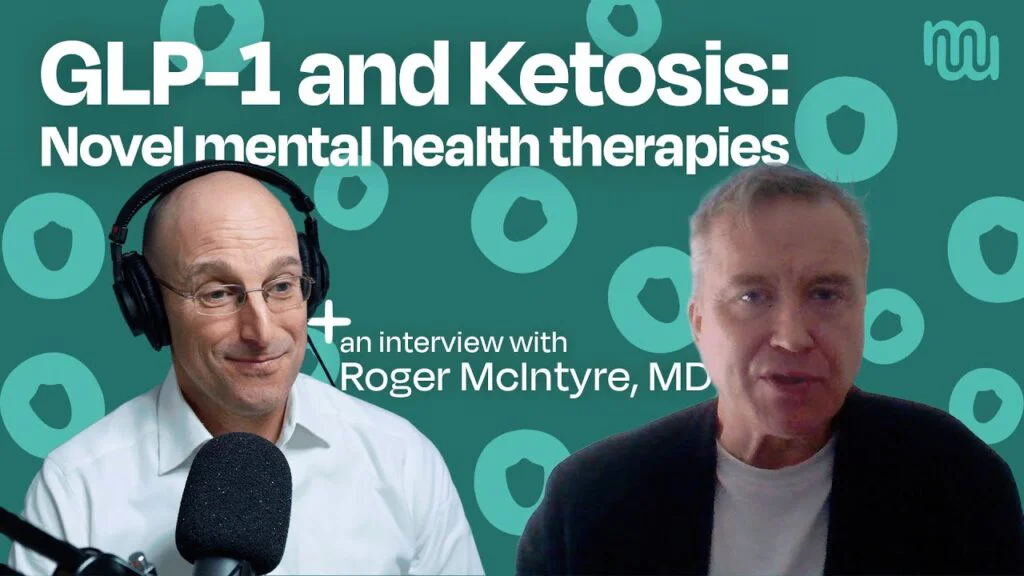
Can weight-loss drugs help the brain? In this Metabolic Mind episode, Dr. Bret Scher interviews Dr. Roger McIntyre—Professor of Psychiatry and Pharmacology at the University of Toronto—about GLP-1 receptor agonists (e.g., Wegovy, Ozempic) and ketogenic therapy in mood disorders. Dr. McIntyre explains why psychiatry’s spotlight is moving from simple neurotransmitter theories to brain energy and cellular metabolism, and how GLP-1s might aid mood both indirectly (better metabolic health) and directly (GLP-1 action in brain circuits). He draws parallels with nutritional ketosis, noting overlapping effects on inflammation, insulin signaling, mitochondria, and neural networks. While optimistic, he stresses staying within current GLP-1 indications and building high-quality clinical trials for both medications and keto before broad psychiatric adoption. The takeaway: a future of “brain-protective” care that integrates meds, diet, sleep, exercise, and psychotherapy—shifting treatment toward resilience and offering real hope for people with depression and bipolar disorder.
Read more

In this wrap-up episode, Dr. Bret Scher compares GLP-1 medications such as Wegovy and Ozempic with ketogenic therapy for metabolic and mental health. Experts discuss benefits, risks, and why lifestyle interventions—especially ketogenic diets—should come first, with GLP-1s serving as short-term bridges to lasting wellness.
Learn more

In this Metabolic Mind episode, Dr. Bret Scher interviews psychiatrist–scientist Dr. Rodrigo Mansur (University of Toronto) about GLP-1 receptor agonists like semaglutide (Ozempic/Wegovy) in psychiatry. Beyond weight loss, GLP-1s act on brain circuits tied to mood, motivation, and cognition—raising the possibility of direct antidepressant and pro-cognitive effects. Mansur shares early signals from pilot work and an ongoing placebo-controlled trial of oral semaglutide in depression, where interim monitoring shows improvement without emergent suicidality so far. He emphasizes caution and balance: prioritize lifestyle and medication optimization, consider metformin, and reserve GLP-1s for carefully selected patients with close safety monitoring. For clinicians and patients navigating medication-induced weight gain and treatment-resistant symptoms, this conversation lays out current evidence, open questions, and how to discuss risks and benefits in real-world care.
Learn more
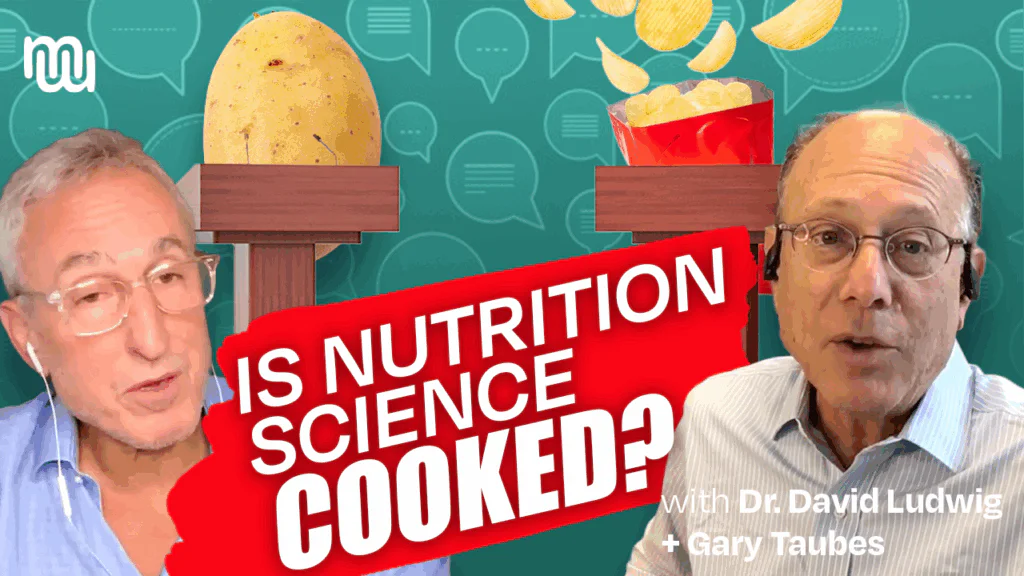
In this Metabolic Mind Podcast episode, Dr. Bret Scher hosts Harvard endocrinologist Dr. David Ludwig and investigative journalist Gary Taubes for a lively debate on ultra-processed foods, nutrition research quality, and scientific bias. They unpack why “ultra-processed” can be a vague, catch-all category, critique how randomized trials and media headlines may overstate conclusions, and discuss methodological red flags like short crossover designs, energy density confounding, and uneven dropouts. The conversation explores confirmation bias in peer review and funding, why mechanism-based thinking matters (especially for refined carbohydrates), and what individuals can do now—experiment thoughtfully with diet changes to see what improves their health.
Learn more
Can weight-loss drugs help the brain? In this Metabolic Mind episode, Dr. Bret Scher interviews Dr. Roger McIntyre—Professor of Psychiatry and Pharmacology at the University of Toronto—about GLP-1 receptor agonists (e.g., Wegovy, Ozempic) and ketogenic therapy in mood disorders. Dr. McIntyre explains why psychiatry’s spotlight is moving from simple neurotransmitter theories to brain energy and cellular metabolism, and how GLP-1s might aid mood both indirectly (better metabolic health) and directly (GLP-1 action in brain circuits). He draws parallels with nutritional ketosis, noting overlapping effects on inflammation, insulin signaling, mitochondria, and neural networks. While optimistic, he stresses staying within current GLP-1 indications and building high-quality clinical trials for both medications and keto before broad psychiatric adoption. The takeaway: a future of “brain-protective” care that integrates meds, diet, sleep, exercise, and psychotherapy—shifting treatment toward resilience and offering real hope for people with depression and bipolar disorder.
Read more
In this wrap-up episode, Dr. Bret Scher compares GLP-1 medications such as Wegovy and Ozempic with ketogenic therapy for metabolic and mental health. Experts discuss benefits, risks, and why lifestyle interventions—especially ketogenic diets—should come first, with GLP-1s serving as short-term bridges to lasting wellness.
Learn more
In this Metabolic Mind episode, Dr. Bret Scher interviews psychiatrist–scientist Dr. Rodrigo Mansur (University of Toronto) about GLP-1 receptor agonists like semaglutide (Ozempic/Wegovy) in psychiatry. Beyond weight loss, GLP-1s act on brain circuits tied to mood, motivation, and cognition—raising the possibility of direct antidepressant and pro-cognitive effects. Mansur shares early signals from pilot work and an ongoing placebo-controlled trial of oral semaglutide in depression, where interim monitoring shows improvement without emergent suicidality so far. He emphasizes caution and balance: prioritize lifestyle and medication optimization, consider metformin, and reserve GLP-1s for carefully selected patients with close safety monitoring. For clinicians and patients navigating medication-induced weight gain and treatment-resistant symptoms, this conversation lays out current evidence, open questions, and how to discuss risks and benefits in real-world care.
Learn more
In this Metabolic Mind Podcast episode, Dr. Bret Scher hosts Harvard endocrinologist Dr. David Ludwig and investigative journalist Gary Taubes for a lively debate on ultra-processed foods, nutrition research quality, and scientific bias. They unpack why “ultra-processed” can be a vague, catch-all category, critique how randomized trials and media headlines may overstate conclusions, and discuss methodological red flags like short crossover designs, energy density confounding, and uneven dropouts. The conversation explores confirmation bias in peer review and funding, why mechanism-based thinking matters (especially for refined carbohydrates), and what individuals can do now—experiment thoughtfully with diet changes to see what improves their health.
Learn more