New Results: First RCT for Schizophrenia & Bipolar Disorder. Learn more.


Listen, Watch & Subscribe on:



What the Science Really Says About Ketogenic Diets and Heart Health
Listen
About the host


Bret:
Welcome to the Metabolic Mind Podcast. I’m your host, Dr. Bret Scher. Metabolic Mind is a nonprofit initiative of Baszucki Group where we’re providing information about the intersection of metabolic health and mental health and metabolic therapies, such as nutritional ketosis as therapies for mental illness.
Thank you for joining us. Although our podcast is for informational purposes only and we aren’t giving medical advice, we hope you will learn from our content and it will help facilitate discussions with your healthcare providers to see if you could benefit from exploring the connection between metabolic and mental health.
February is Heart Health Month, and it’s a great time to talk about what really supports heart health and what doesn’t and clarify. So, one claim that always seems to surface this time of year is that ketogenic diets are bad for your heart. But when you look closely at the science, that claim simply doesn’t hold up.
So today, let’s clear up the confusion, debunk a few myths, and elevate this conversation about ketogenic diets and heart health. Now, the first problem is that many studies criticizing keto aren’t actually studying ketogenic diets. A true ketogenic diet typically contains less than 10% of calories from carbohydrates, or around 30 grams per day, and often far less. Yet, many studies labeled diets with 25% or even 30 or 40% of their calories from carbohydrates as low carb or keto-like.
But that’s not keto, and we can’t assume it’s all the same. At those carb levels, insulin levels remain elevated. The body’s not in nutritional ketosis, not burning fat for fuel, and the metabolic effects are completely different. So, drawing conclusions about ketogenic diets from those studies is like judging marathon training based on a walk around the block, right?
So, when you hear keto is bad for the heart, the first question should always be, what diet are we actually talking about? The second major assumption is that LDL cholesterol goes up for everyone on keto, and that simply is not true. Multiple controlled trials and real world studies show that the majority of people do not see a meaningful rise in LDL cholesterol on a ketogenic diet.
Many see no change. Some even see reductions. Now, a minority of people do experience an LDL increase, and that deserves thoughtful monitoring and consideration. But presenting LDL increases as universal is simply inaccurate and misleading. And what’s often ignored is that keto diets consistently improve the markers of metabolic health.
Arguably, more important risk factors for heart disease than just LDL alone. Triglycerides drop, often dramatically. HDL cholesterol rises. Insulin resistance improves. Inflammation markers go down and so much more. And even further, ketogenic diets have some of the strongest evidence of any dietary intervention for remission of type 2 diabetes, improved insulin sensitivity and significant reductions in visceral fat.
And these all matter tremendously for your heart because diabetes, insulin resistance, fatty liver, hypertension, those are among the strongest risk factors for cardiovascular disease, and they’re all signs of poor metabolic health. In fact, ketogenic diets have been shown to improve blood pressure control better than the dash diet, which is often promoted as the gold standard for heart health.
Now, a diet that reverses diabetes, lowers blood pressure, and improves metabolic health, cannot be dismissed as bad for the heart without ignoring a massive body of evidence. And then, another frequent criticism is that ketogenic diets are high in saturated fat. Now first, a keto diet does not have to be high in saturated fat. There are many variations of a ketogenic diet. Vegetarian keto, plant-based keto, Mediterranean style keto, keto diets that are rich in olive oil, nuts, seeds, fish, and avocados.
So, it’s simply incorrect to assume ketosis means high saturated fat. But even if there is, so second, this is a critical point. Even when saturated fat intake is higher, keto studies consistently show improvements in overall cardiovascular risk markers. So, how’s that possible? Because saturated fat consumed as part of a whole food, low carbohydrate diet behaves very differently than saturated fat consumed alongside refined carbohydrate, sugars and excess calories.
Saturated fat from steak, eggs, yogurt, or cheese eaten in a low insulin environment is metabolically different from saturated fat from pizza, pastries and ice cream, which combine fat with refined carbs and sugars. So, lumping those together ignores dietary context, and that’s one of the biggest mistakes in nutrition science. When ketogenic diets are properly defined and studied, they consistently show improved metabolic health and reduce cardiac risk for the majority of people.
Are there still unanswered questions? Sure, we can say that for just about any dietary intervention. Does ketosis work or ketogenic diets work for everyone? Not necessarily and no one diet works for everyone. Should people monitor lipids and work with their clinicians to monitor their health status? Yeah, absolutely, but claiming ketogenic diets are inherently harmful to the heart is not supported by scientific evidence.
And often, it’s the opposite, that ketogenic therapy improves overall heart health. So, for Heart Health Month, let’s move beyond outdated assumptions. Let’s stop confusing high fat, high carb processed diets with ketogenic diets. Let’s stop assuming LDL responds the same way for everyone, and let’s start recognizing that metabolic health is foundational to heart health.
Thanks for listening to the Metabolic Mind Podcast. If you found this episode helpful, please leave a rating and comment as we’d love to hear from you. And please click the subscribe button so you won’t miss any of our future episodes. And you can see full video episodes on our YouTube page at Metabolic Mind.
Lastly, if you know someone who may benefit from this information, please share it as our goal is to spread this information to help as many people as possible. Thanks again for listening, and we’ll see you here next time at the Metabolic Mind Podcast.
Listen, Watch & Subscribe on:

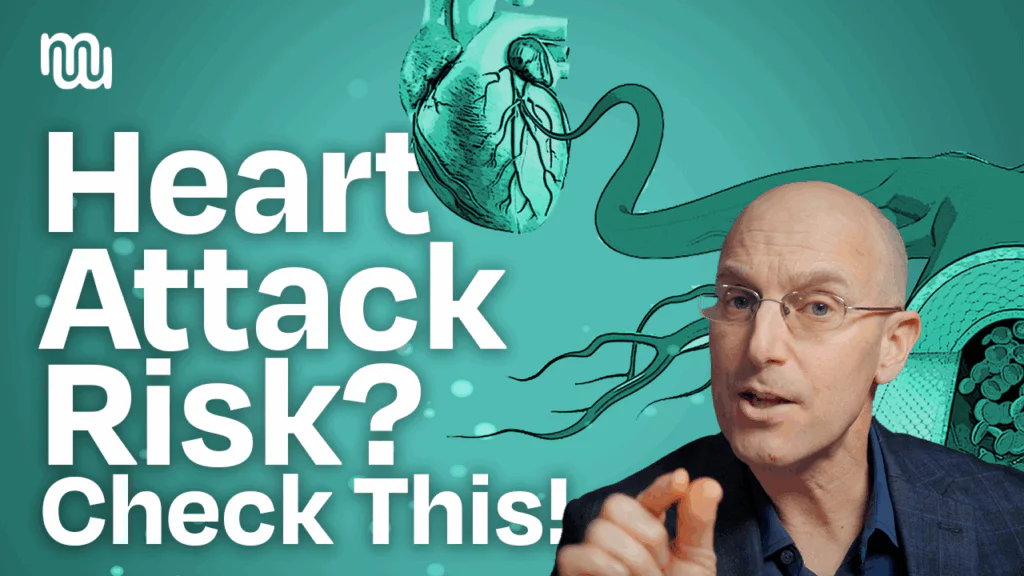
Why should we rely on a blood test to assess heart disease risk when we can see the disease itself? Transcript: Introduction to Carotid Intima-Media Thickness test (CIMT).Have…
Read more

A cautious, and nuanced editorial about elevated LDL cholesterol while on a keto diet. Read more here!
Learn more
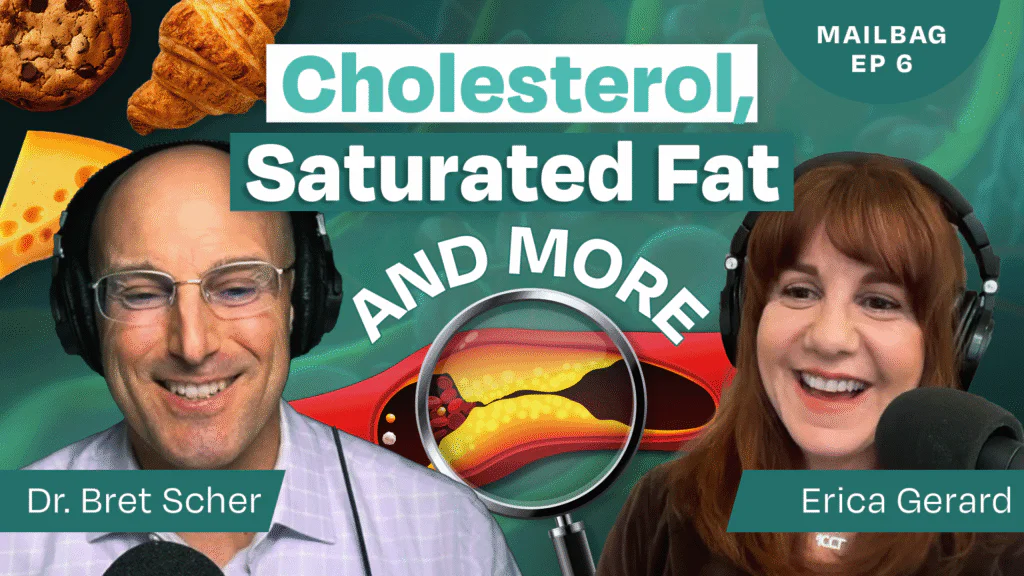
In this Metabolic Mind mailbag episode, Dr. Bret Scher answers common questions about cholesterol on keto, saturated fat, CRP inflammation, gluconeogenesis, and affordable ways to track ketosis. Learn how to interpret LDL changes in context, whether you can do keto without animal fat, what high CRP really means, and when ketone testing matters for metabolic and mental health.
Learn more

Dr. Bret Scher interviews engineer and citizen scientist Dave Feldman about new baseline data from a coronary CT angiography study of Lean Mass Hyper-Responders—lean, metabolically healthy people who develop very high LDL on low-carb diets. In a matched analysis against participants from the Miami Heart Study, LMHRs showed no statistically significant difference in total coronary plaque at baseline despite LDL averages near 270 mg/dL and some values above 500 mg/dL. Within both cohorts, LDL levels did not correlate with plaque burden. The episode underscores scientific nuance: these findings do not “disprove” the LDL hypothesis and apply to a carefully selected population; the pivotal question is what the one-year follow-up scans will show about plaque progression. Scher and Feldman also discuss how modern imaging—CAC and CTA—can help individualize cardiovascular risk decisions beyond one-size-fits-all cholesterol targets, while reminding listeners to partner with their clinicians for context-specific care.
Learn more
Why should we rely on a blood test to assess heart disease risk when we can see the disease itself? Transcript: Introduction to Carotid Intima-Media Thickness test (CIMT).Have…
Read more
A cautious, and nuanced editorial about elevated LDL cholesterol while on a keto diet. Read more here!
Learn more
In this Metabolic Mind mailbag episode, Dr. Bret Scher answers common questions about cholesterol on keto, saturated fat, CRP inflammation, gluconeogenesis, and affordable ways to track ketosis. Learn how to interpret LDL changes in context, whether you can do keto without animal fat, what high CRP really means, and when ketone testing matters for metabolic and mental health.
Learn more
Dr. Bret Scher interviews engineer and citizen scientist Dave Feldman about new baseline data from a coronary CT angiography study of Lean Mass Hyper-Responders—lean, metabolically healthy people who develop very high LDL on low-carb diets. In a matched analysis against participants from the Miami Heart Study, LMHRs showed no statistically significant difference in total coronary plaque at baseline despite LDL averages near 270 mg/dL and some values above 500 mg/dL. Within both cohorts, LDL levels did not correlate with plaque burden. The episode underscores scientific nuance: these findings do not “disprove” the LDL hypothesis and apply to a carefully selected population; the pivotal question is what the one-year follow-up scans will show about plaque progression. Scher and Feldman also discuss how modern imaging—CAC and CTA—can help individualize cardiovascular risk decisions beyond one-size-fits-all cholesterol targets, while reminding listeners to partner with their clinicians for context-specific care.
Learn more