Share your story. Help someone else start theirs. Share Now


Listen, Watch & Subscribe on:



Visceral Fat and the Chronic Health Epidemic
Listen
About the host

About the guest


David:
The human brain evolved. To deal with scarcity, not abundance, and from mu much of human history, there were no guarantees to when our next meal would arrive. So our biological systems, our brains, will. Seek out that sweetest, most energy dense food. So we’re wired to focus on the most salient stimuli in our environment.
It’s not that our brains are not working well, it’s not that our brains are broken. If anything, they’re working too well.
Bret:
Welcome to the Metabolic Mind Podcast. I’m your host, Dr. Bret Scher. Metabolic Mind is a nonprofit initiative of Baszucki Group. Where we’re providing information about the intersection of metabolic health and mental health and metabolic therapies such as nutritional ketosis as therapies for mental illness.
Thank you for joining us. Although our podcast is for informational purposes only and we aren’t giving medical advice, we hope you will learn from our content and it will help facilitate discussions with your healthcare providers to see if you could benefit from exploring the connection between metabolic and mental health.
What’s the biggest medical and public health failing of our lifetime? I’m joined by Dr. David Kessler, who’s pretty clear that it is visceral fat, visceral adiposity, and the metabolic dysfunction and obesity that goes along with it and the just myriad of health complications related to it. But what can we do about it and why are we here in the first place?
Dr. Kessler has an extensive pedigree to help us answer this question. Now he is an MD pediatrician. Also a lawyer. He was the former commissioner of the Food and Drug Administration. He’s been the dean of two different medical schools and he’s a well-respected author of the End of Overeating Question of Intent.
He helps, which was about the tobacco industry and he helps take on the tobacco industry and now diet, drugs and dopamine. Where he explores this connection between diet, visceral adiposity, insulin resistance, GLP-1s, and the food that we’re eating. There’s a lot to unpack here, but I think it’s going to help you better understand the predicament we’re in and how to get out of it.
So enjoy this interview with Dr. David Kessler. Many of the interventions we discuss can have potentially dangerous effects of done without proper supervision. Consult your healthcare provider before changing your lifestyle or medications. In addition, it’s important to note that people may respond differently to ketosis and there isn’t one recognized universal response.
Dr. David Kessler, thank you so much for joining me today at Metabolic Mind.
David:
My pleasure.
Bret:
As we’ve heard in the intro, you’ve got quite the pedigree with a lot in your background, in your history as a doctor, as a lawyer, as former head of the FDA, and of course as an author, diet, drugs, and Dopamine being your new book.
But what I found really interesting in your book is really started with a personal journey, right? It started with your personal journey since you were a kid of weight gain, weight loss. So give us a little bit about. That background about your background, what got you interested in this really this world of metabolic health and diet and how it all came to be for you?
David:
The mystery of weight. I’ve gained and lost my body weight repeatedly over my lifetime. I have suits in every size. I had the privilege of co-leading operation, warp speed during COVID, an intense period of time for all of us. I found myself at the end of that 16, 18 hour days seven days a week, 676 million vaccines later I found myself some 40 pounds heavier.
And I just really wanted to dig in to this mystery of, of weight. Here I was I ran an FDA took on tobacco did COVID Dean of two med schools. I usually can get the things done. No one ever accused me of not having discipline or willpower. But I just couldn’t understand what was going on with weight and wanted to tackle that.
Bret:
And and what makes your personal journey, I think so interesting is you talk about how during COVID you gained all this weight, but you weren’t new to the concept of weight management. You had already. Written the end of overeating years before that. So you’d already researched it and looked into it and yet it still snuck up on you.
Did that kind of surprise you?
David:
Absolutely. I was, I did, with a team, we did the food label back in the 1990s, that nutrition facts panel on, all packaged foods in the United States. I had written in the, this area but I still had just a, very hard time controlling weight.
No I would always be able to lose it, right? Get it off. But then, I would go on with life and I would gain it back, and I really didn’t understand why. I didn’t understand what was driving that.
Bret:
Yeah. And here you are within the medical system, struggling with the things that so many Americans and worldwide are struggling with.
But yet you had the inside track. So what do you think, it’s such a broad question, but what are we doing wrong? Why aren’t we succeeding as doctors, as a government, as the FDA, the dietary guidelines, why aren’t we succeeding in helping people maintain a healthy weight and. By, by association, healthy meta metabolism, metabolic health.
David:
I think the, you tell me, but I think our colleagues the medical profession has been relatively clueless on what is going on. I think we’ve turned, we can turn around and see that the American body in general overwhelmingly, is ill. Only 12.2% of us are metabolically healthy when it comes to basic parameters of blood pressure, blood, glucose lipids, waist circumference.
And I think we, more importantly, I think we are all waking up to the fact that the problem is not weight. Okay. The, it really isn’t how big or how small you are. But it is this toxic fat, this visceral adiposity, the abdominal adiposity that is metabolically active. We always knew I certainly knew that weight wasn’t good for us.
We always knew it was a risk factor, but what we didn’t understand was that it was causative. It was in the causal chain. Many cardiac renal metabolic diseases, diabetes, certain forms of cancer, potentially dementia that this visceral adiposity really was at the center. Of many of those diseases.
Why did we get here? What happened? I think that the way I look at it these ultra formulated foods that consume much of our diet, these ultra formulated foods trigger the addictive circuits. These new anti-obesity drugs can help tam down. That addiction but the ultimate solution is obviously to deal with these ultra formulated foods.
The problem is this visceral adiposity. The only way you get into trouble is that accumulation of that visceral adiposity. That is a result. I think, it’s complex. There’s no doubt you have to be in an energy. Positive state to accumulate that visceral adiposity. But the composition of food also adds fuel to the fire.
We’re just waking up to this and I think medicine has really not distinguished itself greatly on this issue.
Bret:
Yeah, it is interesting as we start to realize something. I don’t know, being so obvious. We always ask the question why didn’t we know this earlier?
And it wasn’t so obvious, this connection that you’re drawing, a decade ago, 20 years ago maybe wasn’t so obvious and really is taking sort of a new focus. Fellow mental health clinicians and healthcare providers, you now have access to a suite of free CME lectures on metabolic psychiatry and metabolic health.
Each of these CME sessions provide insight on incorporating metabolic therapies for mental illnesses into your practice. These CME sessions are approved for a MA category one credits, CNE nursing credit hours, and continuing education credit for psychologists, and they’re completely free of charge on my cme.com.
Now, back to the video. Now in your prior answer though, you used the term addiction, which I think is really interesting because in your prior books, in your prior works you didn’t use the term addiction so much, and I heard you recently on Food Junkies podcast, which is all about food addiction.
So I’m curious to, to learn a little bit more about your. Sort of evolution of coming to the word addiction. ’cause it’s a, from a legal standpoint, from a regulatory standpoint, it’s a loaded word if we’re just talking amongst ourselves Yeah. It makes sense to call it addiction. But for you, someone you know from the FDA with a law background, for you to call it addiction to me, comes with a little higher bar.
So tell me about that.
David:
Let’s just see if we can agree that the effect of these foods are both on these reward or addiction circuits. But they also are on metabolic circuits, right? So you, they, the reason for the complexity in part because of the damage and because this is so hard, is ’cause they’re working on multiple biological systems.
No doubt to, in my mind though, they’re working on these reward circuits.
Bret:
And by they you’re specifically talking about ultra processed foods and the ultra formulated food.
David:
Yeah, I, I call ’em ultra reformulated. I call it the, per the, that perfect trifecta of fat, sugar and salt, fat and sugar, fat and salt, fat, sugar and salt.
I, there’s no doubt that they trigger the reward circuits and those are the addictive circuits. Look, I think the issue is that. The word addiction is generally when we hear that, we think about the people who are weak the down trout, right? And the fact is that maybe we just have to, just tweak that paradigm of addiction, right?
Because it’s not about the weak, it’s not about the downtrodden, it’s about those circuits in all of us. The human brain evolved. To deal with scarcity. Not abundance, and from much of human history there were no guarantees to when our next meal would arrive. So our biological systems, our brains will.
Seek out that sweetest, most energy dense food. So we’re wired to focus on the most salient stimuli in our environment. It’s not that our brains are not working well, it’s not that our brains are broken. If anything, they’re working too well. For the current environment, I think there’s no doubt that sweetness or these complex mixtures, I call it ultra formulated, not ultra process.
Maybe just a nuance of addiction. Those ultra formulated. Foods. What we did was we, we put ’em on every corner. We made ’em available 24 7. We made it socially acceptable to eat any time we’re living in a food circus, what did we expect to happen? But, the fact that they are reinforcing and I think this is key, is that.
What do we mean by that? They are psychoactive. They can change how we feel. I can certainly tell you how I use food. It’s 10 o’clock at night, I’m tired. I, I’m fatigued. I need to, focus for the next several hours to get work. Gimme something to eat, and it’s not broccoli, I can tell you at 10 o’clock at night, right?
And I would condition myself to use that food to change how I feel. And I think that’s just food is very powerful.
Bret:
Yeah. Yeah. And the food that we recommend as a country, as a government, as a medical society is supposedly geared towards the healthy person. Someone without metabolic dysfunction and presumably someone without a food addiction background, but yeah. But it’s not really in practice that way, is it? So you wrote a recent op-ed for the Wall Street Journal talking about how it, you were recommending a separate recommendation for people with metabolic dysfunction, including a low carb diet.
So I’m curious if we, if this concept of, one healthy diet for everyone is just now outdated and completely unhelpful. So what do you think there,
David:
So a lot to unpack in what you just said. What. Became apparent to me. And I think increasingly when we, the, our understanding of metabolism is this visceral adiposity is the culprit.
What do we mean by this visceral adiposity? It’s basically this fat accumulated in the liver, in the pancreas. In the heart it’s ectopic fat, it’s pro-inflammatory. It’s releasing all these cytokines and chemokines that are causing organ dysfunction. Interestingly it’s not all the fat, not that I’m giving, subcutaneous fat, a clean bill of health, but there’s, there seems to be the sick fat that accumulates in the abdomen.
That is worse. The thing that once you’ve are in, once, that there’s visceral a apostate, right? The one thing that I am absolutely convinced the science shows is that if you are hyper insulin anemic, right? If you’re insulin resistant. That is going to add fuel to the visceral adiposity and make it worse.
Now, I think the sort of silent epidemic, right? That’s happened in the last, 20 years. There is, there has been a doubling in the insulin levels throughout in, in the United States. Just blood insulin levels. And we know that if you are in a weight gaining state. In an energy positive state if you have this visceral adiposity, the, that hyperinsulinemia is, is just doing you no good.
Bring down that hyperinsulinemia. And we can see much of the metabolic disease disappear. And I think the, one of the great debates is what’s the effect of this ultra processed food? On insulin levels. And I think that certainly when you see in an environment of excess calories of energy, dense foods, this ultra process, ultra formulated foods, I’m not talking about the addictive circuits, now I’m talking about the metabolic circuits.
I take food, I remove anything that has any structure, to the food. So the food, is just. Fat sugar and salt a and the glucose and the fructose get so rapidly absorbed, right? They flush through the stomach, they get absorbed rapidly into that the, through the duo, through the, the early part of the small intestine, and they give rise to these rapid glucose spikes.
And we’ve always been focused on glucose. But in some ways what we don’t measure. ‘Cause it’s complex. The assays aren’t, I mean as reliable is we don’t measure insulin levels. But I mean my, when you look carefully, the reason why glucose isn’t even more off the charts from this processed food is ’cause that we’re becoming hyperinsulinemia and that insulin is trying to bring down that glucose.
So imagine.
Bret:
So by the time the glucose is elevated, the process has been going on for so long already, but we missed it because we didn’t measure the insulin levels.
David:
I think that that is fair. And then the question is, if you just have this rapid, if I’m just pouring in rapidly absorbable glucose in fructose right.
What does that do to your insulin levels?
Bret:
Yeah, I think there’s no question that the ultra formulated foods are playing a central role in all this. I guess one of the questions I have though is it going to be enough to try to limit it? And one, how do we limit it? There are all these different permutations on that, but the question of is it going to be enough?
And so that’s what really got my attention with the Wall Street Journal editorial. You wrote about a dietary guidelines, including a low carb diet. And you’ve been in the FDA, the inner workings of government and health and how they interact, and do you think there’s any viable way to get a low carb diet in the dietary guidelines directed towards people who are metabolically unhealthy with visceral fat, with hyperinsulinemia.
David:
One couple, a couple of distinctions. Couple of nuances, right? You’re using the word low carb. Give me a little room here in the editorial, in the op-ed piece, I use the word lower carb.
Bret:
Lower carb, right? Okay.
David:
Lower carb. The reason why. Look, I, nutrition is probably the least studied field for the amount of data, effect on health that we could imagine.
So there’s a lot we don’t know about nutrition, but I think it is. It’s humbling that we all respond. There’s just such great variability. I’m not sure low carb or ketogenic or, use, we can choose our terms is necessary for everybody. I think there’s great variability and I think we have to sort that out.
But if you’re hyperinsulinemic, and you have visceral adiposity, then I’m with you. Then low carb, is I, I think can be, have enormous health benefits. Mean cutting that out for somebody who’s not in that state. I think that certain the same parameters don’t apply someone who has a seizure disorder, right?
If I wanna achieve a ketogenic diet because I wanna quiet down certain neural oscillations. So I think, tell me what we need to treat and what we need to get right. But I think we’re at a point where half the country is hyperinsulinemic.
And I think that we have to recognize that these ultra formulated, ultra process energy dense, highly rapidly absorbed, high glycemic, high, foods. Just are just adding real toxicity, real poison to the system. And we just gotta wake up to that.
Bret:
No, absolutely. And like you made reference to, if you’re treating a seizure disorder, if you’re trying to treat bipolar disorder, schizophrenia, we’re seeing the effects of a ketogenic diet.
But that’s very different than saying we have a countrywide a global population crisis of metabolic health and how do we best intervene to, to reverse that? And it seems like the medical answer is GLP-1 medications, but from a dietary lifestyle nutrition perspective, I’d like to think we can still have significant impact and.
And, oh, sorry. Go ahead. You wanna say something?
David:
No. I interrupted you. I apologize. I just I just bristled when you said GLP-1s is the medical answer. I think that the right medical answer right, is to bring, to bear those tools that are effective, of which GLP-1s can be one tool, right?
But I think the medical answer, has to include that full toolbox. Of, nutrition therapy physical activity, behavioral therapy, and pharmacology.
Bret:
And like you said a medicine alone is not good medical care and it’s critical to also provide nutrition guidance. But the question is
David:
Absolutely. Look, we’re in a, what’s the great public health success? Of our lifetime.
Bret:
I guess there could be a bunch, but are you talking about tobacco?
David:
Tobacco, what’s a great public health failure of our lifetime?
Bret:
Metabolic health and food.
David:
And obesity.
Visceral adiposity, right? All these diseases, the, all these chronic diseases. No doubt. If you were a. If you came down from another planet and one industry making billions of dollars, making us sick, and another industry making billions of dollars, similar profits to reverse what the former industry does, you would say, something’s wrong with that picture, fix the underlying problem.
But, this is at the core. I think, this is at the core of medicine. My, my hat’s off. There are a lot of people deserve a lot of credit.
Bret:
They’ve been, on the periphery, steering back to the dietary guidelines. There was another part of the book that really stuck out to me where you said the dietary guidelines declare certain foods as healthy and it doesn’t explicitly say it, but it provides the aura of you can eat as much of these.
Quote unquote healthy foods as you want. And since those by definition are high carb foods, the way the dietary guidelines is set up it’s provided an environment for us to eat lots of carbohydrates.
David:
One of the problems is, we can bring our friends, and have this conversation, what do we even mean by a carbohydrate?
So am I talking about a blueberry or am I talking about a blueberry muffin?
Bret:
It’s not really defined so much, is it? When you look at kids’ schools, like when my kid goes to school, he’s given a blueberry muffin as part of his healthy breakfast, according to the dietary guidelines.
But I would argue anything but
David:
Right. 40 to 65% carbs. There is a line in there. Eat, eat. Fewer refined carbs in there. But, there’s, look, there’s every bit of difference between that carbohydrate that has structure, that has food integrity, that has fiber for which that glucose is not rapidly absorbed.
And I think that’s the problem. And there are other complex carbohydrates. The starches and FI mean that are every bit as damn as that sugar and fructose that is as rapidly absorbed. And look, we did the food label back in the 1990s. And it was a big fight.
We were very proud of it, but we didn’t ask the question of what is the biological effect of those, ingredients that we’re putting on that label. It’s fine if, we can talk about, what’s the fat, what’s the cholesterol, what’s the protein, what’s the carbohydrate, what’s the added sugar in the food?
But no one asked what’s the effect? Of taking all that structure out, processing that food, having those rapid risers and having that affect, that hyperinsulinemia.
Bret:
And I think it’s a, it’s clear that we have to find a way to encourage people to eat less and just telling them to eat less.
Doesn’t work. And that’s why I was referring to this halo of you can eat as much of these healthy foods as you want. And again, that’s where GLP-1s can come in to help people eat less. So I think we also have to steer the discussion of what type of dietary makeup helps people naturally eat less.
And I think forcing them to eat less is counterproductive. And that’s where, low carb keto diet certainly can come in, but not the only way to do it.
David:
I look. I think you’re absolutely right. That eat less, exercise more, right? Just, it was, we told people and no one could do it.
Why can’t they do it? They can’t do it, in part because those addictive circuits. And now you have. These GLP-1 drugs, they give people a way to do it. Now I think we have to be clear that there’s really no magic. The pharmaceutical industry would like us to believe, there’s something magical about these drugs, right?
And when I tell my, talk to my colleagues and I say, they’re appetite suppressants, they bristle. Because they’re more than appetite suppressants, they say. But I think the reality is least in significant part, probably not in, entirely. I think we under, we’re having to understand that they work by delayed gastric empty.
So food stays in your stomach longer and when food stays in your stomach longer. We’ve all experienced that. Whether it’s we have the flu, whether there’s decreased, our GI motility or we have food poisoning. Food just builds up. In our stomach, the last thing you want to do is put more food in your stomach.
The problem is, I don’t know what you are seeing, in, in your patients, but the average patient is what on these, eight, nine months is the data that, that I’m seeing. And the one thing we know, if you go off them. That conditioning that, that feeling, that visceral mallet, that the late gastric redemption is gonna go away over time, it’s gonna fade and then people are gonna gain back the weight.
So three, four years, we’re gonna look at this. People are gonna spend thousands of dollars. The average person’s on this for eight, nine months, and they’re gonna gain back. We’re gonna gain back all that weight, and we’re gonna say this is one big national failure. Unless we figure out how to use these drugs.
And so I think, my old agency needs to do a better job of getting, certainly requiring the manufacturers. How do, how are we gonna use these drugs in the real world? Can I go back on, can I go off them? I can go back on them. Is that safe?
Bret:
So once the FDA approves the drug, do they have any role in, in saying how they’re used or they’re just approved?
David:
No, there’s post-marketing. They certainly have requirements to get, the data. These drugs were proved under the premise. The people will stay on them for life.
Bret:
Which they’re not doing now.
David:
Maybe if some people will do that.
Bret:
Correct. Correct.
David:
But I, and I’m not sure you know what percentage we’ll see, but that’s not been the case.
And, I think we’re all, every, people are experimenting with microdosing and intermittent use and that’s the wild West. That’s no way to do pharmacology. So FDA certainly you wanna make billions of dollars selling this drug in the United States, you can, FDA can require them to do studies, to post-marketing studies of how this drug can be safely used.
This certainly has the authority to do that.
Bret:
And I like your analogy if someone came from outer space and saw one industry making billions of dollars, making us unhealthy and another, spending billions of dollars trying to undo that. It seems like the logical place is not to focus on building up the after effect, but to try and cut off the pre effect, to try and cut off the industry making us unhealthy.
But in the world of regulation, in the world of free markets and companies, is there any hope at all of that happening?
David:
When you’re taking care of, one of your patients, right? You’re gonna tell ’em, wait for the day where the environment. And we fixed the environment. So you’re gonna try to help them today to re I think for the first time, tell me how you feel, I think finally, we have the tools so people can reclaim their metabolic health.
Bret:
That’s interesting. It depends on what the tools are so for me personally, you’re absolutely right. I’m not gonna wait for that day, and that’s why I use low-carb ketogenic diets in a lot of those people because I’ve seen it reduces the cravings, it addresses the addiction, it takes away the potential for those ultra processed foods.
But that certainly hasn’t reached mainstream in that form, in, in medicine. So what tools are you referring to when you say we, we have the tools?
David:
No. I’m talking to the same tool you and I have. We have the same tools, right? So we have nutrition therapy of which there can be diet, we, ketogenic diets, lower low carb diets, right?
So that can take away food noise for some people. Fair. And we also have a, some drugs such as not just the GLP-1s but the phentermine, topiramate combinations. How did that how did those drugs work? What circuits did they work on, right? And then we have the GLP-1 drugs.
Now, the one thing that’s always fascinated me and that I can’t quite understand. Is, there’s no doubt that, how does, how do those ketogenic diets decrease that food noise? What are they doing? And some of my colleagues, it’s ketone bodies, when I can simulate that decrease in that food noise by either these aversive circuits can counterbalance those addictive circuits that GLP-1s or these drugs like.
Topiramate can change, the neural oscillations. I wonder whether the ketogenic diet in these GLP-1s, I mean in these other drugs, this decrease in this food noise, whether the neuro the, whether, the kind of neural changes that are happening. That, to me, that decrease in food news is just a reduction of that addiction.
It’s a reduction of that cue induced wanting. Normally I’m highly responsive. I go in front of the refrigerator, it calls out, I go past, my, my favorite place, on the highway. And I, all of a sudden I get queued. I get these thoughts of wanting and I can’t get it out of my head.
How do I quiet that, that cue induced want? So that is clearly, neural and my sense is, there are. Neural circuits, not just one neuro, neurochemical. That is at play here. And, but my guess is if we understood ketogenic diets these drugs like Topiramate and these GLP-1 reward mechanisms, I think we would find that hey, maybe there’s a common common link to that food satiety.
So you know, whether I can achieve that aversion. Through GLP-1s or with that aversion through ketogenic diets. I think that, my guess is, we just don’t understand ultimately what they’re working on.
Bret:
Yeah. Yeah. It’s a good point and it is fascinating. I’ve had a couple interviews recently with people who are working with ketogenic diets, specifically on addiction, whether it’s alcohol or drug addiction.
And certainly that also plays into food addiction. And I like in your book, you actually quoted Dr. Tro, who’s been a vocal supporter of using ketogenic diets for food addiction. So there’s, I think there’s definitely a crossover, and I don’t wanna keep bringing it up to say, ketogenic diets are the one and only answer, but I think they need to be embraced as a potential answer, especially when we’re talking about the GLP-1s not being as successful in the real world as the FDA had hoped.
David:
Yeah, no, I think I think one of the reasons, one thing I do in the book is, the reality that people are only gonna be on these GLP-1 drugs for eight, nine months. Whatever it is, some people will be on it for years. Some will be on it for a lifetime, some will be on it for months.
But what do you do when you want to go off these? How do you, how are you gonna control appetite so I then go on a lower carb diet?
Bret:
Yeah. So how do we get to the point where we as a medical society and nutrition society and a government can recommend multiple different. Ways of eating as long as it addresses someone’s metabolic health addresses someone’s addictive tendencies, addresses someone’s overeating. Rather than saying, here’s the one way for people to eat.
David:
First we gotta understand the problem. You gotta understand you got a problem and we got a problem. And the dietary guidelines have failed.
And they failed miserably. Again, this is the biggest public health. Failure, mean in our lifetime before. So we gotta understand there’s a problem. We gotta understand what the cause of that problem is. I think it the, I mean at the core of that is this accumulation of this.
For lack of a better term, this toxic fat, this visceral adiposity this chronic disease. What is feeding that chronic, that visceral adiposity, I think it’s hyperinsulinemia. What is triggering that hyperinsulinemia for, what’s making that worse? For many people, I think it’s rapidly absorbable carbohydrates.
First we gotta understand, we got a problem. Once we understand, the cause, right? We can, either take societal action or we can take individual action, but at least we can be armed with an understanding in a way that, the fact, how many books, diet books have been written?
So the fact that I, I just wrote a book Diet, Drugs and Dopamine on the Mystery of Weight after thousands of books have been written. Something’s wrong with that picture. And I think that much of this chronic disease, goes back to this.
Core adiposity that is being fed. By what? By what we eat.
Bret:
All right. Very good. I really wanna thank you for taking the time to join me today to explore all these concepts and I, if people want to, find more about you where can we direct them to go?
David:
Oh so the book. I took everything I could, took everything outta me, right?
It was as intense period. You didn’t tell me what did I get wrong? In the book.
Bret:
What did you get wrong? Gosh, that’s an impossible question to answer. I’m not sure there is a right or wrong. Like you said you’re really trying to lay out the problem.
And then the question, I think the question is what is the solution and how do we go about doing that? There’s so many different layers to that solution.
David:
And that’s why I did the book that, that’s what I try to do in the book, and it’s not beyond our reach. You can make, if I come to you.
You can help me become metabolically healthy, fair. I mean that, that’s a profound thing. And that’s gonna, that has profound implications.
Bret:
Very good. I, well, encourage everybody then to check out your book too to learn all about you and your work and your prior books too.
We’ll link to them in the description of the, of this episode for sure. So thank you again for joining me.
David:
Thanks.
Bret:
Thanks for listening to the Metabolic Mind Podcast. If you found this episode helpful, please leave a rating and comment as we’d love to hear from you. And please click the subscribe button so you won’t miss any of our future episodes.
And you can see full video episodes on our YouTube page at Metabolic Mind. Lastly, if you know someone who may benefit from this information, please share it as our goal is to spread this information to help as many people as possible. Thanks again for listening, and we’ll see you here next time at The Metabolic Mind Podcast.
Listen, Watch & Subscribe on:
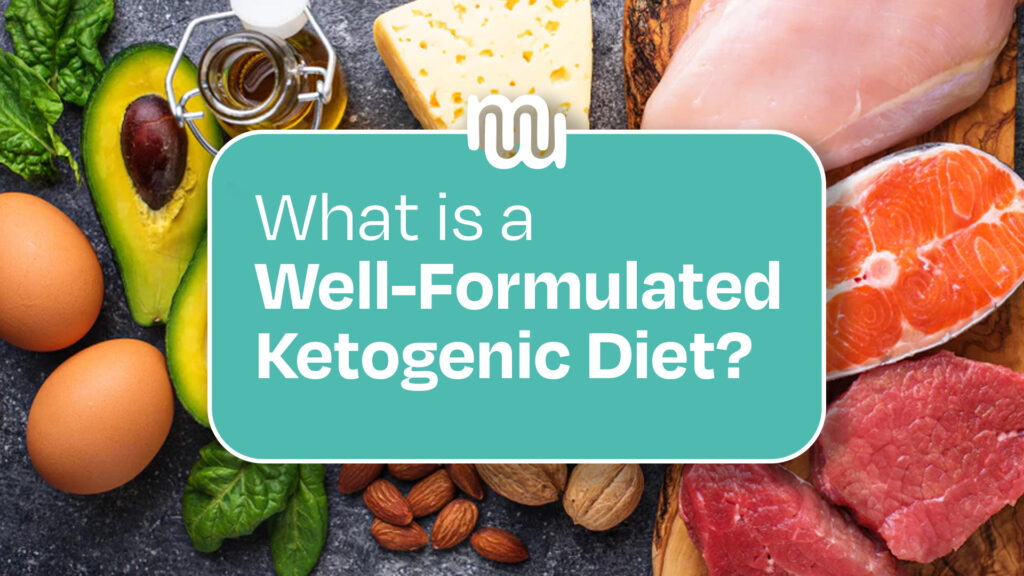
A Practical Guide to the Ketogenic Diet, Why Formulation Matters, and How a Nutrient-Dense Approach Can Unlock Its Full Therapeutic Potential. As research continues to uncover the therapeutic…
Read more
I always wanted to understand life. What moves us? What allows us to heal and thrive? And what goes wrong when we get sick or when we eventually…
Learn more

The ketogenic diet has gained significant attention for its potential health benefits, but confusion and misconceptions abound. This free guide from LowCarbUSA addresses common concerns about the keto…
Learn more

Is coconut oil clogging your arteries, or could it actually reduce your risk of heart disease? Transcript: The controversy surrounding coconut oilIs coconut oil going to give you…
Learn more
A Practical Guide to the Ketogenic Diet, Why Formulation Matters, and How a Nutrient-Dense Approach Can Unlock Its Full Therapeutic Potential. As research continues to uncover the therapeutic…
Read more
I always wanted to understand life. What moves us? What allows us to heal and thrive? And what goes wrong when we get sick or when we eventually…
Learn more
The ketogenic diet has gained significant attention for its potential health benefits, but confusion and misconceptions abound. This free guide from LowCarbUSA addresses common concerns about the keto…
Learn more
Is coconut oil clogging your arteries, or could it actually reduce your risk of heart disease? Transcript: The controversy surrounding coconut oilIs coconut oil going to give you…
Learn more