Get the latest on metabolic psychiatry. Subscribe.


Listen, Watch & Subscribe on:



This Fat is Increasing Your Risk of Chronic Disease
Listen
About the host
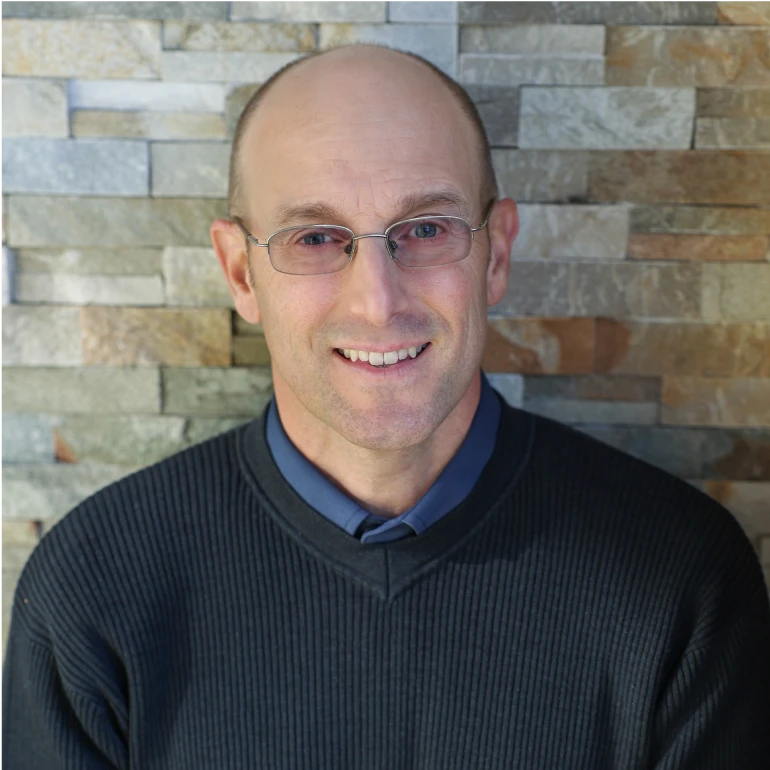
About the guest


Sean:
The truth is, Bret, nothing kills more human beings right now than visceral fat. I mean, it’s more deadly than cancer, but we don’t talk about it because we’re not taught it in medical school.
Bret:
Welcome to The Metabolic Mind Podcast. I’m your host, Dr. Bret Scher. Metabolic Mind is a nonprofit initiative of Baszucki Group where we’re providing information about the intersection of metabolic health and mental health and metabolic therapies, such as nutritional ketosis as therapies for mental illness.
Thank you for joining us. Although our podcast is for informational purposes only and we aren’t giving medical advice, we hope you will learn from our content and it will help facilitate discussions with your healthcare providers to see if you could benefit from exploring the connection between metabolic and mental health.
According to one doctor, there is a clear primary threat to your health that we’re not talking about. It’s not cholesterol. It’s not blood pressure. It’s not even blood sugar. It’s fat. But not any kind of fat. Visceral fat. The fat that surrounds your organs. The fat that surrounds your heart. The fat that’s inside your muscles, intercellular fat.
And Dr. Sean O’Mara is really leading the way to kind of raise the alarm about visceral fat, about what it is, how to diagnose it, and most importantly, what we can do about it. And it’s important to know how it’s related to all the chronic diseases that are affecting society. And Dr.  O’Mara has a pretty unusual path that he came to being an undercover narcotics agent.
Being a lawyer, a prosecutor. Then, being an ER doctor in the US Army. And now, for over a decade, has really devoted his practice to visceral fat, to understanding its importance, its risk, and how we can get rid of it. So, I really hope you enjoy this interview about visceral fat with Dr. Sean O’Mara.
Many of the interventions we discussed can have potentially dangerous effects of done without proper supervision. Consult your healthcare provider before changing your lifestyle or medications. In addition, it’s important to note that people may respond differently to ketosis, and there isn’t one recognized universal response.
Well, Sean, thank you so much for joining me at Metabolic Mind. It’s great to chat with you.
Sean:
Yeah. Hey, Bret, first time with you. Super excited, long time fan. Been following you for years.
Bret:
Oh, thank you.
Sean:
And good job. You know, you’re a great health influencer. So, I’ve wanted to do something with you for a long time. So very grateful for the opportunity to be invited and participate today.
Bret:
Yeah, I really appreciate that. And I’m really excited to get into visceral fat, what it is, why it’s a problem, how to fix it. Because it’s something that you know, if you look at sort of the uptick of how often it’s being discussed, it’s starting to increase for sure. But I think what we’ll learn from you is maybe not as quickly as it needs to be.
So, I want to get into all the details and so people can walk away with really some tangible advice and knowledge about how this impacts their metabolic health and their health, in general. But before we get into that, I’ve got to ask you know, looking through your bio, you were an undercover narcotics agent. So, I’ve got to say you were the first undercover narcotics agents I’ve ever interviewed.
And I can just picture you with the long hair and the tattoos and the earrings, right? Is it, you know, we all have seen movies, and I remember the 21 Jump Street days. Is that what it’s really like being an undercover narcotics agent?
Sean:
Yeah, pretty much. I didn’t have long hair because, you know, when I went into it, I had short hair, but it was, I got my cover was, you know, I was a surfer. I was very tan. I put zinc, I had a lightly bolt shaved in the side of my head and I put zinc oxide into it with a, you know, to keep it real white, just to look like a, you know, badass. So, I was a cop. I was an undercover drug agent. I went to law school.
I became a criminal prosecutor, a trial attorney. And then, I decided, hey, you know, I really am interested in science. So, here I am. You and I talking about health, and it’s my passion. I loved, I love law enforcement doing undercover work, but this is a lot more meaningful work, saving lives and really helping us humanity.
Bret:
Yeah. And I think that sets the example that, you know, to be a good doctor, you need to be able to learn facts and regurgitate facts, right? And to memorize and to repeat, and that really speaks to maybe our follow the authority and very guideline-based practice. But what you’re doing is anything but that.
So, I think that maybe that that sort of, you know, reflects on your colorful beginnings, your different background, right? Your ability to sort of question and get ahead of the curve. And that’s where I think maybe visceral fat is. You could say maybe it’s a ahead of the curve, right? It’s not in the guidelines.
It’s not what every doctor is looking at. But looking at a lot of your material, backed by a number of research study studies, you would say visceral fat is the most important thing to be looking at. And I even saw one comment that you don’t even do blood tests, or maybe you do? Maybe I’m exaggerating this? But you don’t even look at blood tests.
You don’t care about those things. You care about visceral fat. So, with something that important that’s so misunderstood, give us the background. What is visceral fat? Why do we need to know so much about?
Sean:
Yeah, it’s great. So, I do concentrate solely on structural disease, visceral fat. So, first of all, I call it disease, and it’s got structure to it.
And so, we should be looking at it from the perspective that it’s diseased in the body, but it’s the most undiagnosed disease because our physician colleagues in radiology don’t comment on it because it’s not taught to them in medical school. It’s not taught in radiology residency programs to be, they know what it is, but it’s not reported to them as this disease that you got to report it.
The truth is, Bret, that nothing kills more human beings right now than visceral fat. I mean, it’s more deadly than cancer, but we don’t talk about it because we’re not taught it in medical school. And I can tell you from experience, you know, having studied it now for 13 years, that nothing improves the human being more, Bret, in my physician experience, clinically working with people, than eliminating this visceral fat.
So, if I had any other objective or metric or something else to follow to either increase or decrease, nothing comes even remotely close to the results that I’m getting in terms of really eliminating chronic disease. So, it’s not like you’re just eliminating this fat, you’re eliminating everything downstream to visceral fat.
So, what that means is visceral fat is the head of the snake. It’s the first expression of things going wrong in the human body. We actually can see it in toddlers, who are fed, you know, pancakes and waffles and syrup and, you know, processed kind of foods. It starts to accumulate very early in their abdomen, and then it continues to stay in there throughout their lifetime.
And what’s interesting about visceral fat is it’s less about how much you have at a particular point in time. It’s its influence. So, what that means is how long have you had that fat, you know? So, if you get, if you get scanned and you have a tremendous amount of visceral fat, you may not have a lot of disease if you recently gained that visceral fat or the opposite.
You may have a minimal amounts, like barely, you know, anything that you can observe, but you’ve had that all your life, and it spews out these inflammatory molecules. So, I think we need to be paying attention to it because maybe we pay less attention to cholesterol and other things if we knew about the precedence and, the more upstream concern of visceral fat?
Bret:
So, visceral fat, very different from just fat, in general, right? Fat, subcutaneous fat, under our skin. You know, you can look at someone and you might be able to see some adipose tissue, but this is the one surrounding our organs internally. And that’s why you referenced radiology colleagues not talking about it because that’s how you can see it.
You see it on CT scans. You see it on MRIs. But it’s usually thought of just sort of as a, it just happens to be there. It’s an incidental finding. Whereas, you’re saying it is actually a pathogenic problem. It is the problem, and you’ve called it inflammatory fat because we think of fat as maybe just a storage tissue. But it’s actually not right, according to what you’re saying.
This is actually an active tissue, an active organ almost, that is secreting inflammatory components. And that that’s something that maybe surprises people that they think fat is more inert. So, tell us a little bit about that, about the science that this actually secretes inflammatory cytokines.
Sean:
Yeah so, what it actually is secreting are inflammatory substances molecules. So, Interleukins, IL-1, Interleukins-6, resistant tumor necrosis factor alpha. These are active molecules that are associated with causing inflammation throughout the body and not just locally. So, these substances get secreted and distributed systemically because of its capacity to be absorbed.
Its visceral fat releasing these molecules, and its own, you know, blood supply. Its relationship to the portal vein and our circulation system allows it to be readily distributed. I’ve seen a lot of references to it being, you know, this living organ because it has its own blood supply. And it’s also active, and it’s secreting substances.
But I don’t like the term organ because the precedence for organs are that they’re created by nature and they exist in us to help us out. But visceral fact is not intentional, you know, part of nature. In fact, when we started studying for the National Science Foundation, we didn’t look to humans for visceral fat.
We looked to animals, and we saw that they had no visceral fat. The only wild animals, animals in the wild, that had visceral fat were ones that lived in close proximity to humans and were consuming human food or human dietary food. So, such as, maybe, deer near fields, agriculture fields where human food is being grown.
Deer, they eat more corn or grain or something that, you know, is used to feed humans, end up having a higher level or get some visceral fat. They don’t have as much as humans, but they do start acquiring it versus maybe deer or elk that are really in, you know, deep inside, some very remote area and don’t have access to agricultural, mono cropped products.
Bret:
So, that’s super interesting. It sort of speaks to the species specific diet or the species-appropriate diet that all of a sudden are not eating and that we as humans, in general, aren’t eating. So, that yeah, that’s super interesting.
Sean:
It’s natural parks, also, as well and suburbs. So, you know, if you look at bear and things that get into humid garbage cans, they get higher levels of visceral fat, epicardial fat, when they’re eating that human food.
So, species specific diets really, really are important, you know, to figure that out. And I’ve been discussing with veterinarians, you know, who are the physicians for our cattle and the agricultural industry, they’re just treating disease in these animals and none of them say, we’re going to create a super cow. We’re going to create a super goat. It doesn’t happen. They create a super profitable cow, you know, one that has a lot of fat, extra weight, steps on the scale, makes more money for the organization or their clients.
So it’s really kind of a, it just, it was a big, eye-opening experience. And I’ll be honest with you, I mean, I hope my wife has noticed that. I am very interested in going back to school and maybe become a veterinarian. But the reason is not because I want to take care of cows. I want to take care of humans.
Bret, if we cannot figure how to get those cows more healthy, we’re not going to get healthy food into humans. And I think physicians need to be asking the question, oh, if we’re going to eat meat, does it matter? What kind of meat do we eat? Is there a certain level of health in those animals that we ought to be doing?
And the the answer is yes. The healthier the food supply that you consume, if you’re vegan, if you’re eating more healthy vegetables, you’re going to benefit from that. If you’re carnivore, just eating meat only a carnivore diet, you’ll benefit for the healthiest type of meat that you can eat. And if and if you eat, kind of like how I advocate, which is a living carnivore diet.
So, meats with fermented vegetables, fermented fruit, only if they’re fermented. Then, or fermented dairy, then you’ll be, you’ll benefit even more through the contribution of living microbes, the microbiome.
Bret:
Yeah. So we will get into what you can do for it, for sure. But so we, you’ve talked about actively secreting inflammatory compounds.
And then you’ve talked or something that visceral fat does, and you’ve talked about how it actually can sort of invade the tissue and invade the muscle. So, you have sarcopenia and it can invade pancreas and liver and affect the function of that. Are there other ways that that visceral fat directly impacts metabolic health, future health, heart health, cancer?
Are there, are there other contributing factors?
Sean:
Yeah, it is very interesting, particularly that last one. The mechanism of cancer, not completely worked out. But recently, in a 2021 study done by our Irish colleagues in Dublin at Trinity, they actually worked out the mechanism that’s very important to you, to cancer.
And that is, as you know, you probably remember in medical school, I was surprised at this fact, that we all have cancer cells in us. You know, cancer is present in us 24 hours a day. There is a certain system in our body, called our immunity or immunological system. So, it’s our immunology that allows us to go in, find those cancer cells and kill them. And the specific type, or part, of our immune system that does that is natural killer T-cell, these NK killer T cells, and they’re the best.
They’re our first line of defense, and our best line of defense. And it’s rarely talked about. It is not something that can be manipulated much, where we can really increase. And what I am very impressed with Trinity is that they found out that these natural killer T cells are being undermined, suppressed, and denatured by visceral fat.
So, your threat to your killer, your ability to kill off cancer starts with visceral fat formation. So, if you’re somebody that’s worried about cancer, and there are these kind of people with cancer-phobes, you better find out about your visceral fat. So, your biggest threat, you know, immediately comes from a contribution of visceral fat from your abdomen. But another form of visceral fat is the fat that starts forming around your heart.
And I was looking forward to this show because you’re a cardiologist, and I’m like, I can’t wait to get to Bret and talk about this epicardial adipose tissue. There’s just this weird type of fat that forms on the myocardial surface of the heart between the pericardial sac. The inflammatory fat of epicardial fat that’s up against the heart, is having a direct influence on our coronary arteries. We see a preponderance of that visceral of that fat around the artery at that epicardial adipose tissue.
So, you’re really, you know, if you know before cancer, you’re more likely to have a heart attack. And it’s going to be because of this epicardial adipose tissue that we’re not taught about, and we’re not aware of. And so, I jumped in AI, and I would challenge you to do the same thing. And I asked AI, both in Grok and Chat GPT, I said, with everything you could look at, specifically scientific reports, scientific studies, medical records, autopsy records, any information whatsoever about 8 billion people living today or who have ever lived in the past.
How many people can you find that had a heart attack that did not have elevated amounts of epicardial adipose tissue? And guess how many people came up with?
Bret:
Wow. I can’t imagine. Yeah, imagine that’d be a hard thing to try and find, but you’re showing a big zero.
So, that’s interesting.
Sean:
Zero. There’s no human being that’s ever had a heart attack that has not had elevated epicardial adipose tissue. So, here’s what I’m now saying. That I endorse this professionally. No heart fats, no heart attack. If you don’t have that fat around your heart, you’re not going to have a heart attack.
Bret:
Well, so let’s talk about how we would know. I mean, because that’s pretty amazing to say that. So, someone’s going to say like, well, how do I know if I have visceral fat? How do I know if I have fat around my heart? And you’re showing us these images. So, you know, MRIs, CTs. Those are the most likely, or the best ways, to diagnose it.
But you can’t just walk into a doctor’s office and do that, right? You can walk into a doctor’s office and get a blood test. You can get your blood pressure checked. You could even get an EKG. But you can’t just get a CT scan or an MRI. And maybe that’s the big limiting factor to why we’re not talking so much about visceral fat?
So, how can more people understand whether they have this or not?
Sean:
So, great questions. How do you get these scans? Well, you can see heart fat, epicardial adipose tissue. You can see visceral fat, visceral adipose tissue, on both a CT scan or an MRI. So interestingly, if you’ve ever had an MRI of your abdomen, the chances are, you probably aren’t aware of this because I’m guessing cardiologists don’t get a lot of MRI scans of the abdomen.
But the protocol includes the dome of the liver. And so, with the dome of the liver being included, because the liver is visceral within the abdomen, you have to be able to image that visceral fat within the abdomen. And as a consequence of visualizing that visceral fat in the abdomen, we oftentimes see the dome of the liver.
And so if you’ve ever had a CT scan of your abdomen, you can ask to see it and go back and evaluate the fat around the heart because the dome of the liver rises up into the lung and adjacent to that do of the liver is the heart. And then, you can evaluate it. And so, if you’re a physician today watching this great podcast from this great cardiologist, you should challenge yourself to go back and look at your patient’s scans for this deadly fat that I will guarantee was not read by your radiologist when they did that reading.
And so there’s only two radiologists in the world now reading this fat. Dr. Ana Rosa, who’s with the VA system in Omaha, Nebraska, and Dr. Andrew Mitchell, who’s with Vanderbilt University, who are now practicing radiologists and now are reading visceral fat and heart fat because of their awareness to the importance of it being disease that otherwise is left in the body.
Bret, it’s like ignoring a cancerous tumor, but it’s like the doctors weren’t ever taught cancer. So, they don’t, they don’t know about it to report it. So, that’s what we got to do. We’ve got to have more people, like yourself, heroically doing the work. And brother, I know it’s a lot of work doing these podcasts. I know it’s a lot of work, but you’re on an important mission.
And I would say social media health influencers have done more today to help out humanity becoming aware of health promoting education awareness than our own conventional system ever has. You and I’s conventional cardiologists and emergency medicine physicians, respectively, we save lives for sure. But I would submit to you, we’re saving way more lives doing what we’re doing, talking to America and the world about what’s important when it comes to their health.
So, that’s why I’m very excited to be here today talking about heart fat and visceral fat, muscle fat.
Bret:
Psychiatrists and even primary care doctors receive extensive training in how to prescribe medications. But almost none about how to safely reduce them. And yet, for millions of people, tapering psychiatric medications is an essential, and often overlooked, part of their treatment plan.
Georgia:
There is a real art and a science to reducing psychiatric medications. That if you reduced to quickly, then you could have serious withdrawal symptoms on your hands. Sometimes, medications will help at first, and then they’ll lose some or all of their effectiveness over time.
Bret:
So, in part one of this series, we’ll explore why so many people face this decision and what risks and misunderstandings surround it.
So this concept of relapse versus withdrawal of, how do you help people approach that to try and determine is it a recurrence of the symptoms and the diagnosis or is it a withdrawal from the me? And then in part two, we’ll dive into the how, the principles, the pitfalls, and what it really takes to taper safely. Tapering psychiatric medications isn’t about rejecting treatment, it’s about redefining success.
Because sometimes fewer medications, or even none at all, can mean a fuller, healthier life. So, join us October 1st for this two-part series on tapering psychiatric medications. An honest conversation clinicians were never taught to have and patients desperately need.
Yeah, and actually you bring up a great example that you don’t have to go to your doctor necessarily, and say, I want an MRI to look at visceral fat. I want a CT scan to look at visceral fat. If you’ve ever had a CT or MRI for other reasons, you can go back and look at it. And imaging is so prevalent these days.
So many people have had it done. Now, it may not be quantified, right? It may not have, it may be harder to quantify, retrospectively, but you can take a look. You may be even compared to a future study or something, so you can see if it’s there or not. So we, I think, we’ve talked about why it’s a problem.
We’ve talked about ways to figure it out. But then, what do you do about it, right? You’ve got visceral fat. You don’t go in, and you don’t scoop it out, right? It’s not like a surgical problem. Although I’m sure people may start looking at that and thinking about that because we have such a narrow focus so many times in medicine. See the problem, remove the problem, you’re done, instead of realizing it’s a more of a systemic problem.
So how do you get rid of it?
Sean:
Yeah. So, whenever somebody asks about how to get rid of visceral fat, I really like to show this study. And this is the only time, Bret, that this has actually been done in the history of humanity or anywhere in the world. So, what this is a patient that we studied for the National Science Foundation.
He was 70 years old, and he was a bit of curmudgeon. He was the oldest guy we were a following. So, what he agreed to do was just eat meat and vegetables in whole form. So, nothing processed, just chunks of meat, vegetables. We educate him about that. Basically, eating a clean diet, I guess you could say. Like kind of, kind of paleo, you know, but nothing processed at all.
And so this was him at his, at week zero, and this is his visceral fat. We painted it red in the study. So, this is a big chunk of fat in his muscles. But look at the difference, Bret, in just two weeks, okay.
Bret:
Wow. That’s just two weeks? That’s only two weeks?
Sean:
And it’s just two weeks.
Bret:
Wow.
Sean:
Yeah. Not only that, you’re not even a radiologist brother.
You’re a cardiologist, and you saw that right away. But your audience will also be able to see that, too. But you can look at that chunk of fat and he got smaller. But look at 35 weeks. Now, all the fat is gone from his muscles. He’s now got a new shape. He’s got a six-pack. He looks like now a collegiate swimmer, like a, you know, his abdomen.
He is 70 years old. Now, he’s got this oval shape.
Bret:
is he exercising too? I mean, he must be doing some sort of resistance training or exercise.
Sean:
He didn’t exercise one minute.
Bret:
Wow, that’s amazing.
Sean:
No exercise. So, this is a dietary influence. You see the enormous contribution that visceral fat plays, and more importantly, how quickly visceral fat and muscle fat gets eliminated from the body. And there’s an associated scan where his heart fat was also greatly diminished. During this same time period, it gets eliminated through the elimination of processed foods from your diet. So, this is a powerful example, and I think it belongs in every patient room, physician office.
It needs to be in every medical school. And furthermore, you know, it’s what we call an end of one. It’s just one study, but we need to duplicate this. As a researcher of this deadly type of fat, I want to advocate for, you know, funding to do this for a thousand people. We could do this easily. Just a hundred people, I think, we should be able to find, but probably a thousand that would agree just to stop eating processed foods.
They don’t have to exercise. They don’t do anything else. I will tell you, anecdotally, that today I have everybody cutting out processed foods and doing a multitude of other things, like you say, resistance training, getting better sleep, getting sunshine, doing fasting, eating fermented foods. So, there’s actually, when somebody comes and works with me, we give them specifically 50 things, a huge list, of stuff to do to get them healthy.
I no longer give that out to anybody based on our experience with the National Science Foundation because it was overwhelming them. And until they got scanned, they wouldn’t do it. But once they got scanned and saw this big chunk of fat enveloping surrounding their heart and filling their organs within their abdomen and replacing their beautiful muscles in their legs, then they were willing.
They rose their hand, they said, all right, I’ve got a big problem. I’ll do those 50 things.
Bret:
So, you talked about cutting out processed foods, especially carbohydrates. I’ve also heard you talk about sprinting. And so, I wanted to bring that up, specifically, because I think that’s so interesting because we talk about exercise as being beneficial.
Some people will talk about VO2 max, some people will talk about, you know, resistance training in muscles. But I’ve heard you talk a lot specifically about sprinting, which can be pretty intimidating for people to say like, whoa, well, wait a second. You know, I don’t exercise all that much, and now you want me to start sprinting?
But what is it about sprinting that you think specifically helps with visceral fat?
Sean:
Yeah, so what’s interesting about sprinting is it produces more mild myokines in a shorter period of time than anything else studied. So, all forms of exercise. This very interesting study that took a look at 10 different forms of exercise that you could do, a variety of them.
And at the very top, what produced the most amount of myokines, and these messaging modules that get produced typically in the big muscles, the large muscle bellies. So, your biggest ones are going to be in your glutes. In your quads, your legs, the lower extremity muscles. And so they also get produced when you do exercise with your arms, but you produce so much more in these bigger muscles that it’s almost like not even worth paying attention what happens in your arms.
If you build up, it’s interesting, studies show if you exercise your glutes and your legs, do you know your arm muscles grow even if you don’t use them, if you never lift with them? Because those mykines are so powerful, they’re messaging molecules and they need to tell you what they message. So your audience knows, they message your body to burn fat, but not superficial, subcutaneous fat.
It tells your body to burn deadly fat. So, fat around your heart, fat within your viscera and deep subcutaneous fat. So, and the other thing it tells you to do is to grow muscle. So, here’s a guy who had been running 10 miles a day, five days a week. He is a distance runner, and he wasn’t getting better.
I was either going to have to admit that we were wrong or he was cheating or something. He is, oh no, I’m not cheating. And I said, alright. The other thing we talk about is, are you drinking alcohol? So, people who drink alcohol have a resistance to eliminating fat, these deadly fats. And so alcoholics or heavy drinkers, or even just a little bit, I mean of imbibing, will impair your metabolism and make it harder to, through lipolysis where you mobilize these stores of fat and release these triglycerides, and to free fatty acids.
That process lipolysis is impaired by alcohol consumption. He said, nope, not drinking it. The third thing I asked him was, okay, are you staying up all night playing electronic games or building communities or watching TV or movies? And he said, nope, I’m sleeping great. I’m getting sleep. And the fourth thing. We asked him is you got a lot of stress. And he said, no, everything’s great at the company. Everything’s great at home.
You know, my kid isn’t doing dope. I’m, you know, I’m not having any problems. And so, I then we got out of them. I said, how about distance running? We’re starting to see that runners are coming in, they’re skinny on the outside. They’ll look, like marathoners are really thin on the outside. I said, are you still running? You stop running. He goes, no, I’m still running. So, this guy had kept his running 10 miles a day, five days a week.
And we said, look, this time, I put my foot down. I said, look, we’re not going to follow you because we’re not going to get good results. If you keep running, you got to stop running, and start sprinting. So, this was all as visceral fat, this white stuff. And just two months later, look how much he reduced his visceral fat, and he increased his muscles, got a six-pack, grew his muscles.
In just two months by simply stopping running, and substituting in place for distance running for sprinting. So, we try to get our clients to sprint. But heads up, the longer you’ve had the influence of visceral fat, the more difficult it can be to adopt a sprinting strategy. And the more vulnerable you are to straining a muscle like a hamstring, you know, getting a muscle tear or strain.
So, you got to be very careful. Start very slowly into sprinting. It is like lifting weights. You know, go in and just go hog crazy, you know, lifting weights. Start with small weights and expand. So, when it comes to sprinting, start with small distances and accelerate the distance. The difference here is you want to accelerate very, very, very times 10, very slowly, and so that you can begin to slowly adopt advantages of sprinting without going crazy, trying to accelerate in your race and because you’ll get an injury.
Bret:
Yeah. And that’s super helpful to hear you go through the thought process of what you asked him. So we talked about, you know, food and ultra-processed food, carbs, sleep, like you talked about stress, alcohol, and then, of course, sprinting. You also mentioned fasting earlier. And so, I wanted to ask you about that because fasting can mean so many different things, right?
It can mean a five day water fast. It can mean time-restricted eating of a 16/8 type pattern, and there’s concern that maybe more fasting means you’re not getting enough protein or maybe losing some muscle. So, people are looking for that sweet spot. So, when you counsel people regarding visceral fat, where is that sweet spot for you for fasting?
Sean:
Yeah, so my sweet spot is starting them super slow on fasting, and then gradually increase over a period of time. So, I typically recommend to exploit people fasting a very small reduced amount unless they’re kind of accustomed to doing it. So, even if they just skip one meal in between, you know, lunch and dinner, skip lunch and just go to dinnertime.
That’s intermittent fasting, starting with a small amount. And then, eventually, over about three to six months, I challenged them, Bret, to get up to 72 hours of straight fasting, non-caloric fasting. So, no calories for straight 72 hours, straight three days, once a week. I mean, it’s a big fasting period. And what we find is the fastest elimination of epicardial adipose tissue, fastest elimination of heart fat, through fasting and other strategies.
You’ll have some elimination of fats, but what you really want to do is a multitude of strategy. So we do leverage fasting. We see the best results, particularly from an extended fast. So, here’s what’s not talked about, and it’s fairly obvious to me. If you’re going to fast three days a week, you’re going to eat four days a week. You better make up for the lost meat that you didn’t eat, the lost calories those three days.
So, what does that mean? I work with my clients to increase their capacity for feasting. So, this is a very different strategy that you probably never heard about. I promote fasting and feasting. So, what I mean by that is you can’t eat normal when you eat. You got to eat more, more in a feasting way or you’re a pounding food, especially the most nutritious food, which is meat with ferment foods. As a garnish, if you consume or think of fermented foods as like sustenance or you’re eating for its nutrient value, you’re still not going to get enough adequate protein.
It’s never been done where we get studies looking collectively at feasting and fasting. What I promote, but I would submit to you, Bret, that if we did a large study at a hundred or a thousand people that did feasting and fasting, particularly with fermented foods, this rich microbes that need to be consumed with meat, we would actually see that this protein is contributing to muscle protein synthesis with protein, with muscle production.
And we see it all the time in Ns of 1 where I study follow-up scans, and I show my geriatric patients that they’re actually putting on muscle. And boy, you talk about a fun thing to do. Tell an 87-year-old. Not just tell them, show them. Show them where they’re putting on muscle. And always in between that, they tell you, I feel stronger. I’m getting out of the car way easier. I’m doing all, you know, so much better. My golf game has improved. All these fun things that they’re able to to experience and now they can understand.
Because you show them how the black stuff is increasing in their body, they’re getting more muscle. So, I think the concern about muscle loss and protein deprivation is a valid concern only to the extent that you’re not really feasting and making up for the lost, protein and calories that you may be participating in from a caloric standpoint.
So, honestly, I’m up, you know about my best clients, are up around seven pounds of meat, but that’s plenty adequate for them to be building muscle, Bret, even when they’re fasting three or four days a week.
Bret:
Yeah, it’s impressive. I mean that’s, it’s really interesting philosophy about the feast and famine, and it appears to be working in your practice. So, I’d be curious if more people experiment with that and more doctors experiment with it.
Fellow mental health clinicians and healthcare providers, you now have access to a suite of free CME lectures on metabolic psychiatry and metabolic health. Each of these CME sessions provide insight on incorporating metabolic therapies for mental illnesses into your practice. These CME sessions are approved for a MA category one credits, CNE nursing credit hours, and continuing education credit for psychologists. And they’re completely free of charge on mycme.com. Now, back to the video.
But last question before we wrap up here. We’re out of time, at least in the US, where there’s a lot of, I guess, reinvigorated discussion about what else can we do to improve chronic medical conditions, to improve metabolic health, to improve health in general. Do you think the government and regulatory regulators should be talking about an MRI scan for everybody at some point to look at visceral fat?
And if so, you know, what age would you pick and how would you go about that?
Sean:
Yeah. Well, I think the government gives a lot of funding to healthcare systems and can incentivize medical schools and curriculums to be aware of visceral fat.
I think for sure, we need to be attaching coding, CPT coding, and the equivalent of whatever CPT coding is around the world. What happens in America often times, particularly when it’s aligned with good results, gets adopted across the globe. So, the potential for the US government to find out about visceral fat and hard fat, and start promoting its awareness will allow humans and patients to get behind it and understand it.
Look, we did it in the era of the seventies and eighties warning about fat. Our government got involved in that, and we got it wrong. I think it’s okay for the government to opine on, maybe not necessarily create laws where you make people to do that because listen, when I get people to elect to do something, they get better results than I, than if, you try to make them do something.
And I think if we could leverage our government to increase awareness about visceral fat, at least in, as an alternative to, what we’re having shoved down our throats right now, cholesterol, I think, that will go a long way to improving the health of Americans and the lives of Americans.
So, I think awareness of visceral fat, heart fat, muscle fat. We talked about how they can go out and get their scans, talking to the doctors, requesting it, and there’s also a service. I don’t have any interest in them, called radiologyassist.com. People can order their own MRI scans, and pay for it out of pocket even though there’s not yet a CPT code or a mechanism in the insurance lane to get it paid for.
Don’t wait for the insurance companies, and don’t wait for the government to get this right for you. Dip into your pocket. Spend money. Find out about this deadly fat, these deadly areas of fat inside your body. My medical practice can read it for people if they go to my medical practice, drseanomara.com. Another website that we have for our medical practice is growingbetternotolder.com. There’s two different websites, and we’re adopting a nationwide practice of reading MRIs across the country because nobody else is doing it.
And then, we tell people how to get rid of visceral fat and work. We developed an online solution. You don’t even have to come to us anymore. We can do this through online. So, it’s really innovative approach. We’re trying to blow up awareness of visceral fat. But I think the government could be an ally this time instead of being an anchor and a proponent of disease when we got it wrong.
When they got it wrong about fat, dietary fat.
Bret:
I think that’s a great way to wrap it up and summarize in a very, very strong, profound statement there. And I’m glad you listed those websites so people can definitely check you out on those websites. And I see that you’ve been, you’ve been active on Twitter or X as well on social media.
You have a number of podcasts you’ve been on and YouTube videos. So, there’s plenty of information out there for people to search you up and learn more. But I want to thank you for really being on the cutting edge of talking about the importance of visceral fat. Really making people aware of it.
And thank you for joining me today.
Sean:
Yeah, it was a pleasure. And by the way, Bret. I look at faces, and I can tell you have a low level of visceral fat. And also, your voice reflects a low level of visceral adiposity because your voice is nice and pleasant. So, you should get yourself scan interesting and share your MRI scan with your followers, and I’d be happy to come back and we can interpret and do another show if you ever want to do that.
But yeah, you look good, and you perform well. Bret, you’re a real asset to social media. Thank you very much having me on your show.
Bret:
I appreciate that very much. Thank you.
Thanks for listening to the Metabolic Mind Podcast. If you found this episode helpful, please leave a rating and comment as we’d love to hear from you.
And please click the subscribe button so you won’t miss any of our future episodes. And you can see full video episodes on our YouTube page at Metabolic Mind. Lastly, if you know someone who may benefit from this information, please share it as our goal is to spread this information to help as many people as possible.
Thanks again for listening, and we’ll see you here next time at The Metabolic Mind Podcast.
Listen, Watch & Subscribe on:

Discover why weight loss alone isn’t the goal—body composition is. Dr. Bret Scher breaks down how ketogenic diets, adequate protein, and resistance training can drive fat loss while preserving muscle, compares Ozempic/Wegovy (semaglutide) outcomes to keto results, and shares practical steps to improve metabolic health without sacrificing lean mass.
Read more
Psychiatric medications can save lives—but for many people they also trigger rapid weight gain and serious metabolic side effects. In this Metabolic Mind episode, psychiatrist Dr. Matthew Bernstein joins Dr. Bret Scher to unpack what actually works for medication-induced weight gain. They discuss why standard tools like metformin and generic “diet and exercise” advice often fall short, where GLP-1 receptor agonists (Wegovy, Ozempic) and dual GLP-1/GIP drugs (tirzepatide) can fit, and the under-recognized risk of losing precious lean mass and regaining fat when these drugs are stopped. Dr. Bernstein shares how clinician-guided ketogenic therapy can deliver a true “win-win,” improving mood, cognition, and metabolic health together. You’ll hear practical strategies for protein targets, resistance training, CGM and ketone monitoring, and building a coordinated care team so medications support—not replace—sustainable lifestyle changes. If you or your patients are struggling with antipsychotic-related weight gain, this conversation offers a balanced, science-literate roadmap to protect metabolic health without sacrificing psychiatric stability.
Learn more
Is a ketogenic diet an effective, affordable, and sustainable solution for long-term metabolic health? Transcript: Introduction to Dr. Tro’s new paper on GLP1’s vs ketogenic diet.Real world data…
Learn more
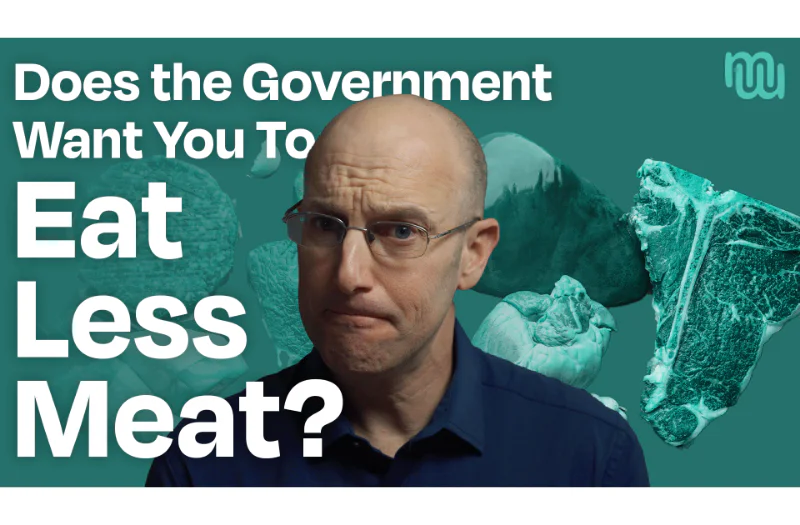
The U.S. Dietary Guidelines Committee’s latest recommendations call for a reduction in red meat consumption, promoting more plant-based proteins like beans, lentils, and peas. In this video, we…
Learn more
Discover why weight loss alone isn’t the goal—body composition is. Dr. Bret Scher breaks down how ketogenic diets, adequate protein, and resistance training can drive fat loss while preserving muscle, compares Ozempic/Wegovy (semaglutide) outcomes to keto results, and shares practical steps to improve metabolic health without sacrificing lean mass.
Read more
Psychiatric medications can save lives—but for many people they also trigger rapid weight gain and serious metabolic side effects. In this Metabolic Mind episode, psychiatrist Dr. Matthew Bernstein joins Dr. Bret Scher to unpack what actually works for medication-induced weight gain. They discuss why standard tools like metformin and generic “diet and exercise” advice often fall short, where GLP-1 receptor agonists (Wegovy, Ozempic) and dual GLP-1/GIP drugs (tirzepatide) can fit, and the under-recognized risk of losing precious lean mass and regaining fat when these drugs are stopped. Dr. Bernstein shares how clinician-guided ketogenic therapy can deliver a true “win-win,” improving mood, cognition, and metabolic health together. You’ll hear practical strategies for protein targets, resistance training, CGM and ketone monitoring, and building a coordinated care team so medications support—not replace—sustainable lifestyle changes. If you or your patients are struggling with antipsychotic-related weight gain, this conversation offers a balanced, science-literate roadmap to protect metabolic health without sacrificing psychiatric stability.
Learn more
Is a ketogenic diet an effective, affordable, and sustainable solution for long-term metabolic health? Transcript: Introduction to Dr. Tro’s new paper on GLP1’s vs ketogenic diet.Real world data…
Learn more
The U.S. Dietary Guidelines Committee’s latest recommendations call for a reduction in red meat consumption, promoting more plant-based proteins like beans, lentils, and peas. In this video, we…
Learn more