Get the latest on metabolic psychiatry. Subscribe.


Listen, Watch & Subscribe on:



Taper Down Slowly: A Beginners Guide to Psychiatric Drug Tapering (Part 1)
Listen
About the host

About the guest


Georgia:
The other thing about that meta-analysis, if I understand it correctly, is that they also said that withdrawal not only was it short-lived and mild, but it that it was uncommon. But I am here to tell you prescribing medicines for 25 years, this is not an uncommon scenario.
Bret:
Welcome to the Metabolic Mind Podcast. I’m your host, Dr. Bret Scher. Metabolic Mind is a nonprofit initiative of Baszucki Group where we’re providing information about the Intercept. Of metabolic health and mental health and metabolic therapies, such as nutritional ketosis as therapies for mental illness.
Thank you for joining us. Although our podcast is for informational purposes only and we aren’t giving medical advice, we hope you will learn from our content and it will help facilitate discussions with your healthcare providers to see if you could benefit from exploring the connection between metabolic and mental health.
Are you on psychiatric medications like antidepressants, antipsychotics, mood stabilizers, benzodiazepines, and thinking about tapering coming off them or maybe just stopping them? Or have you tried to come off them and maybe struggled with some symptoms and not sure if it’s withdrawal or return of your symptomatology?
If so, this is the episode for you. This is going to be a two-part series where I’m joined with Dr. Georgia Ede, where we’re going to talk about the complexities of this topic. It is not a straightforward topic. So, anybody who struggled with this, you are absolutely not alone. But we’re going to cover a lot about the why people would consider to taper or de-prescribe.
What are some of the things you really need to consider ahead of time? And, of course, into the how, what are some of the specifics of how you could do it. And then, what are some of the concerns to look for and what does it mean to have withdrawal symptoms or how do you differentiate that from a return of your symptomatology, from a psychiatric diagnoses and so much more?
So, I really hope you enjoy, and I hope this is helpful for you to learn from Dr. Georgie Ede, and all her experience about psychiatric medication tapering and de-prescription. Now just one quick mention though about tapering and de-prescription. As Dr. Ede mentions, it is very personalized. So, none of this is meant to be prescriptive.
None of this is going to tell you exactly what to do, but really help you understand the concepts and understand how you can proceed with your healthcare team to go about doing this. But it all has to be personalized. Thank you. Many of the interventions we discuss can have potentially dangerous effects of done without proper supervision.
Consult your healthcare provider before changing your lifestyle or medications. In addition, it’s important to note that people may respond differently to ketosis, and there isn’t one recognized universal response.
Well, Georgia, welcome back. I’m so excited to talk to you again. Now, a two-part series that we’re going to really delve into prescription and medication management or tapering or de-prescription, right? All these words that surround how people can manage their own prescription medications, and I’m really glad to have you join me because there’s a lot to talk about for this topic, isn’t there?
Georgia:
Yes. This is a really important topic because there’s so much medication management, whether or not you’re following the ketogenic diet that many prescribers and most patients are not aware of, that’s very important.
Bret:
Yeah, and, I’m glad you brought that up so we can set the stage with your expertise.
We’re going to talk about this within the framework of ketogenic therapy, ketogenic nutrition. But the same principles apply for de-prescription whether or not you’re following a ketogenic diet or whether you’re doing other interventions to help you taper .
The same principles that we’re going to go over really apply to all that, don’t they?
Georgia:
So, if you’re following a ketogenic diet and you are hoping to be able to try to reduce the amount of psychiatric medication you’re taking, as long as you’ve been stabilized and you’re really well fat adapted on a ketogenic diet.
Once you’re at that point and you’re looking at medication adjustment, there really isn’t anything different about managing the medications at that point compared to someone who’s not following a ketogenic diet. But in both cases, whether you’re following a ketogenic diet or not, there are very important principles of safe psychiatric medication tapering that must be followed no matter who you are, what diet you’re following.
Bret:
Yeah. And so in this first episode, we’re really going to cover the, what about the medications, the why you might want to taper, what things you want to consider beforehand. But before we even get to all that, give us your background. How long have you been prescribing psychiatric medications? And then, how long have you really been thinking about, maybe we should also talk about how to get off psychiatric medications?
Give us your background for that.
Georgia:
Yeah, so I’ve been prescribing medications for over 25 years as a practicing psychiatrist. And everybody who prescribes medicines also reduces psychiatric medications. Everybody must do this in clinical practice because, say for example, you start a psychiatric medication and it doesn’t work or it causes side effects, it will then need to be stopped.
Now, we have a lot of training. We receive a lot of training in how to prescribe psychiatric medications. We get almost no formal training in how to de-prescribe psychiatric medications. And this is a shame because there is a real art and a science to reducing psychiatric medications. And if you’re not aware of all of the important principles that apply to that process, it can be very uncomfortable, sometimes even dangerous, for patients.
Bret:
Yeah, and I think that’s really worth doubling down on that. So much training in the prescription and very little training in the de-prescription. And that’s probably why we’re seeing specific specialized tapering clinics, de-prescription clinics, coming up.
People who make that their expertise because even if someone is the expert and trained in psychiatry and in these medications, they still may be, I don’t know, I guess you could say, behind-the-times or not optimally educated about getting somebody off. And that could put somebody potentially in harm’s way, couldn’t it?
Georgia:
It could, and it often does. And so, when I was prescribing, but before, I mean there really has been a lot more research into this topic in recent years, than there was when I was training to become a psychiatrist when I was first practicing. So, when I was first practicing, simply by listening to my patients and actually believing what they were telling me, it became clear very quickly that if you reduced certain psychiatric medications too quickly, then you could have serious withdrawal symptoms on your hands.
And so many of us who were paying attention, we were learning by doing. And we taught ourselves how to feel our way through those psychiatric medication adjustments. But there are still, even today, many psychiatrists who are not attentive to these issues. And because there’s no formal training, some prescribers are not aware and may not be on the lookout for these problems.
Bret:
Right?
And it’s not like they’re purposely trying to harm anybody. And they’re, no, they could actually be practicing according to the guidelines for de-prescription, which as we’ll get to, are probably not accurate. Now dated, not detailed enough. And maybe based on misleading data? But we will get into all that.
In addition to the different types of medications and what to look for, how to tell withdrawal from a recurrence of your symptoms. So, many important topics. But first, let’s just, high level, what is the difference between tapering, de-prescription? How do you like, how do you define those?
Georgia:
Yeah. So, tapering is just gradually, slowly and gradually reducing the dosage of a medication over time. And de-prescription is the term that’s used for for the process. When your goal is to get to zero milligrams, when your goal is to completely come off the medication, which isn’t always what people are trying to do.
Sometimes, people are just trying to find the right dose or the most tolerable dose. But sometimes, they are trying to completely off the medication, which is called de-prescribing. So, we’re trained how to prescribe. We’re just not trained very well on how to properly de-prescribe.
Bret:
Yeah. And I think when you describe tapering versus de-prescription, someone’s going to say, which is better?
Which is which? What should be my goal? And the answer is, as always is, it depends on the individual. So, when you’re working with somebody, is the goal right away, let’s get you off your medications? Or are there, is there other goals that are maybe take higher priority that changing medication may or may not fit into that goal?
Georgia:
There are a lot of different reasons why a psychiatrist or a prescribing mental health professional may wish or need to reduce the dosage of a psychiatric medication. The most common reason being side effects or ineffectiveness or drug interactions. But then, there are also many reasons why.
The patient may wish or need to reduce the dose of the psychiatric medication. So, as I was saying, in addition to side effects, drug interactions, ineffectiveness, sometimes medications will help at first, and then they’ll lose some or all of their effectiveness over time. Some person may become pregnant or be breastfeeding and need to stop a medication in order to balance that risk versus benefit equation.
There are many situations where a person may need or want to reduce the medication, but the most common, and sometimes it’s just personal choice or the medication is no longer available or the person can’t afford the medication anymore. There are many different reasons why somebody may want to reduce or discontinue their medication.
But the most common reasons in clinical practice are side effects or loss of effectiveness.
Bret:
Yeah. And I think that’s really important. A number of reasons why you would specifically say, okay, as a clinician, I need to tell you it’s time to reduce the medications. Or you would come to the clinician saying, I’m having these side effects.
Can I get off the medications? But I guess the broader point that I think I want to make is. this isn’t medications are bad. Nobody should be on medications. Everybody should get off their medications. The point is, you want to be, you want to be healthy. You want to be vibrant, right?
Achieve your definition of treatment success. And that may include medications, and that’s okay as long as you’re hitting those goals. But for some, that by definition would involve fewer medications or getting off the medications. So, I think it’s really important to just set the tone right away that not everybody needs to be off medications.
You can reach your goals on medications. But if you do want to get off medications either for any of the reasons you brought up or just for a strong belief about medications or it doesn’t fit your definition of success, then these are the principles you really want to start thinking about and work with your clinician that we’re going to cover.
Would you agree with that?
Georgia:
So, the goal is feeling well and functioning no matter what. The combination of strategies you have found to work best for yourself may be, it may involve a certain amount of medication every day. It may involve a certain amount of medication from time to time.
And hopefully, it also includes really good brain healthy lifestyle strategies to really, really make sure that the foundation of brain health is there for you for the rest of your life. And we’ll talk about those, too. But I think the main reason why we at Metabolic Mind are talking about tapering-safe tapering practices is because many people go on to a ketogenic diet for mental health reasons, and after a time they feel quite a bit better.
And then, they’re at a point where they would wish to explore, can they use less medication or perhaps even no medication? And so, it’s a very common situation for people who are following ketogenic diets to find themselves in.
Bret:
Yeah, that’s a great point. Now, a couple things for definitions. First of all, we’re talking about psychiatrists. Psychiatrists doing this. First of all, does it have to be a psychiatrist? Can a primary care doctor also help someone with tapering certain medications?
Georgia:
Yeah, so any anybody who is licensed to prescribe medications, can also become involved in de-prescribing medications and tapering medicines.
And so, it’s just a matter of making sure that you have the right information. That you’re well-informed about how to do it properly. So, this could be a primary care doctor, a nurse practitioner, physician’s assistant, and could be a psychiatrist, could be really any kind of physician. Most prescribing practitioners work with psychiatric medications because for better or for worse, many people take psychiatric medications.
So, just about every type of prescribing professional sees people who are taking psychiatric medications.
Bret:
Now, so far we’ve been using the term psychiatric medications as if they’re all one thing, right? And, of course, we don’t mean that, but it’s just the convenient way to discuss them.
But what are, how do you see the main classes of psychiatric medications? And then later, maybe we can talk to the specific considerations for each class when it comes to tapering?
Georgia:
Yeah, so if you’re watching the video version of this interview, you’ll see on a slide the different, the main category, the main families of psychiatric medications.
So, they’re essentially what are called the antidepressants, what are called antipsychotics. There are anticonvulsants and mood stabilizers. There are benzodiazepines and sleep medications, and there are stimulants. Those are the five basic categories of psychiatric medication, and some of these medicines are harder to taper than others.
So, the ones that are most difficult to work with are the benzodiazepines and the antidepressants. Actually, all of them can cause withdrawal symptoms if you reduce the dose too quickly, but those two categories are the most likely to cause problems.
Bret:
Yeah, and that’s a really good point. Like traditionally, the stimulants aren’t thought to provide big withdrawal symptoms or aren’t talked about as the most problematic.
But if you stop it still too quickly, you can still really run into problems. So, even the quote unquote easier to taper can still really give you some problems if you’re not doing it in a really thoughtful and purposeful way, right?
Georgia:
It just depends on the person, because there are people who are so sensitive to any change in medication that even the medicines that are rather simple to work with from a tapering standpoint, which are certainly the stimulants. Even in those cases, there may be some withdrawal symptoms, but they’re very mild, very short-lived.
And so, for example, with stimulants, many people use stimulants on an as-needed basis. They don’t take them every day. And you could not safely or comfortably work with other types of medicines that way, particularly the antidepressants.
Bret:
Yeah. Now, you’ve already listed a number of reasons why someone would want to consider tapering or de-prescription whether it’s side effects, whether it’s a drug interaction.
Maybe starting a new medication that’s going to interact, or whether it’s something like pregnancy or a life change like that that is going to impact the medication. What about the concept of, oh, this medicine just doesn’t seem to be working anymore?
That one seems like it could be a little vague depending on how you define it. So, as a clinician, how do you gauge, is this prescription medication having the effect we want it to have, or should we think about maybe trying to taper it because it doesn’t appear to be working?
Georgia:
Yeah, so sometimes, the medicine never helps it. It doesn’t help, even in the very beginning.
That’s actually fairly common. But oftentimes, if a person is getting partial benefit or even a decent degree of benefit from a medication, especially in the case of, the antidepressants. Those benefits can begin to wear off over time because, and this is one of the fundamental principles underlying safe, comfortable tapering strategy is that the brain adapts to the medications that you administer.
All of these medications are designed to change brain chemistry. They cross the blood brain barrier, and they actually change brain chemistry. That’s what they’re supposed to do. But the brain doesn’t take that lying down. It’s not just passively accepting those changes. The brain instinctively reacts to this foreign substance coming in and trying to change the balance of things.
It reacts by adapting its own anatomy, changing its own anatomy and its own chemistry to try to offset those changes in the opposite direction. So, for example, if you’re trying to raise the amount of dopamine activity in the brain with a medication, the brain will then try to reduce the amount of dopamine activity in the brain by, for example, producing fewer receptors for dopamine. And that’s just one example.
And there is this almost seesaw effect or a whack-a-mole effect where you’re trying to, you’re trying to change something about the brain chemistry and the brain says, oh no, not so fast. I’m trying to get back to where I was before, and this is the concept of, it’s called homeostasis, which just means trying to get back to our previous equilibrium.
Bret:
Yeah. And that’s such an important point that it, I guess, the lure or the thought around prescription medications is that they’re beneficial. They have an effect that’s going to help. And you don’t think about the body saying, wait a second, this is foreign, and I liked it the way I was before.
Maybe I don’t want to change the way the drug’s telling me to change? And it seems like silly and what is that called? Anthropomorphizing, is that the word? But it’s like, it’s a, I think it’s a really helpful analogy to tell you what’s, show you what’s going on inside the body. And therefore, what makes tapering in de-prescription a little more challenging.
Now, I guess the corollary or the natural corollary to de-prescription is saying, maybe we’re given medications that people don’t actually need? And there is some pushback about the psychiatry as a whole, that there’s just a lot of over prescription or unnecessary prescription.
And a lot of psychiatry is based on symptoms, not on can we measure a serotonin-deficit or can we measure a dopamine-deficit or something? A lot of it is based on symptoms, on doctor patient interactions, and on trying to guess or pick what the best medication could be for that individual. But that could also set it up for some over-prescription or incorrect prescription.
How do you feel about that topic of like over-prescription in psychiatry?
Georgia:
I think it’s just a natural, the natural result of not having very good markers for brain health, brain chemistry. Not really understanding fully how these medications work. if you look in the prescribing information for any psychiatric medication, and you look under the paragraph called mechanism of action, meaning essentially how this medication works, in most cases you’ll see, that it’s not fully understood.
And so, we’re working with medicines that we don’t fully understand. We’re working with an organ that we don’t fully understand. And we can’t really, we really can’t measure brain chemistry in the office. And so, a lot of this is trial and error. And we’re really practicing in the dark even in 2025. We are taking a list that we’re basically running down a checklist of symptoms to make a diagnosis, and then we are prescribing medicines using trial and error tactics.
And the tools that we’ve had at our disposal have been really limited, and I think that is a big part of the problem. We would love to do a better job of using these medications, but we really don’t have, we don’t have enough, we don’t have enough information to be able to do that.
So, I think that what ends up happening is, let’s say, for example, somebody comes in for depression, and you start with an antidepressant. You might start with an SSRI, something like Celexa or Zoloft or Lexapro. You start out the antidepressant, it doesn’t work. Or maybe even worse, let’s say it only works partially. That’s a very common scenario, partial response to an antidepressant.
So then, you’re in the situation. Okay, it’s working partially. Should I stop it or should I just add something else to try to get to fully effective? And you see a lot of times, especially because it takes time to de-prescribe a medication. If someone’s been suffering, you think, I’ve gotten them half the way to better.
Why don’t I just take a second medication that might work on a different neurotransmitter than this one? Let’s say we might add some Wellbutrin. This happens all the time. You take a medicine, like a serotonin medicine, like Celexa, it works part of the way. Then, you might add Wellbutrin, which works on different chemicals in the brain, to try to get the person the rest of the way there.
And now, you’re on two medications. But what if you then get side effects on one of these medicines? And then, you might end up adding a third medication to this mix to try to deal with the side effects of those medicines. So, this is how, it’s very common for this to happen for people to end up on three or more psychiatric medications over time.
Bret:
Yeah, and I can see the physician reluctance to take it off if there’s been any improvement, right? Okay, you’ve improved a little bit. If I take it off, then maybe you’re going to lose that little bit improvement? So, why don’t I keep it on and add to another to hopefully magnify that improvement?
You can certainly see that thought process, but it doesn’t always end well, unfortunately, as you, as we’ve been saying. All right. So far, we’ve been talking about it as, either the medication doesn’t help the patient or helps the patient a little bit but not fully.
But what about the flip side of that? We see the commercials that with the long list of potential side effects, including some fairly serious ones. Are there times where the medication actually makes somebody worse?
Georgia:
Absolutely. So, this definitely happens, and it’s not an uncommon scenario at all.
So it’s, and what I have always told my patients over the many years that I’ve been prescribing medicine is, when I prescribe a medicine for you, it’s going to come with this long list of potential side effects. But I want you to know, first of all, that I’ve never seen anybody get all of those side effects.
But I also want you to know that you may develop a side effect that isn’t even on that very long list. And that’s because nobody has ever tried this medication in you before. That list of side effects comes from a particular group of people that were tested, where the medication was tested by the manufacturer to generate that list of side effects.
That’s just what happened to happen to those people. So, I used to say to people when I did, I don’t prescribed medicines that much anymore because thankfully, because I do nutritional and metabolic work primarily now. What I used to say every day, multiple times per day is, if any you start this medicine, go home. Try this medicine, and if you notice anything out of the ordinary, whether it’s on that list or not, if you sprouted horns or turned green, I don’t care what it was, I want you to let me know because it happened within the first couple of weeks, especially of starting that medicine.
It’s almost a surefire bet that the medication was to blame.
Bret:
Yeah. I love how you said that nobody’s experimented with this medication in you before, and that’s what really matters. But hopefully, you didn’t get any phone calls about sprouted horns. I assume you got some about other symptoms, but not the sprouted horns.
Georgia:
No, the funny thing about these brain medications is that they can cause the exact opposite symptoms of the ones that they’re supposed to be helping with. So, an antidepressant can make you more depressed or suicidal. An anxiety medication can make you agitated. A sleep medication can keep you up all night. It’s really, it so varies so much from one person to another.
And even though that’s not going to happen most of the time, I’ve seen it often enough that I know that it can happen. That you can have these, what are called paradoxical reactions, to medicines. It doesn’t mean that, but even though it may seem like it’s not the medicine, how could it possibly be?
It usually is, especially if the timing is right.
Bret:
Yeah. I remember when I had young kids the fear of a paradoxical reaction to Benadryl before a long plane flight. Everybody’s like all the parent, my parent friends would be like, oh, you got to try it ahead of time because otherwise, your kids going to be wired for the entire eight hour flight and you’re, we’re not going to get it.
Luckily ,it didn’t happen. But yeah, so paradoxical reactions happen. It doesn’t matter on the medication.
Georgia:
A perfect, that’s perfect example. A perfect example. Yep.
Bret:
Yeah. All right, now we’re going to get all these comments about you shouldn’t be medicating your kids anyway before long flight, but I wanted to sleep on the plane. Come on.
Okay. But now back to the serious topic. We’ve been talking a lot about tapering and de-prescription, but what are we worried about? What are the symptoms or the main concerns of coming off a medication too quickly?
Georgia:
They can range from really minor issues like dizziness and headaches.
And even those can range from more severe to less severe. But sometimes, they’re just little nuisance issues. Like you might feel a little queasy or you might lose a few nights of sleep, or you might have a headache or some dizziness all the way to very severe and very strange, not uncommon at all, symptoms.
Things that, electrical sensations, that are often referred to lovingly as brain zaps, which can be very disconcerting. And to something to a couple of even very dangerous side effects. So, one is called, akathisia, which is an intense feeling of restlessness or agitation where people will describe it as they’re wanting to jump out of their skin.
This has been quite dangerous in certain scenarios. And even seizures. So, for example, the anticonvulsants and the benzodiazepines, there is a risk of withdrawal seizures if you drop the dose too quickly.
Bret:
And are there certain medications that are more likely to cause others, like you talked about the benzodiazepines and seizures.
But what about some of the others, like just in general, like this medicine tends to cause these the most? Not that it’s anything’s a hundred percent, but how would you characterize that?
Georgia:
Yeah, so the antidepressants, specifically what are called the SSRIs and the SNRIs, the SSRIs or the serotonin medicines.
These are medicines, like Lexapro and Celexa, Zoloft and Paxil. Those medicines, and the SNRIs or the serotonin, norepinephrine reuptake inhibitors, these are medicines like Cymbalta and Effexor, these medicines are much more likely to cause things like, as I was describing before, brain zaps, headaches, dizziness, nightmares, sweating, flu-like symptoms.
People can develop symptoms that are indistinguishable from having the flu. They can feel queasy. They can even run a low-grade temperature. All kinds of things like that. And these can last quite a long time, depending on how the taper was managed. And then, the antipsychotics can cause a lot of those same symptoms because many of the antipsychotics also affect the serotonin system.
But then, there are the anticonvulsants and the benzodiazepines, are much more likely to cause symptoms that are the opposite of their effects. So, for example, those medicines tend to be calming,. They tend to reduce overall brain activity. So, when you stop them too quickly, the brain will then go into overdrive.
So, you may anxious, not be able to sleep. And again, you are agitated or you may even have a withdrawal seizure.
Bret:
Yeah. So, there’s definitely a lot to consider. But the other concern is my, yeah, Is just my depression coming back. Are my symptoms of mania or psychosis or anxiety, are those coming back, and it shows that I need the medication?
So, this concept of relapse versus withdrawal from the medication. And it’s a big topic. It’s, obviously, an important topic with a lot of controversy. But how do you help people approach that to try and determine is it a recurrence of the symptoms and the diagnosis, or is it a withdrawal from the medication?
Georgia:
Yeah, so I have met hundreds and hundreds of patients over the years, who have told me that they weren’t able to come off of an antidepressant. And so, they must need it for the rest of their life. And because they stopped the medicine rather quickly, or too quickly based on my interview with them, I would discover this. And they were just under the impression that meant that they needed the medication because when they tried to reduce the dose, they got more depressed or more anxious or what have you. Their symptom, it felt like their symptoms, were coming back.
But unless you know what to look for, you may miss the fact that this was actually withdrawal and not the actual original mental health symptoms returning. And there are a couple of ways you can tell the difference. It’s not always easy to tell the difference. This is one of the many reasons why it’s so important to work closely with a prescriber, who understands these things. To try to help you tell the difference, when you start to feel worse as you’re lowering the dosage of a medication.
Is that because you’re going into withdrawal and the dose was dropped by too much? Or is that because your original mental health symptoms are returning, and it’s a sign that you, that the medicine was beneficial and you might want to consider staying on it? And so, the couple of the most important differences between those two scenarios.
One has to do with timing, and the other one has to do with the nature of the symptoms you’re getting. So, if the symptoms are occurring very quickly within the first few days, typically, after you’ve reduced the dose of the medication, that’s almost always withdrawal. Withdrawal happens very quickly, and comes on fairly suddenly.
That’s called acute withdrawal. And you can fortunately, if you catch it early enough, it’s very easy to reverse. You just go back up on the dose, and you feel fine within usually minutes to hours, which is nice. But if it’s your original mental health symptoms coming back, that tends to happen much later.
There’s a very, there’s a long delay between reducing the dosage of the medicine and having your original mental health symptoms return. So, one is that timing, but the other is the nature of the symptoms. So, you were asking me before, what kinds of withdrawal symptoms do people tend to get when they reduce the dosage of these different medicines?
And notice how many of those symptoms don’t sound like mental health condition symptoms. Brain zaps are not normal for somebody who has a mental health condition. Flu-like symptoms, dizziness, those are not signs of depression or so, it’s usually fairly easy to tell. But if you don’t even think to ask the question, then you might get stuck believing, or even being told, that the reason why you started to feel worse when the dose was lowered was because you actually do need to take the medicine for the rest of your life.
Bret:
Yeah, I think that’s a really good point about the difference between withdrawal and relapse and something that comes up a lot and you can see the clinicians. That they tend to say, you were better before you decreased the medication, and now you’re feeling a little worse. Let’s get you back on the medication.
I could see that as a reflex, especially if you weren’t taught much about tapering. And actually, unfortunately, I think as has come out a lot recently, is what is taught is that withdrawal is short-lived and very mild and not clinically significant.
In fact, there was a meta-analysis that came out that concluded that psychiatric medication withdrawal or antidepressant withdrawal in this case is just, is very mild and not a real significant increase in symptoms, which when it gets a lot of attention from psychiatrists, you could see how people would latch onto that. And and people who didn’t experience that would say, something’s wrong with me because I don’t fit that. But there’s a big problem with that meta-analysis.
And I had an interview with Dr. Mark Horowitz about that, all those, the majority of those studies, the overwhelming majority of the studies that they used, the patient was on an antidepressant for eight to 12 weeks. So, tell us in, your opinion, the maybe the risks of using that data to apply to everybody else.
Georgia:
Yeah. So that was really an excellent interview with Dr. Mark Horowitz.
I listened to that myself, and he is one of several pioneering mental health professional experts in this new field of psychiatric medication, tapering and withdrawal. And, in fact, he’s one of the authors of this book, the The Maudsley Deprescribing Guidelines, which I refer to very frequently in my own work.
And so, he’s a psychiatrist who specializes in this field. And so one of the many problems with that meta-analysis is that most people are on psychiatric medication, anti antidepressants in particular, for much longer than that in the United States. On average five years, people are on an antidepressant.
The longer you’re on a psychiatric medication, the more the brain changes itself to try to adapt to that medication. And the harder it then becomes for the brain to adapt to the medication being reduced. So, you’re much more likely to get withdrawal if you’ve been on the medication a longer period of time.
And the other thing about that meta-analysis, if I understand it correctly, is that they also said that withdrawal, not only was it short-lived and mild, but that it was uncommon. But I am here to tell you prescribing medicines for 25 years, this is not an uncommon scenario. Yes, there are people who can relatively easy, easily come off antidepressant medications. But most people cannot. Most people must taper for it to be comfortable and safe.
Bret:
Yeah, I think that’s a really good perspective and really important for people to understand. And again, when you see headlines about a study that’s not the end all and be all. You got to know the details of the study. In this case, that was such an important, such an important detail that was really left out of the discussion. So, I’m glad that Dr. Horowitz and others are really talking about that.
So, I think we’ve really set the stage about the concept of tapering and de-prescription, and some of the things you need to be aware of. And some of the reasons why you may or may not want to embark on this. But what are some of the ways someone can prepare? So, in our next episode, we’re going to get into the details about how you would recommend somebody approach tapering and de-prescription in the safest way.
But say you’re even just thinking about it, what kind of resources or what can someone do to prepare either for a discussion or for beginning of tapering?
Georgia:
I think it’s really important to educate yourself about tapering, tapering principles because most prescribers are not educated about this topic. And so, you may be the one to have to point them to resources to help them learn more, especially if you get the sense that they, especially if they’re giving you a recommendation about a taper that sounds like it’s, that it could be problematic.
That they’re suggesting that you drop the dose by a very large amount or that you stop the medication abruptly or that you just start taking the medication every other day. These are all signs that the person is not well educated about safe de-prescribing, guidelines.
Bret:
Yeah. And so, there are a lot of resources out there that people could start with. Hopefully, this podcast being one of them. And we’ve had other interviews on our channel about this.
And you brought up the concept of homeostasis, which Dr. Anders Sorensen talks a lot about, and he has a recent book. And then there are different clinic. Oh, there you go. So that’s, Ander’s book, Crossing Zero.
Georgia:
An excellent book. Dr. Horowitz’s book and Dr. Sorensen’s book, these are really authoritative works in this field.
This is written with a lay person in mind. This is more of a textbook, but still very accessible for a lot of people. And so, I would highly recommend both of them.
Bret:
Yeah. And then what about forums, peer support? Are there areas, are there places people can go to engage with others and learn from others who have gone through this?
Georgia:
There are. So, one of the resources that will have available to people, I believe, by the time this podcast goes live is a Tapering Hub with information about medication management. I will either, I’m not sure exactly what date that’s going to come out, but that will list lots of resources, including community organizations.
There are a lot of robust grassroots organizations. There are essentially communities of people with hard-earned lived experience and wisdom to share about how to safely and comfortably taper off medications, antidepressants included. And for example, there’s Inner Compass Initiative.
There’s also survivingantidepressants.org, I believe it is, and many others. And so, there are some wonderful communities ,who do beautiful advocacy work, education work, empowering people and giving them the tools and resources they need to really support them in having these sometimes difficult conversations with their prescriber.
In fact, a lot of the information that some of these pioneering mental health professionals, like Dr. Sorensen and like Dr. Mark Horowitz and Dr. Yosef Witt-Doerring, that those people and their experiences have been a tremendous source of information for them to begin to grow those specialties.
It’s really important you can get support there. You can read other people’s stories. You can, and you can also learn how to advocate for yourself in these conversations.
Bret:
Yeah. I think it’s so important for people to be able to connect with others going through this experience and also to learn from them.
And, this has been a wonderful start to this topic with episode one. Episode two coming one week from today. But we’ve really covered the sort of the what and the why about de-prescription and tapering. In the next episode, we’re going to cover a lot about the how. A lot about the details of what people need to consider to do this safely and effectively.
So, as we wrap up episode one, do you have any parting words?
Georgia:
No. I just want to give people a message of hope because there are so many people out there, who have been taking medication, say for example, an antidepressants. This is very common for people to be on an, as we were just saying, on an antidepressant for an average of five years.
But I have worked many times with people who have been on antidepressants for 20 years or even 25 years. And at that, and often if I’m meeting them for the first time, we will have this conversation with each other where we talk about, how do we know it’s still necessary? How do we know it’s still working?
How do we know if you still need that medicine or how you feel without it? And so, I think this is a really important conversation to have with whoever’s prescribing your medicine. And that can often open the door to some to an exploration of perhaps reducing or eliminating that medication.
And seeing how you feel. Because these medicines were not designed or intended for long-term use and people’s situations. And chemistry changes. And hopefully, they’ve made some really positive changes in their life and in their lifestyles that will allow them to feel well without the medicine. So, I think, it’s really important to keep an open mind.
Bret:
That’s great. We’ll see you all next week where we talk more about psychiatric medication tapering and de-prescription. Thanks for listening to the Metabolic Mind Podcast. If you found this episode helpful, please leave a rating and comment as we’d love to hear from you. And please click the subscribe button so you won’t miss any of our future episodes.
And you can see full video episodes on our YouTube page at Metabolic Mind. Lastly, if you know someone who may benefit from this information, please share it as our goal is to spread this information to help as many people as possible. Thanks again for listening, and we’ll see you here next time at The Metabolic Mind Podcast.
Listen, Watch & Subscribe on:
Read more

In part two of Metabolic Mind’s series on treatment resistant depression, Dr. Bret Scher and psychiatrist Dr. Georgia Ede review the leading next step treatment options beyond standard antidepressants. They discuss neurostimulation therapies like ECT, transcranial magnetic stimulation, and vagus nerve stimulation, along with rapid acting approaches such as ketamine, FDA approved esketamine (Spravato), and psilocybin. Learn how these treatments differ in effectiveness, session requirements, side effects, cost, and accessibility, and why response prediction remains difficult. The episode also previews part three, focused on lifestyle and metabolic interventions including diet, exercise, and other foundational strategies that may address root causes of depression.
Learn more
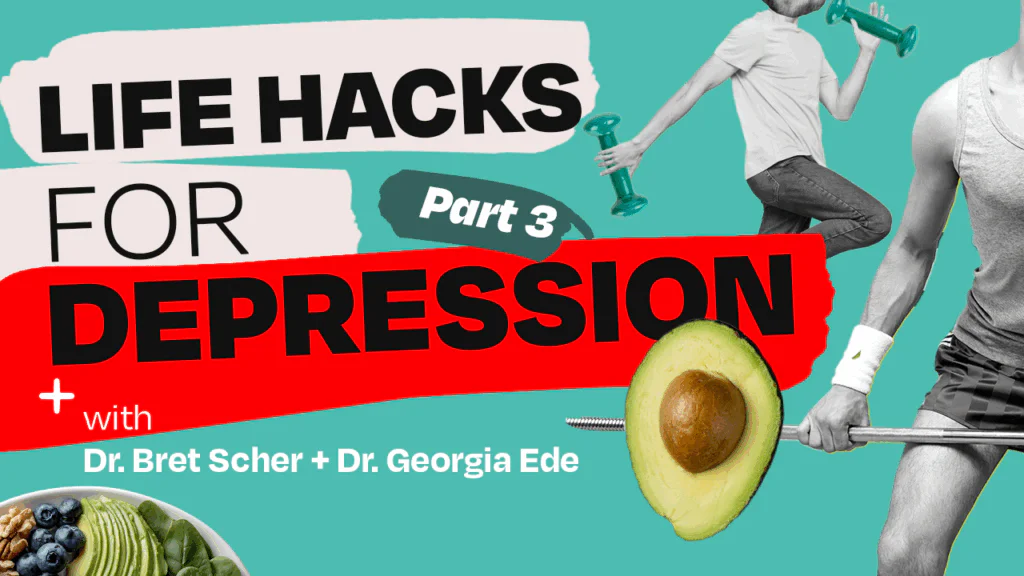
In Part 3 of Metabolic Mind’s series on treatment-resistant depression, psychiatrist Dr. Georgia Ede and host Dr. Bret Scher explore how lifestyle interventions, especially nutrition, can powerfully affect mood and brain function. They discuss the connection between metabolic health and depression, why brain glucose processing may be impaired in treatment-resistant cases, and how ketogenic therapy can provide ketones as an alternative fuel for the brain. Learn practical strategies for exercise, sleep and circadian rhythm support, and the key medical tests that can help identify insulin resistance, plus why addressing potentially reversible root causes can restore hope and expand treatment options.
Learn more
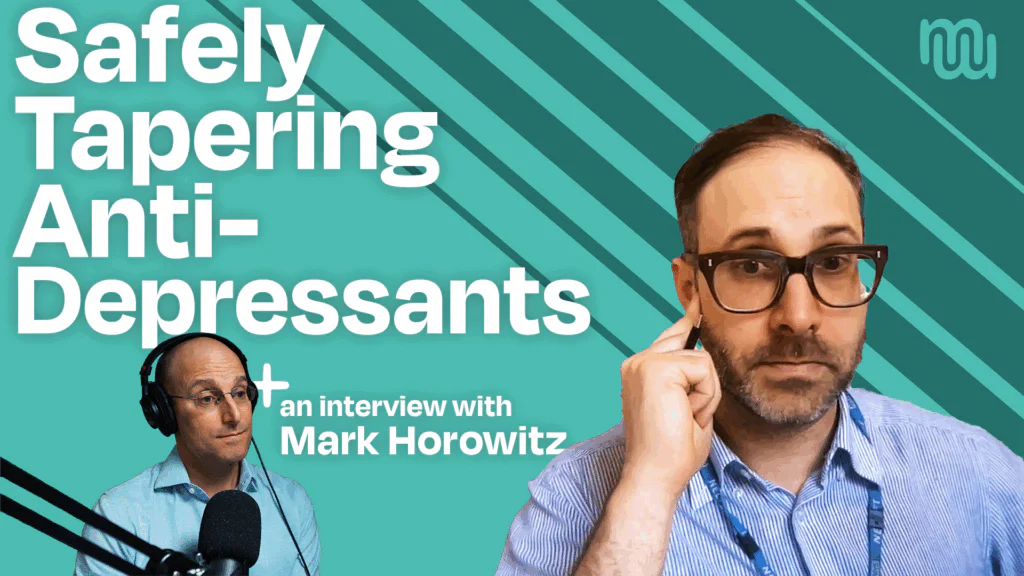
Deprescribing expert Dr. Mark Horowitz explains why psychiatric-med withdrawal is so often mistaken for relapse, how short-trial guidelines mislead clinicians, and the safer “hyperbolic” taper that uses liquids/compounding to make tiny final cuts. Learn practical signs of withdrawal vs. recurrence, what can buffer symptoms, who should (and shouldn’t) come off, and where to find evidence-based support.
Learn more
Read more
In part two of Metabolic Mind’s series on treatment resistant depression, Dr. Bret Scher and psychiatrist Dr. Georgia Ede review the leading next step treatment options beyond standard antidepressants. They discuss neurostimulation therapies like ECT, transcranial magnetic stimulation, and vagus nerve stimulation, along with rapid acting approaches such as ketamine, FDA approved esketamine (Spravato), and psilocybin. Learn how these treatments differ in effectiveness, session requirements, side effects, cost, and accessibility, and why response prediction remains difficult. The episode also previews part three, focused on lifestyle and metabolic interventions including diet, exercise, and other foundational strategies that may address root causes of depression.
Learn more
In Part 3 of Metabolic Mind’s series on treatment-resistant depression, psychiatrist Dr. Georgia Ede and host Dr. Bret Scher explore how lifestyle interventions, especially nutrition, can powerfully affect mood and brain function. They discuss the connection between metabolic health and depression, why brain glucose processing may be impaired in treatment-resistant cases, and how ketogenic therapy can provide ketones as an alternative fuel for the brain. Learn practical strategies for exercise, sleep and circadian rhythm support, and the key medical tests that can help identify insulin resistance, plus why addressing potentially reversible root causes can restore hope and expand treatment options.
Learn more
Deprescribing expert Dr. Mark Horowitz explains why psychiatric-med withdrawal is so often mistaken for relapse, how short-trial guidelines mislead clinicians, and the safer “hyperbolic” taper that uses liquids/compounding to make tiny final cuts. Learn practical signs of withdrawal vs. recurrence, what can buffer symptoms, who should (and shouldn’t) come off, and where to find evidence-based support.
Learn more