Get the latest on metabolic psychiatry. Subscribe.


Listen, Watch & Subscribe on:



Ketosis and Ketamine for Anorexia
Listen
About the host
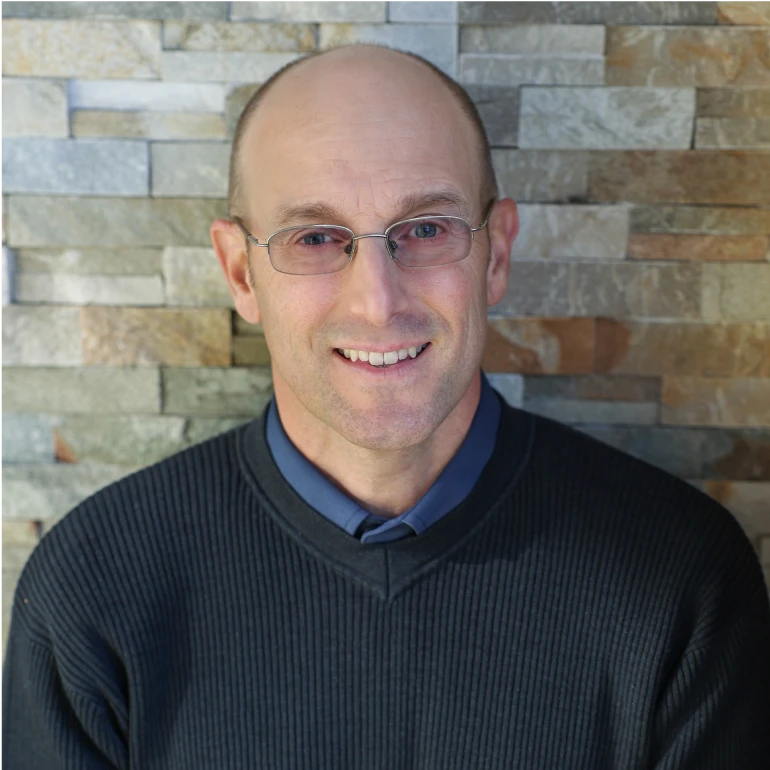
About the guest
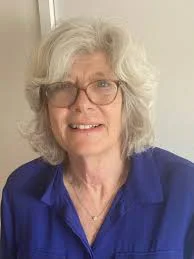
About the guest

About the guest
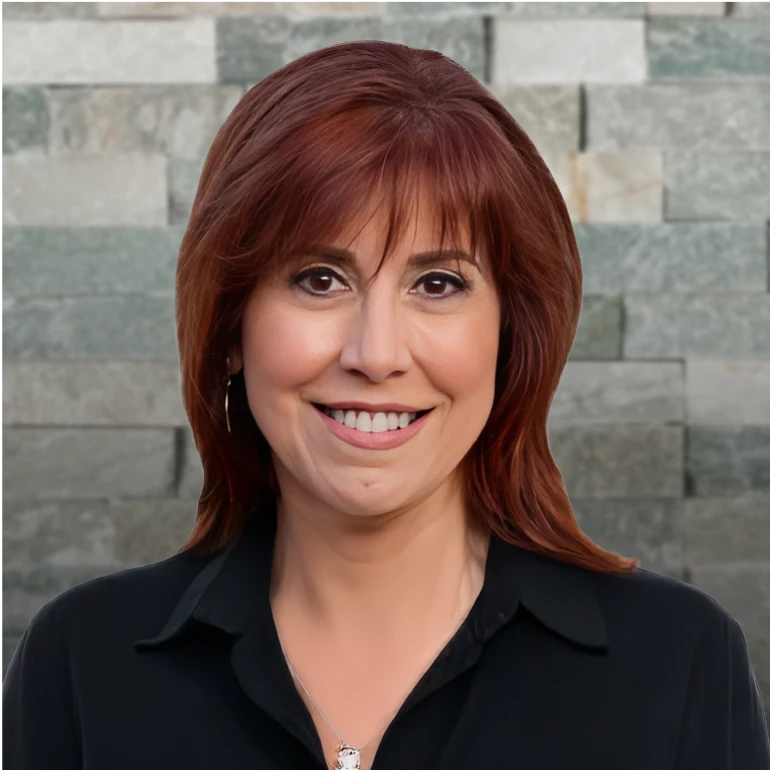
About the host
About the guest
About the guest
About the guest

Bret:
Welcome to the Metabolic Mind Podcast. I’m your host, Dr. Bret Scher. Metabolic Mind is a nonprofit initiative of Baszucki Group where we’re providing information about the intersection of metabolic health and mental health and metabolic therapies, such as nutritional ketosis as therapies for mental illness.
Thank you for joining us. Although our podcast is for informational purposes only and we aren’t giving medical advice, we hope you will learn from our content and it will help facilitate discussions with your healthcare providers to see if you could benefit from exploring the connection between metabolic and mental health.
Welcome back to Metabolic Mind, where we are sharing information and resources at the intersection of metabolic health and mental health and metabolic therapies as mental health therapies. Today, we’re going to talk about eating disorder, specifically anorexia Now. Actually, I was surprised to learn that of all the psychiatric diagnoses, anorexia nervosa has one of the highest mortalities of any of the psychiatric diagnoses.
But when you think about it, it actually makes sense because people, when they get in this, I guess you could say, this spiral of anorexia, it really can take over their whole body and brain and their whole health. And it’s devastating to see, and I think we have to be honest that current treatments are really unsatisfactory to really treat and reverse this condition.
But now, there’s new hope largely coming from first, a single case report, and then a five patient pilot study about using the combination of a ketogenic diet plus ketamine infusion to treat anorexia nervosa. So, it’s one specific study called the Ketogenic Diet and Ketamine Infusion Treatment to Target Chronic Persistent Eating Disorder, Psychopathology and Anorexia Nervosa: A Pilot Study, that was published in Eating and Weight Disorders.
And I’m fortunate today to be joined by three of the authors. One is Barbara Scolnick, MD, she’s a physician, an internist and addiction medicine specialist in Massachusetts. And as you hear, she’s the catalyst for this whole thing.
It was a love story, as she says, starting with her niece. And it’s amazing to hear about her journey, starting with her niece with anorexia and how this led to trying a ketogenic diet, which incidentally, was as at the time, was basically said to be a contraindication to anorexia. Any dietary involvement restricting food is a contraindication to anorexia.
But she took the leap to try her on a ketogenic diet, and now the world of eating disorders is embracing a ketogenic diet because the key being, it’s not a diet, right? We think about it as a diet, as a weight loss diet. I hate to even use the word diet.
It’s a medical intervention, therapeutic ketosis, that changes your metabolism and changes your brain. So, Barbara was able to take that leap with her niece. And the rest, as you’re going to hear is a fantastic story of how it led to this study. We’re also joined by Dr. Guido Frank, MD, who’s a professor of psychiatry at UCSD and an eating disorder specialist.
And also interesting, he was trained as a therapist, as a psychotherapist, in addition to being an MD, which really gives him a unique perspective here. And as we’re going to hear from Dr. Frank, he was a skeptic. Think about the using, again, a ketogenic diet, a diet to treat an eating disorder like anorexia.
He was a skeptic, but it’s interesting to hear him now talk about the mechanisms, and he does talk a lot about the potential mechanisms. And we’re also joined by Dr. Lori Calabrese, MD, who is the the Founder and Medical Director of Innovative Psychiatry, which is her practice, and where she was so instrumental in helping first with Barbara’s niece, and then also with bringing the five patients in the trial for helping institute the ketogenic diet and the ketamine infusions.
And in this episode, we talk about a lot and again, emphasizing how a ketogenic diet is not a diet, right? It’s a medical intervention. And how this started, and the concern of how risky it can be. And all of them, all three of these individuals, are very clear that this study was done in a very controlled, small manner with a lot of support, which does not mean everybody should go out and try it.
And they all speak to how we need more studies and being able to show that we can replicate this, and that it is safe and effective. And what we know from this trial was, of these five people who were enrolled, who all had anorexia, who all also diagnosed with major depressive disorder. And all five of them improved with this protocol of at least four weeks of a kenogenic diet, followed by a series of ketamine infusions.
They all improved and all had sustained improvement out to six months, which is really impressive. Now, will it continue longer? Can it be replicated in other settings? Those are all questions that need to be asked and answered. And fortunately, now because this pilot trial has elevated this discussion now, hopefully, will be looked at.
So let’s get into this discussion with all three of these amazing individuals and hear about their involvement in the study and their thoughts about what this can mean for you or a loved one. Or if you’re a clinician, what this could mean and what we can walk away from this pilot trial, having greater understanding about the role of nutritional ketosis and eating disorders with or without the involvement of ketamine infusions.
Dr. Scolnick, I’d love to start with you and hear about the lead up to this study. This pilot trial that we’ve talked about, and what led you to think that this could be something that will help people.
And what made you want to do this pilot trial?
Barbara:
Okay, thanks for asking. So, it’s a love story, and it was that my niece got sick when she was 14 years old, and I helplessly watched as she fell into anorexia. And it was a very typical case of anorexia, but she didn’t get better. And she traveled in and out of multiple treatment centers for 15 years, basically, and led a very marginal life.
And so, I read and read, and one of the things I did was reject the psychological model pretty much because I knew my sister, and I knew my niece since before she was born. So, I knew that it seemed very physiologically-driven. She had a drive to starve that was very hard to interfere with.
And so, when I read through the old literature, a few things came up. And the thing that struck me the most was the ketogenic diet that it was very similar to the thinking that Russell Wilder used a hundred years ago for the seizure patients. That for some reason, these seizure patients, when they fast, they don’t seize.
I don’t know why, but they don’t. So, if I can give them a diet that’s only a lot of fat and no sugar, maybe they’ll form a nutritional ketosis rather than a starvation ketosis, and they won’t seize? And he was so beautiful and so simple. So, that was really the reasoning. It was very similar. For some reason, my niece’s brain would starve.
She’d eat in the hospital under duress, get out of the hospital and lose weight. And she also clearly felt better in starvation at the beginning, before the torture of it and everybody being upset about her and all that. But at the beginning, it was definitely, she felt great. So, I thought, for some reason her brain likes ketones. It was just as simple as that.
And maybe if we give her ketones, we could make her? Better without starving, and maybe the voice would get quiet? So, it’s completely simple and redundant. But then, so when I took it to the academics to see if they would try it, I had to find more evidence. And there was more evidence. There’s an activity-based anorexia model, and actually, high fat diets had been used in that model.
And the animals didn’t self starve on that. But these were tiny studies, little studies, all the way back in the 1970s. And so finally, but I was very scared to treat, to try it and because of all the obvious things. It’s a weight loss diet, and here she is anorexic, it makes absolutely no sense. And none at all. And when she was 30 though, she said, I’m not going to, I can’t live like this.
And she had not lived much of a life for 15 years. So, we just tried it together. We just started it. And I remember, it was she’d start and stop,  start and stop. We’d walk around New York City where she lives. And I remember going into a health food store and buying MCT oil and saying, just start taking this in the morning, just little by little.
And she’d say, oh, this is a lot of bologna. And then, she’d say after days of it, like baby, my old voice is back. That’s how she reported. My old voice is back, and it got stronger and stronger. And then, I had known about the keto diet, and I knew about the Charlie Foundation. And I had actually met Beth at a conference I had gone to.
Because this idea had been percolating for years for Beth Zupec-Kania. So, Caroline and I got on the plane on Halloween right before the pandemic. It was starting in China, but we didn’t know it. So, we went to Milwaukee to Beth’s house. Spent the day with Beth, and Beth taught her more formally the diet, which she had already been starting.
And she came back and really did the diet, and she said, this is much better. I’m really, I’m better. And it was such a relief, first of all, my brother-in-law was pounding. You might kill her. You might kill her. So, it was a great relief to not have her have a side effect. And then she said, but it’s still there.
The voice is still there. It’s still, it still tells me I’m fat. I’m disgusting. It’s quieter. I could shout it down. And by then, I had heard about ketamine being effective in the animal model because I had befriended some researchers, who told me that was what they had just recently found. And also there had actually been a study, I think it was 1999, in humans and ketamine, that just sat there in the literature, and it looked that it helped take it away.
And I started to read that study to Caroline, and said, you want to try this? Do you want to maybe? And I didn’t, I thought it would maybe ease it together a little bit, and that’s when I found your website, Lori. Because you had the 1999 article on her website. This is the person who can give the ketamine. I just looked up, ketamine psychiatrist give ketamine, so we went and still even there. I remember just being scared again.
What will this do? And at the third treatment, Caroline said the voice is gone. And then, she was anorexia has not come back. And that was in January. So, that’s the story.
Bret:
It’s a dramatic story, and it’s amazing. Reading the paper, you talk about the pilot study that you did. But hearing that it was your niece, that it was someone you loved and cared so much about, that makes it so much more powerful.
But also, the thought that when you were doing this. I’m sure the common belief was keto is contraindicated in anorexia. Not just may not work but contraindicated. Yet, you were able to put the pieces together to say, no, that doesn’t sound right. There might be something here, and give it a try and saw the benefits.
That’s impressive to start, to start that.
Barbara:
All diets contraindicated. All food is good food was the mantra. She had learned that in every eating disorder place she’d went, and some of them even had a cookie test. You could only leave, you could show you’re healthy when you can eat these cookies because you’re not afraid of this food anymore.
I don’t know if you still do that, Guido, you probably don’t. You probably never did that. But, it was, definitely against the grain, but she got better. And then, the pilot was really a lot Lori. Lori is a psychiatrist. She’d seen anorexia. Beth is a nutritionist. She’d seen anorexia.
Nobody ever saw it go away after 15 years, just go away solved. So, you might not notice, but one of the people on the second article is my niece. She’s in one of the authors because she was the peer counselor. So we just said, was this like a one shot deal? You knew what the, and the academics who I went back to and said, see, look.
They said, she clearly likes you. So, it was an emotional connection that you took. And we just said, I said, was that real or would this help other people? We didn’t have, so that was, that’s what got the five-person study off the ground.
Bret:
Recruit five people, have them start a ketogenic diet.
And then Lori, and then you initiated the ketamine therapy with them. Is that how the trial worked?
Lori:
That’s the short version of how the trial worked. Just was a longer version, but yes, the participants in the study began the ketogenic diet with really tight supervision. We actually began it in the middle of the pandemic in-person with all of us present for them in a weekend where we lived with them.
We lived with them. We ate with them. We also prepared all of the food with them. We showed them how to prepare the food, and they each got into ketosis really gently, by the end of the weekend, in a beautiful way. And then, they continued that ketogenic diet at home with very close support with the study monitors with Barbara, with Caroline, with Beth. And with all kinds of external monitoring for at least a month, some two.
A couple of the participants continued it for two months. and then depending on whether or not they could maintain nutritional ketosis without weight loss. And that was just so lovely for us to see. Then, they moved on to the second part of the study, which was ketamine.
Bret:
So, tell us about the nutritional ketosis without weight loss because I’m sure that’s one thing a lot of people have to get over that in their brain. That this is a weight loss diet, but yet, we’re using it in a condition where you can’t have them lose weight. So, were they eating a ton of macadamia nuts and MCT oil and avocados or what was the version of the keto diet that helped them maintain their weight?
Barbara:
It was a pretty modified keto diet. It was a pretty standard diet. What they did is they did have, they were really encouraged to eat three meals a day. I remember when one of the participants, the one who did really the best, who had the same reaction as my niece, it went away after having had it for over 15 years.
She said, wow, now I see that my body is really different because everyone I know on the keto diet is losing weight, and I’m not losing weight. It’s like mine acts differently with me. And it did act differently with them. They hadn’t eaten fat in years. They had avoided fat, and it was a very Beth-like, well thought out, healthy diet with three meals, two snacks, not a whole lot of food.
They also liked that the food was less. Because in the eating disorder centers, they’d be presented with this plate. You have to eat this since this is so energy dense. It was smaller. And they weren’t scared of it, but they, and actually they, all five of them said, and my niece said it, too, the only reason I’m even able to consider this is because I know it’s a weight loss diet.
So, I’m not going to, it satisfies my fear of getting fat. I’m not that afraid of getting fat. So, I’ll give this crazy idea a try. And they all, we had them all, had to be basically, low normal BMI. So, they couldn’t, we didn’t try it with people who were at all unstable. So, these people were all people who were able to maintain a BMI.
Some of them knew they would eventually decrease it because that was their pattern. Stay high a few months out of the hospital and drop again. But they all stayed, maintained weight, and yeah, it was great.
Bret:
Now, Dr. Frank, I want to bring you into this discussion. You’re here, you’re a psychiatrist. You treat eating disorders.
What did you first think when you heard of using keto to treat anorexia?
Guido:
Yeah, I was very skeptical, to be honest. I was trained, early in my career, as a psychotherapist, actually. And after that, I got into biological research and did a lot of, brain. research. And while we talk about a lot about psychosocial influences that drive people to lose weight, I’m convinced that there are strong biological mechanisms that are underlying this. Because only a small amount of people, relatively, develop an eating disorder, although it’s one of the deadliest disorder we have in psychiatry.
So, there’s like this conundrum. And there’s also the observation that people who are very underweight, sometimes they really want to gain weight. And I think I they are genuinely wanting to do that, but they just can’t. There must be some mechanism that perpetuates that. And we have done a lot of brain research over the years.
We focus a lot on the dopaminergic circuitry, which helps explain models. How sort it becomes a reinforcing process, but I think it’s not enough, so to speak. There’s not, there must be more aspects to it. And then, Barbara found me. And then, was wondering whether I’d be interested in pursuing a a larger trial after this five individual study.
And I then, also, was fortunate that I could help write this up and help with the publication. And I was really impressed. I was very impressed by the data. How nicely the behaviors improved when you look at the questionnaire data ,and so forth, while the weight maintained.
And so then, I became really interested and hooked into this topic and spent a lot of time reading about that. And so, when you think about folks with eating disorders, and especially anorexia nervosa, they have a very high level of anxiety. They probably have high trait anxiety perfectionism.
And what research has shown is that anxiety and stress, they interfere with how your brain can use energy. On one hand side, when you have a lot of stress and anxiety, you need more energy. And the brain usually derives energy from glucose, right? But while you have an increased need of glucose, the glucose utilization, paradoxically, is often disturbed and is often reduced.
So that I found particularly interesting, right? And then, I looked into that further, and then I came up with the following model. Folks with anorexia nervosa, so they may have, or we know they have, a lot of stress. They work very hard. They’re very, they really want to do things right. And that, it creates a lot of stress. And it is possible that maybe genetically, they have a predisposition to not use glucose as well in the brain for energy creation. Or maybe it is quote unquote only the anxiety and the stress at the moment? And so, then they have, in a way, a deficit, right? They have done a problem creating all the energy through the Krebs cycle and the mitochondria on the brain.
But maybe the folks who then get into starvation for some reason, who start that, and they get into some level of ketosis, their body then uses ketone bodies, beta hydroxybutyrate and so forth, in the brain to create energy. And I could imagine that this becomes a reinforcing factor.
Because if you then have an energy source that is not, or less, interfered with by the anxiety, and that you all of a sudden can use that, of course, must be reinforcing. And of course, the problem is, if you perpetuate that, if you pursue that, then you wear out your body. You use up everything you have. But still, you have a motivator to pursue, the ketotic state.
And on the other hand, if you provide enough nutrition through a ketogenic diet and provide the ketones that the person better utilizes to support brain function, then it becomes a really powerful tool. One more thing I wanted to add, is when you enhance ketosis, then you also enhance GABA production in the brain.
And I think that’s another really important aspect because this elevated GABA could help with neuronal stabilization, reducing anxiety. So, I think there are separate pathways why a ketotic state or an elevation of beta-hydroxybutyrate ketone bodies in the blood might be so helpful, so to speak, to somebody with anorexia nervosa.
And the ketogenic diet might then help provide these, this energy source. And then ,make it unnecessary, if you wish to restrict food. It makes it unnecessary to cut down your eating because you have enough energy.
Bret:
Yeah, so great to hear you talk about it that way, especially when you started off by saying you were skeptical. So, you started off skeptical, which is I think great because we don’t, if you were already in the camp then, all right, that’s fine.
But you were skeptical, and then you did this deep dive. And then, you came to realize, wow, there’s a mechanism here. And you can see it in patients. And so, I want to get back to you to hear about what the next steps might be. So first, I want to get back to Dr. Calabrese and talk about the next step, though. Because in this case series and certainly in your niece, Barbara, that the ketogenic diet helped.
It started things, and it helped. But in some cases, it wasn’t quite enough. Like you said, the voices were still there, and that’s when the ketamine came in. Dr. Calabrese, tell us about the role of ketamine in this, and why you thought the keto-ketamine combination might be so powerful.
Lori:
I think it came out of my experience with Caroline as the treating, as her treating doctor. I was really shocked, going back to that initial case study, when she reported that the anorexia was gone. I’d actually never seen that, and then, only in three treatments. But the ketamine infusions that I gave her were classic 45-minute infusions at escalating doses.
And when she reported that she woke up, and no longer felt wrapped around her thoughts, felt like she was taken over by them, felt like anorexia took up her head space. I thought, great. And she said, I don’t think I need to come anymore. And then, she came for one more treatment for good measure, right?
And then she stayed in remission for months. When we started this study, we had no idea if that was going to continue, if we were going to continue to see that kind of finding. My thought was, gee, I wonder if the ketogenic diet is really in some ways reducing anxiety, and giving lipids to people who are otherwise not often eating lipids?
And so, patients with anorexia often, as you know, are really eating very low calories. But as they got ketogenic, even in our study, a majority of them very quickly got better. The amount of headspace that their anorexia took up reduced dramatically by 40% or 50%. My thought was, you know what? Wonder if I could use some ketamine, and I wonder if ketamine can create this cascade of downstream events that turns on their DNA?
That creates, all of a sudden, the opportunity for more production of brain-derived neurotrophic vector neuroplasticity? We, all of a sudden, have people who now have this opportunity for dendritic growth and re-arborization. And the idea is, then that’ll create even more cognitive flexibility. Well, that might create even more of an opportunity to include and develop and expand their opportunities, both in their head and in the world, for achieving peace with the food that they eat.
Not making their whole life be about food weight, bodily concerns, bodily preoccupations, and that’s what we saw. That was really startling. We thought of it, and I think incorrectly, thought of it as, oh, this is the thing for anorexia. And then, we know had a great idea for the title of this paper, and he says, this is actually about stopping the anorexic voice.
This is actually about in people, who long-term, have had such a preoccupation in their heads. This actually reduces the chronic preoccupation, the anorexic preoccupations, that happen in this disorder in people, who’ve had it for years. And most of the participants in our study had lived like this for years through all phases of their anorexia.
And seeing that just diminish was really exciting.
Bret:
Yeah, now one thing that this brings up though with the ketamine is, ketamine traditionally thought of as a depression treatment, or I guess, maybe not traditionally. It’s still on the cutting-edge of depression treatment now, I guess you could say.
And a lot of these, or the patients in your pilot trial, had this overlap between eating disorders, anorexia and depression. And so, in the paper, you acknowledge that, was it treating the depression, which got them better? But it brings up this construct that there really isn’t the silo of eating disorder and a silo of depression.
But thry’re are people, and they’re are people, who have symptoms of different, one brain but with many symptoms. It doesn’t neatly fit into a diagnosis. Does it matter if it was treating the depression or treating the eating disorder as long as the patient got better? Like, how do you approach that as a clinician looking at your patients?
Lori:
I think I’m really fundamentally interested in how their lives have gotten pruned, actually. And how, if you I think about the idea that all of us have these wonderful neuronal trees, that we start out with these gorgeous canopies, and that when stress, anxiety, one hit trauma, come in, what we end up with is these big, beautiful trees that get selectively pruned by all sorts of inflammatory processes that ultimately reduce us down.
In a lot of ways, just in the way, same way that we think about brain energy. I think that what neuroplasticity can do is help us find a way out.
So, if we can actually reduce inflammation, let’s say, through a ketogenic diet. If we can enhance GABA through a ketogenic diet. If we can put things into place so that metabolically, patients flourish. And then, we spark something that all of a sudden can get even more neuroplasticity going maybe through what?
Through BDNF, through fertilizer. Then, all of a sudden, you have this possibility for growth to happen and take off. And for the new growth to get myelinated by what? By the lipids that you’re eating in the ketogenic diet that you weren’t eating before. So, I’d love to prove all that. I’d love to have, I’d love to get the research going to ask those questions and to see if we can see it in the research world, just the same way that I think we’re seeing it clinically.
Bret:
Dr. Frank, let’s go to you next. What do you think about this overlap between anorexia, depression, the treatments? The way you described, it really sounds like they can work for both. And that you’re really, you’re not treating one thing, you’re treating the brain.
That’s how I see it. So, I’m curious how you see it from your scientific perspective.
Guido:
Yeah, there’s a lot of comorbidity. We also know that they probably reinforce each other. If you are very unhappy with your weight, your mood gets down. If your mood gets down, if you’re depressed and anxious, then you have a harder time to recover.
In general, I like to look at this. There are only so many super highways we have in the brain, in terms of neuro transmission. We have dopamine. We have serotonin. We have GABA and glutamate. So, there’s a limitation. And they are then affected differently, maybe based on your genetic background and maybe based on how you have been living and eating?
So my work, using brain imaging and eating disorders, has been very much centered around the hypothesis that you really change your brain, how you eat doesn’t matter, in which direction. It goes into an extreme, and what seems to be very largely affected by that is the dopaminergic circuitry.
So, the dopaminergic circuitry. So, you can then effect by how you live in a way, what your expectations are, how high or low your weight is, which is then part of the eating disorder, which then becomes very sensitized. And your fears then hijack a hypersensitized dopaminergic circuitry to make you then more nervous, and avoid food, but depression and where depression comes from. It’s like with most psychiatric disorders, we don’t know exactly right.
We’re still looking for the genetics. We are looking for all these factors that come into play. But I think it’s important to target a circuitry that we can modify. And again, the dopaminergic circuitry is very good with that. But on the other hand, we don’t always know how to modify them.
So, a long time ago, when I was at the meeting, the Society for Neuroscience, I found a poster that I found very interesting and that showed that actually, fats in the diet, they helped with normalizing dopaminergic neurons and help them recover from a state, from underweight.
And I thought, okay, so maybe we should add more fat in the diet, in refeeding to help normalize those do circuits? So, aside from reducing inflammation, I could imagine that the ketogenic diet, aside from providing more energy to the brain, also maybe helps regenerate these dopaminergic circuits.
And that’s maybe then where the ketamine comes in? It then, uses an environment that’s normalized, in terms of energy availability and production. That’s normalized in terms of neurons that have a better myelination, that work better because of the lipid intake. And then, it can actually, can work especially well whether a comorbid psychiatric diagnosis of depression makes the effect of it particularly strong or not?
I don’t think we can say that, and that remains to be seen. But yeah, I think it’s very important that we further this work, and tease apart the different effects. What the ketogenic diet can do for individuals. And who would be the ones ,who respond to it the best, and who does or does not need any ketamine augmentation, for instance.
So, I think these are all really important questions we would like to research and follow-up in the future.
Bret:
Yeah, the future is a very interesting question when it comes to this now. And so, Dr. Scolnick, you started this, we started, kicked off the interview with you, and you kicked off this whole case series and this whole discussion, I think, now that we have to be more aware of.
So, what do you hope, or what do you think, should happen next in terms of how clinicians respond to this? How researchers respond to this? How patients respond? What do you want to see happen next?
Barbara:
Oh yeah, I’d love to see it, how effective it really is in a bigger trial. I’d love to see how the ketamine works with the diet.
I’m not sure. I think it’s an unknown. I’d love to see animal studies, and there is an NYU animal researcher that’s going to be following this. So, that could answer some of the basic things. But I’m a great believer in like just clinical follow-up, and this idea came at a clinical observation or even clinical, just thinking.
So, who does well with what? I’d love to see the genetics tied in. I have a suspicion that there are changes in how we, how all of us, react when there are, when there’s famine, when there’s food scarcity. And maybe that’s an old evolutionary adaptation. And maybe these people with anorexia are the people that in the days of the hunter-gatherer, were the people that led us to better.
That’s not my theory, it’s someone else’s theory. But I thought it was so brilliant, like this is an adaptation to flee famine. It’s just an, it would be perfect. You’d not eat, you’d say you’re not hungry. You’d run all the time. You’d get everybody in the tribe to run all the time to better hunting ground.
but how that kind of got misused and become anorexia because there is no famine and, but, your brain has the sense of famine I just would love to see this all explored and tried more on people and the genetics tied into, I think the genetics would be a useful clue.
Bret:
Yeah, all that sounds very exciting and great avenues to go next, but Guido, what she just talked about was, I don’t know, maybe six or seven different studies there.
So I’m curious what you plan on doing if you plan on doing something next with this or if there’s a next step for you.
Guido:
That would be to do a study that’s focused on ketogenic diet, alone, so we can separate out its effects. That’s, that would be my next step. that’s what we’re working on. And, I have to say, it’s not easy to find funding for these things, but, so that’s really what we would like to do in a, say a regular university or higher level of care setting or research setting that we, involve a substantial number of folks who go through this treatment with a, with many assessments and where we can be very detailed about looking, into eating disorder behaviors, mood anxiety, things like that, and how they change over time and, establish safety, right?
That we can say, okay, this is, a treatment that is safe in folks who are at the low normal weight. And then we can expand it to, Lower weight folks. The other really important thing is anorexia nervosa very often starts out in kids, right? They’re under the age of 18, and that’s a particularly vulnerable population, and we have to be extra careful, to do no harm.
but it’s a step by process where we prove, one hypothesis after the other. establish safety and effectiveness and then hopefully we can, Contribute to a market, reduction of symptoms and increase of health in this population.
Bret:
Yeah, that would be great to see. That would be great to see.
So now Lori, let’s finish up with you. So we’re, we’ve talking about maybe next steps for research, but what about the clinician? What about the clinician who sees a patient in the office today, tomorrow with anorexia and is struggling to find a path out of it? Do the questions are, does it work and is it safe?
Do you think there’s enough there now to say. Okay. With proper guidance, you can start a ketogenic diet and you can get ketamine therapy and this protocol can and should be used in the proper setting. Do you think there’s enough there for that?
Lori:
This is just a very little big, very little bit that’s there.
I’m really excited about the fact that the papers out, that the research has done, that We’ve got this pilot, but our group was a rarefied group. They were all adults, they were all, they all had support partners. We, I think what we can say is we treated five participants and it worked beautifully. we just need more information, I think, and more careful attention, to making sure that it’s safe, to making sure that we try it in the right way.
I agree with Guido’s idea that we need to be able to parse out both parts of this. So there are many, people who are excited about wanting to just jump in and do it. And it’s pretty scary to think of people with active anorexia saying, I, know how to do keto. I’m going to do keto and all, of a sudden you can see this whole cascade.
Of disaster awaiting. So I think we really need to, look at this very safely because I think a ketogenic diet could be tremendously effective if it is nutritional ketosis rather than ketosis for weight loss. And, really creating the environment for that, and the support for that in a family where there’s a person with anorexia is critically important.
I think we did a great little job of doing that in our study. Can that be replicated in all different kinds of families in all different kinds of settings across all different kinds of socio-demographics? We need the research, the careful research to tell us that first. So, I’m all for more research, more work, I’m excited about the idea. I like to talk about the, we all like to talk about, what we’re doing and why. We’d love to see it be done really well and really carefully across the spectrum.
Bret:
So well said, and a great perspective that what you did was in five people in an incredibly controlled, supportive environment.
They were willing to take it in and make the changes. They had all the support, they had all the teaching. That’s not your average person going into a clinic and getting this done. That’s very different than that. So that structure, so what you did was show that it works within that structure.
So, very good point. So, now can that be replicated and can that be expanded? So, I for one, am very interested to see the answer to that question. And I’m thankful for all of you for the work and the passion you’ve put into this. To one, bring it to light so that we’re having this discussion. And two, to really kickstart this for further studies that will hopefully are going to impact so many lives down the road.
So thank you all for joining me today. And thank you for your work and for putting this out there.
Guido:
Thank you so much.
Lori:
Thank you. Thank you. Thank you so much, Bret.
Bret:
So, I don’t know about you, but a situation like this, starting from one person with a family member not knowing what to do. Looking for help, falling back on her medical training, and her love of history of medicine to make the connection between starvation and then ketosis to treat epilepsy.
And could that work for anorexia? Even though it was thought to be a contraindication for her to take that leap and try it. And then, how that led to this five-person trial, this five-person pilot study and starting to get physicians and researchers like Dr. Frank, initially skeptical, now on board with wanting to learn more.
That type of power, starting from one person, just gives me chills. And it makes me very excited for what the future can hold for this. And again, the emphasis being that nutritional ketosis is not a weight loss diet. It is a weight loss diet, but that’s not what we’re talking about here.
We’re talking about the medical intervention used as a prescription in a controlled and supported environment, can have really profound effects. And that’s the key, right? That’s the safety message that we need to convey over and over again. That this, because they succeeded in with these five patients in helping them improve their symptoms, doesn’t mean anybody can do it in any setting because it was very controlled.
And, of course, the message that, you know, this channel, this interview, is for informational purposes only. It’s not meant to tell you how to treat anything. We’re not establishing a doctor-patient relationship. We’re not providing medical or healthcare advice. We want you to learn from this and take this information to your clinician, to discuss this with your prescribing physician, with your clinician, to see if this could be right for you under the specific guidance and monitoring with your healthcare professional.
Please do not try any of this on your own. Nutritional ketosis can be a very dangerous intervention, if it’s not done correctly and with the right support, especially for people who have any sort of psychiatric conditions or diagnosis or symptoms.
So, please make sure this is done only safely with your supporting clinicians ,and do not try this on your own. But aside from that, I really want to drive that home to make sure everybody out there is safe. But I hope you learned a lot from this interview, and I hope you are as inspired as I am about what the future may bring for the role of therapeutic nutritional ketosis for a whole host of psychiatric conditions, including eating disorders, which initially was thought to be a contraindication, but may actually turn out to be one of the most useful indications as we learn more about the research.
So, thank you so much for joining us again on Metabolic Mind, and we’ll see you here next time with more information about metabolic psychiatry, metabolic health and mental health.
Take care everybody. We’ll see you next time. Thanks for listening to the Metabolic Mind Podcast. If you found this episode helpful, please leave a rating and comment as we’d love to hear from you. And please click the subscribe button so you won’t miss any of our future episodes. And you can see full video episodes on our YouTube page at Metabolic Mind.
Lastly, if you know someone who may benefit from this information, please share it as our goal is to spread this information to help as many people as possible. Thanks again for listening, and we’ll see you here next time at The Metabolic Mind Podcast.
Listen, Watch & Subscribe on:
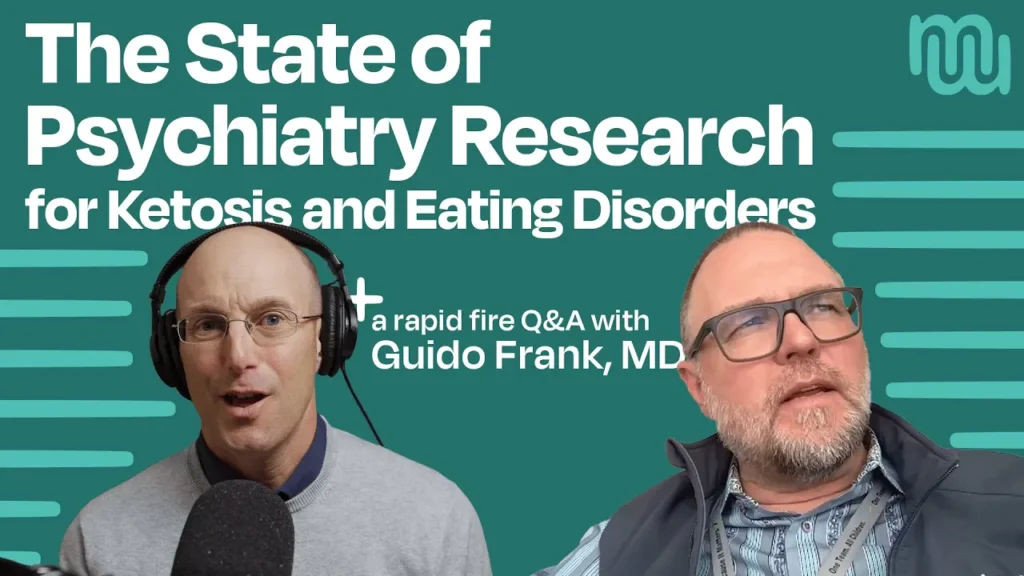
This episode of the Metabolic Mind Podcast features Dr. Guido Frank of UC San Diego, a leading researcher in eating disorders, discussing why anorexia nervosa remains one of the most lethal psychiatric conditions and why standard treatments often fall short. Dr. Frank explains how stress and impaired brain glucose metabolism may intensify restrictive behaviors and why therapeutic nutritional ketosis could provide a new metabolic pathway to stabilize brain energy and reduce obsessive thoughts about food and weight. He also outlines his upcoming clinical trial investigating ketogenic therapy for anorexia, offering cautious but meaningful hope for those seeking new science-based treatment options.
Read more

Learn how the new AnorExit program is pioneering the medically supervised use of ketogenic therapy for anorexia by combining expert nutrition guidance, peer support from someone in long-term recovery, and coordinated care with physicians and therapists. In this Metabolic Mind episode, dietitian Denise Potter explains why nutritional ketosis, once considered inappropriate for eating disorders, may actually help correct underlying metabolic and psychiatric factors when applied safely in a structured, multidisciplinary setting. This discussion explores early case-study success, the science behind ketosis, and how individuals can explore this emerging therapeutic option under expert supervision.
Learn more
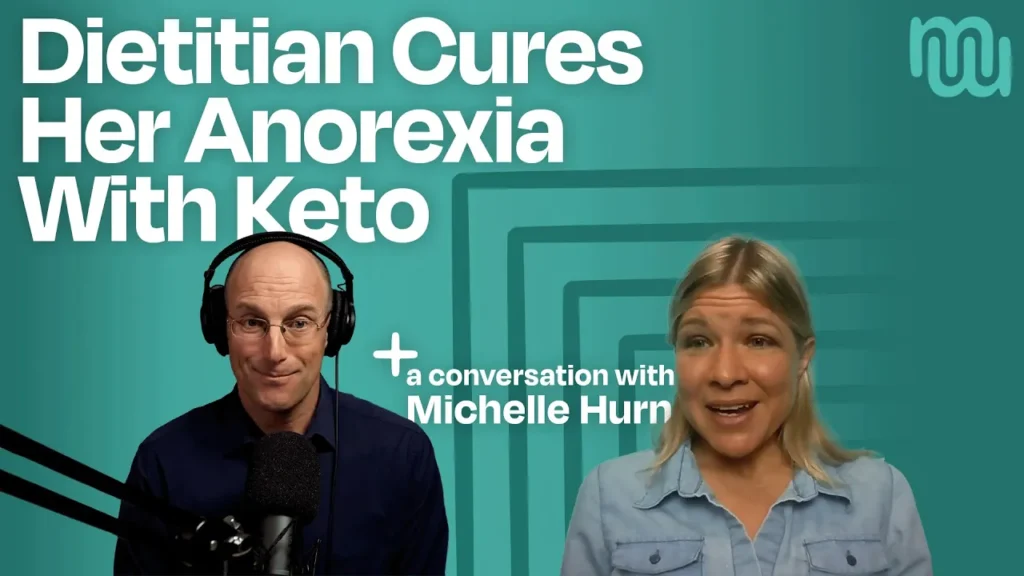
In this Metabolic Mind Podcast episode, registered dietitian and ultra marathon runner Michelle Hurn shares how she went from life-threatening anorexia and crippling anxiety on a high-carb “guideline” diet to full recovery and thriving performance using ketogenic and carnivore nutrition. She explains why standard eating disorder advice about moderation failed her, how stabilizing blood sugar and prioritizing animal foods transformed her mental health, and how she now helps others cautiously explore therapeutic nutritional ketosis as a potential tool for healing eating disorders and anxiety.
Learn more
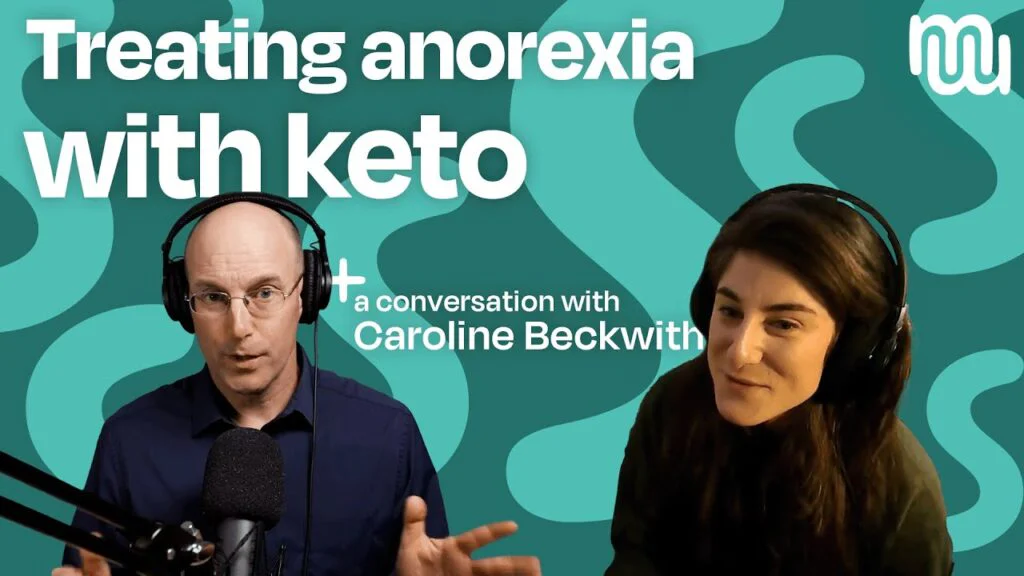
This Metabolic Mind episode shares the remarkable recovery of Caroline Beckwith, who battled severe anorexia nervosa for more than fifteen years and found lasting remission by combining a medically supervised ketogenic diet with ketamine infusions. After years of ineffective standard treatments, obsessive exercise, and even substance use, shifting to therapeutic nutritional ketosis changed her brain chemistry, quieted the relentless anorexic voice, and allowed her to rebuild a full life. Her story challenges the assumption that all restrictive diets are dangerous in eating disorders and instead positions ketogenic metabolic therapy, when carefully supervised, as a promising new option for people with anorexia who have lost hope.
Learn more
This episode of the Metabolic Mind Podcast features Dr. Guido Frank of UC San Diego, a leading researcher in eating disorders, discussing why anorexia nervosa remains one of the most lethal psychiatric conditions and why standard treatments often fall short. Dr. Frank explains how stress and impaired brain glucose metabolism may intensify restrictive behaviors and why therapeutic nutritional ketosis could provide a new metabolic pathway to stabilize brain energy and reduce obsessive thoughts about food and weight. He also outlines his upcoming clinical trial investigating ketogenic therapy for anorexia, offering cautious but meaningful hope for those seeking new science-based treatment options.
Read more
Learn how the new AnorExit program is pioneering the medically supervised use of ketogenic therapy for anorexia by combining expert nutrition guidance, peer support from someone in long-term recovery, and coordinated care with physicians and therapists. In this Metabolic Mind episode, dietitian Denise Potter explains why nutritional ketosis, once considered inappropriate for eating disorders, may actually help correct underlying metabolic and psychiatric factors when applied safely in a structured, multidisciplinary setting. This discussion explores early case-study success, the science behind ketosis, and how individuals can explore this emerging therapeutic option under expert supervision.
Learn more
In this Metabolic Mind Podcast episode, registered dietitian and ultra marathon runner Michelle Hurn shares how she went from life-threatening anorexia and crippling anxiety on a high-carb “guideline” diet to full recovery and thriving performance using ketogenic and carnivore nutrition. She explains why standard eating disorder advice about moderation failed her, how stabilizing blood sugar and prioritizing animal foods transformed her mental health, and how she now helps others cautiously explore therapeutic nutritional ketosis as a potential tool for healing eating disorders and anxiety.
Learn more
This Metabolic Mind episode shares the remarkable recovery of Caroline Beckwith, who battled severe anorexia nervosa for more than fifteen years and found lasting remission by combining a medically supervised ketogenic diet with ketamine infusions. After years of ineffective standard treatments, obsessive exercise, and even substance use, shifting to therapeutic nutritional ketosis changed her brain chemistry, quieted the relentless anorexic voice, and allowed her to rebuild a full life. Her story challenges the assumption that all restrictive diets are dangerous in eating disorders and instead positions ketogenic metabolic therapy, when carefully supervised, as a promising new option for people with anorexia who have lost hope.
Learn more