New Results: First RCT for Schizophrenia & Bipolar Disorder. Learn more.


Listen, Watch & Subscribe on:



My LDL Went Up On Keto. Should I Stop? Cardiologist Explains
Listen
About the host

About the guest


Bret:
The first thing is don’t panic, right? The first thing is LDL is sometimes thought of as the disease, but it’s not, right? Vascular disease is the disease.
Welcome to the Metabolic Mind Podcast. I’m your host, Dr. Bret Scher. Metabolic Mind is a non-profit initiative of Baszucki Group where we’re providing information about the intersection of metabolic health and mental health and metabolic therapies, such as nutritional ketosis as therapies for mental illness.
Thank you for joining us. Although our podcast is for informational purposes only and we aren’t giving medical advice, we hope you will learn from our content and it will help facilitate discussions with your healthcare providers to see if you could benefit from exploring the connection between metabolic and mental health.
Hey everybody, I’m Dr. Bret Scher, cardiologist, lipidologist, and Medical Director at Metabolic Mind. And I’m really happy to announce that The Cholesterol Code documentary movie is now available on demand at Amazon, and I highly recommend everybody watch it. It’s really a great exploration of individuals sharing their stories and watching the scientific journey of what happens when someone improves their life with ketogenic therapy and sees their LDL go up.
It’s really asking some really pertinent questions. And while it doesn’t answer every question, it certainly brings up the importance of asking the questions, and shows you the individual lives that these questions really touch. But as part of this, I had the opportunity recently to discuss with our podcast producer, Erica Gerrard, her personal experience of starting ketogenic therapy and her cholesterol going up, and how to think about it.
So, I want to share that clip with you that was part of our Metabolic Mailbag episode. So, I hope you enjoy this discussion with Erica. And then, also that you’re able to check out The Cholesterol Code documentary, now available on Amazon.
Many of the interventions we discuss can have potentially dangerous effects if done without proper supervision. Consult your healthcare provider before changing your lifestyle or medications. In addition, it’s important to note that people may respond differently to ketosis, and there isn’t one recognized universal response.
Today, I’m joined by our producer, Erica. So, welcome. So great to see you again.
Erica:
Great to be back. Thanks, Bret.
Bret:
Although I called you our producer, but you’re really so much more than our producer. As we’re going to learn, you’ve got personal experience with ketogenic therapies, and you have your pulse on what people are looking for and questions people have out there.
So, you’re way more than a producer, but that’s just the title that came to mind.
Erica:
I guess I should say one of the perks of having this job is that my real-world experience being on keto allows me the opportunity to ask an expert like you when I have questions, and I do have questions.
I guess I should say that I’ve been on keto not that terribly long, about six months now. And I was able to get a full lipid panel recently, and I saw my numbers, and I freaked out a little bit. And so I thought, what a great opportunity to talk about them with you and get your honest feedback because I didn’t know what to think when I saw these numbers.
Bret:
Okay, so before we even get into the numbers, any time somebody says, “This is what my numbers did. What should I do?” I can’t answer that question because the real answer is why are you on keto? What are you experiencing? What have you noticed different? What benefits have you felt? What maybe negatives have you felt, right?
Because it’s everything’s a risk-benefit analysis. So, the first thing we have to set is what is going on with your life? What is keto doing? So, with that in mind, if you’re comfortable sharing, please give a little bit of the background because it’s so important in interpreting how to react to the labs, if at all.
Erica:
Yes, okay. So, there’s really two reasons why I started ketogenic therapy. One is because I am tapering. I’m tapering off of antidepressants, which I was on fairly long term. And so, I knew from learning, listening to all of your wonderful episodes for the past year, that it can really be helpful for a taper to mitigate the withdrawal symptoms.
So, that’s one of the reasons. The second reason is to address some underlying issues, symptoms that I have related to complex PTSD, which is a condition that I’ve had for a long time. So, those are the two reasons why I decided to try keto.
Bret:
And has it been helpful? That’s the key.
Erica:
Yes, it has been helpful, more than I realized.
One, I didn’t really, honestly, I didn’t really expect that much. I was just trying it because I wanted to see what it would be like. But my taper has been much easier, I would say. I feel a little less frayed around the edges. I feel calmer, in general. I feel like I’m more able to roll with the windows and the waves as they come, which has been huge.
If you are tapering, what a relief that is. And then for the CPTSD, it’s been such a pleasant surprise that I’ve been able to reduce symptoms there related to flashbacks and stress and anxiety. Things that I never was able to have a handle on before. So, it has been incredibly helpful, and I’d like to continue to stay on the diet.
But then, when you get tested, a blood panel, and numbers like this, it does make you pause a little bit and wonder, “Okay, should I stay on this long term? Am I doing the right thing?”
Bret:
All right. All good. So, yeah, that’s very helpful to have the background. And I’m glad you brought up tapering.
It’s such an important and delicate topic. So, we have an entire page or an entire section, I should say, on tapering on our website. So, I highly encourage anybody who’s considering it to check that out. And really, the first thing we have to emphasize is how important it is to do with a healthcare team, with a trained professional.
So, check that out for sure if anybody’s interested in learning more about tapering. But okay, now without further ado with this run-up, let’s get to the labs. Let me have them.
Erica:
Okay. So before, and this was about six months prior, my cholesterol was at 173. My triglycerides were at 40, and my HDL was 71. And my LDL calculated was at 94.
Bret:
All right. So, pretty good starting point. Great triglyceride to HDL ratio. LDL perfectly fine. So, good starting point.
Erica:
Okay. So, now we fast-forward to six months post starting keto. My cholesterol is now at 242 My triglycerides 66, HDL 79. So, that went up a little bit. And then my LDL calculated 150. So, way up.
So, the cholesterol number really, that’s what scared me, right?
Bret:
Yeah.
Erica:
242 is high. I’ve never had high cholesterol before in my life. So, what is your reaction to that?
Bret:
So, for starters, my first reaction is the least useful number is total cholesterol. Absolutely the least useful number. Back in the early days of cholesterol, we used total cholesterol because at first, you couldn’t even fractionate it to LDL. And then, it was less common to fractionate to LDL. And so, it just became habit to use total cholesterol.
But really, now that we can just, we routinely get LDL, HDL, triglycerides, you can almost ignore total cholesterol. And a lot of people worry about it because above 200 is bad, quote, unquote, which is so untrue. You can have perfect cholesterol numbers with a total cholesterol above 200. Because remember, it includes HDL. It includes triglycerides, and it includes LDL.
So, I would ignore that. Now, let’s look at your triglyceride to HDL ratio. So, your triglycerides went up, which is a little unusual, although still excellent. So, the fact that it went up from 40 to 66. First, were they both fasting? I got to ask that question.
Erica:
Oh. Not entirely.
Bret:
Ah, okay. So, fasting does not really impact HDL or LDL, but absolutely impacts triglycerides.
So, if you’re going to use triglycerides, then it should be, they should both be fasted so that we have to put a little pin and then and say maybe it’s worth repeating fasted. But then, of course, the big change. The thing that really moved your cholesterol is the LDL going from 90 to the 150s.
That’s a pretty significant jump.
Erica:
Pretty big jump.
Bret:
A more thorough evaluation could contain a lot more labs. The inflammatory markers, the fractionation of the LDL particles, and of course, blood sugar and insulin resistance tests and all that. But if we’re going on just the cholesterol, the first thing is don’t panic, right?
The first thing is LDL is sometimes thought of as the disease, but it’s not, right? Vascular disease is the disease. LDL is one of many risk factors for vascular disease. And if it even causes a problem by itself, it is a years and decades problem, not a weeks and months problem. So, for someone who is young, who has no plaque, who has no significant other risk factors, which as you fit in that category, you know, weeks and months and even years of a mildly elevated LDL is not an immediate concern.
So, the first thing is take a breath, and it’s going to be okay.
Erica:
Whew.
Bret:
Okay. Second is, there actually are some studies that demonstrate an initial increase in LDL in the first six months, that then returns right back to baseline or near baseline at a year. So, that’s the other point of emphasizing that this is not an immediate concern, but a wait and watch because maybe it’s going to come right back down at a year. But the big, the bigger question is, so if it does, obviously, problem solved. Not an issue.
If it doesn’t, then it’s this question of what does somebody do when they have what their doctor’s calling high cholesterol, but it’s because they’re using an intervention that has helped them in ways nothing else has. That they feel great. That it’s improving their symptoms, and they have no other cardiovascular risk factors?
Then I think you have to shift, personally, I think in general, the discussion shifts to a more thorough cardiovascular analysis. Because remember, LDL is not the disease. Vascular disease is the disease. So, that’s when we can start talking about carotid intima-media thickness, CIMT tests, ultrasounds of the carotid.
We can talk about calcium scores. We can talk about CT angiograms. There are so many other ways, and it’s going to vary from individual to individual. But I think the take-home message is the shift is towards detecting and treating the risk of vascular disease, not treating LDL as the disease itself. Does that make sense?
Erica:
Yeah, it does. Thank you for that. So, what I’m hearing you say, don’t panic is number one. And number two, these numbers may very well change a year from now. They may go back down. But also, if they don’t, that perhaps next step is to do some more specific testing, cardio-related testing, just to rule out anything else more serious.
Is that what you would say?
Bret:
Yeah because if somebody already has plaque, then that is going to be a very different approach than somebody who has zero plaque. Because remember, that’s the disease, is the vascular disease. That’s what we’re treating, not LDL itself. So, that’s usually my general approach.
But of course, none of this is medical advice for you or for anybody listening. You have to find a clinician that you’re comfortable working with and work with your clinician. I’m just giving my general approach. But obviously, every individual is going to be a little different.
Erica:
I appreciate that because I’m probably not an unusual case, right?
I’m sure you’ve seen this all the time.
Bret:
Yeah.
Erica:
And I think it’s helpful because so many of us, who are new to a keto lifestyle, want to continue and want to stay on board. And so, it’s good to just address these things as they come up.
Bret:
Yeah.
Erica:
Which leads me into discussing something very exciting that’s happening over here.
Bret:
Yeah, Dave Feldman and his team at Wide Eye Productions have produced a documentary, The Cholesterol Code documentary. And it’s going to be live and available for everybody on Amazon, April 17th, 2026. I know this may live forever on YouTube here. So, just to timestamp it. April 17th, 2026.
So, I highly recommend people check it out because it, basically, it’s this exact question. It highlights people who have changed their lives with ketogenic therapy but had their LDL go up, and much more dramatically than yours. Yours is like a blip on the screen compared to what the people in this documentary have experienced.
So, it’s evaluating what do we do, right? And what has Dave and his team done in terms of the research study that they’ve done. And it doesn’t answer every question. No documentary should. It probably maybe raises some more questions than it answers. But it really does highlight the experience of these individuals and really provide a perspective I think we all need more of, whether we’re clinicians, researchers, or individuals living with high LDL on ketogenic therapy.
I think the perspective from this documentary is really invaluable.
Erica:
Agreed, yes. It’s really exciting. And you know how much we love to question long-held assumptions on this show, and this film does just that. So, if you’re curious about the science behind metabolic health and you’re interested in a fresh perspective on this cholesterol conversation, I highly recommend checking it out.
Again, it premieres on April 17th on Amazon. And let us know what you thought of the film after you see it. You can send us a DM on Instagram at metabolicmind, or you can email us. You can also send us your questions, as we always ask for, at metabolicmind.org/questions.
Bret:
Thanks for listening to the Metabolic Mind Podcast.
If you found this episode helpful, please leave a rating and comment as we’d love to hear from you. And please click the subscribe button so you won’t miss any of our future episodes. And you can see full video episodes on our YouTube page at Metabolic Mind. Lastly, if you know someone who may benefit from this information, please share it as our goal is to spread this information to help as many people as possible.
Thanks again for listening, and we’ll see you here next time at the Metabolic Mind Podcast
Listen, Watch & Subscribe on:
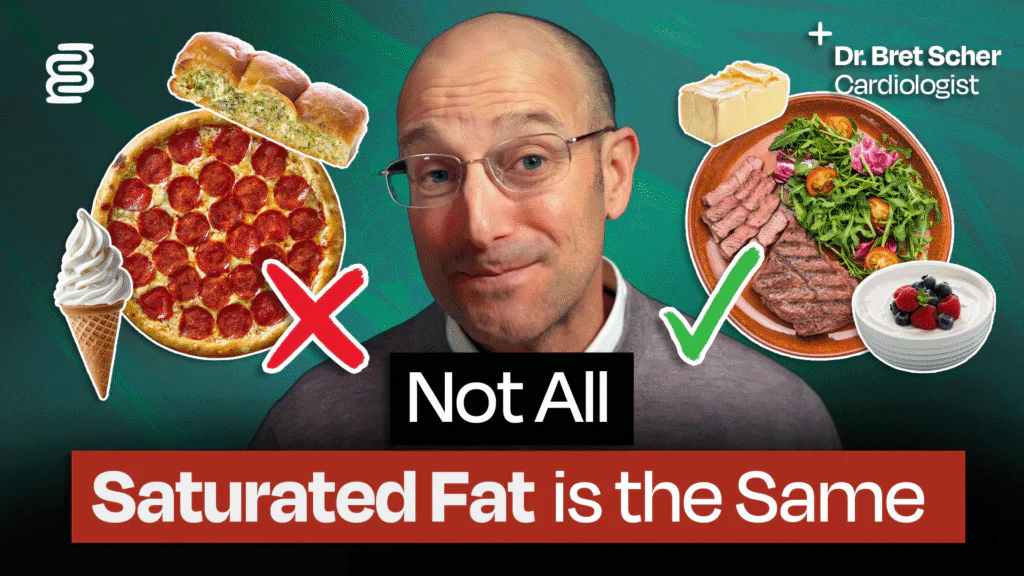
In this Metabolic Mind episode, Dr. Bret Scher analyzes the latest dietary guidelines and the science behind saturated fat. He reviews observational studies, randomized trials, and keto research to explain why saturated fat from whole foods may not be harmful in a low-carb context, and why focusing on overall diet quality and metabolic health matters more than strict saturated fat limits.
Read more
Using ketogenic and other metabolic therapies for mental health recovery is powerful. Thousands of people tell stories of suffering for decades without relief, feeling like they’d lost years…
Learn more
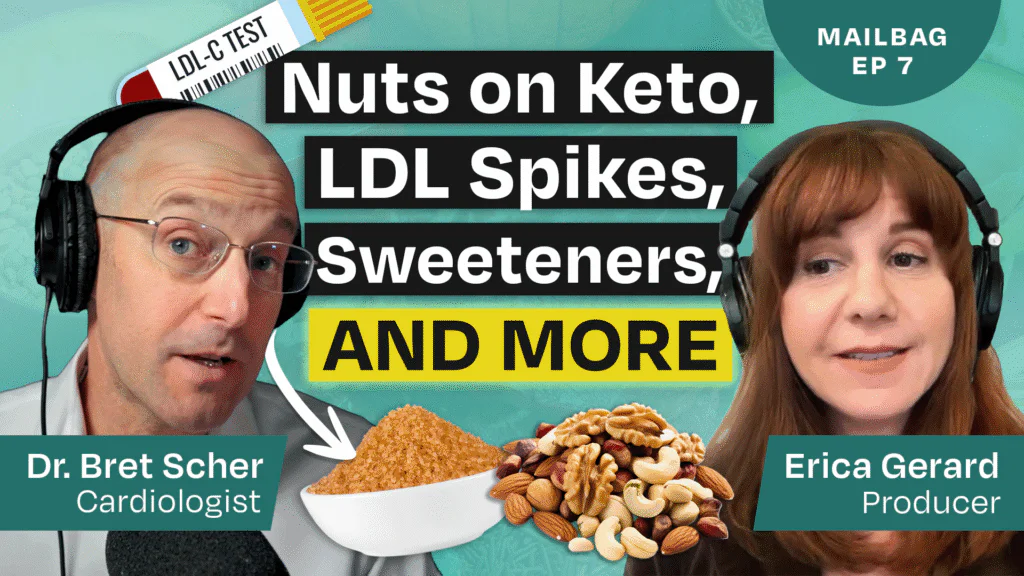
In this Metabolic Mind mailbag episode, Dr. Bret Scher answers common keto questions about high LDL cholesterol, statins, liver and kidney safety, nuts on a ketogenic diet, supplements, and whether daily ice cream can keep you out of ketosis. Learn how to think about cardiovascular risk in context, what makes a healthy keto diet, and how to approach common concerns with a more nuanced, evidence-based perspective.
Learn more
In this Metabolic Mind episode, Dr. Bret Scher breaks down whether nutritional ketosis increases cardiovascular risk and explains why common claims about keto and heart disease are not supported by evidence. He clarifies that no clinical trials have ever shown ketogenic diets to increase heart attacks or strokes, and that the observational studies often cited against keto do not involve people in nutritional ketosis and are plagued by poor data and healthy-user bias. Dr. Scher also discusses how LDL cholesterol should not be interpreted in isolation, why full metabolic health markers matter more, and what current research reveals about lean mass hyper-responders who experience large LDL increases on keto. This episode offers a clear, science-based look at how to assess cardiac risk while using nutritional ketosis therapeutically for metabolic, neurological, or psychiatric conditions.
Learn more
In this Metabolic Mind episode, Dr. Bret Scher analyzes the latest dietary guidelines and the science behind saturated fat. He reviews observational studies, randomized trials, and keto research to explain why saturated fat from whole foods may not be harmful in a low-carb context, and why focusing on overall diet quality and metabolic health matters more than strict saturated fat limits.
Read more
Using ketogenic and other metabolic therapies for mental health recovery is powerful. Thousands of people tell stories of suffering for decades without relief, feeling like they’d lost years…
Learn more
In this Metabolic Mind mailbag episode, Dr. Bret Scher answers common keto questions about high LDL cholesterol, statins, liver and kidney safety, nuts on a ketogenic diet, supplements, and whether daily ice cream can keep you out of ketosis. Learn how to think about cardiovascular risk in context, what makes a healthy keto diet, and how to approach common concerns with a more nuanced, evidence-based perspective.
Learn more
In this Metabolic Mind episode, Dr. Bret Scher breaks down whether nutritional ketosis increases cardiovascular risk and explains why common claims about keto and heart disease are not supported by evidence. He clarifies that no clinical trials have ever shown ketogenic diets to increase heart attacks or strokes, and that the observational studies often cited against keto do not involve people in nutritional ketosis and are plagued by poor data and healthy-user bias. Dr. Scher also discusses how LDL cholesterol should not be interpreted in isolation, why full metabolic health markers matter more, and what current research reveals about lean mass hyper-responders who experience large LDL increases on keto. This episode offers a clear, science-based look at how to assess cardiac risk while using nutritional ketosis therapeutically for metabolic, neurological, or psychiatric conditions.
Learn more