New Results: First RCT for Schizophrenia & Bipolar Disorder. Learn more.


Listen, Watch & Subscribe on:



Can You Prevent Dementia? A Neuroscientist Explains
Listen
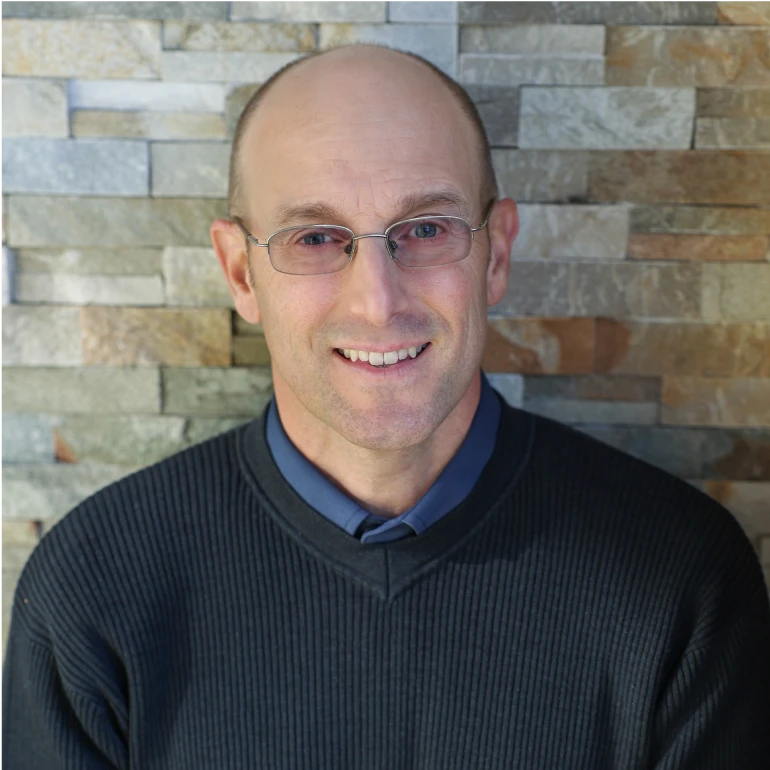
About the host
About the guest

Tommy:
They’re getting bombarded with stuff all the right. They’re busy at work. They’re having to learn new skills. They’re juggling multiple pieces of information. They’re constantly multitasking, task switching. That’s inherently stressful for a variety of reasons. And then, as a result of doing all that, they struggle to actually do deep focused work because they’re just so bombarded with information.
Bret:
Welcome to the Metabolic Mind Podcast. I’m your host, Dr. Bret Scher. Metabolic Mind is a non-profit initiative of Baszucki Group, where we’re providing information about the intersection of metabolic health and mental health and metabolic therapies, such as nutritional ketosis as therapies for mental illness.
Thank you for joining us. Although our podcast is for informational purposes only and we aren’t giving medical advice, we hope you will learn from our content and it will help facilitate discussions with your healthcare providers to see if you could benefit from exploring the connection between metabolic and mental health.
Are we all just destined to have this gradual decline in brain function as we age, maybe eventually leading to cognitive decline or dementia? Or is there something we can all do about it to improve our brain function and become more resilient and future-proof our brain? Today, I’m joined by Dr. Tommy Wood to talk about exactly this.
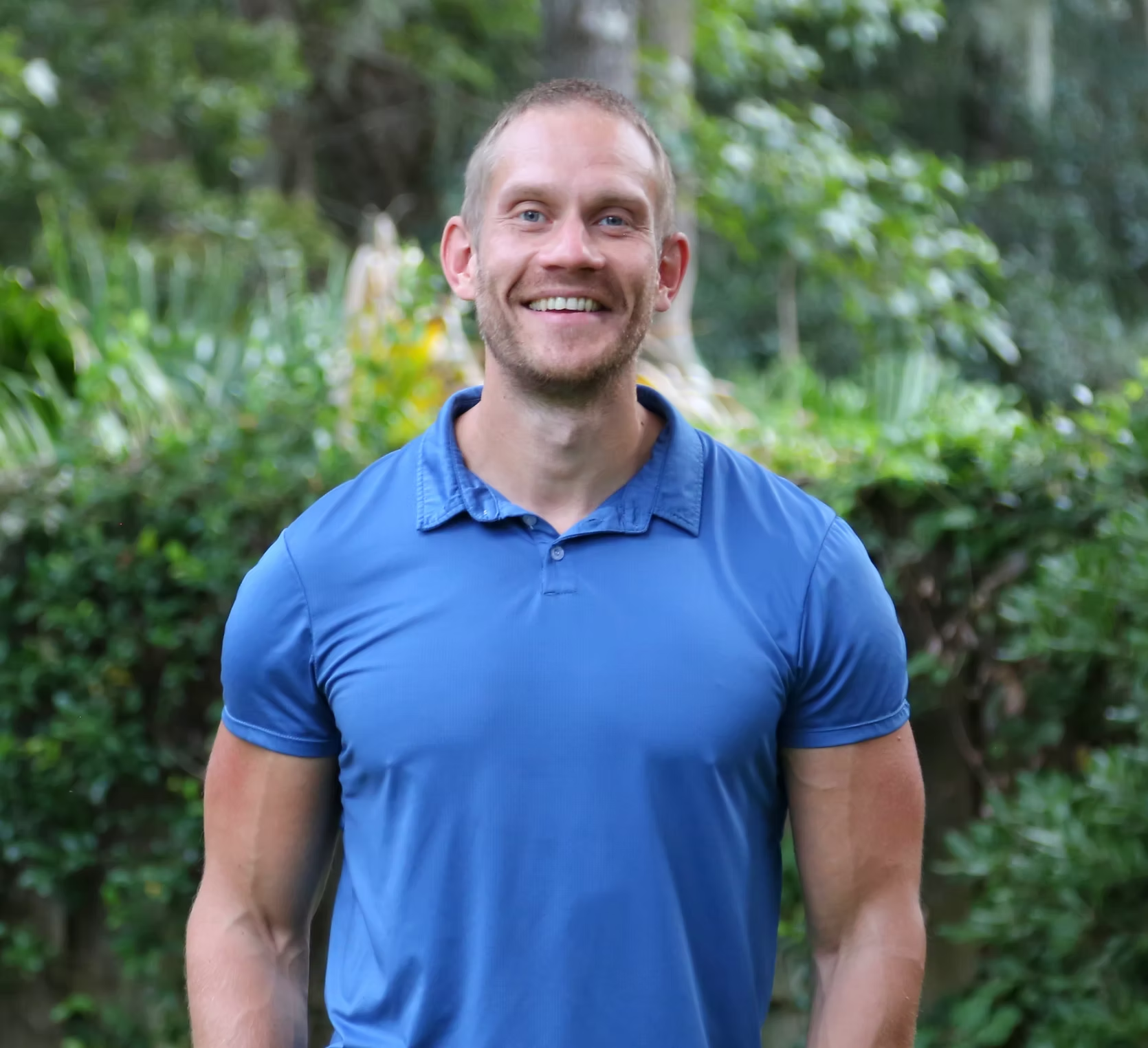
Dr. Wood is a neuroscientist, researcher, performance consultant. He’s Associate Professor of Pediatrics and Neuroscience at the University of Washington, where his research spans brain health across the lifespan, including metabolic influences, brain injury, cognitive decline, and even longevity.
And he’s published extensively and lectures globally on brain health, metabolism, physical performance, and lifestyle. And he also consults with professional athletes, including Formula 1 drivers and digital health organizations. Dr. Wood’s unique background blends science, clinical training, performance coaching, and real-world lifestyle intervention strategies.
He holds degrees from the University of Cambridge, University of Oxford, and a PhD in physiology and neuroscience from the University of Oslo. He’s also co-host of the Better Brain Fitness podcast and author of the upcoming book, The Stimulated Mind: Future-Proof Your Brain from Dementia and Stay Sharp at Any Age, which comes out March 24th, 2026.
So, in this interview, we talk about his work, about his book, and about his concept of how dementia is not a foregone conclusion. How we can take control of it, and how we can use various lifestyle factors in his 3S framework to help future-proof our brain. So, I hope you enjoy this interview with Dr. Tommy Wood.
Many of the interventions we discuss can have potentially dangerous effects if done without proper supervision. Consult your healthcare provider before changing your lifestyle or medications. In addition, it’s important to note that people may respond differently to ketosis, and there isn’t one recognized universal response.
Dr. Tommy Wood, welcome to Metabolic Mind. It’s great to see you again.
Tommy:
It’s so great to see you, too. I’m really excited to be here with you.
Bret:
Yeah, and I’m thrilled to have you here on Metabolic Mind. I know I’ve had the opportunity to interview you for other podcasts in the past, and I’ve seen you at so many conferences.
But here to have you at Metabolic Mind because that’s what we’re going to talk about, the mind. And so let’s jump in. And right away, I want to know what you think is the biggest conception that medicine kind of as a whole gets wrong when it comes to brain health, especially brain health as we age.
Tommy:
Yeah, I think there’s probably, maybe there’s two that that are related but, I think, that are really important. The first is not just medicine. I think it’s society, in general, has this idea, it’s been baked into our consciousness, that as we get older, we are destined to decline, and that there’s nothing that we can do about it.
And those two things are intimately linked. And I would argue that we have good evidence that the former isn’t true. That actually at pretty much any age, we have the capacity to significantly alter our cognitive trajectory and improve cognitive function. And through that, either prevent or at least slow decline.
And if you do that for long enough, you would ideally avoid a terminal period of decline that might end up with you losing enough cognitive function that we would diagnose you with dementia. But I think because of the way that we think about it, it almost becomes self-fulfilling. If I think that I’m going to decline as I get older, I will stop engaging in the things that prevent decline, right?
Oh, I’m too old to learn new things. Oh, I’m too old to pick up that heavy thing. Oh, I’m like, I’m too old to do, I’m too old to do this. I’m too worried about getting injured. I’m too worried about injuring my ego because if I fail at this thing, I’m going to look silly. Whereas it’s that process of engagement with challenging things, be they cognitive or physical, which are some of the most important things that kind of help to build and maintain function.
But if we expect decline, we will stop engaging in those things. And as such, we will potentially drive our own, drive decline, right? This is something called stereotype embodiment theory. We embody the stereotype of aging that then essentially drives the aging process. The other thing that I think we’ve gotten wrong, and I would, personally, love to be wrong about this right now.
Right now, I think I’m right, but I would love to be wrong, which is that there’s this belief that just around the corner is this magic drug that’s going to fix this. We’re going to target this one mechanism, this one pathway that’s going to either prevent, completely prevent or reverse the processes of cognitive decline and dementia.
And I say this as a neuroscientist who studies mechanisms for a living. I don’t believe that there’s just one process that’s driving the sort of the forces of decline such that we can drug it or medicate it. If somebody comes up with that and we actually understand the brain well enough, which I would argue in most cases we actually don’t understand the brain that well, but if somebody comes up with a pill that prevents dementia, I’m all for it.
Don’t get me wrong. That would be amazing. I just don’t think that’s likely to happen anytime soon. And the history of neuroscience tells us that I’m most likely to be right, unfortunately. But that doesn’t mean that there isn’t a lot that we can do. There is a lot that we can do. I think most people, in this aspect, area of the field would agree that a significant proportion, if not the majority of cases of dementia, may be preventable, but it requires lifestyle and environmental and societal change rather than the application of the right pharmaceutical at the right time.
Bret:
And unfortunately, the medical framework is so often let’s find the one mechanism so we can design something to attack that one mechanism and fix it, and that’s-
Tommy:
Yeah.
Bret:
It’s not that clean. It’s not always that clear. But I really like what you said about buying into the stereotype and believing the stereotype so that you live it and, how it’s important not to do that.
And I just think, how many times a well-meaning doctor not thinking they’re doing any harm, hears some issue that a patient’s having and says, “Oh, that’s just because you’re getting older. That happens.” Like we, I’m sure we say that all the time without knowing the impact it could have, exactly like you said, because then the patient can internalize that and say “Oh, I’m getting older.
I shouldn’t expect to be doing these things. I shouldn’t be trying to do these things because I’m getting older,” and that really sets us up for failure. So ,I’m glad you brought that up because that’s such an important concept, and it’s not deep mechanistic research, right? It’s not it’s not big and shiny and sexy.
It’s very simple. But we don’t do that. So, that’s got to be one of the key principles that you lay out in your book, The Stimulated Mind, about not buying into that to help promote brain health. But from that standpoint, what does brain health mean? What does a healthy brain look like to you?
Tommy:
Yeah, that’s a great question. I think just to, just like finish that previous thought, I understand why, you’re a doctor like they’re almost being reassuring. “Oh, don’t worry about it. This is just getting a little older. It’s not some rampant disease or something you need to be concerned.”
So, I understand where that’s coming from. But when you look at trajectories of cognitive decline in studies that have studied the same person over long periods of time, and there aren’t that many, but one was done here in Seattle called the Adult Changes in Thought study, and they found that yes, on average, cognitive function does decline with age, but it doesn’t decline linearly.
It declines in this step change with significant periods of illness, especially periods of hospitalization, which is when we’re not moving. We’re not receiving cognitive inputs. We have a big inflammatory response to whatever it is that made us sick. So, what happens is every time we have some significant removal of stimulus or inputs, we lose function as a result. And then, we come out the other side of it and we say, “Oh, I’m just getting older.”
But it’s not. It’s your body responding to changes in stimulus. So, if instead you said, “Yes, I was sick, but now I’m going to work really hard to regain that function I lost,” right? Just that changing that frame of mind can have a massive effect on your long-term trajectory. So now, to answer your question. My definition of brain health is a relatively simple one.
It’s having a brain that does what you want it to do when you want it to do it. And I think that gives us a lot of leeway. And that’s important because what I want my brain to do is different from what you want your brain to do, and how I might want to feel is different from how you might want to feel, and the skills that I want to learn are different from the skills that you want to learn.
But there are some fundamental processes that we probably want to feel pretty good most of the time. We want to remember, both short-term and long-term. So, episodic memory. So, remember the things that happen to us. Remember some facts. So, there are these core functions that I think everybody wants.
But beyond that, we each have different brains that have been optimized to survive and perform in different environments. And so, I just want to make sure that everybody has the tools and the ability to maximize the likelihood of that being the case.
Bret:
Yeah, and we started off talking about Alzheimer’s and dementia, but as you say in your book, and I like how you phrase this, that’s one part of it.
But it’s also, in society we’re now bombarded with information overload. So, how do we handle that? How does our brain handle that information overload? And as technology changes, we need to learn new skills and how to interact with this new technology, and that’s important.
There’s dementia on one side of the spectrum. But then, there’s functioning within a rapidly changing society on the other end of the spectrum. So, I think that was a really important point to make because it’s not just black and white.
Tommy:
Yeah.
Bret:
You have dementia or you don’t, right? There’s areas of functioning as well. Yeah, so comments about that.
Tommy:
Yeah, the sort of the subtitle of the book is Future-Proof Your Brain Against Dementia and Stay Sharp at Any Age. And though it does focus on dementia, in reality, the thing that I hope I can provide to people is a toolkit for future-proofing your brain, and I mean that in two ways.
One is, yes, can we do whatever we can to minimize the long-term risk of getting dementia, and that’s certainly a thread that runs through the book. But the other part is in an unknowable future, right? I don’t know what technology looks like in six months’ time, let alone 10 years’ time. Like, how do we make sure that we’re able to deal with that, and handle that, and still go about our jobs, not feel stressed or overwhelmed?
And I think that’s really the core goal is how do we perform today and feel good today? And then, have a toolkit that allows us to continue to perform and feel good in the near future as this unknowable world of technology comes towards us.
So, a few things that I talk about are, yes, some aspects of technology. So, I don’t think that we need to throw the entire baby out with the bathwater because we’ve seen several examples of where technology can actually be beneficial from a cognitive function standpoint.
So, in older adults who spend more time using technology, and especially, if it’s like complex. New skills they have to learn, right? Using a computer, programming languages, using new social media platforms they’ve never used before. That’s actually associated with improvements in cognitive function, especially on the social media side, especially if it increases the amount of social contact they have because they weren’t having as many social contacts previously.
So, we give them new opportunities to interact with people, even if it’s online. There seems to be a net benefit there. That’s not the same for young, younger people who are only interacting online, right? That’s a net negative. But it can be a net positive. We see elements of particularly video games, complex multi-sensory, like open-world video games where we explore, solve problems, have to respond quickly to the environment and inputs, learn new motor skills to run the controller.
Those actually significantly improve cognitive function in randomized controlled trials in young people and in old people. So, we can use these things as complex cognitive stimuli that can be beneficial. But at the same time, we do run risks if we spend so much time in the digital world that we then, we’re not sleeping. We’re not eating a nutritious diet. We’re not moving our bodies. We’re not interacting with real humans in real life, right?
So, we have to fit them into this bigger picture. And then something else that we have to acknowledge is that because of the vast volume of information that we have to deal with, our cognitive function is probably going to change, or the way that we use our cognitive function is probably going to have to change in line with that.
So, one good example of this is some studies done by Betsy Sparrow. They were used to define the Google effect, which in these original studies, what they did is they had people, they had them learn information, and then they had them store it in a computer. And if the people thought the computer had stored this information so they could come back and access it again later, they were less likely to remember the information itself and more likely to remember where the information was stored.
But that doesn’t mean that their memory isn’t working. They’ve just remembered something different. Because if you’re now required to remember much more information, you have to figure out a more efficient way to use that memory. And I think that’s okay. So, we’ll see more and more examples of this where, we’ll just…
The same cognitive functions are still important. We’ll just shift how we use them in relation to technology, and we’ll use technology to help bolster those functions. That’s not good or bad, it’s just we’re adapting to the new kind of technological landscape.
The final piece of that which now always comes up is AI, and large language models, and other sort of generative AI tools. And I think we have to think about them in the same way. So ,when you engage your brain in a specific function networks in the brain get activated.
That helps to drive either the maintenance or enhancement of those specific skills associated with that network. And we have some early evidence from studies using AI tools that if we ask an AI tool to do it for us, we don’t activate those same networks in the brain. We’re not going to get the same level of engagement.
We’re not going to get the same level of skill development. So, if you’re having these tools do things for you that you want to be good at, you will not be good at them. And you will get worse because you’re not actually engaging your brain in it. But you can use them to enhance what you’re doing. So, what we might call cognitive orthotics.
This is, you write the essay. You write the presentation. You do the work. But then, you say, “Hey, Claude, what could I have done differently? What could I add here? How should I be thinking about this? What have I missed?” And then, you use its response, and you integrate it yourself back into the piece of work.
That then could result in a better overall piece of work, and you’ve engaged your brain, and you’ve actually done it. So, it’s all going to come down to, across all these different aspects of technology, it’s all going to come down to what are we engaging with? How are we engaging with it? Is it allowing our skills to, be augmented or atrophy?
And then, what are we doing outside of the world of technology to make sure we’re providing this foundation for good brain health and function?
Bret:
Yeah, that was an interesting venture into technology, but there are so many other things that we can do to improve our brain. And I’m sure we’ve seen the list. We’ve heard the different lists. And what we talked about before, looking for the one thing, and you give a good example in your book when you’re going to talk to F1 drivers, Formula 1 drivers.
And you were so excited because you’ve been a Formula 1 fan for so long, and here you were going to help these individuals. And you had this long list, all these things to talk about. And you show up, and they’re like, “Okay, tell us the one thing we can do.” They wanted just one thing, and I know there isn’t just one thing. But if you had to pick one thing for people to focus on, what would it be?
And then we can get into all the others too because I know there’s a laundry list of them. But if you’re prioritizing, what’s your one?
Tommy:
Yes. So, there’s a few different ways that I approach this. And so, maybe after I give you a couple of answers, we can get into a framework that I think we can use to figure out what the one thing is for us individually.
But in terms of what I see most commonly, in say, midlife working age adults, 30s to 50s- ish, what they tend to need more of is either like social connection, social interaction, or like rest and recovery. Like they’re getting bombarded with stuff all the while. They’re busy at work. They’re having to learn new skills.
They’re juggling multiple pieces of information. They’re constantly multitasking, task switching that’s inherently stressful for a variety of reasons. And then, as a result of doing all that, they struggle to actually do deep focused work because they’re just so bombarded with information.
So, for them, structured rest and recovery periods during the day. So, like just giving yourself a break, stepping away from work. Could be a very brief period of meditation. Could be a walk outside. Could be literally anything that just doesn’t require you to think about work. Even for just a few minutes quickly allows the brain to recover.
And then, ideally, they get some good period of sleep at night that kind of allows them to rest and recover and go back and tackle things the next day. As individuals get older, particularly as they transition into retirement, then I think the most important thing usually becomes the maintenance of cognitive and physical stimuli.
Cognitive stimuli particularly, but you can get like maximum bang for your buck by doing something like a physical activity that has a complex movement and social component. Sometimes in the literature, these are called open skill movements or sports. But it’s basically, keep playing pickleball.
That’s essentially it. Pickleball, dancing, any other ball sport, any other team sport, board sport, martial arts, all of these things require you to rapidly process information, interact with other people, learn complex motor patterns that as well as generate some level of fitness and strength.
So, you’re hitting like multiple things at the same time. So, those are like, those are the like depending on who you are, either you need to focus on some kind of broad and challenging stimulus or giving yourself some time to actually truly rest and recover from all the stimulus that you are receiving.
Bret:
I think that’s a great answer. Also, interesting how it’s different depending on your stage of life, and what’s challenging you more. Now, what you didn’t mention in that is nutrition. And here at Metabolic Mind, we talk a lot about nutrition. And nutrition is obviously very important for health, in general, for metabolic health and brain health.
So, not that you’re saying it’s not important. But I was curious that wasn’t number one. So, why is that?
Tommy:
So, it’s not that it’s not that it’s not important. The reason why I would maybe frame that in this conversation with you is that I think that the people listening to that have probably already got that fairly well sorted.
So, then other things come to the fore. But this is absolutely where I think a framework is useful because different things are going to be most important for different people. So, the framework that I present in the book, and the kind of the whole book builds to is this, the 3S model.
And the 3S’s are stimulus, supply and support. So, the basic premise is essentially, I’ve alluded to that how we use our brains, I think, is the primary driver of how those brains function. And so, we want to be really careful with continuing to stimulate our brains. Hence, the book is called The Stimulated Mind, with a wide variety of complex cognitive stimuli, including like deep focused work as well as learning new skills, various cognitive challenges.
So, all the different sports that I mentioned, languages, music, social interaction, anything that really requires you to work hard with your brain in like focused chunks, that is what drives neuroplasticity, drives learning, drives the structure and function of the brain. When you stimulate a part of the brain, either a region or a network of regions in the brain that’s connected to do a specific function, then that area of the brain needs more blood flow.
So, we know in order to have a dynamic and reactive brain, we need good vascular health. So, contributors to vascular health, obviously including everything around metabolic health but also physical activity, particularly aerobic exercise. Anything that sort of contributes to or affects cardiovascular health plays a big role here.
We also need a supply of some kind of energy substrate, right? You want those parts of the network, parts of the brain to do their job. They’re going to need some energy. So, that could be glucose, could be ketones, could be lactate, but that’s going to require good energy regulation. So, this is where metabolic health, metabolic health obviously overlaps massively with cardiovascular health.
But metabolic health then critical to the supply of regular energy to the brain. And then you also need a supply of the nutrients that sort of either run the system or form the structures, the relevant structures, in the brain. Omega-3 fatty acids, B vitamins, precursors to phospholipids like, phosphatidylcholine, serine, ethanolamine.
We know that magnesium, zinc is really important so various antioxidant polyphenols and vitamins. So, vitamin C, vitamin E, but then also the things we find in berries and coffee and tea and dark chocolate. They seem to do some very cool things for gut health, vascular health, and then also may have some direct benefits in the brain.
So, like all of those things absolutely become critically important. That’s our supply bucket. And then, so you’ve stimulated a part of the brain. You’ve brought in a supply of the things that it needs to do its job. But the adaptation and improvement in function in response to a stimulus only happens during rest and recovery.
So, this is now the support bucket. Sleep is obviously a big part of that. But we can also support some of these like neuroplastic processes with other things that are produced in the body. So, trophic factors like brain-derived neurotrophic factor that’s produced during exercise.
Hormone status, certainly, plays a role here. And then, we want to avoid the things that kind of inhibit that adaptation. So, chronic stress is certainly important. Chronic stress like prevents the brain from truly switching off and adapting and recovering. But then, also toxins, or for want of a better word, things that we know can affect the brain from the environment. So, excessive alcohol, smoking, air pollution.
Other like chronic inflammatory conditions can play a role here. So, we know that like things like oral health or other inflammatory conditions are really important. And so, we have these three buckets, right? Stimulus, supply, and support, and we also know they interact because when you stimulate the brain, either through physical activity or cognitive activity, then you drive greater sleep pressure.
And when you stimulate the brain, you drive greater sort of reactivity of supply into those areas of the brain. So, what this means is that it’s not a list of factors, even though I gave you a very long list of different things that are important, right? This is where we come down to my one thing, is that when you change one thing, because they’re all connected, you change lots of things at the same time.
imagine you’re somebody who sleeps five hours a night. If you then start to sleep six hours a night or maybe seven hours a night, we know that your blood pressure’s going to improve and your blood sugar’s going to improve. And high blood pressure and high blood sugar are the two most predictive metabolic risk factors for cognitive decline and dementia.
And you’re also going to feel more sociable the next day. You’re more likely to engage in cognitively challenging tasks because when we’re tired or fatigued, we don’t try and do things that are cognitively difficult. We just don’t feel like it. So, just by changing one thing, you’ve changed everything.
So, this is why I think we can just figure out, “what’s the one thing of all those things Tommy mentioned, what’s the one thing that’s, oh yeah, I feel like I can make some movement on that?” Because when you start to make some movement on that one thing, the whole network starts to shift in your favor.
Bret:
I think that’s a good way to look at it with the framework. Because looking at a laundry list is intimidating, right?
Tommy:
Yeah.
Bret:
People are going to think how am I going to do all this? But having that sort of framework and knowing how they’re all interconnected is also really important. But as part of that list, you listed a lot of foods and specific nutrients, and this is always a question people have.
Should I be supplementing? if you supplement with everything you just said, it’s going to be a huge fistful of supplements, right? Or do you just have to eat the balanced diet? And then where do more specialized diets like a ketogenic diet, where does that fit into that?
So, when you look at that nutrition framework, how do you see that balance of supplements versus foods, and then what kind of dietary matrix?
Tommy:
Yeah, so the way that I think about this, I have this three-pronged or three-lever part of nutrition. And so, in the modern environment, the most important one is energy.
We see this really interesting bell-shaped curve between energy availability in the body, and this in the body, and brain reserve or brain volume, which is a significant predictor of cognitive decline and dementia risk. So, at the low end, which is common in sort of hunter-gatherer kind of groups, and that’s where some of the studies have been done, but also very common in the groups that I work with in athletes who are not eating enough energy.
They have low energy availability. We see in people who chronically have low energy availability, we have smaller brains. We have, this is at the population level, but we also have changes in mood, changes in sleep, changes in cognitive function. So, we know we need to get enough energy into the system.
This is where I worry about chronic caloric restriction or very intense fasting regimens as a longevity hack because I think the brain needs plenty of energy. And you can push that too far, and it may be counterproductive. At the other end, we see the same thing. Higher evidence of excess or higher energy availability in the body, evidence of excess energy availability, which basically is essentially the components of metabolic syndrome.
So, high blood sugar, high blood pressure, visceral adiposity, elevated waist to height or waist to hip ratio. We also see, again, more rapid cognitive decline, smaller brains, higher risk of dementia. So, really the most important thing you can do is eat a diet that just gets you into a sweet spot where you’re eating enough energy, you’re not experiencing low energy availability, but you’re also not experiencing a sort of a chronic caloric excess that we know drives metabolic disease.
Paired with that is making sure that you’re getting enough of those nutrients and those things that I mentioned from the brain, for the brain. A varied nutrient dense diet. If we think about the broad range of things, I think you’re most likely to hit those if you have a diet that has fish, meat, eggs, some dairy, and then a whole variety of vegetables, fruits, legumes, grains, if you’re eating on the higher carb end of the spectrum.
All of that stuff’s great. If your diet is more, either doesn’t include a very wide variety of nutrient dense foods for whatever reason, or is a narrower spectrum of foods, and again, that could be for a therapeutic reason, which is a perfectly reasonable reason to do that, then I think the best option, if you can, is to just test the nutrient status of some of these critical foods.
So, things that we know are directly related to dementia risk and that sort of stack up on top of each other that we can easily measure, vitamin D status, iron status, omega-3 status, and B vitamin status, especially the elevation of homocysteine, which we know actually interacts with omega-3 status as a risk factor for cognitive decline and dementia.
So, if you don’t eat one of those things that I mentioned, I think that’s fine. The main thing that I care about is that you get the nutrients. I don’t care where you get them from. So, this is then where the sort of the third lever of my dietary approach is pattern. What’s a dietary pattern that gets you as many of the nutrients as you need whilst maintaining adequate calorie status?
I’m, again, I’m agnostic to that approach as long as you hit those two things and the pattern feels sustainable. If you need to supplement in order to either overcome insufficiencies or deficiencies or to overcome the lack of a certain nutrient in the diet, then I think that’s perfectly reasonable to do.
So, you might supplement with B vitamins or a fish oil or an algal oil if you’re eating a whole foods plant-based diet. Or maybe you need to supplement with vitamin D because of your latitude. You may need to do things with iron, and in particular women as they enter the sort of perimenopausal, menopausal transition period, often cognitive symptoms they experience are related to low iron.
We also see some cognitive symptoms with low B12, even in the quote-unquote, “normal range.” You might not have enough, you might not have enough B12. So, that’s how I would approach it. I think most of us can get most things from diet, but I certainly supplement myself because I measure. And if I need more of something, then I make sure that I get it.
Bret:
Yeah, but the discussion of supplements always can bring up the misconception of “oh, as long as I’m taking my omega-3s, and then I’m good,” and you pay less attention then to what you eat, and you don’t eat an otherwise healthy diet. ,So I like how you talked about the energy framework and the pattern of the diet.
And then, that’s what sort of dictates what you supplement or not. You don’t, It’s not the other way around of starting with the supplement. So, I think that’s really a crucial aspect of that.
Tommy:
The other part of it which, and just because like we don’t know everything. So, if you’re trying to hedge your bets, there’s this really interesting idea.
It may have been first suggested by Jeffrey Bland, but there’s this thing called, that they call the dark matter of nutrition, which is basically like we only know about 10% of what’s in foods, which means that there’s like another 90% of like different compounds and things that we just don’t know what they do.
But where we have evidence for it, the whole food that provides a given nutrient seems to have a better reduction in risk, say, for a chronic disease than the supplement itself. It doesn’t mean the supplement isn’t helpful. But like omega-3s are the best example. Regular seafood consumption, it seems to be a stronger protective factor against dementia risk than supplementing with omega-3s.
There are absolutely trials that where they supplement with omega-3s and they see improvements in omega-3 status, and that’s associated with improvements in cognitive function. So, supplementation can work, but there’s a whole bunch of other stuff in seafood, like some of which we know, antioxidants, like, astaxanthin, selenium, iodine, right?
There’s a ton of stuff that’s really important, but there’s a whole bunch of other stuff in there that’s probably doing something, and that could be some of the signal of benefit. We just don’t know what it is yet.
Bret:
And what about how does the recommendation change for someone depending on their risk status? So, someone who has a family history of dementia or someone, who has APOE4 gene or compared to someone who doesn’t have any of that?
Is it just intensify more or less, or does the framework change at all?
Tommy:
So luckily, at least right now, the framework doesn’t need to change at all. So, I think what we know so far is that APOE4 is a risk multiplier. It’s not an increase in baseline risk. So, there are other studies like this.
There’s a big study in Finland that looked at this, and several other studies have now explored this, where you seem to get greater benefit from these protective factors or a greater increase in risk from risk factors if you have APOE4. But if you then attend to those, you get greater benefit because you’re offsetting that increase in risk.
So, that includes low-quality diets. So, that’s been found with omega-3 fats. It’s been found with antioxidant polyphenols in the diet. We’ve seen it with high alcohol intake, sedentary lifestyles, like some studies show that people with APOE4 get greater benefit from physical activity.
And then, there are other studies that suggest that a more intensive treatment of cardiovascular disease risk. So, this is actually using a combination of statins and anti-hypertensives, has a bigger benefit in terms of dementia risk in those who have APOE4. So, all of that to say that if you know what your risk, if you can think about the things we’ve talked about, and think about what might my personal risk factors be addressing those, is still the most important thing to do if you have APOE4. And you will, all the evidence suggests you will, you may have an outsized benefit because you’re mitigating some of that increase in risk.
Other studies have shown that if, aside from APOE status, if you look at polygenic risk. So, now polymorphisms across hundreds or thousands of genes that can increase or decrease your dementia risk, again, adherence to healthy lifestyle factors, diet, physical activity, sleep, that kind of stuff, benefits everybody regardless of their baseline genetic risk.
And then, the final piece, the family history. There’ve been some similar studies that that show that regardless of your family history, you can still see a lower risk with a better, better, better lifestyle environmental factors. But one critical piece there might be to think about, your family history isn’t just your genes.
A lot of what comes with family history is shared environments and shared lifestyle practices. So, if you do have a family history of dementia, a good place to start is to think what are the things that I am exposed to or that I do that my family member did who had dementia, and could those be the places to start?
Because that could be some of that shared risk.
Bret:
And so important because I think so many people think a family history or an APOE4 status is a foregone conclusion.
Tommy:
Yeah.
Bret:
And there’s nothing you can do about it because it’s pre-programmed. But as you said, you even get more benefit from doing those interventions.
Tommy:
Yeah.
Bret:
So important. Now let me ask about ketones, the specific role of ketones, either from a ketogenic diet or exogenous ketones, MCT, however you get your ketones, because we know eating better is going to help.
Tommy:
Yeah.
Bret:
Getting your nutrients is going to help. Not having an energy toxicity is going to help.
Ultra-processed foods, refined carbohydrates, not eating those is going to help. But what about the specific role of ketones? How do you see that?
Tommy:
I have a, I have a long history of being a fan of low-carb diets and ketogenic diets for many of the reasons that you’re more of an expert in even I am.
But thinking of it as a therapeutic tool, we use it a lot in pediatric epilepsy, for example. But also increasing evidence in other mental health conditions. Bipolar, potentially schizophrenia, and then traumatic brain injury is an area that, and other brain injuries, that we study in my lab. We’re trying different exogenous ketones as potential neuroprotective agents.
But a lot of that, I still think we need to develop more of an evidence base. Because I’ve been talking about the promise of ketones for traumatic brain injury for a decade, and nobody’s done that study yet. So, I think we need to do a little bit more work there. When it comes specifically to cognitive decline and dementia, we have some evidence, like Steven Cunnane’s work where they used MCTs in individuals with at least the early stages of Alzheimer’s disease.
And what they saw was, as has been described in Alzheimer’s disease, you have decreased glucose uptake into certain areas of the brain. You can see this on a PET scan. But when they gave them MCTs, they had, it didn’t change glucose metabolism in the brain, but it did increase acetoacetate uptake. So, ketone uptake into the brain, and they did that with an acetoacetate PET scan. And that was then associated with some improvements in cognitive function, right?
So, you’re overcoming some sort of metabolic deficit in the brain. What’s interesting in that area, particularly for me because of my personal focus and bias, is that there are some there are some early studies, now more than 20 years old, that show that even in the early stages of Alzheimer’s disease, if you stimulate the brain, it can take up more glucose.
It’s that those areas of the brain maybe aren’t being used in the same way. So, you’re not creating a demand for glucose, and then that’s why glucose uptake in the brain is decreased. It’s not that it can’t get in. It’s that it’s not being asked for, at least to a certain extent. And this is the same with muscles as a glucose sink, right?
We know our skeletal muscles are our most important sink for glucose. But we need to ask for that glucose by doing physical activity, or else there isn’t going to be anywhere for that glucose to go. And so, I think some of the reason why we see deficits of glucose metabolism in the brain in individuals with Alzheimer’s disease is not because of insulin resistance. It’s not because of type 3 diabetes, which some people have called it. It’s because those parts of the brain just aren’t being used, and they’re not asking for more glucose.
So yes, the supply side is important. Metabolic health is obviously critical, and that’s where ketones do seem to play a role once some element of decline is maybe established. But I think the other part is important, too. Are we using our brains in a way that sort of stimulates metabolism of those areas of the brain, such that it maintains function and asks for metabolic substrate in the first place?
Bret:
Those aren’t mutually exclusive.
Tommy:
Absolutely not, yeah.
Bret:
If you can use the brain to stimulate it and provide a dual energy source of glucose and ketones, maybe that’s got something, too? So, I guess that will lead me to my next question, though is, what are you most excited about for the future of either research or clinical practice?
What do you, what’s first for you that you think is coming that is going to really make a difference?
Tommy:
I guess you, so like I’ll just finish by saying I completely agree, right? Those things, I think we need to use our brains better, and we need to supply them with the right fuel, absolutely.
Obviously, in my work, I focus on acute brain injuries. So, if we can, if ketones or exogenous ketones are an option in that so I could study neonatal brain injury and traumatic brain injury, I think that’ll be incredibly important. As it will for Alzheimer’s disease and some of those other conditions you mentioned.
And then another thing that I’m really excited about is thinking about ways that we can continue to support and enhance cognitive function, like wherever you are on that trajectory. So, something that I’m doing some work in is like advanced multi-sensory cognitive stimulation in virtual reality. So, using your Meta Quest goggles, you can tie together like physical activity, complex cognitive stimuli that sort of require you to process multiple types of information, respond to the environment.
And there’s some evidence that if we, especially as we get older, if we continue to stimulate the brain, particularly with activities that require rapid information processing, that can slow the rate of cognitive decline and prevent dementia. And there’s one large study, the ACTIVE study that was done in the ’90s.
They just published data to show that training processing speed in older adults can decrease the risk of later dementia. So, it’s that kind of stuff. And using technology to train the brain and provide new complex stimuli that I’m quite excited to see, like, where we can go with that.
Bret:
Yeah, that sounds fascinating.
I’m sure that’s going to play a big role. This has been a great conversation, and I’m sure you have so much more in your brain you’d like to talk about. But so, any last thoughts? And then, of course, where can people find you if they want to hear more from you?
Tommy:
Yeah, I, think the sort of the main takeaway really is to go right back to the beginning of the conversation and just know that we have a huge amount of agency over our long-term trajectory of cognitive function.
In the book, I provide this idea of the overall strategy being building something I call headroom, which is just like having as much capacity in the system of your brain as possible. And we build that by challenging ourselves and providing all those stimuli that we talked about.
And then, like individual tactics to help support that strategy, include all the physical activity, and sleep, and social connection and all that kind of stuff. But just knowing that by continuing to engage these things, that’s going to be the primary determinant. And we have a ton of control over that.
And then, hopefully, in the book, there’s all the different, like protocols and things that people can apply to themselves. They pick the one thing that they want to do and there’s hopefully enough information for them to start to act on it. The book is available anywhere you buy books.
You can go to thestimulatedmind.com and all the information is there. And then, in the interim, most of the stuff that I do is post on Instagram. So @drtommywood, and you’ll find more information there.
Bret:
Awesome. Thank you so much, and I really hope people will check out your book. I think there’s a lot of information there that can really help them.
So, thank you very much. Appreciate it.
Tommy:
Thank you. This has been fantastic.
Bret:
I don’t know about you, but I found that pretty inspiring just knowing that we have agency. That it isn’t a foregone conclusion that we’re all going to experience a decreased sharpness in our mental acuity or eventual dementia or cognitive decline as we age.
And regardless of our family history or our genetics, it’s still pretty much within our control. So, that whole discussion and the discussion about not buying into the stereotype and being like, “Oh, I’m supposed to decline as I age,” and not letting that affect us and knowing better, I thought that was really the most impactful part.
And yes, there are a number of things we can do, and there’s science to support so many different things. But Tommy’s framework, I think, really helps us see it maybe a little more clearly. But starting with the concept that we can control our destiny when it comes to our brain health, and really keeping our brain stimulated and keeping our bodies healthy and all those different ways to do it.
So, I hope you enjoyed this and really took maybe some encouragement out of this, and maybe also some specific actions that you can take to potentially help your brain health, however you may define it. So, thank you for watching. We appreciate it. We’ll see you here next time at Metabolic Mind.
Thanks for listening to the Metabolic Mind podcast. If you found this episode helpful, please leave a rating and comment as we’d love to hear from you, and please click the subscribe button so you won’t miss any of our future episodes. And you can see full video episodes on our YouTube page at Metabolic Mind.
Lastly, if you know someone who may benefit from this information, please share it as our goal is to spread this information to help as many people as possible. Thanks again for listening, and we’ll see you here next time at the Metabolic Mind podcast.
Listen, Watch & Subscribe on:
Ketogenic therapy has emerged as a cutting-edge, effective treatment for various psychiatric conditions, including severe depression, bipolar disorder, and schizophrenia. It also has demonstrated efficacy in treating and…
Read more
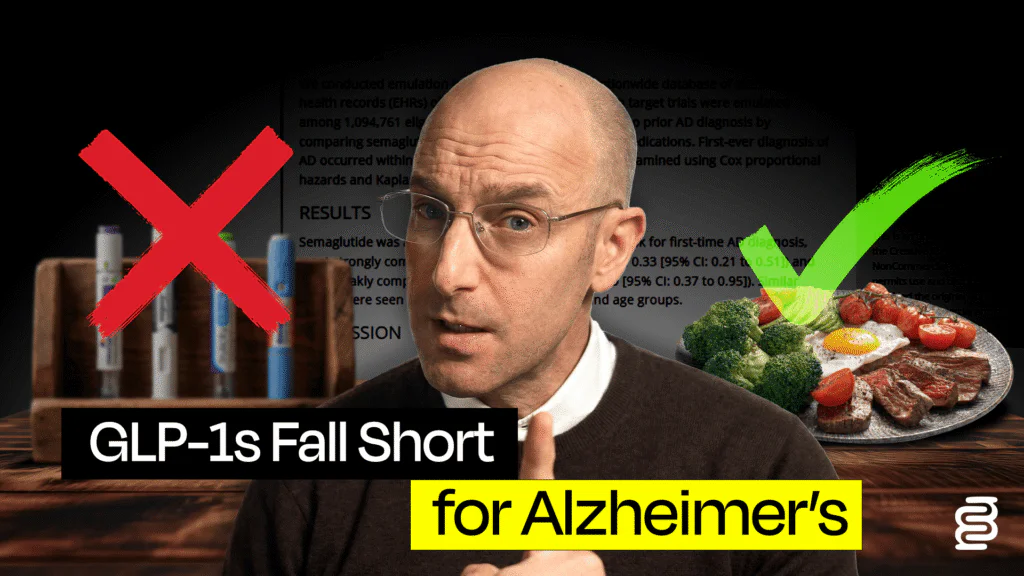
A new clinical trial reveals semaglutide does not improve cognition in Alzheimer’s disease, challenging earlier observational findings. This highlights the complexity of dementia and suggests metabolic improvements from drugs alone may not be enough. Emerging research points to ketogenic therapy as a promising approach, offering the brain an alternative fuel source when glucose metabolism is impaired.
Learn more
SAN MATEO, Calif.–(BUSINESS WIRE)–Baszucki Group today announced an expanded commitment to the landmark Cleveland Clinic Brain Study. Launched in 2022, this ambitious longitudinal study plans to follow healthy individuals…
Learn more
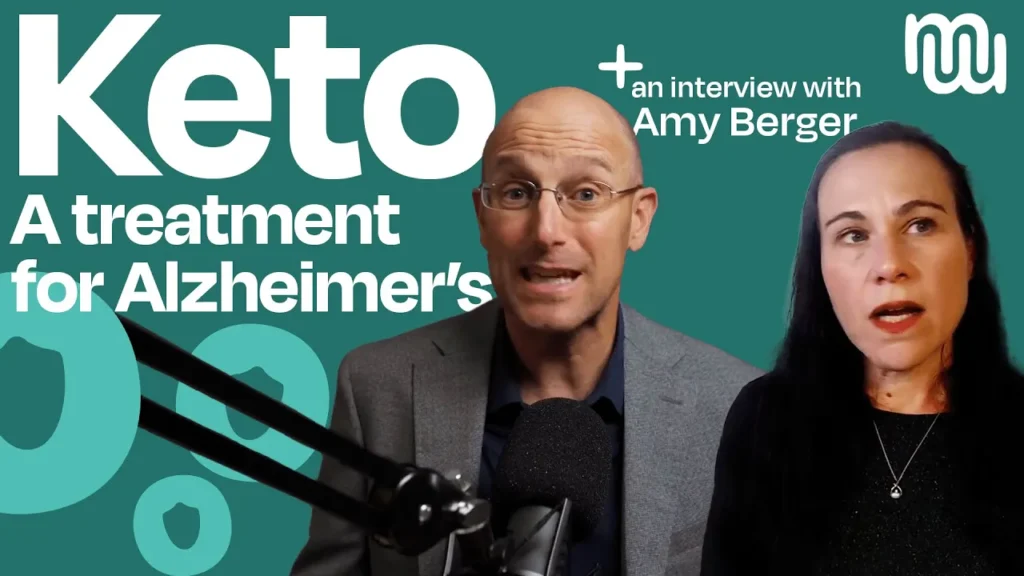
In this Metabolic Mind episode, nutritionist and author Amy Berger (“The Alzheimer’s Antidote”) breaks down why Alzheimer’s is increasingly viewed as “type III diabetes” and a problem of brain energy shortage. She explains how ketogenic diets, MCT oil, and exogenous ketones can help fuel insulin-resistant neurons, support mitochondrial health, and potentially improve cognition in people with mild cognitive impairment or Alzheimer’s disease. Amy also critiques microbiome-focused research, highlights the central role of metabolic health (insulin, triglycerides, weight), and offers practical perspective on using nutritional ketosis as a hopeful, science-based strategy for dementia prevention and treatment.
Learn more
Ketogenic therapy has emerged as a cutting-edge, effective treatment for various psychiatric conditions, including severe depression, bipolar disorder, and schizophrenia. It also has demonstrated efficacy in treating and…
Read more
A new clinical trial reveals semaglutide does not improve cognition in Alzheimer’s disease, challenging earlier observational findings. This highlights the complexity of dementia and suggests metabolic improvements from drugs alone may not be enough. Emerging research points to ketogenic therapy as a promising approach, offering the brain an alternative fuel source when glucose metabolism is impaired.
Learn more
SAN MATEO, Calif.–(BUSINESS WIRE)–Baszucki Group today announced an expanded commitment to the landmark Cleveland Clinic Brain Study. Launched in 2022, this ambitious longitudinal study plans to follow healthy individuals…
Learn more
In this Metabolic Mind episode, nutritionist and author Amy Berger (“The Alzheimer’s Antidote”) breaks down why Alzheimer’s is increasingly viewed as “type III diabetes” and a problem of brain energy shortage. She explains how ketogenic diets, MCT oil, and exogenous ketones can help fuel insulin-resistant neurons, support mitochondrial health, and potentially improve cognition in people with mild cognitive impairment or Alzheimer’s disease. Amy also critiques microbiome-focused research, highlights the central role of metabolic health (insulin, triglycerides, weight), and offers practical perspective on using nutritional ketosis as a hopeful, science-based strategy for dementia prevention and treatment.
Learn more