New Results: First RCT for Schizophrenia & Bipolar Disorder. Learn more.


Listen, Watch & Subscribe on:



Q&A: Keto & Heart Risk, Liver & Kidney Safety, Keto Snacks, Supplements & More
Listen
About the host

About the host


Erica:
I’m nervous because of the propaganda out there saying that you can damage your organs, specifically kidney and liver, by staying in ketosis. Is there any truth to this? I specifically eat roughly five ounces of nuts per day. Is there any downside in that?
Bret:
Welcome to the Metabolic Mind Podcast. I’m your host, Dr. Bret Scher. Metabolic Mind is a nonprofit initiative of Baszucki Group where we’re providing information about the intersection of metabolic health and mental health and metabolic therapies, such as nutritional ketosis as therapies for mental illness.
Thank you for joining us. Although our podcast is for informational purposes only and we aren’t giving medical advice, we hope you will learn from our content and it will help facilitate discussions with your healthcare providers to see if you could benefit from exploring the connection between metabolic and mental health.
Welcome back to Metabolic Mind for another Metabolic Mailbag episode. We love having you submit your questions that we have the opportunity to answer them in our Metabolic Mailbag episode. So today, we’re going to get into a couple more of your questions. A little bit about cholesterol again, but also about nuts.
Can you eat nuts on a ketogenic and low carb diet? How do those fit in? And we talk about this concept of liver, kidney, organ health. Is a ketogenic diet harmful for this or is it potentially beneficial? How do we see that, and do we need supplements for that? Super important questions that a lot of people have and there are a lot of misconceptions about.
So we’re going to talk about that and other maybe misconceptions and some really important questions for ketogenic therapy, whether it’s for metabolic health, for mental health, for the combination of the two. These are important questions you need to know. So let’s jump into our Metabolic Mailbag episode.
Many of the interventions we discuss can have potentially dangerous effects of done without proper supervision. Consult your healthcare provider before change in your lifestyle or medications. In addition, it’s important to note that people may respond differently to ketosis and there isn’t one recognized universal response.
Welcome back to Metabolic Mind. We’re here for another Metabolic Mailbag episode, where I’m joined by our producer Erica Gerard. And she’s going to turn the mic on me and ask me a number of questions that we’ve gotten from you. So start off by saying thank you for providing us with all these questions.
It’s great to just get a feel for what people really want to know. Maybe what they’re struggling with or what they just need a little more information on, and to have the opportunity to help you through that. So thank you for doing that. So here we are again, Erica. Thanks for joining me.
Erica:
Yeah, it’s always a pleasure.
Great to be here. Love putting you in the hot seat and asking you questions.
Bret:
Yeah.
Erica:
Why don’t we dive right in?
Bret:
Let’s do it.
Erica:
So our first question comes from cindyd3620 from YouTube. And Cindy wrote in, “Could you address spikes in LDL when initiating a medical ketogenic diet? Many of us have to face well-meaning GPs who want to immediately put us on statins.
Statins are serious drugs and not one to be taken lightly, especially for those of us who are older and or have neurodegenerative disease in our family lineage. Some keto practitioners say to wait on the statins and observe whether one’s LDLs finally level out, and then others suggest ignoring it entirely.
It would help many of us if this issue was addressed in its complexity. Thanks so much for your fabulous mailbag discussions.” Oh, thank you, Cindy. So what do you say, Dr. Scher?
Bret:
Yeah, good question. And on our previous mailbag, we had a couple different cholesterol questions. And I’ve done some other content on LDL and cholesterol at Metabolic Mind because it is really the most common concern about a ketogenic diet, about eating high fat, about saturated fat.
What does it do to your LDL? Great question. Now one of the things we talked about in the prior mailbag was this concern that doctors have that when they see LDL levels this high, 200, 300, 400, that it has to be a condition called familial hypercholesterolemia. And I went into that on a prior episode, but basically, a genetic mutation that raises your LDL.
But that’s where these doctors maybe are just unaware of what happens with ketogenic diets and ketosis. That being a hyper-responder, although uncommon and not the usual response, can happen with ketogenic diets for people who do not have familial hypercholesterolemia. So I think that’s the first important point to clinically say, is this a genetic mutation I’ve had my whole life, or is it just a recent reaction to the way I’ve been eating?
So when she says spikes in LDL, that’s what I’m assuming, that it’s in that 200, 300-plus range. So of course, a doctor is most likely going to reach for a statin because that’s what the guidelines say and that’s what’s a little frustrating.
Any LDL above 190, the guidelines say treat with a statin. Now, are there other approaches? Of course, there are other approaches that can be individualized, and one is realizing that cardiovascular health and cardiovascular risk is multifactorial. So what’s happened to your blood pressure, your blood sugar, your body composition, your insulin levels, your inflammatory markers, right?
If all those things are getting better, hooray. You’re reducing your cardiac risk. But at the same time, it doesn’t mean you can ignore your LDL cholesterol. So I definitely have an issue with people who say, “you don’t have to worry about your LDL at all if you’re metabolically healthy.” We don’t really have good data to support that.
There’s emerging data people are looking at it. There’s some evidence when you look back at old studies to say it matters less, the impact of LDL is probably less, when you have good metabolic health. But I wouldn’t say it has zero contribution to cardiac risk. So what do you do?
One option is to treat it, right? If you’re getting all these benefits from a ketogenic diet, getting those benefits and treating your LDL is not the end of the world. Other options are you make little tweaks to your diet to see if it makes a difference, adding a little bit of carbs, changing your saturated fat a little bit may or may not work, right?
There is, if someone is a hyper-responder, it seems less likely it’s due to the saturated fat content. So that probably won’t make much of a difference. Other options are to get imaging studies. Look at your carotid ultrasounds. Look at calcium scores or CT angiograms of your coronary arteries because that’s the problem, right?
The problem is the vascular disease, not the LDL itself. So wanting to know if you have the vascular disease could change the approach. But the bottom line is don’t ignore it. Talk to your doctor about it. If you can talk to a doctor who’s familiar with ketogenic therapy and ketogenic diets even better, and know that there are lots of options.
But one thing I want to reinforce is treating an elevated LDL to maintain all the benefits with the ketogenic diet is not the end of the world. This person mentioned statins, but there’s also PCSK9 inhibitors. There’s Zetia. There’s bempedoic acid and a number of other treatments on the horizon as prescription medications.
So there are lots of different options. So it’s not just statins or bust. So I think we need to reframe that.
Erica:
And what about the question about whether they should wait and observe whether the LDLs finally level out over time? What would you say to that?
Bret:
Yeah, thank you for asking that.
That also came up in the last mailbag, that there is some data to suggest there’s a subset of people whose LDL rises within the first six months on a ketogenic diet and then trends back down to normal after that first six months. So yeah, that could be another way to approach it to say, “okay, why don’t we just keep checking to see what happens?”
Because maybe it’s not necessary or maybe it’ll work itself out? So there is that subset of people who will demonstrate that.
Erica:
Great, And just because I feel like I’ve been in Cindy’s shoes before, not necessarily on this situation, but if you were her, what do you say to a statin-happy, well-meaning GP?
Do you have a recommendation for how to engage in that dialogue with your GP who wants to immediately put you on a statin?
Bret:
Yeah, so that’s a really good question, and there are a couple ways to approach this. But I think the main theme for me is to enforce how you want to engage with your clinician as a partner in your health journey.
And what I mean by that is say, look, I understand you want to put me on a statin, and I understand why I’m hesitant to do that at this point. So can you help me to see if there are other ways we can do this right? Because say, I would like to consider getting a calcium score and then following my LDL over the next three months, four months, whatever, to see what happens.
Will you work with me to do that? And then, we can reassess statin therapy at that time, right? So, to come up with an alternative, but not say, I heard on YouTube LDL doesn’t matter. So, I’m not taking a statin.
Erica:
Dr. Bret Scher said for metabolic-
Bret:
So, it’s funny though. It makes me think I’m almost like a marriage counselor, right? And you’re just learning how to communicate. And you’re validating, you’re reflecting, and then you’re suggesting an alternative and say, can we work together on this alternative?
It’s communication.. Doctors are no different. So, I think that’s one approach to take if you wanted to go that route.
Erica:
That’s helpful. It’s always nice to hear from a doctor how they would like our patient to engage in that dialogue with them. So, I appreciate that response.
Bret:
Yeah, I would have a really hard time saying no to a patient who’s, hey, I need your help. Will you help me do this, and help me see if we can do this safely and effectively? And if not, then we’ll reassess. Like, I’d have a hard time saying no to that.
Erica:
Great advice. All right. Our next question comes from andreatf at YouTube. And the question is, “I have been in ketosis for many years to control diabetes, and it works well. According to Dr. Ede’s numbers, my ketone levels are not high enough to be considered therapeutic.
Where can one find help in creating a well-formulated therapeutic ketogenic diet?” Yes. Where do we get support for creating a well-formulated keto diet?
Bret:
For one thing, we have information at Metabolic Mind about what that means, a well-formulated ketogenic diet.
That term comes from Dr. Jeff Volek and Dr. Stephen Finney. And Virta Health has used a well-formulated ketogenic diet. And in Dr. Volek’s KIND study, they used a well-formulated ketogenic diet. So, we have some content that we can link to that sort of reviews what that means. But I think the key is when she said, according to Dr. Ede’s numbers.
Now, I’m not sure what exactly she’s referring to, but there is this definition of nutritional ketosis being a ketone level, a blood ketone level, of 0.5 millimoles per liter. But again, I think it goes back to what are your goals? Why are you following a ketogenic diet or why did you change the way you’re eating in the first place?
And she said to control her diabetes, and it works well. So, I would counter, if you’re achieving your goal, if you’re controlling your diabetes, and certainly if you’ve put it into remission and gotten off your medications, I don’t care what your ketone level is. I care that you’re achieving your health goal.
Now, if you are purposely trying to raise your ketone levels so that you are, maybe if you’re treating major depression bipolar disorder where it appears that a ketone level may have greater impact, higher ketone levels may have greater impact, then okay. Then you want to see how to raise your ketone levels.
And there are a number of different strategies. One is just making sure your carbs are low enough. So, a lot of us assume our carbs are low enough, but maybe that’s the time where you need to use an app to track everything? I don’t recommend that people do that all the time because it’s really labor-intensive.
But maybe that’s the time to do it for a couple days, a week, whatever, to really quantify your carbs and make sure you weren’t just assuming something that’s not true. The second thing can be maybe instituting some intermittent fasting or time restricted eating. Third can be making sure you’re getting enough fat in your diet.
Fourth is making sure you’re sleeping, making sure your stress is adequately managed, making sure you’re getting some exercise or physical activity. All of these things can impact your ketone levels. Getting back to the well-formulated ketogenic diet, the foods, I think the key is focusing on whole foods as much as possible, right?
Not relying on keto products and keto bars and keto cookies. And a lot of the times, the fiber and the carbs and those products can impact your blood sugar and insulin more than a perfectly natural whole foods carb and fiber. So, I think that’s an important distinction, and making sure you’re getting lots of natural fats from your food sources as well.
Yeah, so hopefully that helps answer the question.
Erica:
Great. Okay, our next question comes from faithfirst001 from YouTube. And Faith asks, “Can you help me understand whether this is the right diet for me? I’m nervous because of the propaganda out there saying that you can damage your organs, specifically kidney and liver, by staying in ketosis.
Is there any truth to this and should I start slow?” And I should say that we did get another question very similar about risk of harm to kidneys and liver functions. Maybe you can address that? And the second part of the question was about taking a mineral supplement to help mitigate any risk to those organs.
Bret:
Yeah, such an important question, and something that when you’re interested in ketogenic diets and ketogenic therapy, you really have to wade through a lot of misinformation, unfortunately, that’s put out. So, actually again, we did a recent video here at Metabolic Mind about this mouse study that supposedly prove that keto diets were harmful to your liver and made you age quicker and die young.
And it’s just, it was so poorly done. It was a mouse study with 90% fat and probably unhealthy fat sources. And to assume mice and ketosis, eating a completely unnatural diet for a mouse, is going to translate to human beings is just, I think it’s a farce of science.
Unfortunately, I can’t say that, and I understand why we do rodent studies, right? Like you can’t do 50 year human nutrition studies, but you could do a one year or even a six month mouse study, which would supposedly correlate to decades in humans. But when it comes to ketosis and that type of diet, there’s just no, I do not believe there would be a correlation.
So, especially when we have human data showing the opposite. And here’s the key. We have human data showing improved liver function, resolution of fatty liver. We have human data showing improved kidney function with ketogenic diet. So, how can there be this concern that is going to harm your liver and your kidneys based on mouse data when we have human data showing exactly the opposite?
That it improves it. So, yeah, I would answer this by saying no, there is no reliable, reputable human data to suggest that ketosis is harmful for your liver and your kidneys. And in fact, we have evidence to the opposite. And in terms of taking a mineral supplement, I don’t think that’s necessary.
Now, when you first get into ketosis, you probably do need more electrolytes, and you may need more electrolytes throughout. So, if that’s what she’s referring to as , mineral supplement, okay, maybe. But so, taking electrolytes can be important, but I want to focus on that word. I kind of love the way the question was phrased because of the propaganda out there, and I’d say that’s exactly what it is. Unfortunately, I think it is propaganda, and it’s not good science.
What if mental health treatment looked completely different? I’m Dr. Bret Scher, host of Metabolic Mind, a show where we dive into the cutting edge science connecting your brain and your body. Did you know that your metabolism could hold the key to better mental health from bipolar disorder and depression to schizophrenia?
Researchers and doctors are exploring powerful new treatments that go beyond medication, like ketogenic therapy. Whether you’re struggling yourself or supporting someone who is, Metabolic Mind brings you real stories, expert insights, and the hope of a new path forward. Find Metabolic Mind on YouTube or anywhere you listen to podcasts because what fuels your body, fuels your mental health.
Erica:
Okay, so louder for the people in the back. Dr. Scher says in human studies, there’s no damage to your organs. So, nothing to be afraid of there.
Bret:
That’s right. That’s right. And I guess the other point is you can check your kidney function, you check your liver function. So, if it’s something you’re worried about.
You follow the blood test and then you can decide for yourself.
Erica:
Right, you can always get a blood test at the end of the day and see for yourself. Yeah. The next question is from scottx1gt for you. This question was from YouTube, and Scott asks, “To keep the percentage of carbohydrate caloric intake per day below 10%, I utilize nuts.
I specifically eat roughly five ounces of nuts per day. Is there any downside in that?” Wow, nuts. Yeah, for those of us on keto, nuts are everything. How do you address this question? And also, if we are starving, speaking for some of us on the microphone right now, is it okay to just shove a bag of nuts in your mouth?
Bret:
Wow, good question, and glad to get some of your experience in here, too. So, nuts are really a double-edged sword, right? They’re delicious. They’re calorie-packed. So, for people who actually need to increase their calories, they’re a good source of healthy fats. And they tend to have some protein, variable depending on the nut, and they have carbs as well.
So, it’s actually one of the rare natural foods that have carbs and fat together. Is there anything wrong with eating a bunch of nuts or is it healthy to eat a bunch of nuts? As long as you can one, contain yourself, because sometimes it’s hard to do. And two, it fits into the diet you are trying to construct for yourself in terms of calories and number of carbs and et cetera.
Then, the nuts are fantastic. They’re wonderful. if you need a snack, they’re a great snack. Hopefully, people don’t need snacks very much. But like I said, it’s a double-edged sword because they are very calorie dense, and they are very easy to overeat. Put me in front of some roasted salted macadamia nuts, and you better move your hands or I’m going to eat your fingers along with it because I just can’t stop.
Those are so good. Yeah, some people have this concept of if you’re in ketosis, you can kind of eat as much fat as you want. I don’t agree with that concept. I think you absolutely can overeat fat. You can still overeat calories, depending on what your goals are and what you’re starting from.
So, you do have to be careful for that with nuts. And if you’re getting all your carbohydrates from nuts, then you know, I guess that’s okay. But you could also consider some berries, some raspberries and strawberries, or green vegetables, and high fiber, low sugar vegetables, cauliflower, broccoli, bell peppers, asparagus, et cetera.
Those are other good sources of carbohydrates on a ketogenic diet. So, maybe you want to spread it out? I guess the answer is sure, if this is working for you, just beware of the slippery slope with nuts, and you can consider some alternatives as well.
Erica:
Okay, but can I tell you my favorite nut of all?
Bret:
Please.
Erica:
Okay, so Trader Joe’s has, you can can get the pecans pre-roasted and salted, which is rare because most of the time when you buy them, they are not roasted nor salted.
So, I just want to throw that tip out there to anyone else who loves pecans like I do.
Bret:
Yeah. So the other tip though that I sometimes give is the roasted and salted are even more addictive in my mind.
Erica:
That’s so delicious.
Bret:
If you want the roasted and salted, mix it with some raw. And then, it’s maybe not quite as addictive and you won’t eat quite as much. So, it might be a little trick.
Erica:
Such a good tip.
Bret:
Yeah.
Erica:
Wow, hadn’t even considered that.
Bret:
Yeah.
Erica:
Love it. Okay, yeah. Our last question of the day comes from markbp1w from YouTube, and Mark asks, “What is a good keto diet versus a bad keto diet that creates health problems?
Dr. Georgia Ede speaks of nutrient foods. Can you say more, please? I hear people using vitamin supplements. Is it necessary?”
Bret:
Yeah, good question.
Erica:
So, the question is nutrient foods, what is a good keto diet versus a bad one, and do we need to be taking a vitamin supplement?
Bret:
So, again, it goes back to your goals. I had this amazing interview with Moira Newiss, who was talking about a patient she worked with, who was experiencing homelessness and also was experiencing symptoms of schizophrenia. And he put that into remission with a ground beef diet.
it was a mince diet. It was in the UK. So, high fat minced ground beef, right? Mince meat. Yeah, and he put his schizophrenia into remission despite being in and out of experiencing homelessness. Now, if you looked at that on paper, you’d probably say that’s a terrible keto diet.
That’s not a healthy keto diet. It was a lifesaver for him, right? So, I think we have to be a little careful what we say is a healthy versus unhealthy keto diet. The other thing is packaged foods, processed foods, keto cookies and bars and shakes. On the surface, some people call that dirty keto, maybe.
But again, if that’s what it takes for you to succeed in whatever you’re using a ketogenic diet to do for you, then that’s the diet for you. Now, if we could all construct it and had all the resources and all the ability to construct our, own ketogenic diets, it would be based on whole foods, in my opinion.
It would be an omnivore keto diet with lots of animal proteins and natural animal foods and low sugar vegetables, and a little bit of fruit like that would be the optimal keto diet. Is that the optimal keto diet for everybody? No, some people are going to do much better on a carnivore diet.
Some people are going to do much better on a low meat, keto diet. So there, I think we do have to figure out what works best for us. But I think what Dr. Ede is usually referring to, if I could speak for her, is the concept of a whole foods keto diet and really trying to stay away from a lot of the packaged and processed foods.
But I think we also have to have a little flexibility, and say what’s within our control? What’s within our resources, and what are our goals that we’re trying to accomplish with a ketogenic diet? Oh, and so there was the question about the vitamin supplement. I think in general, vitamin supplements are likely not necessary if you are eating an omnivore, whole foods ketogenic diet.
Now, if you are eating foods that are more processed or are more restricted, then taking a multivitamin or taking magnesium, taking vitamin D, taking things that you might be deficient in, the foods that you’re choosing, might be of benefit then.
Erica:
Okay, so we don’t need to stock up on vitamin supplements, very expensive vitamin supplements, you say,
Bret:
I don’t think so. Now, some things that people tend, that I see people benefit from are maybe magnesium. Couple reasons for that is we can lose more magnesium when we’re on a ketogenic diet. And just the food we eat now tends to be more magnesium-deficient anyway. And then other electrolytes because when you’re in ketosis, you can really lose electrolytes more.
So, those would be my only two that I would say people might want to consider, even if you’re following a whole foods ketogenic diet. But otherwise, it really depends on the specific diet that you’re following.
Erica:
You recommended the LMNT electrolyte packets for me when I first started, and I’m so grateful you did.
Those were extremely helpful, especially in the first two weeks.
Bret:
Yeah, oh good. Yeah, and that’s one brand. There are a number of other brands of electrolytes that are out there that can be helpful, but especially in that first two weeks, so important to increase your electrolyte intake.
Erica:
And our last question also came from faithfirst. Sorry, Faith, I missed it in the first round. But this is a good one, and I think a fun one to close with today. “I currently eat keto all day, but I allow an ice cream snack as my once a day sugar treat. I imagine I’m not going to get into ketosis this way, and we’ll need to kick the sugar for good.”
Yeah, can you talk, I did hear you say earlier, you said hopefully you aren’t relying too much on snacks. So, I’d love for you to talk a little bit about snacking, and then can you talk about this having an ice cream or-
Bret:
Yeah.
Erica:
Even those keto ice cream bars. Are those okay?
Bret:
Yeah, so let’s talk about it.
So, two really different topics. So first, snacking. One of the great things about ketogenic diets is you can eat really nutritious and satiating foods that are high in fat and high in protein. And I would say the first emphasis is making sure you’re getting enough of those in your meals, that you’re not hungry to snack in between meals.
Now, for some people, that can take time. That can be a transition because either you’re used to snacking or your body is taking a little bit of time to get used to the change in foods. But the overall goal is to make your meals nutritious enough, nutrient-dense enough that you’re not hungry between meals.
And it is remarkable to see people have said, I’ve been eating three meals and three snacks my entire life. And I started on a ketogenic diet and a couple weeks in, I just skipped lunch and didn’t even think about it and forgot to eat lunch. And like the look on their face, I’ve never done that in my entire life.
Now, not everybody’s going to have that experience, but I think that is one of the potential benefits, and even goals of ketosis is that we eat less frequently. So, don’t need to snack, which gives our body. time to not have to worry about nutrients for our insulin levels to really drop, and I think that can be really beneficial.
Now, if someone really feels the need to snack, is it an emotional need? Is it a hunger need? Is it a routine need? You know that I always snack at 10 o’clock or I always snack at two o’clock. So, I think it is important to do a little self-reflection and say, why am I snacking?
I think that can be really important.
Erica:
Such a good point, right? Snacking, at least for me, tends to be on, the more emotional side. Yeah, I think it’s pretty common.
Bret:
Yeah, and understanding that’s really important. Doesn’t mean, oh, bad me, I’m emotional snacking. Something’s wrong.
No, it’s a human. It’s totally common, and it’s just being human. So, just understanding that and recognizing it. And then, what you do about it is up to you. But I think the important part is recognizing it. But now let’s talk about ice cream.
Erica:
Okay. Let’s talk about the ice cream.
Bret:
Let’s talk about ice cream.
Erica:
Let’s get to the ice cream.
Bret:
Yeah, so this one worries me a little bit more for someone to be following a keto diet, but eating ice cream, assuming real ice cream, not keto ice cream every day. That’s not a keto diet, right? A keto diet is your entire diet. Are you in ketosis? And really, what that is, is a high sugar, high fat, probably high calorie diet.
And that’s what exactly what we don’t want to be eating for our health. Now, if it’s a tiny little bowl of ice cream and otherwise eating keto? Okay, maybe that’s different than having a whole big bowl or a whole pint of ice cream or something. But I think the point is, if your goal is ketosis, then yeah, you got to get rid of the ice cream.
Now, you asked about keto ice cream. That’s a reasonable alternative to help you get off it. Now, ideally, you would get off the keto ice cream, too. But I think if you’re picking the lesser of two evils, the keto ice cream’s going to be better in most cases than the regular ice cream. There was one study that came out in a few years ago, which I think is worth mentioning.
There were people who were in ketosis. And then, they gave them back high carb, high sugar. And they measured one specific protein as like a vascular inflammatory marker. And that went up pretty high with the suggestion being if you’re in ketosis and you challenge yourself with a bunch of sugar, there may be this risk of vascular damage.
It didn’t actually measure vascular damage. It wasn’t actually an endpoint study, but it was a suggestion. My take home from that is that you do want to be careful of being in ketosis and adding sugar in frequently. I think there can be some risk there. I think people should do their best.
Nobody’s perfect, absolutely not. \But if it’s an everyday ice cream thing, maybe you’re better off just not being in ketosis at that point so your body is more able to handle the sugar. Or just slowly start whittling that down. Find alternatives that will allow you to be in ketosis more.
Erica:
Okay, so let’s say you are a keto ice cream bar a day person.
Now, the sweetener that is used in those ice cream bars, is there anything that we need to be mindful of that can be harmful if we have those on a daily basis is? I think it’s erythritol?
Bret:
Yeah.
Erica:
Is that the sweetener that many of them use?
Bret:
Yeah, so Stevia, erythritol, monk fruit, allulose is a new one.
So, there are different versions. Now, you ask the question, do we have to be concerned about them? So, there have been a couple papers recently, specifically looking at erythritol, that suggest it could increase clotting. It could increase vascular injury. None of these studies are conclusive.
But it makes you think, right? And I think the take home to those studies is, why am I eating this? Rather than saying it’s perfectly healthy, don’t worry about it or saying it’s incredibly risky, nobody should do it. It really gets down to why are you eating it? \And again, is it comfort?
Is it emotion? Is it just part of your routine. And what else can you do, right? Have you, has the person tried some Greek yogurt and berries? And maybe like even just a tiny splash of honey even or something like that but emphasize tiny splash. But you can get to the point where what was once just the average sweet now tastes actually really sweet.
Like yogurt with, or cream with berries, can over time be what a chocolate bar or an ice cream bar used to taste like from a sweetness standpoint. Our taste buds can change. So, I think trying to gradually get to that point is a good goal. People say, oh, I have a sweet tooth.
I can never give up my ice cream or my artificial sweeteners. I’ve seen so many of those people give up their ice cream in their artificial sweeteners. It takes time, but it’s absolutely doable. So yeah, there can be some concern with these artificial sweeteners or these sugar alcohols that we do want to be at least mindful of it and not eat it, and thinking it’s got a health halo and a free pass.
Erica:
That it’s great advice.
I know, personally, if I do veer into the direction of having too many of those sweeteners, I just don’t feel great. I notice that. Love a raspberry and cream situation. I’ll take that all day.
Bret:
Yeah, me too.
Erica:
Alright, great. Thank you so much Dr. Scher.
This was really informative and fun and love doing these Metabolic Mailbag episodes with you. And again, if you have a question that you’d like to ask. Dr. Scher or if you wanted to ask Dr. Ede, we can make that happen as well. You can go to metabolic mind.org/questions or leave a comment on this video, and we’ll see you on the next one.
Bret:
Yeah, and I really appreciate you helping out with these. And we will have Dr. Ede back for future episodes as well. But this was fun to do solo. So, thanks.
Erica:
Absolutely.
Bret:
Thank you for watching. If you want to see more, check out these recommended videos. Also, if you haven’t already, don’t forget to subscribe to our channel to stay up to date with our content and help us expand the movement.
And if you want to sign up for our newsletter, access our resources, read the latest research, or check out the Think Smart framework, click here to visit our website. See you on the next video.
Thanks for listening to the Metabolic Mind Podcast. If you found this episode helpful, please leave a rating and comment as we’d love to hear from you.
And please click the subscribe button so you won’t miss any of our future episodes. And you can see full video episodes on our YouTube page at Metabolic Mind. Lastly, if you know someone who may benefit from this information, please share it as our goal is to spread this information to help as many people as possible.
Thanks again for listening, and we’ll see you here next time at The Metabolic Mind Podcast.
Listen, Watch & Subscribe on:
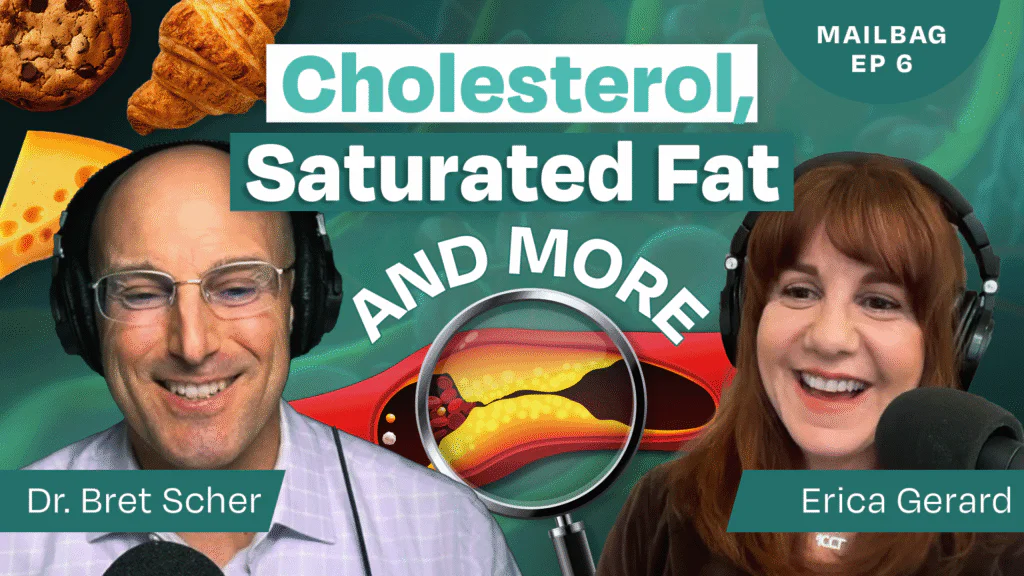
In this Metabolic Mind mailbag episode, Dr. Bret Scher answers common questions about cholesterol on keto, saturated fat, CRP inflammation, gluconeogenesis, and affordable ways to track ketosis. Learn how to interpret LDL changes in context, whether you can do keto without animal fat, what high CRP really means, and when ketone testing matters for metabolic and mental health.
Read more

Does caffeine affect ketosis? Is carnivore really too high in protein? And what should you do if your medications are making it harder to reach therapeutic ketone levels? In this Metabolic Mailbag, Dr. Bret Scher and Dr. Georgia Ede answer some of the most common questions about ketogenic therapy, offering practical guidance on caffeine, carnivore diets, medication management, and how to personalize a metabolic approach for better mental health.
Learn more
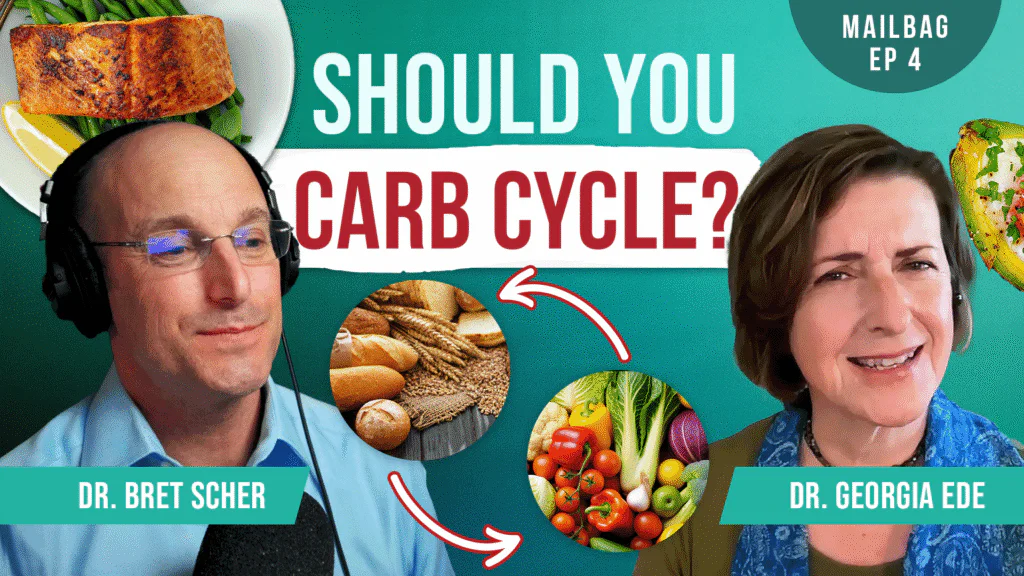
Learn how to build a healthy ketogenic diet with the best fat sources, avoid common keto mistakes, and understand the role of supplements, alcohol, and carb cycling. This expert Q&A explains how whole foods support brain and metabolic health, why processed keto products can be harmful, and how to troubleshoot issues like anxiety on keto.
Learn more
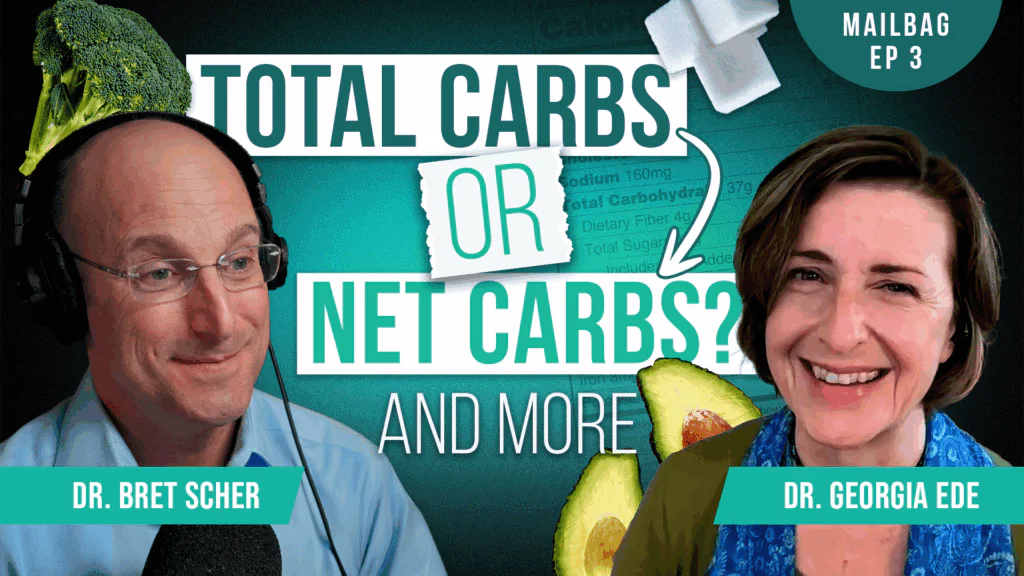
In this Metabolic Mind mailbag episode, Dr. Bret Scher and Dr. Georgia Ede answer listener questions about ketogenic diets, ketone plateaus, and mental health. They explain why blood ketone levels may decrease over time, when it makes sense to aim for higher ketones, and how endogenous ketosis differs from exogenous ketone supplements. The discussion also covers total versus net carbs, hidden carbohydrates in processed keto foods, and practical strategies for managing diet related insomnia during keto adaptation.
Learn more
In this Metabolic Mind mailbag episode, Dr. Bret Scher answers common questions about cholesterol on keto, saturated fat, CRP inflammation, gluconeogenesis, and affordable ways to track ketosis. Learn how to interpret LDL changes in context, whether you can do keto without animal fat, what high CRP really means, and when ketone testing matters for metabolic and mental health.
Read more
Does caffeine affect ketosis? Is carnivore really too high in protein? And what should you do if your medications are making it harder to reach therapeutic ketone levels? In this Metabolic Mailbag, Dr. Bret Scher and Dr. Georgia Ede answer some of the most common questions about ketogenic therapy, offering practical guidance on caffeine, carnivore diets, medication management, and how to personalize a metabolic approach for better mental health.
Learn more
Learn how to build a healthy ketogenic diet with the best fat sources, avoid common keto mistakes, and understand the role of supplements, alcohol, and carb cycling. This expert Q&A explains how whole foods support brain and metabolic health, why processed keto products can be harmful, and how to troubleshoot issues like anxiety on keto.
Learn more
In this Metabolic Mind mailbag episode, Dr. Bret Scher and Dr. Georgia Ede answer listener questions about ketogenic diets, ketone plateaus, and mental health. They explain why blood ketone levels may decrease over time, when it makes sense to aim for higher ketones, and how endogenous ketosis differs from exogenous ketone supplements. The discussion also covers total versus net carbs, hidden carbohydrates in processed keto foods, and practical strategies for managing diet related insomnia during keto adaptation.
Learn more