New Results: First RCT for Schizophrenia & Bipolar Disorder. Learn more.


Listen, Watch & Subscribe on:



Saturated Fat & the Dietary Guidelines: A Cardiologist Weighs In
Listen
About the host


Bret:
Saturated fat is in the headlines again with the government just releasing the official dietary guidelines for Americans. And in it, they kept the 10% cap unsaturated fat. So, we’ll talk about that.
Welcome to the Metabolic Mind Podcast. I’m your host, Dr. Bret Scher. Metabolic Mind is a nonprofit initiative of Baszucki Group where we’re providing information about the intersection of metabolic health and mental health and metabolic therapies, such as nutritional ketosis as therapies for mental illness.
Thank you for joining us. Although our podcast is for informational purposes only and we aren’t giving medical advice, we hope you will learn from our content and it will help facilitate discussions with your healthcare providers to see if you could benefit from exploring the connection between metabolic and mental health.
Many of the interventions we discussed can have potentially dangerous effects if done without proper supervision. Consult your healthcare provider before changing your lifestyle or medications. In addition, it’s important to note that people may respond differently to ketosis, and there isn’t one recognized universal response.
And there was a lot to like about these guidelines, too, though as they emphasize the importance of protein, including animal-based protein. They reduced grains and sugars, and they also discussed a low carb option for those with metabolic dysfunction and metabolic ,diseases like insulin resistance, type 2 diabetes, et cetera.
You can watch our video about the guidelines to learn more. But some are concerned or confused, maybe, that there’s a bit of a discrepancy to increase the allowance of animal protein. And they even talk about using butter and tallow as cooking fats, but still keep the 10% saturated fat restriction.
I guess I see this a little differently because to me their message seems pretty clear. Saturated fat from minimally processed, whole food sources, meat, fish, poultry, cheese, yogurt, especially in the setting of fewer carbs and sugars, really isn’t harmful. And we have to realize that it’s very different from how we get saturated fat in a standard American diet.
Now, there’s still some work about interpretation and implementation, but this is a huge step forward. But it’s not eat more saturated fat within the context of your standard American diet, right? It’s improving the diet as a whole. But now, let’s rewind for a second to what really stimulated me wanting to do this video.
Prior to the DGA being announced, I did a video about a saturated fat study, a meta-analysis that really failed to demonstrate meaningful clinical harm. And boy, did that get the comments going. Saturated fat is definitely a trigger in nutrition and the health scene as well. And I think much of that comes from a misunderstanding of what it is.
And what the research really says. So in this video, I’ll do my best to address the science of saturated fat and the many comments we got. So, make sure to watch it to the end to see if I address one of your concerns or questions. But first, let’s jump to the conclusion. Here are my main points. We can’t talk about saturated fat as one thing. Pizza and ice cream are very different than a grilled steak and full-fat plain yogurt.
Yet, most studies and dietary advice consider saturated fat one thing. And that’s the part of the DGA talking points that I really like. It emphasizes real whole food sources. And the second point is we can’t talk about saturated fat containing foods without also talking about the diet as a whole.
And this relates to the first point in a way. But picture pizza, beer, and ice cream, or eggs and bacon with pancakes and syrup, or lasagna with a bunch of garlic bread, right? Those are a far cry from grilled steak with broccoli, bell peppers and avocado, or full-fat Greek yogurt with strawberries and raspberries.
There’s a dietary matrix we need to consider, especially if that dietary matrix improves metabolic and overall health. So, any discussion about saturated fat that doesn’t consider these concepts is simply inadequate and not really helpful. So, help me out. Why are so many people hesitant to consider that saturated fat from whole foods in the context of a lower carb diet, is different than saturated fat with no regards to where it comes from or the dietary matrix?
I don’t understand. I guess people can be close-minded regarding this crucial concept. So, please comment and help me understand this. But as I said, most published studies don’t consider these issues, unfortunately. Some do, which I will address, but what do we do with all the data that doesn’t? We could just throw it all out, but let’s not do that.
Instead, I want to summarize the five main types of data as I see it. And by summarizing the data, I’m going to address, I guess, my favorite comment I often see. That the data against saturated fat is overwhelming, or the majority of the evidence demonstrates harm. But we really have to take the next step and ask ourselves, what kind of evidence?
So, let’s go through the five. The first is nutritional observational or epidemiologic studies. These are large population studies that track people’s self-reported diets and relate them to heart disease or other outcomes over time. Many will show a weak association between higher saturated fat intake and increased cardiovascular disease.
And yet, some show no association with saturated fat and heart disease. But the key is that this is very weak evidence. Typical hazard ratios are what you can think of as the effect size are very small, around 1.1 to 1.4, which is minuscule. As a reference, smoking and cancer is around 15 to 20, not 1.2.
The strengths of these studies though are their large sample sizes, the long follow-up periods, and studying sort of real world eating patterns. But those strengths just can’t be overcome by the weaknesses of heavy confounding variables, like smoking, exercise, income level, healthcare status, and many more, and the healthy user bias.
People avoiding saturated fat often do many other healthy behaviors. Plus, there’s poor dietary measurements, food frequency questionnaires recall bias, and as I mentioned in the beginning, they fail to distinguish food sources, like steak and pizza or pastries, so forth. So, the bottom line is these studies are good for generating hypotheses, but not for making causal claims.
Much of the concern about the saturated fat originates here. That the overwhelming evidence points one direction, but the evidence is weak and inconsistent. The second type are the mechanistic and surrogate marker studies, almost all LDL-focused. These studies examine how saturated fat intake affects biomarkers, like LDL cholesterol, not clinical events.
On average, they tend to show higher saturated fat intake can raise LDL cholesterol in many, but not all people. But again, these studies usually fail to consider the whole dietary matrix. So, the strengths are they’re mechanistically informative. They often have controlled feeding designs. So, we do know what the subjects are eating, and they’re useful for understanding biology, right?
The fact that eating saturated fat can downregulate LDL receptors on the liver. But the weaknesses that we have to consider is LDL is a risk marker, not the disease outcome. And most studies fail to capture total cardiovascular risk, and they often ignore metabolic concepts, such as insulin resistance, triglycerides, HDL, inflammation, et cetera.
The bottom line is that these studies explain how saturated fat may affect cholesterol, but do not prove it causes heart disease, especially without considering metabolic health. And when it comes to the clinical application of this information, I’d say that’s super easy to check. If you’re worried about LDL, that’s fine.
You can test it. And even better yet, you can test a comprehensive cardiovascular risk. We don’t have to guess. So, if you’re worried about saturated fat containing foods, you can measure the effect they have on your blood work. That’s easy. The third study are randomized controlled trials of saturated fat reduction.
These are trials where participants are assigned to either reduce saturated fat or not, often replacing it with carbohydrates or polyunsaturated fatty acids, PUFAs. Now, these studies tend to show modest LDL reductions with little or no reduction in all cause mortality, cardiovascular mortality, and mixed or neutral effects on heart attacks and strokes.
But the biggest weakness of these studies is the follow-up period. They’re usually about five years long, but since coronary disease is a slowly progressive disease. The studies may not be adequately powered to detect a difference. But in a way, that comes back to the study design, right? When research design these studies, they try to enroll enough people at high enough risk so that the study will have enough power to detect a difference.
But yet they often don’t so they often are underpowered. And that kind of leads this circular discussion about how impactful these studies are. But one area where randomized controlled trials do show a weak signal is when you replace saturated fat with carbs, there’s no difference or even a worsening of heart attack risk.
But when you replace it with PUFAs, there’s a small signal towards benefit. And again, this shows the importance of the dietary matrix. But as an example, when you look at that meta-analysis I covered in my previous video, they looked at the studies that replaced saturated fat with PUFAs, and all but one study cited showed a high risk of bias.
High risk of bias, not moderate but high. So again, that doesn’t completely invalidate the data, but sure does reduce its strength and reliability. So, the bottom line is that RCTs do not consistently show that lowering saturated fat improves hard cardiovascular outcomes, especially when the replacement nutrient is carbohydrates.
And low-quality data suggests a small benefit when replacing with PUFAs. But again, what about the dietary matrix? What about the source of the saturated fat? Not really considered. Okay, we’re down to the last two types of evidence. So, hang in there, and then we’ll get to some more of the comments. So, fourth is food-based RCTs and cohort analysis.
These are studies that examine saturated fat by the food source, like specifically dairy or specifically meat or chocolate. And these tend to show saturated fat from whole foods, dairy, unprocessed meats, and chocolate are often neutral or even beneficial, and that’s right. Many dairy studies show a small signal of decreased cardiovascular risk.
Now, this isn’t proof, but it makes it real tough for it to be harmful if there’s fewer events. Now, on the flip side, highly processed foods containing saturated fat and refined carbs tend to show harm. So, these studies capture some of the food matrix. And therefore, maybe the most relatable to real world impact.
They tend to still be mostly observational cohort studies with fewer of the RCTs, but they emphasize the health effects depend more on the food and the dietary context than on the just absolute grams of saturated fat. And finally, the last type of evidence worthy of mention are low carbohydrate and ketogenic diet trials.
These are interventional trials where saturated fat intake often increases because there’s no limit on it ,and carbohydrates are reduced. And the type of saturated fat changes from processed, combined fat and carbs to whole food, natural fat sources. So, these studies reliably show improved triglycerides, HDL insulin sensitivity, often with no increase or even reductions in ApoB and LDL particles, and improvements in multiple cardiovascular disease risk markers despite higher saturated fat intake.
I guess you can say these studies demonstrate that source of saturated fat and metabolic context really matter. But really none of these trials are powered for long-term cardiovascular events. So again, they’re surrogate trials. And we have to say there’s a small subset where LDL does increase quite a bit with an unclear impact to overall health.
And here, we have gotten some comments about the KETO-CTA study, and what appeared to be rapid progression of plaque. But if you followed this study in sort of the saga around it, you may have seen new data analyses released from the authors demonstrating clear irregularities with the initial Cleerly data set that don’t match with the other three data sets, demonstrating much slower progression or even regression of plaque.
So, we have to be careful how we interpret that initial data, and there’s a lot more to come from that study. So, the bottom line is the low carbo and keto trials challenge the idea that saturated fat is inherently harmful, and further reinforce the importance of dietary matrix and especially a low carb diet.
So, I’d submit that this quote unquote overwhelming majority of evidence, or the totality of data or however you want to say it, suggests that saturated fat is not a universal toxin. Its health effects depend on the dietary pattern, the specific food source, and perhaps even the metabolic health of the individual.
So, what do you think? Leave me your comment about this breakdown of the data. I’d love to hear from you. But don’t worry, we’re not done yet. There’s still some more engaging comments from the prior videos that I want to address. One is saying that encouraging saturated fat intake is the same as saying it’s okay to have high LDL or ApoB and just not worry about it.
I admit this is a complicated topic. The discussion is about saturated fat, not LDL, and it’s not about everyone adding more saturated fat to your standard American diet. It’s about allowing saturated fat-containing foods as part of a healthy overall whole foods diet. And the assumption that LDL automatically goes up is just wrong.
Some will even point though to the mechanistic studies I mentioned showing reduction in liver LDL receptors with saturated fat intake. And sure, but as I mentioned, all you have to do is look at the keto and low carb studies with unlimited saturated fat. Red meat, full-fat, dairy, chicken, thighs, et cetera, cheese, well above the 10% threshold, and on average, those studies show no increase in LDL or ApoB.
And given the dramatic metabolic benefits of the diets, the calculated cardiac risk actually goes down despite more saturated fat. So, I believe it’s medically irresponsible to say saturated fat is dangerous across the board, and everybody should restrict it. Because we’re then denying individuals the opportunity to improve their metabolic and overall health with whole foods, omnivore, low carb and keto diets.
That doesn’t mean everybody should eat this way, or that it has to be high in saturated fat. But we can’t responsibly deny people the opportunity to do so. This next one is a little off topic, but I couldn’t ignore it. That ‘he must be selling something’ comment. I love this one. I wish I was selling meat in a way. I’ve spent some time working on a cattle ranch.
I find it magical. The fresh air, the rolling grasslands, me on my horse helping move the cattle. But that’s the story for another day. I guess for this comment, they missed that whole thing about Metabolic Mine and Baszucki Group being a non-profit. You won’t find one item for sale on any of our sites.
So, sorry to disappoint you. Okay, but back on topic. That was a bit of a diversion. How about the comment that the plant-based diet is the only diet proven to reverse heart disease? For this claim, we have to go back a couple decades to Dean Ornish’s study published in Nature and often cited for this claim.
But this was not a diet study. It was a multi-modality intervention study with smoking cessation, exercise guidance, community connection, stress management. And even increased medical therapy and also a low-fat vegan diet. So, you can’t claim any of the outcomes were from specifically the vegan diet.
That’s just not possible. So, that kind of goes out the window. And following that, we also get comments about the Blue Zones being low saturated fat. As we’ve recently learned, the Blue Zone reports are full of holes and poor documentation and conspiracies. But even beyond that, I mean you have to consider the amount of goat milk and lamb and pork and cheese that they eat in Sardinia and Arcaria.
So, it’s not vegan, and it’s not devoid of natural whole food sources of saturated fat, alright? And finally, one commenter said that all this advice is just useless, and you should do your own blood test. Get a carotid scan, and see for yourself that saturated fat is bad for you, is how they worded it.
And I agree, and I would even add a calcium score or a CT angiogram, if you have access. But here’s what I don’t get. How can you say we all need to individualize testing, and we should all eliminate saturated fat at the same time? Shouldn’t we test ourselves and eat the diet that keeps us healthy? That we enjoy and can sustain?
I agree with promoting individualism, but I don’t think you can do that, and at the same time make blanket restrictions with such weak evidence as everyone should reduce all saturated fat. So again, it comes back to my initial question of why are so many people hesitant to consider that saturated fat from minimally processed, whole food sources in the context of a healthy, low or even lower carb diet is different than saturated fat from highly processed foods combined with refined carbohydrates or an overall unhealthy dietary matrix?
I just don’t get it. So, in light of the new dietary guidelines, let’s elevate the conversation beyond the superficial saturated fat is good or bad. And instead, realize the important details of human nutrition and how they apply to our health. Okay, that was longer than I expected, but I hope it was helpful.
I tried to cover as much as I could, but please let us know what you think in the comments. I probably didn’t cover everything, but I thank you for watching. I’m Dr. Bret Scher. I’ll see you here next time at Metabolic Mind, a nonprofit initiative of Baszucki Group. Thank you for watching. If you want to see more, check out these recommended videos.
Also, if you haven’t already, don’t forget to subscribe to our channel to stay up to date with our content and help us expand the movement. And if you want to sign up for our newsletter, access our resources, read the latest research, or check out the THINK+SMART framework, click here to visit our website.
See you on the next video. Thanks for listening to the Metabolic Mind Podcast. If you found this episode helpful, please leave a rating and comment as we’d love to hear from you. And please click the subscribe button so you won’t miss any of our future episodes. And you can see full video episodes on our YouTube page at Metabolic Mind.
Lastly, if you know someone who may benefit from this information, please share it as our goal is to spread this information to help as many people as possible. Thanks again for listening, and we’ll see you here next time at The Metabolic. Mind podcast.
Listen, Watch & Subscribe on:
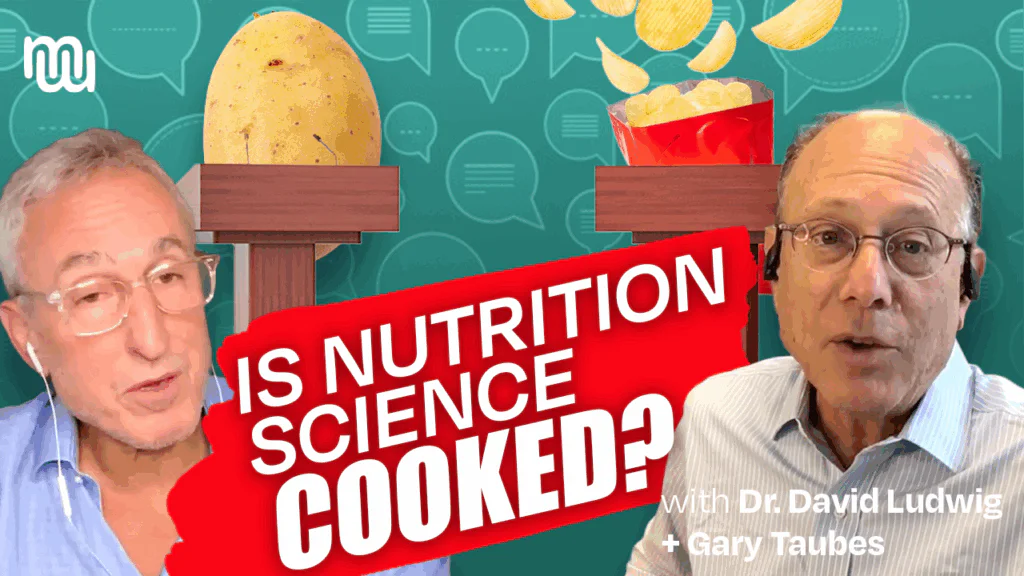
In this Metabolic Mind Podcast episode, Dr. Bret Scher hosts Harvard endocrinologist Dr. David Ludwig and investigative journalist Gary Taubes for a lively debate on ultra-processed foods, nutrition research quality, and scientific bias. They unpack why “ultra-processed” can be a vague, catch-all category, critique how randomized trials and media headlines may overstate conclusions, and discuss methodological red flags like short crossover designs, energy density confounding, and uneven dropouts. The conversation explores confirmation bias in peer review and funding, why mechanism-based thinking matters (especially for refined carbohydrates), and what individuals can do now—experiment thoughtfully with diet changes to see what improves their health.
Read more
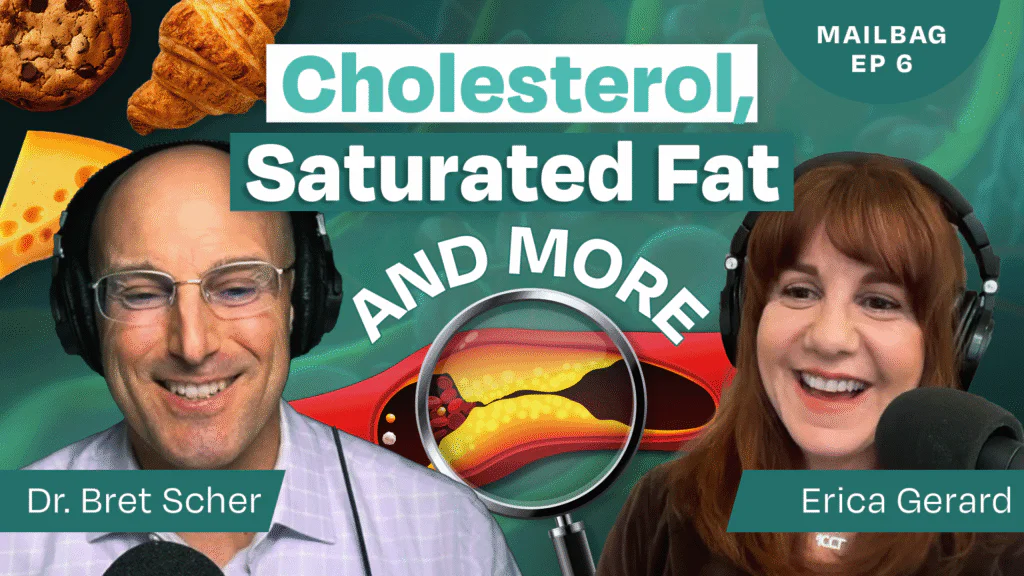
In this Metabolic Mind mailbag episode, Dr. Bret Scher answers common questions about cholesterol on keto, saturated fat, CRP inflammation, gluconeogenesis, and affordable ways to track ketosis. Learn how to interpret LDL changes in context, whether you can do keto without animal fat, what high CRP really means, and when ketone testing matters for metabolic and mental health.
Learn more
A cautious, and nuanced editorial about elevated LDL cholesterol while on a keto diet. Read more here!
Learn more
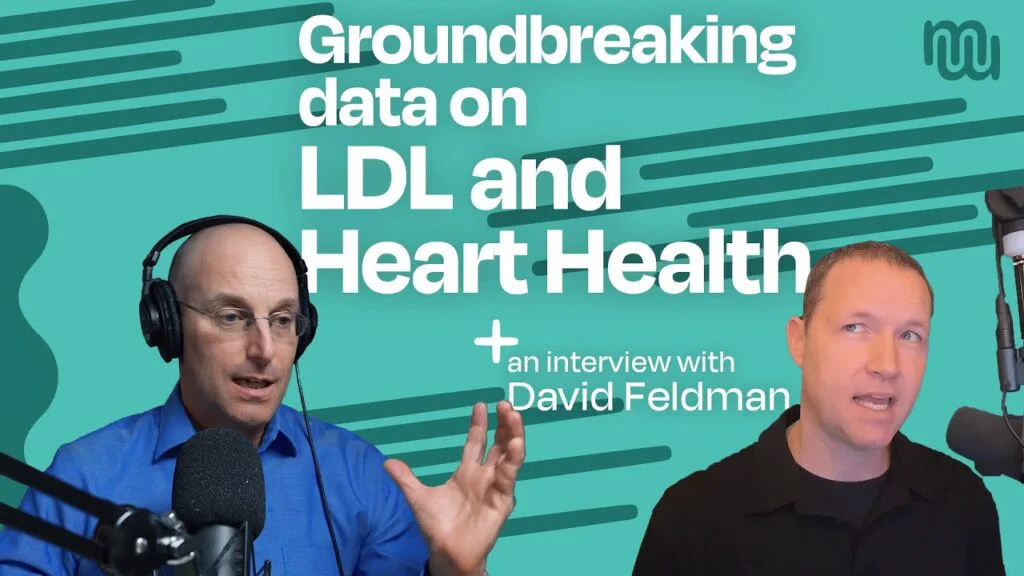
Dr. Bret Scher interviews engineer and citizen scientist Dave Feldman about new baseline data from a coronary CT angiography study of Lean Mass Hyper-Responders—lean, metabolically healthy people who develop very high LDL on low-carb diets. In a matched analysis against participants from the Miami Heart Study, LMHRs showed no statistically significant difference in total coronary plaque at baseline despite LDL averages near 270 mg/dL and some values above 500 mg/dL. Within both cohorts, LDL levels did not correlate with plaque burden. The episode underscores scientific nuance: these findings do not “disprove” the LDL hypothesis and apply to a carefully selected population; the pivotal question is what the one-year follow-up scans will show about plaque progression. Scher and Feldman also discuss how modern imaging—CAC and CTA—can help individualize cardiovascular risk decisions beyond one-size-fits-all cholesterol targets, while reminding listeners to partner with their clinicians for context-specific care.
Learn more
In this Metabolic Mind Podcast episode, Dr. Bret Scher hosts Harvard endocrinologist Dr. David Ludwig and investigative journalist Gary Taubes for a lively debate on ultra-processed foods, nutrition research quality, and scientific bias. They unpack why “ultra-processed” can be a vague, catch-all category, critique how randomized trials and media headlines may overstate conclusions, and discuss methodological red flags like short crossover designs, energy density confounding, and uneven dropouts. The conversation explores confirmation bias in peer review and funding, why mechanism-based thinking matters (especially for refined carbohydrates), and what individuals can do now—experiment thoughtfully with diet changes to see what improves their health.
Read more
In this Metabolic Mind mailbag episode, Dr. Bret Scher answers common questions about cholesterol on keto, saturated fat, CRP inflammation, gluconeogenesis, and affordable ways to track ketosis. Learn how to interpret LDL changes in context, whether you can do keto without animal fat, what high CRP really means, and when ketone testing matters for metabolic and mental health.
Learn more
A cautious, and nuanced editorial about elevated LDL cholesterol while on a keto diet. Read more here!
Learn more
Dr. Bret Scher interviews engineer and citizen scientist Dave Feldman about new baseline data from a coronary CT angiography study of Lean Mass Hyper-Responders—lean, metabolically healthy people who develop very high LDL on low-carb diets. In a matched analysis against participants from the Miami Heart Study, LMHRs showed no statistically significant difference in total coronary plaque at baseline despite LDL averages near 270 mg/dL and some values above 500 mg/dL. Within both cohorts, LDL levels did not correlate with plaque burden. The episode underscores scientific nuance: these findings do not “disprove” the LDL hypothesis and apply to a carefully selected population; the pivotal question is what the one-year follow-up scans will show about plaque progression. Scher and Feldman also discuss how modern imaging—CAC and CTA—can help individualize cardiovascular risk decisions beyond one-size-fits-all cholesterol targets, while reminding listeners to partner with their clinicians for context-specific care.
Learn more