Share your story. Help someone else start theirs. Share Now


Listen, Watch & Subscribe on:



Mitochondria – The Key To Disease and Mental Health with Dr. Martin Picard
Listen
About the host

About the guest


Bret:
Welcome to the Metabolic Mind Podcast. I’m your host, Dr. Bret Scher. Metabolic Mind is a nonprofit initiative of Baszucki Group where we’re providing information about the intersection of metabolic health and mental health and metabolic therapies, such as nutritional ketosis as therapies for mental illness.
Thank you for joining us. Although our podcast is for informational purposes only and we aren’t giving medical advice, we hope you will learn from our content and it will help facilitate discussions with your healthcare providers to see if you could benefit from exploring the connection between metabolic and mental health.
Welcome back to Metabolic Mind, nonprofit initiative of Baszucki Group, where we focus on the intersection of metabolic health and mental health. Today, we’re going to talk about mitochondria, all things mitochondria, the powerhouse of the cell, but it’s so much more than that. So, my guest is Dr. Martin Picard, who really is one of the worldwide experts on mitochondria.
Now, Dr. Picard has a PhD in Mitochondrial Biology from McGill University, and he’s an Associate Professor of Behavioral Medicine in Psychiatry and Neurology at Columbia, where he runs the Mitochondrial Psychobiology Lab. And hearing Dr. Picard talk about mitochondria is really in inspiring.
Like he cares so much about it, and he’s so passionate about it. And you can tell if you go to his Twitter profile, which is at MitoPsychoBio, his picture is a huge mitochondria drawn in the sand, which just shows like how passionate he is about mitochondria. And he talks about it so well, and we start with the basics because a lot of people really don’t know what mitochondria are.
You can’t see them with your naked eye. You can’t touch them. They’re hard to conceptualize. So, we talk about what they are, how involved in our bodies they are, how they’re on every cell, and how they’re involved in so many disease processes, but also how they’re involved with health.
So, it’s not just all about disease. It’s also about promoting health, and what can we do to improve mitochondrial function and mitochondrial health. So, we go through this whole journey in this interview with Dr. Picard talking about mitochondria. So, if you’re wondering about mitochondria, you’re wondering about the role in health, specifically mental health and mental illness, but really any organ system disease process, mitochondria have a role.
This is the podcast, Dr. Picard is the guy for you to listen to because he, not only does he know it well and research it, but he’s so good about communicating about mitochondria. So, I hope you enjoy this interview about mitochondria as much as I did with Dr. Martin Picard. But before the interview, please remember our channels for informational purposes only.
We’re not providing individual group healthcare or medical advice. We’re not providing a doctor patient relationship. Any of the things we discuss could be potentially harmful, if done on your own without clinical supervision. So, never change any of your medications or your lifestyle to treat a medical condition without consulting your healthcare provider first. All right, so let’s get on with the interview with Dr. Martin Picard.
Dr. Picard, thank you so much for joining me on Metabolic Mind so we can really dig into and better understand what are mitochondria. So, thank you so much for joining me today.
Martin:
Yeah, my pleasure.
Bret:
Yeah, so I want to start with a little funny story.
I’m helping my son. This was a little while ago, a few months ago, I was helping my 10-year-old son prepare for this little science competition. And one of the things he had to learn about were all the different organelles in the cells. So, we’re looking at Golgi bodies and endoplasmic reticulum, and, of course, mitochondria.
And like any 10-year-old, he says, why do I have to learn this? This is so stupid. Like, these are so tiny little things, what are they? And I said, hold on. And I ran, and I got Chris Palmer’s book. And I told him about mitochondria in the book, and I told him about the work you’re doing. And his eyes glazed over, and he didn’t really care.
But I felt good that I had some like concrete example to explain to him why he had to learn about mitochondria. Now you study mitochondria, you research mitochondria. But I think a lot of people still don’t really understand like, what are mitochondria? And why are they so important? And why are you devoting your research to mitochondria?
So, if we can take a step back, can you give us, like the brief 1 0 1 about mitochondria?
Martin:
Sure. Yes, and thank you for sharing your story. We have a book at home called, Cell Biology for Babies.
Bret:
Oh.
Martin:
And there’s a page there on mitochondria, and I’ve started this early also with my son.
Bret:
Great.
Martin:
Knows about mitochondria. Yeah so, mitochondria are this beautiful little part of our cells. They’re called organelles, right? The same way that the body is made of different organs that do different things. We have a brain. We have a liver, a heart, and each organ has a different role in sustaining function and health of the whole body.
So, mitochondria is one of the organs of the cell. And maybe the best analogy there, is the brain, and the way that mitochondria are involved in transforming energy, but also in processing a lot of information. So historically, mitochondria have been known as the powerhouse of the cell.
I think that’s a misnomer. And sure, they’re central to transforming energy from the oxygen that we breathe in, the food that we eat, right? And the mitochondria, those two things, the oxygen we breathe, the food we, sorry. The oxygen we breathe, the food we consume. They converge on in mitochondria.
And that’s where the magic happens, where you have incredibly complex processes of ripping off electrons and the electron transport chain for people who’ve heard about this. And then, there mitochondria become charged. So, there’s an electric charge, literally, inside every one of the hundreds to thousands of mitochondria that populate our cells.
So then, mitochondria become charged like little batteries and they actually behave and exist as a network. And something very similar to a social network inside every cell where you have mitochondria that can fuse together to form longer filaments or tubules of mitochondria longer.
Mitochondria can undergo fission or fragmented into smaller bits. They have a life cycle. Old mitochondria actually die out, and then new mitochondria are born. So, there’s a beautiful cycle there. They exchange information the same way that we talk with each other with language and sound. That mitochondria have all of these different ways of talking to each other through chemicals and hormones and ions and other mechanisms.
So, there’s this social life of these small little being, to the tubule shaped organelles in inside the cell. And there’s a whole history about how they came to be, and why they’re, you know, the origin of life that we can get into, if that’s of interest.
Bret:
Yeah, it’s so interesting to think about them as having social interactions with other mitochondria, and that it’s beyond them just sitting there producing energy. But at their core, production of energy is the one of the main features.
And that’s why they’re known for that. And when we talk about disorders, in human health, whether it’s. whether it’s mental illness or whether it’s other disorders, we’re starting to see it as a disorder of energy production, which can then be boiled down to the mitochondria.
So, you said mitochondria take oxygen and they take in the food, and then they create energy. That’s where the magic happens, to create energy Now, I think what also is a little confusing, though, is this happens everywhere, right? Like it’s in your muscles, it’s in your liver, it’s in your heart, it’s in your brain.
So, our mitochondria are really just everywhere in our body.
Martin:
Yes, they’re everywhere. There’s only one cell type that, the body is made of a few hundred cell types. There’s one cell type that does not have mitochondria, which is the one cell type that actually carries the oxygen, right? To towards the, because the purpose of breathing is to bring in oxygen to your lungs. And then oxygen from your lungs diffuses into your blood, and then the blood circulates and touches literally every cell in the body.
And there’s one cell type. That is a reason why blood is red because of the red blood cells, right? The red blood cells, their life purpose is to carry oxygen towards the destination every other cell in the body where mitochondria, ultimately, are the oxygen consumer.
So, red blood cells don’t have mitochondria probably because otherwise the mitochondria there would consume the oxygen that they’re actually meant to transport. Otherwise, every cell in the body, every neuron, every glial cell in the brain, every beating heart cell, every liver cell, every skin cell have hundreds to thousands of mitochondria, per cell.
And the beautiful thing that we’re just starting to uncover now is that mitochondria, not all created the same. And different cell types in the body actually have different types of mitochondria. So we think of those as mito types, and the same way that they’re different cell types or different mitochondria types.
So, the brain mitochondria are actually quite different than the heart mitochondria than the liver mitochondria. So, there’s this beautiful diversity of mitochondria, and that makes us think of them as more of a family of related organelles and not just a single thing that’s passively transforming energy.
There’s a diversity of different types of mitochondria that actually talk to each other. So, the mitochondria in your adrenal glands, for example, where cortisol is made, talk to mitochondria in the brain. And so, the organism, you can see if you think about this, the organism as an ecosystem where you have cells and energetic system to talk to each other. Mitochondria is a key part of this. And if you look at this from a mito centric perspective, you can think of the whole ecosystem of mitochondria as an energy transformation system. And mitochondria transform energy.
They don’t create, energy per se. They take the energy from the food and the oxygen, and then as they combine, they can extract energy from this so they can transform chemical energy from the food and oxygen into electrical energy in the membrane potential that’s called.
And then take the membrane potential, this other form of energy, and then turn this into a different kind of energy like ATP. Maybe some people have heard about? And then, that is what powers the beautiful diversity of human function and human experiences and, eventually, consciousness.
And it all comes down to this transformation of energy inside mitochondria.
Bret:
Yeah, I like how you said, if you look at it from a mito centric standpoint, like coming from like the mitochondria as the center. But I think that’s a hard thing for a lot of people to do because you can’t see mitochondria. You can’t, you don’t get a blood test for mitochondria, right?
You get a blood test for your hemoglobin levels and your kidney function and your liver function, but you don’t measure mitochondria. It’s like a leap for people to say, or for some people to understand, how widespread mitochondrial function and dysfunction impact our health.
But is it safe to say that they’re involved with just about any health or disease process? At its core, could be related to mitochondrial function?
Martin:
Yes, certainly we try to review this. And I should take a step back and say, we think of mitochondria and that organelle as a potential cause, first a source and a source of health and life but then a cause of potential diseases. That’s a scientific model, right?
It’s a hypothesis that we’re invested in, rigorously testing. And so, we need to do this carefully. But what the evidence that’s there, if you go into PubMed or into Google and you look for studies that have looked at some mitochondrial impairment, mitochondrial have many functions, right?
So, alterations and some mitochondrial function, including energy transformation, but also mitochondrial signaling. And any disease you can think of, there is likely a scientific study that has investigated and identified a connection. And then the question is, are impairments in mitochondrial biology driving those diseases?
And I think the answer is likely, yes. And why is that? I think it’s likely because energy is such a central part of what we are and of who we are, to some extent. So, I think that’s why mitochondria have been implicated. There’s growing interest in understanding the connection between mitochondrial biology and health and different disorders, is because energy is central to what we are and how we function.
And if we think about the brain, if you want to convince yourself and make this real, because you’re right, we can’t see mitochondria. And we have the chance here, to have cool microscopes, and you can put living cells and make the mitochondria fluorescent.
And then, you look down the eye piece, and you see them move and fuse. And so, you can see them if you have the right equipment. But our day-to-day experience is that of, is a subjective experience, and the kind of the reality of the body, when and how we feed it and so on.
We’re not aware of our mitochondria, which is probably for the better. But if you want to convince yourself that how central energy is, if you just block blood flow to the brain, right? If you occlude the blood going to you, perfusing your brain for just a few seconds, you’re out. Consciousness is gone.
And the reason consciousness disappears if you don’t have blood flow to your brain, or if your heart stops, is because you’re not feeding your mitochondria anymore. You’re not bringing them oxygen. You’re not bringing them food substrates, and that shuts down everything.
So that’s, I think, a very real example of how energy just sustains human life and human consciousness. So, anything we do, as, you’ve discussed with many scientists and clinicians, the way we feed our body is the kind of energy we put into the system, can actually influence, right?
How the system works, the brain and the whole organism.
Bret:
Yeah, so let’s talk about that for a second because one of the things we focus on at Metabolic Mind is the connection between metabolic and mental health. So, when there’s metabolic dysfunction that can impact mental health and contribute to mental illness.
And at its core, presumably, mitochondria are involved in that. So, how does metabolic dysfunction and insulin resistance, and what some things that are so prevalent in today’s society, how does that impact mitochondria?
Martin:
So yeah, metabolic dysfunction is an umbrella term, right? For that in my view, reflects impaired energy flow, right?
What sustains life is the blood flow. That the beating heart is like a clear sign of light because by moving blood, you move energy, you move oxygen, you move ketone bodies and fatty acids and glucose and proteins and so on. And these are energy forms.
So, the disorders of energy or metabolic dysfunction can be reflected in insulin resistance as which is reflected in, or which represents the inability of cells to take in food substrates when that’s needed. So, there can be metabolic dysfunction at the whole organism level, right?
Which can cause or materialize in obesity, for example. Then, there is systems level metabolic dysfunction in insulin resistance, would be a feature of this. At the cellular level, there can be metabolic dysfunction there. And then, if we go inside the cell, there can be mitochondrial energy transformation defect, or impairments, which of course, ripples out if the mitochondria are not functioning properly that can impair how cells function, how the tissue function, and how the whole organism functions.
So, mitochondria are such a metabolic hub that their inability to transform energy properly or disregulation of mitochondria getting turned on and making a lot of ATP or being dialed down and making less ATP can really affect other levels of biological and physiological complexity.
Bret:
Yeah, and I, think it’s clear there are a lot of things that can impact mitochondrial function. But when it comes to mental illness and psychiatric conditions, in general, there’s been a lot of talk about genetic predispositions. So, are there genetic predispositions to mitochondrial dysfunction as well as environmental factors of just how we live our life that impact it?
But what do the genetics say about it?
Martin:
Yes, that’s a great question. So yes, and I’m not a clinician, but I spend half a day a week in the clinic with my close colleague, neurologist Michio Hirano, where I see patients who have rare genetic mitochondrial disorders. Some people may know mitochondria, those small living life forms inside every cell, they have their own DNA.
And that’s related to their past life as bacteria, and when they were incorporated. So, they have a circular little piece of DNA, like bacteria, which have a few genes that are involved in energy transformation. And some people are born with a defect mutation, or they lose a chunk of mitochondrial DNA, a portion of the mitochondrial DNA sequence.
So, those are called mitochondrial DNA deletions, and that causes primary genetic mitochondrial diseases. So, these are rare genetic conditions, but I think they’re incredibly illustrative of what impaired mitochondrial biology can do to the whole body and to the whole mind.
And these people suffer from multisystem disease, right? So often they have cardiac involvement, digestive issues, renal issues, and endocrine issues, immune alterations in some ways, and many of them have cognitive and psychiatric manifestations. So, there’s a lot of comorbidity between primary mitochondrial diseases that have historically been the domain of neurology and psychiatric conditions.
And this is an area that we’re interested to understand more, but that has been, understudied. So, I think that’s one of the good evidence that if something’s wrong with the mitochondria, and here we have the kind a primary genetic defect in mitochondria, this leads to impaired brain function and, psychiatric conditions.
Bret:
Yeah, that is very clear evidence about that connection. But then, as I alluded to, it certainly doesn’t have to be a genetic reason. There are, unfortunately, plenty of lifestyle things we can do to ourselves to decrease our mitochondrial function and decrease our mitochondrial health.
And the big ones that seem to get a lot of attention are, of course, nutrition and then poor sleep and toxins. And how do you see the main detractors from mitochondrial health that, unfortunately, we do in our society?
Martin:
Yes, so you’re pointing to what I just described were inherited mitochondrial disorders, and then they’re acquired mitochondrial disorders.
So, all of the acquired result from our exposures and internal exposures, who were studying how psychological states and exposure to chronic stress or early life adversity and or the disorders that we can create ourselves, either psychologically or through nutrition and other things, and how they can influence mitochondria.
So, this is all part of the acquired, mitochondrial impairments or dysfunctions. So, there’s a number of things there that converge on mitochondria, including diet, which is a very big one. Everything we put in our mouth, ultimately, converges either directly on mitochondria or around the metabolic pathways that mitochondria are involved in regulating.
So, that’s a very big one. There’s a lot of good research on insecticides and pesticides, and some of those that were used back in the days were, we used at the laboratory as poisons for mitochondria. If you want to know, you know how a mitochondrial impairment will change a gene expression, right?
Some genes that are turned on are turned off in a cell. You can do experiments in this where you have living human cells with their mitochondria, which you can image. And then you can perturb mitochondria, right? Experimentally and then you ask, ooh, what does that do to the signals that the cell will secrete or to the the process of cell division or the effect on a stem cell or things like that?
And some of the tools we use there, or formerly used, poisons or in insecticides, that are direct poisons to mitochondria. There are many things that, you know, that we’ve used, or that are around our ecosystems that can adversely affect mitochondrial biology.
Bret:
Yeah, that’s really disturbing that you don’t have to come up with some specialized mitochondrial poison. It can just be something that’s a run of the mill pesticides that’s been used before, and that’s a potent mitochondrial toxin. It’s a little disturbing.
But I like how you also mentioned about psychological states and how that can affect your mitochondria. And, so how does our psychological state influence our bodies? That’s like a big question that you are researching, and the whole brain body connection goes both ways, right? The dysfunction in the body can affect the brain. And I don’t know if you want to call it dysfunction in the brain, but brain experiences, psychological experiences can affect the body.
And it seems like mitochondria are the connector there. That’s the common variable, is that right?
Martin:
Yes, so the brain is part of the body, and let’s remind ourselves, right? But there’s, many reasons why we think of brain and body. And I think it’s useful to think of brain, body or mind body processes, right, that drive the human experience.
And as there is good evidence, for example, that the gut microbiome sends signals to the brain and then that actually influence, mood and affect, and might contribute to mental health. So, there’s clear, kind of, body to brain signals, right?
And the brain can experience and respond to the metabolic state of the body. And then they’re, of course, a very important drivers, top down brain body signals, where the brain actually regulates blood glucose, for example. And psychological stress will, it can trigger hyperglycemia, especially in susceptible individuals, right?
So, you see a stressful email or you have a stressful interaction, and then you secret cortisol that come from the adrenal glands. And then cortisol goes and then to the liver and says, release glucose and into the blood. And then, we’ll go to the muscle. The cortisol go to the muscle and causes insulin resistance.
So then, that drives hyperglycemia. So a simple psychological state can drive a change in peripheral glucose level. So, there’s metabolic influence on the brain, and the brain can influence systemic energy metabolism. But every little process we think of when we think of like brain body interactions, a stressful thought will accelerate a heart rate within seconds, right?
While the heart beating faster, costs energy, right? Every time the heart beats, there’s energy consumed that need to come from mitochondria. And if you’re having an experience, this changes gene expression inside a cell. You produce or release a hormone while turning on a gene, right?
Turning DNA into RNA cost energy. Then taking the RNA, making a protein, cost energy. And then taking that protein, that hormone, let’s say, and then folding it and then packaging it and then releasing it. All of this cost energy. Every little bit of communication between the brain and the body is energetically demanding, and is an energetic. Process, by nature.
So I think, we think that’s why energetic processes, and then mitochondrial biology being a central part of this, is an important driver. Or if you want the fabric, right, of brain body connection is an energetic, the brain body connection is an energetic connection.
And therefore, energetic perturbations in the mitochondria can likely perturbed that system.
Bret:
Yeah, it is fascinating how the two-way street between the brain and the body is constant, and there’s such an impact both ways that we need to be aware of in so many variables.
But now to bring it back to psychiatry and to symptoms of whether it’s bipolar disorder or schizophrenia, major depression. What about medications? Because if those diseases have a mitochondrial basis and then medications are used to treat them, can medications also further mitochondrial dysfunction? Or are there some that can improve mitochondrial function?
What have you learned from a medication standpoint?
Martin:
Yeah, there’s recent interest in this. And so, people have studied in fairly rigorous studies, in vitro with cultured human cells or in vivo in animals. And so, you can give cells or animals different classes of psychotropic medication and ask, does this change the ability of mitochondria to transport the electrons, to charge the membrane to make ATP?
So, different domains of mitochondrial biology. And the answer yet is, yes, certainly, there’s specific classes of medication that impair mitochondrial energy transformation pretty significantly, which is not widely known.
And certainly, psychiatrists don’t learn about this. And there is, so it’s not well known. But in the last, 10 years, there’s been quite a bit of research on this as we uncover, are starting to understand, the role of mitochondria, the role of energetic processes in neurotransmitter release, neurotransmitter reuptake, and neuronal firing and neuron to glial cell communication.
All of these processes are energetic in nature. So, as this becomes better understood, and the connection with mental health and psychiatric conditions is better understood, there’s been a rising interest to connect those treatments, like you were saying, to mitochondrial biology, and there’s a clear connection there.
And that’s not my area. I don’t know the details, but there’s certainly some classes of medication that have a direct effect on the core machinery for energy transformation, which is a little scary because playing with the chemistry without really understanding how this chemistry gives rise to human experiences and to mental health, is a little dicey.
And I think that’s there’s a lot of medications in psychiatry, lithium being an example. We don’t know how lithium works. We have no idea the underlying biology. But there’s a clear effect of lithium on mitochondrial biology. And so, there’s some people, believe that parts of our of the human experience and the function of brain circuitry and brain networks, is actually driven by mitochondrial biology. So, maybe the reason lithium works in some cases is because of its effect on mitochondria?
Mitochondria could be the target for lithium. I think based on the evidence out there, that’s a possibility.
Bret:
Yeah, I think it’s so interesting, though, the way you described that there are certain medications, subclasses, that are going to impact mitochondrial functioning. We’re going to learn a lot more about this, I think, as research focuses on it. But does that separate medications into maybe short term beneficial medications, but long term harmful medications?
Like maybe they’re doing something in the short term, but over the long term, if they’re degrading mitochondrial function, then they’re going to lose their effectiveness? And maybe that’s why a number of psychiatric medications, you know, worsening cardiometabolic health. Could mitochondria be a reason for that?
Certainly plausible.
Martin:
Yeah, and you mentioned acutely versus chronically, that we have a hard time, I think, as the way humans think and maybe the way scientists are forced to do their research. It’s hard to keep those two things in mind that what you observe acutely.
Does that translate chronically? And there’s a lot of stimuli and stressors that have a certain effect acutely, but chronically, the effect is quite different. And a lot of medications, I think, sometimes have an acute, acutely can help. And maybe that’s where psychiatry is most useful in terms of helping people deal with life threatening, acute episodes of psychosis, for example?
Then, chronically we’re really bad at helping people. And maybe but all, most from what I know of standard, of the way we apply pharmacology to treat people with severe mental illness, those medications are given without the idea that this should be short term.
And most of the time, I think it’s given, and patients are told or led to believe, that they need to continue taking that medication forever. But we have no idea. I think there’s no data on humans on the long-term effects of medications on mitochondrial health and mitochondrial biology, which is a little scary to think about.
Bret:
Yeah. So I, you mentioned, this long-term use of medications and with without thinking, maybe they should be short-term, but also without thinking what else can be done. To specifically target mitochondrial health because maybe if we’re using medications and we’re doing other things to target mitochondrial function and overall brain health, then we can start to potentially taper those medications under professional guidance, of course, because everything else is improving because we have heard from a number of people that they’re treated, they get over their acute episode, but then they just feel like they can’t thrive, they can’t get back to their life, and it’s not until they do other interventions.
That Im, that allow them to get back to their lives, which frequently can also then coincide with tapering of medications, which of course is a very complicated topic. And we have a whole video with, Dr. Georgia Eid and Matt Baszucki about that. But so what it brings us back to though is this question to you is what can we do to improve our mitochondrial function?
And I know you’re not a, you’re not a doctor, you’re not giving medical advice here. You’re just talking about you as a someone who knows mitochondria better than anybody. what can we do to improve our mitochondrial? Function, which then could potentially be seen as a adjunctive interventions to medications in certain disease states.
Martin:
Yes, so you make such a good point, Bret. The ability to thrive and to exhibit resilience and robustness, like life is made of challenges. And I think what we do really well as living organisms, not just humans but all living organisms, is we think of, we take a challenge, right? And then we bounce through it, and there are some things then that make us unable to bounce.
And I think that’s one way in which I think about acute psychiatric episodes, where you go really deep and then it’s hard to come out of it. And sometimes, I worry that some of the medication actually promotes this stuckness, right? And prevents this rebound.
And if we think about going down and then rebounding, and this thriving ability, this requires energy, right? Like it requires fundamentally a change in how the brain operates, the brain body system functions, and your ability to make meaningful life changes or right changes.
And in your social circle or all of this requires energy, and I think that’s why change, just as a general thing in life, changes are challenging to most people. And because change requires energy, it’s like coming out of inertia. If you want to stop something that’s moving, if you like so fundamentally, there’s an energetic requirement to change.
And therefore, bouncing back is an energetic process. So, impaired mitochondria in that situation, or if you live with impaired mitochondria, I think this can be even more difficult. So, that being said, what can we do to promote good or to optimize mitochondrial health, energy transformation or proper mitochondrial signaling?
There’s not a lot of, there’s a need for more research on this. First thing I want to say, there are three things that we know can optimize and improve mitochondrial energy transformation capacity, based on scattered research over the last maybe two decades.
One thing we know for sure is moving. Being physically active, right? So, I think many people know, exercise is a protective factor against many mental illnesses. And exercise is a protective factor for pretty much every disease we know of. And if we flip this, if we think about health as not just the absence of exercise, but this ability to thrive and to live a long, healthy life. Exercise is good for this. So, moving stimulates, and pretty much inside every organ that people have looked at, stimulates the production of more mitochondria. So, if you move, the body feels, ooh, I need more energy.
How do I handle this? Let me make more mitochondria. That’s called mitochondrial biogenesis. And we know that this happens a lot, for example, in muscles. If you go from being completely sedentary to training for a marathon, you can double the number of mitochondria in your muscles.
So, there’s quite a bit of plasticity there. And we’ve done some studies in animal studies of chronic stress, for example. And this changes how many mitochondria, how much mitochondria are in different brain regions. So, moving is number one thing we can do to increase a number, or maybe the quality, of the mitochondria.
Number two is not eating too much. So, being hungry once in a while is healthy. We evolved to do this. And the reason why being hungry is, not eating too much, is healthy, is not too clear. Maybe it’s because it puts you into ketosis? Maybe it’s because it prevents nutritional or metabolic oversupply or overload.
People have done beautiful studies in cultured cells where you take cells and then you bombard them with sugar and with fat and so that causes, there’s too much energy supply relative to what the cells need. And this causes within minutes the fragmentation of mitochondria. So, you go from having a beautiful network of connected and dynamic mitochondria talking to each other, to a completely fragmented mitochondrial network.
So, there’s mitochondrial fragmentation that arises very fairly quickly in cultured cells like this in response to this metabolic overload oversupply. So, if you eat too much, and most people are able to take the excess glucose, excess fat and excess nutrients in the blood, and then store this in subcutaneous adipose tissue, right?
And then we call this obesity or just, yeah, adiposity. But the reason this exists physiologically is because having too much energy substrate, too much sugar, fats, or proteins in your blood, is actually damaging. It’s damaging to the mitochondria. So, not eating too much and maybe something like intermittent fasting or just having just a good diet where you’re hungry once in a while. And then you have a good meal, and then you’re hungry, then you have a good meal.
And every ancient tradition has a fasting period built into their culture. And that’s probably for a reason because once in a while, being hungry actually stimulates some cellular processes, probably mitochondria in a way that is helpful and health promoting.
Bret:
So, the magic question with fasting, though, is how long? And I know it’s like impossible to answer with certainty, but time restricted eating, it can help reduce calories. Maybe it can help reduce insulin and improve insulin sensitivity to some degree? Probably like a minimum of 12 hours, maybe has to be 16, maybe has to be 18?
Do you have any sense when it comes to mitochondria, where the sweet spot is or it’s just clear that some amount of it helps and we still need to learn more about the specifics?
Martin:
Yeah, I think it’s clear that some amount of it helps. I don’t know that we have the right evidence to be prescriptive here about how long should you fast, and it probably depends.
If you’re on a ketogenic diet, or you’re on a low carb diet, maybe you don’t need to fast for as long to, derive the benefits than if you’re on a regular, a high carb diet? And maybe each person’s metabolism is pretty different.
And it’s clear that some people respond a lot better to nutritional ketosis than some others. And so, the benefits are individual specific. And I think, in the same way that each person responds differently to exercise, there are are some people for whom exercise doesn’t seem to trigger a lot of health benefits, and it just makes them, it puts them into a bad place if you do too much of it. But other people just respond amazingly well to exercise, and it’s life transforming. So, I think there are individual differences that are poorly understood. And most of the studies we do are based on like group differences. You do an RCT, and then you look for a mean difference.
And 50 people here, 50 people here. Ooh, like exercise was good, or keto diet was good, but there are always people that are at the bottom of the response, low responders and high responders. So, I think the way we do our science, the way we approach things is a little narrow sight.
It doesn’t respect the degree of individual differences or individuality. So, I have a hard time and I think ultimately we need to move towards a more individualized way of doing medicine and of promoting health. So, I don’t know that there’s going to be one kind of solution for everyone.
Bret:
I think that’s a great point about the translation of the research to the one individual or the one, you know, of you being your own person and how does that relate? And you have to start somewhere. You have to use the evidence you have, but it’s not the end all and be all because there are the individual variations.
So, that makes a lot of sense. Yeah, all right. So, we went through moving your body. We went through, don’t eat too much. And then we got number three. So, what’s number three on mitochondrial health list?
Martin:
So, number three is the most speculative, and we have some evidence that how you feel, and I’ll focus specifically on positive psychological states, might actually drive changes in your mitochondria.
And we did a study a few years ago with Elissa Epel, UCSF, where they took about 90 women, who were asked every morning and every evening how they feel. And then, you imagine you wake up in the morning and then you’re asked, how do you feel now? Do you feel inspired or do you feel confident about your day?
Or do you feel worried and you don’t know what’s going to happen today? And that’s really stressful to you. And then, in the evening, there was a more elaborate questionnaire that asked how much of this did you feel today? And then there were items like love, closeness, and trust and being inspired and motivated and uplifted and connected to others and so on.
And then, some negative things like feeling betrayed and rejected and feeling sad and depressed. And I think everyone can Imagine some days you feel a lot of positive stuff, right? Like you had a great day with your partner, with your colleagues at work. So, you felt a lot of positive things and not so much negative things.
And some other days, you feel a lot of negative things because of things that happened because of your psychobiological state, whatever this, whatever drives the emergence of those positive, negative experiences. So, they ask those questions. So, we have kind of reports on how women feel for seven days in a row for a whole week.
Which is beautiful, daily repeated measures of someone. And then we were able to have white blood cells, immune cells from these women measured on the Wednesday. So, they answered these questions from the Sunday to the Saturday for these seven days. And then on a Wednesday, they came to the clinic gave blood.
Then, Elissa’s team isolated white blood cells and then we measured the mitochondria. And then, what we measured in the mitochondria there is, we call the mitochondrial health index, which is basically how much energy can each mitochondria can transform, right? So, that’s a proxy for a simplistic proxy for mitochondrial health.
So, we were able to relate for the first time how people felt right across that week, and their mitochondria in the middle of that week. And so we asked a simple question first. Do people who feel more positive, have better mitochondrial health than people who feel more experience more negative things?
And the answer to this was, yes. And it seems like people who experience more positive things have slightly better mitochondrial health. But then, the more interesting question was, we know how these women reported feeling for the three days before we took the mitochondria, and then for the three days, let’s say, after we took the mitochondria.
So, we can ask, is it how people feel that predicts or drives the mitochondrial health or is it the mitochondrial health that drives and predicts how people feel? And what the study showed is that how people felt in the morning and the evening on the three days before, on the Monday, the Tuesday, the Wednesday, actually predicted mitochondrial health, but not the other way around.
So, those are mitochondria in the immune cells, right? Remember what we talked about earlier? Mitochondria are different. The brain mitochondria are different than the heart mitochondria and the immune mitochondria are also different. So, it seems how we feel might drive a fairly large change in the biology of the mitochondria and the energy production capacity of our immune mitochondria.
And so, if that’s true, we need to replicate this. And we’re in the process of developing a study to do this at scale and over longer periods and with repeated measures of mitochondria and so on. So, if that’s true, right? That implies that feeling more positive, having more positive experiences can actually directly influence the mitochondrial biology.
And if you can improve the mitochondrial biology and the ability of mitochondria to transform energy in the immune cells, maybe that happens also in your brain cells? And we have evidence that this is the case. And Caroline Trumpff, who works in our group, has amazing data in brain mitochondria.
So, she was able to measure gene expression in the brain of individuals who’ve passed away, but in whom our colleagues had collected data on how socially connected they feel, their level of wellbeing or their level of depression and isolation before they died, right? So, you have the psychological exposures, the psychological state, of these people before they die, and then you have the brain after they died.
And then  Caroline used some fancy single cell gene expression analysis, and neurons and astrocytes and microglia to ask, is there a connection between how people, they said, I’m feeling great. I have amazing sense of purpose. I feel like my life is meaningful. I have great friends and so on.
Does this person have better functioning mitochondria in their neurons or in their glial cells than someone who says, I wake up in the morning. I don’t really want to be here. And I don’t feel well, and I am fairly depressed. And what she’s finding is, yes. And the mitochondria are different in people, who report more positive experiences, than people who don’t.
So, this is opening up a new layer of biology that’s a direct psychobiological connection between the lived human experience and the biology of our mitochondria. So then, If we speculate a little bit, it could be that choosing to do something that you find meaningful and purposeful, right?
And a arranging your life in as much as possible in a way that you feel good about it, right? And making decisions in terms of what you eat, in terms of the people that you surround yourself with, in terms of the job you choose, actually makes a difference on your biology and on the biology of your mitochondria.
This would be amazing, and I think that would be consistent with kind of the growing understanding of the metabolic nature of, and functioning of the brain and mental health. And maybe a path to mental health is to taking care of your mitochondria? And you can take care of your mitochondria by moving more, by being hungry once in a while, and by making choices that make you feel inspired and motivated about life.
Bret:
That’s yeah, I think that’s so interesting. And you can tell your excitement and your passion just in the way you’re explaining it, which I think is wonderful. But you can look at these studies that show people ,who are more positive and had a better outlook on life, that they live longer, they have fewer health problems.
And I would always take those with a grain of salt, okay? But there’s so many confounding variables, and it’s just an association. And it’s just that they make better choices in life, and are healthier in other ways. But now you’re saying, maybe it actually is causative? And there’s a mechanism for that causation, which is opening up this whole new sort of realm, which I think is really exciting.
And so yeah, just be happy and you’ll help your mitochondria, but there’s more to it. So, I think that’s really exciting.
Martin:
And this is a hypothesis, right? But there’s a number of, converging lines of evidence that what we experience actually translates directly into real molecular changes, energetic changes in our mitochondria.
So, there’s a need now for more research to understand the mechanisms there and whether those links are direct. Or maybe you feel great, therefore, you sleep better, and it’s actually the sleep that making your mitochondrial health improved? Or you feel good, and therefore, you eat well.
And so there’s all of these confounders. Either we see them as confounders or we see them as this network, this ecosystem of behaviors and lifestyle and nutrition and biology and psychological state. it’s all interconnected. So there, but I think the emerging science is makes me optimistic that we can uncover and identify real connections there.
That it actually end up being empowering.
Bret:
Yeah, empowering. I like that.
Martin:
Yeah, that’s important part. It’s a lot of how we do medicine now and the public message around genetic predispositions, which I think has been overhyped because for many reasons.
We could talk about if you want. This is highly disempowering, and I think is not justified, scientifically based on the evidence. I think the alternative framework that is, I think, a bigger container that respects more kind of the reality of individualities and idiosyncratic differences and how people manifest health, and how people manifest, the expression is, their mental illness. And each person’s different, and we have these diagnostic categories, but each individual person is different. People, like we said earlier, respond to therapies differently. And I think that’s is more consistent, not with a fixed genetic predisposition, health is dynamic.
And for the most part, genetic is fixed, right? If everything was caused by genes. And there would be this chronic trajectory, you would have no room to be healthy and then be sick and then be healthy again. What we know is that mental health and physical health is highly dynamic.
So, just like energetic processes in the body, energetic processes are dynamic. And I think there’s a lot more evidence to think that the basis of health, once you have the structure and you have the basic information laid down in the genome, the basis of how health manifests over time is energetic in nature, and we’ve lacked tools.
I think the reason we’ve been so focused on other things and genes is we’ve lacked tools to measure energy, and we can see it. Like you can visualize a genome, you can measure sequence the letters and the DNA, and then you can say, ah, now I know something about this person. Energy is much more difficult to measure. And I think by focusing on mitochondria, it is giving us an in, or at least attractable scientific model, that we can explore the underlying basis for human health and human disease. So, this makes me extremely optimistic about our ability to build a framework that will be empowering for people, and that can be transformative.
Bret:
Yeah, I think that’s such a great way to wrap it up on that note. And we really, it’s been a wonderful discussion going through just what mitochondria are, their role in energy, their role in disease processes, and their role in health and empowering the things we can do to improve mitochondrial function.
So this has been a. A wonderful discussion, and I really appreciate you taking the time. So if I, there’s so much more to learn though, especially from you and all the research and the work that you’re doing. So if people wanted to find out more about what you’re doing, where can we direct them to go?
Martin:
Yes, thank you.
Yeah, there’s a growing number of research groups worldwide who are interested in mitochondria and mitochondrial psychobiology. So, this makes me hopeful that together as a community, we’ll make progress at a rate that will allow us to accelerate this transition towards sustainable healthcare. Not disease care, but healthcare.
So, people can go on our websites for our papers. That’s mitochondrial psychobiology lab at Columbia University. And on Twitter, when we publish new articles, we share them there. And I’d be excited to continue interacting with the community of people who are interested in knowing more and understanding the energetic basis of health.
Bret:
Great, we’ll link to those in the descriptions so everybody can find them. And thank you, again. I really appreciate your time.
Martin:
My pleasure. Thank you, Bret.
Bret:
Thanks for listening to the Metabolic Mind Podcast. If you found this episode helpful, please leave a rating and comment as we’d love to hear from you.
And please click the subscribe button so you won’t miss any of our future episodes. And you can see full video episodes on our YouTube page at Metabolic Mind. Lastly, if you know someone who may benefit from this information, please share it as our goal is to spread this information to help as many people as possible.
Thanks again for listening, and we’ll see you here next time at The Metabolic Mind Podcast.
Listen, Watch & Subscribe on:
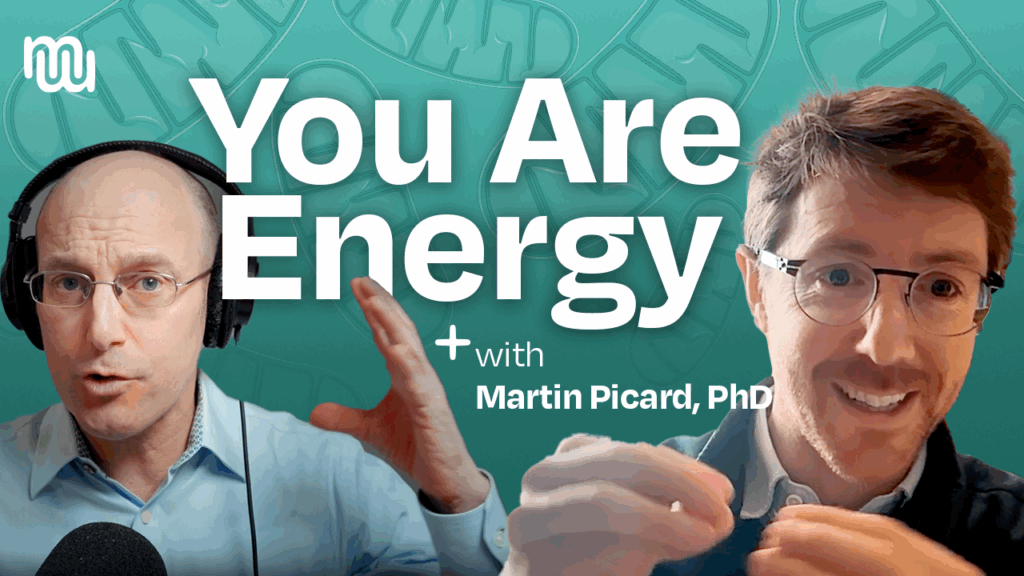
This episode features mitochondrial psychobiologist Dr. Martin Picard discussing his new Nature study that maps mitochondrial “hardware” across the human brain and links it to MRI signals. He explains how different brain regions and cell types have distinct “mitotypes,” why that matters for brain energy and mental health, and how this could enable non-invasive measures of mitochondrial content and function (MitoBrainMap). The conversation explores practical implications—diet, sleep, movement, stress, and social connection—as levers that shape brain energetics, while cautioning against one-size-fits-all prescriptions. Picard also previews upcoming work on saliva/blood biomarkers and his broader vision to reframe health and consciousness through an energetic lens.
Read more
Remember mitochondria: the “powerhouses of the cell”? It turns out, they’re not just high school biology trivia. Mitochondria are vital for transforming the energy your body needs, but…
Learn more
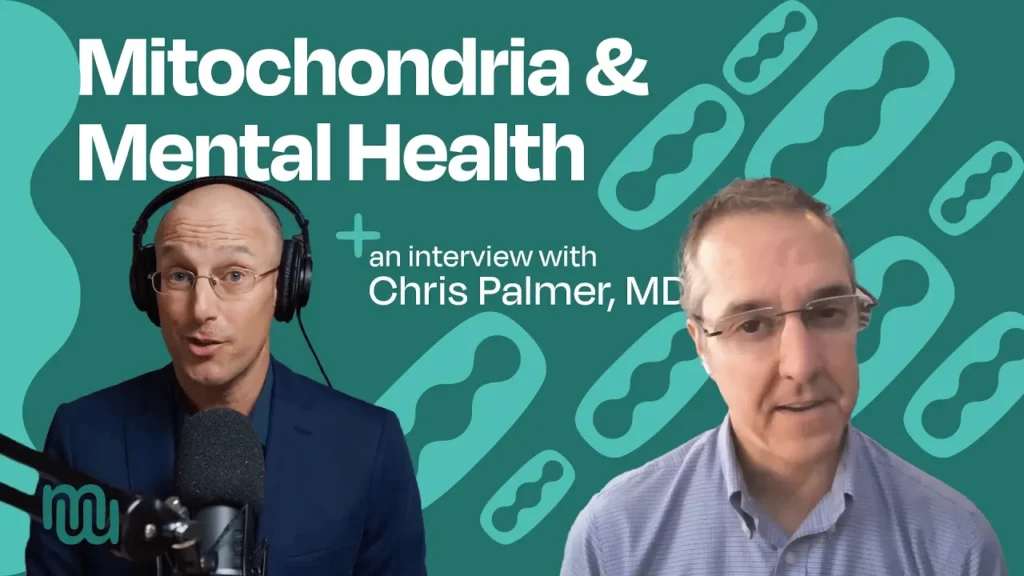
In this Metabolic Mind episode, Dr. Bret Scher sits down with Harvard psychiatrist and Brain Energy author Dr. Chris Palmer to explore why he believes most mental disorders are actually metabolic brain disorders driven by dysfunctional mitochondria. Palmer explains how mitochondria do far more than produce energy—they regulate neurotransmitters, hormones, inflammation, epigenetics, and responses to stress and trauma, offering a unifying framework for depression, bipolar disorder, schizophrenia, and anxiety. Drawing on a century of data on ketogenic diets for epilepsy, he describes how nutritional ketosis, fasting, sleep, and targeted exercise can promote mitophagy and mitochondrial biogenesis, potentially leading to long-term recovery for some patients. The conversation also covers the limits of supplements and “quick fixes,” the metabolic side effects of antipsychotic medications, and Palmer’s call for more clinicians and clinical trials in metabolic psychiatry to address the global crisis of under-treated mental illness.
Learn more
How can a metabolic intervention succeed where potent, “evidence-based” pharmaceuticals have failed? In this compelling guest post, originally published on his ‘StayCurious Metabolism’ newsletter, Dr. Nicholas Norwitz challenges…
Learn more
This episode features mitochondrial psychobiologist Dr. Martin Picard discussing his new Nature study that maps mitochondrial “hardware” across the human brain and links it to MRI signals. He explains how different brain regions and cell types have distinct “mitotypes,” why that matters for brain energy and mental health, and how this could enable non-invasive measures of mitochondrial content and function (MitoBrainMap). The conversation explores practical implications—diet, sleep, movement, stress, and social connection—as levers that shape brain energetics, while cautioning against one-size-fits-all prescriptions. Picard also previews upcoming work on saliva/blood biomarkers and his broader vision to reframe health and consciousness through an energetic lens.
Read more
Remember mitochondria: the “powerhouses of the cell”? It turns out, they’re not just high school biology trivia. Mitochondria are vital for transforming the energy your body needs, but…
Learn more
In this Metabolic Mind episode, Dr. Bret Scher sits down with Harvard psychiatrist and Brain Energy author Dr. Chris Palmer to explore why he believes most mental disorders are actually metabolic brain disorders driven by dysfunctional mitochondria. Palmer explains how mitochondria do far more than produce energy—they regulate neurotransmitters, hormones, inflammation, epigenetics, and responses to stress and trauma, offering a unifying framework for depression, bipolar disorder, schizophrenia, and anxiety. Drawing on a century of data on ketogenic diets for epilepsy, he describes how nutritional ketosis, fasting, sleep, and targeted exercise can promote mitophagy and mitochondrial biogenesis, potentially leading to long-term recovery for some patients. The conversation also covers the limits of supplements and “quick fixes,” the metabolic side effects of antipsychotic medications, and Palmer’s call for more clinicians and clinical trials in metabolic psychiatry to address the global crisis of under-treated mental illness.
Learn more
How can a metabolic intervention succeed where potent, “evidence-based” pharmaceuticals have failed? In this compelling guest post, originally published on his ‘StayCurious Metabolism’ newsletter, Dr. Nicholas Norwitz challenges…
Learn more