Get the latest on metabolic psychiatry. Subscribe.


Listen, Watch & Subscribe on:



Keto Offers Hope in the Bronx: Endocrinologist Uses Diet to Help Underserved Patients Recover Health
Listen
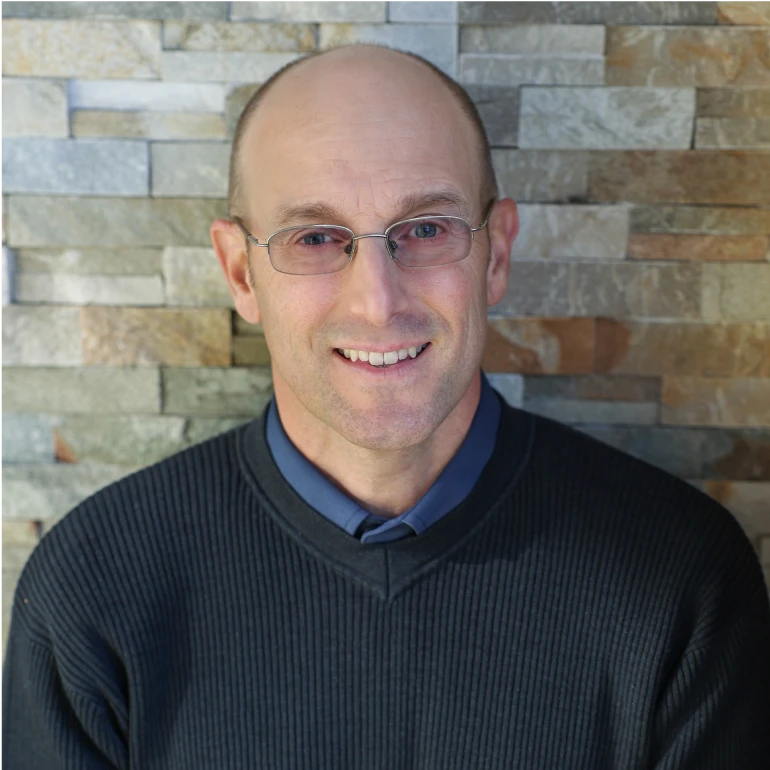
About the host
About the guest

Mariela:
This is really a wonderful opportunity to prove that this is not dependent on socioeconomic status. That the improvement happens across all socioeconomic statuses, and we are depriving anybody who wants to do low-carb from the opportunity if we don’t mention it.
Bret:
Welcome to the Metabolic Mind Podcast. I’m your host, Dr. Bret Scher. Metabolic Mind is a nonprofit initiative of Baszucki Group where we’re providing information about the intersection of metabolic health and mental health and metabolic therapies, such as nutritional ketosis as therapies for mental illness.
Thank you for joining us. Although our podcast is for informational purposes only and we aren’t giving medical advice, we hope you will learn from our content and it will help facilitate discussions with your healthcare providers to see if you could benefit from exploring the connection between metabolic and mental health.
Endocrinologist and ketogenic therapy expert, Dr. Mariela Glandt, embarked on an ambitious program using her own health app to use ketogenic therapy to treat metabolic dysfunction, type 2 diabetes and prediabetes in a population on Medicaid in the South Bronx. A very underserved population with very little resources who have essentially given up hope on their treatment.
But she turned that around and has some dramatic results. So, let’s hear from Dr. Glandt.
Dr. Glandt, thank you so much for joining me again at Metabolic Mind. It’s a pleasure to have you back.
Mariela:
It’s a pleasure to be here. Thank you so much, Bret.
Bret:
Yeah, i’m really excited to have you on to talk about this program you’re doing in South Bronx. It was recently written about by Nina Teicholz, a great piece that she wrote.
And it’s no surprise, we talk about this all the time, about how ketosis and ketogenic diets are such powerful interventions for improving metabolic health, for improving type 2 diabetes, putting it into remission. I guess you could say that’s not a surprise, right? We have plenty of evidence and experience about that. But one of the main concerns or criticisms is, it’s really hard to do well.
It’s really expensive. You need a lot of resources to be able to do it. But now with your work in the South Bronx, it seems like you’re starting to break down those barriers. So, tell us about this project that you embarked on with OwnaHealth in the South Bronx, and what you’re doing.
Mariela:
Yeah, I mean it. This is really a wonderful opportunity to prove that this is not dependent on socioeconomic status. That the improvement happens across all socioeconomic statuses, and we are depriving anybody who wants to do low-carb from the opportunity if we don’t mention it. Because we have sometimes in medicine, a personalistic approach, like we decide what the patient might want.
But the truth is that if you just offer these patients an opportunity to treat their diabetes with diet, you will be surprised at how many of them will take you up on the offer. And this, what we’re doing is, what we did is a pilot for, it’s for a hundred people. We’re almost done with a number.
We’re by now, we have some 80 something, 89 patients, I think. We have 59 that have completed the three-month mark on which we have data. And what we’re seeing is that we, so far, we have a group that has diabetes, a cohort with pre-diabetes, and a cohort with just obesity and some other metabolic syndrome parameter associated with it.
And we offer them, would you like to change your lifestyle in a pretty dramatic way and improve your health, in general? We don’t say anything else. We don’t know if they’re going to be able to get off meds or what the situation is. Now, most of these patients have such a long list of medications that it blows your mind.
And they all, I want to say, I know I’m exaggerating, but it there’s such a high proportion of patients with asthma and depression and migraines. These are the comorbidities that I see over and over again. So, when we offer this to these patients, then they say, yes, or the ones I do, and most of them have said yes.
And then they enroll into a service that is done through an app called the OwnaHealth app. OwnaHealth, like owning your health, taking responsibility for your health in this app, which is Spanish or English, connects them with the doctor and with a coach. And so the patients have to watch a few movies and upload their medications.
And then they’re referred out to OwnaHealth, and OwnaHealth takes them through this journey where they learn how to eat. Their medications are adjusted so that we don’t get into trouble with like SGLT2s or with insulin, and the medications are appropriately titrated down, and adjusted also blood pressure medications.
And then every day, they get an article, which they read. And it’s very simple. It’s one minute read, but they have to. It’s about whatever. It can be don’t fear or fat or whatever. What all of the topics that we talk about here, all the, am I going to die from eating all of that meat?
And then, they just chat with the coach after they have an initial meeting with the coach. The coach teaches them what to do. And then from there, it’s just a journey together. And both the coach and the doctor are on the app. And the doctor is as involved as needed, but the coach is really the big cheerleader and the big educator.
And so, it’s just a journey. And what has shocked all of us has been the incredible amount of difficulties that these patients have been dealing with in this really short time that we’re been treating them. We have two patients who have had a first degree relative shot at in a robbery, to give you an example.
Okay, yesterday, one couldn’t sleep all night because her brother, unfortunately, hit somebody with a car. It’s just like tragedy after tragedy. And that person died, and it’s like horrible things after horrible things. In spite of that, the patient communicated with us and checked her sugar and is still on the diet.
So, what I’m saying is the challenge is there are a number of them are on food stamps. Jail, people with family members in jail. Just recent relatives that have died also of diseases, of metabolic diseases all around them. Cardiovascular disease, people with Alzheimer’s, they’re surrounded by a lot of hardship.
A lot of hardship, and it just makes it all the more beautiful that they’re able to, it just shows how much they need this. That in spite of all of that, they’re compliant doing what they can. And so I really, this is just about the most gratifying thing I’ve ever done because it just surprised me.
And that, just first of all, just how hungry they are for this, and how willing they are to do it. For me, it’s the benefits are almost immediate. So, as the positive.
Bret:
Yeah, reading Nina’s article, there’s some amazing accounts of someone reducing their Medicaid. Fifteen medications, getting off of those. Someone having their A1C going from 9.5 down to 5.5.
Just these dramatic results. But is everybody seeing that degree of dramatic results or are most seen more sort of modest results?
Mariela:
I would say most of them are pretty drastic. Okay, most of are pretty surprising. When it comes to the weight and the A1C, it’s as good as GLP-1s. I would say that’s pretty comparable.
Some of the patients are already on GLP-1s, but they’re getting that benefit on top of the GLP-1.
Bret:
That’s amazing. That’s amazing that it adds to GLP-1s, and obviously, it’s going to be less expensive and probably fewer side effects in the long run, but the fact that it adds on top of such a powerful medication.
But you mentioned food stamps. You said a number of the people are on food stamps. So, clearly, they’re not buying grass-fed ribeyes, and organic veggies and pasture-raised eggs. So, what are they, what are you coaching them or helping them to learn to shop for on food stamps to keep them on the diet?
Mariela:
It’s interesting because they take pictures of what they eat. Some do, not everybody. If they want to, they do. We encourage them because we’re much better able to help them when they actually take pictures of what they’re eating. And what we see that works best is things like sausages, tuna, chicken, some very basics.
Sometimes, it’s a hamburger, a lot of hamburgers. But, one or two patients are really creative and start with very elaborate meals. But some, it’s a lot of chicken. There’s a lot of chicken. But what we notice is that two eggs with bacon, that’s for everybody, right?
Two eggs with butter and bacon. That’s something that’s affordable in the big picture. And you can really get so much out of an egg. And I think that’s like a super food for the price. It’s like the biggest pan for a buck. So, yeah, eggs are a big part of it.
Bret:
So, why do you think it is that so many people feel that keto is expensive and hard to do, and yet what you’re seeing in this population is completely different?
What? What’s the difference?
Mariela:
Clearly, we would rather have it to be the best quality meat, et cetera. I think one of the things we understand is that even when it’s not the best quality, as long as it is an animal protein, we’re seeing the benefits. Why? I think it’s just a stereotype that we know that meat, any animal protein is expensive, right?
So, it’s not hard to believe that it would be very difficult for this population. But one of the things is that they spend a lot of money on junk food, so much money. And because junk food makes you’re always having to go eat to buy more and more, you are never satisfied.
I think, in the end, you can save money by eating keto. In a very ironic way, you can actually do much better from a financial standpoint. Nevermind all the fact that this is a great investment long term, but you suddenly need less medications for the headaches and pains and all of that. But even though a lot of those medications are covered by Medicaid, you just have more money because you’re not buying all that snack.
All those snacks are expensive. They build up. And the fact that I’m like just drink water. They spend so much money on these sugary drinks. It adds up. Those sugary drinks, they’re hell for your health. They also cost money. So, when you start ticking all that out, it makes it actually feasible.
It makes it feasible. So, I think the fact that you’re less hungry, less thinking about food, is it creates something doable.
Bret:
Yeah, that’s a great point about what you’re not spending your money on instead of focusing on how much you are spending on food, that you save so much. Now, another part in Nina’s article was she mentioned that you’re using CGMs.
So, tell us about their experience with CGMs and how that helps in this program. So sorry, continuous glucose monitors. I don’t want to just throw the abbreviation out there. For those who don’t know, CGM is a continuous glucose monitor, okay.
Mariela:
So, definitely not all of our patients on CGMs.
It’s just diabetics ,and it’s the diabetics on insulin. So, that’s what Medicaid is paying for. And in those patients, we really do see a very big in, the feedback, I think, is extremely useful. We’re also seeing that we’re doing a clinical trial led by Andrya Durr and Mark Cucuzella, Dr. Cucuzella in West Virginia.
And in that trial, everybody’s on a CGM. And there you, you do see how, what a great tool this is because the instant feedback is a teaching tool and it allows you to really adjust in real time and to learn in real time. So, many things, you don’t realize what you just ate.
Whatever those chicken wings are actually covered in a sugar sauce, you’re eating more of a dessert than a chicken. So, it’s stuff like that, that you see with a CGM right away. I think the CGMs are extremely powerful, and I love them when we can get them. But not all patients can.
Bret:
Yeah, and then another concept is the need for education and support, which is something if someone just tries to do it on their own, is hard to do. There are websites, there are articles, there are videos you can try and piece together. But I guess the other thing that your program does is has a pre-specified sort of path, that they go through an education path, that’s all part of this app.
So, has the adoption and the ability to use that app, has that just been super simple for this population?
Mariela:
I think for the majority, yes. We’ve had some challenges at the beginning getting them on the app. What we didn’t screen for those patients that are app savvy, which I should have done probably, but I didn’t.
At times, like the first week or two was a kind of like a struggle, and then it took off. So, as far as that’s concerned, it took a little bit in some patients, in our app we have a patient, for example, that doesn’t read or write. So, we do everything through voice, which is also an option for communicating.
This is just to show you, and by the way, a great thing that happened is that she decided to go to learn how to read and write, since she got so much better with the treatment because as this was helping with the diabetes. But what’s not mentioned in the article is the part improvement in depression and anxiety.
And we measure this with the PHQ-9 and the GAD-7 and we see that incredible improvement. So, patients are going back to school, getting new jobs, just the whole positive, psych positive feedback cycle that happens after you go through treating yourself right and wanting to pass that on, that goodness on.
But they’re, I see this incredible change. Even if it’s small, it’s significant because she has other positive steps ahead. So, this woman, for example, is learning to read and write. So, she required help in setting up the app.
But so, the beginning is tough, but then we get them on, because it’s very simple, the app, you only need to be one minute of the day on the app. You don’t have to, it’s not about like, how about having you on the app all day long? Because that’s not the point. The point is just communicate what you need, learn something every day.
And that’s it.
Bret:
Yeah, and I love how you brought up the other benefits, right? Not just the hemoglobin A1C, the blood sugar, the weight, the insulin, but the psychological benefits and just the way it can change your life, and the orthopedic benefits, the physical benefits. You said getting jobs, being more active, like all these things are a little bit harder to measure in numbers, but just so striking when you see them.
Mariela:
Yes, absolutely.
Bret:
Yeah, it’s got to be really rewarding. When I first heard about this, about what you were doing and the population and where you were doing, I’m like, wow, you’re really setting the bar high. You could have really cherry-picked an easy population to show that this works, but instead, you really presented a challenge.
But that’s what makes it all that much more rewarding. To be able to go into these patients, you really probably feel like they have no hope, and they’ve been given up on and don’t have the opportunity to get better. Did you find that a lot of them came from that mental framework?
Mariela:
Oh, yes. Yeah, absolutely. Absolutely, I think, Jen Unwin and David Unwin, they use the word hope a lot, and it is exactly that. It is about hope because that’s the big motivator because they are like, oh my God, just when I thought you were going to give me another pill, you’re giving me something where I can actually get better for real.
And because the effects are seen pretty quickly, that’s also a, it’s a great motivator because they see that, oh, I’m not hungry, I’m surprised. Like so, this is definitely the fact that they are despondent, they are at their wits end with the whole system.
The just being a Medicaid patient in and of itself is very difficult. You don’t have access to a lot of, you don’t have access to the best care. You just don’t. It’s wonderful that it exists, but it’s just difficult. Just seeing the list of medications, you understand that there’s something very wrong.
And as you said, all the other benefits like, especially pain. That’s something that’s so difficult to treat and it’s something that we also see an improvement on. The fact that they stop using the pumps for asthma. The fact that their migraines go away.
This is, these are big wins. These are big wins.
Bret:
Yeah, and you wonder what’s it going to take for Medicare, Medicaid insurances to cover this because where do we want to spend our money? For more medications that address symptoms and one at a time so you need multiple medications? Or an intervention that can help you get rid of those medications address a whole myriad of the root causes, reverse conditions?
Obviously, I’m biased. So. When I phrase the question like that, it’s an obvious leading answer. But do you think this could be the start of insurance companies and the government sort of perking up their ears and saying, wow, maybe this is the way we should go and start funding it? Or is that just a pipe dream?
Mariela:
I hope it’s not a dream because that’s what I’m dedicating my life to right now. We need to make this available to people, period. And I, and we need to change. The incentives are so misaligned in the American health system that this has got to change.
And yes, we’re just tiny little chisel, again, trying to work on this. But I am hopeful, and I am, we’re making good connections and good steps to actually get one day to Medicaid to pay attention to this. That’s really the end goal.
Bret:
Yeah, and I love how you’re out there collecting data.
And you’re doing this study with Dr. Cucuzzella ,and you’re doing this trial. And you’ve published the, what is it? The audit of your practice in Israel, and you’re being really proactive about getting the data out there to say, look, this is what’s happening. And the more that happens, the harder it becomes to ignore.
So, I appreciate all you’re doing. How you’re really taking this head on and really making a difference in people’s lives. And that’s what it comes down to. So, that’s awesome. So, thank you.
Mariela:
We all try, right? Everybody’s coming together, I think. There’s so many people working on this, and we’re growing, right?
As a community, more and more people are starting to see this and contributing to this. And so, it’s exciting.
Bret:
So if people want to learn more about OwnaHealth and about the work you’re doing, where would you suggest they start to look?
Mariela:
Good question. I guess they can go to OwnaHealth. There, you can find out about what the process is like.
They can look me up, and they’ll find articles, interviews, might have a website, glandt.co. And so just go to OwnaHealth. That’s the easiest, okay.
Bret:
Yes, great. And great. Thank you so much for joining me today. I appreciate it.
Mariela:
Thank you. Thank you so much.
Bret:
Thanks for listening to the Metabolic Mind Podcast.
If you found this episode helpful, please leave a rating and comment as we’d love to hear from you. And please click the subscribe button so you won’t miss any of our future episodes. And you can see full video episodes on our YouTube page at Metabolic Mind. Lastly, if you know someone who may benefit from this information, please share it as our goal is to spread this information to help as many people as possible.
Thanks again for listening, and we’ll see you here next time at the Metabolic Mind Podcast.
Listen, Watch & Subscribe on:
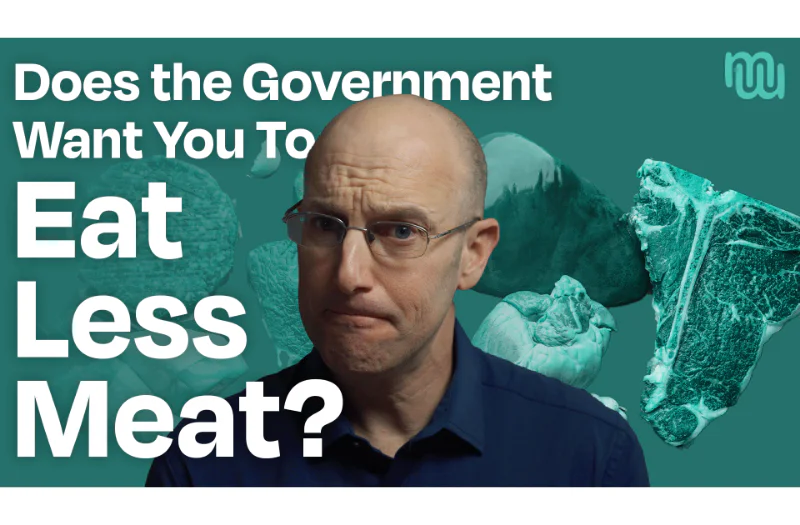
The U.S. Dietary Guidelines Committee’s latest recommendations call for a reduction in red meat consumption, promoting more plant-based proteins like beans, lentils, and peas. In this video, we…
Read more
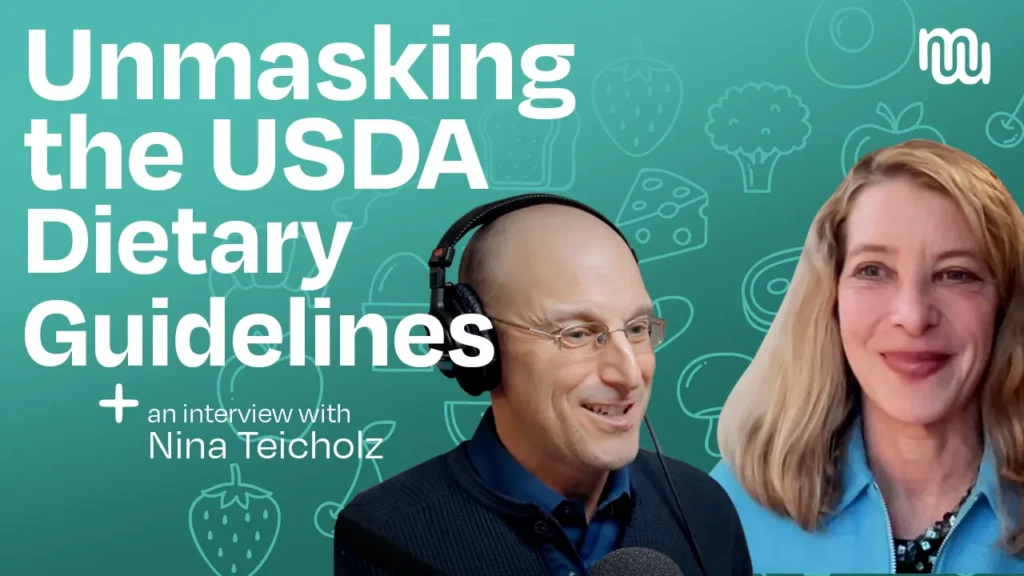
Investigative journalist and Nutrition Coalition founder Nina Teicholz joins the Metabolic Mind Podcast to expose major flaws in the U.S. Dietary Guidelines process. She details how decades of biased science, industry influence, and political control have sidelined over 2,000 clinical trials on low-carb and ketogenic diets. Teicholz and host Dr. Bret Scher discuss why current recommendations still demonize meat and saturated fat, how untested computer models are shaping national nutrition policy, and what must change to make future guidelines truly evidence-based and focused on metabolic health.
Learn more

Read the full New York Post article here! Desperate for answers, Matthew’s parents — Roblox co-founder David Baszucki and novelist Jan Ellison — turned to Dr. Chris Palmer,…
Learn more

A Practical Guide to the Ketogenic Diet, Why Formulation Matters, and How a Nutrient-Dense Approach Can Unlock Its Full Therapeutic Potential. As research continues to uncover the therapeutic…
Learn more
The U.S. Dietary Guidelines Committee’s latest recommendations call for a reduction in red meat consumption, promoting more plant-based proteins like beans, lentils, and peas. In this video, we…
Read more
Investigative journalist and Nutrition Coalition founder Nina Teicholz joins the Metabolic Mind Podcast to expose major flaws in the U.S. Dietary Guidelines process. She details how decades of biased science, industry influence, and political control have sidelined over 2,000 clinical trials on low-carb and ketogenic diets. Teicholz and host Dr. Bret Scher discuss why current recommendations still demonize meat and saturated fat, how untested computer models are shaping national nutrition policy, and what must change to make future guidelines truly evidence-based and focused on metabolic health.
Learn more
Read the full New York Post article here! Desperate for answers, Matthew’s parents — Roblox co-founder David Baszucki and novelist Jan Ellison — turned to Dr. Chris Palmer,…
Learn more
A Practical Guide to the Ketogenic Diet, Why Formulation Matters, and How a Nutrient-Dense Approach Can Unlock Its Full Therapeutic Potential. As research continues to uncover the therapeutic…
Learn more