Get the latest on metabolic psychiatry. Subscribe.


Listen, Watch & Subscribe on:



Keto for Depression: ~70% Improvement for College Students in New Study
Listen
About the host

About the guest

About the guest

About the host
About the guest
About the guest

Bret:
Can Ketogenic therapy help college students living with depression improve their symptoms?
That’s the question that a new study answered, and answered quite dramatically. Dr. Jeff Volek and his research assistant, Drew Decker, at the Ohio State University did this exact study, and I think the results are going to impress you. So here’s the interview with Dr. Jeff Volek and Drew Decker.
Thank you so much for joining me on Metabolic Mind today.
Drew:
Yeah, my absolute pleasure, Bret.
Bret:
So Jeff, you and I had the pleasure of having an interview prior, about the KIND study, the study that you’re doing at Ohio State, where we went over a lot of the details. Before we dive into the results, which I’m really excited to discuss, I’d like to take a moment to rewind and review the trial’s makeup for those who might have missed it.
So, Drew or Jeff, why don’t you give us the background of this trial?
Jeff:
Let me say right off the bat, it’s great to be back here, Bret. I think when we talked, we were in the middle of the trial, and we weren’t in a position to share the results in detail yet.
We’re really elated now that the paper’s been published, and we’re free to talk about the results. And I’m thrilled to have one of my outstanding doctoral students here, Drew Decker. I’ll actually turn it over to him because he was the key person coordinating the trial and working closely with the participants every day. Got to know them very well and developed a rapport. Drew, why don’t you take it away and share the design of the study?
Drew:
Yeah, it would be my absolute pleasure, Dr. Volek. Major depressive disorder is a prevalent disorder globally right now. In fact, we saw an increase in its prevalence from 6.4% to over 20% between 2019 and 2020.
This number doesn’t seem to be decreasing at any significant rate. So it’s a highly prevalent problem within. The world and in the US, and we’re also seeing this problem being mirrored inside of college universities. For example, at OSU, we saw a significant increase in self-reported scores of depression between just a matter of months.
Again, this does correlate with the onset of COVID. But again, that number is not declining at all. So it is an extremely prevalent problem. It’s something that needs to be addressed. Currently, the two main ways that we treat depression are with psychotherapy or with medications through pharmacotherapy.
Now, these two treatment plans, while they do tend to work in about half the individuals that are prescribed them, there is some. Ramifications, negative ramifications that occur from taking a lot of these medications, such as decreased libido, increased anxiety, and then in younger individuals, we even see increased prevalence of suicidal ideation.
So a lot of these negative side effects of some of these medications seem counterintuitive to what we’re trying to do when we’re treating mental health disorders. So that leads to a need for more holistic approaches to this pandemic of mental health disorder. So that’s when we started looking at the ketogenic diet.
So could the ketogenic diet be implemented in a college setting in order to decrease scores of depression or decrease the prevalence of depression? So that was the underlying reason for the study what we were looking at. What we ended up designing was a 10 to 12 week dietary intervention where we were trying to assess the feasibility of the ketogenic diet for college students suffering from major depressive disorder.
And we saw great adherence to the diet. That was our primary outcome: looking at adherence. Secondly, we were looking at what it actually did to these scores of depression, as well as looking at different inflammatory markers and cognitive performance. And we saw a great adherence to the diet, a lot of the students took to it. And were really happy with it. We saw body composition improvements. And we saw decreased scores of depression, a rapid decrease in scores of depression. In fact, in two weeks, we were seeing a 37% increase or improvement in scores of depression.
And then that was sustained and improved upon to the end of the study where we were seeing a 69% improvement. So that was the reason for the study. We showed feasibility and we’re seeing some pretty, pretty promising preliminary, results here.
Bret:
Yeah, those results sound incredible and I definitely wanna focus in on those a little bit more.
But first, let’s talk about the dietary intervention and the adherence, because we hear a lot that, ketogenic diet is so hard to adhere to and so difficult, which I think is a bias that isn’t necessarily true. But then if you even add to that, people in college where you don’t have necessarily a kitchen, you don’t have complete control over your meals.
There’s lots of social interactions and not really a stable schedule. It’s hard to think of a more difficult circumstance to try and stick to a certain diet. So how’d you work your way around that and did you find that to be a factor?
Drew:
Yeah. So our workaround was. Basically we had a very inclusive and individualized dietary consult at the start of the study.
So before individuals even started the study we would sit down with them one-on-one. And have a heart to heart conversation of, what are their dietary preferences? What do they how do they socialize? Is that usually food centric? And then we really tried to describe not only how to adhere to a ketogenic diet, whether it’s staying lower than 50 grams of carbohydrates per day, or just foods to avoid.
But we also focused on what foods can we incorporate that fit their personal likes. As well as what do they usually eat when they’re at the university itself, so that way we could modify and walk them through exactly how they should navigate certain situations. Furthermore, we also gave individuals access to a HIPAA protected app in which we were able to, they’re able to contact us through.
Means much similar to a text message while keeping them codified. Where they could ask anybody on the research team any question they had. They could even take pictures of the food that they’re eating, send it to us, and we could say, this looks pretty good. You might want to decrease the, or get rid of the grapes, or, decrease this or that.
So that really helped that we had this daily communication if they wanted it. A lot of the participants, I would say most of the participants after the initial consult. Didn’t really utilize that app too often, and they did just fine. Some participants definitely needed a little bit more attention where they just wanted to ask a few more questions, see what they maybe could get away with or, where they were at.
Bret:
Yeah. And were you checking ketone levels either with capillary BHBs or some other measurement?
Drew:
So it was through capillary BHB measurement. We did this every single morning while they were fasted. So individuals would send that in. We were able to see that real time as well as glucose.
Bret:
Okay. Very good. And how many participants were there?
Drew:
So after baseline testing, we we had 16 completers. We had 24 participants that ended up coming through baseline. So it was a pretty good number. I would say that there was a with a 33% dropout rate a lot of this was due to the schedule that the individuals had with college or going home during food centric holidays or stress from exams.
So that was definitely a hurdle that we had. And I think what we learned, a lot of valuable lessons to be applied to future studies especially around recruitment times which semesters tend to fit a little bit better.
Bret:
Yeah. And maybe a proactive interaction of, expect increased stress and here’s what you can do, expect that you’re gonna travel and food’s gonna change and here’s what you can do.
Yeah. So really valuable lessons there. I’m sure. Yeah.
Jeff:
I would add just, add to what Drew mentioned on that description. We as another feature of the intervention, we did provide some food to participants to, especially at the onset, to get them off on the right track. And while we’re educating them on the principles of a well formulated ketogenic diet.
So they had that food provision as a perk and as an, as an assistance to, to teach them what appropriate foods look like. And the goal though, of course, was to wean them off the food provision so they could learn how to do this on their own in the real world.
Drew:
Yeah, that’s a very good point, Dr. Volek. Thanks for bringing that up. Yeah, so those first six weeks is when we’re providing food of some sort to them. So we give them five full meals that allowed them to get an idea of what a ketogenic meal would look like. And then after that, for the next five weeks or so, they could come in whenever they want and get.
Different food items. So this could be different sauces that would be keto friendly or they could get electrolyte packets or something along those lines. And then the last six weeks individuals were largely on their own just running the diet. So there was a good six week lead into individuals running.
Entirely on their own.
Bret:
And now Jeff, I wanna ask you, you have more experience in ketogenic research than probably anybody on this planet, but this was relatively unique to look at, specifically depression, specifically in college age individuals. So I’m curious with all your research experience in ketosis.
What did you think about the feasibility and maybe the mechanisms of how this could work, what kind of impact it would have? What were your sort of preconceived thoughts as you came into the trial?
Jeff:
Yeah. We have studied ketogenic diets in a variety of populations over, 30 years for me, almost.
Men, women, lean, obese healthy elite athletes and then really sick individuals too. Cancer patients heart failure patients. However, this was the first population specifically that we’ve studied in the lab with a mental health disorder. We assumed that they would be compliant just like we’ve achieved in all those other populations.
But of course, we needed to demonstrate that. But I certainly think that. The thinking going in was that we’re not really gonna do too much different, the principles of the ketogenic diet remain more or less the same as we would implement in any of those other groups. So we, we had a good sense that this would be feasible and we could do it, but of course, you need to.
Actually demonstrate that proof’s in the pudding. And I, and Drew can probably speak to maybe some of the more unique or specific challenges with this group. Just be, just being the younger college population as you alluded to earlier, Bret. There’s some challenges there.
In general, I think we, we thought we could do this going in, otherwise we wouldn’t have tried it. But and I think as Drew pointed out, we were more or less correct, we could do this at a pretty high level in this population.
Bret:
Yeah. So Drew, you went over some of the interventions that you had and the app and the sort of the availability of coaching.
And with that. As you mentioned, you saw outstanding adherence. So tell us again what the data showed about the adherence.
Drew:
Yeah, so we had individuals were reporting their glucose and ketones 77% of the time. And of that 73% of the time individuals were at a a state of nutritional ketosis defined by 0.5 to five millimolar.
It was incredible. The vast majority of time individuals stayed in ketosis. And I think. A big driver to why a lot of in individuals why we saw our success was just how they felt on the diet. I had individuals come up to me one in particular who he came up and he said, drew, you won’t believe this.
I just failed an exam and the same week I just got red lined by my advisor on my thesis. So this thing, this usually would’ve put me over the edge. I would have to go home, I wanna be able to work on it for a week. Said, I just got right to work. I just took the criticism, took the loss, and just realized I could just do better and keep on going.
And he truly believed that this was from the, stemming from the diet. And he he was excited for it. So I think a lot of our success has to come from how the individuals. Felt on the diet, they’re perceiving that this diet was beneficial for them.
Bret:
Yeah, that subjective feedback is so important, but something that’s often not in incorporated into the publication of the paper.
It’s not necessarily objective data but that self-reported feedback can be so valuable. And I’m sure you saw a lot of that, but did you also. Get feedback that, oh, this was easier than I thought it would be, or, yeah, this was really challenging, but I’m glad I stuck with it. What was your feel of the participants from that standpoint?
Drew:
Yeah. So it depended on the individual. For the most part, I would say the first week or two was a little bit rough. That’s when we had the most interaction with the app that we were using. But after that it seemed everybody. Got the hang of it, especially after week two. People started realizing what their favorite meals were, what they enjoyed, what, how to shop what to keep the cabinet stuff filled with.
And after that it was pretty smooth sailing. Again, a lot of times individuals didn’t need much contact or help after the first couple weeks.
Bret:
Yeah, that’s great to hear it. Certainly the feasibility part seems very impressive. But then you also mentioned some of the depression scores which improved dramatically.
So tell us more about that.
Drew:
Yeah, absolutely. So we were using three different surveys to measure individuals. Score of depression or their global wellness. This was we use the PHQ nine Patient Health Questionnaire nine which is a nine item questionnaire. The lower score denotes an improvement in depression.
We also use the Hamilton rating Scale of depression. This is an observer rated score of depression. So individuals would actually come into the lab they would talk with a trained psychologist and the psychologist would be able to give them a score, not just off of how they answered the question, but also different.
Physical cues that they might be having. Maybe one was crying when they’re answering a question or trying to not make eye contact with the observer. And that would also affect score. And then we had a survey that assessed overall wellness. So for this score as a positive score was correlated with an improvement in their wellbeing.
So for the PHQ nine, we saw a 30 what, 37% improvement by week two. And this was sustained throughout the rest of the intervention. So week two we’re having a huge improvement and this is sustained and improved all the way through until we’re having a six, 9% improvement by weeks 10 to 12. This was also, this was further shown with a Hamilton rating scale of depression where we were seeing a 59% improvement by week six, and we were seeing a 71% increase by the end of the intervention or improvement by the end of the intervention. So with these two surveys, we’re seeing that not only are individuals having significant improvements statistically significant improvements, but we’re also seeing clinically Im, significant improvements as well by week two and then sustained throughout. So this was, absolutely incredible. For our scores of global wellness we saw no decrement at all. We only saw improvements throughout. So again all three surveys that we’re handing out to, to have these scores of depression or their wellness showed only positive effects throughout.
Bret:
Yeah, that’s really dramatic and I’m glad you clarified the statistical significance and clinical significance. ’cause a lot of these surveys. Have sort of a threshold of clinical significance in change. And it sounds like you, you more than hit that in, in, in the evaluation and the results.
So Jeff, let me turn to you. Were you surprised in any way by the degree of improvement in the rapidity how fast people improved or was it along the lines of what you expected or hypothesized.
Jeff:
Yeah I I think we certainly came in with the hypothesis we were gonna have some benefit, but I would say the magnitude of the response was a little surprising.
But even more than that, Bret, in diet intervention studies in particular, it’s so important to look at the individual responses because no one’s response exactly like the mean or the average. When you look at the individual. Trajectories and responses to the intervention. Every single person decreased their self-reported and observer rated scores of depression.
So in other words there were no non-responders. Ev and that’s pretty rare. And in diet or any kind of lifestyle intervention research. So the the results were very consistent and reliable across people. Suggesting that this is a pretty robust tool for improving depression if people are willing to adopt the diet and be compliant.
That’s even more impressive to me is how consistent the responses were across participants.
Bret:
Yeah, that really is amazing. Just to say that statement, there were no non-responders is remarkable fellow mental health clinicians and healthcare providers. You now have access to a suite of free CME lectures on metabolic psychiatry.
And metabolic health. Each of these CME sessions provide insight on incorporating metabolic therapies for mental illnesses into your practice. These CME sessions are approved for a MA category one credits, CNE nursing credit hours, and continuing education credit for psychologists, and they’re completely free of charge on my cme.com.
Now, back to the video. Now the pushback again, as is against almost any pilot trial is okay, it wasn’t randomized. How do you know it was the diet effect and not just the be because they were part of a study and getting more attention. And, you don’t usually start with randomized controlled trials, but what do you think about that? And are there plans in the future for a randomized control trial?
Jeff:
Yeah, I’ll quickly just comment for sure. There’s limitations in this study. It was a pilot study as a, proof of concept should we, explore this further kind of thing. And of course, the data more than justify and inspire us to wanna follow this up.
But we don’t have a control group, so we can’t rule out just people getting better over time because they were engaged in. Some counseling programs and there were a few participants who were on medications as well. From a research and a sort of experimental design perspective, we we have some limitations.
We cannot truly isolate the effects of the ketogenic diet here. Having said that I’m not aware of any placebo effect or even. Current treatment whether it be cognitive behavior therapy or medication that would produce this level of improvement and this consistency of improvement. So it doesn’t really discourage my enthusiasm for the results.
It just really makes makes me want to definitely follow up with this, with a more rigorous experimental design with controls and comparison groups where we truly can isolate the magnitude of the effect. Of the ketogenic intervention.
Bret:
Yeah. Drew, you have anything to add there?
Drew:
No. I just I agree with everything Dr. Volek said. And yeah, absolutely this this kind of research needs to continue and definitely encouraged to, jump on this and keep on running with it and include some of those control trials and really try to put the nail in the coffin on how ketones affect mental health disorders, such as major depressive disorder.
Bret:
Yeah.
And when we have an early, I guess you could call it early trial like this, being a pilot trial, not, thousands of people the question always comes up well. How could this impact clinical practice? Now, and I know neither one of you are clinicians and you’re not giving medical advice, I’m only asking for your opinion.
Do you think a finding like this, that every single person responded and the degree of response and the consistency of response that a doctor should look at this trial even though it’s early and say, Hey, maybe this is something. Maybe this is something I should start implementing in my practice now.
Do you think the results justify that?
Drew:
I would say yes to that, especially if you’re looking at it just from a health perspective. What do they have to lose by implementing the diet by having them go see a registered dietician or somebody trained with the ketogenic diet help really formulate a plan for them to follow.
The way I look at it. Here is it won’t hurt, at the very least it won’t hurt. And you could see some extremely meaningful improvement for these individuals that are suffering. Mental health disorders don’t just suffer or don’t just affect the individual, but it affects their families and their loved ones.
So a lot of these individuals are desperate. They want, they need more help, so if we can throw another holistic approach, why wouldn’t we?
Jeff:
Yeah, and I would agree with that. Because we’re not obviating other treatment options. This is an adjunct and people have to eat every day.
They have to make decisions. Okay what am what meals am I going to make and what am I gonna consume? And it doesn’t mean you, you still can’t participate in other treatment options. So it’s really as Drew said, there’s little downside to this. We did not observe any. Serious adverse events or any as I said earlier, non-responders.
So there’s virtually no downside other than you, you’d have to change your diet and make trade-offs in terms of some of the foods you’re consuming. And then there’s, huge potential upside. So I think if I’m not a psychologist or psychiatrist, but I would certainly think bringing this up as an option.
To patients and clients and people would be wise. And PR at this point.
Bret:
And I’m glad you brought up that you didn’t see any adverse effects. So just to clarify, so you were monitoring for certain adverse effects and side effects and negative outcomes. So you’re monitoring for those and did any pop up during the study?
Drew:
No. So we didn’t have any adverse effects from the diet itself. We. Had again, with that, that consult that we had before individuals came in, we definitely stressed electrolyte or in increasing their electrolytes just so that way we could avoid that classic keto flu. And we did I don’t have, I didn’t have anybody that said they’re suffering from brain fog or from feeling a little bit down in those first couple weeks.
So I think that, that helped with a lot of things, but yeah, we didn’t have any adverse effects throughout the 10 to 12 week intervention.
Jeff:
Yeah, I think we did a complete metabolic panel, blood lift, it all sorts of, liver and kidney function, so forth all remained in the normal range.
Bret:
Alright, so one other question is, you mentioned the degree of improvement at two weeks and then how it increased over time, up to sort of 69% increase. I think you said that. That sounds dramatic. So how do we put that into perspective? Of SSRIs and other antidepressants and other treatments, and I know, it’s probably all over the place depending on the study, depending on the intervention.
So it’s really hard to compare. But do you have any sense of how this fits into that?
Drew:
Yeah. So when we’re looking at different treatment plans, so psychotherapy and pharmacotherapy or a combination of the two we see success or it has been, success has been seen. Similar rate for what we were seeing on our trial.
One of the biggest differences though is that like Dr. Volek said, we had no non-responders. And this is seen with psychotherapy and in pharmacotherapy especially where, it, it tends to work in about half of the individuals. The other half, maybe not so much. So I think one of the giant takeaways from this study was.
Everybody was responding in a very positive manner to the intervention.
Bret:
Yeah. That is pretty dramatic. Alright any other results that you wanted to bring up or mention?
Jeff:
Yeah I think the some of the other meta more metabolic markers or work mentioning. And I just for context, this group, and I think this is a feature of them just being young adults.
They were relatively, at least on the surface, metabolically healthy. Their glucose was in the normal range. I don’t think any participant was even pre-diabetic let alone diabetic. So they were healthy just in terms of their insulin resistance status. For the most part, they were also on average normal weight, although we had some variability.
But the mean BMI was 25 or 26 I believe. Having said that, this is very consistent with what we’ve seen in many other populations. There was a significant weight loss and we did a very accurate measure of body composition with dual energy X-ray absorbed optometry, which gives us their body composition percent fat, wound mass.
Fat mass. And the majority of that weight loss was from fat mass. So again, the consistency here, every single person. There was a couple that maybe stayed their same weight but everybody else lost weight and improved their body composition. So that’s always a perceived benefit for almost everyone who adopts a ketogenic diet.
And that was certainly the case here. And I think, there’s a potential for that to feed back and improve self-esteem and so forth. That may have contributed to the reductions in depression. And then I think there, there are also a few biomarkers we looked at in the inflammatory panel and that hormonal panels that were also consistent with prior work.
Specifically leptin levels were considerably lower. And we think this is a beneficial effect in terms of lower inflammation, improved leptin sensitivity and so forth that nears many of our other ketogenic interventions. So this improvement in depression, it’s coinciding with other improvements as well which I think is important that we have a lot of arrows going in the right direction, not just the depression scores.
Drew:
Which, as you mentioned with losing body weight may be playing into a improvement in score of depression.
I think that goes back to your question, Dr. Scher, if should a clinician implement this diet based off of this study, whether it’s even, let’s say, play the devil’s advocate and say that body composition was a player in that, then we’re still seeing improvements in body composition.
So again, can’t hurt.
Jeff:
Drew maybe you can take that one on the the cognitive performance. So we had several domains of cognition improved.
Drew:
Yeah. And we also see improvements with a lot of the cognitive performance. So we implemented the NIH toolbox.
This was done at baseline and at the end of the tests the study. And we saw improvements on different on select tests of cognitive performance, including, auditory verbal learning oral symbol digit tests and improvement in pattern comparison. So we were seeing improvements in cognitive performance, and we saw no declines on any test within the the training module, the testing modules.
Adds more power or more strength to the intervention itself, I would say.
Bret:
Yeah. Very impressive very impressive results. I’m not sure anybody could have predicted, a hundred percent response and the degree of the response. And so I definitely look forward to seeing more research on this.
A as Jeff said, I mean it clearly, suggest that there should be more research on this in the future and with larger, randomized controlled trials, et cetera. If people want to learn more about you and your work, where would you direct them to go?
Drew:
Yeah, so you guys could go to Low Carb OSU and that’s a website that we have, low carb, osu. And you could also follow me on Instagram it’s Drew_ d _Decker. So that’s where you’d be able to follow me and follow the works of Dr. Volek’s lab as well.
Bret:
Great. I want to thank you and Jeff very much for joining me and thank you for all your work.
Drew:
Of course. Thank you very much.
Listen, Watch & Subscribe on:
Youth mental health refers to the emotional, psychological, and cognitive well-being of children, adolescents, and young adults. This period of life is marked by rapid brain development and…
Read more
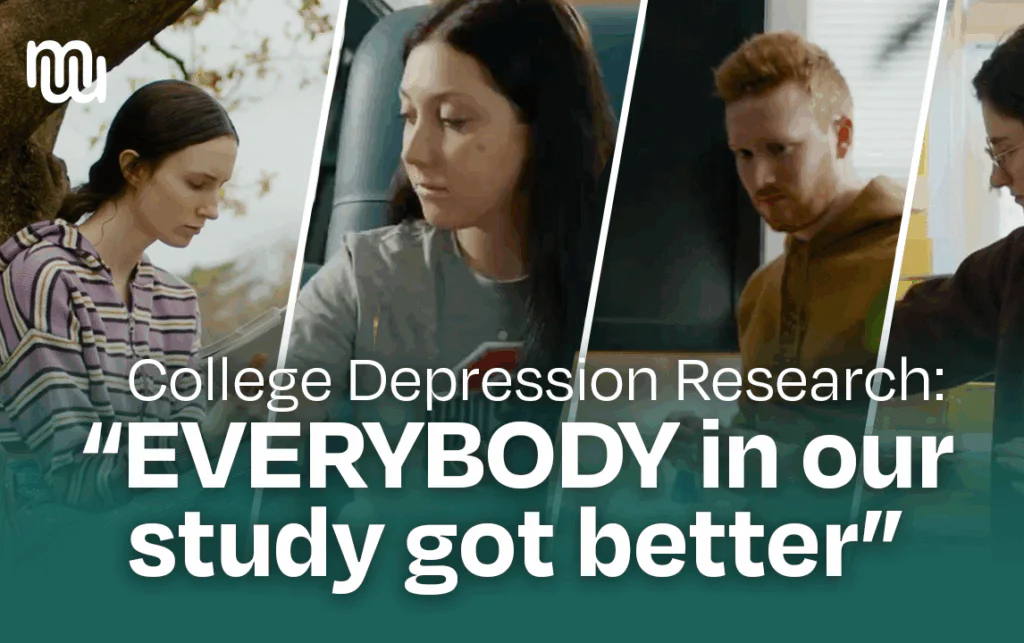
The promise of ketogenic therapy for treating mental illness is accelerating with the newly published findings of a pilot study at The Ohio State University, which showed remarkable…
Learn more
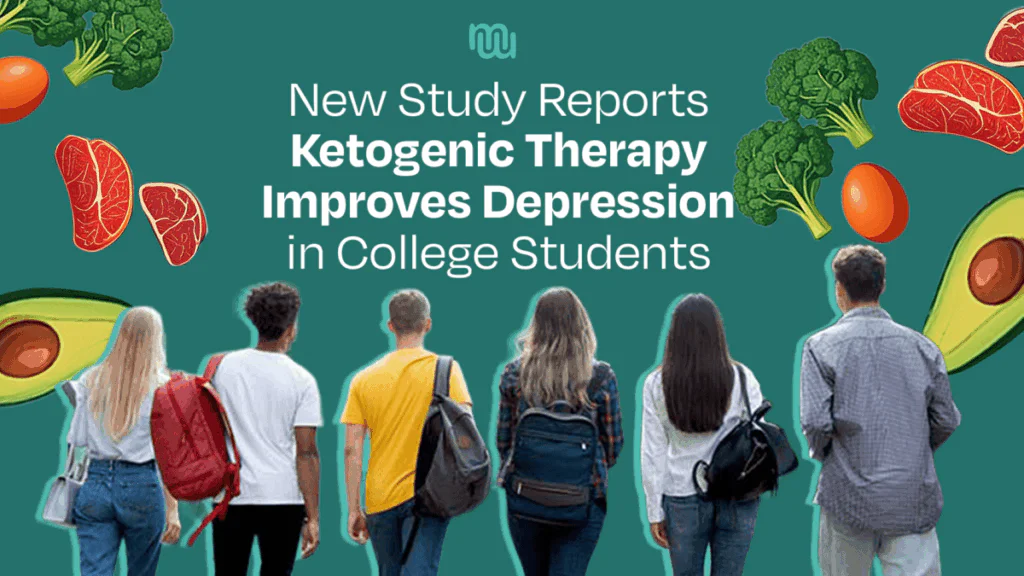
College can be a time of rapid growth, but also intense pressure. For many young people, college is the first time they are setting out on their own….
Learn more

Youth mental illness is on the rise, and treatment options are often limited, especially for kids with bipolar disorder. In this interview, Elizabeth Errico, founder of the Children's Mental Health Resource Center (CMHRC), shares how her organization is implementing ketogenic therapy in a real-world setting for kids aged 6 to 17. The year-long study is part of a larger initiative supported by the Baszucki Group to expand mental health care options through metabolic approaches.
Learn more
Youth mental health refers to the emotional, psychological, and cognitive well-being of children, adolescents, and young adults. This period of life is marked by rapid brain development and…
Read more
The promise of ketogenic therapy for treating mental illness is accelerating with the newly published findings of a pilot study at The Ohio State University, which showed remarkable…
Learn more
College can be a time of rapid growth, but also intense pressure. For many young people, college is the first time they are setting out on their own….
Learn more
Youth mental illness is on the rise, and treatment options are often limited, especially for kids with bipolar disorder. In this interview, Elizabeth Errico, founder of the Children's Mental Health Resource Center (CMHRC), shares how her organization is implementing ketogenic therapy in a real-world setting for kids aged 6 to 17. The year-long study is part of a larger initiative supported by the Baszucki Group to expand mental health care options through metabolic approaches.
Learn more