New Results: First RCT for Schizophrenia & Bipolar Disorder. Learn more.


Listen, Watch & Subscribe on:



Is Ketosis Safe for Mental Health?
Listen
About the host


Bret:
Welcome to the Metabolic Mind Podcast. I’m your host, Dr. Bret Scher. Metabolic Mind is a nonprofit initiative of Baszucki Group where we’re providing information about the intersection of metabolic health and mental health and metabolic therapies, such as nutritional ketosis as therapies for mental illness.
Thank you for joining us. Although our podcast is for informational purposes only and we aren’t giving medical advice, we hope you will learn from our content and it will help facilitate discussions with your healthcare providers to see if you could benefit from exploring the connection between metabolic and mental health.
Is ketosis for mental health safe? You may have heard about the benefits of therapeutic ketosis to treat mental illness and improve mental health. And you may have also heard that ketosis is a dangerous condition that you should avoid at all costs. is this true? In a word, no. But let’s get into some of the specifics. Welcome back to Metabolic Mind, a nonprofit initiative of Baszucki Group where we explore the intersection of metabolic and mental health.
I’m your host, Dr. Bret Scher. At Metabolic Mind, we talk about therapeutic ketosis or ketogenic interventions as a medical intervention because being in a state of ketosis improves your metabolic health, and changes how your brain creates energy, making it more efficient and less dependent on glucose and insulin.
Now, emerging evidence in clinical experience indicate that ketogenic therapies can treat and even reverse symptoms of bipolar disorder, major depression, schizophrenia, even anxiety, dementia, and more. We recommend you watch some of our prior videos to learn more about the effectiveness of ketogenic therapies for mental illness.
But some people, including physicians and other healthcare professionals, may caution you against pursuing ketogenic therapies believing ketosis is a dangerous condition that we should all avoid. To be fair, I understand why they would think that, but they’re entirely incorrect. Because you see in medical school, really the only thing that doctors learn about ketosis is the dangerous medical condition, called ketoacidosis.
And this is a life-threatening emergency. It occurs mainly in people with type I diabetes, who have essentially no insulin production. So, their blood sugars become sky high, and their cells are unable to use any of the blood sugar to create energy due to the lack of insulin. But what doctors don’t learn is that this is entirely different from normal nutritional ketosis.
So, let’s quickly review how we make energy, which will make more sense of this. So, mitochondria in our cells convert either glucose or fat into energy for the body and the brain. You can think of our bodies as like a hybrid car, right? Just as a hybrid car can run on electricity or gas, our bodies can run on glucose or fatty acids.
But here’s the critical point. It’s normal from an evolutionary standpoint to alternate between using glucose and fatty acids. So, when our hunter-gatherer ancestors had lots of natural carbs from a forging trip or stumbled upon a beehive, there’s plenty of carbs and glucose to use for energy.
But when they went days without carbs or they focused just on eating a successful hunt instead of eating what they foraged, they switched from burning glucose to burning fat or fatty acids, the fat that they ate and the fat that they stored in their body. It was this hybrid engine that really allowed us to survive throughout evolution.
Okay, but what does this have to do with ketones? I’m getting there, right? When we burn fat for fuel, we naturally produce ketones in the process, and our muscles and brains can in turn use ketones for further energy production. So, it’s entirely natural to burn fat for fuel and produce ketones, which we can then use as an efficient energy source.
Now, just to throw some numbers at you, most people in nutritional ketosis find their blood ketone levels are between 0.5 millimoles per liter and 3 millimoles per liter, maybe even as high as 4 sometimes. But those in ketoacidosis are usually around 10 millimoles per liter. So, there’s a huge difference in the amount of ketones.
So now, let’s take a closer look at this term of the medical condition ketoacidosis. So that second part, acidosis, that signifies that your blood becomes more acidic, which is in large part why ketoacidosis is so dangerous. But this simply doesn’t happen with nutritional ketosis.
With nutritional ketosis, your acid-based status remains perfectly balanced, and it’s something you can easily measure with a simple blood test to prove it to yourself or your physician. So, that’s just a misconception. So, the other misconception, though, is that although ketones can supply up to 70% of the brain’s energy requirements, they can’t supply 100%.
So, that part’s true. But the misconception is then that means we have to eat carbohydrates to supply the rest, but that is absolutely not true. Our bodies can create all the glucose we need from fat and from protein through a process in the liver called gluconeogenesis, which literally means creating new glucose.
So, we may have a glucose requirement, but that’s not the same as having a dietary carbohydrate requirement. So to summarize, nutritional ketosis is a normal evolutionary process and not the same as ketoacidosis. Ketosis is perfectly healthy. It’s a physiologic state that can supply all of our body’s energy needs. And in fact, can do so more efficiently than relying only on glucose and carbohydrates, especially for someone with metabolic dysfunction.
So, if you encounter a healthcare professional who tells you ketosis is dangerous and you should avoid it, please share this video with them to help them better understand this normal process of ketosis. And please explore our other videos at Metabolic Mind to learn more about the efficacy and safety of therapeutic ketosis in psychiatry and neurology.
And you can start from a safety standpoint with this video to explore if ketogenic diets cause heart disease. But before you go, please remember our channels for informational purposes only. We’re not providing individual or group medical or healthcare advice or establishing a provider patient relationship.
Many of the interventions we discussed can have dramatic or potentially dangerous effects of done without proper supervision. So, consult your healthcare provider before changing your lifestyle or your medications. Thank you very much for watching, and we’ll see you here next time at Metabolic Mind. I’m Dr. Bret Scher.
Thanks for listening to the Metabolic Mind Podcast. If you found this episode helpful, please leave a rating and comment as we’d love to hear from you. And please click the subscribe button so you won’t miss any of our future episodes. And you can see full video episodes on our YouTube page at Metabolic Mind.
Lastly, if you know someone who may benefit from this information, please share it as our goal is to spread this information to help as many people as possible. Thanks again for listening, and we’ll see you here next time at The Metabolic Mind Podcast.
Listen, Watch & Subscribe on:

When countless people are suffering and lives are at stake, why invest time and money in Randomized Controlled Trials? During a question and answer session with panelists at…
Read more
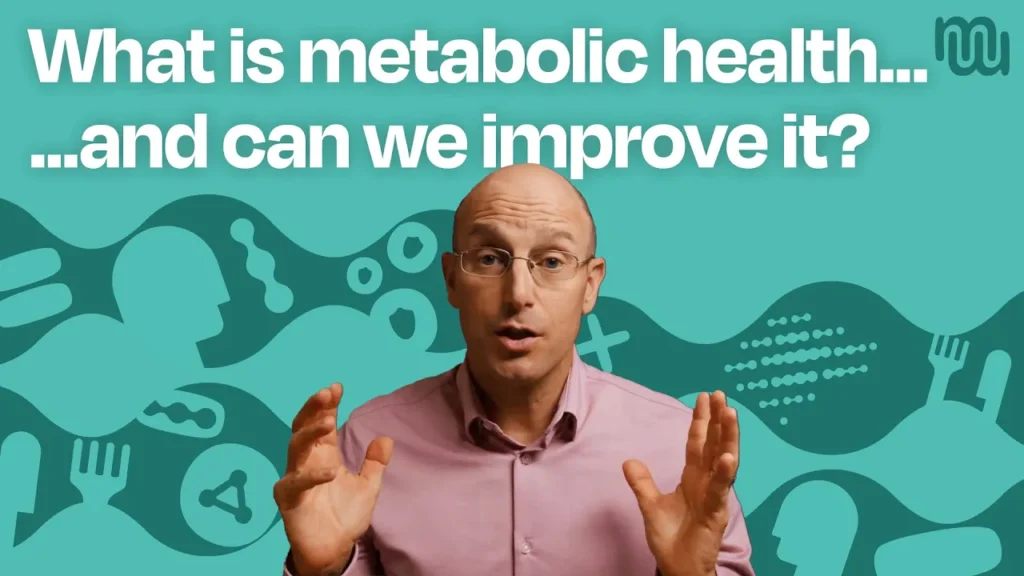
This Metabolic Mind episode features Dr. Bret Scher breaking down metabolism, metabolic health, and how modern living drives metabolic dysfunction. He explains how constant exposure to ultra-processed foods, limited movement, and chronically high insulin levels lead to insulin resistance, fatty liver, visceral fat, and impaired energy production. By understanding this mismatch between our evolutionary biology and our current environment, viewers gain clarity on how improving metabolic health may also support better brain function and mental well-being.
Learn more

We at Metabolic Mind believe that there’s a strong connection between mental and metabolic health. But where did this belief come from? In this article, we’ll answer this…
Learn more
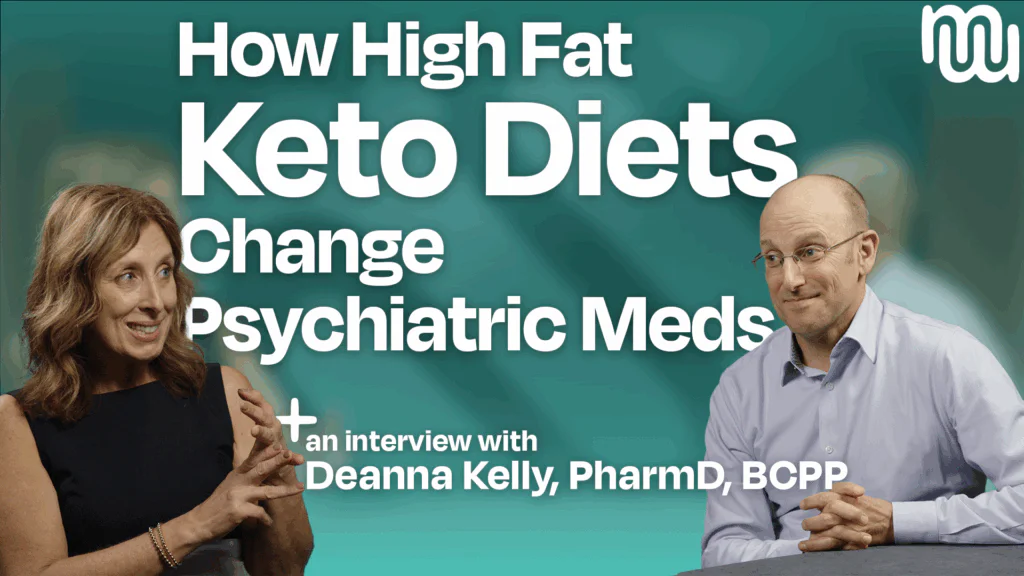
Pharmacist and psychiatry professor Deanna Kelly explains how high-fat and ketogenic diets alter psychiatric drug absorption and metabolism. She discusses risks with quetiapine, lithium, and the new xanomeline–trospium combination, how medications can disrupt ketosis, and why communication with pharmacists is critical for safe, effective metabolic therapy.
Learn more
When countless people are suffering and lives are at stake, why invest time and money in Randomized Controlled Trials? During a question and answer session with panelists at…
Read more
This Metabolic Mind episode features Dr. Bret Scher breaking down metabolism, metabolic health, and how modern living drives metabolic dysfunction. He explains how constant exposure to ultra-processed foods, limited movement, and chronically high insulin levels lead to insulin resistance, fatty liver, visceral fat, and impaired energy production. By understanding this mismatch between our evolutionary biology and our current environment, viewers gain clarity on how improving metabolic health may also support better brain function and mental well-being.
Learn more
We at Metabolic Mind believe that there’s a strong connection between mental and metabolic health. But where did this belief come from? In this article, we’ll answer this…
Learn more
Pharmacist and psychiatry professor Deanna Kelly explains how high-fat and ketogenic diets alter psychiatric drug absorption and metabolism. She discusses risks with quetiapine, lithium, and the new xanomeline–trospium combination, how medications can disrupt ketosis, and why communication with pharmacists is critical for safe, effective metabolic therapy.
Learn more