New Results: First RCT for Schizophrenia & Bipolar Disorder. Learn more.


Listen, Watch & Subscribe on:



What are Metabolism and Metabolic Health, and How Do They Impact Mental Health?
Listen
About the host


Bret:
Welcome to the Metabolic Mind Podcast. I’m your host, Dr. Bret Scher. Metabolic Mind is a nonprofit initiative of Baszucki Group where we’re providing information about the intersection of metabolic health and mental health and metabolic therapies, such as nutritional ketosis as therapies for mental illness.
Thank you for joining us. Although our podcast is for informational purposes only and we aren’t giving medical advice, we hope you will learn from our content, and it will help facilitate discussions with your healthcare providers to see if you could benefit from exploring the connection between metabolic and mental health.
What is metabolic health and how does it become dysfunctional? At Metabolic Mind, we focus on this crucial connection between metabolic health and mental health and metabolic therapies, like ketogenic therapies as treatment for mental illness. But while we say these terms, often we realize that the terms metabolic health and metabolic therapies can be confusing and may not be intuitive for everybody.
So, in this video, I’m going to explain what you need to know about metabolic health, what it is, how it can go wrong resulting in metabolic dysfunction, and what you can do to improve it. But before I jump into this discussion, please remember our channels for informational purposes only. We’re not providing individual or group medical or healthcare advice or establishing a provider patient relationship.
Many of the interventions we discuss can have dramatic, or potentially dangerous effects, if done without proper supervision. So, consult your healthcare provider before changing your lifestyle or your medications. Alright, now let’s start with metabolism. If we want to understand metabolic health, we should first understand metabolism.
So, let’s look at that worldwide medical authority known as Wikipedia. Okay, I’m being sarcastic, of course, but let’s do it anyway. So, Wikipedia defines metabolism from the Greek metabolite, which means change. It’s the set of life sustaining chemical reactions in organisms. The three main functions of metabolism are the conversion of the energy in food to energy available to run cellular processes.
Two, the conversion of food to building blocks for proteins, lipids, nucleic acids, and some carbohydrates. And three, of the elimination of metabolic wastes. Pretty good definition, or for a simpler definition, Medline defines metabolism as referring to all the physical and chemical processes in the body that convert or use energy.
So, put simply, metabolism is how we use our food to create energy. Taking energy in the form of calories and allowing our cells to turn those calories into energy our bodies can use. So, when our energy inputs from food match our body’s need for energy production, we have a metabolism that is balanced or in sync.
And when we have more food caloric input than we need at the moment, then we need to be able to store that excess energy. So, we can store a small amount as glycogen in our liver, but most of the storage is in our fat cells or in our adipose cells. Now, from an evolutionary standpoint, it makes complete sense that we would function this way, right?
It’s difficult to know exactly how we lived over thousands of years ago, but it’s safe to assume we would’ve had times of food excess, like a big hunting or forging success or stumbling upon a beehive, but then followed by times of food scarcity, multiple days without success with hunting or forging. So, our bodies need a way to store excess calories when they’re available. And then, later mobilize those calories for energy production when food intake is scarce.
In this scenario, excess energy was episodic, and the food came from mostly naturally occurring foods. But think about nowadays, right? An industrial society, energy excess is all too common and consistent and frequently from unnatural foods, right? There’s a convenience store or a fast food joint seemingly on every street corner.
So, it’s clear, we now have this evolutionary environment metabolism mismatch. And further contributing to this mismatch is that physical activity, right? Physical activity was a way of life throughout evolution. So, high calorie foods and quick energy were valued since one, they were rare, but two, they were quickly burned with consistent physical activity.
In addition, most food tended to be very nutrient dense, right? Meaning a lot of nutrients for the amount of calories. Again, fast forward to modern industrialized society, and you’ll see we are the exact opposite, right? In the industrialized world, food is widely available 24/7. Much of it is ultra-processed, combining carbs and fats for a high caloric, low-nutrient content.
And, of course, our physical activity has been relegated to 30 minutes on the stair master for most people, if at all. So, this evolutionary environment metabolism mismatch sets up the perfect scenario for metabolic dysfunction. So, if metabolism is how our body uses our nutrients and food intake to produce energy, we can assume metabolic dysfunction is when that process doesn’t work very well.
And that usually results from having too much energy intake and/or suboptimal composition of energy intake, which then overwhelms our body’s ability to both efficiently burn and store the energy for future use. So, when we have a chronic oversupply of energy, our fat stores actually get full. We can’t store it anymore in our fat cells. So, we need to find other places to store the energy.
At that point, we frequently store it in our organs in the form of visceral fat, fatty liver, fatty pancreas and others. And excess fat in these organs disrupts their function. Thus, further worsening metabolic dysfunction and turning into overt disease states, like type II diabetes and others. Now, the other important part about storing fat is that it’s supposed to be a two-way street, right?
We store it so that we can access it later to metabolize and produce energy. But accessing fat stores require low insulin levels. Now, most people have heard of insulin as a medication people with diabetes, especially type I diabetes, need to take. But in everyday life, our cells need insulin to take in glucose or blood sugar from the bloodstream and bring it into the cell, which is where we use it to create energy.
But high insulin levels also tell our bodies, we have plenty of energy so we should store the excess energy in fat cells. Only when insulin levels drop and they’re low, can we then reverse that process. And then, can we access the fat stores to mobilize and use for energy production.
Nowadays, when we have a constant supply of energy dense, nutrient poor food, we can easily overwhelm our metabolism causing our insulin levels to remain elevated, called chronic hyperinsulinemia. And thus, preventing us from accessing our fat stores. And when insulin levels are too high for too long, our cells ability to listen to it diminishes.
So, some of our cells, like those in our muscles, in our brain, literally become resistant to the effect of insulin. The end result is too much blood sugar floating around in circulation and not enough being used by our cells to produce useful energy. And many disease processes can result from that.
So to review, metabolism is how we take in nutrients and convert them to useful energy. Metabolic dysfunction is when we take in too much and the wrong kind of nutrients so our system gets overwhelmed, which results in insulin resistance, high insulin levels and fat deposition in our fat cells, and eventually, our organs.
This is the unfortunate result of an evolutionary process that served us well in our hunter gatherer past, but is mismatched to our current industrialized society. But the good news is we can fix this, right? It’s not all bad news. We can fix this. We may not be able to fix everything about our food environment, at least not right away, but we can take purposeful steps to improve our metabolic health.
Not surprisingly, much of the solution has to do with correcting our environmental metabolic mismatch. And our next video, we’ll cover the keys to reversing metabolic dysfunction and restoring our metabolism. So, be sure to check that out to get started on your path to metabolic health.
Thanks for watching. I’m Dr. Bret Scher of Metabolic Mind, a nonprofit initiative at Baszucki Group. If you found this video helpful, please like and subscribe. And please leave a comment as we’d love to hear what you think about metabolism and metabolic health. And like I said, be sure to watch our next video on how to fix your metabolism.
We’ll see you next time at Metabolic Mind. Thanks for listening to the Metabolic Mind Podcast. If you found this episode helpful, please leave a rating and comment as we’d love to hear from you. And please click the subscribe button so you won’t miss any of our future episodes. And you can see full video episodes on our YouTube page at Metabolic Mind.
Lastly, if you know someone who may benefit from this information, please share it as our goal is to spread this information to help as many people as possible. Thanks again for listening, and we’ll see you here next time at The Metabolic Mind Podcast.
Listen, Watch & Subscribe on:

Disrupted metabolism, so-called metabolic dysfunction, is a dangerous condition that has been associated with numerous medical conditions, including mental illness, dementia, diabetes, heart disease, cancer, and more. What…
Read more
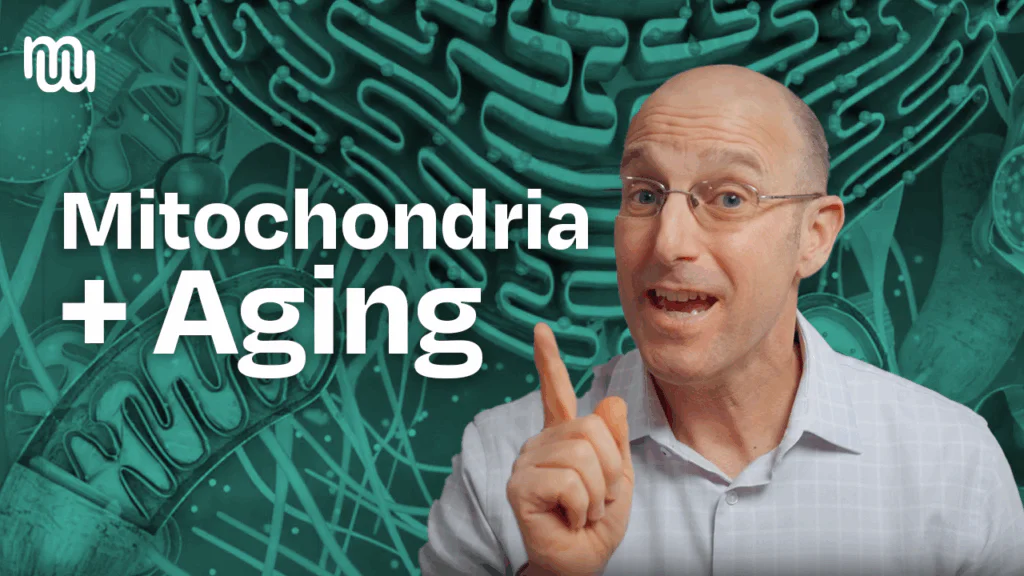
Remember mitochondria: the “powerhouses of the cell”? It turns out, they’re not just high school biology trivia. Mitochondria are vital for transforming the energy your body needs, but…
Learn more

What you eat can directly impact your metabolic health and your mental health. Adopting a therapeutic nutritional ketosis diet shifts the body’s fuel source from glucose to fat…
Learn more
What can you expect from the Metabolic Mind blog? At Metabolic Mind, we’re helping change the treatment of mental illness by discussing the role of metabolic and ketogenic…
Learn more
Disrupted metabolism, so-called metabolic dysfunction, is a dangerous condition that has been associated with numerous medical conditions, including mental illness, dementia, diabetes, heart disease, cancer, and more. What…
Read more
Remember mitochondria: the “powerhouses of the cell”? It turns out, they’re not just high school biology trivia. Mitochondria are vital for transforming the energy your body needs, but…
Learn more
What you eat can directly impact your metabolic health and your mental health. Adopting a therapeutic nutritional ketosis diet shifts the body’s fuel source from glucose to fat…
Learn more
What can you expect from the Metabolic Mind blog? At Metabolic Mind, we’re helping change the treatment of mental illness by discussing the role of metabolic and ketogenic…
Learn more