Share your story. Help someone else start theirs. Share Now


Listen, Watch & Subscribe on:



Healing Beyond Psychiatry: A Mother’s Story of Bipolar Disorder and Recovery
Listen
About the guest
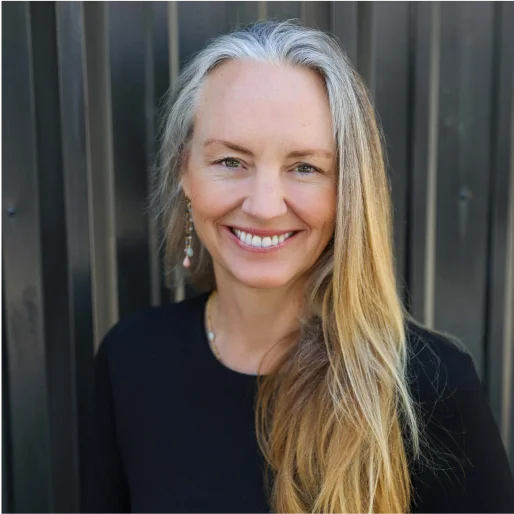
About the guest


Bret:
Welcome to the Metabolic Mind Podcast. I’m your host, Dr. Bret Scher. Metabolic Mind is a non-profit initiative of Baszucki Group where we’re providing information about the intersection of metabolic health and mental health and metabolic therapies, such as nutritional ketosis as therapies for mental illness.
Thank you for joining us. Although our podcast is for informational purposes only, and we aren’t giving medical advice. We hope you will learn from our content and it will help facilitate discussions with your healthcare providers to see if you could benefit from exploring the connection between metabolic and mental health.
Laura:
I’m going to just jump us right in, but before I do, I can already feel myself getting emotional. I think part of why you and I connected so meaningfully last spring as a mother and as a daughter, and my mother and my father and my sisters are in the audience here today, too, which is like really meaningful for me.
We could just look at each other and know.
Jan:
Yeah.
Laura:
I know what you’ve been through as a mother because I’ve been through it as a daughter, and my family has been through it, too. And I think that family members, parents especially, but spouses, partners, siblings, children don’t often get enough space in this broader conversation to talk about what it’s like for you as family members supporting your loved ones as best you can with the information you have at your disposal when navigating the mental health industry.
And I wanted to give Jan the chance to really share about what her journey has been like as a mother and her family’s journey. And the previous panel touched on that, of course, the impact on families. But I’m just, to bring us right in, I want to just kind of ask you to briefly share what led your family, what led you as a mother to meet the mental health system for the first time? What were the circumstances? What were you told? What were the options given to you? What was the story you were given?
And then what happened after your family began a relationship, you could say, with the conventional mental health system?
Jan:
First of all, thank you so much to Laura and Cooper for making this happen. What Cooper left out of that story is that the reason I was there is because I had recently read Laura’s book, and so of course I was going to be there.
Brilliant, wonderful, transformational book, it inspired me. So how did we get here? We were sailing along, had four kids. Our son, Matthew, was 17. We also have three daughters, younger, he’s the eldest, sailing along, raising them. Honestly, feeling maybe a tiny bit smug that we didn’t have the problems in our family that we saw around us.
And maybe what came after was slight punishment for my secret unspoken smugness that they were pretty easy to raise, relatively speaking. And then Matthew turned 17 and headed into his junior year at a big public school in the Bay Area and took on a lot. We tried to get him to not take on quite so many AP courses, and captain of the varsity water polo team, and head of the chess club, and play in the jazz band. And then, decided he needed to take multi-variable calculus at night after water polo practice through online, through Stanford. And then, fell madly in love, and his life exploded.
And probably if we had taken him to a psychiatrist, he would’ve been diagnosed with an anxiety disorder. I thought of it as a nervous breakdown. We found a therapist. He taught himself to meditate. He worked through it. He dropped two classes. He survived his junior year and headed into senior year in much better shape and got into college and went off to college at Berkeley.
I will say, it never occurred to us to go see a psychiatrist or to have him prescribed any medication. My husband like doesn’t even take an aspirin. Melatonin was out of the question. Like we were very anti-everything. We were just, it wasn’t even on our radar. It wasn’t even something we’d ever considered.
And so we dodged the psychiatric system in that first go round. When Matthew was having his struggles, we basically blamed it on the girlfriend, and that was very convenient. And I’m not sure we were entirely wrong. Then he went off to Berkeley, and he joined a fraternity. And he took on the hardest possible major electrical engineering, computer science. His dad’s an engineer. He’s not really an engineer, but that was the path he chose. And he joined a fraternity. And he started drinking, and he started using high dose cannabis, which we didn’t learn until much later.
But he would say now that had a lot to do with what came after. He started drinking a lot on weekends. And came home, got mono over Christmas, went back college, started smoking cannabis again. And I don’t want to say it was entirely cannabis-related. I think we all like to say, what was the cause?
What caused it? What caused it? It must be one thing that caused it. I don’t think it was one thing. I think it was many things. It was social stress. It was academic stress. It was lack of sleep. It was joining this fraternity and losing a whole week of sleep during rush. It was getting mono. It was the cannabis. It was nicotine. It was alcohol.
It was a lot of things combined. I can’t blame it on the girlfriend because she was no longer part of the story. But in March, he had a full-blown manic psychotic episode, typically in bipolar disorder. The story is, it takes, I think, seven years to get a diagnosis. I basically googled his symptoms. And I knew he was having a manic episode, which the diagnosis of bipolar 1.
All you need to do is have one manic episode in your life that is not immediately precipitated by drug use, recreational drug use. Basically he, by the DSM-5, we knew he had a, technically, he had a diagnosis of bipolar 1, and then they threw on the with psychotic features, landed at Stanford Hospital.
We actually found a psychiatrist who prescribed Olanzapine. This speaks to who Matthew is as human being and why he’s doing so well now. He’s very determined, and he determined in his state that he was in that the psychiatrist, who he had a lot of respect for, had set up a test of Matthew’s enlightenment. And if he refused the medication, he would pass the test of enlightenment.
And my son, very dedicated to his beliefs and his commitment, was I’m going to test to pass the test of enlightenment by not taking the antipsychotic medication. He took it once. He hadn’t slept by that point. He hadn’t slept for two weeks. And when I say he hadn’t slept, and people don’t understand what bipolar 1 mania is about, he didn’t sleep at all.
He slept maybe an hour here and there every couple of days for two weeks. And so you can imagine that alone is going to make somebody a little bit crazy. And he basically was just pacing the kitchen and had a lot of ideas about spiritual transformation. He’d been reading Eckhart Tolle’s, The Power of Now, and that was the root of his delusion, call it or his spiritual enlightenment, depending how you want to define it, for many years.
Landed at Stanford Hospital for 10 days, and that launched us into the mental health system, which isn’t really a system at all. As the Head of Psychiatry at Stanford once told me, it’s not a system. It’s never been built. It’s not broken. It’s just never been built. It’s more like America’s mental health madness.
And for five years, we were in that madness. The first two years, he was hospitalized that first time and three more times for manic psychosis. He was treated all over the country. He was in residential treatment centers, partial hospitalization programs, et cetera, et cetera. One program that was supposed to get him off of medications, which they went way too fast. They didn’t read any of the materials that people in this room have been providing for 10 years. He left that both depressed and manic, probably in a mixed state. And it was, took over our whole family life. There was nothing else that I focused on but that. And so by the end of that five year period, we were basically not very far along.
He’d gotten sober. He’d gotten med compliant on five medications for three years. And he was still not himself. He was barely hanging in there living independently in college, but very much not himself. And the story might have ended there, and it didn’t.
Laura:
Gosh. So I think part of what makes your family story so powerful is that the experiences that Matthew has had in his life are not just, I had a rough patch of some down moods. He, like so many of my friends and fellows and colleagues, has gone through what psychiatry would label, psychotic episodes, which is oftentimes the kind of go-to question that critics of those of us who are critiquing the mental health industry turn to.
Okay, we’ll find that someone with a worried person, who’s had a rough patch, isn’t really helped by these meds and doesn’t need them. What about those people, quote unquote, who are psychotic, schizophrenic, whatever serious mental illness label you want to give them?
And I think it’s part of what makes your family story part so powerful is that question can’t be used as a way to diminish or discredit the incredible transformative journey that your family’s been on because Matthew has been through so many experiences that psychiatry would label the most extreme of the most extreme.
And I can, having been a daughter and knowing what my family went through, the fear and the confusion and the overwhelm when your kid, whom you love more than anything in the world is behaving in ways that are terrifying, confusing. Or you can just feel their pain. You can feel the depth of their pain and you want to help them.
You want to comfort them. And I think making space for that and really recognizing that family members are truly doing the best they can with the information they have at their disposal. And I guess that’s where I want to go next with you, Jan. What was the story you were told about what lay in store for Matthew? And when did you, as a mother, begin to question that story?
Jan:
It’s a good question, and I would say it’s not the typical story. We questioned it. Before he ever got it, we questioned it from the beginning. It was never, we basically never believed anything anybody told us. But we also didn’t have many options. He was hospitalized that first time. On the ninth day of 10 days stay, we finally met with the psychiatrist for the first time.
I had an outside psychiatrist who’s managing his care. So, that wasn’t so bad for us, but you could imagine another family who didn’t have the resources to hire an outside psychiatrist, who happened to have ties to Stanford, who was calling in and saying, here’s what I want you to do for his medications?
It was an absolute disaster. And I remember she sat us in a room on the 10th day and said, he has bipolar 1. He’s always going to need to take medications, but that’s okay because I have problems with my eyes and I wear glasses. This is literally what she.
She said to us, and I mean she did have like really strange, thick glasses. So, maybe for her they were analogous, but I was not impressed by that analogy. And so, we essentially rejected the diagnosis from the beginning. The antipsychotics were extremely useful in that first stay to get him to go to sleep. Although he was forcefully injected in the emergency room while I was standing there watching that. That has left a scar.
Four security guards held him down, and basically, put a shot in his butt. And they made him put on the hospital pajamas. And then, once we got up to the psych ward, turns out he was allowed to wear his regular clothes. I was never clear on why four security guards had to make sure that he put on these hospital-issue pajamas, but that’s how it went down.
And so, we were told he’s going to be on medicines for the rest of his life. But the outside psychiatrist was a bit of a cowboy, and I call him a cowboy. Now, at the time, I thought he was our savior. And maybe both are true? He said, I am not going to give Matthew a diagnosis at all. I think it’s too soon. He could have had a one-time psychotic break related to any number of things, the cannabis included.
This made us very happy, and we went down a path of taking the lead of this psychiatrist. Matthew basically tapered off Olanzapine, very high dose of Olanzapine, like 20 milligrams when he was released in the hospital. Tapered down over three months to zero, and the psychiatrist said, oh, he’s euthymic. He’s okay.
And I was saying, he’s not euthymic. He’s not himself. Euthymic is, in bipolar ProLon, neither manic nor depressed, but he was definitely not himself. And I was worried. I was worried about him going back to school. He just, he was not himself, but we wanted to be optimistic. Matthew certainly didn’t want to be medicated.
He went back to college. He was manic again within a month, and we brought him home again. And that got us into this cycle.
Laura:
And not sorry to interrupt, but I’m curious, were you told that three month reduction was slow?
Jan:
Oh, yes. We were told that was very slow.
Laura:
Doesn’t surprise me.
Jan:
Very slow, and we.
Laura:
That’s not slow.
Jan:
We know, now that we’re 10 years in, he’s still trying to get off Olanzapine at a high, he was on a dose of 25 milligrams. He was on five milligrams when he finally started the intervention that saved his life. He’s at 1.7 now, and we go down by 0.1 milligram every, whatever, 10 days or something, when he starts, when he’s tapering.
So, still a ways to go. And, yes, looking back, of course, he got manic again. He was, yeah.
Laura:
He was in withdrawal.
Jan:
He was in withdrawal ,and he was also doing the same things that had made a manic in the first place. Cannabis, alcohol, nicotine, stress, et cetera, et cetera. So, why would we expect a different result?
Laura:
After lunch, Anders and Mark will get into the nitty gritty of what it actually takes to safely and successfully taper off of these drugs. But for anyone who’s sitting there, what do you mean 0.1 milliliters? Did you say milli? You have it in liquid? Oh, you have it in solid. It’s how slow, slow, tapering is. People just can’t fathom it.
Many people, many of my friends, need to taper over years to get off without having destabilizing withdrawal symptoms that mimic so-called relapse, which happened to Matthew, which has happened to many. How many people in this room have been told when you tried to come off your psych drugs, you’re having a relapse of your underlying illness?
Yeah. So, we’ll get more into that in the afternoon. And in the remaining time we have, looking back, I guess I’ll frame the question in two ways. Looking back, what information should you have been given as a mother that you weren’t? What options should you have been given?
And another way to frame that question is, if you were, if their parents listening right now, or spouses or partners listening right now, what have been the key lessons you’ve taken away from this journey you’ve been on that you want other family members to know?
Jan:
I guess to answer that question, I have to finish the story of what happened. So, five years in, he was not doing well.
And during those five years, it wasn’t just, he was prescribed 29 different medications, including nine different antipsychotics. He did short trials of many of them, long trials of others. He was on five different medications at the time that we finally discovered the work of Dr. Chris Palmer and the emerging field of metabolic psychiatry, which we’ve now devoted four years to building.
And he getting off the benzos, I thought was the worst until now. He’s still trying to get off carbamazepine, which shockingly is worse than benzos. Lithium, he sailed off in a few months, no problem. But five years in, he’s on five medications. He’s doing everything.
We tried neurostimulation, tried orthomolecular medicine. He was seen a psychiatrist once a week. He did every form of therapy available. He still wasn’t himself. He wasn’t well, and we happened to meet. I did want to say a word about stigma. We happened to meet somebody.
We talked about this to everyone we knew. And I think that is really important because if we hadn’t, we would not have ultimately heard the story that saved Matthew’s life, which was, we happened to meet somebody who was running an investment fund that was in investing in mental health startups.
They knew we were doing that kind of work, and he told us his story. I discovered Chris Palmer. I went on a therapeutic ketogenic diet, and my bipolar symptoms resolved after 20 years. And I was like, whoa, stayed up all night reading Chris Palmer’s website. At that time, there were two case studies. He hadn’t written his book yet, but there was enough of a seed for me to say, this kind of makes sense.
If this works to resolve seizures in epilepsy when no drugs work, then it’s doing something powerful to the brain and to the whole system. And so we got Chris Palmer to work with us, consult on the case. We found a dietician from the epilepsy world, who knew how to do this as a medical intervention.
We talk about medicalization as a negative. But in this case, it was extremely helpful to have people who’ve been doing this in the field of epilepsy, who knew what they were doing, who knew how to deliver this kind of intervention. And he went on a medically supervised therapeutic ketogenic diet, measuring ketones twice a day in January of 2021.
And that spring, he didn’t have to go up on the Olanzapine. He stayed at five milligrams. He had to go up to 25 milligrams the year before just to keep him sleeping. Just to literally keep him from getting up before in the morning and driving to the beach and going surfing in the dark. And I was like, something powerful has happened to his circadian system that we don’t need to call it an illness or a disorder or anything. But something was not working in the way he responded to a change in seasons, in the way his sleep got so incredibly disrupted and that healed on a ketogenic diet.
By April, he was in remission. And it’s now almost five years later, and his bipolar symptoms have not come back. He does not have bipolar disorder.
Laura:
Yeah. So, if you were going to give like a pep talk or kind of bullet point list of what you wish you had been told at the very beginning about, whether it’s about metabolic health or the diagnoses themselves, what would you want to leave family members listening right now with?
Jan:
I honestly, I wish that I could offer every family the information that we didn’t have then, that we have now. And that is that before jumping into a medication that is going to radically alter your brain function, let’s try some other things first.
First of all, let’s look at the fuel source to the brain and the body. And when I think about the field of metabolic psychiatry, which sounds very medicalized, but if you think about psychiatry being medical treatment of the psyche or the soul or the mind, and then you add metabolic to that.
Metabolic meaning, how is body using, transforming the energy of food and oxygen very simply. Then you could think of metabolic psychiatry as energetic medicine for the mind, and that’s how I think about it. I really feel that is what we are seeing. We are seeing mind healing, being restored to health and vitality by changing the way we fuel our bodies.
And that can be through food. It can be through sunlight in the morning, simple things like that. in the order of operations, I think the food needs to come first and maybe the morning sunlight because that can provide the energy to then take on additional things like trauma therapy, like movement, like getting sleep under control.
So, this model of metabolic psychiatry that we have been developing over the last several years is really saying, let’s look at the fundamentals of what makes a human function in a healthy way, the whole system function well, and those things are simple. It’s food. It’s sunlight. It’s movement. It’s sleep.
Let’s start with those things and really take them on. This is not, oh, eat better. This is not eat better. This is transform your metabolism because metabolism energy is what drives health. That is what I’ve come to understand after really deeply studying this for the last four years. That’s what I want people to know, and I want them to go to Metabolic Mind where we have tried to kind of consolidate this information so that it’s available to other people.
Laura:
It’s an incredible resource. And when I think about reforming this system, if we want to call it that, I love what that Stanford psychiatrist told you. That’s a really interesting way to frame it. Psychiatry is here. It exists.
It’s not going to just not exist anymore because people are upset with its current standard of care. And that, I think, is what makes metabolic, the field of metabolic health, so promising is that it’s an invitation to existing psychiatrists and future psychiatrists to chart this new path. Take this different path. Check out Metabolic Mind, and you’ll hear from Nicole and Lauren this afternoon who will go deeper into their personal and professional work in the metabolic space.
We’re going to wrap up here. And why don’t Cooper, are you there? You are. You’ll introduce the next panel. We have a, we’re a little late. So, if you need to stretch, stand up. But we’ll start in about two minutes, the next panel. And Jan, I just want to thank you so much for sharing your family’s story.
Thank you. Thank you. Thank you for all the work you’re doing.
Bret:
Thank you for watching. If you want to see more, check out these recommended videos. Also, if you haven’t already, don’t forget to subscribe to our channel to stay up to date with our content and help us expand the movement. And if you want to sign up for our newsletter, access our resources, read the latest research, or check out the Think Smartt framework, click here to visit our website.
See you on the next video.
Thanks for listening to the Metabolic Mind Podcast. If you found this episode helpful, please leave a rating and comment as we’d love to hear from you. And please click the subscribe button so you won’t miss any of our future episodes. And you can see full video episodes on our YouTube page at Metabolic Mind.
Lastly, if you know someone who may benefit from this information, please share it as our goal is to spread this information to help as many people as possible. Thanks again for listening and we’ll. See you here next time at the Metabolic Mind Podcast.
Listen, Watch & Subscribe on:
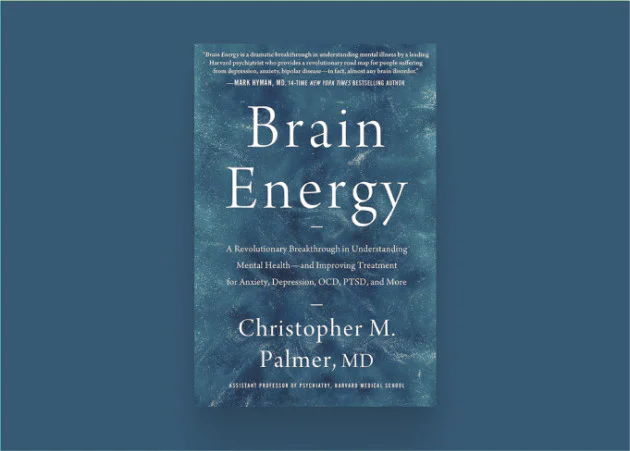
Harvard psychiatrist Dr. Chris Palmer outlines a new understanding that unites our existing knowledge about mental illness within a single framework.
Read more
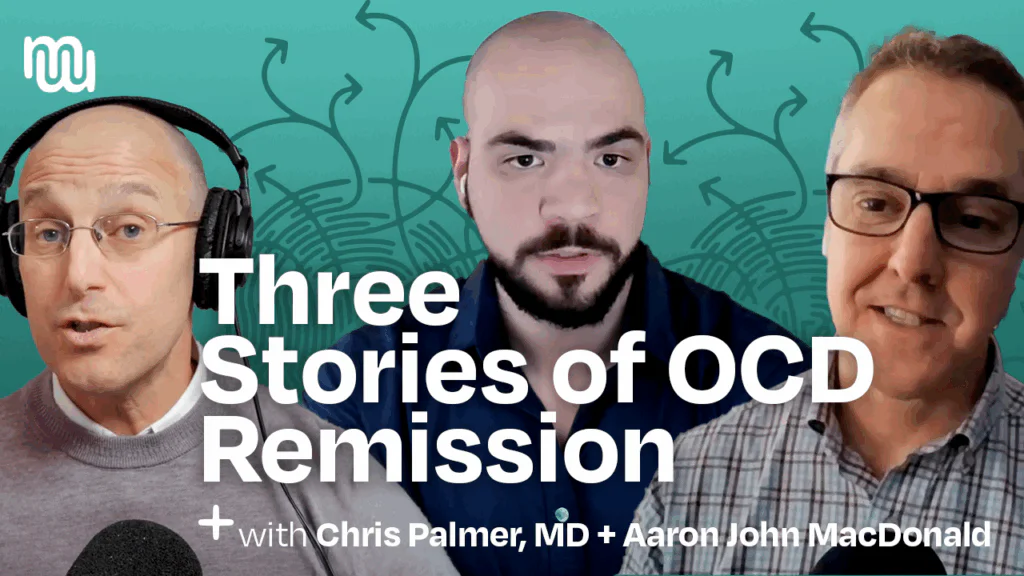
Can ketogenic therapy help reduce or even resolve symptoms of obsessive compulsive disorder (OCD)? Dr. Chris Palmer and research assistant Aaron MacDonald join Metabolic Mind to discuss one of the first published case series exploring metabolic and ketogenic interventions for OCD.
Learn more
Robyn Dobbins' Harbinger of Health Small Group Coaching is a 12-week program for individuals looking to partner with a trained and experienced low-carb health coach.
Learn more
This episode of the Metabolic Mind Podcast features Dr. Lily Mujica Parodi, a Baszucki Endowed Chair of Metabolic Neuroscience, and Dr. Kirk Nylen, Managing Director of Neuroscience at Baszucki Group. Together with host Dr. Bret Scher, they explore groundbreaking research on insulin resistance in the brain and its link to dementia and cognitive decline. The conversation highlights a critical age window for intervention, the stabilizing role of ketones on brain networks, and the potential of ketogenic diets and lifestyle changes to prevent or slow neurodegeneration. Listeners gain both scientific insight and practical takeaways on how metabolic health influences long-term brain function.
Learn more
Harvard psychiatrist Dr. Chris Palmer outlines a new understanding that unites our existing knowledge about mental illness within a single framework.
Read more
Can ketogenic therapy help reduce or even resolve symptoms of obsessive compulsive disorder (OCD)? Dr. Chris Palmer and research assistant Aaron MacDonald join Metabolic Mind to discuss one of the first published case series exploring metabolic and ketogenic interventions for OCD.
Learn more
Robyn Dobbins' Harbinger of Health Small Group Coaching is a 12-week program for individuals looking to partner with a trained and experienced low-carb health coach.
Learn more
This episode of the Metabolic Mind Podcast features Dr. Lily Mujica Parodi, a Baszucki Endowed Chair of Metabolic Neuroscience, and Dr. Kirk Nylen, Managing Director of Neuroscience at Baszucki Group. Together with host Dr. Bret Scher, they explore groundbreaking research on insulin resistance in the brain and its link to dementia and cognitive decline. The conversation highlights a critical age window for intervention, the stabilizing role of ketones on brain networks, and the potential of ketogenic diets and lifestyle changes to prevent or slow neurodegeneration. Listeners gain both scientific insight and practical takeaways on how metabolic health influences long-term brain function.
Learn more