Get the latest on metabolic psychiatry. Subscribe.


Listen, Watch & Subscribe on:



Exposing the Truth Behind EAT-Lancet’s Diet Report & MisInfluencer Campaign
Listen
About the host

About the guest


Georgia:
I would never issue a document proclaiming that everyone in the world should eat the way I think they should eat. And even if I can back up the science six ways to Sunday, one of my problems with the EAT-Lancet report isn’t just that the science isn’t there. It really intends its goal is to control the way people eat.
If you’re going to make a claim like that, a proclamation like that, it had really better be founded on some very solid science. But actually, their diet is incredibly risky.
Bret:
Welcome to the Metabolic Mind Podcast. I’m your host, Dr. Bret Scher. Metabolic Mind is a nonprofit initiative of Baszucki Group where we’re providing information about the intersection of metabolic health and mental health and metabolic therapies, such as nutritional ketosis as therapies for mental illness.
Thank you for joining us. Although our podcast is for informational purposes only and we aren’t giving medical advice, we hope you will learn from our content and it will help facilitate discussions with your healthcare providers to see if you could benefit from exploring the connection between metabolic and mental health.
Is there one healthy way we should all eat that’s healthy for us as humans and healthy for the environment? If you listen to the recent publication and the committee behind EAT-Lancet and their report for Planetary Healthy Diet, it would be to eliminate all animal products and eat a plant-based diet.
But is this really healthy for humans and healthy for the environment? And as part of this campaign, as part of this push to promote this diet, they’ve labeled a number of mis-influencers. So, why are they calling these people mis-influencers, and what can they do to counter the information they put out?
I’m joined by one of these mis-influencers, Dr. Georgia Ede. She joins me as she normally does on a number of our recordings here. But this ,time to specifically talk about EAT-Lancet. What it is. What it’s meant to address. How it’s maybe falling short. And what about this whole concept of mis-influencer? So, I hope you enjoy this interview, this very enlightening and informed interview, with Dr. George Eid.
Many of the interventions we discussed can have potentially dangerous effects of done without proper supervision. Consult your healthcare provider before changing your lifestyle or medications. In addition, it’s important to note that people may respond differently to ketosis, and there isn’t one recognized universal response.
Hey, Georgia, welcome back.
Georgia:
Thank you. It’s nice to be back, Bret.
Bret:
Yeah, today’s going to be a little bit different. We’ve had so many recordings about various mental health issues as it relates to metabolic psychiatry and, metabolic health, which have been wonderful. So, I hope everybody goes back and listens to those, whether it’s our tapering series or whether it’s our mailbag episodes or so many other recordings.
But this one is specifically going to be about the EAT-Lancet diet, or the Planetary Health. Diet, because there’s been a lot of buzz about it recently now that EAT-Lancet is coming out with a 2.0 version of their recommended diet for planetary health. But along with it, came this list of mis-influencers, and I got to put those in big air quotes of which you were one of them.
So, I want to get into all of this. But first, let’s rewind for a second and talk what. talk about what EAT-Lancet and the Planetary Health Diet even is. And if just Google it, and say it’s meant to address unsustainable food systems, which cause environmental damage. And sub-optimal human diets leading to poor health.
That’s like, how they frame it. And of course, you could argue one way or another what actually does that. But give us your perspective on what EAT-Lancet is, and why it’s being done and why it’s important.
Georgia:
Yeah. So the original EAT-Lancet report, which came out in 2019. That report, first let’s talk about what EAT and Lancet even are.
EAT is a nonprofit startup that’s dedicated to, in their words, transforming our global food system through sound science, impatient disruption, and novel partnerships. And The Lancet is one of the oldest and most respected medical journals in the world. And they commissioned, published The Lancet Report, which the original one in 2019 was written by a group of 37 scientists from around the world led by Professor Walter Willett at that time of Harvard University.
And the original goal of that document, in their own words, is a great food transformation that seeks to achieve an environmentally sustainable and optimally healthy diet for the world’s people by 2050. And its core recommendation is essentially to minimize or eliminate animal foods from the diet for everybody over the age of two. And replace the nutrients that animal foods provide with whole grains, legumes, nuts, supplements, and fortified-processed foods.
Bret:
So really interesting. They’re proposing to address the environment and human health by eliminating animal foods, which goes into such, so many layers to address there.
But the first, let’s talk about the environment. Let’s get that out of the way quickly because neither one of us are environmental scientists. But there’s this just blatant disregard for animals having any beneficial impact in the environment, and animals, or certainly ruminant animals, by definition being dangerous for the environment in this type of proposal.
And even though neither one of us are environmentalists or environmental scientists, I think we know enough to say that’s pretty superficial and doesn’t go into the nuances and the details, which can show exactly the opposite. But what’s your take on that?
Georgia:
It really doesn’t make sense for us to think about the existence of animals, including ruminant animals, on the planet as being inherently unhealthy for the environment.
And they’ve been here for a very long time. And simply, their existence is not a threat to the environment. Really, as you say, I’m also not qualified by any stretch of the imagination to evaluate the environmental aspects of the report. And there are others who are, who take issue with the way that the information is presented and question a lot of the conclusions that the commission came up with.
But I think that we can all agree that there are major problems with the way that we produce both plant and animal foods, especially industrially mass produce plant and animal foods. And that these do need to be addressed. And of course, even those of us who include meat in our diets, and those of us who advocate for the inclusion of meat, seafood, poultry, eggs, animal foods in the healthy human diet, we care about the planet, too.
And we care about animal welfare, too. And the question is, the first question to ask is what is the healthiest diet? What are the healthiest foods for humans? And we answer that question first. And then, we gather the best minds in the world to understand agriculture and environment and aquaculture and everything else to help us figure out, okay, what is the, what are the ways in which we can produce those foods that are optimal in the human diet in healthier and less destructive ways to make the diet, the healthy diet, more sustainable?
But the first question is. What is the healthiest diet for humans? So the fact that they call this, that they’ve branded this diet, the PhD or the, Planetary Health Diet is very telling. It’s really not branded the HHD, the Healthy Human Diet. It’s not branded the BHD, the Brain Healthy Diet. It’s branded the Planetary Health Diet.
So, I’m not sure that would be my first priority. I care about both of these things, but, we do need to get our facts straight about what humans should be eating for optimal physical and mental health before we try to figure out how to do things better.
Bret:
Yeah, I love that perspective that we should really be focusing on the healthy human diet first. And then, doing that in a planet, a beneficial planetary and environmental way. And as you mentioned, the industrial production of plant-based matter or plant-based foods is certainly not friendly to the environment, which this EAT-Lancet, it doesn’t necessarily address either.
So, you really have to do, weigh both of those. But it all comes down to the human diet. What science or what research has been done on this type of diet ,and how it can benefit or be detrimental to human health. What’s your summary of that?
Georgia:
And then in this new report, which came out just this week, the EAT-Lancet 2.0. So to speak, the original is 2019s. Now, 2025, six years later, the diet is almost identical to the version 1.0.
It’s 100 calories fewer per day. It’s 2,400 calories instead of 2,500 calories per day. It’s otherwise identical to the original diet, and they acknowledged this in their report. That it’s essentially unchanged. So, there is really no news there in terms of what the recommendations are.
But the main issue with the report is that the argument that they’re making is that in order to save the planet, not just save the planet, but also save human health to preserve and protect human health is that we minimize or eliminate animal foods from the diet. And you’re asking, okay, what is the evidence for that? What is the science?
They say sound science is one of their pillars and the vast majority of science that they use to back up their claims comes from the field of nutrition, epidemiology and nutrition epidemiology. We don’t need to go into the details. There are other places you can read about that, including chapter three of my book, which is all about nutrition, epidemiology, and the risks of relying on this kind of methodology, nutrition, epidemiology.
In a nutshell, it’s simply a way to generate hypotheses. It’s a way to generate theories about what the relationship might be between certain foods and certain health problems. Tthese are guesses. and these are wild guesses. I, this is my view, they’re based on these food frequency questionnaires. Large surveys of great numbers of people over long periods of time, trying to understand what people eat, and whether there’s a relationship between what they eat and how healthy they are.
So, these questionnaire based guesses are the theories that are generated about how we, what might be going on between our diet and our health. So, the vast majority of the information in the report comes from epidemiological studies. So these are untested theories. By and large, there’s very little information that comes from randomized controlled trials, clinical experiments, human biology.
That information where it does exist is dismissed, excluded, ignored, downplayed, in favor of, in many cases, the guesswork that comes from nutrition epidemiology. And this may have to do with the fact that one of the co-chairs for this new EAT-Lancet. There were three co-chairs. There were 70 authors of the second EAT-Lancet report.
And there were three co-chairs, and one of them is Professor Walter Willett, who really invented the use of nutrition epidemiology to study human nutrition. So he, of course, is very invested in this method and really relies on it quite heavily when evaluating. human health.
Bret:
Yeah. I think that we don’t need to delve into epidemiology anymore. I think you did a great job setting it up and how it really is unreliable for making global recommendations. But it also comes down to this concept that there’s one healthy way for people to eat and everybody should eat in this way.
And that’s just that starting with, that concept is so bizarre to me because we’re all different. We all have different metabolism. We all have different genetics. We all have different likes. We all have different preferences, we all have different lifestyles. So, to think that there’s one way that we can all eat just seems in incredibly misguided.
And also completely disregarding the potential benefits that animal foods can have in a diet. So, help me make sense of this. Help me address this, the things that they’re completely overlooking about animal-based foods.
Georgia:
The thing is that they don’t overlook it.
They openly acknowledge repeatedly, the nutritional superiority and importance of animal foods. There are direct verbatim quotes that I could read you right now from the report where they acknowledge how important these foods are. But then in the same breath, they will say, but meat is too dangerous.
It’s too dangerous to include. Yes, it’s important. Yes, it’s more nutritious. Yes, it contains higher quality protein, et cetera, et cetera. And yes, it would be beneficial for people to include these foods in their diet, but it’s too dangerous. Nutritionally it’s important, but it’s too dangerous.
It’s going to cause diabetes. It’s going to cause cardiovascular disease, et cetera, et cetera. And all of that information, but human health, but meat is an apocalypse on a plate. Whenever they make those claims, they’re always basing those claims about the risks of meat to human health on nutrition epidemiology studies.
And again, that’s untested guesswork. So, I think this is, they acknowledge repeatedly in the report that. So for example, I have a quote right here. Red meat is high in protein, heme iron, and other minerals, but is also high in saturated fat and cholesterol and low in essential polyunsaturated fatty acids.
And then, they say red meat intake has also been positively associated with, when you hear associated with, that means epidemiology with unhealthy weight gain and risks of gestational diabetes. That’s the diabetes of pregnancy, colorectal cancer, frailty, and unhealthy aging. So, they say it’s nutritious, but epidemiology says it’s dangerous.
This is the drumbeat that you hear throughout the report. And so, this is really the fundamental problem with this document.
Bret:
Yeah. that’s pretty frustrating. But there also have been studies showing by eliminating meat and sticking to this plant-based diet, that there are significant micronutrient deficiencies.
And it seems do they acknowledge that, too? And just say, oh, but you can supplement that. So, it’s okay to eat a nutrient-deficient diet because you can supplement. Or how do they address that?
Georgia:
So again, a quote from the report, intake of calcium, vitamin B12, iron and iodine from the PHD, or the Planetary Health Diet, warrant further attention, especially in populations that have low dietary diversity.
So essentially they’re saying we fall short, our diet falls short. With respect to at least four key nutrients. And then again, their answer is supplementation and fortified-processed foods to make up those gaps. And of course. Calcium vitamin B12, iron and iodine are easiest to obtain and some, and in some cases only possible to obtain from animal foods.
So, instead of recommending animal foods as a solution, they won’t do that because they are afraid that meat is going to harm people’s health. And so, they recommend supplements and fortified-processed foods.
Bret:
And while we’re talking about deficiencies and what’s best for human health, here we are at Metabolic Mind where we focus on the brain. We focus on mental health. So, you talked a little bit about the, I guess you could say, the deficiencies of this diet for health. But what about specifically for mental health?
Georgia:
Again, I’m going to take the review quoting from the report. So, B12, for example. B12 is a very important nutrient for brain development, for brain health, for neurological health.
So, they say global average vitamin B12 intake, which is already somewhat insufficient, was slightly reduced in the Planetary Health Diet. When not optimized, vitamin B12 intake is likely to be low. If consumption of all animal sourced foods is on the lower end of the PHD ranges, for example, in vegan and vegetarian diets, and no supplementary foods are consumed, this merits attention because deficiencies can result in permanent neurological damage.
Again, they acknowledge that animal source foods are really vital for optimal human health, but they stop short of recommending them because of these associations with these very weak and untested, associations between, meat and chronic health problems.
Bret:
Yeah. And I know in your book, you spend a lot of time talking about the benefits of animal source foods for brain health. And let’s also talk about protein. The most bioavailable protein for the least number of calories. And certainly, the least number of carbohydrates comes from animal source foods.
And trying to replace that with plant source foods is not impossible, but certainly more challenging. And comes with more calories and more carbohydrates and more processing. And frequently, these diets recommend a much lower level of protein, like going to the RDA of the 0.8 grams per kilogram, which is like the basic to just, not to protein deficiency, but certainly not optimal.
But they frequently default to that. Do they address the need for protein intake in this diet?
Georgia:
They do, but again, they say that this can all be managed if you properly plan your diet and you, quote unquote, “optimize” your Planetary Health Diet.
They don’t give a lot of specific information about how one is supposed to do that, just that it needs to be optimized. And they, in the report, just as they did in 2019, they openly acknowledge that their Planetary Health Diet is inadequate, nutritionally inadequate, for pregnant women, for growing children, for teenage girls, for women of reproductive years, for the malnourished, for the impoverished, and for people over the age of 50.
And all those cases, there are risks that need to be carefully adjusted for, and the diet needs to be optimized and supplemented and fortified. And when you think about that, you think, now they don’t recommend their diet for anybody under the age of two. So, up to the age of two, you’re allowed to have the animal foods that you need to grow your brain, to develop your brain.
After that, you’re on your own. The problem with this plan isn’t just that it requires an awful lot of special fussing and planning and a lot of knowledge that many people may not have at their fingertips to be able to construct a diet that’s going to meet all their needs. But if you think about who all of those people are, and who the most vulnerable people are on that list, it’s women and children.
This diet is especially dangerous for women and children. And women and children are the ones, at least in my experience, who take these recommendations more to heart. Children and women are more susceptible to messages that are about planetary health and animal welfare.
Bret:
So, many other issues, but another one is that a diet like this, or a dietary recommendation like this, completely disregards that we have likes and dislikes. And we have hunger. And emotions and cravings, and to make one blanket recommendation like this completely ignores those.
And then, I guess the other point is like, sure, if you live in New York City, and there’s a plant-based restaurant on every corner, you’re going to do just fine. But if you’re in rural Nebraska, Kentucky, or the inner cities, or Africa or wherever, the challenges to meet your nutritional needs with this type of diet are enormous.
So, do they make an effort to address those as well?
Georgia:
No, one thing that they emphasize a number of times on the report is that they really intend for their diets, they view their diets as flexible and inclusive. And by that, they mean that it supports, I believe, in the report they used terms like flexitarian, pescatarian, vegetarian, vegan. And then, and they refer to different types of cultural, traditions around food that the diet allows for cultural diversity.
But what they, but what the diet does not allow for, it doesn’t allow for low-carbohydrate pattern. It doesn’t allow for a ketogenic pattern. It doesn’t allow for paleo pattern. It doesn’t allow for a carnivore pattern. So, it only allows for the patterns that fit within their description of what a Planetary Healthy Diet should look like.
So, it’s inclusive. It allows you to go all the way down to zero in terms of nutritious animal foods, but it doesn’t allow you to go, say, below 53% of carbohydrate per day. It doesn’t even, it’s very interesting some of the recommendations they make, for example, they arbitrarily decide these ranges for different foods.
And they’ll say, for example, with seafood, you can have zero to 100 grams of seafood per day. And then, they arbitrarily decide that 30 grams is what they should recommend on the Planetary Health Diet. They recommend for beef, pork, and lamb, 15 grams per day on average. But you can go down as low as from all the way down to zero, up to 30 grams per day.
But what’s interesting is when you look at sugar, because for sugar the range is zero grams to 30 grams per day, and they actually end up recommending 30. The maximum on in that range. It really doesn’t make any sense. So why recommend any sugar at all? And the other thing that’s interesting is the unsaturated plant oils. So, unsaturated plant oils, including soybean, canola, and sunflower, which they explicitly list as on as included among the unsaturated plant oils.
They say you should have between 20 and 80 grams per day. You’re not allowed to go down to zero on your, on your ultra-processed, factory-formed plant oils, zero is not allowed. And these are not minimally processed whole foods by anyone’s definition. And yet, multiple times in the report, they say that their recommendations are based on whole foods principles, but on what planet is a factory produced seed oil a whole food?
It doesn’t make any sense.
Bret:
So, I think it’s pretty clear their definition of a whole food diet, and their definition of scientifically sound are very different than what ours. And hopefully, the majority of the world define those, as which really pokes some big holes in this diet and makes it very concerning.
Without putting words in your mouth, I guess just a simple yes or no answer. Is this diet a optimal diet for human health?
Georgia:
It is not. And they acknowledge that. I really do think that they do acknowledge that because any diet that needs fortification and supplementation is, obviously, not an optimally healthy human diet.
Bret:
Right, now because you answered that way.
Let’s get to now the juicy part of this, because you answered that way in advance of the release of the 2.0. There was actually a release of the mis-influencers, air quotes, mis-influencers who have done an organized approach to discredit and attack EAT-Lancet. Their words, not mine.
And you were listed as a very high ranking member of this. So first, how does it feel to be labeled as a mis-influencer?
Georgia:
It’s interesting. I actually think it’s a, it’s a very good thing. And the reason why is in order, clearly the content that I produced that criticized the Lancet Report came to their attention.
And I think that’s no small thing. And I would like to believe that the content that I and others produced had a lot to do with the fact that they felt the need to produce this report to try to discredit all of us. And I think it may also have had something to do with the way the report was re-released.
I noticed that certain things that I criticize about the report are no longer there. And that certain, and I’m not the only one, I’m certainly not the only one who produced content, critiquing in the report. And then, also there are certain concerns that I and others voiced about the content of the report. That it appears as though the authors have gone to great links to try to acknowledge and address without actually addressing them.
But they’re trying to make it look as though they’re addressing these shortcomings. So, it’s a wonderful thing, honestly, to be able to have this dialogue in a way, with the authors of the report and with the public. Because before social media, if a report like this were issued, very few people a would’ve even had access, been able to read it. And very few people would’ve had access constructive criticism of the report.
And so it would’ve been, it would’ve been harder to generate criticism and a debate around whether or not we should follow these recommendations. So, I do think that it is a good thing. That it helps. I like the fact that they’re paying attention to what we said, even though they’re not addressing our, they’re not addressing, they’re not addressing our concerns.
Bret:
Yeah. I think we can say a lot about the way they went about it, and we’re going to get to that.
Georgia:
Yeah.
Bret:
So, you put, you had a really good post on Instagram where you listed sort of the comments they made about you as a mis-influencer. So, I want to read this one. So, Dr. Ede posted an opinion piece in Psychology Today in which she claimed the EAT-Lancet diet is vague, inconsistent, unscientific and downplays the serious risk to life and health opposed by vegan diets.
And then they go on to talk about Psychology Today. It’s a popular outlet. It has internal fact checking. And then, you posted, yeah, so which of my claims are illegitimate because they listed this as being something you’re saying as a mis-influencer, but didn’t address why that’s actually wrong.
Now, that’s troubling that they can’t back up their reasoning for why you are a mis-influencer.
Georgia:
Right, and so just as they do in the EAT-Lancet Report, they’re not substantiating their claims. They’re not giving good evidence about why do they think I’m associated with the meat industry?
There’s, I challenge anybody to find a shred of evidence that I have any connection with anybody in the meat industry, financial or otherwise. There’s no evidence there. And so you, how can you say that about, how can you say that about somebody without any evidence? And so, I think that’s really, I think that’s really irresponsible and unkind.
And so, I really would like to know, which of my claims they think are illegitimate. I went to great lengths in my Psychology Today post, as well as in my presentation in Denver in 2019, which is available on YouTube ,if people are curious to watch that, about EAT-Lancet’s plant-based planet.
Watching that video or reading that Psychology Today post, I make very specific claims, arguments about the flaws in the EAT-LANCET’s report’s conclusions, and about their reasoning and about their scientific support. None of the things that I pointed out about the report have been addressed by any author of EAT-Lancet, either publicly or privately to me.
So, I don’t understand how you can spend all this money and time and energy writing this long report to essentially slander, slander, slander my character
Bret:
Unfortunately, it makes a lot of sense.
Georgia:
without of evidence.
Bret:
Right?
If they can’t address the actual points with evidence, what’s left? And that’s to try to discredit you, is the only thing that’s left. And they’re just, as you said, they’re way off base, and there’s absolutely no evidence to it, which is so frustrating. And that leads to a post that Amber O’Hearn did, made on X, which was actually, I guess, an image from this report where they’re saying these are the types of narratives that will be used against EAT-Lancet.
So, they’re trying to prepare their soldiers, prepare their community. This is what we’re going to see. And one of them is saying, is disparaging or maligning as they call it, that EAT-Lancet diet is unhealthy. And they say health-based misinformation describes the EAT-Lancet diet as nutritionally deficient, ultra-processed and harmful.
It sounds like they almost admit this in the EAT-Lancet, themselves, that is nutritionally deficient. But yet, here they’re saying this is misinformation, and they, again, they do not provide anything to counter it. And then they say, people will say it’s not good for the environment. Okay, pesticides and monocropping and so forth, they don’t really address that.
Undermining the science and research that it’s based on poor science, which you said, they don’t really address the opposite and so many other things that they say these are what the mis-influencer are saying, but they don’t address why that’s wrong. And as I’m reading this, I’m saying, yeah, those are all correct.
So, what did you think when you saw this report?
Georgia:
I, like I said, I actually think, ultimately, it means that we have struck a chord. We struck a nerve. And that, some of that, the arguments that we’re making, they must be indefensible.
If they had good information to counter our arguments with, I would hope that they would publish that. But I don’t think they do. And if they did, they haven’t shared them with us or the public. I think that it’s, it all they can really do, as you’re saying, is to question our character and our motives and our financial motives, in particular.
But there really isn’t any evidence. I can only speak for myself. There isn’t any evidence that I’m connected with the meat industry or any food industry. But there is evidence, very good evidence, that EAT-Lancet is connected to major big food corporations, including corporations that produce ultra-processed foods and chemical fertilizers and pesticides and food additives and so forth.
And that information is publicly available for anybody to see. In a way, it feels as though they are accusing us of the very tactics that they, themselves, have used to try to gain influence over the way food is produced and consumed. And I’m nutritionally pro-choice. So, I believe I’m convinced by the science that animal foods, particularly meat, seafood, poultry, eggs.
it doesn’t have to be all of those things, but the animal foods belong in the optimal human diet, belong in a brain healthy diet. But I am still nutritionally pro-choice. I would never issue a document proclaiming that everyone in the world should eat the way I think they should eat. And even if I can back up the science six ways to Sunday, which I have done in my book. It’s still everyone, I think ,deserves the right to choose the diet that they feel most comfortable eating.
And one of my problems with the EAT-Lancet report isn’t just that the science isn’t there. It really intends its goal is to control the way people eat, and that this is the diet that everybody is supposed to follow within these margins, within these ranges of grams of this and that.
So, I think that’s, if you are, if you’re going to make a claim like that, a proclamation like that, it had really better be found it on some very solid science. But actually, their diet is incredibly risky. And it really on very shaky ground, and it’s going to put a lot of people at risk for nutritional deficiencies, particularly as I said, women, children, and the more vulnerable people in the world.
Bret:
Yeah. So, many good points there. And, especially, the what you mentioned about, really trying to control the diet that everybody eats. They use that as one of their misinformation points, too, which is actually exactly what they’re doing though. And they didn’t address how that’s not the case.
and their conflicts of interest, and who’s sponsoring this is so blatant, where it’s so frustrating that they would try and turn that on you. And then, of course, the nutrient and nutrition deficiencies and how it can lead to poor health. it’s all just so right there. And so frustrating that they would just ignore that so much of this and try and put it out as what we should all be doing.
I can’t thank you enough for taking the time and the energy and putting up with the frustration to address all this because we need voices like yours, just like we did in 2019. So, the world knows that this isn’t a one-sided issue. That there are many other issues we need to address, and there are many faults in this that we need to address.
Not that it’s not important to look for a diet for human health and for planetary health. But this isn’t it. So, I can’t thank you enough.
Georgia:
You’re very welcoming. Thank you for inviting me on to talk about it. I really, all I really want, is for people to be able to see what went into this report and to pull the curtain back on it and understand what it actually means, and what it actually says.
And to really be very careful with your, to construct your diet in a way that’s going to be healthy for you. The main reason why I do this kind of work is because I know that there are a lot of people out there who are not going to read this report, or they’re going to read it and it’s going to be too hard to sort through.
And it is written, it’s not written as a, it’s not written for the general public. It’s a very difficult report to read. The nutrition section is only seven pages long, but it still takes hours to really, to really read it and understand what they’re saying, and what kind of science or research it’s based on, is not a quick, it’s not a quick thing.
And so I hope that it’s useful to people, I guess, is what I’m saying.
Bret:
Yeah. I’m sure it will be. I’m sure it will be and there will, I’m sure there will be more as the discussions continue. Maybe we’ll update this in the future, too? But, again, thank you for being a proper health influencer, as I would label you, and not an influencer, and I look forward to our next meeting.
Georgia:
Thank you very much.
Bret:
Thank you for watching. If you want to see more, check out these recommended videos. Also, if you haven’t already, don’t forget to subscribe to our channel to stay up to date with our content and help us expand the movement. And if you want to sign up for our newsletter, access our resources, read the latest research, or check out the Think+Smart Framework, click here to visit our website.
See you on the next video. Thanks for listening to the Metabolic Mind Podcast. If you found this episode helpful, please leave a rating and comment as we’d love to hear from you. And please click the subscribe button so you won’t miss any of our future episodes. And you can see full video episodes on our YouTube page at Metabolic Mind.
Lastly, if you know someone who may benefit from this information, please share it as our goal is to spread this information to help as many people as possible. Thanks again for listening, and we’ll see you here next time at The Metabolic Mind Podcast.
Listen, Watch & Subscribe on:
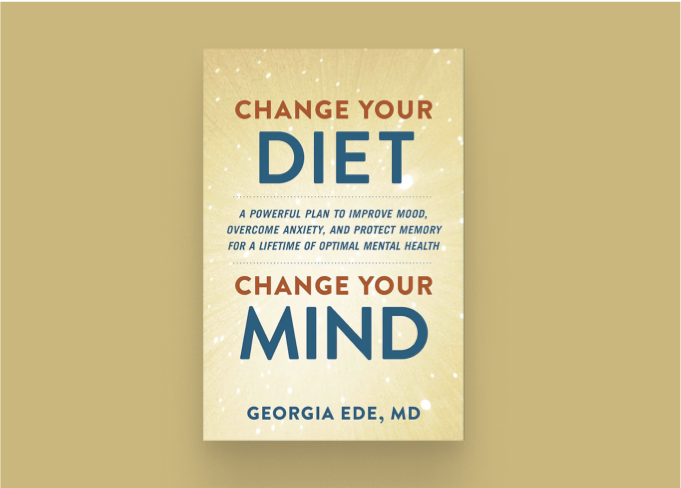
A powerful plan to improve mood, overcome anxiety, and protect memory for a lifetime of optimal mental health.
Read more

Visit Dr. Georgia Ede's website to help you discover the powerful connection between your psychiatric or medical diagnosis and your diet.
Learn more
In this Metabolic Mind Podcast episode, Dr. Bret Scher and psychiatrist Dr. Georgia Ede unpack the often-misunderstood realities of psychiatric medication tapering and deprescribing. They explain why most clinicians aren’t formally trained to taper safely, outline major medication classes (antidepressants, antipsychotics, mood stabilizers/anticonvulsants, benzodiazepines, stimulants), and describe how the brain adapts to medications through homeostasis—making abrupt dose reductions risky. The conversation clarifies how to distinguish withdrawal from relapse using timing and symptom patterns (including “brain zaps” and flu-like effects), critiques claims that antidepressant withdrawal is rare or mild, and shares practical resources and peer-support options to help patients advocate for safer, personalized taper plans.
Learn more

In this episode of The Metabolic Mind Podcast, Dr. Bret Scher and Harvard trained psychiatrist Dr. Georgia Ede explore the realities of treatment resistant depression and why it is often the norm rather than the exception. They examine the limits of the chemical imbalance theory, the results of the landmark STAR D trial, and why antidepressants frequently fail to deliver lasting relief. The discussion highlights overlooked contributors such as brain inflammation, low brain derived neurotrophic factor, and metabolic dysfunction, while previewing emerging treatments including transcranial magnetic stimulation, ketamine, psychedelic assisted therapy, and lifestyle and metabolic interventions. This three part series offers a hopeful and science based look at new options for people struggling with depression.
Learn more
A powerful plan to improve mood, overcome anxiety, and protect memory for a lifetime of optimal mental health.
Read more
Visit Dr. Georgia Ede's website to help you discover the powerful connection between your psychiatric or medical diagnosis and your diet.
Learn more
In this Metabolic Mind Podcast episode, Dr. Bret Scher and psychiatrist Dr. Georgia Ede unpack the often-misunderstood realities of psychiatric medication tapering and deprescribing. They explain why most clinicians aren’t formally trained to taper safely, outline major medication classes (antidepressants, antipsychotics, mood stabilizers/anticonvulsants, benzodiazepines, stimulants), and describe how the brain adapts to medications through homeostasis—making abrupt dose reductions risky. The conversation clarifies how to distinguish withdrawal from relapse using timing and symptom patterns (including “brain zaps” and flu-like effects), critiques claims that antidepressant withdrawal is rare or mild, and shares practical resources and peer-support options to help patients advocate for safer, personalized taper plans.
Learn more
In this episode of The Metabolic Mind Podcast, Dr. Bret Scher and Harvard trained psychiatrist Dr. Georgia Ede explore the realities of treatment resistant depression and why it is often the norm rather than the exception. They examine the limits of the chemical imbalance theory, the results of the landmark STAR D trial, and why antidepressants frequently fail to deliver lasting relief. The discussion highlights overlooked contributors such as brain inflammation, low brain derived neurotrophic factor, and metabolic dysfunction, while previewing emerging treatments including transcranial magnetic stimulation, ketamine, psychedelic assisted therapy, and lifestyle and metabolic interventions. This three part series offers a hopeful and science based look at new options for people struggling with depression.
Learn more