Share your story. Help someone else start theirs. Share Now


Listen, Watch & Subscribe on:



Dietitian Cures Her Anorexia With Keto
Listen
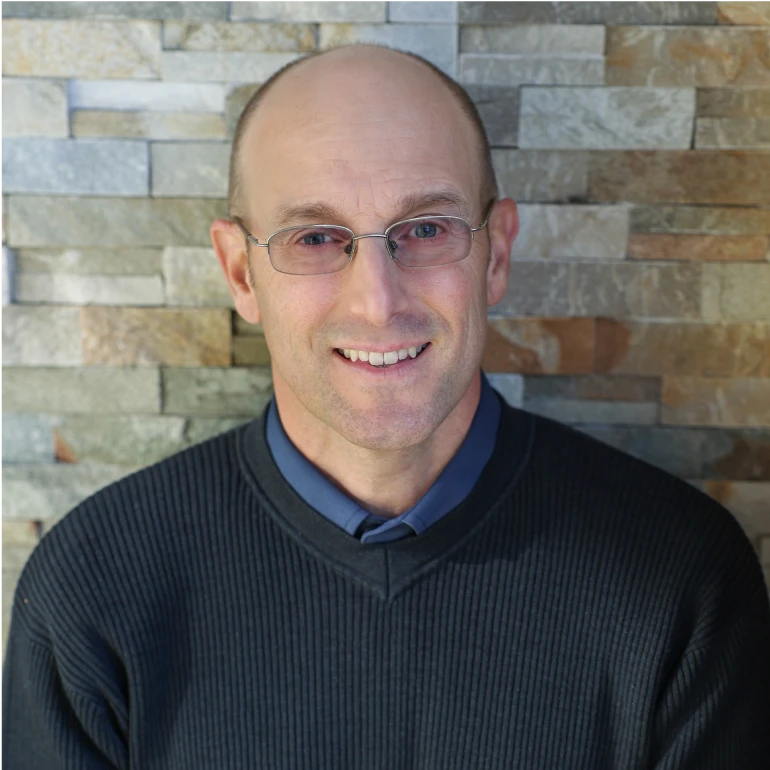
About the host
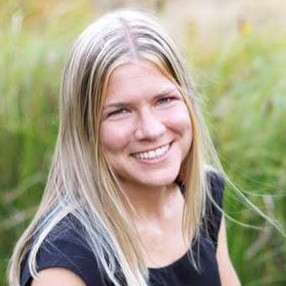
About the guest

Bret:
Welcome to the Metabolic Mind Podcast. I’m your host, Dr. Bret Scher. Metabolic Mind is a nonprofit initiative of Baszucki Group where we’re providing information about the intersection of metabolic health and mental health and metabolic therapies, such as nutritional ketosis as therapies for mental illness.
Thank you for joining us. Although our podcast is for informational purposes only and we aren’t giving medical advice, we hope you will learn from our content and it will help facilitate discussions with your healthcare providers to see if you could benefit from exploring the connection between metabolic and mental health.
Michelle:
We’ve ended up in a society that 93% of us are metabolically unhealthy.
We’ve made the base of our diets these highly processed carbohydrates. You’re like, oh, I don’t eat many carbs. And then, you walk through, well, I have cereal for breakfast and yogurt and a sandwich for lunch, and yeah, cookie, carbs. And what I’ve seen in a lot of the eating disorder community, myself included, is I do much better with a lower carbohydrate diet.
Am I potentially able to eat a very high-carbohydrate diet? Yeah, I did for many years, but my anxiety literally was so bad that I couldn’t talk or speak clearly, or I had suicidal ideation and panic attacks. If your brain isn’t functioning properly, then you can’t live a good full life.
But probably the best thing about eating this way is I no longer feel like I’m standing on the sideline of my own life.
Bret:
Welcome back to Metabolic Mind, a nonprofit of Baszucki Group, where we share information and resources at the intersection of metabolic and mental health. Today, we’re going to dive deeper into nutritional ketosis as a potential treatment for anorexia nervosa.
And as I’ve said before, just saying those words gives me the chills for multiple reasons. First, eating disorders and anorexia have the highest mortality of any psychiatric illness, and standard of care treatments are far less effective than we would hope. As a result, thousands of individuals with eating disorders often give up hope for recovery and struggle through decades of ineffective treatment.
And the second reason, though, is that we frequently hear that any restrictive diet, and I put those in air quotes, is contraindicated for someone with eating disorders. Not just unhelpful, but dangerous and contraindicated. But now we’re learning the opposite may be true for some with eating disorders, and that’s because nutritional ketosis is far more than just a diet.
It’s a medical intervention that changes metabolism and our body’s and brain’s physiology. And as you’ll hear in this interview, nutritional ketosis can help some people on the path to recovery. So, today, we’re going to hear about one such case. Michelle Hurn is a successful ultra marathon runner, and a keto and carnivore dietician, who by all means is thriving.
But to get here, she had to overcome her own journey with anorexia, her failure to improve with the standard of care, and her fear and discomfort of trying a diet that goes against everything she was taught, not only as a patient but as a dietician. So, in this interview, we get into her struggles, successes, and how she’s taken what she’s learned to help others in similar situations.
Now, as with many things, when clinical experience and enthusiasm are ahead of the research, we have to be careful. There’s still a lot that’s unknown about ketogenic diets and eating disorders. Yet, we also have to acknowledge that the treatment options for eating disorders, for the most part, are unsatisfactory and people are suffering right now, looking for help and looking for hope.
And that’s why we want to explore this topic today and in upcoming videos. Not to say this is a proven treatment that everybody with an eating disorder should try. No, definitely not. But rather, we want to share the experience of those who have treated their decades long journeys with eating disorders and found resolution and remission of their disease. Something that most experts don’t believe is even possible.
But before we begin the interview, please remember that our channel is for informational purposes only. We’re not providing individual or group medical or healthcare advice or establishing a provider patient relationship. Many of the interventions we discuss can have dramatic or potentially dangerous effects if done without proper supervision. So, consult your healthcare provider before changing your lifestyle or your medications.
Therapeutic nutritional ketosis, or simply starting a ketogenic diet, is a powerful health and medical intervention that can change your body’s metabolism and can dramatically alter brain function, medication levels, sleep patterns, energy levels, and other physiologic functions. If you have a psychiatric diagnosis, behavioral health symptoms or take medications for psychiatric condition, you should not start a ketogenic diet alone.
Instead, consider starting a therapeutic ketogenic intervention with careful monitoring from your healthcare provider or an experienced clinician. We hope you’ll share information with your healthcare provider and discuss whether therapeutic ketosis is an appropriate, safe and potentially effective intervention for you.
Okay, so now let’s hear from Michelle Hurn, author of the Dietician’s Dilemma, who you can find on Instagram at runeatmeatrepeat, that’s runeatmeatrepeat. Great handle. So, let’s hear from Michelle.
Michelle, thank you so much for joining me to talk about your personal journey and now your professional journey through this crazy world of nutrition. So, thank you so much.
Michelle:
Yeah, you’re welcome. Thank you so much for having me.
Bret:
So, let’s start by going back and getting a little personal, if you don’t mind, about your personal journey with food and nutrition and eating disorders.
And tell us how all this came about.
Michelle:
Yeah, I’ll try to give you the Reader’s Digest version.. So, when I was 12 years old, I was diagnosed with anorexia nervosa. I was about five feet tall and 57 and a half pounds. A BMI of a little over 11. For people who aren’t familiar, anything under 18.5 is considered dangerously underweight.
I was put in in-patient treatment immediately. I actually passed out in school. That’s how they found out that I was so sick. I was given about a 10% chance to survive, and I was immediately put on a 24-hour tube feeding system and fed the standard American diet. I was away from my parents for two months.
I was in a place in Wickenburg, Arizona. During that time, I did regain weight. But I was put on seven different medications as a 12-year-old. I had severe anxiety. I had depression. I had severe GI issues, diarrhea, constipation, going back and forth. I had racing thoughts around food, but I was told as a 12-year-old, this is your lot in life.
People do not recover from eating disorders. If you go beyond this, you’ll be, you’ll just have to be a high-functioning human with an eating disorder. You can regain weight, but you’re always going to be obsessed about food, thinking about food. And for the most part, that was correct throughout my adolescence. Even though I did regain weight, and I did go back to school. I was able to participate in athletics.
I was constantly thinking about food. I relapsed a few times in high school. And relapsed, lost quite a bit of weight. I was counting calories, analyzing. I had notebooks full of food and the calories. But I decided to become a registered dietician because I thought okay, I went from you’re probably going to die to now you’re alive. So, maybe I can help other people?
Maybe there’s something in nutrition that I’m missing? I had an intuition that blood sugar stabilization, keeping our blood sugar as balanced as possible, was beneficial for brain health and body health. But when I became a dietician, I’m sure you’ve had many dieticians or people talk about this before, there were things that didn’t make sense.
We’d go into a room with somebody with type II diabetes, and my preceptor would say okay, we’re going to teach them to feed our patients carbohydrates five times a day and match it with insulin. And I would just ask questions. I would say, don’t they, aren’t they not tolerating carbs?
Shouldn’t we teach them to eat less? Oh, no, Michelle and everybody needs carbs, whether you have kidney failure, heart failure. And I was a student, but I’ll never forget walking into the ICU and flipping over the tube feeding. I was like, oh my God, this is the same stuff I was fed as a 12-year-old. At that time, I was 24.
Because the number one ingredient when we’re tube feeding patients, and you’re getting tube feeding if you’re not able to eat by mouth or you need extra calories, was maltodextrin corn syrup, solid soy protein and canola oil. So, once again, I would just propose, wow, is that the best thing to feed somebody who’s been in a traumatic car accident, maybe has cancer?
And I was told, it’s just calories. Stop asking questions. And I became a dietician, and for the most part of my clinical career, I saw the revolving door sickness. I was working in acute care. You’d see someone come in with type II diabetes or kidney failure, and things just tended to progressively get worse.
And doctors would tell me like, look, it’s not the guidelines. It’s patients just aren’t doing what we tell them to do. But, often for the most part, of course, there’s outliers, people were really trying to follow the guidelines. And myself, I became an endurance athlete, and I was trying to follow these guidelines. And I had severe anxiety and depression throughout my life to the point of suicidal ideation, severe self-injury.
And I was just once again told look, this is just your lot in life. And then, yeah.
Bret:
So, let me, let me nterrupt you there for one second, though. So, as you’re going through your dietician training and learning all this about the carbohydrates and about the balanced diet and all that, and you had this natural curiosity and questioning about it.
But with your background and with your history of an eating disorder, when you’re focused around food all the time from a professional life, and then you have to eat in your personal life. What was your thought process like then? Was it getting better at that point or was it, or did all this focus on food worsen it?
I’m just curious how you responded.
Michelle:
Yeah, I think I was able to compartmentalize to some degree, as somebody who was also very athletic. I was able to eat almost, just had a plan. I would try to stick to some type of eating plan. But yeah, I wouldn’t say it was either better or worse.
Things were just pretty, pretty terrible. I like to say I felt like I was standing on the sidelines of my own life quite a bit. You’d go out somewhere, and what people were eating, I was always very careful to try to pack foods or eat before. And, of course, the nutrition guidelines encourage everybody to eat in moderation.
I desperately wanted to be that person who could eat cookies or eat something and not suffer anxiety or not feel dizzy and shaky. But that wasn’t my reality, and as someone with an eating disorder, we’re told you’ll know you are well when you can eat all things in moderation.
And I couldn’t do that. I noticed whenever I had a cookie or a piece of cake, even though once again, I was very athletic. I’m a lean human. I would have such severe anxiety to the point of literally panic attacks. And so, I remember thinking, there’s something wrong with me. It’s not the food, it’s not the whatever.
But so yeah, so that was my experience as someone with an eating disorder. and even when I was, running and racing into my twenties, I was still, pretty lean probably to the point of being underweight at some point. Then, it wasn’t until 2019 that I completely lost my health.
Like I went from being able to, I was training, trying to qualify for the Olympic trials, and I was running, 15, 20 miles a day. And all of a sudden, I couldn’t run two. I’d go out, and I’d break out in cold sweats. I was so anxious that I had to call into work. it just felt like my life was falling apart.
Like many people, you go to doctors to get your blood test, like what’s going on? You get all, you get prescribed Xanax. You try a few unconventional things. Some things are legal in my state that may not be illegal in other states. And just nothing helps.
Bret:
And what were you eating at that point?
Michelle:
Very high-carbohydrate diet, over 400 grams of carbohydrates a day. I actually reached out to two dieticians, sports dietician, sports dieticians, and they told me I needed 500 grams of carbs a day. And at that point, I’m driven. I tried that, and yeah, that’s what led to my, what I like to call, my come to Jesus moment, where I just, I had a really bad day in the hospital as a dietician.
We had a patient pass away. I covered oncology. A young patient. Came home early, fell asleep on the couch, and woke up at two in the morning. And it just felt like my body was on fire. I was out of solutions. And I feel like most people dealing with eating disorders have been there where we’ve seen a therapist. We’ve tried everything.
We’ve tried medications, and I’ll never forget standing in the living room being like, I do not know what to do. And so, finally, I just got my car keys. I drove to 7-Eleven. I got 30 pounds of ice. I put it in the bathtub ,and I’m just sitting in an ice bath at three in the morning crying. And that’s when my wife said, hey, you know what I think? We should do something different.
I’m 36 years old at that point. And I said, yeah, I’m done running. This is ridiculous. Like clearly my running days have passed me. I’m tired of thinking about food all the time. And so it’s interesting because like I’m sure many people, you don’t think these like very horrible moments in your life are going to be a springboard for change. And so, it was that few days later that I ended up saying, shoot, I’m not running so much. And I’ve heard that ketogenic diets can be very beneficial for mental health. So, why not just roll with that for a minute and just see if that helps?
Bret:
Yeah, so when you first heard that, it goes against everything you were taught as a dietician.
Everything you were taught about eating disorders, and how to treat them. It was the opposite of everything you’ve heard.
Michelle:
Yes.
Bret:
So, I’m always curious how someone comes to accept that maybe I should try this because it seems like there’s such a barrier. So what was your thought process like?
Michelle:
Yes, and quick plug for my book, that’s what the Dietician’s Dilemma. What do you do when you learn that everything you’ve been taught, like what healed me was against everything I’d been taught? So, I was terrified of a ketogenic diet. I was taught as a dietician that the fat will kill your heart. You will not have enough glucose for your brain.
And I was like, okay, this will be a very short term thing and maybe a few weeks, maybe a month. And then, I stumbled on the carnivore diet. And I was in so much pain. Just my muscle pain that I thought, you know what? Why don’t we just do this for a few weeks? Like, I’ll give it a few weeks.
And, of course, you bring that to your partners. I’m sure anyone with an eating disorder, if they’re living with their family or a significant other, she was like, F no. This is an eating disorder. This will only set you back. Absolutely not. We fought about it. She cried. I felt terrible. Finally it was like, you’re an adult.
Do whatever you want. I don’t care. Like you’re not, this will not work. And I can’t tell you why I had such a conviction. I think just because I tried so many different things. And I was fortunate to be able to go onto social media and to see so many people like, they look healthy. I’m not healthy.
And I did not know, and this I made me very angry that there is so many clinical trials on ketogenic diet, not specifically with eating disorders. Although we do have some very good case studies with Dr. Shebani Sethi now for binge eating disorder. and I’m very familiar with the work of Dr. Chris Palmer.
But as I’m going through these studies, I’m like, no one has ever taught me this. At that point, I’d been a dietician for over a decade. No one has taught me how effective they are in reducing A1C. No one has taught me about how ketones are anti-inflammatory. And you’re a little bit shocked.
You’re excited. And long story short, I did the carnivore. I ended up doing full carnivore for 30 days. But at week three, my muscle pain started getting better within a week. But I attributed that to, oh, I’m not running. But week three, I remember coming home. I came home a little early, and my wife was sitting on the couch. And she said, hey, I need to talk to you.
She beat me home, which is unusual with her work hours. And you never want to hear that.
Bret:
Right?
Michelle:
Oh no, like did someone die? Am I in trouble?
Bret:
Nothing good starts that way.
Michelle:
Yeah, that’s not good. Like, oh geez. And she said, I don’t know if I like this way of eating yet or not. But this is the best your anxiety has been in the 11 years that I’ve known you, and we both were just like, whoa.
Like, it was true. Like, I wasn’t, I was calm. I didn’t have to eat every two hours. I was finally getting enough saturated fat and enough vitamins. I also, and we could do a two hour podcast about this, about bioavailability. I just, I don’t think in my life I’d ever had such bioavailable nutrition. As a dietician, they’re telling me to eat all these grains and all these vegetables. And yeah, so then I, once again, perhaps naively, I thought, wow, all my coworkers are going to be so excited about this. The hospital’s going to want to implement this. These low carb diets are diabetic. And so I brought all this research and wrote a proposal to our clinical, director and he doodled the whole time and it was just like, yeah, interesting.
Do we want to implement this? Oh, no. No, we just do the nutrition guidelines. And as I healed and as I noticed the reduction in my anxiety, I literally started to have moments where I would just cry because I was making myself some, we, ended up getting a cow share, which is, you get a lot of pounds from one cow at a time. And I was grinding up some meat and I’m like, oh, this is too lean.
I need to add more fat. And so there I am. And I’m just like, what? As someone with an eating disorder, you avoid fat at all costs. And it was like all of a sudden, here I was just totally okay. It was like all of a sudden. And I don’t want to, I don’t want to make this like Pollyanna, like certainly anybody with an eating disorder, it’s multifaceted, right?
Like you’ve got to work through your trauma. I’ve been doing work for years with that type of thing. But I found when I was able to nourish my body once again with that really highly bioavailable nutrition. And I wasn’t constantly spiking and crashing my blood sugar with so many simple carbohydrates, that I healed.
Bret:
Yeah, such an amazing story. And now you’re back running as well.
Michelle:
Oh, yeah. That’s a funny story. So, probably about, I was just home more because I wasn’t running, I thought ah. And so my wife like literally said at one point, you know what? Why don’t you go for a run?
You’re annoying me. This was probably two months into eating a lower carb. And I was like, had this feeling because it felt like such a part of my identity for so many years. I was like, ooh, I don’t know if I should. And the last time I went out to run, I would get a cold sweat. But then it was like, okay, drop the ego. Come on, Michelle.
Get your act together. So, I was like, yeah, it’ll be fun. I’ll be maybe like a recreational runner, right? I will just go out there, run a couple miles. And who knows if you can run low carb anyway? And I went out and I just ran for an hour and I felt fine. Of course, my wife was like, oh, this will be great.
We’ll do this once, like twice a week. And then I was like, what if I run ultras? Like instead of doing marathons, how about 50 miles? Oh, God bless her. I’m sure you’re familiar with Zach, Zach Bitter. I reached out to him. He was my coach for a long time and talked about, you know how it made so much sense, especially for the ultra distance. Can I teach my body to burn more fat for fuel, even at faster paces? Because it doesn’t matter if you’re a high-carbohydrate athlete or a low-carbohydrate athlete. Everyone’s goal is to preserve muscle glycogen. Because we’ve all, if you’ve been a marathon runner and you’ve hit the wall, that’s when you started to tap in your muscle glycogen.
And so, I found I was very successful. I’ve run four ultra marathons, distances from six hours to a hundred kilometers, 62 miles. And done that really well.
Bret:
So, eating this way didn’t even, didn’t only heal your brain, it healed your entire body.
Michelle:
Yes.
Bret:
So from a mental and a physical aspect.
So, such an amazing story. And so, now here you are as a dietician teaching people or helping people learn better ways to eat for them, for their health, for their mental health. And you encounter people with eating disorders that you can help as well. But there’s got to be still that fear of, if I have an eating disorder and I focus on food so much, why are you going to give me a restrictive diet that focuses on food so much?
So, how do you respond if someone comes to you and has those thoughts or those feelings?
Michelle:
Yeah, and that’s a great question. You know what I like to start saying is, I like to apply to like common sense. I think sometimes we out-think our common sense. And so, first of all, I like to say, okay, every species has a species-specific diet.
Most people can get that. I have a dog named, Jackson, and I have a tortoise named Gertie. They eat very differently. Jackson, obviously, eats more carnivore, the livers, the meats, the fats. Gertie, kale and lettuce. If I fed, if we flopped it, both species die. Humans have a species-specific diet, which we thrive off of, and I believe evolution.
You look back at evolution, humans were designed to eat animal protein and fat. Our system digest it, uses it really well. Our brain functions really well. We have very high bioavailability with those things, meaning we can absorb and utilize those nutrients. We do not absorb and utilize the nutrition from plants very well.
Now everyone loses their mind. That doesn’t mean that we can’t have some plants. Most people, I think, can tolerate a lot of plants, okay? But what we’ve seen is, and a lot of people can tolerate carbohydrates, okay? I’m not anti-carbohydrate, but what has happened is as we’ve given people these very highly processed, we’ve made the base of our diets these highly processed carbohydrates.
And when I say that, what I mean is people, and as a dietician, people are like, oh, I don’t eat many carbs. And then you walk through, I have cereal for breakfast, and yogurt and a sandwich for lunch, and yeah, cookies, carbs. What has happened is we’ve ended up in a society that 93% of us are metabolically unhealthy.
And I say, I like to use the example, when it comes to eating disorders or mental health, that it’s my hypothesis that some people just don’t utilize, glucose in the brain very well. Like just, and Dr. Chris Palmer has lots of good research on this. And a good way to think about this is epilepsy. Babies or born without the ability to process glucose.
So, you give them normal formula or whatever, and they will seize. When you give them a ketogenic diet, they stop seizing. Nobody’s ,oh my gosh, that baby had a terrible diet. Or that baby’s mom was spiking the baby’s food with sugar. No, it’s just you were born with a genetic inability to utilize glucose.
And so what happens? We remove that, things go better. And what I’ve seen in a lot of the eating disorder community, myself included, is I do much better with a lower carbohydrate diet. Am I potentially able to eat a very high-carbohydrate diet? Yeah, I did for many years, but my anxiety literally was so bad that I couldn’t talk or speak clearly.
As I stated earlier, I had suicidal ideation and panic attacks. And obviously, now as you hear me presenting, I would hope that I come across as clear and coherent. And I’m very lucky. I have a beautiful life. I’m happy. I’m able to run lots of miles. I work, I do lots of great things.
But if your brain isn’t functioning properly, then you can’t live a good, full life. But probably the best thing about eating this way is I no longer feel like I’m standing on the sideline of my own life. And when I say that, what I mean, and I think people with eating disorders will be able to relate to this, is you could be somewhere, let’s say you’re hanging out with friends.
You can be doing something as simple as like playing a card game. You just can’t be in the moment because you’re constantly thinking about what did I just eat? What am I going to eat? So by allowing, by fueling, our brains in a species-specific way. Once again, I would love to, if I had Jeff Bezos’ money, I would just do tons of clinical trials on this, and hopefully, come with better data.
But I can only serve you the anecdotal data that I have. And then, obviously, point to more research on ketones and things.
Bret:
Yeah, so you’re living the life now that they told you would never be able to live when you were younger.
Michelle:
Yeah, they said no. Yeah.
Bret:
You found a way.
Michelle:
They said all things, and that’s another thing I want to say. I was going to say this, the body and brain’s ability to heal is greater than anybody is allowed you to believe. I hope people hear that. Because when I was 12, once again, I was told, you’re probably going to die. If you don’t die, you’re going to be a mess your whole life, don’t you know.
Just your body can heal, but in order for the body to heal, it’s not just throwing medications at you. And I’m not anti-medication. There’s certainly times in your life that you probably should be on medications, if you’re dealing with severe anxiety or depression. It just makes sense.
Once again, go back to, you know how I feed species-specific. When you feed your brain and body, the things that can make it function properly. You’re going to be a healthy human. The processed food industry has made this narrative that we’re missing out on life if we’re not eating cookies. If you had told me I would feel the way I do now, like when I was, I don’t know, 19 or 20, I would, you could’ve said, hey Michelle, you’re going to be, have no anxiety.
You’re going to feel really great, stable blood sugar, running well. Oh, but you have to give us your right arm. I want to give it to you in two seconds. I don’t care if I can’t eat processed food. So yeah, that makes me so angry, and all these dieticians out there that send me mean messages saying, oh, you’re, it’s okay to eat things in moderation.
I’m glad if it works for you, that’s wonderful. I do not give a flying F what anybody ultimately eats. My goal is to help as many people as possible. And I suffer tremendously, and I know many people are suffering. And the moderation thing doesn’t work in my experience and my opinion for most humans.
Bret:
Let’s talk for a second about the reaction that some people can have to this.
So, if someone’s out there listening, and they’re living with an eating disorder. And they say, wow, this must work. It worked for Michelle. It worked for all these other people. I’m going to just start a keto diet, a carnivore diet and see if it works for me. Do you have any concerns with someone just doing that kind of on their own and thinking that it’ll work for them, just like it’s worked for other people they’ve heard about?
Michelle:
Yeah, one, I would make sure like, there’s so many steps to make sure that you do. Because it’s rare, it’s easy to turn anything into an eating disorder regimen. You could make a carnivore diet, a keto diet, a vegan diet, you could make anything an eating disorder. If you’re going to do this, and try to limit your portions, think about it, whatever.
Yeah, no, that would absolutely be my concern. So, I would say anybody who wants to do this, you’re starting it. Ideally, you’re working with a dietician, nutritionist, health coach. You have some support. Certainly, if you’re on any type of, medication, specifically blood glucose lowering drugs, you got to work with your doctor.
Ideally, you have a doctor or somebody on board. But let’s just say, if you’re in a good spot where you’re like, look, I know, let’s say you’re a little bit underweight and you’re like, I really want to, I want to go for this. I want to try this. I just think you have to be really honest with yourself, and if you’re not sure, ask somebody you trust.
I’m very fortunate. My partner’s great. I have a few very close friends and family that are very, that I feel very good talking to about this. Just like anything else, there’s no, there’s no magic. It’s just getting to a point where you’re giving your body enough fuel and enough nutrition and, ideally in time, it takes time.
I shared that I felt much better in three weeks. But I’ve been doing this now for several years, and it’s not like my life is magical or perfect. I don’t have difficult days, but it’s, it’s so much better. But yeah, ideally, I would say who, whatever you are, even if you’re in a good spot, it’s never a bad idea to make sure you have outside support.
Bret:
Yeah, the support seems like such an important part because it, with eating disorders, in a lot of these interviews I’ve been doing, people have said they were good at hiding the eating disorder from everybody else. They were good at hiding their obsessions about food and their just focus on food and their restrictions on food.
So, that’s where having that outside eyes, that outside perspective of someone else who’s close to you, who can see things from a different perspective, can give you that feedback. And that’s why I think it’s so important. And whether it’s you as a dietician, or you as a dietician plus a family member or friend or whatever.
So, do you work with your clients to make sure or help them set up that sort of support structure?
Michelle:
Yeah, ideally, we want to make sure you have somebody else in your life, too. Because I’m obviously not going to be able to talk to you like daily, or sometimes even just several times a day, if you’re brand new or you’re struggling.
Whether that’s, we can connect you, there’s a lot of support groups online, or whether there’s people in your community or just you want an accountability buddy, like you have a good friend or something. Yeah, we absolutely try to make sure that you have resources because it can be really hard at first because you literally are challenging everything you’ve ever known.
I remember it was just so strange to go from, I eat like a oatmeal and a piece of fruit in the morning to oh, I’m having a pound of ground beef and a stick of butter. This is a lot, and this is weird. Like we’re just doing it. You have to be really brave. You almost have to like, be able to let go and trust. I think I was at a point where things were so bad. I couldn’t run.
I was in so much pain that almost like a rock bottom-type thing. And so that’s another thing, like if you’re going to, if you’re going to make a change, I think you have to be really honest with yourself that you’re ready, you’re committed. You have outside, you have other coping mechanisms.
Because, of course, restricting or binging and purging is a coping mechanism for us. So, what are you going to do when you get anxious or sad or stressed out?
Bret:
Yeah, that’s a great point. it’s changing your diet is one part of the intervention of the treatment plan. It can be a big part of it, but there’s so much more that also is involved.
So, I’m glad you brought that part up. And that’s what gives you a very unique perspective and an incredibly beneficial perspective. Because you know the food part and you know what it’s like to live this way part. So that’s a very good combination that can help a lot of people.
So, I hope a lot of people hear your message, and look you up. And see your Instagram at runeatmeatrepeat on Instagram.
Michelle:
Yes.
Bret:
I love that. I love that title.
Michelle:
Yes, we try to have some fun. We do some funny skits on there to make fun of some traditional nutrition advice.
And, but yeah. and I also I’m happy to talk to anybody. If anybody has any questions, you can email me through Instagram or my website. I know it can be really kind of lonely, scary place. So, I’m always, and if I’m not the right resource for you for potentially, like if you need a different resource, I’m happy to point you in a different direction as well.
Bret:
Great, thanks for all your work. And thanks for joining us and sharing your story today.
Michelle:
Yeah. Thanks again for having me.
Bret:
Wow. I find that such an inspiring story to become healthy again, Michelle had to overcome what she was being told multiple times, first from her doctors about her eating disorder, and then from everything she learned to become a dietician.
Only by not going along with what she was told was she able to regain her health and her life. That’s takes bravery and was really a difficult thing to do in the beginning, as you heard, but worked out well. And we’ll see this is a common theme. In our next video, we’ll hear from Caroline Beckwith.
If you heard our podcast with Caroline’s aunt, Dr. Barbara Scolnick, you may already know some of her story. But in our upcoming interview, we’ll go into much greater detail about her eating disorder, and her path to health through ketosis. And that ultimately led to a pilot study treating anorexia with nutritional ketosis and ketamine infusions.
So, definitely check out that episode, if you haven’t watched it or listened to it. So, thanks again for watching. Please remember to leave a comment about what you found most helpful or curious in this episode, and we’ll see you next time at Metabolic Mind. I’m Dr. Bret Scher. Thanks again for watching.
Thanks for listening to the Metabolic Mind Podcast. If you found this episode helpful, please leave a rating and comment as we’d love to hear from you. And please click the subscribe button so you won’t miss any of our future episodes. And you can see full video episodes on our YouTube page at Metabolic Mind.
Lastly, if you know someone who may benefit from this information, please share it as our goal is to spread this information to help as many people as possible. Thanks again for listening, and we’ll see you here next time at The Metabolic Mind Podcast.
Listen, Watch & Subscribe on:
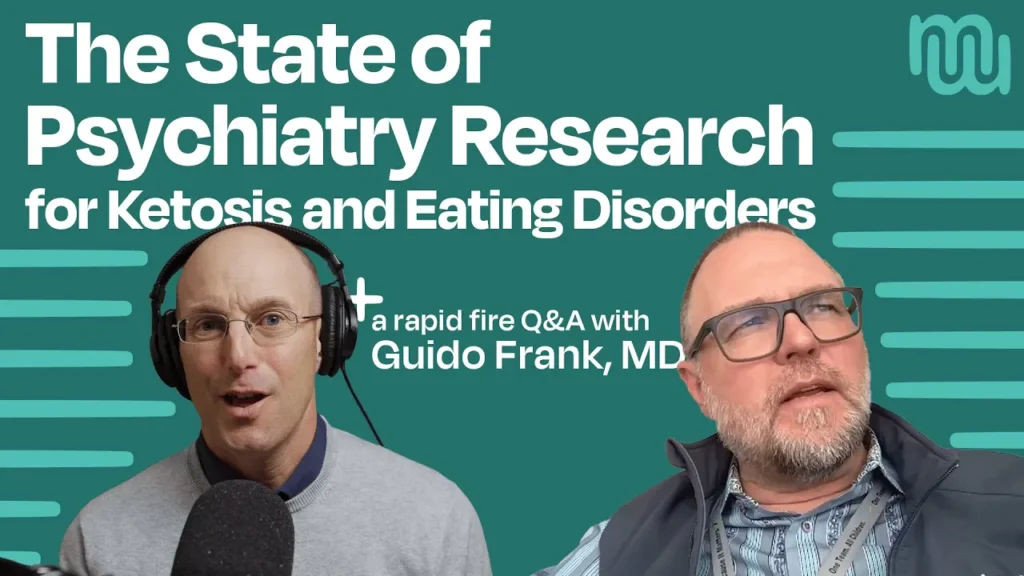
This episode of the Metabolic Mind Podcast features Dr. Guido Frank of UC San Diego, a leading researcher in eating disorders, discussing why anorexia nervosa remains one of the most lethal psychiatric conditions and why standard treatments often fall short. Dr. Frank explains how stress and impaired brain glucose metabolism may intensify restrictive behaviors and why therapeutic nutritional ketosis could provide a new metabolic pathway to stabilize brain energy and reduce obsessive thoughts about food and weight. He also outlines his upcoming clinical trial investigating ketogenic therapy for anorexia, offering cautious but meaningful hope for those seeking new science-based treatment options.
Read more

This Metabolic Mind episode shares the remarkable recovery of Caroline Beckwith, who battled severe anorexia nervosa for more than fifteen years and found lasting remission by combining a medically supervised ketogenic diet with ketamine infusions. After years of ineffective standard treatments, obsessive exercise, and even substance use, shifting to therapeutic nutritional ketosis changed her brain chemistry, quieted the relentless anorexic voice, and allowed her to rebuild a full life. Her story challenges the assumption that all restrictive diets are dangerous in eating disorders and instead positions ketogenic metabolic therapy, when carefully supervised, as a promising new option for people with anorexia who have lost hope.
Learn more

Learn how the new AnorExit program is pioneering the medically supervised use of ketogenic therapy for anorexia by combining expert nutrition guidance, peer support from someone in long-term recovery, and coordinated care with physicians and therapists. In this Metabolic Mind episode, dietitian Denise Potter explains why nutritional ketosis, once considered inappropriate for eating disorders, may actually help correct underlying metabolic and psychiatric factors when applied safely in a structured, multidisciplinary setting. This discussion explores early case-study success, the science behind ketosis, and how individuals can explore this emerging therapeutic option under expert supervision.
Learn more
THINK+SMART is a community-inspired resource that provides a framework for ketogenic and metabolic strategies like those that have helped our son and so many others recover mental wellness.
Learn more
This episode of the Metabolic Mind Podcast features Dr. Guido Frank of UC San Diego, a leading researcher in eating disorders, discussing why anorexia nervosa remains one of the most lethal psychiatric conditions and why standard treatments often fall short. Dr. Frank explains how stress and impaired brain glucose metabolism may intensify restrictive behaviors and why therapeutic nutritional ketosis could provide a new metabolic pathway to stabilize brain energy and reduce obsessive thoughts about food and weight. He also outlines his upcoming clinical trial investigating ketogenic therapy for anorexia, offering cautious but meaningful hope for those seeking new science-based treatment options.
Read more
This Metabolic Mind episode shares the remarkable recovery of Caroline Beckwith, who battled severe anorexia nervosa for more than fifteen years and found lasting remission by combining a medically supervised ketogenic diet with ketamine infusions. After years of ineffective standard treatments, obsessive exercise, and even substance use, shifting to therapeutic nutritional ketosis changed her brain chemistry, quieted the relentless anorexic voice, and allowed her to rebuild a full life. Her story challenges the assumption that all restrictive diets are dangerous in eating disorders and instead positions ketogenic metabolic therapy, when carefully supervised, as a promising new option for people with anorexia who have lost hope.
Learn more
Learn how the new AnorExit program is pioneering the medically supervised use of ketogenic therapy for anorexia by combining expert nutrition guidance, peer support from someone in long-term recovery, and coordinated care with physicians and therapists. In this Metabolic Mind episode, dietitian Denise Potter explains why nutritional ketosis, once considered inappropriate for eating disorders, may actually help correct underlying metabolic and psychiatric factors when applied safely in a structured, multidisciplinary setting. This discussion explores early case-study success, the science behind ketosis, and how individuals can explore this emerging therapeutic option under expert supervision.
Learn more
THINK+SMART is a community-inspired resource that provides a framework for ketogenic and metabolic strategies like those that have helped our son and so many others recover mental wellness.
Learn more