Share your story. Help someone else start theirs. Share Now


Listen, Watch & Subscribe on:



How This Doctor Put Over 150 Patients into Diabetes Remission
Listen
About the host
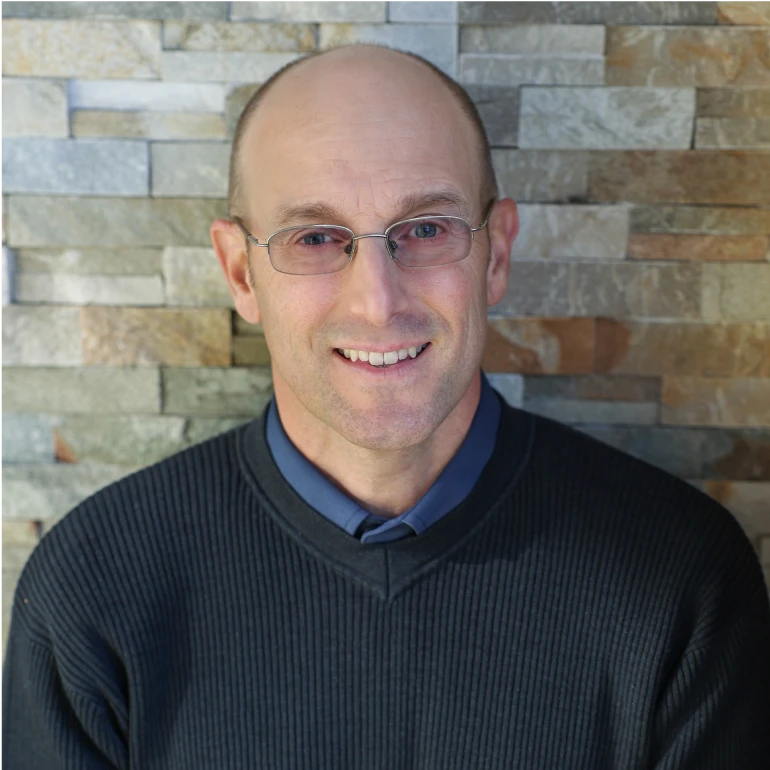
About the guest
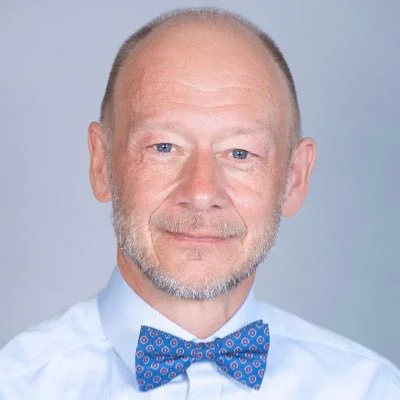

David:
Worldwide, really, most doctors have the idea that diabetes is a chronic deteriorating condition, and I know it isn’t true.
Bret:
Welcome to the Metabolic Mind Podcast. I’m your host, Dr. Bret Scher. Metabolic Mind is a nonprofit initiative of Baszucki Group where we’re providing information about the intersection of metabolic health and mental health and metabolic therapies such as nutritional ketosis as therapies for mental illness.
Thank you for joining us. Although our podcast is for informational purposes only, and we aren’t giving medical advice, we hope you will learn from our content and it will help facilitate discussions with your healthcare providers to see if you could benefit from exploring the connection between metabolic and mental health.
It’s pretty clear we should no longer be talking about managing type 2 diabetes but rather putting it into remission. With using low carbon ketogenic interventions, it is possible. A doctor in the NHS in the UK, Dr. David Unwin, is shown what he can do in his single medical practice. And this opens up the door for safely and effectively using ketogenic interventions for so many other medical interventions, such as in psychiatry, another endocrinology for weight loss for and, of course, diabetes.
And Dr. David Unwin as a single doctor is showing what he can do in his practice. So let’s hear this interview from Dr. David Unwin and see as a clinician what this might mean for your practice or as an individual, what this might mean for your goals of your care and your interaction with your physician.
All right. Dr. David Unwin, thank you so much for joining me at Metabolic Minds.
David:
It’s so lovely to chat to you again. This was overdue by years, I feel.
Bret:
By years, I remember first chatting with you many years ago at a low carb conference, I think it was in Denver. Yeah, and, learning about your practice and what you were doing and not just how you were running your practice and improving people’s lives, but how you were also collecting data and publishing it for others to see.
I want to get into all that and get into the news coverage you had in the UK. But first, for those who aren’t familiar with you, just give us a little bit of your background and who you are.
David:
Thank you. Yes i’m an elderly GP. I’m 66.
In fact, I’m, I think, I’m the oldest working primary care doctor in about a hundred miles radius in the UK. Doctors don’t last like they do in the states, they tend to pack up all. So there, I’ve looked after the same community of people for 40 years, an amazing privilege. And they can’t, just can’t get rid of me because I love it so much.
And up until I think it was, up until 2012, I was a very ordinary doctor and mainly my focus was on running a big practice. We got 10,000 patients, but my focus seemed to be on medicating patients, and then I had a eureka experience. And since then, I’m fascinated by the true cause of many chronic diseases.
And, the thing I really major on is metabolic health and particularly insulin resistance and type 2 diabetes. And now fast forward, we’ve got an amazing database because we’ve kept very careful records of all the patients who’ve adopted a low carb diet since January, 2013. And that enables me to with monotonous regularity, publish papers, explaining how my patients are doing.
And, it’s evidence really for what can be achieved because we are just in the National Health Service. So this is low carb in the National Health Service in the UK with our, all of the terrible, we’re short of doctors and nurses, and we’re on 10 minute appointments, is all we have.
Fast forward, now we may have perhaps the greatest number of remission of type 2 diabetes cases possibly in the world. We’ve got 151, and that is more than a quarter of everybody with type 2 diabetes in my NHS clinic. And so these patients are not, they don’t, I don’t choose them. So I can’t cherry pick.
They are the ordinary people who live in the north of England, north of Liverpool, which is where I am. So that’s the background, although it’s all got out of hand a bit. We’ve done TV documentaries, we’ve done radio work. And the thing I think that caught your attention was we were given six minutes prime time news time on national television in January of this year where they showcased really my patients. They came and spent a day with us, and they created a little mini documentary, and it ran from seven o’clock, which is prime time. I was so very proud of that. So that’s more or less it.
Bret:
Yeah.
That must have been an amazing experience for you. I look, I know you fairly well, and I know you’re not doing this for the limelight and the notoriety. You’re doing this because it’s the right thing to do for your patients, and you are a true clinician at heart who wants to help your patients.
I remember having the discussion about how finding this way to help your patients transformed your practice and your enjoyment and your practice. But then to get this attention, and this nationwide attention to highlight what you’re doing, I’m curious how that felt. I’d imagine it was a little uncomfortable and exhilarating and rewarding all at the same time, but how’d you feel about it?
David:
It was so confusing because really British GPs are very disinclined to enjoy mediattention. And it made at the beginning, it made me and all of the partners, were very much against me doing anything. But then against that is the idea that if you don’t tell the world what is possible, how are people to be hopeful?
And worldwide, really, most doctors have the idea that diabetes is a chronic deteriorating condition, and I know it isn’t true. And I see in every clinic I do patients, absolutely, transformed with hope and then, but it’s them really, it’s the potential within people for doing better that I find just the most wonderful medicine.
And that wasn’t my experience of medicine for the first 25 years. It was very depressing. I now find it very exciting. Yeah, so it was, it’s been very mixed because in you also draw the attention of people who don’t like what I do, and I think doctors on the whole, we want people to like us.
So it’s quite a shock on social media, when you have to deal with people who don’t like what I do. And so it has just, as you say, been a bit mixed and very, in the early days, I was so mystified as to why would people not be delighted that I was not using drugs for my patients and that they were achieving remission and improved lipid profiles and improved renal function and improved liver function.
I was totally mystified. I got hate mail and all sorts of it. It’s taken me many years to understand that when you move in into these things nationally, of course, people disagree. And the thing is to try and keep it polite. A thing you do, Bret, you are always very polite.
I’ve never heard you, these sort of personal things that you get on social media. So I had to learn. How to survive in that. And also, I have to be careful because I’m a Royal College, which is a thing we have in the UK, we have a Royal College, which is an independent body representing primary care physicians, and they like what I do.
And that has enabled, I think that’s why one of the reasons we’ve been able to make more progress perhaps here with low carb and diabetes than you have in the States because the Royal College is independent. The Royal College has made me a clinical expert in diabetes and that has given me a little bit of status really. So that instead of being just an old GP, I am supported.
And the college is in truly independent. It does not accept money from big pharma or indeed anybody. And that makes things possible that I think perhaps a, harder for some of my colleagues in in the States.
Bret:
Yeah, that’s a remarkable statement right there, that they’re independent.
They don’t take outside funding from pharma or industry, and they are in favor of what you’re doing because you’re helping people with lifestyle, with diet, with low carb nutrition specifically, and not requiring medication. So it really is in stark contrast, too. Here in the US and other areas where there is so much influence.
And I think that’s, what’s so important about the example that you’re setting though, that look, this is what one, like you said, one practice, one doctor, 10 minute appointments. This is what we can accomplish. So why isn’t everybody doing this? And you were out there, telling the world about it.
And it’s so easy when we go to our low carb conferences, and we talk to low carb doctors. Everybody’s talking about remission of type 2 diabetes, but I really like the point that you made that you really have to get out there and spread the message to the rest of the medicine because the rest of medicine is still talking about managing type 2 diabetes and not using low-carb nutrition to put it into remission.
But like you said, there’s pushback. So I guess I hate to focus on the negative, but I’m curious what the pushback is because for people who have been there, and experienced it, it’s wow, why doesn’t everybody see this? So what has some of the pushback been?
David:
The major one was that all my various enemies clubbed together and attacked me through a national newspaper.
This was The Mail on Sunday, and they told me they were investigating me for months and that was a very uncomfortable experience because they were contacting all my friends trying to find somebody that would dish the dirt on me. And it’s horrible. That went on for months and they were a mixture.
Some of them were professors of various vested interests, and in the end, they bullied our nice organization, which is the standards organization who previously had supported my teaspoon of sugar equivalents, the way I help patients understand, what food does to their blood sugar.
And we did a freedom of information thing. They published a paper saying that my work was inaccurate and that there wasn’t evidence for it. And then we did a freedom of information thing to discover that they had essentially blackmailed, nice with threats of what the paper would publish.
That was in about four years ago, and I found it was really upsetting because. It’s I don’t know, it’s you don’t want to be on the front. You don’t want to be on the pages of Sunday papers. At the time I was very upset and then afterwards I actually found that so many people supported me and the world forgets what’s Sunday papers. And it hasn’t done me any harm and the college didn’t drop their support of me.
In fact, supporters gathered and gathered. So you just have to learn to develop a thick skin as I think many of our colleagues have had to do. So that was, but then again, other papers. So another difference I would highlight, the press here are, again, more independent. So I’ve had coverage in the Times, the Telegraph, the Daily Express.
I’ve written 35 articles for the Daily Mail and as well as Radio Four. Our big radio plus four television channels have taken my, so you have to take the rough with the smooth, and the smooth is that so many journalists are curious about what we achieve. They’re fascinated by the success stories of my patients.
And I’ve had a great deal of media coverage, but also I’ve had to pay the price, which was the thing in the Mail on Sunday. Taken, overall, I suppose it’s a not a bad ratio of bad to good. And I need to get over it and move on. But yes, it’s, I look again at the States and it seems as if you are, I don’t know what it is with your media, they’re not curious about these amazing stories.
Because you’ve got loads of wonderful stuff going on in the States and Nina does some great work. But beyond that, the rest of you seem to struggle to get the sort of coverage that I get reasonably easily. And so I’m asking you now what, why is that?
Bret:
Yeah, it’s a fantastic question. I wish I knew the answer, and it may just come down to more outside influences really being very cautious and skeptical about low-carb interventions. But to take it back to you though, this is why it’s so important that you’re not just in your little silo, taking care of your patients, but you are collecting the data, publishing the data, putting your data out there for everybody to see.
So it is objective and it is, clear as day, how you’re improving the lives of your patients. And I think that’s so important. And now, we’ve got that here in the US with Virta Health and now, Dr. Tro and his TOWARD program. But you’re right, they haven’t gotten necessarily the same media attention that you are getting.
But it’s so important that you are getting it because, oh, low carb and all that protein, it’s gonna hurt your kidneys. Oh, it’s going to raise your cholesterol and worsen your cardiac risk. It’s gonna have all these negative consequences, but then your data in your practice shows exactly the opposite. It lowers your cardiac risk, it improves your kidney function.
So really what you are doing is counter counterbalancing or counteracting all of those uneducated concerns about low carb, and I wonder if maybe that’s also some of the pushback, because people who have believed and talked about the dangers of low carb don’t want to be wrong? So there’s that as well.
So have you encountered that too?
David:
Oh, we have, but it’s a funny thing, Bret, I’ve come to see some of my enemies as my friends in that, If I wasn’t on social media, I wouldn’t get the pushback. But then the answer to that is to answer it. So if somebody, if people are worried about renal function and a high protein diet, the answer to that is audit and publish.
If people are worried about liver function, if they’re worried about lipid profiles, audit and publish. And so the goading I have received from colleagues about renal function, liver function, lipid profiles, cardiovascular risk, and so on, it has actually done me good because rather than just get angry, why don’t you look at your data? And science is about interesting questions.
So I have a data set and I can ask, what has happened to renal function? What has happened to all these things? I, what I’m currently championing actually is the difference that real world data can make to science. And I really would encourage clinicians around the world, if you’re doing good work, if your results are good, audit and publish because people can’t disagree with clinicians who show what’s possible.
We don’t need to fight and argue and be rude to each other. You people can say to me, I worry about lipid profiles. And I can say, good point. Here they are, and as you rightly say, they’re all improved significantly, and that’s actually the end of that chat. What comes next is they should be, how interesting what is it you are doing, Dr. Unwin, and what specifically are you doing that’s enabled this?
Some academics have been really fascinated by my work and help me publish. Each of the papers has a professor as a senior author, and each of these professors are academics who see the value of real world data because so often we do RCTs that do not represent the patients that I am caring for.
And that, there is a real value of what doctors with ordinary patients can achieve. And that we shouldn’t just abrogate this too, think that, oh, I used to think that I had nothing to contribute as a humble GPI. Nothing to contribute. Every GP, every doctor potentially has some something useful if you are prepared to collect baseline data and latest follow up.
And increasingly, as only last week, Tro has published a really sound paper showing, I think it was 19.5 kilogram weight loss on patients on his program at one year. That really competes with the wake of ozempic things. And it’s, there we are. Those are patients, that’s what happens.
I’d encourage clinicians everywhere. It’s very exciting looking at your data, but it’s a pity for a little while. It’s very tedious while you collect data and then suddenly it becomes fun. And now I’m absolutely addicted to, and that’s what’s now coming back.
I’ve got 151 patients with drug-free remission. Let’s drill down into the detail of that. So how long does it take them to get remission? How long is it sustained for? What are the factors that make that possible? And can it be replicated? All of these is endlessly interesting where you would move next.
Bret:
Yeah, and I, I’m glad you brought up the point of how it seems tedious at first and then becomes fascinating because I’m sure, most doctors who are busy doctors would say, I don’t have the time for that.
Like that’s just gonna take so much time and energy. But how else do you know what you are doing as a doctor is having the results you want? Like otherwise, you’re just making the assumption, I’m following the guidelines, I’m doing what they say to do, and I assume my patients are getting better. But you don’t actually know unless you’re tracking it, and that’s exactly what you are doing and showing that by doing something maybe different than what most guidelines say. You are accomplishing tremendous results. And to compare your practice to Virta Health or to Dr. Tro’s practice, it’s very different because, like you said, you don’t choose your patients. They show up; their NHS patients.
They’re just the people who live locally, which just shows if if you can have this type of impact in your practice, then others can do the same that are in similar boats, and it should be such an example for what practices can accomplish. So as we talk about using ketogenic therapy for mental illness, for cognitive decline, for other endocrine disorders or for weight loss and type 2 diabetes, like everybody now should be able to start to consider it based on public publication of what you’ve been able to accomplish.
And so I hope you, you realize like the role you’re playing in that, but it’s slow to catch on and slow to be adopted because, especially here in the US. It’s contrary to what the guidelines say. So I’m just curious what you think it’s going to take to chip away at that from more people to recognize the impact you’re having and to say, huh, maybe I could do the same in my practice.
David:
There is, I try and be hopeful and there is real hope. For instance, the Royal College of General Practitioners published an e-learning module, which is free to all 52,000 GPs in the UK that I and seven under other doctors published, and I believe it’s the most successful e-learning module they’ve ever produced, done by the greatest number of doctors.
So that’s hopeful. Another thing is this, you and I, Bret, were part of what essentially was a grassroots revolution right from the start based on the internet, based on Twitter, and there’s a huge body of clever, informed, ordinary people who are doing this in the UK. The idea of cutting the carbs, any taxi driver would know what you’re on about.
In fact, cutting the cut, shrink your belly. Ordinary people in the UK know, have heard about this and many of them have done it. And that wouldn’t have been the case when I started in 2012, 2013. So that’s progressing it. It’s moving up. So primary care I learned from a patient.
Primary care went, it went grassroots primary care. And gradually kicking and screaming, the endocrinologists and cardiologists are beginning to join us, but it’s slow. However, the cavalry are on the hill, and the cavalry for me is continuous glucose monitoring because when people see it, it’s so simple, isn’t it?
Type 2 diabetes, your problem is high blood sugars. So well, what makes your blood sugar high? If you’ve got a CGM on, I ate a banana, went up, spiked. And so this is revealing to very many people the truth of the, about their blood sugar, the whole, this is the various, and so we started off with continuous glucose monitors for type 1.
And what I’ve been doing is using them in type 2 and pre-diabetes. I’ve been breaking the rules, and either my patients buy them, or I break the rules and prescribe just a couple of continuous glucose monitors as an educational tool. And my goodness, people learn fast. They learn fast, and it’s really hard for healthcare professionals who disagree with you and me to deal with the evidence that patients have while that food puts my blood sugar up alarmingly.
You can’t tell people to carry on eating porridge for breakfast, and it spikes their blood sugar. So that, I think, is, it’s causing a lot of doctors to think afresh if we can. I get all the doctors I know and any doctors watching, please get yourself a CGM and wear it.
And you’d find out loads. It’s really interesting. and won’t be long to, we’ve got continuous, keto monitors as well. There are the next thing coming. So that is very interesting. The final thing is I believe the world over some of the insurance companies, so somebody has to pay for all these drugs.
Somebody has to pay for all the morbidity and mortality, and insurance companies are getting tired of picking up the tab for all this, and some of them are looking very seriously. But could your health insurance be cheaper if you wore a CGM and went low carb? And that I believe is getting fairly hot in the States.
I’ve personally been working with a big reinsurance company Swiss Re for probably six years now. And that, so the combination of continuous glucose monitors and interested powerful insurance companies, it gives me hope. Plus the growth within social media. There’s nothing like success, and the before and after photos and this sort of thing gives hope.
People experiment, and do more of what works.
Bret:
Yeah. It’s so interesting to bring up the financial part of it and the insurance companies or the reinsurance companies, because look, in medicine, we believe, like we have strong held beliefs, and there’s dogma, and there’s teaching and there’s guidelines.
But the insurance companies, they don’t care about that. They care about the bottom line. They care about money, which on the one hand you could say, ugh, isn’t that terrible? All they care about is money. But on the other hand, it puts, it takes away all these barriers to different types of care. They just want the best care that’s gonna help the patients the most so they pay less.
And whatever it is, and so I think that’s a really fascinating way to really have people recognize the power of low-carb interventions. And the TOWARD Study with Dr. Tro showed $1,700 per patient per year savings. That’s pretty remarkable. And so more people need to recognize this, and I think that is a way in, like you’re saying.
David:
Well, also for me, it helps solve a problem I had.
So, the problem I had at the beginning was I can’t accept money from drug companies or anybody because immediately everybody will say, oh, he is been bought up. In the low carb movement, we always struggle endlessly for cash to fund the conferences, to fund the RCTs, to fund everything.
And I pretty early on I thought, insurance companies in a way. It’s cleaner money because there isn’t a product that they’re peddling, there isn’t a supplement or a drug or anything. And so if insurance companies would show an interest, it’s more convincing to the general public. And Swiss Re have hosted some pretty spectacular conferences and they’ve also paid for shared editions of the British Medical Journal on those conferences to bring up the idea of nutrition in world medicine.
And they, so there’s an intervention, like a powerful insurance company along with the British Medical Journal to change the environment. And it has made. quite, quite a difference.
Quite a difference.
Bret:
Yeah. Yeah. I’m so encouraged by the work you’re doing just to help your patients and to have a megaphone to the world about what you’re doing and what you can accomplish in your type of practice. So, I really applaud you for all the work you’re doing because I know it’s not, I know it’s extra work, right?
It’s definitely extra work from just taking care of patients, but it’s important.
David:
While we’re on Bret, that’s caused me to think if anybody wants to know some my deepest secrets, I don’t really have any. But I share anything because of course I want more doctors to do this. And I’ll just share one thing with you, if I may.
The media cannot resist really good before and after photos. They can’t resist and nor can you or me every, I love every one of them. What I do with some of my patients, I say, what if today was the fattest day of your life? And what if from now on you got smaller? Might it be an idea to take a photo of you at your fattest?
And if what you and I do together works well, perhaps you might feel able to share that photo success in a year’s time. And if I fail, nobody need ever see that photo. And that little deal means that patients cheerfully, they keep the photos. And you’ll see on Twitter, I have a steady stream of spectacular, amazing people brave enough to share these before and afters and media love it because it’s visually so powerful.
I, they’re amazing. I love every one of them. And I’m so proud of those people. And I think more doctors, it isn’t, I don’t think it’s wicked to do that. And you wouldn’t use it against, you would, I always take, I always check and a week later, check again.
Are you still happy? And it helps. It helps motivate other people because they think, if Joe, ordinary Joe from Southport can do it, maybe I can, too? And those same patients have been on television. That’s what happened. By the way, on the, where we began, when we’re talking about the six minutes they were talking to really my patients, what is it like to have lost all this weight?
What is it like to be off all your drugs for diabetes? It was that made the television, the, my patients just telling the truth. It’s very compelling. That was an interruption, I finished.
Bret:
I hope people can see that too. Can people like, Google it and find that segment and, watch it?
David:
Yes, I’m sure. Or I’ll send you the link and you can add it to this. That would be probably the best. We did put it on Twitter, but I’ll send you, the link. As I say, watch me at Low Carb GP on Twitter and every couple of weeks I put up another patient or as we call it Graph of the Week.
And my patients really are desperate to be graph of the week. Can I be graph of the week?
Bret:
Yeah, so I highly recommend people follow you for all that information. And also you’re involved in a number of conferences coming up, so tell us what you have coming up in the near future.
David:
Oh, it’s so exciting.
Yes. We’ve got some great conferences. So probably the first one is, so some of your listeners might have heard of, Jen and I helped set up a charity, you call them not-for-profit, I believe about 10 years ago. This is the public health collaboration. We were a group of 16 doctors who were, let’s say disappointed by the quality of public health advice in the UK and we thought, we’ll say if we disagree, we’ll set up an alternative, a source of information that’s called the Public Health Collaboration.
It’s been very successful, and we now hold a big international conference every May. Sometimes in London somewhere, sometimes elsewhere. So we’ve got the public health collaboration 2-day conference since Central London. That’s the 31st of 31st of May. And that’s a big one, really. Then 2 weeks later, Keto Live.
It is an amazing conference. I, it’s like the university experience. Bret, I know you are coming, and I don’t think you’ve done it before, but what’s different about Keto Live is that it’s not a very big conference, but the speakers all stay usually for most of the week, and so there’s a, it’s more, I think it’s like a university experience because I learned so much because the speakers don’t fly in and fly out.
We do walks every evening, all of us together, and we’re all having dinner together, and I learned such a lot. Gosh, Adrian Soto-Mota, do you know him, Bret?
Bret:
Oh yeah. I’m a big fan of Adrian.
David:
Oh, me too. My goodness. I had a three hour train ride with him. He is astonishing. Absolutely astonishing.
And I got to know him there. And that’s the kind of thing. So that’s in Saint Moritz. Very beautiful, so what isn’t to love? A whole week of keto low carb. The food’s wonderful. The Swiss mountains are beautiful. The company’s amazing. Jen and I are both going, we’re both speaking there.
Then very important, I’ve become really very passionate as has Tro actually, the idea of ultra-processed food addiction because part of the other thing is, I’m fascinated by success, but I’m also fascinated by failure. And you cannot be a low carb clinician without noticing with monotonous regularity, intelligent people do stupid stuff and they eat carbs that they know are bad for them.
And when intelligent people do something they know harms their health, why didn’t we see this? I can’t believe now, I would’ve said to you a few years ago, I’d never met anybody who was a bread addict or a carb addict. And the reason was I never asked them. We know now. There’s been a wonderful paper out recently.
About a third of everybody with type 2 diabetes is an ultra-processed food addict, and in this really is coming round to the work of Jen, my wife, a clinical health psychologist, and she and I have worked together on what can we do to help people with ultra-processed food addiction because internationally, it’s not even recognized as an illness.
And people would be told, oh, you’re inventing this. You don’t need treatment because this condition does not exist. So Jen’s devoted her career now to getting ultra-processed food addiction recognized. She’s also passionate about, if it exists, what is an effective mode of treatment?
And so she and I have with, our most difficult patients, the ones who fail, we are experimenting with what helps. And so we have a conference. Jen, of course, has set up another charity for this, another non-profit. And in the Royal College of General Practitioners on the fourth and 5th of September in Central London, we have a big international conference on food addiction.
Tro, of course, is coming because he absolutely believes in ultra-processed food addiction, personally and professionally, as do I. And so I, that particular conference there is a much cheaper option. You don’t have to, you don’t have to fly the way to London. You could just, as much cheaper, you can just sign up. Watch that on online.
A few followers on Twitter, you’ll soon do that. So those are three conferences. I actually do 50 or 60 speeches a year, so I’m dotting all over the place. So I, yeah, I’m doing them every week all over the place. But those are the, are big, major national conferences and international conferences. And Bret, I can’t wait to see you in, I’ll take you a walk in Saint Moritz We’ll go around the lake together.
Bret:
I look forward to that. Very much, The conversation and the walk is something I can’t wait. So thank you very much and thank you for taking the time to join me. Thank you for all your work, and I, we will definitely have you back to hear more from you in the future.
David:
Bret, thank you. And to anybody who’s bothered to listen. Thank you very much.
Goodbye.
Bret:
Want to take a brief moment to let our practitioners know about a couple of fantastic free CME courses developed in partnership with Baszucki Group by Dr. Georgia Ede and Dr. Chris palmer. Both of these free CME sessions provide excellent insight on incorporating metabolic therapies for mental illness into your practice.
They’re approved for a MA category one credits, CNE nursing credit hours, and continuing education credits for psychologists, and they’re completely free of charge on mycme.com. There’s a link in the description. I highly recommend you check them both out. Thanks for listening to the Metabolic Mind Podcast.
If you found this episode helpful, please leave a rating and comment as we’d love to hear from you. And please click the subscribe button so you won’t miss any of our future episodes. And you can see full video episodes on our YouTube page at Metabolic Mind. Lastly, if you know someone who may benefit from this information.
Please share it as our goal is to spread this information to help as many people as possible. Thanks again for listening, and we’ll see you here next time at The Metabolic Mind Podcast.
Listen, Watch & Subscribe on:

Over 2 million people in the U.S. are living with type 1 diabetes (T1D). Despite advancements in care, only 21% are estimated to have an A1C below the…
Read more
Launched with seed funding from the Baszucki family’s $50 million commitment to improve metabolic health, the Coalition for Metabolic Health (CMH) — an independent alliance of leading scientists,…
Learn more
Keto Mojo is a brand of blood ketone and glucose monitoring kit designed for individuals following a ketogenic diet. It provides a convenient way to track ketone levels…
Learn more

Ketogenic therapy for mental health is gaining traction, but what happens when it doesn’t seem to work or even makes things worse? In this episode, Dr. Georgia Ede and Dr. Bret Scher answer some of the most common questions about ketogenic diets, including what to do when your mental health doesn’t improve, how to properly enter ketosis, and why sweeteners, snacks, and dairy might be holding you back. They break down the difference between a ketogenic diet and ketogenic therapy, and why things like ketone levels, medication adjustments, and lifestyle factors matter. You’ll also learn why some people experience initial worsening symptoms, how to transition more gradually, and when to seek support from experienced clinicians.
Learn more
Over 2 million people in the U.S. are living with type 1 diabetes (T1D). Despite advancements in care, only 21% are estimated to have an A1C below the…
Read more
Launched with seed funding from the Baszucki family’s $50 million commitment to improve metabolic health, the Coalition for Metabolic Health (CMH) — an independent alliance of leading scientists,…
Learn more
Keto Mojo is a brand of blood ketone and glucose monitoring kit designed for individuals following a ketogenic diet. It provides a convenient way to track ketone levels…
Learn more
Ketogenic therapy for mental health is gaining traction, but what happens when it doesn’t seem to work or even makes things worse? In this episode, Dr. Georgia Ede and Dr. Bret Scher answer some of the most common questions about ketogenic diets, including what to do when your mental health doesn’t improve, how to properly enter ketosis, and why sweeteners, snacks, and dairy might be holding you back. They break down the difference between a ketogenic diet and ketogenic therapy, and why things like ketone levels, medication adjustments, and lifestyle factors matter. You’ll also learn why some people experience initial worsening symptoms, how to transition more gradually, and when to seek support from experienced clinicians.
Learn more