New Results: First RCT for Schizophrenia & Bipolar Disorder. Learn more.


Listen, Watch & Subscribe on:



Whole-Person Care for Mental Health: Dr. Scott Fears on Amae Health’s Approach
Listen
About the host
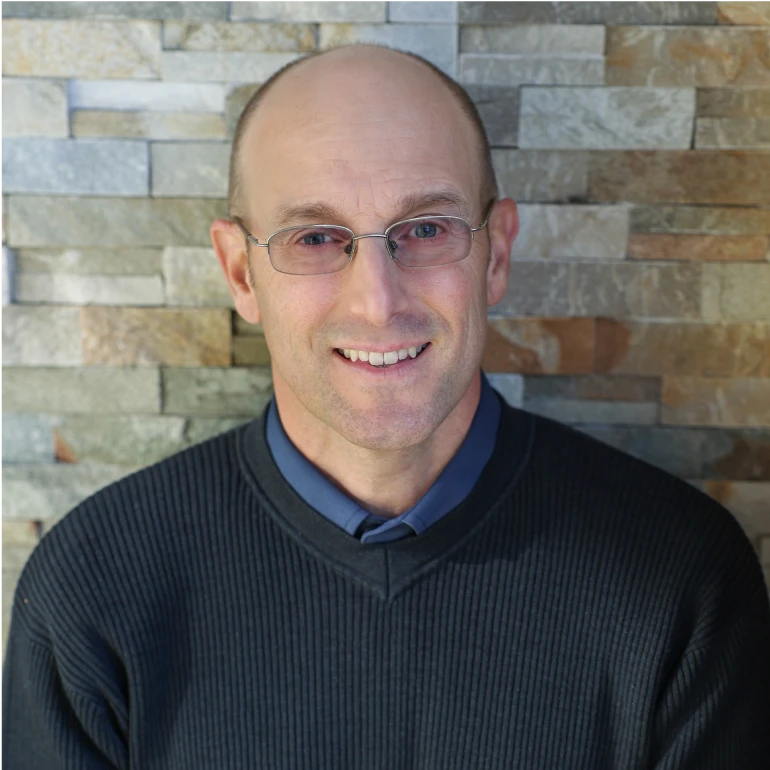
About the guest
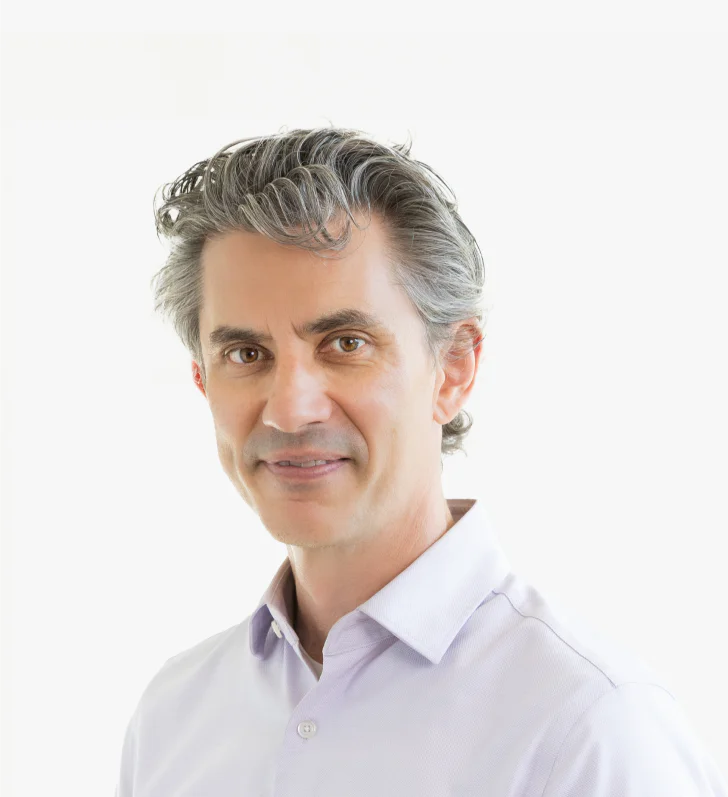

Scott:
Not only are we helping people change their diet, which by itself is going to add a lot of structure and stability to their life. But also if we can actually get them to ketosis, we know at least some, hopefully a lot, that’s part of the question now is, you know who and how much are each individual going to respond, but really moving him towards these food as medicine kind of approaches.
Bret:
Welcome to the Metabolic Mind Podcast. I’m your host, Dr. Bret Scher. Metabolic Mind is a nonprofit initiative of Baszucki Group where we’re providing information about the intersection of metabolic health and mental health and metabolic therapies such as nutritional ketosis as therapies for mental illness.
Thank you for joining us. Although our podcast is for informational purposes only and we aren’t giving medical advice, we hope you will learn from our content and it will help facilitate discussions with your healthcare providers to see if you could benefit from exploring the connection between metabolic and mental health.
Dr. Scott Fears is an MD PhD, and he’s the Chief Medical Officer for Amae Health and is a psychiatrist with decades of experience. So, it’s really interesting to his hear his take on a new way of approaching patients and a new way of providing psychiatric care and what that means for what they’re doing at a Amae Health.
What it may mean for the future of psychiatric care, and how it’s impacting their patients. And what role does diet nutrition and metabolic health play in all this? So, let’s hear from Dr. Fears.
Dr. Scott Fears, thank you so much for joining me today.
Scott:
Yeah, absolutely. Happy to be here.
Bret:
Why don’t we start off give us just a little bit about your background, what you’re doing in practice. Then, we’ll get into some more of the details.
Scott:
Yeah, absolutely. Way back when I thought I was going to be a hemoc doc, I did a MD PhD.
PhD was actually in childhood leukemia, kind of molecular genetics looking at impacted translocations. Enjoyed it a lot. When I went back to medical school, the only thing that interested me was psychiatry or the thing that really pulled me in. And I think one of the things, one is I liked the clinical care, but I also liked the fact that, and this would’ve been late nineties, 2000 is a lot of the molecular genetics that we had been working on in cancer were moving over into mental health.
So, it was a move towards that biological, the biological revolution that began in psychiatry, maybe the seventies or eighties really was starting to mature. So, that was fascinating. Trained at UCLA, and then at that point, split my career interest on two ways.
One was research and really doing gene mapping and using intermittent phenotypes. So, intermediate phenotypes are phenotypes that kind of, instead of focusing specifically on diagnoses like schizophrenia and bipolar, we looked at things like brain structure through MRIs, neuropsych testing, personality character profiles, that sort of thing.
And we use those quantitative phenotypes to map genes. I mentioned that because I think a lot of those tools, which at that time were really basic science tools, are now starting to enter clinical medicine, some version of kind of what we call precision medicine, that sort of thing. So, I had the kind of the research track and then my clinical track.
I’ve always been very interested in serious mental illness, schizophrenia, bipolar, severe borderline and so practiced in a variety of environments, including nonprofit, working with homeless folks in Los Angeles. And then about 10 years ago, moved over to the VA and was running the SMI programs there.
And those programs are remarkably successful or helpful for folks with SMI. So, they’re in the wraparound care. You got people going out really kind of using peers, health coaches, all that sort of thing in support. And those just can generate great results. but they don’t exist in any scalable way outside the VA or nonprofits or counties, all of which are overwhelmed.
Like you counties have a huge limit in terms of what they can provide. So, a few years ago, met a couple founders of a company called Amae Health, Stas Sokolin and Sonia Garcia. They pull me on as employee number one, Chief Medical Officer, and we built Amae. And Amae really embodies this integrative whole person care.
We have a very strong focus on physical health. So, really half the programming is aimed towards health coaching, diet modification, and primary care, right? So, actually managing the primary care, lipids, blood pressure in the clinic. As we were building that, a huge foundational kind of key to all of that was the fact that meds can be extremely helpful for some folks, even necessary for some folks at least, for a period of time.
And therapy, conventional psychotherapy, group therapy also can be extremely helpful, but they really don’t capture everything that needs to be captured. Folks really need to have structure in their day, strong physical health. And so a lot of our focus is how do you exercise?
How do you eat well, right? And so in the clinic, we actually have a grocery store. We have a couple grocery stores across the street. And part of the treatment is, we’ll do field trips over to the grocery store, talk about this is what healthy food is, this is how you navigate a grocery store, find the right stuff, and then come back to the clinic and actually make lunch and that sort of thing.
So, we started that. So it’s up and running for a couple years. And then maybe a year and a half ago, met Baszucki Group, right? So circulating amongst some of the conferences and the more innovative kind of areas that are being pushed for mental health, and it was a perfect click.
I think our focus on, let’s make these dietary changes. They’re very important for set and structure. And then really came across the kind of the emerging evidence that Baszucki Group has made so clear on if you push ketogenic diets, there are folks that just receive tremendous benefit from that, able to lower their medications.
These are folks that maybe have been decades of, fairly high burden of symptoms. Medications probably helpful or clearly helpful for some, and yet, they got them so far and they paused in kind of a stable state of partially well, but still with a lot of symptoms.
And then, adding the ketogenic diet really had, it can be remarkable for some folks. So, there’s a little bit of a light bulb that clicked there on, hey, we need to be, we need to give this a go. And if, not only are we helping people change their diet, which by itself is going to add a lot of structure and stability to their life, but also if we can actually get them to ketosis.
It is, we know at least some, hopefully a lot, part of the question now is, who and how much are each individual going to respond, but really moving them towards these food as medicine kind of approaches.
Bret:
Yeah, such an interesting journey that you’ve been through to get here.
But I’m really curious, you put yourself back in the mindset of the you that was studying the genes and the biological mechanisms. And then to say to that person one day, you’re going to be showing someone how to shop at a grocery store as part of your treatment. Could you ever imagine drawing those lines?
Scott:
Yeah, that part, maybe not. But if you’d grab that young version of me and said, hey, look, let me talk about inflammation. Let’s talk about ketosis. Let’s talk about glycemic index and how the brain and the rest of the body are differentially sensitive to high levels of sugars and carbohydrate and the what.
That I would’ve bought.
Bret:
Okay.
Scott:
That, you could’ve you, that’s the journey I could’ve taken.
Bret:
Yeah.
Scott:
it wasn’t at the time, it’s not something that I was exposed to. So, the science part of me was, I think, fully developed back then, and you could’ve bought me in on that.
I don’t think the behavioral change, I think, I would’ve nodded but been less impressed. Now, having been in practice for some decades, it’s just that it’s very clear. Again, medications can be very helpful and even necessary. But if that’s all we’re doing, we’re really missing the big picture.
Bret:
Yeah.
Scott:
We’re missing the whole person. So, again, I think part of my frustration, once I got trained and went out there and started practicing, one of my frustration is we are so narrowly focused on, psychiatrists predominantly do medications, for those of us who do therapy, we’ve got these two skills and they’re great.
But still it’s a small sliver of someone’s whole life. And so I think to me, what has become really clear that I wouldn’t have guessed 20, 30 years ago, was the importance of just taking the whole person and addressing everything, and really trying to sort it all out.
Bret:
So, why, like why is there such that disconnect, right?
Scott:
Yeah.
Bret:
The fact that you can be interested in the mechanisms, right? And oh, that’s so cool the way it’s going to work, and I can see it scientifically. But behavior changes so hard, maybe you shouldn’t go there and just fall back on the pill. What do you think it is in our system, and our structure that causes that sort of default?
Scott:
Yeah, it’s a great question. I think there’s a lot of layers to it, and there’s probably folks that are much more qualified to answer the question than me. But just to point out a few. One of the most obvious is the reimbursement model. The fee for service model. Psychiatrist can bill for 20, 30 minute visit, an hour visit.
They can, and that visit is literally in the note saying, this is how much time we spend talking about medications. This is how much we time we spent on counseling and therapy and that sort of thing. And that’s it. Therapists can bill similarly fee for service, but all of the other things in life of driving behavioral change.
For example, in the clinic, we’ve got health coaches, dieticians, nutritionists. All of that. That’s not billable. There are some kind of, if you get creative, there’s some payers that will go a little bit down that path. But at a systemic level, there’s really, it’s really hard to get that reimbursed.
And so you end up just doing what kind of earns the dollar, again, which is prescribe meds and do psychotherapy. I should add that often, in fact, it’s the rule, not the exception, that those two things are separate. So, you usually have a psychiatrist who’s focused exclusively on medications and then a therapist that is most of the time in a separate building, separate location.
They’re doing those, their thing, and those two individuals don’t talk, nearly some don’t talk at all. It’s actually pretty remarkable that there’s this lack of communication. So, you get this split therapy. No one’s talking to anyone, and it’s very limited to these billable services.
So, I think the financial model is a huge part of it. I also think there’s a whole, the fact that the medicalization of mental health, which I think is, there’s a lot of positives to that. I look at mental health and say, okay, let’s treat this like every other physiologic disorder.
So again, I think there’s a big advantage of that, and the physical health world recognizing that the mental health world, those aren’t separate things. We’re all kind of one. The problem is, I think, we’ve over overemphasized the approaches used by physical medicine. So, we’ve overemphasized the here, what’s your symptom?
Let me give you a pill for that. What’s your side effects? Let me give you another pill for that. So, psychiatry has done what the rest of medicine has done, which is they’ve just taken this, you know, more or less simplified approach. The rest of medicine isn’t really focusing on diet, exercise, the way they need to.
We all say it, we all say get your diet, get your exercise, but actually putting the processes, mechanisms in place, actually make those behavioral changes, it just doesn’t exist in medicine.
Bret:
Which is so interesting because you could think if anybody’s going to adopt it, it would probably be the area of medicine that’s focused on weight and obesity.
Scott:
Yes.
Bret:
Or blood sugar or blood pressure because those are the things that can really be impacted. So do you think it’s going to be even harder for the mental health field to adopt those principles?
Scott:
Yes. Yes and no. I do think mental health has the advantage of most of us are trained in the biopsychosocial model. So, we get educated and trained on the importance of the whole person. We get educated on, this person exists within a family, within bigger systems. We all know physical health impacts mental health. So, I think from a training perspective, we’re on board.
And so I think in terms of a receptive audience, there are hopefully no psychiatrist or psychotherapist that would say all of that stuff’s garbage. Like all of them are going to say your physical health is absolutely essential.
Bret:
Yeah.
Scott:
So, I think to some degree, there’s an advantage there to a receptive audience.
I think the problem is mental health, in general. Once, or speak about psychiatrists in general, once we’re at a medical school and we do our internship, we never talk about numbers again. We never talk about blood pressure. We don’t, or we obviously see it, but we don’t think in terms of quantitative metrics, generally.
Hemoglobin A1C, following lipids, following blood pressure. We just don’t think like that. We don’t do physical examinations of a patient. Don’t lay hands on patients. So there’s, I think, mental health kind of, again, once you’re out of medical school, your tendency is to move just towards prescribing and talking.
And that’s what we do. I do think, for example, the emergence of fitness trackers and just this massive amount of data that’s out there could be tremendously useful in mental health, right? A standard question is how much are you sleeping, right? What time do you go to sleep?
What time do you go to bed? And fitness trackers, that more or less tells you right there, and certainly combined with subjective reports, you could get a much more accurate picture of what someone’s sleep pattern, daily activity, naps during the day, that sort of thing.
No one’s using that. It’s this kind of low hanging fruit data that’s hanging there. And yet, we’re not going after. And I think part of it, I think there’s more than one factor contributing to that, but one of them is we’re just not used to looking at numbers.
Bret:
But to be able to see those numbers and correlate them with mood, with anxiety, with risk of mania or whatever the case may be. To be able to track that out over time can be such a powerful, huge predictor.
Scott:
Yeah, and we know it’s all related, right? So, we know the knowledge is there.
I think the habits of, let me look at, let’s look at your fitness data, let’s track it with mood scores over time, that sort of thing. It’s just, that’s just not part of our training.
Bret:
And so I guess we’re a little spoiled here, right? Because we’re at a conference here where I’m hearing an endocrinologist talk about PHQ-9s and GAD-7s. And I’m hearing psychiatrist talk about insulin and HOMA-IR.
Scott:
That’s very cool. Yeah, very cool.
Bret:
The whole world should be doing this in our opinion, right? But so it seems like there’s a big barrier, but do you think we can start to get there as people start to realize that connection more between metabolic and mental health and the importance of cross care of patients? Are we getting there? Are we making progress?
Scott:
So, the answer, I think, is yes. I think we’re moving, there is certainly an appreciation of it. I do think the physical world and the behavioral health world, there are some kind of pretty established barriers.
Some of them are unspoken. Some of them are simple things like stigma. Stigma still exists.
Bret:
Yeah.
Scott:
I still talk to colleagues who make faces when they talk about a depressed person or encounter someone with psychosis. It freaks them out, and they get a little, get weird about it.
So, it exists on that side. Again, what I mentioned before, psychiatrists or mental health practitioners over time lose the skill of thinking in terms of numbers. They don’t think about physical medicine, and so, withdrawal there. I also think payers, there’s maybe one of the biggest barriers here is payers, commercial and Medicaid, Medicare. They divide care into behavioral health, which is maybe about 15% of the market, what they pay for. And then physical health, which is about 85% of what they do.
Bret:
Yeah.
Scott:
And part of what we do at Amae is we have a lot of conversations with payers. And I think the, I’ve been impressed with kind of commercial insurance and Medicaid providers in the sense I think they’re very motivated to do the right thing.
They see, especially care for serious mental illness, they see there’s a lot of limitations there, and I think they really want to do the right thing. Head in the directions where the care will get better, but they’re constrained. We’re meeting with the behavioral health division who, again, it’s 15% of, kind of the whole package, and they then have to go to a boss or supervisor who, it’s looking at the big picture saying, eh, this is only 15% of what I have to worry about.
Meanwhile, I’ve got to worry about this over here. Yeah. So, I think there’s a deprioritization that’s going on. I think the other thing is there’s difficult problems. Let me say right, there is the separation of these things is baffling, right?
So, someone gets manic, right? A bipolar individual gets manic, gets in a car accident and breaks their arm. When they get admitted to the hospital, they’re admitted and paid for under a physical health attribution. So, they’re attributed to, okay, this is a physical health problem.
And the reality is that was a mental health problem.
That was the consequence of an untreated or undertreated mania. But that’s not part of how we see the world. And so there’s this kind of separation that’s been around for so long and I think it’s really set up both the payer structures, the provider structures.
It’s really set up, some long entrenched kind of ruts that are difficult to break.
Bret:
Yeah, it’s so interesting, too, because we know anti-psychotic medications can cause weight gain and insulin resistance and high blood pressure and cardiovascular disease and type II diabetes. So there’s, that clear interrelated. But when you have them in different buckets, where’s the payer? So, when you describe the care structure you have at Amae and the level of care, and the just the different areas you’re addressing, I got to be honest, it sounds expensive, right? It sounds like you have a lot of people, but yet you’re, like you said, you’re working with payers. Are you starting to see some success in getting this paid for?
Scott:
Absolutely, yeah. Now we do go after the most complicated and expensive patients. So, our general approach is to go to a payer and say, or a hospital, we’ll work with both payers as well as institutions, and we say, give us the folks that are cycling in and out of the emergency room, cycling in and out of inpatient.
Maybe they get stabilized after a couple weeks on inpatient, but there’s no great place for them to land that really is going to consolidate those gains and keep them stable. So, they get sent out and they’re okay for a few weeks, maybe a few months, but the inevitable as they slide back into it, a decompensated state and back in the emergency room.
These folks are costing 50, a 100, there’s patients mental health costs a million bucks a year.
Bret:
Wow.
Scott:
And so we go to insurance companies and we say, listen, give us your top 2%, 3%, 5%. Give us everyone that costs more than 50 grand, and give us a bundled payment.
Part of the creativity of the model is working with payers to see what’s doable. So there’s, our preference is go to go towards a value-based model of care, even with some risk sharing where we’re able to say, we’ll actually share the risk based on outcomes here.
Those are actually quite hard to get. I think there’s interest in those, but quite hard to get. But what we are able to say is, listen, this person costs you 50 grand a year. Give us 15 grand a year in a bundle payment. That way we get around all the fee for service. We’re saying, give us a 15 grand, we’ll give a heavy dose of psychiatry care.
We’ll give a heavy dose of therapy, and we’re going to pay for the health coaches, the dieticians, the field trips, and that sort of thing. So, we’ll use that 15 to make sure they’re getting all the standard care. But now, we’re going to add all of these other things.
Bret:
Yeah, and what are you seeing? What are you seeing in their responses?
Scott: It’s remarkable, and I mean, it’s and I knew it, right? it’s not a surprise, but it’s nice to see, stand these clinics up and do well. So, for example, in our first 30, 40 patients, in our first clinic, the average number of hospitalizations for each of the members, we call the patients members, was five in the previous year per person.
Bret:
Per person, yeah.
Scott:
Per person in the previous year. And since, for those 30, 40 patients, there’s been one or two hospitalizations total across all our patients. And, and so yeah, it’s remarkable to have someone come in, being a community, being a very supported environment, and these, by the way, it’s not residential.
These are day five day a week treatment programs, which just provides a tremendous amount of stability. And then over time, you just see people really come into their own. Blossom, come out of whatever thought disorder, psychosis. So, it is really, it’s the most enjoyable part of the job.
Bret:
That’s great, yeah.
Now, how are you starting to incorporate metabolic therapies and ketogenic therapies into this practice?
Scott:
So, the diet intervention has always been a part of it. Kind of psychoeducation going to the store. For the introduction into the keto, we wanted to make it a research project, right?
So, we wanted to get in, we wanted to be measuring data. We wanted to be able to show that we’re in, a structured way, we’re really trying to track the benefits they can get from keto. We are not doing a randomization in the clinic. We talked about it, but the clinic really, first and foremost, it’s about getting people better.
When I first started talking to you guys, Baszucki Group, Metabolic Mind, it became very clear to me that if someone can get to a ketosis, there is a very high chance that they’re going to get a very substantial symptom reduction. So much so that I actually didn’t want to randomize folks to non-ketogenic diets.
I wanted to say, let’s see. Let’s put everyone who’s enrolled, let’s put them on the ketogenic diet. Let’s come up with a plan. It’s going to make outcomes a little, it makes it a little hard to say, this is what the ketogenic diet is doing by itself because we don’t have a great control on. But everyone’s got an Oura ring, right?
We’re collecting symptom measure. We are doing a baseline of a couple weeks of kind of diet as usual, while they’re wearing the Oura ring. And we’re doing our baseline assessments, and then initiating the diet and then tracking from there on now.
Bret:
Yeah, I look definitely look forward to seeing that data, and see what you can produce there.
So, another big topic that comes up with ketogenic therapy, which I’m sure you’re going to experience more of, but even without ketogenic therapy, is this issue of tapering or even de-prescribing psychiatric medication. So, especially these patients who are in and out of the hospital, every time they’re in the hospital, they probably just get more medication. And then when they come out over time, do they really need those medications? How comfortable are people de-prescribing? So what have, what is your experience in your approach with tapering or de-prescribing in the setting of your Amae clinics?
Scott:
Great question. We get trained to start meds. No one gets trained to stop a medication.
It is a remarkable thing. Even with something like depression where, especially if someone has a late onset depression. They’re 40, 45. So, maybe a little, that’s not old, but a little, that’s a little older for a first episode of depression. That individual should get a trial of medication, maybe six months, maybe a year, and then we should taper off.
No, that is not the standard of practice. The standard is as simplistic. Once you start a medication, that’s it. You’re on the medication for life. Patients aren’t really educated on, hey, this is what we, this is what the medication’s doing. And at a certain point, maybe we don’t need that?
That’s just not part of standard psychiatric care. Now, I will say in private practice, I’m sure folks are stopping medications all the time. And my experience, a lot of times that’s the patient saying, I want to do this, and the physician saying, okay, let’s give it a go.
But it’s generally not a physician-initiated move. So, that’s just interesting. The field as a whole, and probably even medicine as a whole, we’re not that well trained to stop medications. So, that’s the field as whole. When it comes to SMI, I think those issues are even more exacerbated because the polypharmacy is quite remarkable, not uncommon for someone to be on 4 or 5, 6 medications.
They can be the same class of medication. It can be a mix. And for some folks, I work in a pretty complicated population. Some folks, it’s needed, right? You just, if you work slowly, methodically, and it truly is the case that you’re just having to layer on these medications with an attempt to really get people into an okay place.
But, for a lot of folks, I’ll make the somewhat provocative statement. Maybe most patients who have SMI, maybe they need a few medications to get them stabilized. But once they’re stable, we need to start backing off of the medications and, do it carefully, appropriately, and at the right pace with a lot of kind of patient involvement and engagement.
And which includes by the way, saying, hey, I think we can do this, and we can do this in a way where if it does cause a problem. We’re watching and we can make the adjustments as needed.
Again, not a conversation we’re very trained to have. Now, throw in the ketogenic diet. Someone gets ketotic and actually I think it’s extremely important to watch, to make sure they’re not overmedicated at that point. That with the diet, whatever’s happening underneath physiologically, we are now in a situation where the meds are too much.
So, I think my general approach is, let’s get you on the least amount of medication you need. Let’s get you stable. And then, I do think there needs to be a window of stability. I do think the brain is an organ that takes months to reach an equilibrium. Once it’s at equilibrium though, I think you can have confidence.
Okay, we’re in a healthy state, and we don’t want to rock the boat too much, but we can make slowly changes, slow changes towards simplifying.
Bret:
Such a good point about the equilibrium, and the brain needing to come to equilibrium. So, different than cutting a blood sugar medication in half. And then seeing what it is, and cutting it in half again. There’s not the equilibrium, isn’t the same, and I guess the risk isn’t the same, right? You can always just, okay, blood sugar’s a little high as opposed to risk of mania, risk of psychosis. Totally different. Yeah, so the concept of going slow is much more profound in a psychiatric setting.
Scott:
You got gene expressions turning up, turning down. I think receptors are being modulated and kind of expressed and just moving around and that takes time. And the kind of initial reaction, then the reaction on top of that.
And there’s synaptic receptors, there’s pre-synaptic receptors. There’s a lot of feedback loops that are happening. So, I think you need time to let all those feedback loops settle back into an equilibrium.
Bret:
And the other question, I guess, is how many touch points do you have? If you’re seeing your patient every six months, how are you going to regulate that?
But in your clinic setup, it sounds like you have many more touch points.
Scott:
Excellent. That’s an, that actually is what gives us, you know, the confidence, right? We’re seeing you every day. Once you’re, we’re not seeing them every day forever. As individuals get stable, we step them down, but we do have a high touch, right?
It’s the idea being you’re going to be coming in regular enough. I can say, how are you doing, now? The other thing we are doing is we’re bringing in the technology, right? So, the fitness trackers, right? And remote monitoring, we’re setting people up, phone-based, symptom PROs, the patient reported outcomes, right?
And so part of the model is, let’s put a nice, heavy layer of surveillance on you, right? We’re tracking these symptoms. The eventual goal is to be able to look at things like fitness trackers and develop algorithms that can identify little concerns of, hey, you’re in a stable state, but it looks like it’s starting to get a little shaky.
Let’s pay attention. And maybe the ideal is I catch a symptom relapse very early on and be able to do a low-risk intervention. That has the chance of pulling them back into stability as opposed to what the standard is, like you mentioned, that if you’re seeing someone every six months.
The chance that you are catching, at that six month visit, the chance that you’re catching an early symptom decompensation, right, is very low. It’s going to happen a month or two or three before the visit, and by the time you show up to your visit, you’ve already got an entrenched set of symptoms.
The brain has now moved back into that ill state, that disordered state, and now you have to throw higher risk interventions, throw multiple meds. That’s, and so I, the part of the model that allows us to do these things is the high touch, and the kind of the dense follow up that we have.
Bret:
So, I wish everybody could have access to this type of clinic. I know you have one in Los Angeles and you are expanding. So, where else are you available?
Scott:
Raleigh, North Carolina, we got a clinic. We opened up in New York, kind of Upper East Manhattan, this month. And then we’re opening in Houston at the beginning of the year. So, that’ll be four.
And we’ve got a couple other spots, we’re actually in quite a few conversations, couple other spots that look like they’re going to happen sometime next year.
Bret:
Yeah, I really love how you’re changing the paradigm of care and showing people what true, like whole body, whole person care really means and that’s wonderful.
Thank you. Thank you so much for taking the time to meet with me today and talk.
Scott:
Yeah, this is, like I said, we’ve thought a lot about this. And then I think there was just that happy coincidence of kind of joining up and saying, whoa, let’s take our ideas to the next level with the whole metabolic approach.
Bret:
Excellent.
Scott:
It’s been great.
Bret:
Alright, thank you.
Scott:
Yeah, thank you.
Bret:
Thanks for listening to the Metabolic Mind Podcast. If you found this episode helpful, please leave a rating and comment as we’d love to hear from you. And please click the subscribe button so you won’t miss any of our future episodes.
And you can see full video episodes on our YouTube page at Metabolic Mind. Lastly, if you know someone who may benefit from this information, please share it as our goal is to spread this information to help as many people as possible. Thanks again for listening, and we’ll see you here next time at the Metabolic Mind Podcast.
Listen, Watch & Subscribe on:
How can a metabolic intervention succeed where potent, “evidence-based” pharmaceuticals have failed? In this compelling guest post, originally published on his ‘StayCurious Metabolism’ newsletter, Dr. Nicholas Norwitz challenges…
Read more
ACCORD is proud to announce that the Baszucki Group has awarded more than $600,000 in research funding to support a groundbreaking study on metabolic psychiatry in partnership with…
Learn more
THINK+SMART is a community-inspired resource that provides a framework for ketogenic and metabolic strategies like those that have helped our son and so many others recover mental wellness.
Learn more

Dr. Nick Fabiano, psychiatry resident and researcher, joins the Metabolic Mind Podcast to explain how exercise can be prescribed as a treatment for depression. He shares the latest evidence showing exercise is as effective as antidepressants or therapy, explores why even small amounts of movement improve mood and brain health, and introduces a practical FITT framework for clinicians to personalize exercise prescriptions. Fabiano also discusses the biological, psychological, and social mechanisms behind exercise’s antidepressant effects, the role of adherence, and how movement can complement or reduce the need for medication.
Learn more
How can a metabolic intervention succeed where potent, “evidence-based” pharmaceuticals have failed? In this compelling guest post, originally published on his ‘StayCurious Metabolism’ newsletter, Dr. Nicholas Norwitz challenges…
Read more
ACCORD is proud to announce that the Baszucki Group has awarded more than $600,000 in research funding to support a groundbreaking study on metabolic psychiatry in partnership with…
Learn more
THINK+SMART is a community-inspired resource that provides a framework for ketogenic and metabolic strategies like those that have helped our son and so many others recover mental wellness.
Learn more
Dr. Nick Fabiano, psychiatry resident and researcher, joins the Metabolic Mind Podcast to explain how exercise can be prescribed as a treatment for depression. He shares the latest evidence showing exercise is as effective as antidepressants or therapy, explores why even small amounts of movement improve mood and brain health, and introduces a practical FITT framework for clinicians to personalize exercise prescriptions. Fabiano also discusses the biological, psychological, and social mechanisms behind exercise’s antidepressant effects, the role of adherence, and how movement can complement or reduce the need for medication.
Learn more