New Results: First RCT for Schizophrenia & Bipolar Disorder. Learn more.


Listen, Watch & Subscribe on:



What the Ketone Heart Risk Headlines Got Wrong
Listen
About the host


Bret:
Welcome to the Metabolic Mind Podcast. I’m your host, Dr. Bret Scher. Metabolic Mind is a non-profit initiative of Baszucki Group where we’re providing information about the intersection of metabolic health and mental health and metabolic therapies, such as nutritional ketosis as therapies for mental illness.
Thank you for joining us. Although our podcast is for informational purposes only and we aren’t giving medical advice, we hope you will learn from our content and it will help facilitate discussions with your healthcare providers to see if you could benefit from exploring the connection between metabolic and mental health.
You’ve probably seen the headlines and social media posts recently claiming that ketones or ketone bodies are associated with higher cardiovascular risk and possibly even causing heart attacks. And that these findings, therefore, mean a ketogenic diet is bad for heart health. One person on X even said about this data, this study, “See? That’s why I never recommend a keto diet.”
But when you look at the actual study, the data tell a very different story from what the headlines imply. And the short answer is it has absolutely nothing to do with the ketogenic diet, not even close. So, let’s break it down. The paper published in the Journal of the American Heart Association looked at the relationship between circulating ketone bodies and future cardiovascular outcomes and mortality in a large population cohort called the UK Biobank.
So, it’s a large group of individuals living their lives and getting a slew of blood tests done. The researchers crunched the data looking for associations with good or bad health outcomes. So, it was not a ketogenic diet intervention. Not at all. It was not an intervention study at all. It was simply measured levels of ketone bodies in the blood at one time only, by the way, at baseline. And then followed people for over a decade, but no future ketone measurements. Just that one time.
So, that’s by definition a weak association study, and that’s the first key limitation. Association is not causation. And just because higher ketone bodies were associated with higher rates of cardiovascular events does not mean at all that ketosis cause any harm. But perhaps the biggest point of all this was that the group with the highest ketones, they were still eating on average 250 grams of carbohydrates per day. 250.
Remember, a ketogenic diet is usually 20 to 30 grams of carbs per day. So. This is not even close. And interestingly, they were measuring very low levels of ketones in micromoles per liter. So, the highest cohort was above 79 micromoles per liter. So, that’s 0.07 millimoles per liter. Where for nutritional ketosis, we’re talking about 0.5 millimoles per liter. So, completely different measurement.
So, here we have a general population not eating a ketogenic diet, not fasting, and measuring very small levels of ketones. So, there are many factors that can influence this low-level circulation of ketones. They can be elevated for many reasons that have nothing to do with diet, like chronic illnesses or catabolic states, uncontrolled diabetes, of course, certain medications. Or really any element of metabolic stress or a number of acute illnesses or even causes of frailty.
So, all these can minimally raise ketone levels and they’re really markers of poor health. So, in this paper, these minimally elevated ketone levels may simply signal that someone is metabolically stressed or unhealthy in other ways or on a trajectory towards a disease. Not that consuming a ketogenic diet caused harm because, of course, they weren’t eating a keto diet.
And that’s a classic issue in epidemiology, reverse causation, confounding. And since the group with the higher ketones happened to also be more likely to have diabetes, higher blood pressure, active tobacco abuse, it’s clear they were less healthy. And therefore, it’s not a surprise that they would be more prone to show signs of illness or metabolic stress.
So, the way this study has been portrayed on social media, unfortunately, reflects a common thread of flashy headlines. Dramatic conclusions that have nothing to do with the actual data. So at best, the study suggests ketone levels may correlate with future risk in a general population, but that could reflect a wide range of underlying physiological states unrelated to diet. And specifically, it tells us nothing about ketosis, therapeutic ketosis, ketogenic diet.
So, I really hope we all can do better and elevate the quality of discussion around these studies to actually make it reflect the data. Thanks for listening to the Metabolic Mind Podcast. If you found this episode helpful, please leave a rating and comment as we’d love to hear from you, and please click the subscribe button so you won’t miss any of our future episodes.
And you can see full video episodes on our YouTube page at Metabolic Mind. Lastly, if you know someone who may benefit from this information, please share it as our goal is to spread this information to help as many people as possible. Thanks again for listening, and we’ll see you here next time at the Metabolic Mind Podcast.
Listen, Watch & Subscribe on:

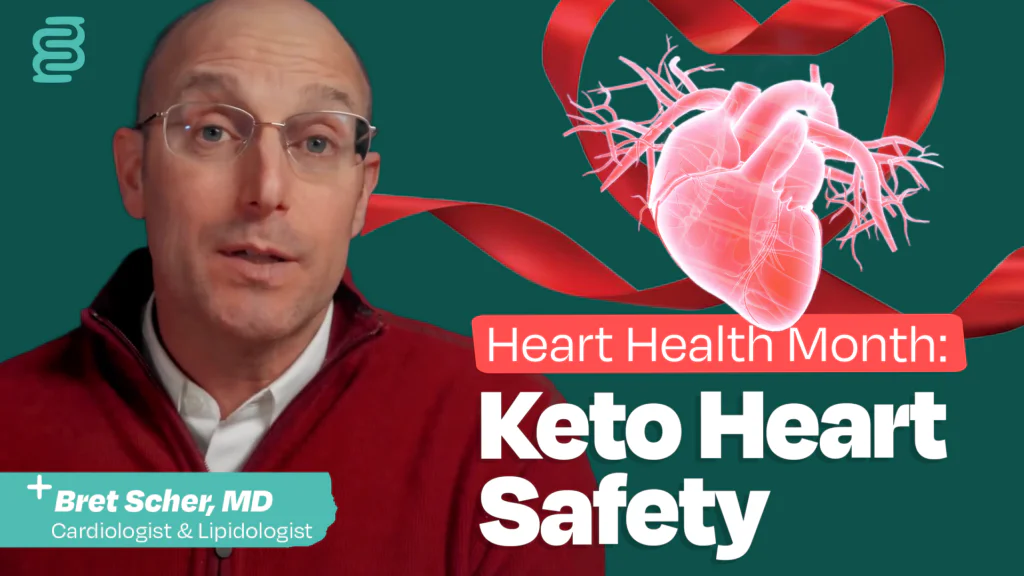
In this Metabolic Mind episode, Dr. Bret Scher addresses the claim that ketogenic diets are bad for heart health. He explains why many studies misrepresent keto, how cholesterol responses vary, and how ketogenic diets can improve key markers like triglycerides, HDL, insulin resistance, and blood pressure. Learn why metabolic health is central to heart health and how keto may play a role.
Read more

Discovering metabolic psychiatry can feel like a door finally opening. For people who have spent years cycling through medications, adjusting doses, and searching for something more, the connection…
Learn more

A cautious, and nuanced editorial about elevated LDL cholesterol while on a keto diet. Read more here!
Learn more

In this Metabolic Mind mailbag episode, Dr. Bret Scher answers common questions about cholesterol on keto, saturated fat, CRP inflammation, gluconeogenesis, and affordable ways to track ketosis. Learn how to interpret LDL changes in context, whether you can do keto without animal fat, what high CRP really means, and when ketone testing matters for metabolic and mental health.
Learn more
In this Metabolic Mind episode, Dr. Bret Scher addresses the claim that ketogenic diets are bad for heart health. He explains why many studies misrepresent keto, how cholesterol responses vary, and how ketogenic diets can improve key markers like triglycerides, HDL, insulin resistance, and blood pressure. Learn why metabolic health is central to heart health and how keto may play a role.
Read more
Discovering metabolic psychiatry can feel like a door finally opening. For people who have spent years cycling through medications, adjusting doses, and searching for something more, the connection…
Learn more
A cautious, and nuanced editorial about elevated LDL cholesterol while on a keto diet. Read more here!
Learn more
In this Metabolic Mind mailbag episode, Dr. Bret Scher answers common questions about cholesterol on keto, saturated fat, CRP inflammation, gluconeogenesis, and affordable ways to track ketosis. Learn how to interpret LDL changes in context, whether you can do keto without animal fat, what high CRP really means, and when ketone testing matters for metabolic and mental health.
Learn more