New Results: First RCT for Schizophrenia & Bipolar Disorder. Learn more.


Listen, Watch & Subscribe on:



Triglycerides Down, Plaque Unchanged: What This Trial Reveals
Listen
About the host


Bret:
A new clinical trial just showed that a drug, which dramatically lowered triglycerides, remnant cholesterol, and ApoB produced zero measurable reduction in coronary artery plaque compared to placebo. This is Metabolic Mind Bitesize. I’m Dr. Bret Scher.
Zero. surprising with all those results, right? And the researchers’ response was, “We just need longer trials to see a beneficial signal.” I suppose that may be true, but I think there’s a more important question being missed here, and it goes beyond just this one drug. So, in this particular case, the drug was olizarsan. It targets a protein called ApoC-III, and it did exactly what it’s designed to do.
Triglycerides down, remnant cholesterol down, even ApoB down a little. The blood work looked great. But when they scanned the heart arteries, the plaque hadn’t changed at all compared to those who got a placebo. So, here’s the thing. Triglycerides and remnant cholesterol are real cardiovascular risk factors.
The science on that is pretty solid. So, why would lowering them with a drug fail to move the needle on plaque? I would say it’s because there’s a critical difference between what we want to fix and how we go about fixing it. Lowering the number with a drug is not always the same as fixing the underlying problem that caused that number to be high in the first place.
Makes sense, right? And the main reason for elevated triglycerides are metabolic dysfunction and insulin resistance. An ApoC-III inhibitor doesn’t fix those. And this is not just a triglyceride story. This is a whole medicine story. I can think of a ton of examples. So, think about blood sugar, metformin, GLP-1s, insulin.
They’re powerful tools, but type 2 diabetes is also fundamentally a disease of metabolic dysfunction and insulin resistance. Dietary change, lifestyle change can put it into remission, but a drug manages it. Those aren’t the same thing. What about blood pressure? Millions of people are on antihypertensives.
Many of them have high blood pressure because of excess weight, poor sleep, chronic stress, metabolic dysfunction. The pill brings down the number, which is important, but it doesn’t fix the metabolism, the sleep, the stress. And what about weight? We now have highly effective GLP drugs that produce real weight loss.
But if we use them without addressing eating behavior, food environment, metabolic health, again, then we gain the weight right back the moment the drug stops. The number on the scale temporarily changed, but the underlying system did not. So, this drug-first approach, it’s not just incomplete, but it’s also dangerous because it narrows how we think.
When a pill is assumed to be the answer, as with lowering these triglycerides, then we stop asking why the number was abnormal in the first place, right? We stop exploring how lifestyle factors work together to heal the whole system. Diet, exercise, sleep, stress, these all interact with each other in ways that no single drug can replicate.
And that’s the foundation of metabolic psychiatry and metabolic medicine as a whole. And that’s what I’m passionate about teaching, helping patients, helping clinicians reframe their approach to metabolically-rooted diseases. None of this means, though, that drugs are bad, right? It’s not a good or bad thing.
Responsible medication use has an important place in patient care. But I think the best outcomes come when we ask why is this number abnormal or why are these symptoms present, and what combination of lifestyle change and targeted medication will actually address it. So, hopefully, this perspective was helpful.
If so, please like and subscribe and leave us a comment as we love to hear from you. I thank you for watching. I’m Dr. Bret Scher, and we will see you here next time at Metabolic Mind, a non-profit initiative of Baszucki Group.
Listen, Watch & Subscribe on:


Why should we rely on a blood test to assess heart disease risk when we can see the disease itself? Transcript: Introduction to Carotid Intima-Media Thickness test (CIMT).Have…
Read more
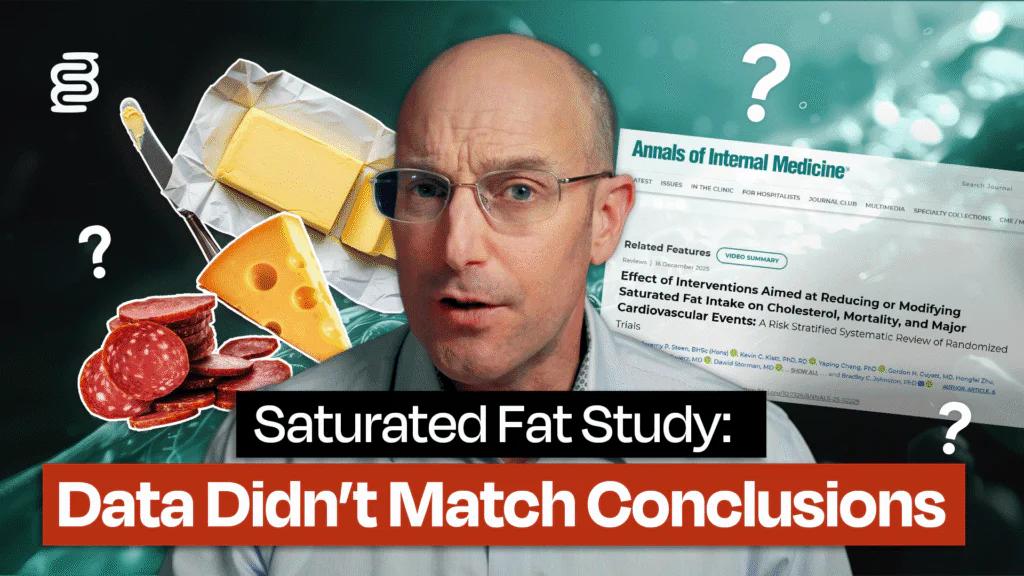
In this episode, Dr. Bret Scher takes a closer look at a new meta-analysis examining saturated fat and cardiovascular health. He breaks down what the study actually found, why its results showed no statistically significant increase in heart attacks, strokes, cardiovascular deaths, or overall mortality, and why saturated fat may need to be considered within the context of a person’s overall diet and metabolic health.
Learn more

In this Metabolic Mind mailbag episode, Dr. Bret Scher answers common questions about cholesterol on keto, saturated fat, CRP inflammation, gluconeogenesis, and affordable ways to track ketosis. Learn how to interpret LDL changes in context, whether you can do keto without animal fat, what high CRP really means, and when ketone testing matters for metabolic and mental health.
Learn more

A cautious, and nuanced editorial about elevated LDL cholesterol while on a keto diet. Read more here!
Learn more
Why should we rely on a blood test to assess heart disease risk when we can see the disease itself? Transcript: Introduction to Carotid Intima-Media Thickness test (CIMT).Have…
Read more
In this episode, Dr. Bret Scher takes a closer look at a new meta-analysis examining saturated fat and cardiovascular health. He breaks down what the study actually found, why its results showed no statistically significant increase in heart attacks, strokes, cardiovascular deaths, or overall mortality, and why saturated fat may need to be considered within the context of a person’s overall diet and metabolic health.
Learn more
In this Metabolic Mind mailbag episode, Dr. Bret Scher answers common questions about cholesterol on keto, saturated fat, CRP inflammation, gluconeogenesis, and affordable ways to track ketosis. Learn how to interpret LDL changes in context, whether you can do keto without animal fat, what high CRP really means, and when ketone testing matters for metabolic and mental health.
Learn more
A cautious, and nuanced editorial about elevated LDL cholesterol while on a keto diet. Read more here!
Learn more