Get the latest on metabolic psychiatry. Subscribe.


Listen, Watch & Subscribe on:



The Ultra-Processed Food Debate: Science, Bias, & Truth
Listen
About the host

About the guest

About the guest
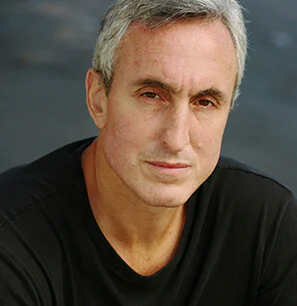
About the host
About the guest
About the guest

David:
Gary, so you’re proposing that they’re biased, and you’re not. And that any independent?
Gary:
No. I’m proposing that they don’t know how to do science, and I do, despite the fact that I’m a journalist, and they’re the ones getting published. I know what bad science is. I don’t know if they do.
Bret:
Welcome to the Metabolic Mind podcast. I’m your host, Dr. Bret Scher. Metabolic Mind is a nonprofit initiative of Baszucki Group where we’re providing information about the intersection of metabolic health and mental health and metabolic therapies, such as nutritional ketosis as therapies for mental illness.
Thank you for joining us. Although our podcast is for informational purposes only and we aren’t giving medical advice, we hope you will learn from our content and it will help facilitate discussions with your healthcare providers to see if you could benefit from exploring the connection between metabolic and mental health.
If there’s one thing we can all agree on, it’s that we need to get rid of ultra-processed foods, right? Actually, maybe not. And then the surface, this seems surprising. It seems like ultra-processed foods are the bad guy, but when we actually get down to the details, there’s more to it than that.
And on the one hand, it’s frustrating. Like we can’t even agree on this. But on the other hand, it’s really enlightening to show how we can look for the superficial victory that maybe doesn’t have the actual impact we want. So, today, I’m joined again by Dr. David Ludwig, an endocrinologist at Harvard and Boston Children’s Hospital, and a researcher who’s been focusing on low-carb nutrition on metabolic health, and also Gary Taubes, an investigated journalist and author who spent decades investigating health, why we gain weight, nutrition.
And together, they have some different opinions about ultra-processed foods, but we get into much more than just ultra-processed foods. We talk about the state of nutrition research and the role of biases, confirmation biases, and how a recent study that’s been lauded as the best science, in the most unbelievable study, it’s really kind of garbage if you listen to Gary and David.
So, how can we be so backwards in our thinking? And finally, we get into some solutions with some pretty heated debate back and forth. So, I really hope you enjoy this entertaining and informative discussion with David and Gary. Many of the interventions we discuss can have potentially dangerous effects of done without proper supervision.
Consult your healthcare provider before changing your lifestyle or medications. In addition, it’s important to note that people may respond differently to ketosis, and there isn’t one recognized universal response.
All right, Gary and David, welcome back. I think this is our third time getting together for a discussion, and it’s always a pleasure to have you. And today, we’ll talk a little bit more about ultra-processed foods, which has obviously been a big topic in the news, and you both have been very busy with ultra-processed foods.
Gary writing a Substack about it, and David publishing in New England Journal of Medicine about ultra-processed food. It’s easy to think about this topic as black and white. Ultra-processed foods are bad. Getting rid of them is good. But then we get into the details where things get a lot murkier, and we’ve talked about this before.
So, David, I want to start with you with your New England Journal article where you laid kind of the problems with just calling them ultra-processed foods. And then, from there, we’ll get into Gary about how this influenced your Substack in a recent study, which was maybe not quite interpreted correctly, the Bing Crosby science, as you called it.
So, we’ll go from there. So, David, tell us about this article you wrote, New England Journal of Medicine.
David:
Sure, we all recognize there’s a major problem with the food supply in some way. And the term ultra-processing is, it grabs us in the gut, if you will. It is such an evocative term, like who could disagree that a food supply that is subject to extensive industrial processing, in which ingredients are ripped apart and recombined to make food companies massive profits in our health expense, couldn’t be contributing in some fashion?
The question is: how do you define ultra-processing, and how do you put policies into action that are actually going to benefit public health? And that’s the rub. The term ultra-processing or ultra-processed foods, as it’s now being used, was defined by a team in Brazil in 2009, based on initially three categories, and then that was extended to four categories.
And it has a very specific, although complicated, definition. And it has to have, be an industrial product with simply one ingredient, main ingredient or additive that isn’t traditionally used in cooking in artisanal foods or home cooked foods. So, anything that deviates from tradition, and it’s not clear how far back that goes. Is it a century? Five centuries?
But any new additive that wouldn’t traditionally be used if it’s an industrial product makes it ultra-processed. So, that’s the problem because there are additives, there are main food ingredients, that can be processed in a neutral, a benign, way or even a beneficial way. There are additives that are benign or even beneficial. So, the term ultra-processed food lumps it all into this one basket, and it uses a single category to describe this vast array of packaged foods as either good or bad.
And that, in precision can, I argue in the New England Journal of Medicine, cause more harm than good.
Bret:
Yeah, which if you’re a doctor and you’re counseling your patient and you say, just eat more whole foods and less ultra-processed foods, that’s easy. And maybe you don’t need to refine it more. But if you’re talking about regulations and research and rules, then all of a sudden, you really need to get these details correct.
David:
Yeah, you have to get the details right. And I give an analogy. Maybe it’s a metaphor? No, I think it’s an analogy in my Substack, excuse me, medium blog, in which I ask people to do a thought experiment. Let’s say researchers got it into their head that white colored foods, foods that are white, cause all sorts of chronic disease.
And so, they did observational studies, and they found, sure enough, that overall people who eat more white foods are less healthy, and they found specific white foods that are big problems, like white rice and white bread and added sugar. Would we based on this say, let’s just stop eating all white foods to prevent chronic disease?
The problem is that, of course, there are other white foods that are, it would be mostly interpreted as healthful, yogurt, cauliflower, tofu. And there would be other colored foods that would slip by that could cause a big problem, like colas and brownies. So, that’s why we have to target precision in public health.
Otherwise, we miss the mark. We waste effort. We don’t accomplish what we want, and we can actually cause harms.
Gary:
There’s a couple of other issues here, that one, speaks to what you said, Bret, which is as a clinician telling patients to avoid ultraprocessed food. It’s ultraprocessed food is a multi-syllabic term for junk food.
Something we all inherently know what it is. Like an apple is not junk food, and a Snickers bar is junk food. But potato, a baked potato is not junk food. Potato chips are junk food. If you have to say ultra-processed food to get your patient or your client, if you’re a dietician, to pay attention, you probably have a patient or client who’s not smart enough to care.
I don’t know how else to phrase that. People have no, again, mothers have been telling their kids for decades, just the existence of the term junk food, is a reason to avoid these foods, or at least to think of them as something you shouldn’t make the basis of your diet because they’re junk.
Now, they’re ultra-process junk. The other issue is when we’re invoke terms like this, the implication isn’t just for public health, and then, what physicians should say to their patients. But there are scientific implications as well what you’re studying. And now, as David said, you’re studying a whole category of foods, ultra-processed foods versus minimally-processed foods.
And we’re going to discuss these trials where you’re doing experiments, where you’re saying, look, we’re going to give these people ultra-processed foods. So. They’re eating potato chips and packaged burritos from 7-Eleven. And they’re eating ice cream and Coca-Cola and Snickers bars, and for breakfast they’re having Honey Nut Cheerios, or one of those awful cereals that I’ve never even been allowed to have in the house since the 1960s that are 50% sugar.
And then, the other people are eating salmon and kale and quinoa. And for breakfast they’re having full-fat Greek yogurt, and then, grapefruit. And you end up saying, the ultra-processed foods are bad for you. We see deterioration of health status with the ultra-processed foods, but you haven’t, again, you haven’t learned anything we don’t know.
And the assumption is that the Snickers bar is bad for you in the same way that the Coca-Cola is bad for you in the same way that the potato chips are bad for you and in the same way that the Quest Bar that is designed to be low-carb and ketogenic is bad for you. They’re all bad because they’re ultra-processed. That kind of scientific thinking fails from the get go. And yet, that’s what we’re seeing. Not just getting published in major publications, but did it then makes the media.
Bret:
Well, so it’s a great point that the evidence we have that ultra-processed foods are harmful for our health, really relies on low-quality observational studies with tons of confounding variables and low hazard ratio, and the same problem we get with so many nutrition observational studies. But there have been at least two randomized crossover trials that supposedly have demonstrated that ultra-processed foods are harmful for our health and cause us to eat more.
At least, that’s the interpretation. But that’s part of your Substack to say, hold on, we’re focusing on this kind of incorrectly. So, we’ve talked about the Kevin Hall study in the past that was, the two week study, which was clear was just not enough time to show a meaningful difference.
And even though it was regarded as such an incredible research feat, it really wasn’t when you step back and look at it. But now, we have an eight week crossover study that you wrote about in your Substack that was published in Nature Medicine that was interpreted as reinforcing the previous findings that ultra-processed foods cause you to eat more and gain weight.
Except both groups, the ultra-processed food and the minimally-processed food, both lost weight. So, how do you make sense of that?
Gary:
And this is the point I made in the Substack, if you believe that the problem with ultra-processed foods, they make people eat too much, which is what the Kevin Hall’s NIH study supposedly found. David has, pretty much decimated the methodology in that study. But yeah, that was considered. There were crazy quotes out there about this being one of the most important nutrition studies since almost literally the invention of bread or white bread, sliced bread.
That’s it. That study showed that if you give people ultra-processed foods, they eat 500 more calories per day on an ultra-processed food diet than a minimally-processed food diet. Again, it was flawed, but this is a general assumption. So, the reason we evoke ultra-processed foods is as deleterious is to explain the diabetes, you know, explosion and diabetes obesity rates around the world, they associate with the explosion in these ultra-processed foods, junk food, whatever you want to call it.
And now, the British researchers decide they’re going to do a study where they’re going to isolate the ultra-processing from the other aspects of a healthy diet that it would’ve been considered 20th century science by the ultra-processing people. So, they create healthy versions of an ultra-processed diet and a minimally-processed diet that both satisfy the criteria for the British the dietary recommendations, I forget what terminology that used for this.
But so, they’re healthy by the standards of the British government’s diet recommendations, we could talk about those endlessly. But they are minimally-processed and also processed, and they put their subjects on it for eight weeks, and lo and behold, they lose weight on both diets. So, over eight weeks, they lose about four pounds on the minimally-processed diet, and they lose about two pounds on the ultra-processed diet.
And the headline then becomes, right, that you lose more weight on a minimally-processed diet. But the point I was making in the Substack is that your dogma says ultra-processed foods, your hypothesis says ultra-processed foods are bad because they make you eat too much. And now, we’ve given people an ultra-processed diet, the weight, an ultra diet, and they lost weight. So, they clearly didn’t eat more.
They must have eaten less. So, you’ve refuted your hypothesis. And in a functioning science, there’s nothing scientists like more than to refute their hypothesis because then they’ve made a discovery. Everything else is a confirmation. That’s boring. But if you’re doing a real science, you’re laughing about this.
But if you’re a physicist, you grow up a young physicist in the world, all you want to do is do an experiment that somehow refutes what is commonly believed.
Bret:
Yeah. But that seems to be not the case for nutrition science.
David:
Not necessarily your common belief though.
Gary:
Yeah, and that’s where it gets tricky.
David:
Can I just jump in?
Gary:
Absolutely.
David:
A couple of points. So, you could argue so Gary raises the point that both groups in this new study lost weight, and is that a fundamental refutation of the notion of overeating? But there are different ways of interpreting it. But I’d like to come back to just basic methodology.
When we hear that a group lost a pound or two more, these are from statistical models. And so, you have to ask, are these statistical models valid in this particular study? A strength is maybe it went eight weeks instead of two weeks. I’ll also point out that they still had what looks like a very big carryover effect, which is one of those potentially invalidating problems in short trials.
But let’s come back to just very basic. The first figure in the paper is the participant flow chart. It’s like how many people started, where they went, how many dropped out. So, out of 55 people, there were 12 dropouts. And dropouts, meaning they stop following, and you can’t collect their data, eat eating.
These two diets, all 12 were on one diet, and that was the minimally-processed, not the ultra-processed, the minimally-processed. The chance of that happening randomly is less than one in a thousand. So, what does this tell us? Two things. One is they found the comparison, minimally-processed diet, somehow untasty, unpleasant, or difficult to follow.
The second thing it tells us is that the statistical models are going to be seriously biased because once you have that many dropouts, and if, especially if they’re disparate between groups, then your estimate of the weight loss difference is going to be biased.
And when you, if you subjected this as we are, sent in a note to the editor and we’ll see if they take it or not. But when we consider other ways of analyzing the data that take into account that the dropouts looked different from everybody else, right? The people who are dropping out probably might not have been losing weight. They might have had trouble with the diet, then this effect seems to vanish.
So, there may be nothing there. And that’s the sort of critical review that would happen in most fields of science and happens in the fields of nutrition. When people don’t like an idea, then they come at it with exactly this kind of analysis. But here, since the idea is, I don’t know, it seems to be so comforting to people.
We found a factor we could, it’s got a technical sounding name, ultra-processed foods. It’s got a formal definition, and we can find some suggestion that it influences weight, at least over the long term. Let’s charge ahead and all of the critical thinking, study design 101 seems to be abandoned in our analysis of it.
Gary:
And this is when David talks about it seems to be abandoned.
Remember, this article was published in Nature Medicine, right? So, it was peer-reviewed. So, the one possibility is David’s just wrong about this, although he’s clearly right about all the 12 dropouts coming from the minimally-processed, coming actually before the start of the minimally-processed food period or during the period.
Yeah, so this is a huge flung analysis, the paper, but that somehow the peer reviewers or the editors didn’t care. Now, if they had care, the problem is then you’ve got problems with the paper and then you, if you have to do the re-analysis, you might not see the result you want to see.
What do you think would’ve, if you had pointed that out, if you had refereed that paper and you point this out in the referee’s opinion, david? What? What happens? This is all hypothetical.
David:
Let me just say, these are, even though I think that they are blazing red flags. On one level, they’re subtle points. The authors did do something called sensitivity analysis.
They have their two pound weight difference. Now, actually, I, just a very brief aside, I have to say it is egregious that they took that two pounds over eight weeks, and said, if this continued for a year, it would be more than 10% weight loss. Now, that’s egregious. if you, if this were legitimate, why would we ever run a drug trial more than two, four or eight weeks.
If you tried to do this, if you offered that rationale with the drug, they would laugh you out of the journal. And yet this is, this was in the paper, and it was a key selling point in their media. It’s not one or two pounds, it’s 10% body weight over a year. Oh, by the way, if, everything stays the same, and we know it doesn’t, but in an event the authors, I’m not, saying that there was any kind of maliciousness.
They did sensitivity analyses. In other words, they asked, are our assumptions about this two pound weight loss robust? They just did it wrong, and they used an just one brief technical, they used an assumption called missing at random. That’s a statistical term. It doesn’t mean it’s totally random, but it means you can predict what the dropout looks like based on their other criteria.
But when dropouts are systematically different, they’re all in one group rather than another group. You can’t use that assumption. You have to use missing, not at random. That’s a statistical term, and that changes everything. And I think that for, it seems that these papers are not getting the sophisticated statistical review that journals would apply to any major drug study.
Bret:
Yeah. So there’s the specifics of the study and the statistics, and how maybe it’s not getting the same level of review as if someone disagreed with the findings. But then, there’s what it means for the public discourse, what it means for the media, what it means for people saying this confirms prior studies when it really doesn’t.
Gary, that’s a big point you made that it actually, you could say, contradicts the prior study, but the response was, it confirms it. And that’s despite all these methodological and statistical problems, but then it just feeds into this discussion that see ultra-processed foods are bad.
And so, we need to find a way out of it. So, discussions like this are one way out of it for sure. But what is a better step? What can we do better than what is being done now?
David:
Before we come to the solution, can I just jump in with one more thing? We got a lot of problems to talk about. The solution’s going to have to wait.
We got more problems. So, in my blog in Medium, so people go to my David Ludwig, MD, Medium. I went, and I found quotes about the original two week trial, which has all of these problems. The effect is rapidly weaning over the two weeks. It would disappear after another two weeks, there are huge, almost a two-fold difference in energy density between the ultra-processed and the unprocessed diets.
We know that’s enough to explain the whole effect. It could simply be rediscovery of the nutritional wheel of energy density. Anyway, many problems. Lack of a wash-up period, and these are the quotes from leaders in the field about this study. I’ll give you three. As good a clinical trial as you can get, that’s number one.
Again, this is a two week trial with the effect weaning and all that stuff. Second quote, the most important study ever done to explain weight gain. And quote number three, landmark findings that the processing of the foods makes a huge difference in how much a person eats. So, I ask myself, how is this possible?
And on one level, it makes me want to just not get out of bed, and go to work anymore. Because, seriously, are we all, and maybe Gary and I are part of this and the other side, are we just so fundamentally biased in our own preconceived notions with some mixture of ego and professional reputation, and just paradigm blinders that we can no longer have a discourse on objective terms about what a good study is?
Is it, is the field of nutrition functionally dead right now? And is anything that we’re going to, is any kind of criticism that we might make about a popular notion doomed to echo in silence until we perhaps encounter the next massive public health blunder? Like we tried this once with the low fat diet in the 1970s, 80s and 90s. We may probably made obesity worse.
Do we have to just reproduce these blunders, time and again, before we stop and say, alright, let’s rebuild nutrition science on more solid foundations.
Gary:
Okay, let me, so first of all, that would be possible. But one reason not to be optimistic is because as long as we’re producing drugs that treat these disorders, people lose interest in whether or not the underlying science is correct.
Trying to explain what David’s discussing here, and then part of the reasons I got into this field as an investigative journalist was what you’re seeing, the reason this paper, all these papers were accepted with all these flaws. The reason that these quotes David’s reading is because these papers told people what they wanted to believe.
They confirmed the existing belief system, and everybody thinks that one of the classic biases in science is to believe a trial is done well because it confirms what you believe. And we all do that on some level or if nothing else. Like I was thinking, the kind of this 12 dropout problem in one arm and not the other.
If this had been a ketogenic diet arm, this trial, this never gets published because then you’ve got reviewers who are, nobody will follow it. And so, it has no value. And then, the statistics are we can’t do the statistics because clearly this was not at random. So, everybody’s reading these papers and reviewing these papers and accepting, or not accepting, the findings based on whether or not they confirmed their belief system.
And the reason science created the scientific method was launched 400 years ago by a guy named Francis Bacon, a British attorney, wrote a the seminal paper called Novum Organum. And basically, the idea was we need a methodology to explore the universe to elucidate knowledge that breaks out of all these cognitive biases that we’ve been discussing.
And one of the most profound biases was this idea that we only see what we want to see. So if you’re, the quote about this being the most-
David:
The most important study ever done to explain weight gain.
Gary:
Was that a Marian Nessel quote? One of them was.
David:
Let’s not target any person in particular because-
Gary:
I get shit, they’re going to say it in public. We can target it.
David:
No. Let me, I think it’s important that we don’t target anybody because these are representatives of a paradigm that affects the whole field, but there’s been plenty of hyperbole and limited paradigm among the low-carb folks, too. So, this isn’t personal.
Gary:
We should target them. Also, that’s the point is you don’t-
David:
Let’s not make it personal. Let’s keep it focused on  the fundamental problem.
Gary:
Okay, this is a difference between being a scientist and a journalist. One of my favorite quotes in journalism was from, I think it was one of the Mitford sisters, I think it was Nancy, who said, you may not be able to change the world, but you can at least shame the guilty.
David:
No, I’m not really interested in that because nobody changes their mind. When they’re shamed, they just fight back.
Gary:
Okay, let me just read you then a letter that the Harvard professor sent me a while back, a couple weeks ago. It was in Nature Medicine by the professor Marian Nessel at NYU, and considered the grande dame of nutrition policy.
The reason I name her is not, I am fond of Marian. I know you’re fond of Marian, David. She is quoted in virtually every article. Then one of the problems with how journalism is done, health and nutrition journalism particularly, is that half a dozen to a dozen usual suspects are identified using the Casablanca term, usual suspects, and they’re the ones who are interviewed for every article.
So, if it’s ultra-processed foods, I’m going to get Marian. I’m going to get Kevin Hall. I’m going to get Christopher Gardner. And Marian had a letter to this, talking about this British trial, and this was in Nature Medicine, and the headline is Ultra-Processed Diets Promote Excess Calorie Consumption, about a diet trial in which the people on the ultra-processed diet lost weight.
Now she might not have read that written that headline.
David:
And it was relative to the other, to the control different.
Gary:
I know, but that’s not, when you’re talking about excess calorie consumption, there’s no relativity in there except to what you were eating prior to going on the diet.
That’s what, it’s relative. So, I’m going to assume the headline was written by some, a Nature editor or not, maybe the letters editor who wasn’t paying enough attention? And then, she says, they not only bill on previous research, but also address criticism to that research. They don’t. They said this in the paper, and when I’m talking about this paper, everything David has said about it is true.
This, it was six week trial, 55 people, all the dropouts, all the statistical issues. I’m not so concerned with whether or not what they reported was correct, was represented reliable knowledge about what happened to their subjects. I’m only interested in how they interpreted it once they reported it.
And that’s where you see the biases. So again, they acknowledge in the paper that they went out with a hypothesis based on this two week landmark nutrition study, that if you feed an ultra-processed food diet to people, they will overeat, consume excess calories and get fatter. And that hypothesis was refuted, okay?
Although they didn’t use the word refute, I forget how they phrased it. And then they say, but nonetheless, this builds and confirms on everything we believe, which is the exact opposite of what they’ve said. And when I got into this field 27 or so years ago, when I started writing about this nutrition for science, and the reason I did is because I was interviewing nutritionist for a particular story, and I saw this kind of thinking at work very clearly.
And I had been trained by experimental physicists and chemists to think that whenever I hear this kind of thinking, I’m dealing with bad scientists because bad scientists only pay attention to the data that they-
Bret:
Psychiatrists and even primary care doctors receive extensive training in how to prescribe medications, but almost none in how to safely reduce them. And yet, for millions of people, tapering psychiatric medications is an essential, and often overlooked, part of their treatment plan.
Georgia:
There is a real art and a science to reducing psychiatric medications. If you reduced too quickly, then you could have serious withdrawal symptoms on your hands. Sometimes, medications will help at first. And then they’ll lose some or all of their effectiveness over time.
Bret:
So, in part one of this series, we’ll explore why so many people face this decision and what risks and misunderstandings surround it.
So, this concept of relapse versus withdrawal, of how do you help people approach that to try and determine is it a recurrence of the symptoms and the diagnosis or is it a withdrawal from the me? And then, in part two, we’ll dive into the how, the principles, the pitfalls, and what it really takes to taper safely.
Tapering psychiatric medications isn’t about rejecting treatment. It’s about redefining success because sometimes fewer medications, or even none at all, can mean a fuller, healthier life. So, join us October 1st for this two part series on tapering psychiatric medications, an honest conversation clinicians were never taught to have and patients desperately need.
Gary:
It confirms their beliefs, and they ignore the evidence that doesn’t. And when I was reporting my first story on, I think it was beliefs that salt caused hypertension, which was a major investigation for the journal science. It won the one of the two major science journalism awards that year. And it was a Scottish cardiologist, epidemiologist who described this kind of thinking to me, as he called it Bing Crosby epidemiology, which is accentuate the positive, eliminate the negatives, say goodbye to Mr. In-Between.
And it’s wonderful term. It’s funny because it should actually be Johnny Mercer, who wrote the song, rather than Bing Crosby, who most famously sang it. But who knows who Johnny Mercer is? This gentleman that doesn’t have this name, but this is exact criticism that Francis Bacon made 400 years ago.
People only pay attention to what confirms their beliefs, we’re wired to do that, for whatever reason, somehow in our evolutionary history, that was an advantage. But when it comes to actually trying to elucidate the reliable knowledge, it becomes a disadvantage. And we have an entire field of nutrition and obesity research that only sees what they want to see.
David:
Oh, so Gary, but let’s start with the hard work, which is if we’re doing this global complaint against the field, undoubtedly, that applies to us as well. We are engaged in some forms that we’re not perhaps aware of and our adversaries might comment on, and maybe it’s not to the same degree? And maybe we have some better practices because we’re insurgents and we have to because we have a higher bar to climb?
And I’ll just briefly, on that note, say, I think all my career I’ve had the sense that I have to work a lot harder to get a paper accepted through peer-review because it’s challenging mindsets, but we still have our own blinders on. So, let’s start with us. How do we improve our behavior?
How do we improve our cognitive processes to set an example so we’re just not pointing the finger at the other side, crossing our arms and waiting?
Gary:
Because again, there’s the assumption we all have the cognitive biases. The first thing is to acknowledge that you have the cognitive bias.
David:
Well, it’s good of you to acknowledge that could apply to us as well.
Gary:
Yeah. Thank you, and I’ve said this from the very first start because I’ve ever written, but what you want to do is, and we’ve argued about this, David, is particularly when it comes to sugar versus refined carbs, is if you don’t know what the, if you haven’t established unambiguously what the correct hypothesis is and you owe it to yourself primarily, and then to everyone who reads your articles to acknowledge all the existing hypothesis.
To talk about Richard Feynman, and his famous Cargo Cult Science commencement address at Caltech, said this, and I use it all the time, but when he was trying to describe what science is, he said it was an almost bending over backwards to be insanely honest about what you’ve done and what you haven’t. And I, we all, try to do that.
David:
Well, Gary, do you do that as rigorously to your pet hypotheses as you do to the opponents?
Gary:
You look at anything I’ve written. You find me a sentence where I state that what I’m saying is anything more than a hypothesis, or I don’t have even a parentheses if I’m right. I do it to the point where it, I used to joke that my first book, Good Calories, Bad Calories, would’ve been 30 pages shorter if I had only used is or are definitive verbs instead of maybe or might possibly be or could be.
And in the first version of the book was 400,000 words long unfinished.
David:
Okay. So Gary, do you, so you’re proposing that they’re biased, and you’re not. That, any independent-
Gary:
No. I’m proposing that they don’t know how to do science, and I do, despite the fact that I’m a journalist, and they’re the ones getting published.
I know what bad science is. I don’t know if they do.
David:
I think that’s a little too facile.
Gary:
I think the bias is the I. You can think that David, but you and I have had arguments where I’ve argued this to you in the, your most recent letter that you wrote, actually, the New England Journal of Medicine article.
I said, you can’t say are here. You can’t say this is true. You should say it may be true. We don’t know if it is or not. If you’re all you need, is that honesty? And you’re being a good scientist. I’m not saying I’m right. I’m just saying at the basis it’s, do you know this to true?
David:
I want to go on-
Gary:
and if you don’t-
David:
I’m assuming Bret has some other questions, but let me just-
Gary:
What do you got?
David:
Just try to bring this back by citing Bacon that you did, and we will not imply that has anything to do with his low-carbohydrate preferences. But if these great philosophers of science are true, we cannot see our own blinders, and we have to depend upon our adversaries, our opponents, to show them to us.
Now, they don’t always do it nicely. And like I looked on social media today and to see what, how people are responding to my New England Journal of Medicine piece. There were actually no substantive criticisms. There were a few academics that attacked me personally, which I took as a compliment because they can’t find anything specific.
And they’re the same ones who do every time. And in fact, if they didn’t, there’s two or three of them. If they didn’t, I’d say I’m probably not writing anything meaningful because they’re not attacking me in pejorative terms on social media. But the point is, we will only learn from our, about our blinders from our opponents. And thus, we need to establish collegial relationships with our opponents so that we can tell each other what the back of our heads look like.
And there’s just very few mechanisms for doing that in a constructive way.
Bret:
Let’s drive this back.
Gary:
No, wait, Bret, hold on.
Bret:
Go ahead.
Gary:
Here, hold on. Let me just, because I disagree with actually David’s take on this, not surprisingly. We accept the existence of our cognitive distance. Our blinders is real.
That’s a given, okay? As soon as you, that’s the first step. We’re all biased, okay? We all see what we want to see, and we try to fight it. And the scientific method is designed to help us fight that. What are, I don’t the word adversaries, but what the, what should happen in the field, in any functioning science, is you present your evidence and it is the obligation of your colleagues, not to point out what, whether or not you’re closing your eyes to the obvious, but to challenge the evidence and point out all the ways you might’ve misinterpreted.
This is what like, when David writes letters through England Journal of Medicine about this landmark study that was done by Kevin Hall, David is doing Kevin Hall a favor. In an ideal world, he should have written those. They should have had that conversation before the paper was published. But you publish a paper, you interpret it to the best you can. Actually, let me describe, if I can take a minute, how this happened in the physics community in which I grew up.
So, you do an observation. You see something remarkable, and you’re accelerator and you’re detector. And you immediately seem, oh my God, I saw something remarkable. I am assuredly wrong, and I am going to screw up my career hopelessly forever and my reputation if I publish this as is. So, I’m going to give seminars to people. And back then, they gave seminars to the smartest people I know, and they’re going to explain to me why I’m wrong. And their job in the room listening to me present my data is to tell me all the things I missed to explain, why I’m an idiot, and why this great new discovery is wrong. And if that, they can’t do it.
If they do it, then they say, look, you didn’t, like David says about Kevin Hall’s study, the crossover, there should be a period between the two diets that’s ideally at least a month long so we don’t see the crossover effects. So, in an ideal world with funding, Kevin would say, that’s a good point, David.
I’m sorry. Let me redo the study with a four week or six week period in between the two diets. We’ll see what we get. And if he still gets the same result, then David could say, yeah, but you also got this problem with the diets. And there’s this problem with the way you’re measuring energy expenditure or intake.
And in an ideal world, Kevin would say thank you. Thank you, David. That’s a great point. Let me redo the study, and fix those points. And so you oscillate between people arguing about what they did and what they did wrong and what they did, and you asymptotically approach some reliable result you could believe in.
And then you say, and lo and behold, you still have a discovery.
David:
Gary, there’s just the, it breaks down in two ways. One is that these aren’t physics experiments they take year to do-
Gary:
No, I know. I know. I do-
David:
and millions of dollars.
Gary:
Exactly.
David:
And secondly, that’s
Gary: that’s the problem in the field. The point is-
David:
and secondly, nobody’s going, nobody’s going to eat differently and not get obesity or diabetes.
Gary:
I completely agree with you.
Let me just finish, okay? I realize I’m gone. When you finally get to that result that you, smartest people, can no longer criticize, they can’t find how you screwed up. Now, you publish your study. And it says, if it was on this subject, ultra-processed diets promote excess calorie consumption?
Okay? Because what you’re saying to your readers is, we think we found this. We probably didn’t, okay. The way nature is such, we probably just didn’t figure out yet. And David Ludwig, our buddy, wasn’t smart enough to help us and neither were these low-carb fanatics who gave us some pretty good advice.
But nonetheless, so we still find this remarkable result. Question mark. Read it. Tell us how we’re wrong. And then that question mark stays until somebody confirms that in a study that goes through the same process. And the problem with nutrition, as David was saying, is the studies are too expensive. They take too long.
They include human subjects. They come with all these like practical problems that make this process of science too difficult to do. So, instead, people assume it’s not necessary. Forget the question marks. Forget the possibility. Let’s just publish the papers and pretend we got it right, and they’re no longer doing science.
So, when David says we have to, at what point, do you grind the field to, and stop again? I have said that, but on some level, these people are no longer doing meaningful science.
David:
There are ways of rebuilding if we have to like, ultimately, go through another massive public health failure, and then say, we’ve got to rebuild the field.
There are some obvious ways to do this. Right now, like the funding decisions, and that’s who gets to do what trials, studies, tend to come from echo chambers. The people who are on the funding committees, or in the case of internal NIH studies, it’s the people there. If you have, if that committee contains people who mostly agree with your paradigm, then the opportunity to improve the design and to prevent a massive waste of effort.
And remember, as Gary, as actually Gary said in a Substack, a poorly designed study is unethical. He quoted, I don’t know if it was George Box or someone famous, it. Anyway, so you have an opportunity to design the right study in advance, if you have real diversity of intellectual opinion reviewing the study before it gets done.
And we don’t have that. We, a lot of these funding decisions, and I sit on these committees, and it’s unfortunate that a lot of it is subconscious bias. You have a colleague, you’ve worked well with him, you agree with his ideas. Let’s fund it. You got some new idea that’s pretty radical, and it’s means that stuff you’ve been doing for many years is probably wrong.
If this proves out, oh, that’s a waste of money. And so, at every level of the process, from the initial funding decision through the conduct, through the scientific review and the post publication, dialogue is biased. And so, it’s like a wind that keeps blowing in the same direction. And each level, each wind might be a moderate factor. But when they all add up, you blow the boats to one side of the lake, and you leave the rest of the lake unexplored.
Bret:
Yeah. Which is, it brings us to the what can we do, right? Like why we get out of bed. Because you, after listening to this conversation, I’m sure there are a lot of people who say I can see why you don’t want to get out of bed. This seems hopeless, and we can’t even agree on ultra-processed foods.
Like how terrible is that? Like we can’t make any progress, but you, so you’re talking about changes that need to be made from the inside, and you mentioned, do we need to suffer another public health crisis to burn it down? We’re in the middle of the biggest obesity, diabetes, metabolic health crisis we’ve been in.
If we need a bigger crisis-
David:
No, I said another blunder.
Bret:
Another blunder. Okay.
David:
We’re clearly in the middle of a crisis.
Bret: Yeah.
David:
The question is whether we have another blunder, do we?
Bret:
Yeah. If we’re not at the point to say we need to burn it down and start over. Now, I would hate to see when we actually got to that point, how bad it would have to be.
But can we do that, right? Are we going to have to chip away, and is this going to take decades to solve? To put these pieces into motion that are going to help us do better science? Help us answer the questions better? Help us to get out of the echo chamber and actually be able to inform policy about this and help people improve their health?
David:
So, my prediction is that we have to recognize that the new GLP-1 type drugs are revolutionary. They really are on a class unlike anything we’ve seen. And they’re not just causing weight loss, they’re reducing a range of very serious chronic diseases. And I think that, as Gary implied earlier, I think, or made this point, we’re probably not going to give serious attention to nutrition science until the blush is off the bloom, if that’s the proper way of saying it, for these drugs.
We’re going to have to let them play out a bit, and yes, embrace that. They’re accomplishing a lot, but they’re not going to take us all the way. They have side effects. They’re going to be unforeseen adverse reactions down the road when we have experienced long enough. They are expensive.
And so, when the limitations of the drug will take care of everything, mindset becomes clear. And that’ll be in a few years. I think that we have a chance to then come back into nutrition science ,and say, take it seriously, and say, how do we do it right? But I fear that for the next couple of years, conversations like these are maybe a fun exercise for us, but I doubt that they’ll have any impact.
Gary:
And I’m far more pessimistic.
David:
Yeah, usually you’re the pessimist, Gary.
Gary:
Oh, I’m far more pessimistic than you are. First of all, we don’t know that the GLP-1 drugs are going to, they may could be wonder drugs. Who knows? They could remain wonder drugs. They could be the drugs you could stay on for 40 years.
And I, that concept I find hard to believe, but it’s possible. The other problem is, to do really meaningful science, and this my, so my whole career since, yeah, for 40 plus years now, I hate to say it, has been studying good science and bad science. And the good science is more than just, it’s how you set up the experiment.
But it’s a mindset and a critical, rigorous approach to this job of establishing reliable knowledge that 99% of the time, people have to learn from their, from very good mentors who get it. And they have to learn it in laboratories where they get it. And they have to learn it from other researchers who are constantly critiquing their work and how they’re thinking.
So, they learn to think like these brilliant scientists, who we grew up with and that mentorship over the years. It just doesn’t exist in certain fields of science. The culture of good science doesn’t exist. So, to expect that you could recreate it is very hard. I just don’t see how it can happen.
I think we’re pretty much stuck with bad science for the duration, whether the drugs work or not. And at least in nutrition and when it comes to obesity, where there’s such a ruling dogma about calories in and calories out. And people have so much trouble ever getting away from that, thinking it’s a fundamental problem. And there other observers of science and studiers of science have come to even more pessimistic views than I have. I think there are some fields at which this culture still exists. But in nutrition and obesity research, diabetes, and this sort of borderline between public health and medical therapies, I think it’s just gone.
It may never have been there to begin with.
Bret:
You both are making the effort to talk about ultra-processed foods, to talk about the specifics. I assume you’re doing it in the hope that we’re going to figure this out, and we’re going to be able to refine this and get this right to find out what it is that we need to target in these foods.
David:
Yeah, let’s bring it back to where we started. Ultra-processed food is a, it’s an iconic, it means so much and so little. The problem is that, as we talked about, that it doesn’t take into account mechanisms. There are some food substances and some additives that are benign or helpful, harmless or actually beneficial.
There are others that are big problems and in my New England Journal Medicine paper, I tried to emphasize this, that we should be focusing when it comes to the processing of mechanical processing, it’s the carbs that have the problem. Carbohydrate is essentially rapidly digestible starch, and sugar raise blood sugar and insulin within minutes if they’re processed.
But when you eat an unprocessed, essentially, whole carbohydrate, oat groats that are cooked but not processed or wheat berries or whole fruit takes the body a lot longer. So, blood sugar and insulin don’t rise as much. Big difference in processing for carbs. Virtually no difference in processing of proteins and fats because both of those nutrients are slowly absorbed even when processed olives and olive oil.
Olive oil is in a sense, as processed as a sugary beverages. It’s a single macronutrient extraction. Nobody says olive oil is unhealthy these days. In fact, it oftentimes tops the list among things that you should be adding more of despite its high energy density. Is there really a big difference between steak and hamburger?
One’s about a third the price, but metabolically, they’re very similar. And you can go through this long list I did in, I do in my blog. So if we bring in mechanisms, we don’t disregard nutrients. We bring them back to the concept of ultra-processing. Then, we have something that could be useful to public health. But as it is, it’s a distraction that risks more harm than good.
Bret:
Very good. Very good. All right, Gary, final words from you.
Gary:
First of all, I agree with David about, the issue is, see the problem with the salt processed food concept, it was actually evoked by these Brazilian nutritionists, 15 years ago, to replace this idea that macronutrients matter, and that we should be paying attention to not all foods or the whole diet, but the carbohydrate content, the quality of the carbs, the processing the carbs, the sugar content.
Ideally, we’ll find our way back there. There’s clearly some resistance. I have plenty of issues with the Make America Healthy Again movement. But when it comes to nutrition and diet, I think they’re beginning to understand some of the issues that are confronting them there. And they might even fund some studies.
So, this could be a fad that also passes about ultra-processed food. My other negativity is about getting good science on all this. The thing to remember within, which is particularly relevant to Metabolic Mind, is that when you want to know if a particular dietary pattern works for you, by which I mean it reverses some symptom of chronic disease, whether it’s obesity or diabetes or bipolar schizophrenic disorder, you don’t need a clinical trial.
You don’t need a finely tuned experiment to know if it works. Because you want to know if it works on you. So, you can try. And the reason that people like us have, the reason we’re speaking is over the years, thousands and millions, probably, of people around the world have decided this makes sense to me.
They read a writing, they listen to your podcast. They try it themselves. They find that it does what they were hoping it does for them. And then, clinical trials can be useful for knowing what the long-term side effects are, or having some average sense of whether or not the, what you tried might be better or worse than what somebody else is recommending.
But you don’t need the kind of science that I’m discussing to find out if this is an approach that works for you. You just have to try it.
Bret:
Yeah. It’s a good perspective that the individual versus the clinician versus the researcher versus the policymaker all need different levels of evidence for instituting or believing something.
I think we’ve covered a lot of ground, and unfortunately, we have to wrap because I’m sure you guys could keep talking for a while here about this because-
David:
No, I’m talked out.
Bret:
You’re done. Gary can keep talking. The rest of us are-
David:
I’m going back to bed. I’m going back to bed.
Bret:
Thank you both and we’ll link to the Substack and the New England Journal paper and the the Medium and all your other work.
We’ll, make sure that’s linked for everybody to read more about it. But thank you both so much for joining me again.
David:
Thank you, Bret.
Gary:
David, pleasure.
Bret:
Thanks for listening to the Metabolic Mind Podcast. If you found this episode helpful, please leave a rating and comment as we’d love to hear from you.
And please click the subscribe button so you won’t miss any of our future episodes. And you can see full video episodes on our YouTube page at Metabolic Mind. Lastly, if you know someone who may benefit from this information, please share it as our goal is to spread this information to help as many people as possible.
Thanks again for listening, and we’ll see you here next time at the. Metabolic Mind Podcast.
Listen, Watch & Subscribe on:
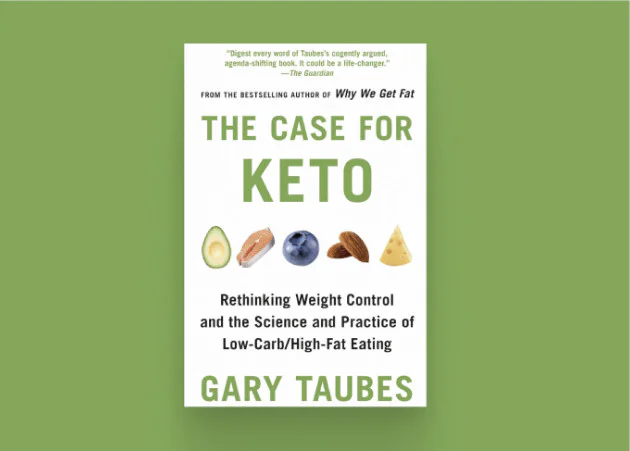
For fifty years, the medical establishment has preached the same rules for losing weight: restrict calories, eat less, and exercise more. Yet in that time, obesity in the United States has skyrocketed.
Read more
The question of whether most ultra-processed foods are metabolically harmful is no longer up for debate. This food category, which includes some of the most obvious dietary offenders…
Learn more
Dr. Bret Scher debunks the myth that the brain needs carbohydrates, explaining how it can thrive on ketones while producing its own glucose through gluconeogenesis. In this Metabolic Mind episode, he explores why ketogenic therapy can be safe, effective, and potentially life-changing for people with brain-based conditions like depression and dementia.
Learn more

When countless people are suffering and lives are at stake, why invest time and money in Randomized Controlled Trials? During a question and answer session with panelists at…
Learn more
For fifty years, the medical establishment has preached the same rules for losing weight: restrict calories, eat less, and exercise more. Yet in that time, obesity in the United States has skyrocketed.
Read more
The question of whether most ultra-processed foods are metabolically harmful is no longer up for debate. This food category, which includes some of the most obvious dietary offenders…
Learn more
Dr. Bret Scher debunks the myth that the brain needs carbohydrates, explaining how it can thrive on ketones while producing its own glucose through gluconeogenesis. In this Metabolic Mind episode, he explores why ketogenic therapy can be safe, effective, and potentially life-changing for people with brain-based conditions like depression and dementia.
Learn more
When countless people are suffering and lives are at stake, why invest time and money in Randomized Controlled Trials? During a question and answer session with panelists at…
Learn more