Get the latest on metabolic psychiatry. Subscribe.


Listen, Watch & Subscribe on:



Safe Tapering Practices for Anti-Depressants with Dr. Mark Horowitz
Listen
About the host

About the guest


Mark:
Withdrawal effects are a sign from your body that you are changing the level of drug too quickly for the body to adapt. You need to slow down. You should come off as fast as you can and as slow as you need. So, some people hear me speak and they say, oh, you’re saying everyone’s going to come off over 5 years.
And that’s not true. Some people come off in 4 weeks or 4 months. But a lot of people have trouble, especially after long-term use. And so I say come off as fast as you can. People don’t want to have the adverse effects of these drugs. That’s often why they’re coming off them. But often people have trouble, and they need to slow down. So, you should go as slowly as you need.
Bret:
Welcome to the Metabolic Mind Podcast. I’m your host, Dr. Bret Scher. Metabolic Mind is a nonprofit initiative of Baszucki Group where we’re providing information about the intersection of metabolic health and mental health and metabolic therapies such as nutritional ketosis as therapies for mental illness.
Thank you for joining us. Although our podcast is for informational purposes only and we aren’t giving medical advice, we hope you will learn from our content and it will help facilitate discussions with your healthcare providers to see if you could benefit from exploring the connection between metabolic and mental health.
Are you or a loved one on antidepressants, antipsychotic, or other psychiatric medications and looking to come off? And have you seen examples on social media of people doing exactly that? Well, be careful. Today, we’ve got Dr. Mark Horowitz, who’s a researcher and a physician who specializes in de-prescription and tapering psychiatric medications.
And as you’re going to hear, it’s not so easy as it sometimes seems on social media. And there are some definite precautions we need to put in place and things to consider when doing so. So, watch this video, and hopefully it will help. And please remember, none of this is medical advice, but hopefully information to give you to help do this safely with your healthcare team.
All right, Dr. Mark Horowitz, thank you so much for joining me today at Metabolic Mind.
Mark:
Thanks for having me on, Bret.
Bret:
Yeah, this is such an important discussion to have, talking about de-prescription, about tapering psychiatric medications. And it’s something that we’ve seen a lot of people post on social media, online about their personal experiences.
And we have to realize, your mileage may vary. Not everybody is going to have the same experience. So, it’s important to approach from a broader standpoint. And you’re one of the most perfect people to have talk about this. So, give us a little bit about your background and why you’re such a good person to talk to about de-prescribing psychiatric medications.
Mark:
I’ll tell you how I came to this work. I’m from Australia. I started my, I did my medical degree there. I started training as a psychiatrist and I came to London to do a PhD in how antidepressants work and the neurobiology of depression.
And it was at the end of my PhD that I read a paper about withdrawal effects from antidepressants, and I found that quite startling because I hadn’t been taught about withdrawal effects from those drugs in medical school or my PhD or my psychiatry training. And I found it startling for a couple of reasons.
Number one, drugs that cause withdrawal effects also cause tolerance. They’re the flip sides of the same coin. The more tolerant you are to a drug, the more you get withdrawal from it. And at that point, I’d been on an antidepressant for about 12 or 13 years. I was in my early thirties at that point, and I started to think a drug I’ve been on for 13 years that causes tolerance, how could it still be having an effect?
And the second thought I had was, drugs that cause withdrawal effects, things like Oxycontin or benzodiazepines like Valium or Xanax, tend not to be very good for people in the long-term. They tend to cause all sorts of toxic effects. And so it made me start to think about this drug that I’d been taking for so long, and I’d had a number of health problems whilst I was on this drug.
I had a lot of trouble with daytime fatigue, memory and concentration problems. I’d been, I’d had a very good memory when I was younger. And since being on the drug, I’d noticed that things got worse with time. Part of me thought maybe it’s just age, but I was doing a lot worse than I had been before in this sort of cognitive faculties.
And I had a lot of trouble with falling asleep during the day and that attracted various diagnoses. I read about this withdrawal effects from antidepressants. I thought, look, maybe I’ll try coming off? And I’ve been on it now for 10 plus years. Things were going okay for me. I thought I’d give it a go.
And being the kind of diligent, nerdy PhD student that I was, I went and read all the published papers about how to come off antidepressants. And they were written by the leaders in my field, some of whom I was working with at King’s College London, where I did my PhD. And they said withdrawal effects, they used the euphemism discontinuation symptoms, are mild and brief, and most people can come off these drugs in 4 weeks.
And that sounded very reassuring to me. And I’ll talk a bit about where those, where that guidance comes from. And then, because I’m a millennial, albeit a geriatric millennial, I went online to see what do people, what are patients saying about it?
And there was a very different story there. People talked about having huge difficulty coming off the drugs. They were grinding up tablets. They were opening up capsules and removing beads. They were weighing. They were using jewelers scales to weigh small doses. They were spending months and years coming off. And some of them said they had life threatening symptoms at different points.
I thought, that’s a very different story. Now, I’m a fairly institutionalized person. I’ve got six academic degrees. I’m used to paying attention to what professors say, but I didn’t quite know who to believe. And I decided to split the difference, and I decided to come off a lot slower than the guidelines at that point said in the UK, but not quite as slowly as people on these online groups said.
And I started to come off over 4 months. And I was on, at that point, escitalopram or Lexapro, one of the most common antidepressants prescribed in America. I was on 20 milligrams and I decided to halve my dose every month for a few months. It took me about 4 or 5 months to get down to a very low dose to do that.
I used the equipment in my molecular biology lab at my university. So, I was able to use cutting edge pipettes, weighing machines that were from a molecular biology lab. So, I was a slightly mad scientist, a bit like Walter White from Breaking Bad, but using prescribed drugs.
And when I got down to a very low dose of Lexapro, what I thought was a low dose, one milligram, essentially my life imploded. I had trouble sleeping and I would wake up in the mornings in full blown panic, palms sweaty, heart rate racing like I was being chased by a wild animal. And I’d stay in that state of panic or terror for about 9 or 10 hours of the day.
So, towards the evening, I’d get a bit of relief. I felt a bit dizzy and things around me appeared unreal, dreamlike. Now, I should say, when I went on the drugs at the age of 21, I was a neurotic probably. I still am a neurotic character. If you’ve seen a Woody Allen film, you’ll know what sort of family I come from.
But I’d never had any of these symptoms before. I was worried about my course. I was worried about what I should do with my life. I had a series of existential dilemmas as young people do. So, if what I had when I went on the drugs at the age of 21, I would’ve scored 4 out of 10 in intensity on negative symptoms.
What I had when I came off the drugs, I was 9 and three-quarters out of 10. Totally different ballpark. Those symptoms went on day after day, then week after week. And eventually, I thought, I can’t keep living like this, every day waking into terror. I was barely able to function at work.
At some point, I took leave. I was on my knees. I started running hours a week just to get a bit of relief. I ran until my feet bled. I listened to probably 2000 renditions of John Kabat-Zinn Body Scan Meditation. I did anything I could to try to survive, and I ended up having to go back on the medication.
So, I went back up on my dose, back to a full dose. And I realized at that point that I was not on the drug because it was helpful to me, but because I couldn’t stop it. I was then trapped on that drug, and I guess a few things happened from that. One, so first of all, I thought, look, I’m a very unlucky guy.
I’ve had a really tough time coming off these drugs. You know what a piece of bad luck, woe is me. But I found very soon that there was dozens of people with the same story on online forums. Then, I found hundreds of people, and eventually, I found tens of thousands of people. So, today, there’s 180,000 people coming off these drugs on different peer support sites, Facebook, private groups, other peer support sites with the exact same story.
I tried to come off these drugs. I had huge trouble. My doctor told me it couldn’t be withdrawal effect from these drugs because they’re mild and brief. It must be your terrible mental illness. You must need to be back on your drugs. And so I’ve walked away from my doctor to go to these peer support sites, and I found the advice on here much more helpful than my doctor.
It’s a complete inversion of the usual order of things where doctors know about the area, and who knows what’s happening on social media? Complete inversion.
Bret:
Yeah, that’s such an important point. Yeah, I apologize for interrupting, but I think that’s such an important point to make because when symptoms come back, it seems like the initial reaction from the majority of prescribing psychiatrists is it’s your in illness coming back. And therefore, you need this medication.
And people aren’t getting the support they need, and that’s why they’re turning to these online forums. So, now you’ve gone through PhD training, you’ve gone through medical school, you’re training as a psychiatrist. What is the training, still just two to 4 weeks? Symptoms are mild, and that’s the most you get.
Has it not evolved at all in your training?
Mark:
So, this is a great point. So this is where, because there’s a bit of, if you go on Twitter or somewhere, there’s an argument between psychiatrists and patients. And it’s played out also in people’s consulting rooms.
A patient’s saying, I have these terrible symptoms. And the doctor’s saying, it can’t be this. And the reason is, and some people think, oh, doctors must be out to get us. They must be crooked. They must be taking money from drug companies. That’s not the case for the most part for people, for your regular suburban GP and psychiatrist.
What it is, is because of what the guidelines say. So, it’s worth unpacking that for a second. The guidelines in America still say exactly what I just said to you before. Withdrawal effects, actually, they don’t even use that word. They use the word discontinuation symptoms are mild and brief, last for a week or two, and you can come off the drugs over several weeks.
They’ve got a couple of addendums. Sometimes people may need longer but no details. And the reason that the guidelines say that is because they’re based on studies that go for 8 to 12 weeks. So, drug companies gave antidepressants to patients for 8 to 12 weeks to get the drugs approved by places like the FDA.
After those studies, they stopped the drugs in some of the studies, and they detected withdrawal effects. The way they detected withdrawal effects in these studies is they often asked patients to come forward and report withdrawal effects. In other words, the patient had to put their hand up or pick up a phone and call the researcher.
Say, I’m having some trouble. And so, lo and behold, after only 8 weeks on the drugs, not many people have severe withdrawal effects. Some people do. Interestingly, on a drug like Effexor venlafaxine, already after just 8 weeks on the drug, 5% of people are reporting severe withdrawal effects, just 8 weeks.
So some, so not everybody, but it’s true that most people have mild and brief symptoms after 8 weeks, especially when you don’t ask them very carefully. In other words, you wait for them to make.
Bret:
Do we have any data on 8 to 12 years as opposed to 8 to 12 weeks?
Mark:
So, exactly. So, that’s where the guidelines come from.
We know that the longer you’re on these drugs, the more severe the withdrawal effects. The more common they are, the more severe, the more long lasting. So, what we have is a series of studies that have looked, that have asked people that have been on the drugs for longer. And the longer people are on the drugs, the more severe and the more common withdrawal effects.
So, for example, in studies that survey people who’ve been on the drugs for about three years on average, which is about the average length of time in the UK, a bit less in America, people are now moving towards 5 or 10 years is the average time. Half of them say they’ve got withdrawal effects and half of those people say they’ve got severe withdrawal effects.
So, the longer people are on them, the more severe the effects.
Bret:
But you said half. Half the people. That’s half.
Mark:
Yeah.
Bret:
That’s substantial.
Mark:
And by the time, and the graph keeps on going up, it flattens out. But by the time you’re at 10 or 12 years, which is off very far on the right side of the graph, it’s more like two thirds of people.
And I should really say I’ve never ever met, maybe they exist, I’ve never met anybody on Effexor Paxil or Cymbalta, these drugs that are hard to come off, for more than 10 years that hasn’t had serious trouble. They maybe are out there, but I’ve never encountered them. So, that’s why there’s a big mismatch between watching the textbooks and the guidelines for clinicians and what patients are reporting.
That’s what causes all of this misunderstanding. Because in my training and in lots of doctors’ training, relapse has been hammered into our heads, watch out for relapse. Anxiety is relapse. Depression is relapse. Insomnia is relapse and withdrawal effects. I barely even mentioned, they’re whispered discontinuation effects down the bottom of the paragraph.
And so in doctors’ minds, the horses, when you hear hoof beats, horses are relapsed. And zebras, that’s the withdrawal effects. I think the data says the opposite. I think it says more.
Bret:
But I guess there’s clinically, it might be difficult to differentiate them, between them or at least the way psychiatrists are taught, make it difficult to differentiate.
And I know there’s probably not one answer, but what are some of the things you use in your de-prescription clinics to help differentiate between recurrence of the disease process versus withdrawal effects?
Mark:
Yeah, great question. So, I’ll just zoom out for a second because i like to problematize the idea of relapse.
Relapse implies that everybody’s walking around with severe, recurrent disorders. The depression’s a bit like asthma. If you stop your puffer, you get your wheezing back. But we know that for most people who get prescribed antidepressants, it’s prescribed by a GP or a primary care physician, not a psychiatrist.
Most people have mild to moderate conditions, not severe conditions. And most people are put on an antidepressant in the context of a stress during their life, divorce, job loss, new diagnosis of a physical illness, death of a loved one. In other words, most people are there at a low point in their lives, and most people do not have recurrent disorders.
So, the idea of relapse is itself very over exaggerated. The joke I like to make is you can’t have a relapse of divorce unless you’re extremely unlucky and married the same person again. So, most people will move through that stressor. They’ll readapt, they’ll get a new job.
They’ll adapt to illness. They’ll change their relationship circumstances. Most people do not have recurrent disorders. So, that’s the first thing to say because I think this framing of people’s mood and anxiety as a recurrent, lifelong brain condition is not supported by the data. And that kind of framing does come from largely from pharmaceutical companies.
So, I think that’s the first thing, to take a step back, then to drill into how do people present. one of the. One of the keys is that people have different symptoms to what they had when they were put on the drug. There are a lot of symptoms of withdrawal. Things like headache, dizziness, this sensation that things are not real, depersonalization, derealization that help to mark it out from the original condition.
But also we know the most common withdrawal symptoms from antidepressants are psychological symptoms. Now, we know that from other substances, if you come off benzodiazepines, panic attacks, trouble sleeping, anxiety, depression, those are all common from alcohol, from any drug that you can think of.
And it’s true from studies for antidepressants. And so, if someone presents just with psychological symptoms, which is very common, that was my predominant set of symptoms, you can’t rule out withdrawal at that point. There’s a great paper that says the patient is trying to tell you the diagnosis.
If they say, i’ve never had this before. This is worse than anything I’ve ever experienced, that’s a good sign that it’s a withdrawal effect. Like what I had, 4 out of 10 symptoms when I went on the drug. and then I had 10 out of 10 when I came off the drug. Sometimes, doctors will say, maybe your condition has gotten worse?
But that’s a very, that’s a very peculiar framing of things. Because most people, as I said, their emotions respond to their context. It’s a bit strange to think of these things as getting worse on their own. That’s not normally what happens. What happens is people get extremely common withdrawal effects when they come off these drugs.
So that’s fun.
Bret:
We were focusing on antidepressants and depression. So, how does that then relate to bipolar disorder, schizophrenia or severe suicidal depression? Do you look at those differently, in a completely different context or is it more the same?
Mark:
Look, I guess there’s, I think about neurotic conditions, and more serious, what are called psychotic conditions, somewhat separately.
So, neurotic conditions, like anxiety and depression, tend to undulate with people’s context in life. When people are in a very bad state, they tend to have more symptoms. And that’s where relapse is less common. When, people are coming off their drugs in these more persistent disorders that are diagnosed as schizophrenia or bipolar disorder, then you know, often it can be the case that people do have recurrent disorders that may be there for their lives.
Although people can have changes in intensity. Some people can have it when they’re young people, and it reduces in intensity as they get older. But in the case where relapse is more likely, it does make things more complicated. But a lot of what I’m saying about antidepressants also pertains to those drugs.
So, coming off mood stabilizers, antipsychotics, benzodiazepines, gabapentinoids, they all cause withdrawal effects. Those withdrawal effects can be both psychological and physical, and the psychological effects, in particular, can be mistaken for a return of people’s underlying condition. I just, very briefly, lithium has been the most studied on this topic.
It’s been shown that people who come off lithium are 8 times as likely to have a mood episode that is manial depression than they were before they started the drugs. In other words, there’s clear evidence that’s a withdrawal effect. There’s no, it’s not that their condition has gotten worse by being given lithium.
What’s happened is coming off lithium is so destabilizing to their physiology, that mania or depression is precipitated. And that just shows you how destabilizing coming off these drugs can be. And we think that coming off these drugs more slowly can try to, can minimize those effects.
Bret:
Okay, yeah. Yeah, and that does make a lot of sense, but it makes it confusing to know what is the quote unquote right way to do, to go about this? And there is no one right way. And like we’ve said before, this is not medical advice. This is exploring the topic so people can understand more to talk to their provider about it.
But it’s easy to say you have to taper off the medication slowly. That’s easy to say, but what does slowly mean? Four weeks? Four months? Four years? Does the medication matter? Does the individual matter, right? There’s so many different variables that it’s hard to couch.
But what do you say when someone says, what does it mean to taper slowly?
Mark:
So, I’ll give you, I’ll give you two answers to that. There’s, one that sounds like a zen koan, which is you should come off as fast as you can and as slow as you need. So, some people hear me speak and they say, oh, you’re saying everyone’s going to come off over 5 years.
That’s not true. Some people come off in 4 weeks or 4 months, but a lot of people have trouble, especially after long-term use. And so I say come off as fast as you can. People don’t want to have the adverse effects of these drugs. That’s often why they’re coming off them. But often people have trouble, and they need to slow down. So, you should go as slowly as you need.
The analogy that I use is a bit like deep sea diving and the bends. It’s a good analogy of coming off these drugs. In deep sea diving, you go down to the bottom of the ocean. And the pressure is very high, and it pushes gas into your vessels. And if you shoot up to the top of the ocean, it’s a bit like jumping off your drugs too quickly.
The pressure drops off very quickly. Gas pulls out of your vessels ,and you get something called the bends. It’s a decompression illness. Gas pulls out. It causes headache, dizziness, joint pain, and muscle aching. And so what are you told to do by your instructor? You’re told to come up slowly and reequilibrate to the new pressure, then go up.
Get used to that new pressure, and go up again. And do it slowly. If you get into trouble, you should go back down and go up again more slowly. That’s how you work out the rate, although often that’s too dangerous. They put you in a chamber at the top, and they increase the pressure and do it that way.
It’s a very analogous to coming off these drugs. Your brain, when it’s on antidepressants or different psychiatric drugs, becomes used to abnormal levels of the chemicals or the drugs effect. Increased serotonin for depression, lowered dopamine for antipsychotics. We don’t quite know what lithium does.
And if you make changes too quickly, it causes a very big destabilization of the brain, which is what causes withdrawal effects. And so, just like deep sea diving, what you should do then is slow down. Wait to get used to that new level of drug, and then go more slowly. And so that’s really, withdrawal effects are a sign from your body that you are changing the level of drug too quickly for the body to adapt to. You need to slow down.
We have done some work on what is the rate that people need. There is not enough research on it. We have some guides. Things like the length of time you’ve been on the drugs. The longer you’re on the drugs, the harder it is to stop because the more your brain has adapted to the drugs. Higher doses have some increased risk, past experience coming off.
If you had a lot of trouble in the past, chances are you’ll have a lot of trouble in the future, and the type of drug. So, certain antidepressants and certain antipsychotics can have a greater risk than others. And so if you’re in a higher risk group, you should go slower. But the final answer is really what keeps the person’s withdrawal symptoms at a tolerable level.
Most people cannot white knuckle it, like I couldn’t for months. Most people can handle, I would say 3 or 4 out of 10, withdrawal symptoms in intensity. And that’s what you’re trying to look for each person. So I, in my clinic, we are finding the rates that basically produces tolerable levels of withdrawal symptoms for every patient.
And everyone’s a bit different. And if we had more data, we’ll be able to work out what those characteristics are that predict slower versus longer withdrawal.
Bret:
It’s interesting. It changes the perspective of, oh, if you get withdrawal symptoms, you’re just one of the unlucky ones as opposed to you’re going to get withdrawal symptoms, and we just need to make sure they’re tolerable and that you adjust to them before going down to the next dose.
So, I really like that change in perspective. I think it’s a much safer approach. So, let’s talk a little bit about practicality, right? Someone’s on 40 milligrams, they go to 20 milligrams. See how they feel for a little bit, go to 10 milligrams. Then maybe go to 5 milligrams and then stop.
That’s probably the typical way people do it. So give us your perspective on that type of a taper.
Mark:
Right, you’re exactly right. That’s the most common practice. Most doctors will say, halve your dose for 2 weeks or 4 weeks. Then halve it again, then stop it.
That’s what the guidelines have implied for many years. We’ve interviewed a thousand patients, most of them from America, and that’s what doctors recommend. So, we know that’s what’s happening. That’s what’s called a linear taper. You’re going down by set amounts, say 20, 15, 10, 5, 0. It’s intuitively easy for people because you can do it with existing tablets.
You can split tablets in half, give it every second day. And that’s why doctors recommended it. The problem is that the drugs affect the brain differently to what you would expect. This is where I would show a graph where the dose of drug on the X axis, and the effect on the brain on the Y axis is not a straight line. And that’s true for, I’m showing as an example here, citalopram, which is a Celexa, an antidepressant.
But what I’m showing is actually true for all psychiatric drugs, antipsychotics, mood stabilizers, benzodiazepines, any class of psychiatric drug, and it shows that doubling the dose doesn’t double the effect on the brain. So, going from say 20 milligrams to 40 milligrams doesn’t double the effect.
In fact, it doesn’t have that big an increase in effect. And even a tiny dose, like 2 milligrams. So, the smallest tablet available in America will be 10 milligrams. Even 2 milligrams, which people would say is homeopathic, actually has about half the effect of 60 milligrams. Much bigger than you would think.
And the reason for this relationship is a pharmacological law called the Law of Mass Action. And it basically says, when there’s not much drug in the brain, all the receptors for that drug are open, unsaturated. And so when you put in a milligram of drug, it has a big effect at low doses. A bit like the game of musical chairs.
When all the chairs are open, it’s easy to find a seat. As there’s more and more drug in the system, more and more receptors are occupied by the drug, and every extra milligram of drug has less and less effects. So, you get this diminish, this law of diminishing returns, and that shows you what will happen if you go down by the way that most doctors do, let’s say 20 15, 10, 5, 0.
The first reduction causes only a small change in effect on the brain. Most people can tolerate that. Some people have some trouble. The next reduction has a bigger effect on the brain and so on. And the last reduction from 5 milligrams to zero milligrams has a huge effect on the brain.
It’s like jumping off a cliff, and most doctors will say, how could you have a problem? This is a half the smallest dose. And what they’re getting confused by is it’s half the smallest tablet, doesn’t mean it’s a small dose, not in terms of effect on the brain. And what I’ve just shown for effect on the brain, it’s actually true for every level that you look at. Level of serotonin produced by antidepressants, or increase in the synapse clinical effects. This hyperbola, this pattern of action exists at every level of these drugs. Whatever you look at, it’s kind of a universal pharmacological law.
And so what will make more sense is not to go down by even amounts of dose, but to go down by even amounts of effect on the brain. And to do that, you need to go slower and slower. As the curve gets steeper, it’s going to go down by smaller and smaller amounts, down to very small final doses. So, like in this graph, the final dose will be 0.8 milligrams so that you’re not jumping down by larger amount in terms of effect on the brain as the previous reductions, in other words, down to this very minuscule dose before stopping.
And that presents a lot of practical barriers to clinicians in everyday practice. And those barriers are, the smallest tablet in America is 10 milligrams. You can halve it, that gets you to 5. And getting to lower doses, that becomes very difficult.
So, the sort of solutions that we use in my clinic in London and in Outro, the clinic that’s operating in America, is we get people either liquid versions of drugs or compounded tablets or capsules so that they can make smaller doses. It allows them to go at a pace that they can tolerate. Because otherwise, people are being pushed off this cliff at what seems like a low dose, but isn’t a low dose.
And there are now studies that find that people that could not stop their antidepressants in the usual traditional way, halving, halving again, can get off their drugs if they take longer, months and longer, and go down in this hydraulic fashion down to very low final doses. Those are observational studies.
We’re doing a randomized controlled trial now in Australia, but those are studies showing that people often on drugs that are hard to come off, who have tried sometimes several times and not being able to, can come off when they take this slower hyperbolic approach.
Bret:
Yeah, I think that makes a lot of sense, especially seeing that graph, that hyperbolic graph, really puts it into perspective.
So, you mentioned compounding pharmacies, and you mentioned liquid medicines as the practical approach. Now, we’ve heard from a lot of people, compounding pharmacies are hard to find and expensive, not covered by insurance.
Now but the liquid medications, do most of these medications, even the antipsychotics, the mood stabilizers, do they tend to come in liquid versions?
Mark:
It depends. In England, almost all of these drugs come as liquids. In America, it’s a bit more, it’s about half. Half, I think, from memory.
So, quite a lot of these drugs do come as liquids that are made by the manufacturers. I think that in America, compounding pharmacies are fairly common. I think you’re probably right. They may not be covered by insurance, which might be difficult for people. But I’ve heard differing prices from people.
So, sometimes it’s $50 a month. Sometimes it’s a couple of hundred dollars a month. So, it really depends. Sometimes, Imagine people could get it on their insurance. So, I don’t know that in detail. But yes, you’re right, there are barriers. And also, I guess, most doctors are not used to prescribing these sort of drugs.
They’re used to prescribing the tablets off the shelf. So, I think there’s a bit of a familiarity barrier, but I’ve seen a lot of people that have had their doctors prescribe the relevant drug for people. There are also options that people can do that are off label. One in 4 drugs in America are prescribed off-label.
And so you can do things like crush up tablets and mix it with water. You can open up capsules and count beads, for example. The manufacturers of certain drugs have shown if you open up a capsule and take out beads, that the beads maintain their pharmacokinetic properties in air so that they still deliver the same drug.
The main thing is to re-encapsulate them in a capsule before swallowing them so that these beads don’t hurt your throat. So, there are all sorts of guides around, even from the National Health Service in England, that tell people which drugs can be crushed and mixed with water. Some can’t, some extended release tablets.
There are certain issues to take care with, but a lot of them can. And the reason such guides exist is because nurses and pharmacists will often do this to people that can’t swallow. So, there’s a lot of guidance around which drugs can be actually taken in a liquified form. So there are a variety of options.
Some were expensive, some harder to get, some with a bit more fiddling at home, but most people can find some solution that works for them.
Bret:
Yeah, and I like how you mentioned the nurses, the pharmacists, the doctors, like nobody should try this on their own, and assume they can do this with their medication.
Absolutely needs to be done with professional guidance. And so I guess another question is though, what other factors can impact the withdrawal symptoms and the ability to get off medications? And actually, I’m not going to ask that general question. I’m going to make it specific. So, here at Metabolic Mind, we talk a lot about ketogenic therapy for treating mental illness. And those are the, a lot of the examples we see from people who come off their medications while they’re in ketosis, and they tend to do well.
Now that’s not a study, that’s just anecdotal reports. Maybe the people who don’t do as well don’t report it? And I’m certain those exist. But do you think, and this is all hypothesis, but do you think there could be something about protective benefits of being in ketosis, the ketones themselves, the metabolic health, whatever it may be, that can allow for a safer or faster de-prescription or tapering or no? It’s too hypothetical and we shouldn’t even consider it. Like what? What do you think?
Mark:
Look, I always want to be cautious. There haven’t been studies that have looked at this. Although that would be an interesting study to see if these sort of factors would make it, would make it easier to come off.
What I see with people because everyone would like, what would make this quicker? I think, again, to zoom out, what happens with people is their brains adapt to these abnormal levels of neurochemicals produced by psychiatric drugs. And what is involved is the brain readapting to the drug not being there.
So, if you’ve been on a drug that increases serotonin, what happens is the brain becomes less sensitive to serotonin. That’s homeostasis. When it’s hot outside, we sweat. When it’s cold outside, we shiver. And what needs to happen to readapt to the drug not being there is for you to become normally sensitive again to sense to serotonin.
A bit like restoring your factory settings on a phone. And so, your brain needs to readapt in terms of receptor levels. I’m not really sure that anything can speed up that process. A lot of people want to know, what supplement, what drug can do that. And I think it’s a little bit like healing from a broken leg.
You can put the leg back together. You can protect it from further damage with a cast, but there is no real drug or supplement or procedure that will make a bone heal quicker. The bone it needs to grow new osteoblast, a bit of old bones, grow new fibrous tissue and vessels. It’s a very complicated process overseen by evolution.
I don’t think there’s a way to speed that up. And I think that’s a little bit true for coming off these drugs because everyone wants to know, how do I make it quicker? What’s the trick? So, I want to be a bit clear-eyed about it, that I think there’s no way to really speed up that process.
Having said that, I think anything that makes somebody feel better, in general, can help people come off the drugs. Everyone has a different answer to that. Some people say that exercising through withdrawal helped keep them steady. Some people say exercise made them feel worse because it knocked them around too much.
Some people say intermittent fasting helped them tolerate withdrawal symptoms. Other people say it didn’t help them at all. So I think, in that basket, ketosis may sit there. If ketosis is making people feel better, in general, it may be something that can buffer the process because that’s what I’m thinking about. What will buffer the process?
I still think if you jump out the top of a building, it doesn’t matter how buffered you are. You’re going to get into trouble. But if you’re running down a series of steps, having shoes on that buffer the impact on your knees may make it a bit easier. So, I guess I’m giving a cautious answer.
I hope people don’t think they found some answer that will make them be able to stop their drugs in a week or in 4 weeks because they found something that makes them feel better. I want people to be cautious about that. But I think if people find things that make them feel better, in general, that’s likely to help the process.
And an ketosis may well be one of those elements.
Bret:
Yeah, I think that’s a great answer. And the flip side of that is there’s probably clearly things that can make it harder. If you’re not sleeping, if you’re abusing alcohol and drugs, if you’re chronically stressed out, like all those things are going to make you feel worse and going to make it a much harder process.
So, then the flip side is things that make it better. May make it a little easier, but clearly won’t make it worse. I think we could probably say that with certainty.
Mark:
Definitely, I definitely agree with that frame. There’s definitely things that make it worse, and that exactly the flip side is things that make you feel better are going to make it easier. So, I agree with that.
Bret:
Now, actually, in this part of the discussion is probably the question I should have started with, but I want to ask it anyway. Does everybody need to come off these medications? Like should this be a goal for everybody who’s put on a medication to say, okay, where’s the date i’m coming off of it?
Mark:
Yeah, look. This is obviously a very complicated question, and the answer is it’s different for everybody. Everyone has different circumstances. I think that there are a few issues to think through when trying to come up with this decision. It’s obviously a very big decision, and I don’t make that for anybody.
My work is all about if you want to come off the drugs, what’s the safest way to do it? And it’s a very, everyone has to think through what this is. What decision is right for them. I think a few things, number one, i’m talking a bit about antidepressants, but I guess what I’m saying for antidepressants is true for a lot of psychiatric drugs. Is the drug beneficial for you?
So, we know, for example, from studies that you know for most people, antidepressants are not effective. The number needed to treat for antidepressants is 7. That means 6 people are treated with antidepressants without any benefit versus placebo and one experiences benefit. So, there’s already a lot of people that are walking around probably with a drug that isn’t helpful to them.
That’s up to the person to decide is this helpful or not? Sometimes people find a drug helpful to start with, and then it becomes less helpful over time for a couple of reasons. Number one, whatever was going on in their lives may have resolved. The divorce is 10 years ago. I see a lot of people, I see middle-aged women who are on medication for postpartum depression, and they’ve got kids that are in their thirties.
So, whatever was going on back then, it’s in the past. Number two, the drugs wear off over time. I’ve talked about tolerance. A lot of these drugs wear off over time. So, any benefit tends to wane over time. That’s best known for benzodiazepines where tolerance is really clear that by a few months, people often have almost no effect, in terms of a beneficial effect.
And in fact, there are some studies saying that people on long-term medications, it can actually make things worse. So, when it comes to benzodiazepines, people can have worse anxiety. They get interdose withdrawal, and it can make their anxiety worse. And there’s a field of research looking at what’s called tardive dysphoria for people on antidepressants, where they suggest that being on long-term antidepressants may actually make people’s mood worse.
Then, I think there’s another important point, which is how do the drugs affect us? How do they have benefit? Because a lot of people will say to me, these drugs were very helpful to me, and you know that’s, of course, true for lots of people. I think it’s good to interrogate why that is.
For example, when it comes to a lot of different medications, people have been told that these drugs will correct a chemical imbalance. In depression, is this idea that depression’s caused by low serotonin and the drug will fix it by increasing serotonin. For other conditions, there are other explanations.
I think we should be aware that there’s very little research that shows that’s true, especially for depression. No one has ever found clear evidence of low serotonin in depressed people. Really, that story was originally a hypothesis. It was amplified by drug companies. It doesn’t seem to have panned out as what the drugs are doing.
And there are lots of different explanations for what the drugs may be doing. People talk about inflammation and stress hormones and neurogenesis, and most of that is based on animal studies. It hasn’t been shown in people. A lot of it is speculative. But for example, for antidepressants, what is very clear is if you ask people who are on these drugs, most of them will say that they feel emotionally restricted or numbed. That their range of emotions from very positive to very negative has been squeezed into the middle.
And you can see why that could be very beneficial in the short term if you’re very panicked, very depressed, very anxious. Turning the volume down from a 10 to a 3 could be a great relief. And it’s also the number one reason people come to my clinic in London to come off their medications. Because in the long-term, not experiencing joy or passion can affect your sense of self, your quality of life, sense of intimacy with others.
So, a lot of people come to clinic in London or to Outro in America saying, I want to know who I am. I want to know. I can handle a few negative emotions. I want to feel fully human again. So, I think a lot of people we know in America believe that antidepressants will fix a chemical imbalance.
Did you think that we also know, you’re less likely to want to stop it because why would you stop a drug that fixes a chemical imbalance? It seems very reasonable thing to do. So, I think it’s good to interrogate what the drugs are doing, and why they’re doing it to make sense of what’s going on.
I haven’t gone into a whole list of adverse effects, which is the other major reason people want to come off these drugs. From weight gain to daytime tiredness to concentration problems from memory problems, emotional numbing, sexual problems. There are a series of studies suggesting that some of these drugs can increase the risk of physical health problems, cardiac disease, obesity, diabetes differing for every different drug class.
So, there are a lot of adverse effects in the long-term to be aware of. And I think people need to sit down and work out, do the benefits of the drug outweigh the harms in making a decision? And thinking about where they are in life and what role that medications have played for them, both positive and negative before coming to a decision about it.
Bret:
Yeah, and I think that’s really important to give that type of a detailed discussion. Because if somebody, again, the influence of social media, someone sees someone else coming off their medications and thinks, oh, I should do that too with my zyprexa with my lithium with my Lexapro.
If there, if it seems like the right thing to do to come off, well it might not be for everybody. But go through that checklist of the number of things that you mentioned to see if it makes sense for someone to come off. And of course, to do it under professional guidance, and we say that a lot, right?
Do it with your healthcare team, with your prescribing physician, with your doctor. But we started the conversation by a lot of doctors saying, oh no, it’s not a withdrawal symptoms, it’s a relapse. So, go back on it. So, there’s a disconnect, right? Wanting to get the help from your provider that you can’t really get.
So what kind of advice or resources can you direct people to that may help them in that situation?
Mark:
It’s a great question, Bret. I agree with you. Ideally, people are doing it with their, with an informed clinician overseeing who understands these issues and knows how to differentiate withdrawal from relapse, and how to come off it in a safe way.
Unfortunately, that sort of informed clinicians are, unfortunately at the moment, scarce in America. I hope that’ll change. I guess there’s a few options for people. After I wrote a paper about this wave coming off, I’ve received about 20,000 emails, mostly from Americans, asking me to help them come off their drugs.
And that’s part of why I set up Outro Health, which is now a clinic that runs in California. It’s soon to be in Washington state, Washington, DC, and Colorado. Because we basically, with enlightened psychiatrists in America, we’ve trained clinicians to be able to oversee people coming off these drugs.
So that’s, people that know what they’re doing. People that aren’t lucky enough to be in the same state as outro, there’s now a few different pieces of guidance around. So, I wrote a textbook called the Maudsley Deprescribing Guidelines. The  Maudsley is a famous psychiatric hospital in London, and I worked with a very famous professor of pharmacology to write basically a guidebook telling doctors and other clinicians how to get people safely off medications.
I know that a lot of patients have actually bought that book and given it to their clinicians, which to me is somewhat topsy-turvy. But that’s the world we live in. That might be one port of call. There’s also guidance from the Royal College of Psychiatrists in England, which has been updated.
So, in America, one of the reasons that there’s all this trouble is the guidance on this topic has not been updated since 2010. So, it still says things that are very outdated, whereas guidance in the UK is a bit more up to date. Sometimes doctors will respond well to being given this guidance, but sometimes doctors don’t love being told what to do. So, you’ve got to feel it out.
I would ask a doctor a few questions to work out their level of familiarity with these drugs. How would you distinguish withdrawal from relapse? Do you use liquids to get people off these drugs? How long does it take? A few questions, what the doctors level of familiarity with the the drugs are.
In England, I think we are a bit further ahead than in America. The government has said this is an issue. We have overprescribing of antidepressants and other psychiatric drugs. We need to have clinics to set up to help people come off these drugs. The clinic that I run is the first such clinic that does that.
There’s guidance now more and more for doctors, for pharmacists, for psychiatrists. So, there is much more of an awareness about these issues, and I hope that America will catch up. And in the meantime, there’s a few of these sort of specialist clinics around to help people out.
Bret:
Very good. Thank you for all your work in this field, and thank you for taking the time to join us today to share this very important information. Because like I said, there’s so many people sharing their personal experience, and it’s important to have all the background and detailed information when doing this.
I know you’ve got a website. And you’re on Twitter or X, and you’ve got Outro. So, where can people go to learn more about you? Where would you direct them to learn more about this topic?
Mark:
So I’ve got a, I’ve got a pretty dinky website, markhorowitz.org, where I’ve got a lot of my papers and other interviews and links.
I’m on Twitter at markhoro. One word, yes. Outro Clinic is at outro.com with a tapering clinic in California and soon to be Colorado, Washington State, Washington, DC. And, yeah, those links will get you a lot of my, a lot of my work.
Bret:
Great. Dr. Horowitz, thank you again for taking the time.
I really appreciate it.
Mark:
Thanks, Bret. Thanks very much.
Bret:
Thanks for listening to the Metabolic Mind Podcast. If you found this episode helpful, please leave a rating and comment as we’d love to hear from you. And please click the subscribe button so you won’t miss any of our future episodes. And you can see full video episodes on our YouTube page at Metabolic Mind.
Lastly, if you know someone who may benefit from this information, please share it as our goal is to spread this information to help as many people as possible. Thanks again for listening, and we’ll see you here next time at the Metabolic Mind Podcast.
Listen, Watch & Subscribe on:
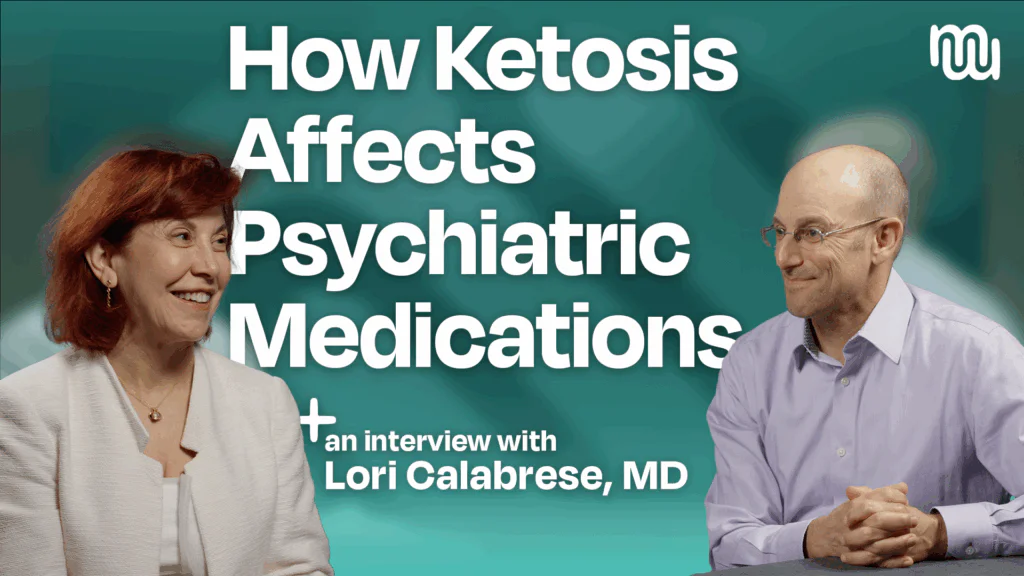
Psychiatrist Lori Calabrese explains how ketogenic diets affect psychiatric medications, sometimes amplifying their effects, and outlines a thoughtful approach to safe medication tapering. She discusses distinguishing side effects from relapse, stabilizing metabolism first, and using lifestyle tools like exercise and sleep to make deprescribing smoother and more effective.
Read more
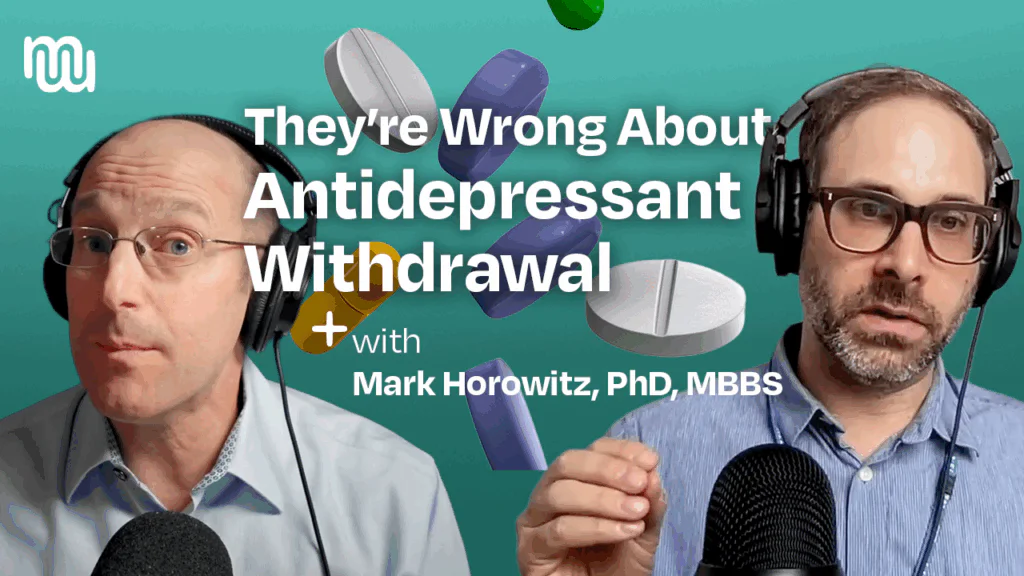
Does psychiatric medication withdrawal exist — or is it just a myth? For anyone who’s lived through it, the question alone can feel insulting. Psychiatric drug withdrawal is real. While the experience varies widely, for many, it’s not “brief and mild” as many guidelines state it is. It can be intense, destabilizing, and often misunderstood. One of the most painful challenges is trying to determine whether what you're experiencing is withdrawal or relapse.
Learn more
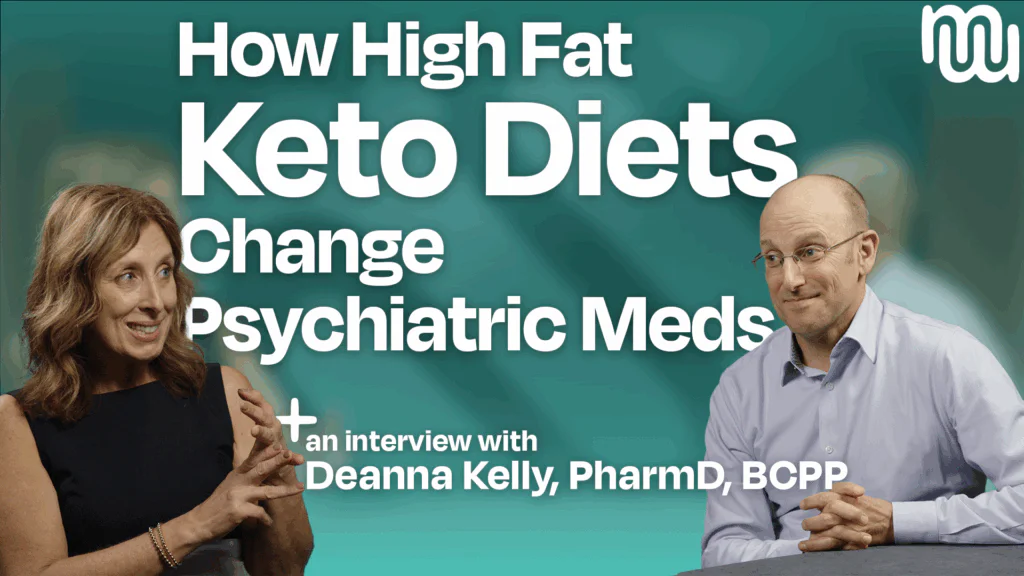
Pharmacist and psychiatry professor Deanna Kelly explains how high-fat and ketogenic diets alter psychiatric drug absorption and metabolism. She discusses risks with quetiapine, lithium, and the new xanomeline–trospium combination, how medications can disrupt ketosis, and why communication with pharmacists is critical for safe, effective metabolic therapy.
Learn more
When starting a ketogenic diet or initiating therapeutic nutritional ketosis for treating a psychiatric illness, careful management of your medications is critical. It’s important to work closely with…
Learn more
Psychiatrist Lori Calabrese explains how ketogenic diets affect psychiatric medications, sometimes amplifying their effects, and outlines a thoughtful approach to safe medication tapering. She discusses distinguishing side effects from relapse, stabilizing metabolism first, and using lifestyle tools like exercise and sleep to make deprescribing smoother and more effective.
Read more
Does psychiatric medication withdrawal exist — or is it just a myth? For anyone who’s lived through it, the question alone can feel insulting. Psychiatric drug withdrawal is real. While the experience varies widely, for many, it’s not “brief and mild” as many guidelines state it is. It can be intense, destabilizing, and often misunderstood. One of the most painful challenges is trying to determine whether what you're experiencing is withdrawal or relapse.
Learn more
Pharmacist and psychiatry professor Deanna Kelly explains how high-fat and ketogenic diets alter psychiatric drug absorption and metabolism. She discusses risks with quetiapine, lithium, and the new xanomeline–trospium combination, how medications can disrupt ketosis, and why communication with pharmacists is critical for safe, effective metabolic therapy.
Learn more
When starting a ketogenic diet or initiating therapeutic nutritional ketosis for treating a psychiatric illness, careful management of your medications is critical. It’s important to work closely with…
Learn more