New Results: First RCT for Schizophrenia & Bipolar Disorder. Learn more.


Listen, Watch & Subscribe on:



Q&A: Healthy Fats, Alcohol, Perimenopause, & More
Listen
About the host

About the guest


Bret:
What are the best sources of fat? What is a good keto diet versus a bad that creates health problems? Do you recommend any type of vitamins or supplements? Do you carb cycle? We need to address the effect of alcohol and ketosis.
Here we’re again for another Metabolic Mailbag where Dr. Georgia Ede and I answer your questions that you leave us on YouTube and Twitter and Instagram and metabolicmind.org/questions. We love to hear from you, and we thank you so much for your questions. So, please keep them coming. We want to address everything related to ketogenic therapy, metabolic psychiatry, ketosis in general, and lifestyle interventions to improve your metabolic and mental health.
So, please keep the questions coming. So, here’s another episode of our mailbag with Dr. Georgie Ede.
Hey, Georgia. Welcome back to another Metabolic Mailbag episode. Thanks for joining me again.
Georgia:
Good to be back.
Bret:
Yeah, we’ve already addressed so many questions that we’ve gotten from the audience, and there’s so many more to address people sending us comments on YouTube, on Instagram, on X and at metabolicmind.org/questions.
So, we love getting these questions. We love addressing them, and we really hope it is helping everybody. So, let’s dig in to this episode where we’re going to talk about caffeine and alcohol and we’re going to talk about what happens. If you’ve been on. Keto for, a num of a certain amount of time, and then your anxiety worsens.
But we’re going to start off with finishing. The second part of the question that we ended our last episode with Freedom to Be Me from YouTube asked about how much fat per day should you eat, which you did a amazing job answering that question. But what are the best sources of fat? So that’s an interesting one.
What, how do you counsel people on the best sources of fat?
Georgia:
I keep it actually quite simple and it’s really just. Fat from whole plant and animal foods. So whichever foods you, if you’re eating a plant-based diet, animal-based diet, or an omnivorous diet, just fat from whole foods as opposed to factory fats.
This could be avocados, olives, coconuts, duck fat, tallow, egg yolks. And these are the types of fat that, really what matters is the quality of the fat. And so, if it’s fat from whole foods, you’re always going to be on pretty solid ground. What you want to avoid, and in my opinion is, factory fats that come from factories.
And these are, especially the vegetable oils, soybean oil, sunflower oil, safflower oil, corn oil. Even though we are told they’re heart healthy and they’re plant-based, we are designed to handle a certain amount of the fatty acids that are in those oils, but not in large quantities and factory produced.
And so, there are many different possible problems with this, but the simple answer is eat just as with everything else with nutrition, follow whole foods principles and get your fats from whole foods.
Bret:
Yeah, and I think a lot of times when people ask this question, they say, what about saturated fats?
What about monounsaturated fats and polyunsaturated fats? And I think one great part of the answer is, if you have a specific leaning one way or the other, you can design a ketogenic diet to fit that. It doesn’t have to have any saturated fat. It doesn’t have to have any seed oils, right?
You can fit your diet, you can arrange your diet to fit that. Now, that being said, I find it so frustrating that I think the only reason we even talk about seed oils is because of this fear of saturated fat. That’s why they were designed right? And they were also designed because they’re cheap and easy and whatnot.
But if there wasn’t this fear of saturated fat, then we wouldn’t really need to have the seed oil discussion. But yeah, I think that lays it out. That if you’re eating fat from a whole food source, you’re in a pretty good spot, and you’re doing all right.
Georgia:
Yeah, you really can’t go, you really can’t go wrong there.
Yeah, I think it’s keeping it simple, I think is really the best strategy. And like you were saying, on a ketogenic diet, the thing about a ketogenic diet that makes it ketogenic is the macronutrient composition. How much protein? How much carbohydrate? And how much fat? But that fat and that protein can come from plants, animals or both.
So, you could get the same macronutrient ratios whether you prefer to eat all plants, all animals, or a combination of the two. It’s not, we’ve been taught for decades to divide fat into two categories, saturated and unsaturated. What we need to do is stop thinking about it like that because all whole foods contain a mixture of both.
What we need to start thinking about is fats that are factory fats versus real fats or refined versus unrefined. That’s what we need to start paying attention to. It doesn’t, it really doesn’t make any sense to think about saturated fat as bad for us.
Bret:
Yeah, and when we’re at home and we’re cooking for ourselves, we can control all of that. When we go out and we’re at a restaurant, it can be harder to control.
Now, do you recommend when people go to a restaurant, they specifically say, please don’t give me any seed oils? Cook my food and butter, or whatever other natural fat you might have. Do you recommend that?
Georgia:
This is a tough one because most restaurants do use vegetable oils. They are inexpensive.
And even when restaurants put what they say, if you ask for say olive oil and vinegar for your salad dressing instead of a bottled or a restaurant dressing, which almost always is going to have vegetable oil in it. If you ask them, oh, can you just bring me some olive oil and vinegar? Nine times out of 10, that olive oil is not going to be pure olive oil.
It’s going to be olive oil mixed with a vegetable oil. Again because it’s less expensive. So, when you eat out, you have very little control there. There are certain things you can do to get more control. So, by ordering certain things on the menu that are either lower in fat and bring your own olive oil to the restaurant or whatever kind of fat you, or butter, whatever fat is that you like to bring with you, you can do that.
Or you can order things that ,you know, that don’t have very much fat in them. Or you can actually see the components of the meal. But honestly, if you’re eating hot food that’s been cooked in any kind of a fat, it’s almost always vegetable oils. Eat out as little as you can, and be careful when you’re ordering on the menu that you’re ordering things that are much harder to hide those vegetable oils in.
Bret:
Yeah, i think that’s good advice. And when I talk to patients, my general approach is, look, if you’re eating out like once a week, it’s probably not that big of a deal, right? Because there is certainly a dose response, but there are some people who, you know, might be in sales or might be in some sort of job where they are out at a work dinner four nights a week, five nights a week.
And they’re eating out, I think they really have to pay a little more attention to this. So, I think the frequency really matters here. Yeah, alright. Jumping to our next one, MarkB-p1w on YouTube. Thank you very much.
This is very interesting. “I would like to know what is a good keto diet versus a bad that creates health problems? Georgia speaks of ‘nutrient foods’: can you say more please? I hear people using vitamin supplements; is that necessary?” So, I think this brings up a good question. Like we talk about a keto diet as if it’s one thing, which it clearly is not.
There are so many different versions of a ketogenic diet. It’s any diet that gets your ketones, that gets your body producing ketones, right? Are there different good versus bad to put labels on them? How do you respond to that?
Georgia:
Yeah, so thanks, Mark. I love this question because it’s true. Just like any diet, there are healthier and less healthy ways to construct it.
And again, following whole foods principles is really key, and there it’s really important. The ketones are important for mental health for a lot of people need to be in ketosis for good mental health. That’s why, that’s what Metabolic Mind is largely about. But the brain cannot live on ketones alone.
The brain also needs nutrients, and it also needs to be protected against damage. For example, in my book, I describe it as a brain healthy diet. It’s not just ketogenic. It has to nourish the brain. It has to protect the brain, and it has to energize the brain with ketones.
But the nourishing and protecting are just as important. And so, you want to make sure that you know which foods are best at delivering nutrients to your brain. And then, you need to know which foods are riskiest to your brain, that are going to cause the most inflammation and oxidative stress, for example.
There’s a lot more information about this in the book. But essentially, if you follow whole foods principles, meaning you’re building your ketogenic diet out of healthy whole foods, and then you are on much safer ground than if you’re eating a ketogenic diet where you’ve got a lot of processed foods and keto-friendly packaged foods. if you’re buying something at the store that says keto-friendly, doesn’t necessarily mean that it’s friendly. Doesn’t even necessarily mean that it’s keto because it could have a lot of more carbs in it than the package leads on. If it says net carbs, three carbs per serving, it could actually have much more carbohydrate in it than that.
And it’s also a matter of knowing which whole foods are good for you and which contain the most nutrients. And so by and large, those are the animal foods. And so, one of the healthiest ways to construct a ketogenic diet to make sure you’re getting all your nutrients is to include some animal food in the diet.
But if you’re not comfortable doing that, if you’re eating a vegetarian version of a ketogenic diet, one of the recommendations I make in the book is make sure you include enough eggs in the diet. And if you’re eating a vegan diet, make sure that you’re using, veering towards tofu, which contains the full complement of amino acids and is very keto-friendly.
It’s extremely low in carbohydrates. So, there are ways that you can, that you can design your diet to suit your preferences. But by and large, you want to follow whole foods principles and stay away from the keto products, the cereals, the keto cereals, the keto cookies, the keto shakes, the keto bars. Stay away from all of that as much as you possibly can.
Bret:
Yeah, and if someone is eating a predominantly whole foods keto diet that is an omnivore keto diet, do you recommend any type of vitamins or supplements?
Georgia:
Oh, sorry, I forgot about that part of your question, Mark. I’m not really a supplement person. I’m a food-first person and supplements only when necessary.
And there are definitely, even with the most perfectly constructed diet, whatever that might be, there still may be a need for certain supplements in certain individuals because some people do have trouble, let’s say for example, because of damaged gut health, being able to absorb and extract all of the nutrients from food easily.
Especially as we get older, it can be harder, for example, to absorb B12. That’s just one example of something that can be challenging as you get older. And there can be certain health conditions that interfere with our ability to obtain nutrients from foods. And there can be certain dietary patterns where you’re not going to get everything you need from your diet.
For example, in vegan diet, it’s really important to include a very specific supplements to make up for those gaps that exist in the plant kingdom. And yes, there’s definitely a place for supplements, but I am always, I always prefer because the body is designed this way to get as many of those nutrients from food as possible.
Bret:
Yeah, very good.
Fellow mental health clinicians and healthcare providers, you now have access to a suite of free CME lectures on metabolic psychiatry and metabolic health. Each of these CME sessions provide insight on incorporating metabolic therapies for mental illnesses into your practice. These CME sessions are approved for AMA category one credits, CNE nursing credit hours, and continuing education credit for psychologists, and they’re completely free of charge on mycme.com.
Now, back to the video.
So, next is ElyseChused from YouTube. “If someone does very well,” sorry if I mispronounce handles. Some of these are hard to figure out what they are, but I apologize. But we love the questions. So, keep them coming. “If someone does very well on keto for three months and then notices a worsening of anxiety, what could be driving this?
Could it be hormones? Could it be histamine? And how do you troubleshoot it? Do you carb cycle?” Do you do other things? So, you know something that we hear frequently. Someone starts with a ketogenic diet, is doing great, and then something happens and something gets worse. In this case, she’s asking about anxiety.
So, how do you address that?
Georgia:
Yeah, this is a great question because things, sometimes things will change over time, and it does require some troubleshooting. And there’s definitely not just one answer, but there are many possibilities. So, for the first thing I would always do if someone starts to feel worse on a ketogenic diet after that keto adaptation period, which can take 6 to 12 weeks after that adaptation period.
If you’re not feeling as well as you were at first, then it’s time for troubleshooting. So, the first thing I always recommend is check your ketone levels and see if they are either too low or too high. Because if you’re not consistently in good ketosis within a range that works well for many people, which is somewhere between one millimole and three millimole.
Again, some people may do well higher. Some people don’t need to be this high, but that’s the range where a lot of people will get some good benefits. Make sure your ketone levels aren’t into the fours and fives all the time. Because for some people, that feels good, but for some people that is very uncomfortable. For some people, that was going to cause anxiety and insomnia and hunger and irritability and difficulty concentrating.
So, make sure they’re not too high. The other thing is make sure you’re not falling out of ketosis too frequently because if you’re cycling in and out of ketosis, that can definitely, kick up anxiety. Another thing you can do is, this came up in another question in our previous episode. As you become adapted to a ketogenic diet, you can become more sensitive to caffeine. You can become more sensitive to alcohol. You can become more sensitive to medications you’re taking. And so, all of those may need to be looked at.
You might need to reduce the amount of caffeine in your diet, the amount of alcohol that you take in, and you may need some careful medication adjustments, usually downward. Talk with your prescriber about that. And then, you can look at, and you mentioned, Elise, you mentioned histamine, which is such a good question because, and there’s information about this in my book as well as, a histamine can, people who are sensitive to histamine. Histamine is a naturally a molecule that naturally builds up in aged, processed, fermented and cured and smoked and meats and cheeses, especially high protein foods like meats and cheeses.
And these high histamine foods are very popular in ketogenic diets because they’re convenient and portable. You can take them in the car or take them to work. And they’re very low in carbohydrate, or many cases, completely carbohydrate-free. So, they’re popular on ketogenic diets. And if at that three month mark, you’ve started to turn more to foods like that, it may be that you’re sensitive to histamine.
And you may need to take a look at that and choose more fresh foods more often and see if that helps. And so, things like bacon and cheese and salami, jerky, those kinds of things, can for people with histamine intolerance, start to kick up some anxiety, some headaches, some rapid heart rates, some insomnia. So, I’m really glad that you asked about that because that’s something that does happen for some people.
Bret:
Yeah, that’s a great point about those foods, which can be fairly common on a ketogenic diet. But not everybody’s going to respond the same way to them. Yeah, that’s crucial. Now, I think you addressed how to troubleshoot it, but one specific thing she brought up was carb cycling, which is a wonderful topic, whether it’s related to this specific situation or not.
Just what are your thoughts on carb cycling for someone who’s in ketosis and following a ketogenic diet?
Georgia:
I’m not a fan of carb cycling and partly because, for several reasons. So, one is if you cycle out of ketosis and your brain happens to do better when you’re in ketosis, you’re going to lose some of those benefits when you cycle out of ketosis.
Another reason is because many people struggle with carbohydrate addiction. And when they cycle out of ketosis, they sometimes can have a really hard time getting back into ketosis. Sometimes, intention thinking that you’re going to, you’re going to stop the ketogenic diet and increase your carbohydrate intake for, say, just a weekend may turn into a week, a month, six months.
It can be very difficult to find your way back if you have, and you know who you are, if that’s your history. So, it’s very dangerous for people with food addiction. Another reason is that I don’t see a biological need for it. So, there is an argument out there that carb cycling is important because we need to have higher levels of insulin to support certain bodily functions, like growth and repair pathways.
There’s even a very popular argument out there that women need to have carbohydrates periodically in order to have healthy hormonal cycling and healthy reproductive function. This is a myth. This is not the case. There is no biological requirement for dietary carbohydrate for males or for females. So, if you are worried that your insulin is being kept too low for too long and you want a boost of insulin, just eat more protein ,and you’ll get a, you’ll get a boost of that insulin without the risk of carbohydrate.
But if you really, and if you really do think that, if you’re really worried and you want to have carbohydrate, if you do carb cycle, which again, I don’t recommend, at least stick to whole food sources of carbohydrates, like fruits and starchy vegetables, as opposed to ice cream and cookies and cakes and pies and those kinds of things because it’s much easier to find your way back.
And it’s much healthier to take in those kinds of carbohydrates than the processed ones.
Bret:
Yeah, I think that’s a really important point, a number of points. Now, Elisa also asked a separate question, specifically about perimenopause. And it brings up the question of women and their cycle and carbs and there are lots of reports of women who feel better when they increase their carbs at certain parts of their cycle and then decrease it later.
Even though ,I would venture to say, there’s not a whole lot of research on this. And like you said, there’s no requirement for it. There are some women who do feel better that way. So ,how do you talk to your female patients about this and their cycle? Or when they’re in perimenopause?
Georgia:
It’s funny. So ,there’s two different questions there. And so, one is about if you feel better having more carbohydrate at certain points in your cycle and that hasn’t disrupted you the other goals that you’re trying to attain in terms of good mental health.
Then, there’s no, there would be no reason for me to try to convince you otherwise. If it’s working for you, don’t mess with it. But I have yet to work with somebody for whom that is really the case. It’s almost always when I’m working with a woman, who is either in perimenopause or is having issues, mental or physical health symptoms around the, leading up to the time of their period and during, it’s almost always because they haven’t fully adapted to the ketogenic diet yet. And so, it really is in most cases a matter of taking the time to get to the other side of that adaptation period.
Most people do better. Their hormonal rhythm, their hormonal regulation, their symptoms leading up to and during their periods are all, in my experience, always so much better if they actually get into ketosis and stay there. And there’s some good research coming out in this area, especially in the field of polycystic ovarian syndrome, a very common cause of infertility in women and common cause of menstrual irregularities and obesity, which is essentially an insulin resistance condition.
And it responds very well to carbohydrate restriction and ketogenic diets. So, it’s a matter, it may be a matter of troubleshooting the diet. If you’re finding you’re getting carb cravings during your cycle, there’s usually something we can do about that to troubleshoot the actual diet. And then for perimenopause, I’ve worked with many women in perimenopause, and I myself went through perimenopause on a ketogenic diet.
So, I can tell you it’s very helpful because what’s happening in perimenopause is women become more insulin-resistant. That’s one of the major drivers for the changes in body composition. The weight gain that tends to happen, the brain fog, all the other things that people notice when they’re going through perimenopause, mood moodiness, and fatigue.
And it responds actually quite well to a well-formulated ketogenic diet. So, it’s almost not a better time in your life to try it. Because that’s when women start to, they lose some of the protection that estrogen gives them against insulin resistance. Men and women, when they’re younger, men are more likely to be insulin-resistant.
And that’s why you can see that they can, they gain weight around their middle earlier than women do. Women tend to gain it more around their hips and thighs. But then, once they go through perimenopause, everything starts to shift and a different pattern emerges. So, that’s because men are more insulin-resistant than women until menopause. And then, women catch up. So, a ketogenic diet can be really your best friend in perimenopause.
Bret:
Yeah, and I should mention, we have a couple videos that may help, expand upon this even further, even though that was a great answer. So, I’m not sure if it does expand very much, but one is an interview with Dr. Madison Kackley from the SHE IS lab at Ohio State, where they’re really focusing specifically on ketosis in women and trying to address these questions that are unique to women.
And also, I did a video on carb cycling that goes into a little bit about the theories behind it, and when it might be, when it might be helpful and when not. So, that might add, so we can link to those. I always feel strange, do I point up here? Do I point up here? Like where do we, it’s like a leap of faith, where are we going to put them?
But we’ll link to them somewhere for you guys to find them.
Georgia:
So Bret, I’m curious. Do you have a different opinion about carb cycling, or do you know of situations where carb cycling can be useful?
Bret:
I think in the carb cycling video, I go beyond just the ketosis for mental health. I think if you are in ketosis to treat a specific condition, specifically a brain-based condition, then carb cycling is generally not recommended. And I don’t think it’s going to help you, and the chances that it’s going to hurt you could be higher than it’s helping now in athletes, who are trying to, yeah in athletes, it’s very different.
Or in people who are just trying to be in ketosis for general health, but missed parts of not being in keto or of a non-ketogenic diet. So, how do you frame carb cycling in a healthy and safe way? And then, it doesn’t mean, doesn’t give you license to eat whatever you want. When you’re carb cycling, you still need to focus on the healthiest natural carbs you can find.
So, it is those patterns, but not to counter anything you say. Completely agree with everything you said.
Georgia:
Oh, no. And I agree with what you said. Yeah, that’s, thank you. I was just curious to hear your perspective.
Bret:
All right, why don’t we do one more for this episode? I think I said we were going to address caffeine, but we’ll kick caffeine to our next episode because we have so many questions, a lot of time here that we’re going to dedicate to this. But for this one, let’s talk about alcohol.
So guillaumekalfon, sorry, guillaumekalfon9117 from YouTube. And by the way, all these questions are from YouTube. So Instagram people, Twitter people, and of course, metabolicmind.org/questions, step up your game. We want more questions from you. Okay, anyway so, guillaumekalfon says, “I feel we need to address the effects of alcohol on ketosis.”
Yes, we do. We need to address the effect of alcohol and ketosis because that’s a question a lot of people have. And you already did mention that you can become more sensitive to alcohol. You’ve mentioned that a couple times in our Q and A. So, that’s certainly something to address. But what else, what other aspects of alcohol intake?
Georgia:
Yes. So, one of the things I love about the way guillaumekalfon asked this question was he said, asking for a friend, of course. So, there are a few different pieces of this puzzle. So, one is that when you can stay in ketosis and include alcohol on your ketogenic diet? Lots of people do this, low carb wines, low carb beers, sugar-free spirits.
If you have, if you enjoy those types of alcoholic beverages, you may notice a couple of things. One is that they may not affect your ketone levels. So, they may seem keto-friendly. And the other thing is you may notice that your glucose level goes down, especially if you’re wearing a continuous glucose monitor.
You’ll see your glucose level goes down. So why is that? So, the reason why is that when you take in alcohol ethanol is the active chemical and alcohol in alcoholic beverages, the liver views alcohol as a toxin. And so, it gives alcohol something called oxidative priority. And what that means is it’s going to drop everything else it’s doing to deal with the alcohol. Metabolize it, detoxify it, and send it out of the body as quickly as it can before it gets back to its usual business.
So, that’s called oxidative priority. And while, so one of the things that stops doing is it stops making glucose. Glucoseneogenesis stops because, and that’s why your glucose level goes down after you have alcohol, unless you’ve drunk, unless you’ve had an alcoholic beverage that has sugar in it, which you shouldn’t.
Then, your glucose level will go down, and that’s because the liver stops making glucose. But the other thing the liver stops doing is it stops burning fat. And so, during the period of time that your body’s dealing with this ethanol, the alcohol, it’s not burning fat during that period of time.
So, you’re not getting those benefits. You’ll still see ketones on the meter, but you’re not going to get the benefits of your cells being in fat-burning mode. And the really, one of the major problems with alcohol is that it is a powerful promoter of oxidative stress. And that’s one of the root causes of physical and mental health problems is, and that’s one of the reasons why a lot of people follow a ketogenic diet in the first place is to reduce oxidative stress.
And so, if you’re taking in a substance, which directly and powerfully promotes oxidative stress, then you’re really counteracting a lot of the benefits and a lot of the hard work you’ve done to get into ketosis in the first place. And another thing that’s really important, of course, is that alcohol can be addictive in many people and is not a brain healthy beverage.
So, one thing I don’t want anybody doing, and I’ve seen this happen in a few people, is trading in their carbohydrate addiction for an alcohol addiction. So, just because alcohol is, certain types of alcoholic beverages are keto-friendly doesn’t mean they’re friendly for you, for your brain, for your life, for your relationships, for your total health. And so many reasons to keep alcohol to a minimum or completely avoid it if you have a history of addiction to it.
So many different reasons to be careful with alcohol, even on a ketogenic diet.
Bret:
Yeah, very good. Very good. I think that’s a good way to wrap up this episode. So, thank you again, another episode of Metabolic Mailbag and we’ll come back for another one because we have plenty of other questions to address about caffeine and about the carnivore diet.
We had a number of questions about that, which you tend to know a thing or two about. So, I think that’ll be wonderful to have you weigh in on that. So, I look forward to seeing you again on the next one.
Georgia:
All right. Til then.
Listen, Watch & Subscribe on:
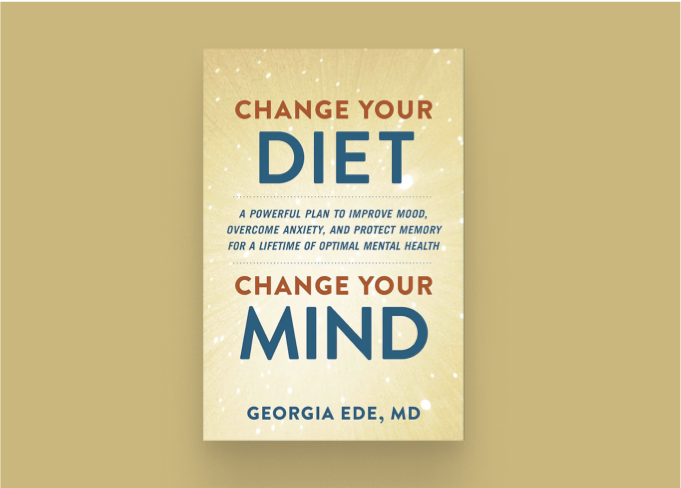
A powerful plan to improve mood, overcome anxiety, and protect memory for a lifetime of optimal mental health.
Read more

Visit Dr. Georgia Ede's website to help you discover the powerful connection between your psychiatric or medical diagnosis and your diet.
Learn more
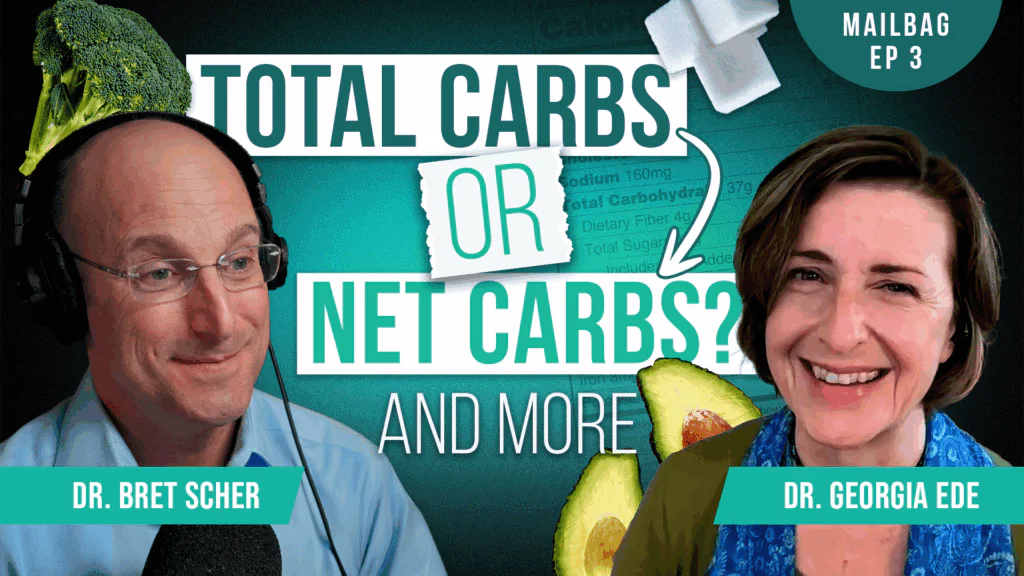
In this Metabolic Mind mailbag episode, Dr. Bret Scher and Dr. Georgia Ede answer listener questions about ketogenic diets, ketone plateaus, and mental health. They explain why blood ketone levels may decrease over time, when it makes sense to aim for higher ketones, and how endogenous ketosis differs from exogenous ketone supplements. The discussion also covers total versus net carbs, hidden carbohydrates in processed keto foods, and practical strategies for managing diet related insomnia during keto adaptation.
Learn more
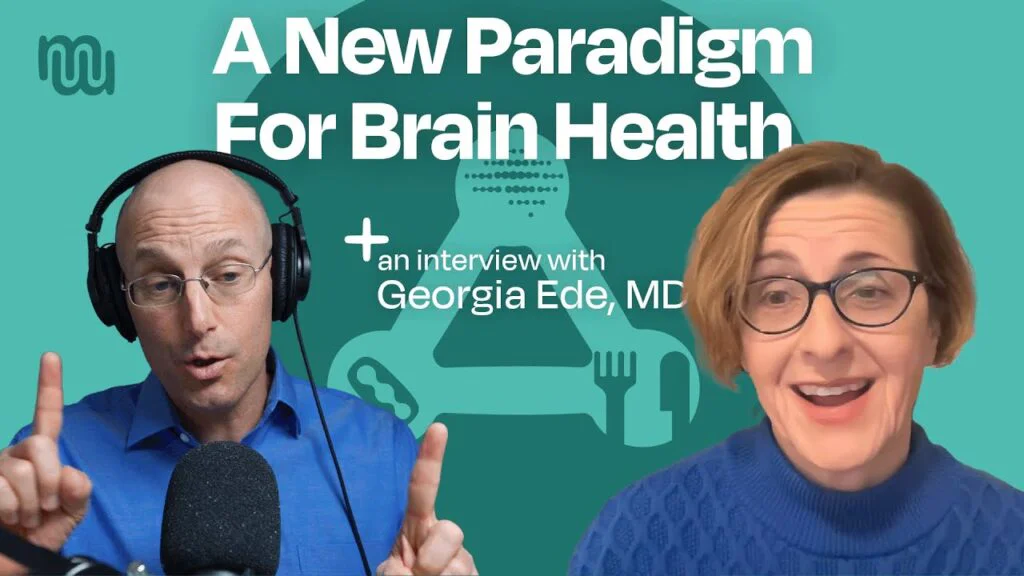
Harvard-trained psychiatrist Dr. Georgia Ede joins Dr. Bret Scher to cut through “brain superfood” hype and lay out a science-first framework for eating to improve mood, reduce anxiety, and protect memory. Drawing on clinical experience and rigorous evidence, Ede explains how unstable blood sugar and chronically high insulin drive brain inflammation and oxidative stress—and why restoring healthy metabolism (sometimes with lower-carb or ketogenic strategies) can sharpen thinking and stabilize emotions. She clarifies common nutrition myths, from the limits of observational food studies to the debate over seed oils and saturated fat, and makes the case for whole-food patterns—including some animal foods—to supply essential brain nutrients. Practical takeaways include using continuous glucose monitors, simple labs, and symptom tracking to personalize your plan. If you want clear, actionable guidance for lifelong brain health—beyond clickbait and diet wars—this episode is your roadmap.
Learn more
A powerful plan to improve mood, overcome anxiety, and protect memory for a lifetime of optimal mental health.
Read more
Visit Dr. Georgia Ede's website to help you discover the powerful connection between your psychiatric or medical diagnosis and your diet.
Learn more
In this Metabolic Mind mailbag episode, Dr. Bret Scher and Dr. Georgia Ede answer listener questions about ketogenic diets, ketone plateaus, and mental health. They explain why blood ketone levels may decrease over time, when it makes sense to aim for higher ketones, and how endogenous ketosis differs from exogenous ketone supplements. The discussion also covers total versus net carbs, hidden carbohydrates in processed keto foods, and practical strategies for managing diet related insomnia during keto adaptation.
Learn more
Harvard-trained psychiatrist Dr. Georgia Ede joins Dr. Bret Scher to cut through “brain superfood” hype and lay out a science-first framework for eating to improve mood, reduce anxiety, and protect memory. Drawing on clinical experience and rigorous evidence, Ede explains how unstable blood sugar and chronically high insulin drive brain inflammation and oxidative stress—and why restoring healthy metabolism (sometimes with lower-carb or ketogenic strategies) can sharpen thinking and stabilize emotions. She clarifies common nutrition myths, from the limits of observational food studies to the debate over seed oils and saturated fat, and makes the case for whole-food patterns—including some animal foods—to supply essential brain nutrients. Practical takeaways include using continuous glucose monitors, simple labs, and symptom tracking to personalize your plan. If you want clear, actionable guidance for lifelong brain health—beyond clickbait and diet wars—this episode is your roadmap.
Learn more