New Results: First RCT for Schizophrenia & Bipolar Disorder. Learn more.


Listen, Watch & Subscribe on:



Q&A: Caffeine, Carnivore, Meds, and Ketones—What’s Helping or Hurting Your Mental Health?
Listen
About the host

About the guest


Bret:
So, is caffeine really worth worrying about? Wouldn’t the carnivore diet be too high in protein? What is it about the carnivore diet that helps people when the ketogenic diet doesn’t? What about caffeine on a carnivore diet? What do I do if I’m taking medications that lower my ketones?
Welcome to The Metabolic Mind Podcast. I’m your host, Dr. Bret Scher. Metabolic Mind is a nonprofit initiative of Baszucki Group where we’re providing information about the intersection of metabolic health and mental health and metabolic therapies, such as nutritional ketosis as therapies for mental illness.
Thank you for joining us. Although our podcast is for informational purposes only and we aren’t giving medical advice, we hope you will learn from our content and it will help facilitate discussions with your healthcare providers to see if you could benefit from exploring the connection between metabolic and mental health.
Here we are again for another Metabolic Mailbag where Dr. Georgia Ede and I answer your questions that you leave us on YouTube and Twitter and Instagram and metabolicmind.org/questions. We love to hear from you, and we thank you so much for your questions. So, please keep them coming. We want to address everything related to ketogenic therapy, metabolic psychiatry, ketosis in general, and lifestyle interventions to improve your metabolic and mental health. So, please keep the questions coming. So, here’s another episode of our mailbag with Dr. Georgie Ede.
Many of the interventions we discussed can have potentially dangerous effects of done without proper supervision. Consult your healthcare provider before changing your lifestyle or medications. In addition, it’s important to note that people may respond differently to ketosis, and there isn’t one recognized universal response.
Georgia, welcome back. We have another Metabolic Mailbag episode. Thanks for joining me again.
Georgia:
Very good to be back.
Bret:
Yeah, these have been great. We’ve gotten so many questions from people on YouTube mostly but also at metabolicmind.org/questions and on different platforms. And people have a lot that they want to ask.
And I’m so glad that we have the opportunity to address them because some of these are really important questions that clearly they’re not the only ones having. So, why don’t we jump in? We ended our last episode talking about alcohol. So this one, let’s start talking about caffeine because we’ve got a number of questions about caffeine.
“Does one need to give up yerba mate, coffee or other sources of caffeine? And would MCT oil in coffee counteract any gluconeogenesis caused by the caffeine?” So, is caffeine really worth worrying about? And that came from citygalana4518 on YouTube. So, thank you for that question. Let’s face it. Caffeine is the most commonly used legal drug there is.
And I guess while we’re talking about this, I should take an ah, okay, I’m ready now. Thank you. All right, so what do you say about caffeine?
Georgia:
Yeah, so in the last episode, I came down hard against alcohol. And now, I’m working hard to lose this popularity contest. I’m going to say that there are many reasons to consider taking a look at the amount of caffeine in your diet. And for some people, it’s going to be really beneficial to remove it all together.
So, I would encourage people to explore this, especially if they’re not getting the results they were hoping for anxiety, for mood swings, for insomnia. And because caffeine can disrupt sleep, it can cause mood swings. It can cause anxiety, panic attacks, et cetera, irritability. And for some people, it’s going to be a really important step to take to explore that relationship. So what citygalna is asking is, does one need to give up? Does one need to give up your yerba mate, coffee, other sources of caffeine? It really depends on who you are. Some people do just fine with caffeine as part of their ketogenic diet and their brain healthy lifestyle.
Others find that it makes a big difference if they cut back or eliminate. And the only way to know is really to explore that for yourself. So, caffeine does a number of things. So, one thing it does is it raises stress hormone levels. And when your stress hormone levels are high, that turns on gluconeogenesis.
So, it tells your liver to release glucose into the bloodstream because it thinks you’re under stress. It thinks you need fast energy. So, it’s going to release more glucose into the blood. It’s going to raise your blood sugar a little bit. It’s going to keep your blood sugar a little bit higher for that period of time that the caffeine’s in your system. It also suppresses appetite.
And this can be really supportive on a ketogenic diet. It can help you eat less, get into ketosis more easily. But as the caffeine wears off, there can be rebound hunger for some people where you might say, oh, you’re good until about three o’clock. And then, you suddenly get really hungry as the caffeine is wearing off.
And another thing is the sleep. So caffeine, it doesn’t just raise stress hormone levels. It also has effect on a brain chemical called adenosine, which is your sleep promoting neurotransmitter. And for some people, it can take up to 24 hours for caffeine to completely clear the system. So, especially if you’re a slow metabolizer, if you drink a significant amount of caffeine or if you drink caffeine until late in the day, your sleep quality is not going to be good.
And that’s one of the foundations of good mental health. So, for all of these reasons, it’s important to take a look at caffeine, especially if you’re not getting the results that you were hoping for.
Bret:
Yeah so, I just have to say it’s 11:00 AM where I’m recording. So, this is my last little bit, or I won’t drink anymore after that.
Because I know if I drink it late, I’m staring at the ceiling all night and can’t sleep and a lot of people do that. Now, but a lot of patients that I work with would tell me, I drank three, four cups of coffee and felt like I needed more. And then when I went on the keto diet, like one felt too strong for me.
So, it is interesting how that change can really happen for a lot of people.
Georgia:
Exactly, the ketogenic diet mimics the effects of a lot of drugs, including caffeine. A ketogenic diet is naturally stimulating. But it’s stimulating without the crash and without the side effects, without the sleep disturbance, and it also cost less.
Bret:
Okay, we got a number of questions about a carnivore diet. So, why don’t we jump into some of those? So, first is karolinaciucas664. And again, I’m sorry. These are hard. A lot harder than names because they’re usually like a mash of letters.
So anyway, “Wouldn’t the carnivore diet be too high in protein? I’m a bit at a a loss about what to eat.” So, we’ve already addressed sort of protein and how much protein to eat. What are sort of the goal proteins? And there’s a range for different people depending on what your ketone levels and what your health goals are, and how tall you are and how active you are, right?
And how old you are. All these things factor into the amount of protein that is right for you. But when you’re specifically talking about a carnivore diet, is that by default pretty high in protein and maybe too high for ketosis?
Georgia:
It is never healthy to overeat anything on any diet, including protein.
And there are some people who follow a carnivore diet where they eat as much protein as they want. They don’t put any limit on it whatsoever. And that does work for some people, but only if your appetite is being well-regulated by that carnivore diet. There’s actually, there’s a whole chapter in my book about carnivore diets that goes into a lot of the details about how to construct a carnivore diet in a healthier way.
And especially if you’re trying to get the benefits of ketosis as well as the benefits of carnivore, then you really can’t overeat protein. Because if you eat too much protein, that will raise your insulin levels, can even keep your glucose levels running higher, and will make it harder for you to get into ketosis.
You can even gain weight. You can feel sluggish. You can just feel generally unwell because you’re eating too much protein, is not healthy. Just because it’s carnivore doesn’t mean that it has to be high in protein. You still want the right amount of protein.
Bret:
Yeah and that’s where you know your choice of, if you’re eating meat, your choice of cut.
Is it a fat or cut or a leaner cut? Or are you eating pork, which is naturally fattier? And so, your choice of meat on a carnivore diet can really dial up that fat and dial down that protein depending on what you choose. So, you can really specify it to yourself, yeah.
Georgia:
Yes.
Bret:
So, let’s see. Our other question on a carnivore diet from AgnesJ-e3P on YouTube.
“I have a question about the carnivore diet. What is it about the carnivore diet that helps people when the ketogenic diet doesn’t?” Which I think is just a wonderful question. “Is it because it’s extremely low carb or is it because some people have reactions to plants, and what about vegetables that are technically fruit, like cucumbers and avocados?
Would they have fewer antinutrients?” So, there’s a lot packed in that question. Great question, Agnes.
Georgia:
Agnes is brilliant because she’s correct on all count. All of these things are likely, help to explain why many people gain additional benefits by switching from a traditional ketogenic diet to a carnivore diet.
So, one is that it is naturally lower in carbohydrate. Another is that, it is that many people do have reactions to certain plant foods. And so, they feel better when they remove those plant foods. And it is true that there are certain plant foods that are kinder and gentler than others. It’s another point that I make in my fruits and vegetables chapter of the book, is that if you are going to include some plant foods in your diet, it’s helpful to know which ones are more likely to bother you and less likely to bother you based on the kinds of chemicals they naturally contain.
And so fruits, most fruits, not all, there are certainly poisonous fruits in the world. But edible fruits by and large have many fewer naturally occurring plant toxins in them than vegetables. And that’s because many fruits are designed, so to speak, to be eaten. That the plant needs you to eat them to spread their seeds. If the plant needs you to eat them to spread their seeds, they’re going to be, they’re not, it wouldn’t be in the plant’s best interest to infuse those fruits with toxins that are going to harm you or kill you because it needs you alive and well to help spread its seed.
So, that is true. So, vegetables by and large tend to be higher in natural defensive plant toxins than most fruits.
Bret:
So, when it comes to the question though, about what is it about the carnivore diet that helps people when the ketogenic diet doesn’t?
Is it just because the carbs or the reaction to plants? I think the answer can really be yes to both. But that, of course, that doesn’t mean that everybody needs to go on a carnivore diet. That some people are going to do perfectly well on an omnivore keto diet. And so, personally, when I’m working with, clients, I’ll usually start them, if they’re starting a ketogenic diet ,on an omnivore-style keto diet and see how they do.
And then, in part of the troubleshooting, if they’re not getting the results they want, then maybe it’s an opportunity to try a carnivore diet. Or if someone comes to me on a ketogenic diet not getting the results they want from the get-go, that’s when I could consider a carnivore diet. So, I really see it as like a stepwise treatment.
But some people would say, go straight to a carnivore diet, maybe. And I don’t know if you recommend that or not, or I guess there’s no black and white. It’s working with the individual to see what’s going to fit them best.
Georgia:
Exactly, it’s personalized, and that’s exactly what I do in the book as well, is that there are different levels that people can start at based on their goals and their preferences.
And so, one thing I do in my practice, I do a lot exactly what you just said. Often, we’ll start somebody on an omnivore ketogenic diet, unless they prefer to start with a carnivore diet, which is also perfectly fine.
I would gradually move them onto a carnivore diet. Not all of a sudden, but gradually. But there are times when I start with a carnivore diet. And those times are when people have tried a ketogenic diet, and it hasn’t worked well, or they have a really difficult time managing the rules of a ketogenic diet because they’re overwhelmed or depressed or anxious or just having a lot of difficulty because of their mental health issue managing, figuring out how to do a ketogenic diet.
How many carbs, which foods can I have, how much can I have? What do my ketone levels need to be? And so, there are some cases, including a couple cases I put in the book, where when somebody was not able to manage a ketogenic diet because of their mental health condition to use the carnivore diet because it’s so simple to get them into ketosis and then expand from there.
So, you can do it in both directions. You can start with a regular ketogenic diet and then go to the carnivore diet if you need to or want to. But you can also do it the other way around. You can go from carnivore and expand towards a ketogenic diet because it’s just so much simpler to start with a carnivore diet in terms of the rules.
Bret:
What if mental health treatment looked completely different? I’m Dr. Bret Scher, host of Metabolic Mind, a show where we dive into the cutting edge science connecting your brain and your body. Did you know that your metabolism could hold the key to better mental health from bipolar disorder and depression to schizophrenia?
Researchers and doctors are exploring powerful new treatments that go beyond medication, like ketogenic therapy. Whether you’re struggling yourself or supporting someone who is, Metabolic Mind brings you real stories, expert insights, and the hope of a new path forward. Find Metabolic Mind on YouTube or anywhere you listen to podcasts because what fuels your body fuels your mental health.
Yeah, it reminds me of this interview I just had with Moira Newiss, who published a case report about a patient she worked with who was in and out of homelessness and living in shelters and living in a hotel without a full kitchen. And he was following a carnivore diet out of simplicity.
He would just cook up some mince or some ground beef, and that’s what he ate. And it was so easy and so effective for that individual. So yeah, that’s an interesting way to do it for people who can’t, who struggle with a more diverse ketogenic diet.
Georgia:
It’s harder to get simpler than that. And it really does help some people who really have difficulty managing the complexities of a ketogenic diet, aren’t a big deal for a lot of people. But if you have a mental health issue or any kind of other life constraint as this gentleman did, it can be really nice way to start.
Bret:
Yeah, and so Agnes had a follow up question about caffeine on a carnivore diet. So, we talked about caffeine, in general, on a keto diet, but what about caffeine on a carnivore diet? And we hear that like, what is allowed on a carnivore diet, right?
Because caffeine’s not meat. It’s not right. So, can you do it and salt and spices? And we hear questions about these types of things on a carnivore diet. So, how do you respond to that for caffeine and some of the others?
Georgia:
There are no carnivore police, and so you can actually make your carnivore diet.
Carnivore means different things to different people. It’s fascinating, actually, because just about any diet on the planet, there’s no one version of it, right? So, the different versions of Mediterranean diets and ketogenic diets and vegetarian diets. So, same with carnivore diets.
It means different things to different people. Some people, it means beef and water and salt, period. Other people, it means all ruminant animals and water and salt. Other people, it means all animal foods, including dairy and eggs. Other people, it means, I think for purely rationalization reasons, it means coffee and tea and wine and spices.
And so, where you draw the line really depends on your goals and your preferences. But if you are drawing the line too far outside the, I would say meat, seafood, wood, poultry. If you’re drawing it too far outside that line, you might not have the same benefits.
And therefore, if you are drawing the line very loosely and you’re not getting the results you’re hoping for, it may be useful for at least a time as an experiment to go to a simpler version of the carnivore diet.
Bret:
Yeah, I think that’s a good question, I mean a good point, but also a really good question because I like that there are no carnivore police. So, you really can adjust it.
And then, the last part of her question, she mentioned that she’d really been craving berries. So, she started adding those because she figured there was something in her body wanted from those or needed from those. So, how do you address cravings like that, and it’s like a that slippery slope, right?
We’re not talking about craving chocolate and candy and, sweets, but craving something natural, like berries, that can fit on a ketogenic diet when eaten in a limited amount. So, how do you talk about that?
Georgia:
Yeah, so again, it depends on the results, right? So, if you’re, first of all, why are you craving the berries?
It could be that there could be a very real physiological reason for this. Depending on how you’ve constructed your carnivore diet, you might not be getting enough vitamin C, and berries do contain vitamin C. There are actually very few things in berries that you can’t get elsewhere, and you can get vitamin C from animal foods. But you have to be very careful not to cook the animal foods too much because it’s the vitamin C that is in animal foods, just like in any food, is destroyed by heat.
And so, it could be that you’re not getting enough vitamin C on your carnivore diet. Another reason though, and a very common reason for craving things like berries on a carnivore diet is you just really miss that refreshing, juicy, that fresh taste that comes from a fresh plant food, like a fruit or a vegetable.
Crisp or juicy or refreshing, you don’t get that texture or that sensation from any animal food. And so, a lot of people do miss that. And so, that may be part of what’s going on, too. And again, no carnivore police. You can design the diet however you want. If you include some berries in your carnivore diet and you still are achieving the goals you’ve been trying to achieve, then why not include them?
There’s no reason to restrict your diet unnecessarily if you’re getting the benefits that you are aiming for.
Bret:
Yes, I love that point you made. Like when we crave something, and it might not actually be the food or the nutrients, but it’s the texture that we may be craving, which can be very limited on a carnivore diet. And yeah, I think that’s really important to recognize and address and find ways around.
Yeah, very good. Next question is from elenafernandez4334 on YouTube. Thank you for the question. “What do I do if I’m taking medications that lower my ketones? I’ve been doing keto for over two months now, but my medication is interfering with my ketone levels. I can see improvement, but I believe that it could be better if I wouldn’t take my medication. Yet, I cannot just go off my medications.”
Thank you for saying that part. “I cannot just go off my medications as I have been suffering from psychosis and other mental health issues in the past. What do you suggest me to do?” So first, before you answer the question, I like to say we have a whole host of content on de-prescription, on medication management, which is really important, that which I’m sure you can address part of.
But that first part of the question, medications that lower my ketones. I’m sure a lot of people when they hear that might be like, wait, there are medications that can actually lower my ketones? Because it’s not talked about a lot. Obviously, you talk about. It’s in your book. It’s in your training program, but not necessarily widely talked about.
So, walk us through this.
Georgia:
Yeah, the first thing to tell Elena is that congratulations for starting a ketogenic diet. And it’s really wonderful that you’re already seeing improvement, especially with the symptoms that you described struggling with. It’s really fantastic that you are starting to feel better, and so I love hearing that.
But the position that you’re in now is a really commonplace for people to be in, whereas they’re starting to feel better on a ketogenic diet. But they’ve still got medications on board, and they have the sense they feel like, oh, I bet I could feel even better. I bet these medicines are standing in the way of me achieving my full potential.
And this could very well be the case, but also, as you said, you can’t just stop your medicines. It’s very dangerous, extremely risky and potentially even dangerous or even life threatening, depending on the medicine and depending on how fast you try to lower it to stop it. It could be really risky or dangerous.
So, what do you do in that situation? And this is why Bret was just saying that we’ve put together a hub of information to walk people through some of these considerations so that you can think through how you might talk to your prescriber about this and how you might approach the situation because it is true that medications can lower ketone levels.
It is also true that medications, you can start to become more sensitive to them as you start a ketogenic diet. They may need to be lowered. It is also true that you might feel better on less medication. And so the question is, how do you think through that? And how do you, what’s the next step?
And so, one of the things to think about is, how many medicines are you taking? How high are the doses? If the person that you’re working with to prescribe them, are they open to you exploring reducing the dose a little bit, very carefully, under their supervision to see if you could maybe feel better with less? Because once you’ve been on a ketogenic diet, you said for over two months now, I would give it at least three months before, unless you’re developing side effects on the medicine.
Unless the medicines are start to feeling, starting to feel too strong. I would give it at least three months before you start to talk about with your prescriber whether you can go down a little bit on these medicines and see how you feel. But this is when people do well on a ketogenic diet.
The next step is, once you’re fat adapted and you’re feeling better to then really, a wonderful thing to explore is can you now reduce that medication? And if so, how exactly do you go about that? So, I think you’re in a wonderful place, and you’re being patient. And you’re being committed. And I think that this is, I would really encourage you to read that information that we’re going to put up on the hub.
I don’t know when it’s coming up, Bret, but it’s coming up soon, I think. So, that will be a resource that you can turn to that can help guide those conversations with your prescriber.
Bret:
Yeah, and then we also have a two-part series on YouTube and podcast about medication management de prescription, which I encourage people to look for. It may or may not be out at the time you hear this, but definitely check for that. Now, I don’t expect you to give an exhaustive list, but she did mention medications that lower her ketones.
So, what are the top three medications that pop into your mind when you think of medications that may inhibit ketosis?
Georgia:
Antipsychotics, certain anticonvulsants and certain antidepressants. So, all of the antipsychotics, even if they claim not to have any metabolic side effects. All of them have a risk and many, most of them are very significant risk of raising glucose and insulin levels and putting you at high risk for type 2 diabetes, obesity, et cetera.
And so, the antipsychotics are medicines like Risperidone or Risperdol, olanzapine or Zyprexa, quetiapine or Seroquel, aripiprazole or Abilify. There are many others. Those are some of the more commonly prescribed ones. All of them have a risk of metabolic issues. Many of these medicines raise your glucose and insulin levels within minutes to hours of the first dose.
So, these are metabolically powerful medications. The good news is that the ketogenic diet can help counteract a lot of those metabolic side effects. So, it’s a nice combination. Certain anticonvulsants, especially valproate, also known as Depakote, can lower ketone levels. And then certain antidepressants, particularly mirtazapine or Remeron is one of the worst offenders.
And there’s a lot more we could say about this, but there are many people now who take antipsychotic medications because they’re not just prescribed and approved for psychosis anymore. They’re also used as mood stabilizers. They’re used for treatment-resistant depression. They’re used for anxiety, insomnia, agitation. Mood swings that don’t quite meet criteria for bipolar disorder. They’re used for lots of things. In my opinion, they’re overused. But in any case, lots of people who are listening to this podcast will be familiar with these medicines or be taking them themselves.
And these medicines do make it harder to get into ketosis. But everybody who’s taking these medicines can absolutely get into ketosis. I see it all the time. So it’s not a, it’s not a barrier. It’s just, it’s a hurdle. So, it just takes a little bit more and you have to be a little stricter with your diet and a little bit more patient.
Bret:
Very good. The classic overachiever that you are. I asked for three, and I think you gave us like 10 there.
Georgia:
Three families, antipsychotic three families.
Bret:
Okay, very good, very good. Look, I think this has been a another wonderful episode of our Metabolic Mailbag going over everybody’s questions. So, please keep these questions coming.
Comment on YouTube, on Twitter, on Instagram and metabolicmind.org/questions. We’d love to hear from you, and hopefully, we’ll be able to address your questions on a future episode. So Georgia, thank you so much for all your wisdom, all your experience, and thanks for joining me again.
Georgia:
Thanks everybody for your questions.
Bret:
Thank you for watching. If you want to see more, check out these recommended videos. Also, if you haven’t already, don’t forget to subscribe to our channel to stay up to date with our content and help us expand the movement. And if you want to sign up for our newsletter, access our resources, read the latest research or check out the THINK+SMART framework, click here to visit our website. See you on the next video.
Thanks for listening to the Metabolic Mind Podcast. If you found this episode helpful, please leave a rating and comment as we’d love to hear from you. And please click the subscribe button so you won’t miss any of our future episodes. And you can see full video episodes on our YouTube page at Metabolic Mind.
Lastly, if you know someone who may benefit from this information, please share it as our goal is to spread this information to help as many people as possible. Thanks again for listening, and we’ll see you here next time at the Metabolic Mind Podcast.
Listen, Watch & Subscribe on:
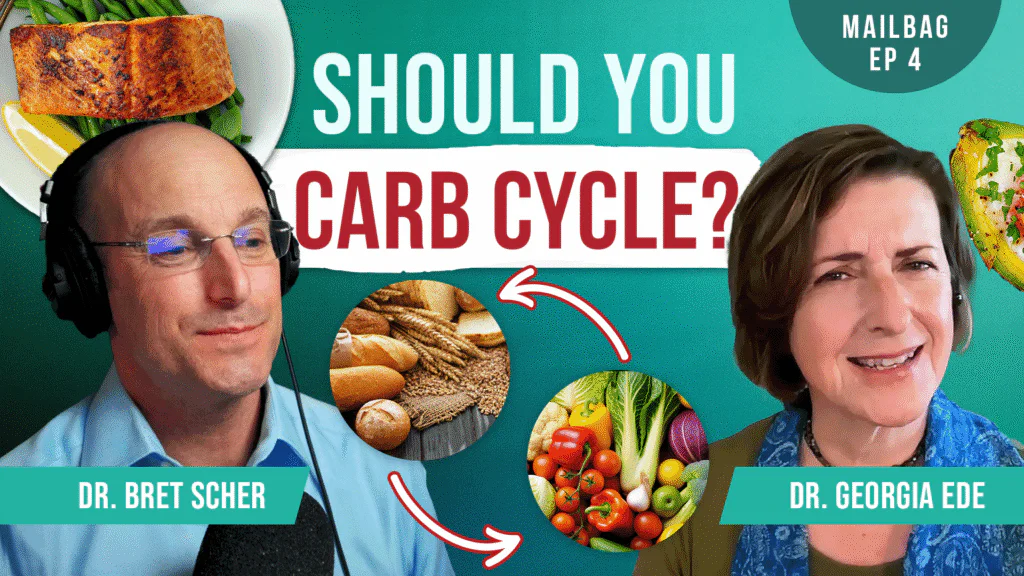
Learn how to build a healthy ketogenic diet with the best fat sources, avoid common keto mistakes, and understand the role of supplements, alcohol, and carb cycling. This expert Q&A explains how whole foods support brain and metabolic health, why processed keto products can be harmful, and how to troubleshoot issues like anxiety on keto.
Read more
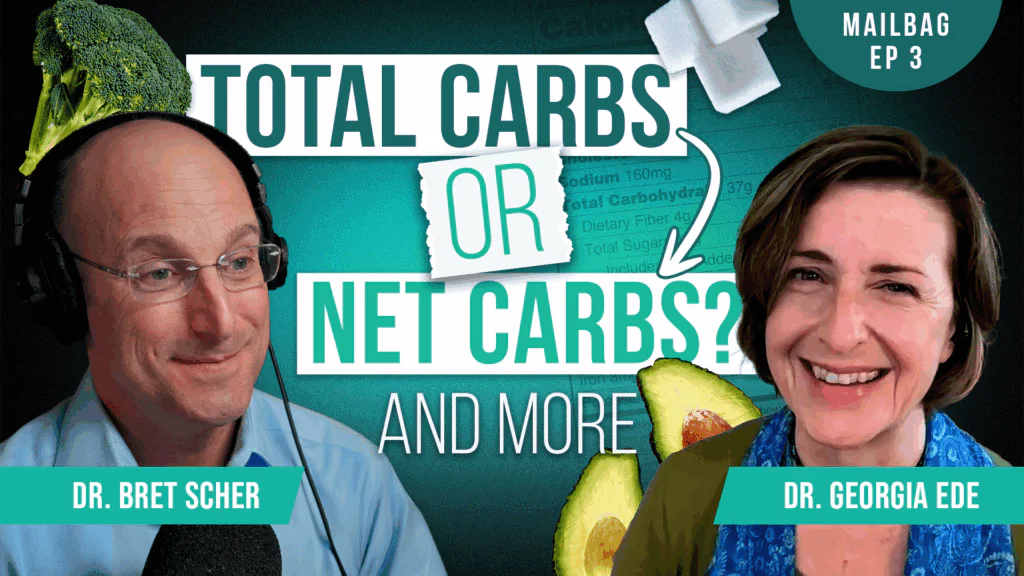
In this Metabolic Mind mailbag episode, Dr. Bret Scher and Dr. Georgia Ede answer listener questions about ketogenic diets, ketone plateaus, and mental health. They explain why blood ketone levels may decrease over time, when it makes sense to aim for higher ketones, and how endogenous ketosis differs from exogenous ketone supplements. The discussion also covers total versus net carbs, hidden carbohydrates in processed keto foods, and practical strategies for managing diet related insomnia during keto adaptation.
Learn more
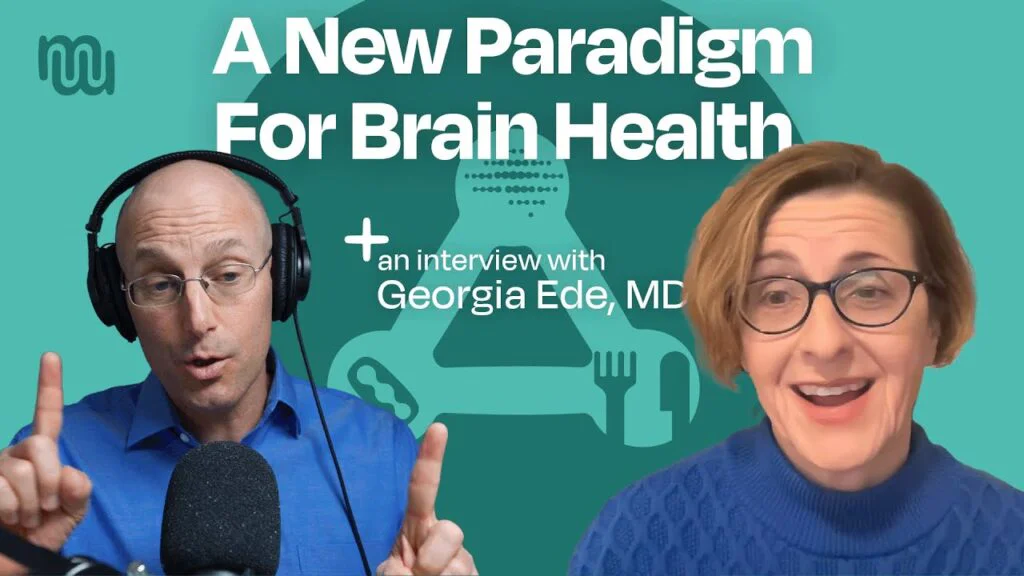
Harvard-trained psychiatrist Dr. Georgia Ede joins Dr. Bret Scher to cut through “brain superfood” hype and lay out a science-first framework for eating to improve mood, reduce anxiety, and protect memory. Drawing on clinical experience and rigorous evidence, Ede explains how unstable blood sugar and chronically high insulin drive brain inflammation and oxidative stress—and why restoring healthy metabolism (sometimes with lower-carb or ketogenic strategies) can sharpen thinking and stabilize emotions. She clarifies common nutrition myths, from the limits of observational food studies to the debate over seed oils and saturated fat, and makes the case for whole-food patterns—including some animal foods—to supply essential brain nutrients. Practical takeaways include using continuous glucose monitors, simple labs, and symptom tracking to personalize your plan. If you want clear, actionable guidance for lifelong brain health—beyond clickbait and diet wars—this episode is your roadmap.
Learn more
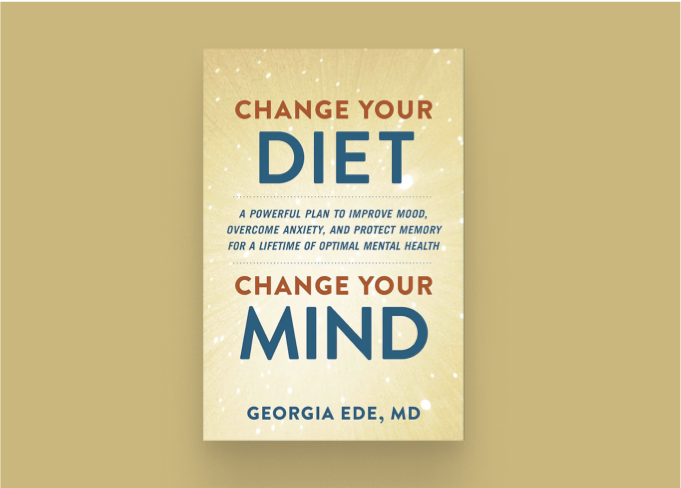
A powerful plan to improve mood, overcome anxiety, and protect memory for a lifetime of optimal mental health.
Learn more
Learn how to build a healthy ketogenic diet with the best fat sources, avoid common keto mistakes, and understand the role of supplements, alcohol, and carb cycling. This expert Q&A explains how whole foods support brain and metabolic health, why processed keto products can be harmful, and how to troubleshoot issues like anxiety on keto.
Read more
In this Metabolic Mind mailbag episode, Dr. Bret Scher and Dr. Georgia Ede answer listener questions about ketogenic diets, ketone plateaus, and mental health. They explain why blood ketone levels may decrease over time, when it makes sense to aim for higher ketones, and how endogenous ketosis differs from exogenous ketone supplements. The discussion also covers total versus net carbs, hidden carbohydrates in processed keto foods, and practical strategies for managing diet related insomnia during keto adaptation.
Learn more
Harvard-trained psychiatrist Dr. Georgia Ede joins Dr. Bret Scher to cut through “brain superfood” hype and lay out a science-first framework for eating to improve mood, reduce anxiety, and protect memory. Drawing on clinical experience and rigorous evidence, Ede explains how unstable blood sugar and chronically high insulin drive brain inflammation and oxidative stress—and why restoring healthy metabolism (sometimes with lower-carb or ketogenic strategies) can sharpen thinking and stabilize emotions. She clarifies common nutrition myths, from the limits of observational food studies to the debate over seed oils and saturated fat, and makes the case for whole-food patterns—including some animal foods—to supply essential brain nutrients. Practical takeaways include using continuous glucose monitors, simple labs, and symptom tracking to personalize your plan. If you want clear, actionable guidance for lifelong brain health—beyond clickbait and diet wars—this episode is your roadmap.
Learn more
A powerful plan to improve mood, overcome anxiety, and protect memory for a lifetime of optimal mental health.
Learn more