Get the latest on metabolic psychiatry. Subscribe.


Listen, Watch & Subscribe on:



Metabolic Mailbag: Ketone Plateaus, Sleep Issues, Fat Intake, and More
Listen
About the host

About the guest


Bret:
Why have my ketone levels hit a lower plateau, and should I try to get higher ketone levels? And if so, how? Total carbs or net carbs please address diet-induced insomnia for some people who try to improve their lives when they attempt keto. How much fat per day? And what are the best sources of fat?
Welcome to the Metabolic Mind Podcast. I’m your host, Dr. Bret Scher. Metabolic Mind is a nonprofit initiative of Baszucki Group where we’re providing information about the intersection of metabolic health and mental health and metabolic therapies, such as nutritional ketosis as therapies for mental illness.
Thank you for joining us. Although our podcast is for informational purposes only and we aren’t giving medical advice, we hope you will learn from our content, and it will help facilitate discussions with your healthcare providers to see if you could benefit from exploring the connection between metabolic and mental health.
So, that’s actually a big one. Here we are again for another metabolic mailbag where Dr. Georgia Ede and I answer your questions that you leave us on YouTube and Twitter and Instagram and metabolicmind.org/questions. We love to hear from you ,and we thank you so much for your questions. So, please, keep them coming.
We want to address everything related to ketogenic therapy, metabolic psychiatry, ketosis, in general, and lifestyle interventions to improve your metabolic and mental health. So, please keep the questions coming. So, here’s another episode of our mailbag with Dr. Georgie Ede.
Many of the interventions we discussed can have potentially dangerous effects of done without proper supervision. Consult your healthcare provider before changing your lifestyle or medications. In addition, it’s important to note that people may respond differently to ketosis, and there isn’t one recognized universal response.
Well, Georgia, welcome back to another mailbag episode, which you came up with a clever. The clever phrase, our metabolic mailbag, which I think is, it really sums it up. And we had a really good response. So, thank you for joining me for another one.
Georgia:
I’m glad to hear that people have questions. Let’s hear what they’ve got to say.
Bret:
Yeah. So, in our next episode, we’re going to address a lot about ketone measurements. A lot of people have questions about ketone measurements, and we’re going to talk about maybe some endogenous versus exogenous ketones. And we’ll talk about maybe different professions, and how they can guide, help guide people with ketosis, whether it’s a doctor or a therapist or those and some other topics.
Really interesting questions that people brought up. So, why don’t we just jump in? The first three really are going to be about ketone levels because that was one of our most popular questions. From JeffCrozier317, thank you, Jeff. Three months on a strict keto diet, targeting 20 grams per day has delivered significant relief from treatment-resistant major depression.
So, first of all, just sit back and round of applause there.
Georgia:
Yes.
Bret:
That’s amazing, just right there. And we had this whole series on treatment-resistant depression. So, if anybody is interested, I highly recommend they check that one out as well. But lately, I’ve consistently been in nutritional ketosis, but just barely 0.5 to 0.8 millimoles per liter on blood tests. Early on, I would routinely be greater than 1.5 millimoles despite no noticeable change in diet. Why have my ketone levels hit a lower plateau and should I try to get higher ketone levels? And if so, how? Now this comes up, I’m sure you’ve seen it.
I’ve seen, we’ve seen, at Metabolic Mind that keto levels change a lot, and maybe someone in the beginning is higher, and then they come lower and plateau. So, how do you respond to Jeff and to others in this predicament?
Georgia:
Yeah. So strong work, Jeff. So, that’s the first thing to say of obvious strong work.
Several different points wrapped up in this really excellent question. So one is, does it matter if ketone levels drop over time? And the question, the answer really is, it depends. So, if you’re still getting really good relief from your treatment-resistant depression, then it really doesn’t matter what the ketones are.
As I teach in my clinician training program, treat the patient, not the meter. So, if you’re feeling well, there’s no need to chase ketones. But if you’re not feeling as well as you were at the higher level, then there is a good argument for trying to get the ketones higher. And there are ways that you can do that, which we’ll come back to in a second.
But the second piece of the question is, okay, if this has occurred, why do we sometimes see that ketone levels can start to trend lower over time, especially in people who are very nicely fat-adapted? You can sometimes see that, and that’s because ketones are energy. And once your body has become, once your cells have become really efficient at using ketones and fat actually for energy, often, they know exactly how much they need. And your body will only produce the amount necessary.
And as you get more efficient at using them, you often may need less. And so, you may not need to worry about that ketone level if you’re getting good results. But if you’re not getting good results anymore, then it is worth it to try to raise those ketone levels. And the certain ways you can do that, which we talked about in our last mailbag episode, or one of our most recent mailbag episodes, is exercise, intermittent fasting, making sure you’re not overeating protein, making sure your carbs are as low as they can be.
These are just some of the most powerful levers you can pull to try to get the ketone levels into a higher range.
Bret:
Yeah, very good point. And I like how you said so-called treatment-resistant depression. Because it really should be labeled like medication-resistant depression.
Georgia:
Yes.
Bret:
Because that’s what usually what people are trying on first, but clearly not resistant to metabolic therapy and ketogenic therapy.
So that’s fantastic. Now, I should mention that question came from YouTube, as did most of these questions. But if anybody has questions on other platforms, whether it’s Twitter, X, Instagram, or of course, our website at metabolicmind.org/questions. You can submit questions there.
Plenty of other options, but most of these came from YouTube. So, next is, my name is Tom from YouTube, who said, I heard people that the longer urine ketosis, the more efficient your body gets at using ketones, and therefore, your blood levels of ketones might decrease even though you’re in a still in a deeper state of ketosis.
Is this true now? You addressed this already except what I wanted to focus on here was still in a deeper state of ketosis, which I think is really interesting about how you define that. How deep in ketosis you are. Is it only by the millimoles per liter in your finger prick, or is it by some other measure? And is it true that you adapt to it and get in a lower level?
I think it was an interesting point to that question.
Georgia:
It is. And so, really what it comes down to, again, is how you are, how you’re feeling at these different degrees of ketosis by the meter. So, if you look at the meter, and your ketones are low, let’s say they’re 0.7, 0.8, instead of 1.5 or whatever it is, your sweet spot is.
If you’re not feeling as well, then, you’re not in deep enough ketosis. But most people, when they’re talking about deep ketosis, they are talking about the level on the meter, and there are some people who find a very clear connection between how high the ketones are and how well they feel.
That doesn’t necessarily mean that higher is always better because I think we’ll come to some other questions in this episode or in a future episode where that’s not always the case. And so, it’s really important to, as you’re following your ketogenic diet and becoming, practicing being in ketosis and seeing how you feel, you’ll discover for yourself what your personal therapeutic range is.
And it may change after you’ve been adapted, especially after about three months. If you’ve been in good, consistent ketosis for 12 weeks or longer, then you are, you’re really entering into a phase where you’re much better fat-adapted, and your body will know. We’ll, instinctively know what you need.
And so, making sure that you’re paying attention, not just to the media, but also to how to how you feel.
Bret:
Yeah. And that’s, it’s a great answer, but not always the answer people want to hear. Because sometimes, people are so goal-oriented. They’re like, tell me the number. I’m going to shoot for that number.
I’m going to hit that number. But it’s not always so clean. So, I like the way you phrase that. And then, another ketone-related question from citygalna4518 on YouTube. When aiming for a specific ketone level, say 2.0 millimoles per liter, is it important how much is from endogenous production? Meaning just how much we make from our lifestyle and how much our body makes, and how much stems from exogenous supplementation?
So, drinking a ketone ester or something of that sort? How do you address that?
Georgia:
Yeah. It really matters where the ketones come from. So, when you’re bringing in ketones from outside the body through a supplement, it’s not that those can’t be useful as a tool, but that’s, those ketones are, they tend to be expensive.
They may have sweeteners or caffeine or other things that may cause you side effects. And they’re very short-lived. They only last in the bloodstream, and have metabolic activity for on average at most about 90 minutes. And so, you often, if you’re really wanting to get benefits from those ketone supplements, you may need to take them multiple times per day, which can really run into a lot of money.
And some of them don’t taste very good. So, there are a lot of downsides to exogenous ketones, but they can be a very useful tool. They can be useful for people who, for whatever reason, don’t have as much control over their diet as they wish they had. People, for example, living in assisted-living facilities, people with cognitive impairment who may not be able to follow the diet as carefully from day-to-day as they wish they could.
Or there are a variety of different situations where you might need a boost from an exogenous supplement to compliment your low carbohydrate or ketogenic diet to get the ketones into a higher range. And they can also be a very useful tool when you’ve, say, when ketosis has been interrupted, either intentionally or unintentionally, to help you get back on track.
So, as a temporary bridge back into natural endogenous ketogenesis, which is making ketones yourself from inside your body. So, it does matter. But so exogenous ketones are fine. They can be used as a tool, that’s fine. But they’re, they have some shortcomings. But what you really want, what you really want is you want, you don’t just want ketones.
You also want your glucose levels to be in a nice, healthy range and your insulin levels to be nice and low because the main driver of so many of the mental health and physical health diseases that we’re trying to counteract with the ketogenic diet are high glucose and insulin levels.
And when you take a supplement, you are not lowering your glucose levels or your insulin levels to any significant degree. And a supplement is not going to be able to get your glucose and insulin levels into a healthy range. So, what you really want is you want for glucose to be in a healthy range, for insulin levels to be nice and low so that you can be burning fat and generating ketones naturally inside your body around the clock for free.
That’s what you want.
Bret:
Yeah. I think that’s such a good point that really this living in a state of high glucose and high ketones has, kind of, never happened in evolution or in history, right? But if you can drink ketones, you can get in that state, but that’s not going to give you, you may feel it, right?
You may feel some brain effects, but it’s not going to be as impactful as also lowering glucose, lowering insulin, improving metabolic health with those ketones. And I like how you said for free. Let the liver do it. The liver doesn’t charge you. It’s okay. You can do it for free. I was just at the Society for Metabolic Health Practitioners Conference.
Georgia:
Oh, yeah.
Bret:
Yeah. and both, Dom D’Agostino and his wife, Csilla D’Agostino, presented separate topics on exogenous ketones and some of the research they’re doing. And it’s interesting stuff for sure. And I think we’re going to learn a lot about the exogenous ketone impact on multiple aspects of brain health.
But I that sweet spot of combining it with the diet, with endogenous production, I think is where it’s at. So, I think that was a really good point. Alright, so let’s transition off of ketones for a minute and go to different types of practitioners. So for, so this is from basilebazina2960 from YouTube.
For US masters-level therapist. Is it ethical to talk about diet during sessions since we’re not physicians? Interesting question, right? Who is able to really prescribe, quote unquote, a diet or talk about dietary interventions?
Georgia:
Officially, nobody. And that’s because every type of practitioner doesn’t meet all the criteria that one could imagine a governing body might want.
So, for example, as a psychiatrist, I’m not a dietician. A dietician is not a psychiatrist. A primary care doctor is not a psychiatrist. And so, there are always going to be, right now, there is no profession, there is no designation or credential that you can get that everyone would uniformly agree, is the correct combination of qualifications and credentials to give metabolic nutrition advice to people with mental health conditions.
And so that, there’s good news and there’s bad news. So, the bad news is that there really are, there’s no widely accepted set of qualifications that you would, could achieve in order to be giving this advice. But on the flip side, there are really no rules about this. And so, there are, you have a lot of leeway here. Obviously, many different types of practitioners give dietary advice all the time, whether they’re really aware of that they’re doing it officially or not.
So, people talk all the time about eating more fiber or eating a Mediterranean diet or eating whole foods, or eating less fat or losing weight or exercising. People give out this kind of advice all the time as practitioners, and nobody even thinks twice about it. So, the difference is that ketogenic diets are different in that they do require some special knowledge.
And in order to be recommended safely, because there’s such a powerful metabolic intervention, you can’t just, you can’t just recommend that everybody that comes into your practice starts a ketogenic diet. It does require some special knowledge and skill to be able to carefully and safely help people onto a ketogenic diet, especially during the early transition period. So, that’s why it’s different now. So, one of the things in my, this comes up in my training program, all the time because many different types of clinicians take the training program and many of them are not prescribers.
And one of the things I always say is talk to your local licensing officials and your local malpractice provider to find out what your particular scope of practice is and make sure that you don’t either need extra coverage to be able to give out this kind of advice to be able to talk about these things.
Or what are the rules within your profession in your region, around what is okay and not okay to talk about from a dietary perspective? And the second, the second piece of advice I would give is to consider taking Nicole Laurent’s course. She’s a licensed mental health counselor with lots and lots of experience with ketogenic diets and lots of knowledge about ketogenic diets for mental health.
So, if you go to mentalhealthketo.com, she teaches a, program, a course, for non-prescribers that covers many of these questions of how to safely and ethically and responsibly incorporate information about ketogenic diets into your work with mental health, in mental health care.
Bret:
Yeah, I think that’s such an important question, and so many important details in that answer. But from my perspective, I want every health coach, every therapist, every dietician, every primary care doctor, every psychiatrist talking about it and knowing about it. But doing it in a safe way, and I think that’s most important.
So, you mentioned that, but I just really have to double down on that, and that’s why I talk about the team, right? If you are a therapist or even a coach and want to talk about it, you better make sure that person’s doctor knows that you’re making these changes or that the person is aware of what to look for in terms of medication changes, serum blood sugar, blood pressure and what to look for in terms of like possible mania, like we talked about for a bipolar in an episode we recorded before.
Like all these things are really important to do it safely. So, I want everybody talking about it, but I want it done safely. Now, good point about checking with your local board and your malpractice provider and all that to make sure that it’s allowed. But yeah, that’s a very important question.
Fellow mental health clinicians and healthcare providers, you now have access to a suite of free CME lectures on metabolic psychiatry and metabolic health. Each of these CME sessions provide insight on incorporating metabolic therapies for mental illnesses into your practice. These CME sessions are approved for AMA category one credits, CNE nursing credit hours, and continuing education credit for psychologists, and they’re completely free of charge on mycme.com. Now, back to the video.
All right. Very good. Let’s go to Rose. RoseLily8847 on YouTube. Very thankful for these series of videos. Could you please kindly share when it’s low carb or keto? Is it referring to total carbs or net carbs?
Now ,I have my answer to this. So, I’m really curious how you answer it and see if it’s the same.
Georgia:
Uh, oh.
Bret:
Yeah, let’s see.
Georgia:
This could be interesting. So, total carbs for those who don’t know the difference between total carbs and net carbs.
So, total carbs are all the carbohydrates, all the different types of carbohydrates, that a food can have. And there are essentially three different categories of carbohydrates that a food can have. So, one is the natural sugars that naturally occur. The natural sugars and starches that occur in a food. Let’s say, for example, an apple will have a certain amount of natural sugar in it, and then you’ve got fiber.
Fiber is actually a type of carbohydrate, but it doesn’t really have an effect on blood sugar. And a lot of people will subtract out the fiber from the total carbohydrate when they’re following a ketogenic diet. But there’s a third kind of sneaky type of carbohydrate that you will find almost exclusively in processed and prepared and packaged foods that are manufactured rather than that come from nature.
So, these are the sugar alcohols, and a lot of the other non-sugar sweeteners that we don’t absorb as well as sugar. And because we don’t process them quite the same way as they’re not fiber, but they’re not sugar. They’re somewhere, they’re somewhere in between because they’re only partially digested, partially absorbed.
And that, and so those fuzzy carbohydrates in the middle, which are used all the time in quote unquote, keto-friendly products, they actually do, many of them do, affect your blood sugar and many of them do raise your insulin levels. And so, they’re not necessarily keto-friendly, but there is, but because of the way the packaging rules are, at least here in the United States, is you can get away with not counting those.
When you’re eating package, it’s because the processed food manufacturers want you to think that those types of carbohydrates don’t count, but they do. And so, when you’re eating those, any kind of packaged food, processed food, industrially made food, that’s not a whole food, always count total carbs, not net carbs, because net carbs is the sneaky kind of loophole that manufacturers use to say it doesn’t really have as much carbohydrate.
If you look at the total carbohydrate, there might be 20 grams per serving, but the net carbs is magically somehow only three. And that’s because there’s an awful lot of other stuff in there that could actually be affecting your blood sugar. The sugar alcohols are notorious for this, like malitol, but that is not the only example. So, when you’re eating whole foods, you can use total carbs minus fiber.
When you’re eating processed foods, count total carbs.
Bret:
I guess I’m disappointed. We have the exact same answer. We have the same answer.
No debate, no argument. Yeah.
Georgia:
Oh, no.
Bret:
Yeah. When you’re eating, when you’re eating just whole foods, real foods, subtract the fiber because we know how that works. It’s natural fiber. But the fiber that’s added to the bars and the cookies and the packaged materials, the added fiber, we actually kind of don’t know how it works.
It’s not as clean as real fiber so total carb. So, yep, we agree. All right, moving on. No debate here. Sorry, no fireworks. All right. But that’s great, right? It shows there’s a certain degree of consensus about this and, yeah. all right. So, 1TimBarrett from YouTube, please address diet-induced insomnia for some people who try to improve their lives when they attempt keto.
Now, we know how important sleep is for health, in general. For mental health, for sure. And there are a number of people who, when they start on keto or even later in their keto journey, they really have trouble sleeping. So, how do you help people address that?
Georgia:
Yeah. So Tim, this is a great question because it happens for quite a few people.
Now, most people will find that they will sleep better after switching to a ketogenic diet. But that doesn’t always happen right away. In fact, during the first couple of weeks, especially, sleep can be worse. There are actually quite a few things that can be worse before they get better. And sleep is one of them that you can see in some people.
And there are a lot of different reasons for this. Some of them are theoretical, and some of them are absolutely, clearly occurring. For example, sometimes it has to do with electrolyte imbalance. So, if you’re not properly supplementing electrolytes, you could have, you’re at higher risk for having insomnia when you’re transitioning.
if you’re aiming for ketone levels to be too high, too quickly, if you’re jumping too quickly onto a ketogenic diet, that’s a huge shock to the brain and body. If you have dropped your carbohydrates from, say, 3 to 350 grams per day, down to 20 grams per day in one fell swoop, that’s a big shock to your system and that can absolutely disrupt sleep and cause all kinds of other problems temporarily in the beginning.
And and there can even be a temporary period where the body is under more oxidative stress, but that resolves within about three weeks. So, there are a variety of different things that I won’t go into all the details about why this happens, but there are a lot of biochemical reasons why this may be happening.
And some of these, you can minimize through certain strategies, and some of which are laid out in more detail on my book. But then, in other cases, it may just be a matter of troubleshooting. So, for example, when you switch onto a ketogenic diet, if you, if your sleep is disrupted for more than the first two or three weeks, it usually means that it’s not just about keto-adaptation.
It may be about other things as well. So, for example, when you are starting a ketogenic diet, once your body starts to adjust a little adapt to it, you can become more sensitive to caffeine, you can become more sensitive to alcohol. And both caffeine and alcohol are notorious for disrupting sleep.
You may need to take a look at those things if simply getting through the keto-adaptation phase and managing electrolytes and starting slowly, and all those other kinds of things don’t help you enough. If you’re out at three weeks or so and you’re still not sleeping well, that could be something you should look at. Another thing is you might be becoming more sensitive to a medication you’re taking and the medication may need to be adjusted, usually downward.
Now, there are also some people who find certain supplements helpful when they’re transitioning to the ketogenic diet. So, not just electrolyte supplementation. Some people find antioxidant supplementation helpful temporarily. Some people find having a little bit of baking soda because there can be temporary acid-based disturbances in the very beginning of the diet. Some people find inital, there’s a supplement called Inositol, I-N-O-S-I-T-O-L, useful for sleep problems when they’re adjusting to a ketogenic diet.
Some people take Trytophan or 5-HTP. These are, which crosses the blood-brain barrier more easily, to raise levels of tryptophan in the brain to try to ease that insomnia. In the beginning, I would just caution that if you’re going to try tryptophan or 5-HTP, that you don’t do that if you have any history of bipolar symptoms. Because if you’re taking anything that raises tryptophan levels in the brain, including that could also potentially raise serotonin levels in the brain.
And just like a serotonin medication, the SSRIs, are potentially unsafe for people with bipolar disorder. So can tryptophan and 5-HTP also raise serotonin levels in the brain and could trigger hypomania. So, be very careful with those supplements if you have that history. And so anyway, lots of different things you can do. But the bottom line is in most cases this is temporary.
And in most cases, after two to three weeks, your sleep will be better than it was even before you started the ketogenic diet.
Bret:
Yeah. lots of good nuggets and details in that answer. And I’ve heard a lot of people say, maybe eating later before bed, which generally is not what’s recommended, in the earlier eating period, eating a number of hours before bed.
But for this specific circumstance, sometimes if people have a small snack within an hour or two before bed, they can find that sometimes that helps them sleep better. But, of course, there’s a lot of variability in that as well and how is that going to impact the rest of your health, your metabolic health, your mental health, et cetera.
So, it’s not ust everybody try it kind of thing, but everybody’s got to figure out what works for them. So, a lot of detail seems like a very simple question, but there’s a lot of detail there, which I think is really helpful. Yeah. why don’t we do one more for this episode? And then, we’ll jump to the next episode after that and for everybody. So, this is freedomtobeme on YouTube.
Can you please speak about how much fat per day, and what are the best sources of fat? So, that’s actually a big one. That’s a big one to end on, but yeah. How much fat per day and the quote unquote, best sources of fat that’s okay?
Georgia:
We don’t mind big questions. We are not afraid. So, we’ll take them. These are great questions, everybody.
Freedomtobeme, so in terms of how much fat, I actually can’t tell you, personally you, how much fat you need because I don’t know enough about you. And so, everyone’s going to need a different amount of fat. And the reason for that is the amount of fat you need is depends on your energy requirements.
So, in the beginning, what I say to people, there are lots of different ways of doing this, but in the beginning, what I say to people is eat fat to satiety during, say, the first six weeks or so because, and so that you won’t be hungry. So, that you won’t be tempted to overeat carbs or protein because carbs or protein or what you need to really keep a very close eye on to get into and stay in ketosis.
So, I like people in the beginning to focus on the carbs and protein, really practice getting those in the right places, and not worry about the fat in the beginning. So, eat fat to satiety. But then, once you’re past six weeks or so, or maybe even 12 weeks, if you’ve, if you are not achieving your health goals, and especially if you have some weight to lose, and you’re not losing it, then you may need to adjust the fat downward.
And so, there’s no one right amount the fat for the person. When dieticians construct a ketogenic diet for somebody, the first thing they will often do is estimate their total daily calorie requirements. And so-
Bret:
You said the C word.
Georgia:
I said the C.
Bret:
The C word.
Georgia:
I did, okay. Yes, I said the C word because calories do count in a certain way.
So, in any case, how much food you eat does matter. You don’t really want to overeat anything, including fat. But the reason why a ketogenic diet is considered a high-fat diet isn’t necessarily because it has unlimited amounts of fat. It’s because it has more fat in it than the standard diets we are recommended to eat.
So, a ketogenic diet is simply extremely low in carbohydrate, usually say around 20 grams per day. And then, it’s got just the right amount of protein for your needs, and that’s going to usually be somewhere between, say, I don’t know, 70 and 150 grams, depending on who you are. It’s going to be within a particularly a relative tight range.
And then, all the rest of your calories for that day are going to come from fat. So, if you’ve been eating a standard diet, it’s going to look and feel like an awful lot of fat compared to what you’re used to. But it’s just that you’re, basically, replacing your carbohydrate calories with fat calories.
And so that’s really what it’s all about. And then, in terms of, and, there are some wonderful free keto calculators out there in the world on various websites. For example, I know that KetoMojo has a macro calculator that can estimate your how much fat you should have in your diet.
Maria Emmerich has a really excellent keto calculators also free online. There are a variety of different sites where you can find keto calculators to estimate the amount of fat that you should have in your diet.
Bret:
Yeah, and just to interrupt there for one second, we’ve talked with, we’ve interviewed, whether it’s Nicole or different practitioners, who have talked about case studies, and they’ll talk about we started on a 2.5-to-1 keto diet. And then, went down to a 1.5-to-1 keto diet.
So, if you’re working with somebody who is specifically prescribing a specific ketogenic diet with a fat to protein plus carb ratio, that  2.5-to-1 , then the amount of fat you eat is definitely going to matter. But otherwise, if you’re not on that specific prescribed ketogenic diet, then eating fat to satiety is really the way to go once you’ve defined your carbohydrate and protein intake.
So, I think that’s important to clarify.
Georgia:
That’s a good point. So some people are working with dieticians that, or, creating their own very, like a prescription ketogenic plan where everything is very precisely. precisely measured. And so if you’re doing that, if you’re trying to achieve a particular fat to protein plus carb ratio of say  1.5-to-1 , or  2-to-1 , or  2.5-to-1 , then the amount of fat is going to be very, is going to be dialed into a very particular amount.
So, that’s a really excellent point.
Bret:
I think that’s a great, answer about how much fat per day, and how it really is a nuanced response. Now, for the second part of freedomtobeme. what are the best sources of fat? We’ll address that on our next episode. And we’re also going to talk about, let’s see, what happens if your anxiety worsens when you’ve been on keto, when you’ve been on keto for about three months or so.
And we’re really going to dive into, there are a couple questions on alcohol and caffeine and supplements and those types of things. So, we’ll address all that on our next episode. So, thank you again, Georgia. Thank you for joining me, and I hope people got a lot out of this.
And please remember, we want to hear your questions. We, will do our best to address them. Also let us know on YouTube, on X, on Instagram, and. Of course, at metabolicmind.org/questions. So Georgia, I’ll see you on the next one.
Georgia:
See you there.
Bret:
Thanks for listening to the Metabolic Mind podcast. If you found this episode helpful, please leave a rating and comment as we’d love to hear from you. And please click the subscribe button so you won’t miss any of our future episodes. And you can see full video episodes on our YouTube page at Metabolic Mind.
Lastly, if you know someone who may benefit from this information, please share it as our goal is to spread this information to help as many people as possible. Thanks again for listening, and we’ll see you here next time at the Metabolic Mind Podcast.
Listen, Watch & Subscribe on:
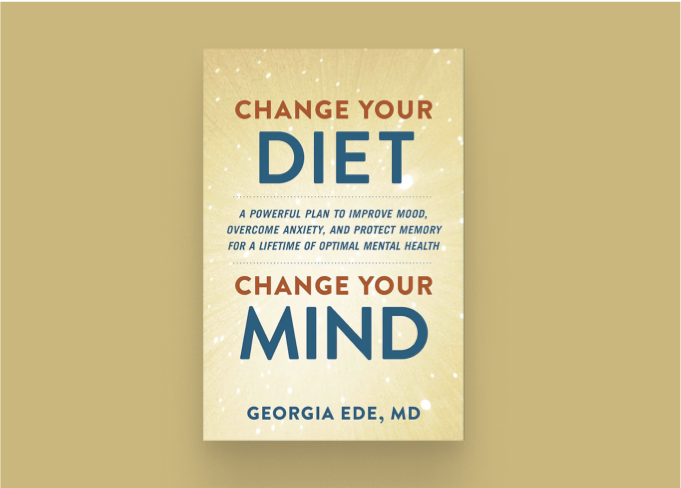
A powerful plan to improve mood, overcome anxiety, and protect memory for a lifetime of optimal mental health.
Read more
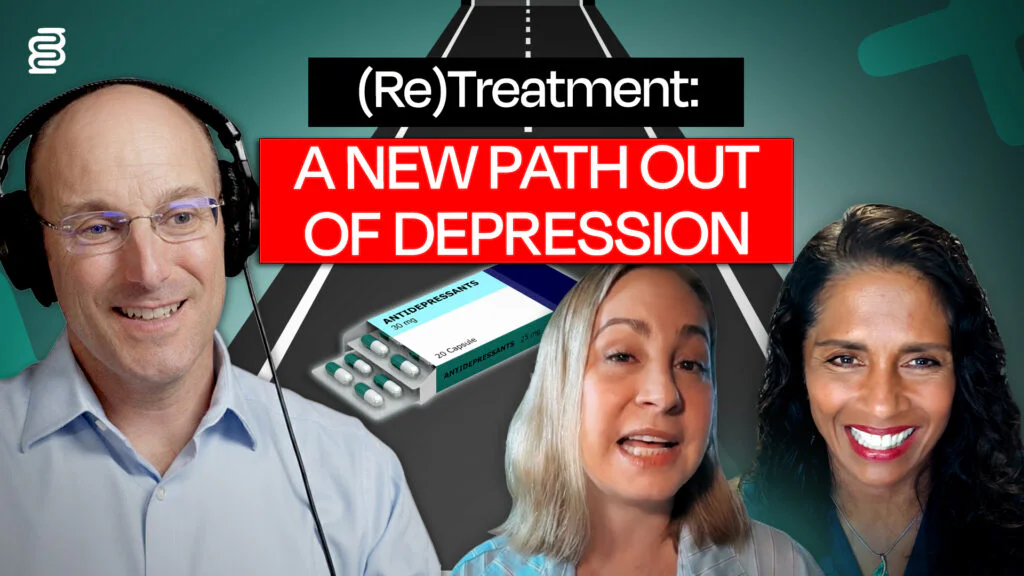
The Metabolic Mind Podcast features Silvia Covelli and functional medicine psychiatrist Dr. Achina Stein discussing the Healing Depression Project, an immersive retreat designed to address root causes of chronic and treatment-resistant depression. They explore how functional medicine testing, therapeutic ketogenic nutrition (gluten- and dairy-free), sleep repair, morning light exposure, daily walking, meditation, and intensive psychodrama can work together to reduce symptoms. The conversation highlights why a one-size-fits-all, pill-only approach often falls short, shares early outcome data and follow-up insights, and offers practical priorities for people seeking sustainable depression recovery through metabolic and lifestyle strategies.
Learn more
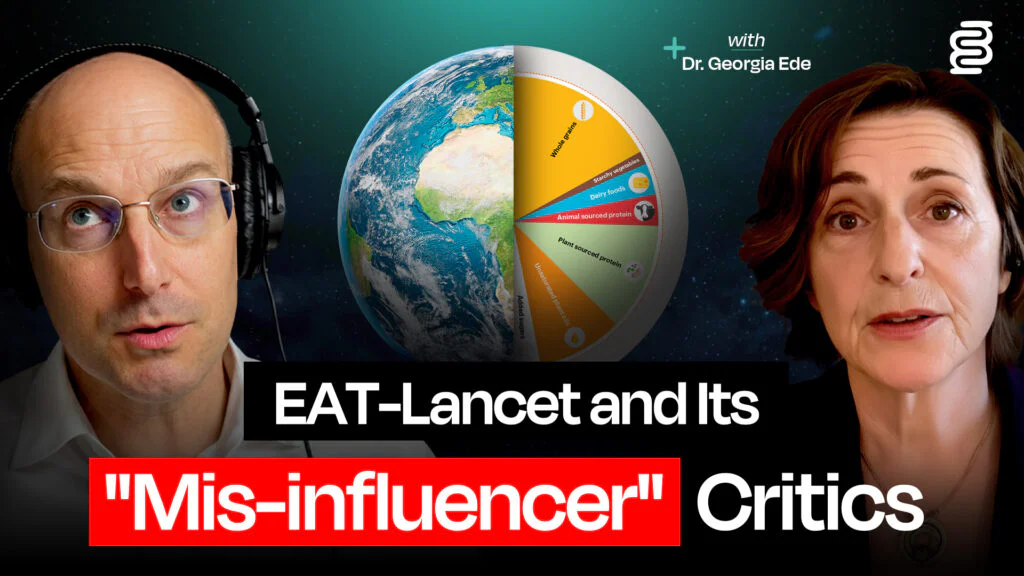
Dr. Georgia Ede joins Dr. Bret Scher on the Metabolic Mind Podcast to examine the EAT-Lancet Planetary Health Diet and the controversy around its push to reduce or eliminate animal foods worldwide. They discuss why EAT-Lancet’s human-health claims rely heavily on nutrition epidemiology, what the report concedes about nutrient shortfalls and supplementation, and why a one-size-fits-all global diet may be risky for vulnerable populations. The episode also unpacks the “mis-influencer” campaign targeting critics, questioning whether the response addresses scientific critiques or focuses on discrediting dissent.
Learn more
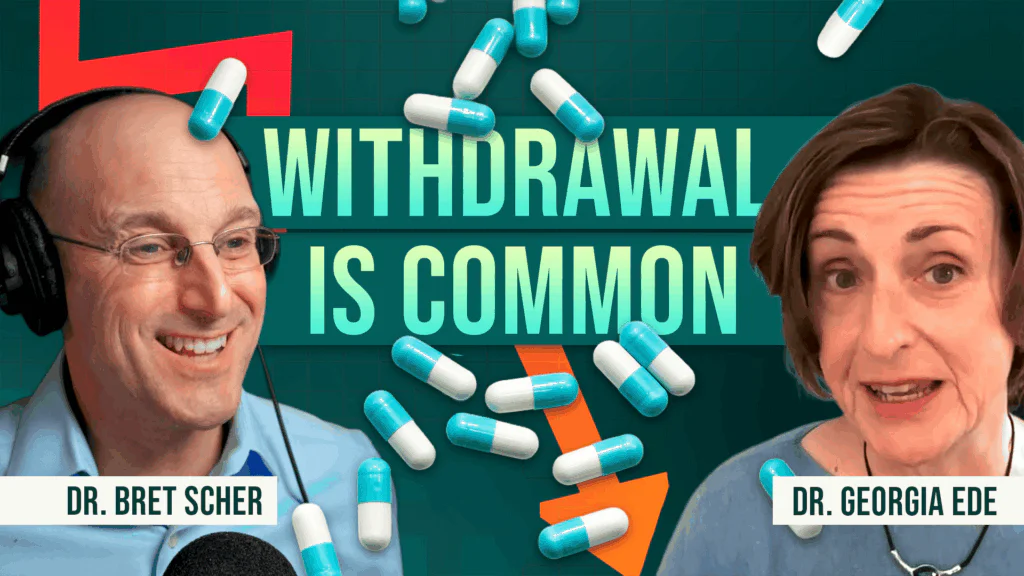
In this Metabolic Mind Podcast episode, Dr. Bret Scher and psychiatrist Dr. Georgia Ede unpack the often-misunderstood realities of psychiatric medication tapering and deprescribing. They explain why most clinicians aren’t formally trained to taper safely, outline major medication classes (antidepressants, antipsychotics, mood stabilizers/anticonvulsants, benzodiazepines, stimulants), and describe how the brain adapts to medications through homeostasis—making abrupt dose reductions risky. The conversation clarifies how to distinguish withdrawal from relapse using timing and symptom patterns (including “brain zaps” and flu-like effects), critiques claims that antidepressant withdrawal is rare or mild, and shares practical resources and peer-support options to help patients advocate for safer, personalized taper plans.
Learn more
A powerful plan to improve mood, overcome anxiety, and protect memory for a lifetime of optimal mental health.
Read more
The Metabolic Mind Podcast features Silvia Covelli and functional medicine psychiatrist Dr. Achina Stein discussing the Healing Depression Project, an immersive retreat designed to address root causes of chronic and treatment-resistant depression. They explore how functional medicine testing, therapeutic ketogenic nutrition (gluten- and dairy-free), sleep repair, morning light exposure, daily walking, meditation, and intensive psychodrama can work together to reduce symptoms. The conversation highlights why a one-size-fits-all, pill-only approach often falls short, shares early outcome data and follow-up insights, and offers practical priorities for people seeking sustainable depression recovery through metabolic and lifestyle strategies.
Learn more
Dr. Georgia Ede joins Dr. Bret Scher on the Metabolic Mind Podcast to examine the EAT-Lancet Planetary Health Diet and the controversy around its push to reduce or eliminate animal foods worldwide. They discuss why EAT-Lancet’s human-health claims rely heavily on nutrition epidemiology, what the report concedes about nutrient shortfalls and supplementation, and why a one-size-fits-all global diet may be risky for vulnerable populations. The episode also unpacks the “mis-influencer” campaign targeting critics, questioning whether the response addresses scientific critiques or focuses on discrediting dissent.
Learn more
In this Metabolic Mind Podcast episode, Dr. Bret Scher and psychiatrist Dr. Georgia Ede unpack the often-misunderstood realities of psychiatric medication tapering and deprescribing. They explain why most clinicians aren’t formally trained to taper safely, outline major medication classes (antidepressants, antipsychotics, mood stabilizers/anticonvulsants, benzodiazepines, stimulants), and describe how the brain adapts to medications through homeostasis—making abrupt dose reductions risky. The conversation clarifies how to distinguish withdrawal from relapse using timing and symptom patterns (including “brain zaps” and flu-like effects), critiques claims that antidepressant withdrawal is rare or mild, and shares practical resources and peer-support options to help patients advocate for safer, personalized taper plans.
Learn more