New Results: First RCT for Schizophrenia & Bipolar Disorder. Learn more.


Listen, Watch & Subscribe on:



Is The Egg Debate Finally Over? See what a New Dementia Study Says.
Listen
About the host


Bret:
Welcome to the Metabolic Mind Podcast. I’m your host, Dr. Bret Scher. Metabolic Mind is a non-profit initiative of Baszucki Group, where we’re providing information about the intersection of metabolic health and mental health and metabolic therapies, such as nutritional ketosis as therapies for mental illness.
Thank you for joining us. Although our podcast is for informational purposes only and we aren’t giving medical advice, we hope you will learn from our content and it will help facilitate discussions with your healthcare providers to see if you could benefit from exploring the connection between metabolic and mental health
A new study is making headlines suggesting that eating more eggs is linked to a lower risk of dementia. And I want to talk about this because while the headlines sound exciting, the real story is buried inside the data. And it’s more interesting than the soundbite, I think. I’m Dr. Bret Scher, I’m the Medical Director at Metabolic Mind and a cardiologist focused on metabolic health, and I think eggs can be an important part of that.
So today, I want to walk you through what this study actually shows, what it doesn’t show, and why the baseline data alone in this study really makes it worth your attention. So, let’s start with something I think is critically important whenever a nutrition study makes the news, and that’s we need to ask, what kind of study is this?
And is it a strong study, a weak study? What can it actually tell us? So, this is an observational study. Researchers followed a group of people over time, used kind of low-quality food frequency questionnaires to record what they ate, and examined who developed dementia and who didn’t. They found an association between higher egg consumption, both at the low-level of egg consumption and the higher level compared to none, and an association with a lower risk of dementia. Now, that’s interesting.
It does not prove eggs prevent dementia. So, let’s start there. Observational research cannot establish causation. It can identify patterns worth investigating. And in this case, the pattern, I think, is worth a closer look. So, but here’s what I want you to focus on. Before we even get into the outcome data, you look at who was eating no eggs or fewer eggs, and the lowest egg consumption group compared to the highest, the lowest egg consumption group exercised more.
They had a lower BMI. They were more educated. They were less likely to smoke. By almost every conventional measure of health and lifestyle, the people eating the fewest amount of eggs were healthier going into the study. And furthermore, added to this, the highest egg consumers also ate more meat and fewer whole grains.
They had this dietary pattern that many nutrition researchers would traditionally flag as higher cardiovascular and metabolic risk. Probably not the truth, but that’s what a lot of people believe. So, here’s the question that the data forces us to ask, though. If the lowest egg group had better baseline health, better lifestyle habits, and a dietary pattern more aligned with conventional health guidelines, why did they not show a clear protective advantage in dementia outcomes?
When the group that looks healthier on paper does not outperform the group eating the most eggs, that’s a meaningful signal. Now, again, it doesn’t prove eggs are beneficial. But it really weakens, if not eliminates, the argument that they’re harmful. How can the less healthy group have less dementia if they’re eating something that’s harmful, right?
It doesn’t quite make sense. But let’s pause for one second and talk about the funding because that’s come up a bit in social media and is worth discussing. The study was funded in part by the National Egg Board. Industry funding doesn’t automatically invalidate the research, but it is a legitimate reason to look more carefully at the methodology and ask whether there are design choices that could have introduced bias to favor the eggs.
But interestingly, this study was also funded by the National Cancer Institute. That’s a federal research body that obviously has no financial stake in egg consumption. And personally, reviewing the methodology, I didn’t find meaningful red flags, aside from the inherent weak observational methodology.
But as I mentioned, that would actually go against eggs, like not be in favor of egg consumption because of the healthy user-bias. So interesting. If you found anything in the methodology concerning for bias, please let me know. All right, but let’s zoom out for a second and put this in context because eggs have a kind of a complicated history in nutrition science.
For decades, eggs were villainized primarily because of their cholesterol content. The logic seems straightforward to some, I guess, at the time. Dietary cholesterol can raise blood cholesterol. High blood cholesterol can lead to heart disease. Therefore, eggs cause heart disease. So, limit your eggs, protect your heart.
But obviously, it’s not that simple. And that chain of logic does not hold up at all under scrutiny. We know that for most people, dietary cholesterol has a relatively modest effect on blood cholesterol, if at all. And for those who do have an increased cholesterol, it can be high HDL and lower triglycerides that go along with that with eating more eggs.
So, that’s not going to raise your risk for sure. And dietary cholesterol does not equal heart risk. And this matters because eggs are one of the most nutrient-dense whole foods available. They’re complete protein with an excellent amino acid profile. They’ve got high leucine content for muscle protein synthesis.
They’ve got choline, essential for brain health, and chronically under-consumed in a lot of Western diets. Full of healthy fats, natural nutrient matrix that your body recognizes and uses efficiently. So, the case against eggs was already weaker than the messaging suggested. And new evidence like this really seems to make it even weaker, if not just disappear.
So, here’s what I want you to take away from this study, and I guess from this conversation. Observational research has real limitations, of course. This study does not prove eggs prevent dementia, and we should not claim it does. Over-claiming the evidence is how nutrition science loses credibility and can really confuse patients.
But the healthy user-bias embedded in this data set is genuinely meaningful. When the group that looks healthier by every conventional metric fails to outperform the highest egg eaters on cognitive outcome, that’s worth noting. The bias was against the eggs in this study, and the eggs still seem to outperform not eating eggs.
So, it adds to a growing body of evidence that the argument against eggs simply doesn’t hold up. So, can we finally put this egg debate to rest? Based on the totality of the evidence, I think the answer is yes. But of course, I hate that term, totality of evidence. But still, I think the answer is yes. Eggs are nutrient-dense whole foods that belong in a healthy diet.
If you’re still being told by your nutritionist, dietician, doctor that you should avoid eggs because of cholesterol, really, that advice is not evidence-based, and it’s worth having another conversation. All right, so I hope this was helpful. If it was, please like and subscribe and leave us a comment.
Thank you for watching. I’m Dr. Bret Scher. We’ll see you here next time at Metabolic Mind, a nonprofit initiative of Baszucki Group
Thanks for listening to the Metabolic Mind Podcast. If you found this episode helpful, please leave a rating and comment as we’d love to hear from you. And please click the subscribe button so you won’t miss any of our future episodes. And you can see full video episodes on our YouTube page at Metabolic Mind.
Lastly, if you know someone who may benefit from this information, please share it as our goal is to spread this information to help as many people as possible. Thanks again for listening, and we’ll see you here next time at the Metabolic Mind Podcast
Listen, Watch & Subscribe on:
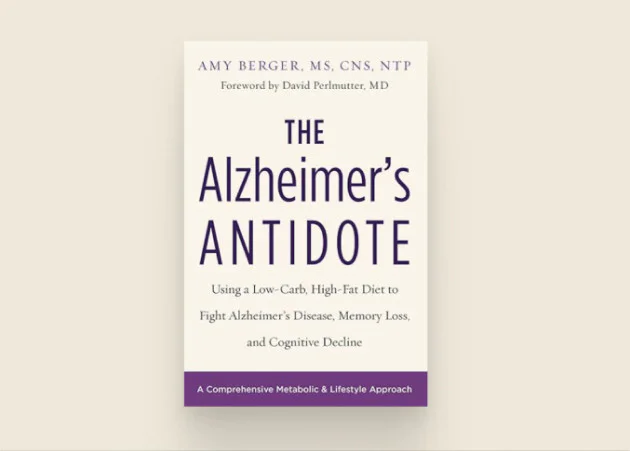
Amy Berger’s research shows that Alzheimer’s results from a fuel shortage in the brain.
Read more
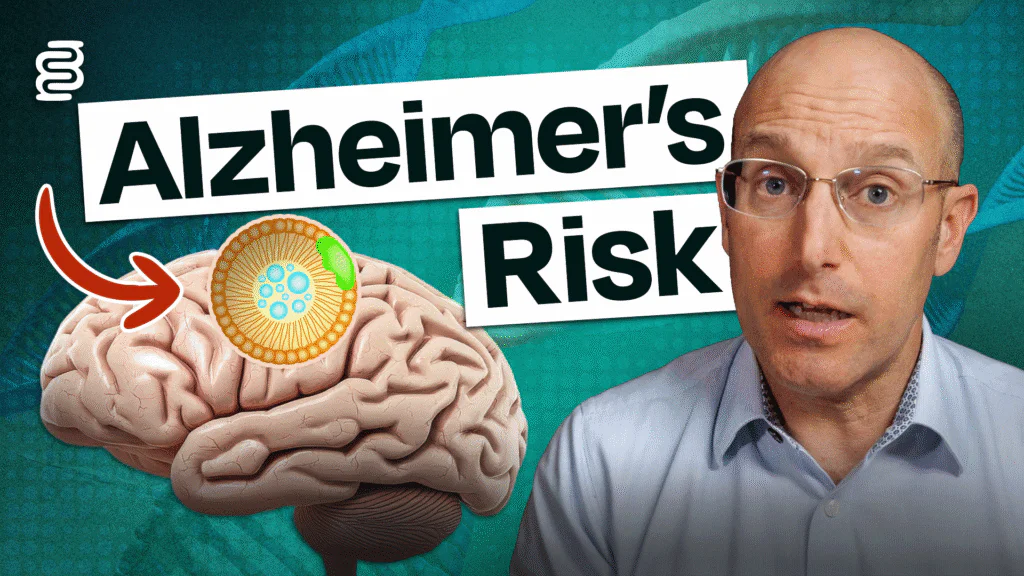
On this episode, Dr. Bret Scher explores what the latest research says about ApoE4, diet, and dementia risk. Despite longstanding recommendations for ApoE4 carriers to limit red meat, emerging data challenges that assumption and raises new questions about how nutrition, metabolic health, and lifestyle may interact with genetic risk for Alzheimer’s disease.
Learn more
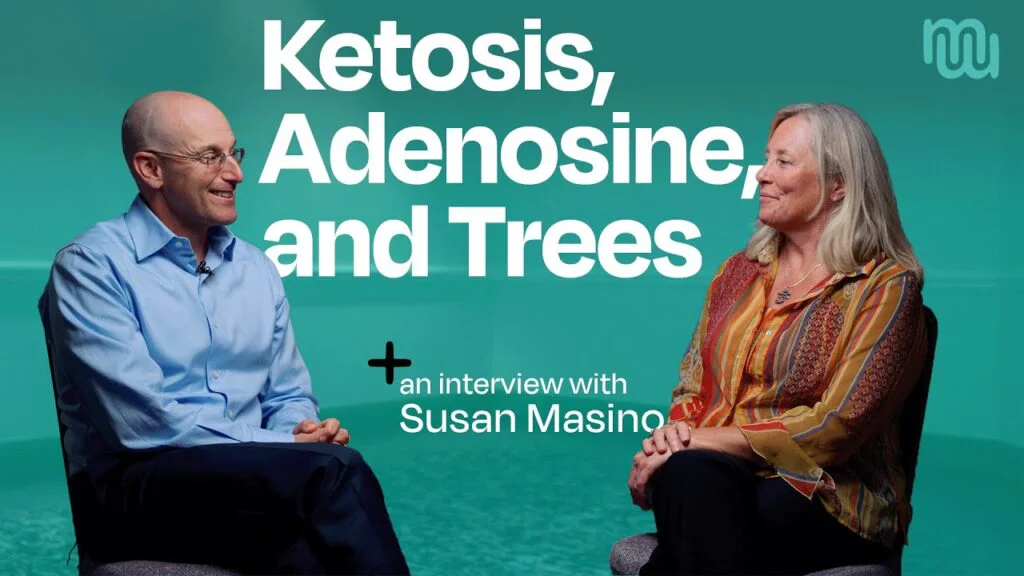
Dr. Bret Scher talks with neuroscientist Dr. Susan Masino about why ketogenic therapy isn’t a single-mechanism “drug” but a multi-pathway approach that can stabilize brain networks and support long-term resilience. Masino’s research centers on adenosine—an energy- and signaling molecule that rises with ketone metabolism and helps suppress seizures, modulate neural activity, and drive epigenetic changes. She introduces “preconditioning,” showing how ketosis can ready the brain to better withstand future insults such as stroke, with adenosine as a key mediator. Beyond diet, Masino bridges neuroscience with her forestry work, summarizing evidence that regular exposure to nature lowers anxiety and loneliness and should be treated as a practical, community-level tool for mental health. The conversation reframes brain care around prevention: combine ketogenic strategies, time in nature, and other lifestyle supports to build durable mental well-being—while working with clinicians for safe, individualized implementation.
Learn more
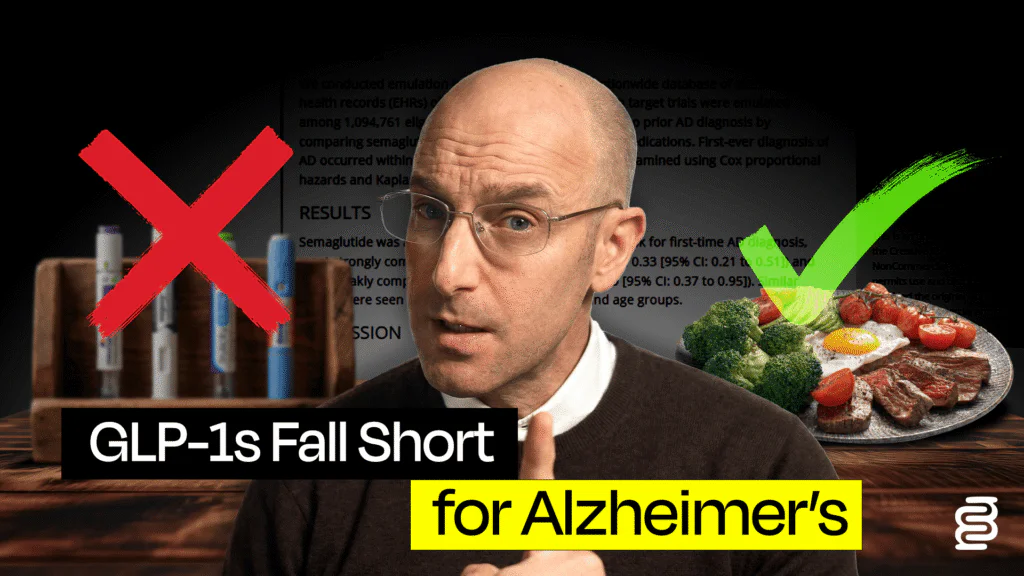
A new clinical trial reveals semaglutide does not improve cognition in Alzheimer’s disease, challenging earlier observational findings. This highlights the complexity of dementia and suggests metabolic improvements from drugs alone may not be enough. Emerging research points to ketogenic therapy as a promising approach, offering the brain an alternative fuel source when glucose metabolism is impaired.
Learn more
Amy Berger’s research shows that Alzheimer’s results from a fuel shortage in the brain.
Read more
On this episode, Dr. Bret Scher explores what the latest research says about ApoE4, diet, and dementia risk. Despite longstanding recommendations for ApoE4 carriers to limit red meat, emerging data challenges that assumption and raises new questions about how nutrition, metabolic health, and lifestyle may interact with genetic risk for Alzheimer’s disease.
Learn more
Dr. Bret Scher talks with neuroscientist Dr. Susan Masino about why ketogenic therapy isn’t a single-mechanism “drug” but a multi-pathway approach that can stabilize brain networks and support long-term resilience. Masino’s research centers on adenosine—an energy- and signaling molecule that rises with ketone metabolism and helps suppress seizures, modulate neural activity, and drive epigenetic changes. She introduces “preconditioning,” showing how ketosis can ready the brain to better withstand future insults such as stroke, with adenosine as a key mediator. Beyond diet, Masino bridges neuroscience with her forestry work, summarizing evidence that regular exposure to nature lowers anxiety and loneliness and should be treated as a practical, community-level tool for mental health. The conversation reframes brain care around prevention: combine ketogenic strategies, time in nature, and other lifestyle supports to build durable mental well-being—while working with clinicians for safe, individualized implementation.
Learn more
A new clinical trial reveals semaglutide does not improve cognition in Alzheimer’s disease, challenging earlier observational findings. This highlights the complexity of dementia and suggests metabolic improvements from drugs alone may not be enough. Emerging research points to ketogenic therapy as a promising approach, offering the brain an alternative fuel source when glucose metabolism is impaired.
Learn more