New Results: First RCT for Schizophrenia & Bipolar Disorder. Learn more.


Listen, Watch & Subscribe on:



Research Shows Eating THIS Could Reduce Alzheimer’s Risk
Listen
About the host


Bret:
Welcome to the Metabolic Mind Podcast. I’m your host, Dr. Bret Scher. Metabolic Mind is a non-profit initiative of Baszucki Group where we’re providing information about the intersection of metabolic health and mental health, and metabolic therapies, such as nutritional ketosis as therapies for mental illness.
Thank you for joining us. Although our podcast is for informational purposes only and we aren’t giving medical advice, we hope you will learn from our content and it will help facilitate discussions with your healthcare providers to see if you could benefit from exploring the connection between metabolic and mental health
If you’ve been told you carry the ApoE4 gene, you have also likely been told that you’re at much higher risk for Alzheimer’s disease. And that’s unfortunately true in a way because ApoE4 is a strong genetic risk factor for Alzheimer’s disease. But here’s what often gets missed. It’s not your guarantee or your destiny.
Increased risk doesn’t mean your fate is determined. And new research suggests what we eat may influence that risk, but not in the way that’s commonly promoted by doctors and dieticians. So first, before we get into that, what is ApoE? So, ApoE stands for apolipoprotein E, a protein involved in how your body transports fats and cholesterol.
It’s one way to think about it. And there are three common versions. ApoE2, ApoE3, and ApoE4, and everyone carries two copies of ApoE. If you carry one copy of ApoE, your risk of Alzheimer’s increases about two to three times from baseline. If you carry two copies, that risk can be eight to 12 times higher.
Now, that sounds scary, but remember risk is not destiny. Because even among ApoE4 carriers, many people never develop Alzheimer’s. ApoE4 affects the brain in several ways. It may impair how the brain handles lipids. It’s associated with increased inflammation. It may reduce the brain’s ability to clear the amyloid plaques associated with Alzheimer’s, and it may affect brain energy metabolism as well.
So, all of these can contribute to Alzheimer’s disease over time. But these processes don’t happen by themselves. They are heavily influenced by the environment. And one of the most fascinating observations in research is that in some traditional or non-industrialized populations, ApoE4 doesn’t appear to carry the same increased Alzheimer’s risk.
In fact, in some populations, it’s even associated with greater longevity. So, I was recently fortunate enough to interview Dr. Tommy Wood about his book, The Stimulated Mind. And in this interview, he mentioned studies demonstrating groups, like hunter-gatherer tribes and other indigenous populations, show very low rates of dementia, even among ApoE4 carriers.
So, we should ask why, right? And the studies don’t say for sure, but we can make some educated guesses. And those guesses usually center around the environment. More physical activity, less processed foods, more sunlight, more natural dietary patterns, and much lower rates of metabolic disease. So, this reinforces the concept that genes aren’t your destiny, like I said.
Our actions and our environment can shape how the genes are expressed. And this isn’t a completely new concept. For years, many experts have recommended that people with ApoE4 should eat largely plant-based, low-fat diets, avoiding red meat. The thought being that this was a brain-healthy diet, and that saturated fat and meat could increase LDL and could increase dementia risk. But when we look at the actual data, that assumption falls apart. And a recent study further knocks down this assumption.
So, this particular study published in JAMA Network Open looked at diet and dementia risk in people with and without ApoE4. And it reported that among ApoE4 carriers, either one or two alleles, higher meat consumption was associated with a lower risk of dementia. Not only did eating meat not appear to make it worse or increase the risk as is thought, but it appeared to lower the risk.
Now, let’s be clear, it’s an observational study. It doesn’t prove that meat prevents dementia. But it does make it highly unlikely that meat increases dementia risk in ApoE4 carriers, and that directly challenges what many people have been told. And the timing of the study is interesting because another recent observational study that was published found that vegetarians had a higher risk of dementia compared to non-vegetarians.
So, lacto-ovo vegetarians saw a twenty-eight percent higher risk, and vegans saw a thirty-three percent higher risk compared to omnivore eaters. And also important in the study was there was a gradient effect. So, the stricter of a vegetarian or vegan someone was, the higher the risk. Again, observational study, and this one had nothing to do with ApoE4, too, to note.
But so, we have to be cautious about over-interpreting the results. But we can start to break down the myth that meat is bad for cognitive health. And we can start to postulate maybe why unprocessed meats could be beneficial. Meat contains highly bioavailable important nutrients for the brain, like vitamin B12 and iron and zinc and essential amino acids and even creatine, right?
These are nutrients that are harder to obtain in adequate amounts from plant-only diets and can be really beneficial for brain health. And I should mention that none of these studies looked at low-carb diets or high-protein diets or anything like that. But those are studies I would certainly like to see since early studies from Dr. Cunnane and Dr. Phillips suggest cognitive benefits from ketogenic interventions.
But given the state of the evidence as it stands, what can we conclude? Even if you carry an ApoE4 gene that increases your dementia risk, your environment, lifestyle, and diet still matter enormously. Having ApoE4 doesn’t determine your fate. And in fact, it may mean your brain is more sensitive to necessary nutrients, and meat may be the most efficient way to get those nutrients.
Much of this needs to be replicated. But as it stands now, it certainly suggests meat is not harmful for those individuals. And this is just scratching the surface about nutrition, lifestyle, brain health. If you’re interested in learning more about nutrition and dementia and ketogenic interventions for dementia and metabolic health, we’ll post links in the description below
Thanks for listening to the Metabolic Mind Podcast. If you found this episode helpful, please leave a rating and comment as we’d love to hear from you. And please click the subscribe button so you won’t miss any of our future episodes. And you can see full video episodes on our YouTube page at Metabolic Mind.
Lastly, if you know someone who may benefit from this information, please share it as our goal is to spread this information to help as many people as possible. Thanks again for listening, and we’ll see you here next time at the Metabolic Mind Podcast
Listen, Watch & Subscribe on:
Amy Berger’s research shows that Alzheimer’s results from a fuel shortage in the brain.
Read more
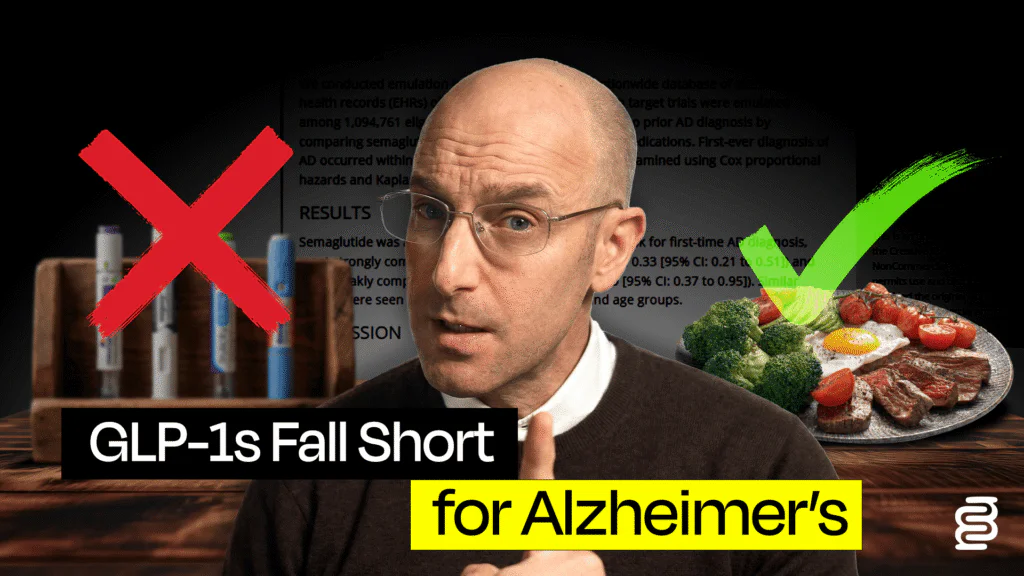
A new clinical trial reveals semaglutide does not improve cognition in Alzheimer’s disease, challenging earlier observational findings. This highlights the complexity of dementia and suggests metabolic improvements from drugs alone may not be enough. Emerging research points to ketogenic therapy as a promising approach, offering the brain an alternative fuel source when glucose metabolism is impaired.
Learn more
SAN MATEO, Calif.–(BUSINESS WIRE)–Baszucki Group today announced an expanded commitment to the landmark Cleveland Clinic Brain Study. Launched in 2022, this ambitious longitudinal study plans to follow healthy individuals…
Learn more
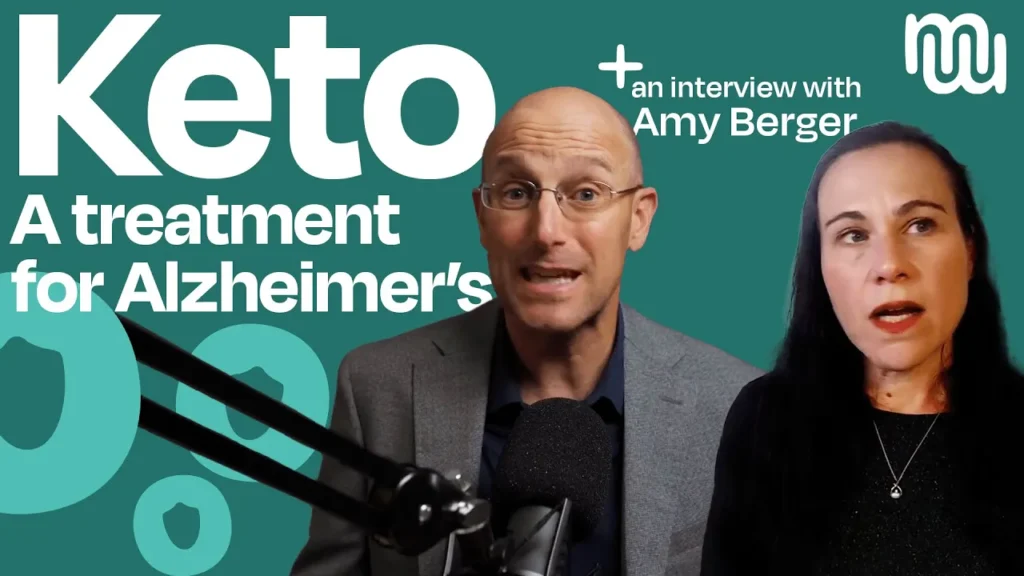
In this Metabolic Mind episode, nutritionist and author Amy Berger (“The Alzheimer’s Antidote”) breaks down why Alzheimer’s is increasingly viewed as “type III diabetes” and a problem of brain energy shortage. She explains how ketogenic diets, MCT oil, and exogenous ketones can help fuel insulin-resistant neurons, support mitochondrial health, and potentially improve cognition in people with mild cognitive impairment or Alzheimer’s disease. Amy also critiques microbiome-focused research, highlights the central role of metabolic health (insulin, triglycerides, weight), and offers practical perspective on using nutritional ketosis as a hopeful, science-based strategy for dementia prevention and treatment.
Learn more
Amy Berger’s research shows that Alzheimer’s results from a fuel shortage in the brain.
Read more
A new clinical trial reveals semaglutide does not improve cognition in Alzheimer’s disease, challenging earlier observational findings. This highlights the complexity of dementia and suggests metabolic improvements from drugs alone may not be enough. Emerging research points to ketogenic therapy as a promising approach, offering the brain an alternative fuel source when glucose metabolism is impaired.
Learn more
SAN MATEO, Calif.–(BUSINESS WIRE)–Baszucki Group today announced an expanded commitment to the landmark Cleveland Clinic Brain Study. Launched in 2022, this ambitious longitudinal study plans to follow healthy individuals…
Learn more
In this Metabolic Mind episode, nutritionist and author Amy Berger (“The Alzheimer’s Antidote”) breaks down why Alzheimer’s is increasingly viewed as “type III diabetes” and a problem of brain energy shortage. She explains how ketogenic diets, MCT oil, and exogenous ketones can help fuel insulin-resistant neurons, support mitochondrial health, and potentially improve cognition in people with mild cognitive impairment or Alzheimer’s disease. Amy also critiques microbiome-focused research, highlights the central role of metabolic health (insulin, triglycerides, weight), and offers practical perspective on using nutritional ketosis as a hopeful, science-based strategy for dementia prevention and treatment.
Learn more