Get the latest on metabolic psychiatry. Subscribe.


Listen, Watch & Subscribe on:



Go Slowly: A Beginners Guide to Psychiatric Drug Tapering (Part 2)
Listen
About the host

About the guest


Georgia:
What we’re really trying to do is we’re trying to get to the root causes of your symptoms because the root cause of your symptoms isn’t a serotonin deficiency. It’s not a medication deficiency. Something is wrong, in many cases biologically, that needs to be addressed. The symptoms are trying to tell you something.
Bret:
Welcome to the Metabolic Mind Podcast. I’m your host, Dr. Bret Scher. Metabolic Mind is a nonprofit initiative of Baszucki Group where we’re providing information about the intersection of metabolic health and mental health and metabolic therapies, such as nutritional ketosis as therapies for mental illness.
Thank you for joining us. Although our podcast is for informational purposes only and we aren’t giving medical advice, we hope you will learn from our content and it will help facilitate discussions with your healthcare providers to see if you could benefit from exploring the connection between metabolic and mental health.
Tapering and stopping psychiatric medications is not an easy thing to do, let’s be honest. So, if you’re thinking about doing it or if you’ve tried doing it and struggled, you’re not alone. But there are definitely some things that you need to think about ahead of time and put into place with your healthcare team to make it most effective.
So, this is part two of a two-part series with Dr. Georgia Ede, where now we’re going to talk about the how. What are some of the ways of how to go about tapering and de-prescribing psychiatric medications. So, I hope this is a very helpful interview where we learn a lot from the experience and the knowledge from Dr. Georgia Ede.
Many of the interventions we discuss can have potentially dangerous effects if done without proper supervision. Consult your healthcare provider before changing your lifestyle or medications. In addition, it’s important to note that people may respond differently to ketosis, and there isn’t one recognized universal response.
Well, Georgia, welcome back to part two of our psychiatric medication tapering and de-prescription series. Such an important topic, and I’m so glad you can join me again today.
Georgia:
Good to be back, Bret.
Bret:
Yeah, so we kind of talked about the what and the why in our lap last episode. And today, we’re really going to get into the how.
So ,if you haven’t already listened to episode one, I highly recommend everybody go back and do that to really set the stage. But, I guess, what is the summary of why this is so important to talk about, and why the specifics that we are going to talk about for tapering are often not what somebody hears from their prescribing physician.
Georgia:
Right. So, the reason why we’re talking about tapering on Metabolic Mind is because many people who start a ketogenic diet, for example, find themselves feeling better. And then, want to explore whether or not they can reduce or even eliminate the psychiatric medications that they have been using.
And so, and then, the reason why we are having an entire episode about this, about how tapering is best approached is because tapering is not straightforward. It’s actually very complicated. And if it’s not done well, it can, it can actually lead to harm. And most prescribers, even very seasoned clinicians who have been prescribing for many years, are not well-informed about how to taper medications safely and comfortably.
Bret:
Yeah. And in the last episode, we covered a big meta-analysis that got a lot of publicity about how, you know, withdrawal symptoms are very mild and really not all that concerning. But it was based off of people taking the medications for eight to 12 weeks. So, concepts like this, which gets promoted among very well-meaning prescribing psychiatrists, can be misleading and potentially harmful to the patients.
And I think that’s why it’s so important that we discuss a lot of the specifics today that are going to be different than what many prescribing psychiatrists or other other practitioners believe. But with the caveat being, you can’t say like, here’s how you do it. You take X dose for X number of days, then you reduce to Y dose for Y number of days. And then, you’re good.
And there’s not like a cookbook way to do that, right?
Georgia:
Absolutely not. So, there are three primary principles of good psychiatric medication tapering. One is personalization. The plan must be personalized.
Another is patience. It often takes a quite a long time to come off of a psychiatric medication safely and comfortably. And the third is professional support.
Bret:
Yeah. and you know, I think, another important concept is it, this is much more challenging than almost any other type of medication. You know, like we can taper blood pressure medications. And yeah, there could be a risk of rebound high blood pressure, and you just go slow and monitor.
But when it comes to the brain, and the adaptations that happen in the brain to medications, it really makes it sort of probably the most challenging medication to taper. Would you agree with that statement?
Georgia:
That’s right. So, lots of people out there will have stopped or rapidly tapered off of medications for physical conditions, you know, things like, you know, like antibiotics for example, or statin medications.
There are lots of medicines out there that, if you stop them abruptly, it’s usually not going to, not going to bother you that much. May not bother you at all, but brain medications are not that way. The brain is very, it’s exquisitely and uniquely, sensitive to changes in its interior environment. And so, any sudden movements can cause a huge backlash in terms of emotional and cognitive symptoms.
Bret:
Yeah, and we talked in the lap last episode how psychiatric medications are not one thing. We often talk about it just for simplicity, but there are different categories that may require different prescription, or sorry, different de-prescription approaches. So, we recommend everybody check those out.
But when we talk about tapering principles, do the same principles pretty much apply too, regardless of whatever we’re talking about, you know, an antipsychotic, a mood stabilizer, an antidepressant? Does the same principles apply?
Georgia:
Essentially, I mean, every plan needs to be personalized. But there are some principles that can apply generally across the board. And that’s essentially, you know, start low and go slow, right?
So, just reduce the dose a little bit. Maybe by five or 10%, and see how the person does. And so, and because some people are much more sensitive to these reductions in dosages than others, but it’s much more complicated than that, especially as the taper goes on. And I’m sure we’ll talk about this, but really the guiding principle of no sudden movements, I think, really applies to just about every psychiatric medicine.
Never stop any psychiatric medicine abruptly. There are just a few rare exceptions to that, and I’m not even going to mention them because I don’t want people out there to take risks with this, right? So, I think that it’s really important to have a healthy respect for these mind-altering substances.
Bret:
Yeah, and I think it’s important to maybe reflect on what is the most commonly given advice, which is usually cut the pill in half for, you know, two weeks, three weeks, four weeks, whatever. Maybe even less.
Then cut it in half again. And then, you can stop it, right? The sort of the linear tapering is generally the advice that is given. Is that what you see most people giving out there in the community?
Georgia:
Well, I mean, I’ve seen all kinds of things that are very unfortunate. So that’s a very common approach.
Some people just stop the medicine cold, some which the worst possible thing you can do. Some people, like you said, they’ll cut it in half for a week or two. Then, they’ll cut it in half again, if they can. It depends on how big the pill is, and then they’ll stop it, right? And so, I’ve even very, very commonly will hear that somebody has started to take the medicine every day, or every other day.
I mean, every other day or every third day or twice a week. And now, I’m just going to use it once a week, and then I’m going to stop. That is a, that’s a recipe for disaster. So, because the brain doesn’t like things to be uneven. It wants everything to be nice and calm and even and stable.
So, if you are raising the dose one, you’re taking the medicine one day and you’re not taking it the next day. That is a huge shock to brain chemistry because the level of the drug in the brain is going to be very uneven. So, there are lots of ways not to do this, right?
Bret:
So, let’s talk about the way to do it. And the word often used is hyperbolic tapering. Again, not that that’s the only way, but that’s sort of the most common term I’ve heard used to describe, maybe a safer and more effective way of tapering. So, describe what hyperbolic tapering is, and is that what you think is recommended?
You should, should be recommended most?
Georgia:
You know, what’s so interesting is that for years when I was in practice before I heard, I’ve never, I had never heard of the term hyperbolic tapering because most people weren’t talking about or teaching about or writing about how to safely do this. I just learned through trial and error in my own practice that the closer I got to the bottom of the taper, the slower I had to go in order for it to be comfortable for people.
And so it, I would, hundreds and hundreds of times in the course of my career, I would have the same conversation with patients saying, I know it feels like you’re almost done, but you know, sometimes the last part of the taper is the hardest.
Bret:
It is so counterintuitive, right? You’re like, I’m only on one milligram, and I was on 20 before.
Why is this one milligram different, so hard? Like, it’s so counterintuitive.
Georgia:
It is. And the way I would describe it, the way I explain this is, so let’s say that you’re taking a hundred milligrams of Zoloft, sertraline, which is a very commonly prescribed serotonin medication, SSRI, for depression and anxiety.
And so, let’s say you’re taking a hundred milligrams of Zoloft. And let’s say you reduce the dose by 25 milligrams as your first step. That’s already kind of a big drop. But in any case, let’s say that’s what you did. Not at all in common. So, you go from a hundred milligrams to 75 milligrams. So, that is 25 percent drop in the dose because you’ve dropped by 25 of a hundred.
So, it’s 25%. Now, let’s say you wait a couple of weeks, and the person seems to be doing okay. And then, you drop the dose again by another 25 milligrams. Now you’ve gone from 75 to 50. That’s a, that’s a 33% drop in the dose. So that’s a bigger percent if you go down by the same number of milligrams.
Every time you reduce the dose, the percentage of the total that you’re dropping is getting bigger and bigger and bigger. And that’s what the brain cares about. The brain cares about what percentage you’re dropping it by. Not by how many milligrams you’re dropping it by. So, in the beginning, it can feel you can it feel like a walk in the park. You’re dropping the dose and everything’s going fine.
But if you don’t slow it down towards the end, you can often end up in really serious withdrawal and. So this is very commonly not appreciated.
Bret:
Right. So, I think that’s a really good description of the percentage rather than the dosage, is such an important way to approach it, which kind of can make it hard, right?
Because it’s so much easier to cut the pill in half or cut it in a quarter or take it every other day, right? Those are easy to do. But to calculate what is a, you know, 25% reduction or a 10% reduction. To calculate that and be able to get that appropriate dose can be a little bit challenging for people.
So, what are some tools that people use to try and help them with that?
Georgia:
So, one is to work closely with your prescriber to plan the taper, and do that math. There are some wonderful resources now available. We talked about this last time. So, for example, The Maudsley Deprescribing Guidelines, is one excellent book that can help you plan an appropriate taper.
Crossing Zero, a brand new book by Dr. Anders Sorenson, is another book that can walk you through examples of how to very carefully taper medication. And then. there’s a, there’s actually a free, training program online by Dr. Josef Witt-Doerring, and this is a very detailed course. Anybody can take it.
I have taken it myself, that walks you through how to think about and do the math to appropriately reduce the dosage of a medication very, very slowly.
Bret:
Yeah.. So, it’s important to know that there are resources out there, and you can prepare ahead of time. And you know, there are other things that people talk about, like compounding pharmacies or switching to liquid dose medications, which can be really helpful tools that may be available to some.
Not to others, but those are like two of the most specific ones that I hear people talk about. Is that something you’ve used or heard of other people using?
Georgia:
I’ve had to use them. You really don’t have any other choice in a lot of cases because the smallest doses available made available by manufacturers commercially usually are not small enough to do, especially that final part of the taper.
And, you know, some of these medicines are the smallest dose of some of these medicines is 20 milligrams. And so, you know, if you know, it’s not going to be possible for you to do the taper slowly with the commercially available strengths that are there.
And so you have to work with a compounding pharmacy or get really, really creative with your, you know, cutting pills or counting beads from capsules, mixing things in water. All kinds of things that I’ve done over the years to help people come off their medication more slowly. But the, but really there, the two, the two best ways to do it.
The two most accurate ways to do it are by using what’s called a compounding pharmacy. A compounding pharmacy can create for you special formulations, special low strengths, low concentrations of medicines, in various forms. It can be liquids. It can be tablets, can be capsules.
The prescriber can work with the compounding pharmacy to request a particular type and concentration of the medication, specifically for tapering. And the other resource is called tapering strips. There’s a company in the Netherlands that with a prescription will, for certain psychiatric medications, will create customized tapering strips with where the dose is being reduced over time.
Bret:
So, I mean, you can see how it’s so much easier to say, cut in half. Cut in half, and stop, right? And unfortunately, sometimes we default to the easier path, especially if there’s some belief that it is not harmful or that it still works But as we’ve covered, I think that’s a little, unfortunately, misleading given the way the literature is.
So, really important to have these tools to know what to use. But there’s this other concept though, the question of what are you tapering to, right? Are you just saying, all right, you’re eventually going to get off this medication and good luck? You don’t need anything else.
Or are there other things that should be in place to help you get off the medication? So, we’ve talked a lot about ketogenic diet, ketogenic therapy as a way of, you know, really helping with the symptomatology and helping with de-prescription. So first, I guess, tell us why you think that’s so successful as a specific tool. And then, just list some of the others that people use to say, what am I tapering to?
Georgia:
Yeah, so if your goal is better mental health with less medication, you want your brain to be as healthy as you can get it. So, you really want to shore up your brain health, and there are lots of very powerful ways to do that. And so, if you’re trying to improve your mental health, you need to improve your brain health.
Because if a medicine has been even a little bit helpful in managing symptoms, especially of a serious mental illness where you might’ve had psychotic symptoms or manic symptoms or self-injury or suicidal thinking, and you really don’t want those symptoms to come back. And so, you can greatly increase your chances of feeling well with less medication, or perhaps, even no medication by improving total brain health.
So, ketogenic diet is one way to do that. Understanding which foods in the diet can cause inflammation is another way to do that and oxidative stress. Because what we’re really trying to do is, we’re trying to get to the root causes of your symptoms because the root cause of your symptoms isn’t a serotonin deficiency.
It’s not a medication deficiency. Something is wrong, in many cases biologically, that needs to be addressed. The symptoms are trying to tell you something. Now, they might be trying to tell you something about your life circumstances. You might be in a really, a very unhealthy relationship. You might be in a job you hate. Either lots of different psychological and environmental reasons why you might not be feeling mentally well.
But then, there are also very real biological biochemical factors that you have control over, to a large extent, with your lifestyle. So, inflammation and oxidative stress and insulin resistance are vitamin deficiencies, nutrient deficiencies. There are many, there are toxic exposures.
There are many causes of mental health symptoms that you can do something about, and it might help you feel a lot better. So, we’re talking exercise, diet, sleep, prioritizing sleep, managing and reducing stress. And then, getting those glucose and insulin levels in a healthy range. This cannot be overstated.
Getting those glucose and insulin levels in a healthy range, is going to, is going to be one of the most powerful levers you can pull when it comes to your mental health.
Bret:
Yeah, I think that’s a really important concept. And you know, Anders Sorenson, in his book, he talks a lot about therapy, as coming off medication.
So, other interventions still very important, but getting your brain healthy, getting your lifestyle healthy, and you know what to avoid as well. You know, unfortunately, substance abuse and addiction go hand in hand with many psychiatric diagnoses. So, addressing that as well and making sure you’re coming off of those. So many different things to consider.
It’s not like you can just follow these rules, and you’re going to get off your medications and don’t need to do anything else, right? Absolutely not. Not what we would recommend at all.
Georgia:
Absolutely, not. I mean, I had very good training in psychotherapy. Actually, the residency program that I attended was one of the Harvard programs. But it was the Harvard program that focused most on and valued psychotherapy more than some others.
And so I got very good training in psychotherapy, and I really value it. And I know how important and how useful it can be. And so, that’s very important. And thank you for mentioning substance abuse. I forgot to mention that, you know, substance-free living is just like medication. These are mind-altering substances that the brain adapts to.
And the adaptations that the brain makes to try to accommodate the presence of that substance are often going to stand in the way of your good mental health goals.
Bret:
Yeah. Very well said, very well said. Well, I mean, we’ve talked a lot about the concepts of the how to do it to make it as safe and effective as possible. But things don’t always go as planned, right? People will run, will often run, into roadblocks.
So, how does somebody tell if they’re having a withdrawal syndrome, symptom? And then, what do they usually do about it as they’re trying to taper these medications?
Georgia:
So, one of the most dangerous things you can do is stop a medicine abruptly or drop the dose too quickly. And you can tell this has happened because you’ll usually get what are called acute withdrawal symptoms.
Just means early and sudden withdrawal symptoms within a few days of reducing the dose. And the reason, now some people, when that happens, they will just kind of push through it. They’ll say, oh, well, you know, these are supposed to be mild and short-lived. I’ll just tough it out. How, you know, what’s the worst that could happen, right?
Well, the worst that could happen is something called protracted withdrawal. It’s just prolonged withdrawal, and we’re talking prolonged. So, prolonged withdrawal means that you’ve dropped the dose by more than your brain can manage. So, if you drop it by a small amount, the brain can kind of catch up. And it can adjust itself to that new dosage relatively easily.
It takes a little time. You might have a few mild withdrawal symptoms. That’s the brain adjusting. But if you drop the dose too quickly, and you’re getting a lot of withdrawal symptoms. And you leave the dose there, or worse still, you continue going down on the dosage because you’re just trying to go get off as fast as you can and get through it.
There is this chance of something called protracted withdrawal, which just means you could have waves of serious, disabling withdrawal symptoms for months to years that when you go back up on the dose., It’s not going to help. So this, it’s been compared to by the experts in the field, and this has been a very helpful concept to me, as a akin to a traumatic brain injury.
That you have injured brain anatomy and chemistry in a way that’s going, that’s going to take the brain a very long time to heal from. So, this is something that will, when you have acute withdrawal symptoms, if you drop the dose too quickly. And you recognize that, and you go quickly back up. If you do that soon enough, the withdrawal symptoms will go away within usually minutes to hours.
This is not the case with protracted withdrawal symptoms. These are a different beast altogether. And the really, the only thing that helps with that situation is time. And it can take a very long time for those symptoms to reverse themselves.
Bret:
And are there certain medications that people need to be more concerned about protracted withdrawal than than others?
Georgia:
It’s more likely with antidepressants and benzodiazepines and sometimes with anticonvulsants, than other categories of medication.
Bret:
Yeah, and I mean, important to note, that that can happen even if someone’s doing a percentage-wise hyperbolic tapering. You know, just because that is maybe the most effective and safest way, doesn’t mean it’s perfect and people. So, people still need to be aware of this, don’t they?
Georgia:
Although it’s much less, if you go slowly and carefully, it’s much, much, much less likely to happen. It’s also less likely to happen if you haven’t been on the medicine for very long. So, this tends to be people who have been on the medicine for a longer period of time, and who have dropped the dose by too, you know, by too much at once.
Bret:
And you mentioned how in the acute withdrawal, going back on the medication can kind of help with those withdrawal symptoms. Does the same concept apply for protracted withdrawal? Because you said the only thing is time. So, does that mean going back on the medication doesn’t help?
Georgia:
It doesn’t tend to help.
No, because it’s no longer about the medicine being there and not being there. It’s now about the injury that’s occurred to the brain that the medication can’t repair. And so, only time and something called neuroplasticity can help with that. So, the brain, the neuroplasticity is the brain’s ability to grow new connections, and heal and repair itself over time.
And so the, you know, growing and strengthening these connections. And so, that healing process, you can do a lot to support that healing process, specifically all of those lifestyle strategies we’re talking about. So, stress management, stress reduction, living substance free, eating a healthy diet, that you know, no junk food, no refined carbohydrates, no vegetable oils, whole foods, ketogenic, low-carb.
I think is well worth considering exercise. So, and psychotherapy, improving your relationships, you know, all kinds of things you can do to support the brain’s healing function.
Bret:
Yeah, I think those are such important principles. And again, we like to simplify things, I think sometimes as human beings, and the thought that all I have to do is follow these steps, and I can get off my medication well. No, as you’ve mentioned, all these other things to put in place are so important.
Fellow mental health clinicians and healthcare providers, you now have access to a suite of free CME lectures on metabolic psychiatry and metabolic health. Each of these CME sessions provide insight on incorporating metabolic therapies for mental illnesses into your practice. These CME sessions are approved for AMA category one credits, CNE nursing credit hours, and continuing education credit for psychologists. And they’re completely free of charge on mycme.com. Now, back to the video.
I want to talk about another kind of fairly serious, and unfortunately, common practical barrier that people run into, is they watch a video. They hear from others. They join a community. And they make the decision that I think it would be right for me to get off my medications.
And your doctor isn’t really willing to consider it. What is someone to do in that situation? I mean, that could be really, really troubling and problematic for that individual.
Georgia:
Sure. This certainly does happen. And the first thing I would recommend is have a conversation with the prescriber to understand where they’re coming from. Because there may be good reasons why they’re reluctant to do this. And you do want to hear them out, and see if you can kind of work through those and come to a shared understanding.
You know, have a conversation. Ask why. Why is there that hesitation or that recommendation to not stop the medication or not to try to at least reduce the dose of the medication? So, have that conversation. But if there isn’t, you know, if you’re not going to make headway in that regard. Then, it’s time, I think, to get a second opinion.
You know, consult with somebody else. Consult with another prescriber there. And you could even have a consult with a tapering specialist. So, there are, there are a number of programs now that where you can seek support and guidance from, prescribers who specialize in this. So ,one is called Outro, O-U-T-R-O. That’s Dr. Mark Horowitz’s service.
There’s another service called the Taper Clinic. That’s Dr. Yosef Witt-Doerring’s specialty medication tapering clinic. And then, you can also, you can also get advice from this book, Crossing Zero by Dr. Anders Sorenson. But you can seek support from community, from community organizations, grassroots organizations ,who can point you to resources that may be useful in your, in your search for an attempt to taper off the medication.
So, just because your prescriber may not want to reduce the medication doesn’t necessarily mean that that’s the end of the conversation. And again, there could be very good reasons why your prescriber is reluctant to taper. For example. they may not have the time to learn about tapering. They may not have the time to supervise a taper.
They might be too busy. They may think that you’re not in a very stable place right now, and that it’s not the best time for you to do a taper. But maybe later on would be a better time? They may be worried because perhaps they’ve gotten to know you over time and they’ve seen you in dire straits before.
They may worry that if the medication is taken away, that some very serious symptoms could come back that could really disrupt your quality of life or even your relationships or your employment or might end up in the hospital. So, and it could be unsafe. And so, it’s not that, it’s not that it’s always the right thing to do to begin a taper.
I think it’s just an important conversation to have so that you can understand where they’re coming from.
Bret:
Yeah, very well said. And I think before we wrap, though, I think we should also reflect back on something we touched upon in the first episode. And you know, with so many people sharing their stories, it’s really easy to look at someone else’s experience and say, wow, look at all these people who got off their medications.
That’s great. I’m going to do what they did. But then, maybe for you, the experience is different. You’re not able to get off your medications or not able to get off easily and having some symptoms or whatever the case may be. How do you help someone sort of reframe what success looks like for them, knowing that it’s not going to be the same for everybody?
Georgia:
Every person’s situation is unique, and that’s why it’s so important to have a personalized plan. Like you were saying before, that there’s no one size fits all taper strategy. The tapering plan is going to vary depending on who you are. How old you are. What other medicines you take? What kinds of medicines you take now? What their dosages are. How long you’ve been taking them? How much you weigh? What your lifestyle is. What your metabolic health is. The reasons why you want to come off the medicine, the reasons why you started taking the medicine in the first place.
So ,many different factors come into play. And very importantly, how sensitive you are to medication changes because some people are much more sensitive than others. And this is through no fault of your own. It’s just luck of the draw. And so, it must be personalized. So, I think, that it’s very important to keep in mind that medicine, the match between a medicine and a person is just like any relationship.
It’s unique. And so, the approach will also need to be unique. So, success again, is really, success is also personal. So, you know, success means feeling well and functioning well regardless of what strategies support you in feeling well and functioning well.
For some people, that will be, they’ll feel best without any medication at all. And using other strategies, other people will find a certain amount of medication, either every day or from time to time important, and in supporting them in feeling well and functioning well. So It’s, I think, it’s really important not to view your tapering attempt as a failure if you don’t successfully get to zero.
Because getting to zero, while it’s a wonderful goal and It does happen for some people, it doesn’t happen for everyone. And so, I do have patients in my own practice, who are doing lots of wonderful things for their lifestyle. Have made great strides and have been able to dramatically reduce the amount of medication that they’re taking, but they still find that a certain amount of medication is useful.
And you know that partly, I think, that’s because we don’t fully understand all of the root causes of mental health problems. And so, all we can do is the best we can do with the tools we have. And if you happen to still have some symptoms left over that lifestyle and psychotherapy and making changes in your environment haven’t helped with, then we may not fully understand why those are still there.
But if the medicine, it helps you, then there’s no shame in using it. And it’s a tool, there at your disposal. I think really the goal is to identify which medicines you tolerate best and to take the least amount of that medicine necessary.
Bret:
Yeah, so that’s a number of very helpful, specific interventions people can make in their lives. A question we get a lot though is, what about supplements? Do supplements have any role in helping somebody, specifically in this case, tapering and getting off of medications?
Georgia:
So, you know, when you’re thinking about what the brain is trying to do when you are tapering a medication, it is trying to, it is trying to get back to where it was before.
It’s very sensitive when you’re reducing a medication. The brain, brain chemistry and anatomy is very sensitive. And so, what you’re trying to do is you’re trying to remove a substance that’s essentially foreign to the brain. And the brain has all it can do to manage that. If you add another foreign substance and, you know, for example, supplement.
Then, you’ve got a new substance for the brain to contend with, and they could have very unpredictable effects on brain chemistry. So, my personal, my personal, you know, opinion is I would lean away from supplements. Not only when you’re tapering, but especially, if you’ve got protracted withdrawal where the brain has been in a sense injured and is trying to heal.
So, I’m not in the supplement camp when it comes to withdrawal symptoms. And I have talked with a couple of experts in the field who do agree with me on this. So, that doesn’t mean that certain ones couldn’t be helpful, but my instinct would be to keep the brain as free of foreign substances as you can while it’s trying to recover from the one that you’re trying to reduce already.
Bret:
Well, Georgia, I think that’s a wonderful way to conclude it. And I thank you so much for joining me to share all this information about medication taper, about de-prescription about withdrawal, about how to manage it.
And importantly, about the message of what does success look like? I think that’s so important for everybody to really sort of define. And as we talked about, you know, there are important steps to put into place before somebody starts a tapering process, and to really ask the why.
And to work with their prescriber for how to do it. And I think you really did a wonderful job of laying out all those principles here. And I’m sure people are going to have lots of questions for us, which we love. Please send us question, send us your suggestions, metabolicmind.org/questions. And then, of course, on our YouTube page, on Instagram, on X or Twitter, on Facebook.
I mean, I lose track of all the different social media outlets we have. But whichever one you’re on, let us know. Give us a question. And I will give you the floor for one last, one last comment to help us wrap up this really, I think, helpful and instructive discussion.
Georgia:
Yeah. You know, I just really want to give people, again, a message of hope. That there are many cases, ways that you can use less psychiatric medication, you know, to keep your mind open to that possibility.
But medication, you know, as a prescribing psychiatrist, I’ve seen medications help people. So, I just want to make it clear that, you know, I don’t necessarily think it’s the best strategy for everybody to come off all of their psychiatric medication.
Obviously, I’m a nutritional and metabolic psychiatrist. So, I work with people who wish, who have a goal of reducing their reliance on psychiatric medication. But I think it’s really important to keep in mind that if we, I really don’t want to send a message that psychiatric medication is always the wrong approach.
And that you have to do is stop your medication and do psychotherapy, and everybody will be fine. The reason why I think that’s an important message to counter is because, you know, decades ago we, you know, there are people with mental illnesses all around the world, who, you know, we were, we were told, they were told that these problems were not biological.
That these were not medical issues. That these were flaws in character or, you know, that people possessed by demons. So, we don’t need to go, we don’t need to go back a hundred years to when we didn’t understand that there was some biochemistry behind certain mental health symptoms that really needed to be addressed.
And that, and this is so this is very important because if you find that, for example, psychotherapy, is not sufficient for addressing your mental health symptoms, it’s important to go beyond that and not forget the biological piece of the puzzle. And that’s where so many of these other lifestyle strategies can be so useful.
And so, I think it’s important to remember that some mental health symptoms are not just about your relationships and your upbringing and your psychology and your inner thoughts. They are also, and although that can be very true for a lot of people, there’s also for many people a serious biological problem that needs to be addressed.
And so, whether that’s with medication or not, it’s important to keep that. Keep that in mind.
Bret:
Yeah. And I think you’ve highlighted so many different potential interventions that can help address those that deal with medications as well. But I think that’s a good way to wrap it up to help people really reframe that and understand that concept.
So, thank you so much Georgia. I really appreciate your time and all your expertise.
Georgia:
Thanks. I hope it’s helpful to people.
Bret:
Thanks for listening to the Metabolic Mind Podcast. If you found this episode helpful, please leave a rating and comment as we’d love to hear from you. And please, click the subscribe button so you won’t miss any of our future episodes.
And you can see full video episodes on our YouTube page at Metabolic Mind. Lastly, if you know someone who may benefit from this information, please share it as our goal is to spread this information to help as many people as possible. Thanks again for listening, and we’ll see you here next time at The Metabolic Mind Podcast.
Listen, Watch & Subscribe on:
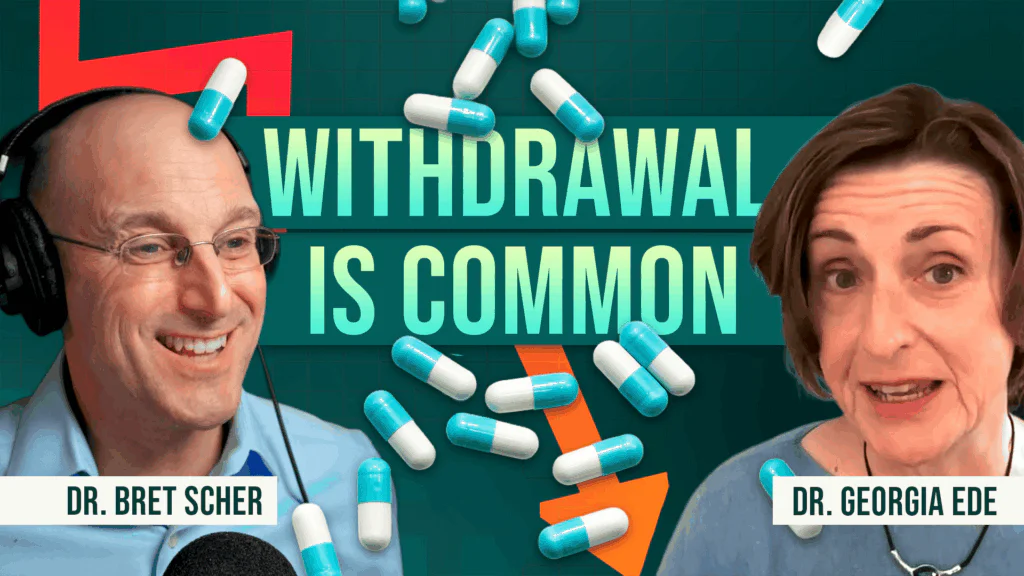
In this Metabolic Mind Podcast episode, Dr. Bret Scher and psychiatrist Dr. Georgia Ede unpack the often-misunderstood realities of psychiatric medication tapering and deprescribing. They explain why most clinicians aren’t formally trained to taper safely, outline major medication classes (antidepressants, antipsychotics, mood stabilizers/anticonvulsants, benzodiazepines, stimulants), and describe how the brain adapts to medications through homeostasis—making abrupt dose reductions risky. The conversation clarifies how to distinguish withdrawal from relapse using timing and symptom patterns (including “brain zaps” and flu-like effects), critiques claims that antidepressant withdrawal is rare or mild, and shares practical resources and peer-support options to help patients advocate for safer, personalized taper plans.
Read more
Learn more
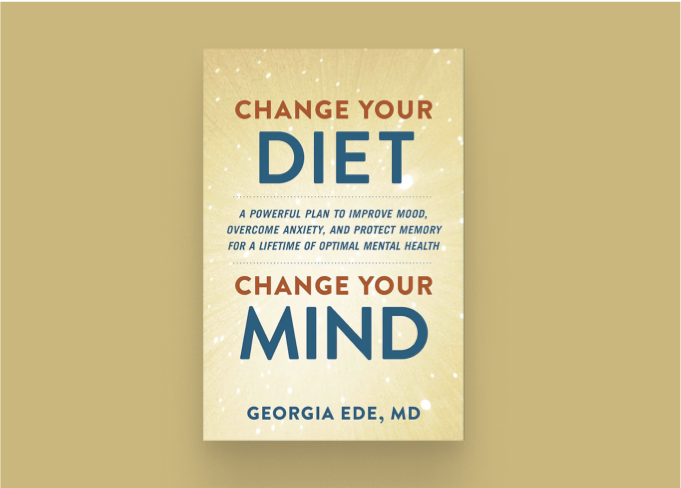
A powerful plan to improve mood, overcome anxiety, and protect memory for a lifetime of optimal mental health.
Learn more

Visit Dr. Georgia Ede's website to help you discover the powerful connection between your psychiatric or medical diagnosis and your diet.
Learn more
In this Metabolic Mind Podcast episode, Dr. Bret Scher and psychiatrist Dr. Georgia Ede unpack the often-misunderstood realities of psychiatric medication tapering and deprescribing. They explain why most clinicians aren’t formally trained to taper safely, outline major medication classes (antidepressants, antipsychotics, mood stabilizers/anticonvulsants, benzodiazepines, stimulants), and describe how the brain adapts to medications through homeostasis—making abrupt dose reductions risky. The conversation clarifies how to distinguish withdrawal from relapse using timing and symptom patterns (including “brain zaps” and flu-like effects), critiques claims that antidepressant withdrawal is rare or mild, and shares practical resources and peer-support options to help patients advocate for safer, personalized taper plans.
Read more
Learn more
A powerful plan to improve mood, overcome anxiety, and protect memory for a lifetime of optimal mental health.
Learn more
Visit Dr. Georgia Ede's website to help you discover the powerful connection between your psychiatric or medical diagnosis and your diet.
Learn more