New Results: First RCT for Schizophrenia & Bipolar Disorder. Learn more.


Listen, Watch & Subscribe on:



Dr. Ken Berry on the Medical Landscape of Chronic Disease
Listen
About the host
About the guest


Ken:
The current clinical guidelines as they are, as they’re currently fabricated, are completely compromised by pharmaceutical interests
Bret:
Welcome to the Metabolic Mind Podcast. I’m your host, Dr. Bret Scher. Metabolic Mind is a non-profit initiative of Baszucki Group where we’re providing information about the intersection of metabolic health and mental health, and metabolic therapies, such as nutritional ketosis as therapies for mental illness.
Thank you for joining us. Although our podcast is for informational purposes only and we aren’t giving medical advice, we hope you will learn from our content, and it will help facilitate discussions with your healthcare providers to see if you could benefit from exploring the connection between metabolic and mental health.
Please remember that our channel is for informational purposes only. We’re not providing individual or group medical or healthcare advice or establishing a provider-patient relationship. Many of the interventions we discuss can have potentially dangerous effects if done without proper supervision.
Consult your healthcare provider before changing your lifestyle or medications. In addition, it’s important to note that people may respond differently to ketosis, and there isn’t one recognized universal response
Dr. Ken Berry, thanks for joining me.
Ken:
Hey, thanks for having me.
Bret:
Of course. So, here we are at the CoSci Conference, and we kicked it off last night with Cholesterol Code. It was a sneak peek of the documentary. So. Let me ask you, what was your impression after watching it?
Ken:
I think it was very well done, well made.
I think the It was more emotional than I thought it would be, in a good way. I think that any documentary to touch your heart has to be heartfelt. And I think they did a great job of the telling the stories in a way that regular folks can understand.
Bret:
Yeah, and that’s got to be so important for people to realize we’re talking about real human beings.
We’re talking about people changing their lives, and I think that is so important. But you’re a doctor. We know how doctors practice. Do you think that will impact a doctor in the same way and say, “Maybe I need to reevaluate my clinical practice based on this documentary?”
Ken:
What I’m hoping that it’ll do is it’ll spark the curiosity of the student that the doctor used to be.
Bret:
Yeah.
Ken:
Because many doctors, when they’re in active practice, they’re no longer students. They think they know what they’re talking about. They’ve listened to their pick of the experts, and that’s just how they practice medicine. And I’m hoping that seeing this and really being able to see inside the lives of these people, these patients, their patients are just like these people.
Bret:
Yeah.
Ken:
They often get caught in medical binds where there’s, it’s a dilemma. There’s no solution. It’s just either bad or less bad or maybe slightly more good. And I hope that the average practicing physician will say, “Maybe I should look into this again? Sounds like some things have changed.”
Bret:
Yeah. When we talk about risk-benefit analysis for any treatment, do you think mainstream medicine really understands the potential benefits of ketogenic therapy?
Ken:
No, not even close. And the risk-benefit analysis is something that every doctor should have top of mind at every patient encounter. But that’s very often not the case. And that’s another hope I have for this documentary, is that it makes doctors go, “Oh, I should really be considering a lot more things during an office encounter when I’m having a office visit with a real human.
There are many other variables at play here that maybe I should consider more than what’s their LDL cholesterol.”
Bret:
Yeah. And let’s talk for a minute about sort of treatment guidelines or the way medicine is practiced now and the research used to inform that, right? There’s this term evidence-based, evidence-based medicine, which is thrown around a lot.
But what does that mean? Is that the randomized control trials? Is it multi-thousand person epidemiology studies? Or is it the citizen scientists, the N of one, the anecdotal reports? How do you see that hierarchy when it comes to how we currently practice or maybe should be practicing medicine?
Ken:
I think the randomized control trial that’s double-blind, it’s always going to be the ultimate standard for medical treatment. I think it always will have to be because it’s really the best way we have to decide A or non-A. But there are so many practicing physicians right now who completely discount anecdotal evidence.
And when I say that anecdotal, that means a real human’s real lived experience. That’s what that actually means. And so, what I’m excited for is that patients, after seeing this documentary, will now be able to make the mental leap and say, “Oh, so I don’t just have to blindly do whatever my doctor says.
I can play around. I can tinker. I can eat more of this or eat less of that. I can do more exercise, less, different types.” And so, I hope that’s what it really leads to because the current clinical guidelines as they are, as they’re currently fabricated, are completely compromised by pharmaceutical interests.
And I don’t know of anybody rational who would disagree with that. That the pharmaceutical influence is inappropriate, and many would say egregious.
Bret:
Yeah.
Ken:
And so, I love it that people can watch this documentary, watch some YouTube videos, read a book or two and say, “I think I’m going to try this intervention.” Because then, they just became a citizen scientist, didn’t they?
Bret:
Yeah.
Ken:
Now they’re, doing an N equals one experiment. And they, better than any other doctor on the planet, will be able to assess their own results, both external and internal, both physical and mental. They’ll be able to go, “Man, that really helped me feel better,” or “no, not so much.”
And that’s the literal definition of a scientist.
Bret:
It’s interesting, I think, when doctors look at data and evidence, they want something that will apply to everybody or as close to everybody, which we know doesn’t exist.
Ken:
Yep.
Bret:
But when you look at what’s going to apply to you as an individual, that’s where the citizen scientist can really come in. And I think such an important theme, and basically, just marrying back what you said. But let’s talk about the outside influences that affect our clinical guidelines, our treatment guidelines, our major organization recommendations who accept funding from pharmaceutical companies, from ultra-processed food manufacturers.
What can we do about that?
Ken:
As you know, I tried for years to reach out to the American Diabetes Association and their previous medical director. I reached out to him multiple times to try to have a conversation in public about low carbohydrate diets as a therapeutic intervention for diabetes.
Bret:
Yeah.
Ken:
And they had zero interest, never responded. Even had a very prominent endocrinologist at a very large university who was in residency with their previous medical director who said, “Oh, no problem. I’ll reach out to him.” Still didn’t hear back. And so, it was at that point that a group of physicians and I said, “I think the ADA may be beyond reform.
I think they may be too captured. That they’ve went too far down this road to turn around and come back.” And so, we decided to form a parallel, a society called the American Diabetes Society. And we’ve been working on the back end getting it set up as a non-profit that will be educational. And then, eventually, will sponsor and support research into using low carbohydrate diets to give type 1 diabetics normal A1Cs and a drastically reduced risk of diabetic complications. And for people with type 2 diabetes, to completely reverse that and put them back to the normal baseline of having diabetic complications.
Bret:
When you say that, it sounds so just common sense. Like that should be the goal for any organization treating diabetes, shouldn’t it?
Ken:
Yeah, and what I find is the current leader, Diabetic Association, their actions, their social media posts tend to muddy the water. They actually tend to cause more confusion than they do clearing things up.
They tend to, many patients have told me, “I’m so frustrated because I don’t know what to do because I made the ADA’s recipes, I followed their guidelines, and my diabetes either didn’t get any better or it actually got a little worse. And so, I’m just at a loss. I guess I’ll just take my medicine, take my injections, take my pills. And I guess that’s all I can do.”
Bret:
Yeah.
Ken:
And I feel like that a diabetes society should be a beacon, should offer hope by giving them the scientific knowledge they need to say, “Hey, there’s actually a lot of research about this, that’s done by Virta and done by many others, that you can absolutely drastically reduce your A1C back towards a good, healthy normal and slash your risk of diabetic complications.”
Bret:
Yeah.
Ken:
It needs to be very clear. It needs to be very helpful. It needs to be very doable, very attainable. And I think if the message is presented to the average person, they’re like, “Oh, okay. So, that sounds really easy. Just do more of this and less of this.”
Bret:
Yeah.
Ken:
“Yes. Okay, I’ll go do that, then.”
Bret:
Yeah.
Ken:
It’s so simple.
Bret:
Certainly is to hear you say it. It certainly is simple. And it’s almost baffling, like why that isn’t the case. So, I think it’s great that you’re not just sitting on the sidelines saying this is wrong, but taking the steps to say, “What can we do to change it?” By forming the American Diabetes Society, and I hope, great things will come from that.
But it’s one thing to say, “Okay, so we are not taking money from pharma. We’re not going to be only medication-focused.” But is that the same as saying medicines don’t have a role and will not be beneficial in this, realm?
Ken:
Not at all. I am a classically trained physician.
I think that there are instances where there’s no better option than pharmaceuticals, in certain situations. But to blindly throw them at every conceivable condition is folly. Some would say malpractice, but let’s just stick with folly.
Bret:
Okay.
Ken:
But yeah, there are many instances where the best option is a pharmaceutical intervention. But there are many options, which are currently covered up and smothered up by pharmaceuticals where they really don’t serve any useful role at all except to increase the profits of certain corporations.
Bret:
And what about the argument, “Ah, I just don’t have time to talk about, to another person about exercise and nutrition, and I can just write the prescription. And they’re going to take it, and they might get better”?
Ken:
Human nature applies to every human. Doctors, are just dudes and chicks.
They’ve got bills to pay. They’ve got schedules to keep. They’ve got overhead. They’ve got all the headaches and things that everybody has. And so yeah, if they can do something that’s approved by their regulating organization, they’re not going to get in trouble. It’s super fast, super cheap, super easy, AKA write a prescription and get them out of here.
A lot of them are going to do that. But I have great hope for physicians because you know as well as I do, in order to get into med school and pass, you had to be a good student. You had to be an eager learner. Every doctor and every doctor I know used to be an eager learner.
Bret:
Yeah.
Ken:
And so, we hope that is still inside them somewhere. And we hope that with the message of the ADS and Metabolic Mind and other parallel organizations that are springing up to replace the organizations, who are just not helping people anymore, hoping to reignite that spark of being a forever student and always curious about human health.
Bret:
I love that message about the forever student. Stay curious. Get back to your roots of being a good learner.
Ken:
Absolutely.
Bret:
And an interested learner.
Ken:
Absolutely.
Bret:
I hope everybody hears it and takes it to heart. So, thank you. Thank you for your work. And where can people find the American Diabetes Society?
Ken:
So, we now have a website up and running. it’s americandiabetessociety.org. And we’re on all the social media platforms. And in the coming, months we’re going to be putting out position papers, endorsing other organizations’ position papers, recipes that will actually lower your blood sugar and lower your A1C instead of causing it to go up.
Bret:
Yeah.
Ken:
And many just practical, simple tips that people with diabetes can do to either reverse it, if it’s Type 2, or get a normal A1C and no complications, if it’s Type 1 or any of the others. Excellent.
Bret:
All right. Thank you very much.
Ken:
My pleasure.
Bret:
Thanks for listening to the Metabolic Mind Podcast. If you found this episode helpful, please leave a rating and comment as we’d love to hear from you. And please click the subscribe button so you won’t miss any of our future episodes. And you can see full video episodes on our YouTube page at Metabolic Mind.
Lastly, if you know someone who may benefit from this information, please share it as our goal is to spread this information to help as many people as possible. Thanks again for listening, and we’ll see you here next time at the Metabolic Mind Podcast.
Listen, Watch & Subscribe on:
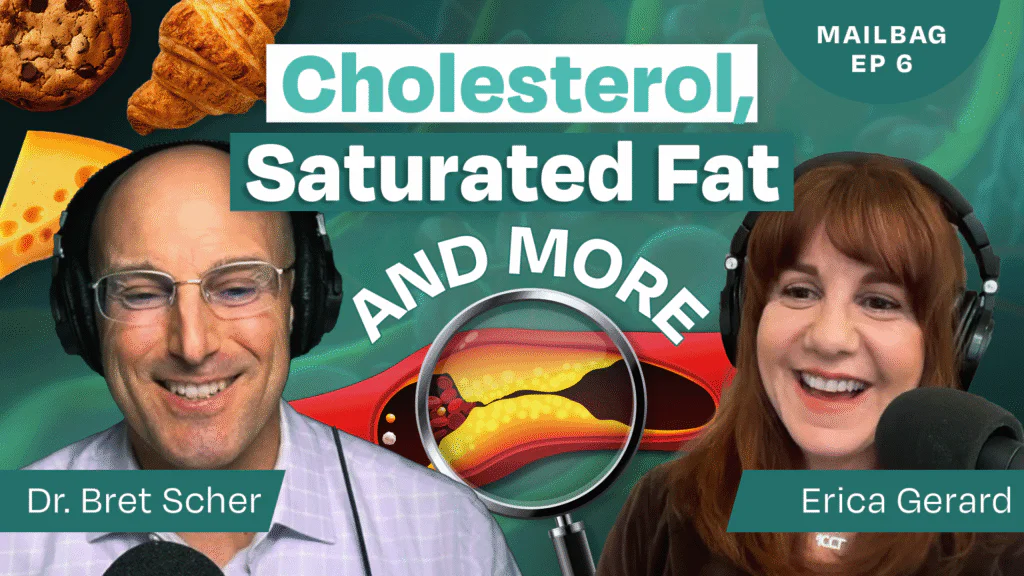
In this Metabolic Mind mailbag episode, Dr. Bret Scher answers common questions about cholesterol on keto, saturated fat, CRP inflammation, gluconeogenesis, and affordable ways to track ketosis. Learn how to interpret LDL changes in context, whether you can do keto without animal fat, what high CRP really means, and when ketone testing matters for metabolic and mental health.
Read more

Is coconut oil clogging your arteries, or could it actually reduce your risk of heart disease? Transcript: The controversy surrounding coconut oilIs coconut oil going to give you…
Learn more
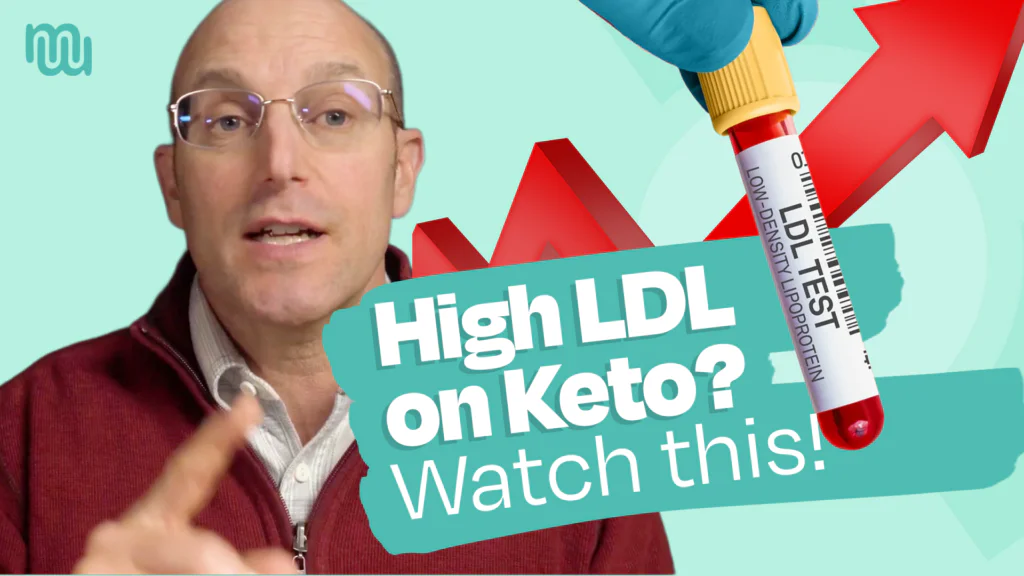
Lean mass hyper-responders are challenging some long-standing assumptions about cholesterol and cardiovascular risk. Dr. Bret Scher explores why certain lean, metabolically healthy people experience dramatic increases in LDL cholesterol on a ketogenic diet—and the unanswered question of whether elevated LDL carries the same risk across very different metabolic states.
Learn more
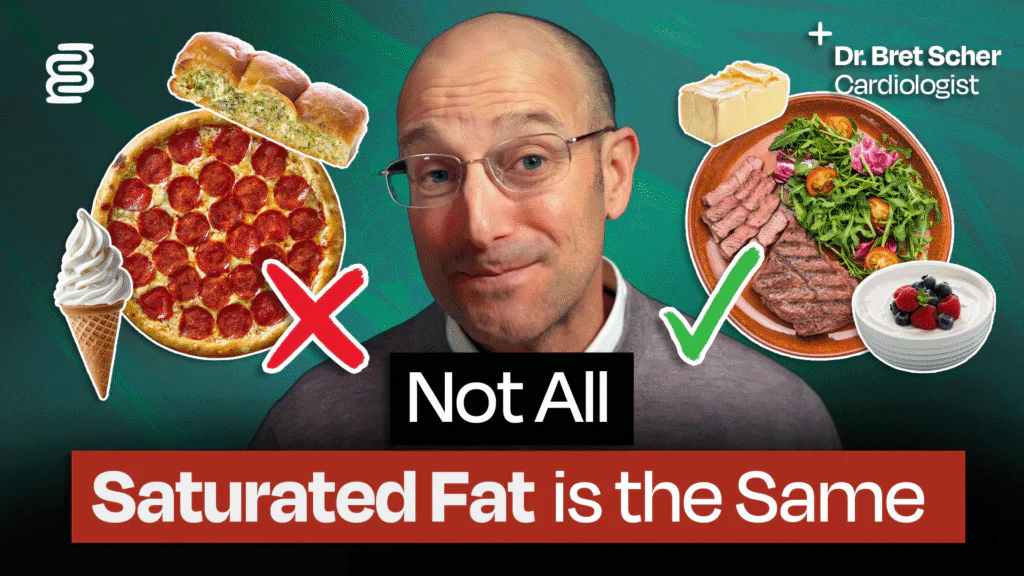
In this Metabolic Mind episode, Dr. Bret Scher analyzes the latest dietary guidelines and the science behind saturated fat. He reviews observational studies, randomized trials, and keto research to explain why saturated fat from whole foods may not be harmful in a low-carb context, and why focusing on overall diet quality and metabolic health matters more than strict saturated fat limits.
Learn more
In this Metabolic Mind mailbag episode, Dr. Bret Scher answers common questions about cholesterol on keto, saturated fat, CRP inflammation, gluconeogenesis, and affordable ways to track ketosis. Learn how to interpret LDL changes in context, whether you can do keto without animal fat, what high CRP really means, and when ketone testing matters for metabolic and mental health.
Read more
Is coconut oil clogging your arteries, or could it actually reduce your risk of heart disease? Transcript: The controversy surrounding coconut oilIs coconut oil going to give you…
Learn more
Lean mass hyper-responders are challenging some long-standing assumptions about cholesterol and cardiovascular risk. Dr. Bret Scher explores why certain lean, metabolically healthy people experience dramatic increases in LDL cholesterol on a ketogenic diet—and the unanswered question of whether elevated LDL carries the same risk across very different metabolic states.
Learn more
In this Metabolic Mind episode, Dr. Bret Scher analyzes the latest dietary guidelines and the science behind saturated fat. He reviews observational studies, randomized trials, and keto research to explain why saturated fat from whole foods may not be harmful in a low-carb context, and why focusing on overall diet quality and metabolic health matters more than strict saturated fat limits.
Learn more