New Results: First RCT for Schizophrenia & Bipolar Disorder. Learn more.


Listen, Watch & Subscribe on:



Rethinking Cholesterol Risk: What Lean Mass Hyper-Responders Reveal
Listen
About the host


Bret:
Over the past few years, a fascinating group of people has caught the attention of doctors and researchers studying cholesterol and metabolic health.
Welcome to the Metabolic Mind Podcast. I’m your host, Dr. Bret Scher. Metabolic Mind is a non-profit initiative of Baszucki Group, where we’re providing information about the intersection of metabolic health and mental health and metabolic therapies, such as nutritional ketosis as therapies for mental illness.
Thank you for joining us. Although our podcast is for informational purposes only and we aren’t giving medical advice, we hope you will learn from our content and it will help facilitate discussions with your healthcare providers to see if you could benefit from exploring the connection between metabolic and mental health.
They’re called lean mass hyper-responders or LMHRs. Lean mass hyper-responders are individuals who adopt a ketogenic diet. That’s important. They’re eating a ketogenic diet, and they experience a significant rise in LDL cholesterol, but in a specific metabolic context. So, by definition, LMHRs have LDL cholesterol above 190 milligrams per deciliter, HDL cholesterol above 80, and triglycerides below 70 milligrams per deciliter.
Although, as with many medical definitions, the cutoffs are more suggestions than hard and fast rules. But you got to pick somewhere, but that’s the general phenotype. And importantly, these individuals tend to be lean, physically active, insulin sensitive, and metabolically healthy. And thus, the hypothesis is that the LDL goes up so much because they’re burning mostly fat for energy, since they’re in ketosis, but they have a high demand and not a lot of internal fat stores. Thus, they depend on the lipoproteins to deliver fatty acids to the muscles and organs in their body for energy.
So, I emphasize this is a hypothesis, but it sure does make a lot of sense. Now, this hypothesis, though, is important because at first glance, many clinicians assume that these individuals have familial hypercholesterolemia, or FH, which is a genetic condition associated with high LDL and increased cardiovascular risk.
And really, that’s the only other clinical scenario where we see LDL levels this high. So, it makes sense that the uninformed would assume all these individuals have FH, but here’s the key point. By definition, lean mass hyper-responders do not have familial hypercholesterolemia. By and large, they don’t have the genetic mutations and don’t have the personal and family history of heart disease that defines FH.
Their LDL rise happens after dietary carbohydrate restrictions, not at birth like with FH. And often reverses when carbohydrates are reintroduced, and it occurs alongside excellent metabolic markers, low insulin, low triglycerides, high HDL. That pattern is fundamentally different from FH. And this brings us to the big unanswered question: Is elevated LDL cholesterol the same risk factor for heart disease if it’s in metabolically healthy people on a ketogenic diet as it is in the general population? A population which is, on average, metabolically unhealthy.
Most of our cholesterol risk data comes from people eating high-carbohydrate diets with high insulin levels, higher triglycerides, more inflammation, and widespread metabolic dysfunction. LMHRs challenge that framework. In these individuals, the rise in LDL appears to be linked to energy trafficking. The body moving fat efficiently to tissues for fuel when carbohydrates are restricted.
In other words, LDL may be elevated not because of disease, but because the body’s adapting to using fat as its primary energy source. But we don’t know if that matters or not, and that’s the problem. So, I need to emphasize, this does not mean that elevated LDL is automatically harmless. It means we don’t yet know whether LDL carries the same risk across radically different metabolic states.
And that uncertainty is exactly why LMHRs have become the focus of growing scientific interest, and why this question deserves careful study, not assumptions. And a new documentary, called Cholesterol Code, explores this LMHR phenomenon following real people, clinicians, researchers, and individuals living as LMHRs as they wrestle with these questions.
It highlights the gaps in our current understanding and asks whether context, metabolic health, insulin levels, dietary patterns truly matters when it comes to cardiovascular risk. And the best part is that you can help spread this message and host your own screening of the documentary. And it doesn’t mean you have to believe in the hypothesis or not.
It’s all about exploring the question, and it’s incredibly easy to host your own screening. This platform, Gathr, G-A-T-H-R, they handle all the logistics, the ticketing, the streaming, and the setup. All you have to do is invite your friends, colleagues, or community, and Gathr takes care of the rest so you can be part of this metabolic health movement and part of the new approach to asking challenging health and scientific questions.
You can start by going to cholesterolcodemovie.com. And like I said, it doesn’t mean you’re for it or against it. It means you want to explore it and ask these questions. So, this documentary doesn’t claim to have all the answers, but it does ask the questions. And sometimes, that’s how science moves forward.
And it’s questions like these that force us to either reaffirm or break down our longstanding assumptions. So, I hope you found this useful. And I hope you get to see the Cholesterol Code movie and keep following the journey as we continue to learn more, right? The movie’s sort of just the starting point.
We’re going to continue to learn more with more research and more information. So, as always, thank you for watching. I’m Dr. Bret Scher, and we’ll see you here next time at Metabolic Mind, a nonprofit initiative of Baszucki Group. Thanks for listening to the Metabolic Mind Podcast. If you found this episode helpful, please leave a rating and comment as we’d love to hear from you, and please click the subscribe button so you won’t miss any of our future episodes.
And you can see full video episodes on our YouTube page at Metabolic Mind. Lastly, if you know someone who may benefit from this information, please share it as our goal is to spread this information to help as many people as possible. Thanks again for listening, and we’ll see you here next time at the Metabolic Mind Podcast
Listen, Watch & Subscribe on:
Have you been told you have high cholesterol and need to start a statin to prevent a heart attack? You're not alone. Every year, millions receive this news from their doctors—often with a sense of fear and urgency. But it turns out that cholesterol isn’t the best way to determine your risk of cardiovascular disease.
Read more
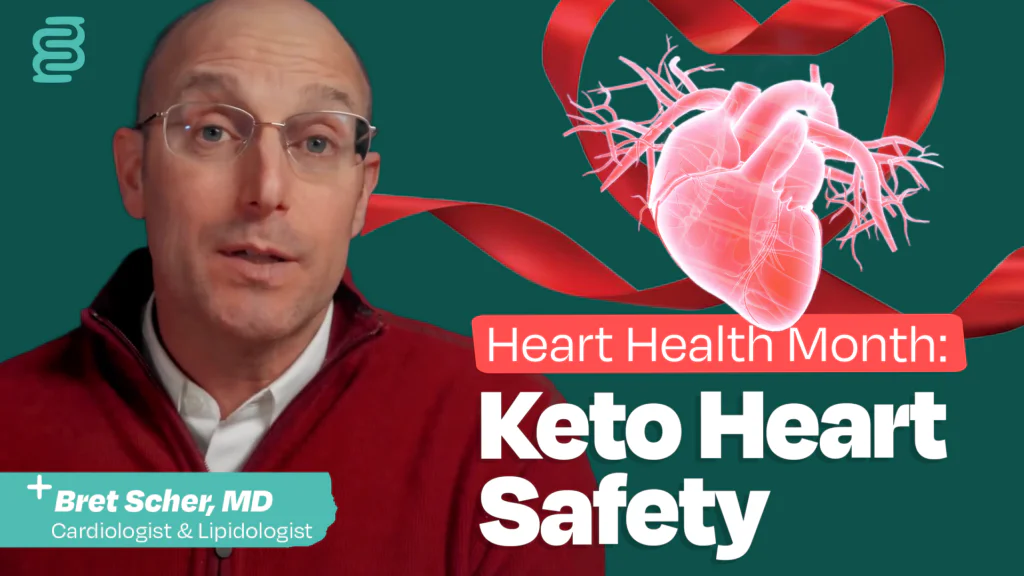
In this Metabolic Mind episode, Dr. Bret Scher addresses the claim that ketogenic diets are bad for heart health. He explains why many studies misrepresent keto, how cholesterol responses vary, and how ketogenic diets can improve key markers like triglycerides, HDL, insulin resistance, and blood pressure. Learn why metabolic health is central to heart health and how keto may play a role.
Learn more

“For the first time in years, I felt like my brain was finally running on the right fuel,” said one of the participants in a new pilot study…
Learn more
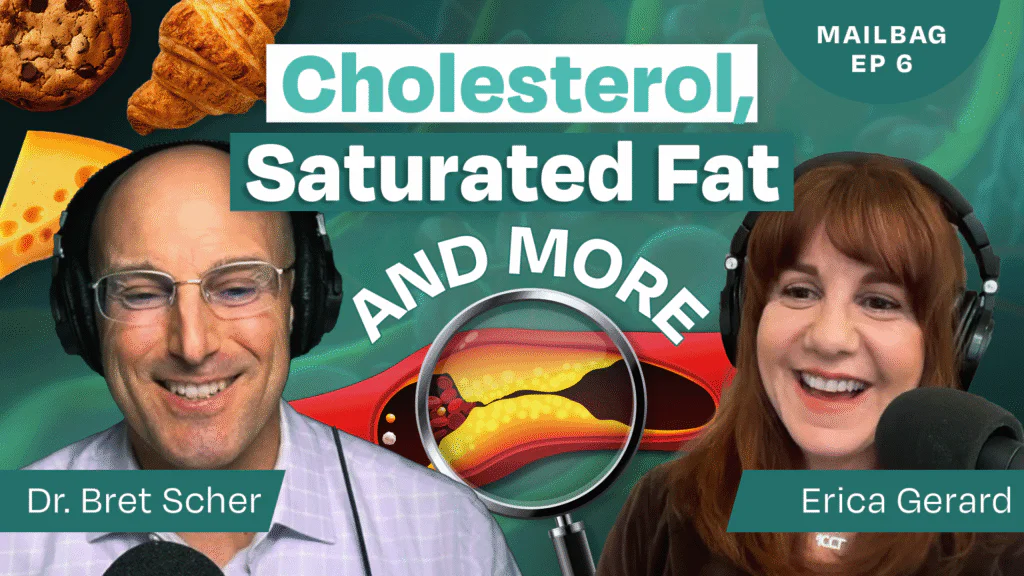
In this Metabolic Mind mailbag episode, Dr. Bret Scher answers common questions about cholesterol on keto, saturated fat, CRP inflammation, gluconeogenesis, and affordable ways to track ketosis. Learn how to interpret LDL changes in context, whether you can do keto without animal fat, what high CRP really means, and when ketone testing matters for metabolic and mental health.
Learn more
Have you been told you have high cholesterol and need to start a statin to prevent a heart attack? You're not alone. Every year, millions receive this news from their doctors—often with a sense of fear and urgency. But it turns out that cholesterol isn’t the best way to determine your risk of cardiovascular disease.
Read more
In this Metabolic Mind episode, Dr. Bret Scher addresses the claim that ketogenic diets are bad for heart health. He explains why many studies misrepresent keto, how cholesterol responses vary, and how ketogenic diets can improve key markers like triglycerides, HDL, insulin resistance, and blood pressure. Learn why metabolic health is central to heart health and how keto may play a role.
Learn more
“For the first time in years, I felt like my brain was finally running on the right fuel,” said one of the participants in a new pilot study…
Learn more
In this Metabolic Mind mailbag episode, Dr. Bret Scher answers common questions about cholesterol on keto, saturated fat, CRP inflammation, gluconeogenesis, and affordable ways to track ketosis. Learn how to interpret LDL changes in context, whether you can do keto without animal fat, what high CRP really means, and when ketone testing matters for metabolic and mental health.
Learn more