New Results: First RCT for Schizophrenia & Bipolar Disorder. Learn more.


Listen, Watch & Subscribe on:



ApoB Explained: What Your LDL Test Doesn’t Tell You
Listen
About the host


Bret:
Welcome to the Metabolic Mind Podcast. I’m your host, Dr. Bret Scher. Metabolic Mind is a non-profit initiative of Baszucki Group, where we’re providing information about the intersection of metabolic health and mental health, and metabolic therapies, such as nutritional ketosis as therapies for mental illness.
Thank you for joining us. Although our podcast is for informational purposes only and we aren’t giving medical advice, we hope you will learn from our content and it will help facilitate discussions with your healthcare providers to see if you could benefit from exploring the connection between metabolic and mental health.
LDL cholesterol, ApoB, heart risk. What’s the difference between LDL and ApoB? Why does it matter? Let’s talk about it. This is something we hear a lot. Now, we all know that heart disease is the number one cause of death around the world. And for decades, doctors have focused on LDL cholesterol as the main marker to predict who might be at risk. And we know it’s not that great of a marker.
And lately, we’ve heard a lot more about a more predictive marker, apolipoprotein B, or ApoB. And there have been some social media exchanges about this trying to clarify exactly what it means. But here’s the key take-home to understanding why ApoB is more predictive for heart disease than LDL and when it’s more predictive.
And here’s the thing, it’s actually not really about cholesterol at all. It’s probably all about something even more important: metabolic health. So, here at Metabolic Mind, we hear personal stories from people all the time using ketogenic and metabolic therapies to treat their psychiatric and other brain-based disorders.
But sometimes, there’s a concern about an increase in LDL or ApoB when someone’s following a ketogenic or a high-fat diet. So, let’s break this down in as simple way as we can. LDL cholesterol, often called the bad cholesterol, that’s really an outdated term, but LDL cholesterol is just a way to say the cholesterol that’s carried within an LDL particle.
See, cholesterol can’t just float around in the blood by itself. It needs a carrier, such as an LDL particle or an HDL particle or other particles, like VDL particles. It has to be a particle, a truck, a boat, whatever your analogy, to help transport cholesterol. So, the point is that when you get your LDL cholesterol number on a blood test, it tells you how much cholesterol is inside those LDL particles, but it doesn’t tell you how many particles there are.
So, LDL is measuring the total cargo, not the number of trucks carrying it, and here’s where ApoB comes in. Every bad particle, the LDL, the VLDL, and other particles called remnants, they have one ApoB protein on its surface. So, one particle equals one ApoB. So, when you measure ApoB, you’re indirectly counting all the potentially concerning particles, something LDL cholesterol doesn’t do.
But remember, LDL particles come in different sizes. So, that’s another important concept. And we know that the smaller sizes, the small, dense particles, are more concerning, more atherogenic than the larger, less dense particles. And what’s interesting is the small particles carry less total cholesterol, right?
Smaller size, you can’t fit as much in there, but yet they appear to be a higher risk for heart disease. So again, LDL cholesterol does not tell you whether your particles are small or big or how many particles, but ApoB indirectly does. So, consider these two examples. One person has larger particles, which carry more cholesterol per particle, and one has smaller particles carrying less.
So, for the equivalent LDL cholesterol value on a blood test, say 130 milligrams per deciliter, you’ll actually need more of the small particles and fewer of the large particles to get the same amount of total LDL cholesterol. But again, you can’t tell that just by checking the LDL cholesterol value. But the ApoB will be higher for the person with more overall particles, which is the person with the smaller particles and the higher risk. Oof.
Okay, take a breath. You with me so far? So, that’s how LDL and ApoB are different, but here’s the key point. All of this is really just a reflection of metabolic health. That’s right. We’re talking about cholesterol, but it’s really a reflection of metabolic health. If you’re metabolically healthy, you tend to have low triglycerides, low VLDL and remnants, and mostly large LDL particles.
And in this case, LDL cholesterol and ApoB usually match up pretty well, and they’re one and the same. This is called concordance. So, there’s not that much of a difference. But if you’re metabolically unhealthy, you tend to have high triglycerides, lots of VLDLs and remnants, and lots of small LDL particles. And there, the LDL can look more normal when the ApoB is elevated, right? Because you need the ApoB to tell you about the particles and the size.
So, there is a discordance between LDL and ApoB where ApoB is much more valuable. So, more valuable with metabolic dysfunction, really the same as LDL with metabolic health. So, to say it another way, when someone’s metabolically healthy, LDL and ApoB are likely interchangeable. But when they’re metabolically unhealthy, that’s when ApoB is a better marker than LDL. And it has more to do with the metabolic health than probably the cholesterol itself, right?
So, is the real problem the ApoB or the metabolic dysfunction that causes the high ApoB in the first place? So, it’s becoming increasingly clear that the biggest risk factors for heart disease are components of poor metabolic health, high blood pressure, blood sugar abnormalities, like type 2 diabetes or even prediabetes or type 1 diabetes, high triglycerides, low HDL, chronic inflammation, and so on.
So, while lowering ApoB may reduce the heart disease risk for some, fixing the underlying metabolic dysfunction likely helps even more. All right, so quick summary. Bottom line, LDL tells you how much cholesterol is inside the particles. ApoB indirectly tells you how many particles there are and their size, and that’s a better predictor of heart disease. And poor metabolic health is what sets the stage for higher ApoB relative to LDL.
Now, if you improve your metabolic health by lowering refined carbohydrates, improving insulin sensitivity, eating more whole foods, staying active, then you are improving your heart health. So, understanding ApoB is important, but fixing your metabolic health is the true foundation of preventing heart disease.
So, I hope this helps you better understand ApoB, LDL, and how they relate to metabolic health. And if it was helpful, please like and subscribe and share this with others who may benefit. And be sure to leave us a comment as we love to hear from you and allow others to learn from your experience. So, thank you for watching.
I’m Dr. Bret Scher, and we will see you here next time at Metabolic Mind, a non-profit initiative of Baszucki Group. Thanks for listening to the Metabolic Mind Podcast. If you found this episode helpful, please leave a rating and comment as we’d love to hear from you. And please click the subscribe button so you won’t miss any of our future episodes.
And you can see full video episodes on our YouTube page at Metabolic Mind. Lastly, if you know someone who may benefit from this information, please share it as our goal is to spread this information to help as many people as possible. Thanks again for listening, and we’ll see you here next time at the Metabolic Mind Podcast
Listen, Watch & Subscribe on:


Have you been told you have high cholesterol and need to start a statin to prevent a heart attack? You're not alone. Every year, millions receive this news from their doctors—often with a sense of fear and urgency. But it turns out that cholesterol isn’t the best way to determine your risk of cardiovascular disease.
Read more
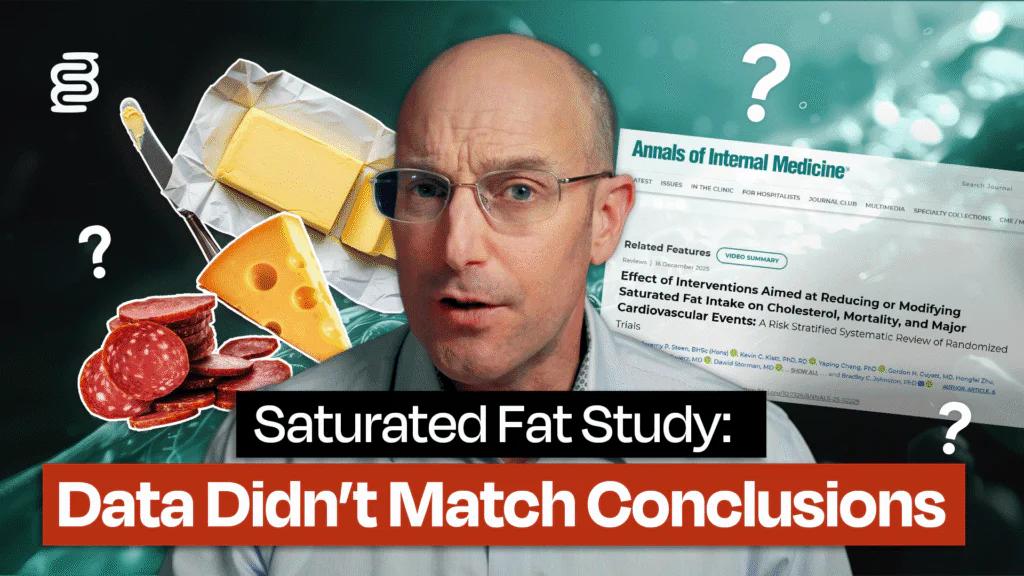
In this episode, Dr. Bret Scher takes a closer look at a new meta-analysis examining saturated fat and cardiovascular health. He breaks down what the study actually found, why its results showed no statistically significant increase in heart attacks, strokes, cardiovascular deaths, or overall mortality, and why saturated fat may need to be considered within the context of a person’s overall diet and metabolic health.
Learn more
In this Metabolic Mind episode, Dr. Bret Scher addresses the claim that ketogenic diets are bad for heart health. He explains why many studies misrepresent keto, how cholesterol responses vary, and how ketogenic diets can improve key markers like triglycerides, HDL, insulin resistance, and blood pressure. Learn why metabolic health is central to heart health and how keto may play a role.
Learn more
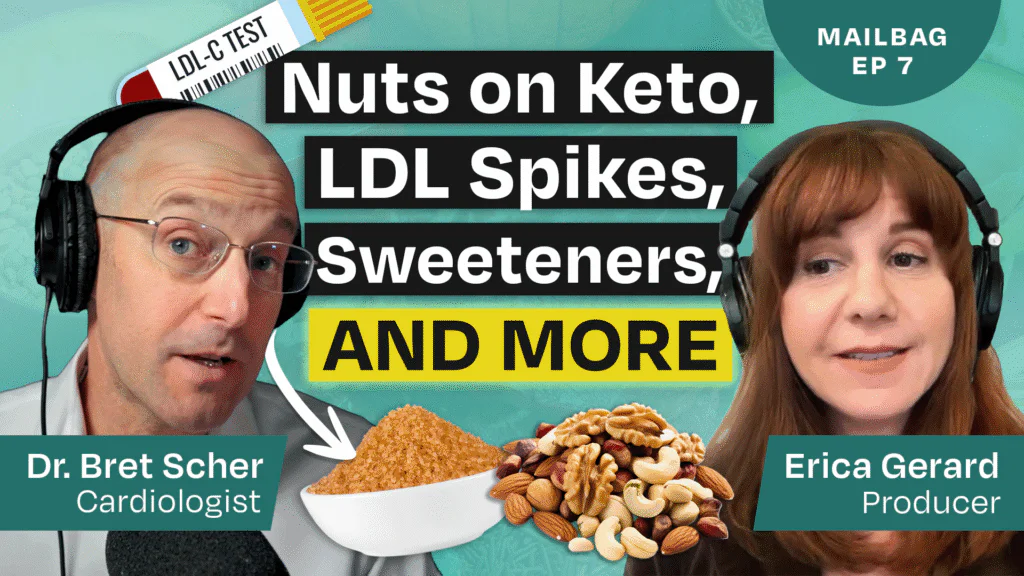
In this Metabolic Mind mailbag episode, Dr. Bret Scher answers common keto questions about high LDL cholesterol, statins, liver and kidney safety, nuts on a ketogenic diet, supplements, and whether daily ice cream can keep you out of ketosis. Learn how to think about cardiovascular risk in context, what makes a healthy keto diet, and how to approach common concerns with a more nuanced, evidence-based perspective.
Learn more
Have you been told you have high cholesterol and need to start a statin to prevent a heart attack? You're not alone. Every year, millions receive this news from their doctors—often with a sense of fear and urgency. But it turns out that cholesterol isn’t the best way to determine your risk of cardiovascular disease.
Read more
In this episode, Dr. Bret Scher takes a closer look at a new meta-analysis examining saturated fat and cardiovascular health. He breaks down what the study actually found, why its results showed no statistically significant increase in heart attacks, strokes, cardiovascular deaths, or overall mortality, and why saturated fat may need to be considered within the context of a person’s overall diet and metabolic health.
Learn more
In this Metabolic Mind episode, Dr. Bret Scher addresses the claim that ketogenic diets are bad for heart health. He explains why many studies misrepresent keto, how cholesterol responses vary, and how ketogenic diets can improve key markers like triglycerides, HDL, insulin resistance, and blood pressure. Learn why metabolic health is central to heart health and how keto may play a role.
Learn more
In this Metabolic Mind mailbag episode, Dr. Bret Scher answers common keto questions about high LDL cholesterol, statins, liver and kidney safety, nuts on a ketogenic diet, supplements, and whether daily ice cream can keep you out of ketosis. Learn how to think about cardiovascular risk in context, what makes a healthy keto diet, and how to approach common concerns with a more nuanced, evidence-based perspective.
Learn more