Listen to the audio version:
(New to this series? I’m so glad you’re here! Radiant Beast: The Open Workbook series announcement lays the foundation for everything that follows.)
(Why My Future Self Had New Handwriting, Part 2)
Sometimes, you can totally rewrite the past.
In my previous article, Why My Future Self Had New Handwriting, I wrote about the conscious decision to alter my handwriting style, something that required ongoing practice.
While writing that article, I had the idea to try something I had never done before. What would happen if, now, two years after beginning to craft and write in this new style, I tried to form letters the way I once had?
Turns out, I absolutely cannot “turn off” my new style and return to my former handwriting. That version seems to have been deleted from my neurocircuitry, overwritten by the conscious style I chose, practiced, and gradually automated.
I put bipolar I disorder into remissionby implementing metabolic therapies that improved my brain and body’s ability to transform and utilize energy. Since then, I have spoken with many others whose experiences mirror my own, people who have recovered from serious mental illnesses. Many of us had to rebound from a prolonged loss of cognitive capacity. We clung to the concept of neuroplasticity as a lifeline, trusting that even after years of blunted cognition, our brains could be restored, that executive function, memory, and creative and intellectual vitality might return. Neural pathways shaped by years of mistreated symptoms, impaired metabolic function, medication side effects, and harmful coping strategies are not fixed. We rewired them and proved to ourselves that healing is possible.
One of the reasons I launched Radiant Beast: The Open Workbook was a desire to connect with others who understand the steep trenches and ecstatic peaks of this adventure of remission and reinvention, and to offer those just beginning this journey a vision of empowering possibilities.
Steve Wolf has been a consistent and thoughtful presence in the comments on the workbook, often making me reflect, sparking new article ideas, and pointing me toward resources worth exploring. He is clearly intelligent, inquisitive, and well-read. Recently, he shared in a comment the persistence it took to restore his cognitive faculties after years of impairment. He described how his ability to read had been “vaporized” for nearly a decade by olanzapine, the same antipsychotic I took for a similar length of time. I asked him what it felt like to regain that ability and whether he had any guidance for others on a similar path.
“How did it feel?
Incredible!
But it didn’t kick back in immediately. I initially could barely read half a page of text, and with little memory and comprehension. I really thought I was fried.
But I had heard about neuroplasticity, that regular exercise is good for that, had started Keto and had seen a video about mitochondrial repair. So I persisted. And slowly I learnt to read, concentrate, and think again.
On the excessive amount of Olanzapine I was on I had only managed to read three books cover to cover, but even then I hadn’t managed to retain much information.
Right now I’m staring at a whole shelf of books I ordered online during that period I couldn’t actually read. Unopened paper trophies. I can now though, so I’ll be polishing them off over the next year or two.
The only advice I would have is you might feel irrevocably brain damaged, but you’re not. It improves, though the speed of that improvement will vary wildly from individual to individual I guess.”
Steadfast self-compassion and patience, paired with hope, and often a devoted practice of positive affirmations, matter deeply as you recover. For anyone who needs to hear this: you can really become yourself again— in fact, you will not merely return to baseline, who you were before illness or trauma, but grow into a stronger, more resilient, and more fully actualized version of yourself.
There are many ways to describe neuroplasticity. Some liken it to folding a flat sheet of paper into a small square; when you unfold and refold, the paper falls more easily into the same lines and creases forged the first time.
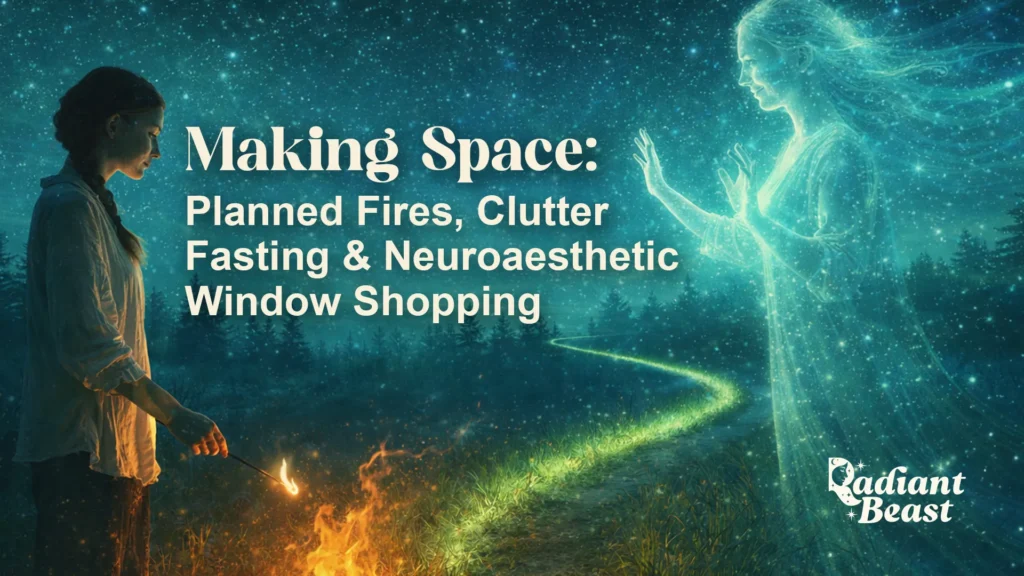
I’ve also heard it described as walking through grassland until a path becomes defined, easier to tread with each pass. When I think about erasing my old handwriting and automating something entirely new, I find another layer of metaphor: a planned fire before regrowth. A moment to relish the strike of the match of reinvention before dropping it, sizzling as it meets the dry grass. To pause, breathe, and watch the orange glow of the flames while reflecting on the bright future ahead. When new grass emerges from the ash, you can tread fresh paths with more intention and conviction than ever before. Difficult life experiences can attune you, more than most, to the immense power of your daily choices.
Making Space: Inner and Outer Harmony
Now, nearly four and a half years into remission from bipolar I disorder through metabolic therapies, I remain in awe of how stable and content my life has become. Looking back on my experiences, and through conversations with others, I see a particular magic in the radical transformation that often unfolds during the first few years of metabolic healing. I would encourage anyone currently on that path to journal about it with fervor. It is rugged and magnificent terrain: most experience deep, mixed emotions, joy in reuniting with oneself paired with inevitable challenges, including the weight of grief and remorse that can arise when facing the unnecessary loss of years or decades. Part of the journey is learning to rebuild confidence and move forward with curiosity and excitement about what lies ahead, rather than becoming fixated on what has been lost. It is important to feel and process grief without allowing it to consume you. This can be a difficult balancing act. If you are documenting your recovery journey publicly, I invite you to share a link in the comments of this article so others may find inspiration along the way.
With a strong baseline of ongoing stability, I still enjoy consciously architecting change to keep life fun, fresh, and surprising. The reason something as simple as changing my handwriting feels meaningful to me is that it signals an openness to new sensations and ways of being, arising from the subtle yet surprisingly impactful ways we can sculpt daily life by altering minute details. Our relationship with ourselves, and with the world we create through small choices that compound, never has to grow stale. We can evolve in ways that once felt unimaginable, only to discover how quickly they become second nature and form the foundation for the next iteration.
In my previous article, I wrote about an annual New Year’s ritual of writing myself a letter from the vantage point of my future self one year ahead, describing how my life has changed. I tuck the letter away and revisit it the following New Year’s Eve. I have never shared these future self letters with anyone before. I cherish the ritual and the intimacy it creates with myself.
This year, 2027 Hannah reminded me, in my relatively new penmanship, that what I did to reinvent my handwriting can be applied to other domains of my life in playful new ways that seem minor, yet go a long way in shaping how I feel day in and day out. While I certainly enjoy the challenge of specific milestone goals, what matters to me most is how I experience daily life.
Looking back, during some of my darkest periods, in the depths of symptoms driven by metabolic dysfunction and under the heavy fog of sedating psychotropic medications, my house was often a mess, mirroring my disheveled psyche. I had no energy, literally, metabolically. My inner and outer worlds felt weighted down and stifled, settled into a kind of stagnant chaos; frozen in immovable disarray.
Like many, I accumulated clutter I didn’t need, without any real organizational system. Before I became mysteriously ill and received the devastating black box label of bipolar I disorder, I aspired to be healthy. I ate whole foods, exercised, and meditated. When I came to accept, based on faulty assumptions and inadequate science, that I had a chronic illness I couldn’t control, no matter how hard I tried, and that I would have to endure medication side effects like substantial weight gain and brain fog for the rest of my life, I said, screw it! I turned to substances for fleeting relief.
During those years of hopelessness, I drank far too much alcohol, smoked a pack a day, and gorged myself on junk food to momentarily numb the pain of a life that felt meaningless, excruciatingly slow, and dull. Empty beer bottles piled up, the stench of smoke hung in the air, dirty dishes accumulated, and clothes were perpetually strewn about. Small leaks of time and energy added up as I constantly lost things, playing daily games of hide-and-seek with the simplest necessities.
As I was unknowingly fueling my body in ways mismatched to my biology, flooding my cells with glucose when they were hungry for restorative ketones, my cells were damaged and desperate for repair. My outer world became an extension of that inner inefficiency and chaos.
With the beginning of my healing journey in early 2019, I unknowingly began implementing metabolic therapies. I gradually overcame addictions to alcohol, smoking, and junk food, replacing them with positive coping strategies like meditation, exercise, and both intermittent and extended fasting. Eventually, I discovered medical keto in 2021, which I follow through a vegetarian dietary approach, and it became my cornerstone intervention for deep healing. As consistent cellular cleanup began, it naturally externalized. I started cultivating a cleaner, more ordered environment.
At times, I undertook multi-month challenges of purposefully committing to not buying anything I did not undoubtedly need, focusing instead on getting rid of unnecessary things. Over time, this has become my default orientation. For the sake of this article, I call this practice clutter fasting.
Through clutter fasting, I learned that rather than accumulating more, I benefited most from creating space. Space to see what I already had, to organize it efficiently, and to use it in more life-enhancing ways. Just as fasting and dietary ketosis induce cellular cleanup and systems-level harmony in the body, abstaining from material consumption and focusing on organization can quickly create peace and harmonious functionality in one’s environment.
The Desire Beneath the Desire: Fun Window Shopping While Clutter Fasting
My mom loves shopping, and I enjoy the ritual of going with her, simply to chat and spend time together. At the same time, I remain committed to avoiding unnecessary purchases and excess clutter. During clutter fasting, I eventually realized I could extract more from the shopping experience without buying anything, simply by shifting my approach.
On these shopping trips, when I felt the impulse to buy something I clearly did not need, like another coffee mug, hand towel, or new garment, I resisted the urge to consume and took a picture instead.
Later, at home, I would reflect on the object and ask myself: was there an internal longing I had projected onto this item, saturating it with a mysterious allure? The answer was almost always yes. Looking more closely revealed something meaningful about my inner craving. It forced me to ask: what is the desire beneath the desire?
The magnetism, I found, often pointed to a way I subconsciously longed to feel. Perhaps the texture evoked calm, or the rich color scheme fell into a stunning pattern, perfectly alive and full of momentum. Once I identified the root of the yearning, I could consciously work with it. I would meditate on the feeling, conjuring it through visualization. This often revealed new ways to explore the desire without acquiring anything, for example:
- drawing inspiration from the color scheme or texture and working on a piece of art
- realizing I was craving novelty or excitement and going to a dance class or seeking an exhilarating new experience
- recognizing that a certain friend evokes that same mood and feeling, and reaching out to connect
- noticing that I already owned something with a similar quality and bringing it into more conscious appreciation
I have learned over time, in countless ways, and still have to remind myself daily, that desires often become most useful when we can hold them and listen to them closely, rather than acting on them impulsively. The world offers limitless possibilities, and humans hold endless desires, constant new itches to scratch. This is both fascinating and dangerous.
When we attempt to quench desire solely through external acquisition, we risk entering an endless cycle of wanting, exhausting ourselves on the hedonic treadmill, something I wrote about in (publish on Substack and add link) 3 Ways to Leverage Hedonic Adaptation: Lessons from Serious Mental Illness & Recovery.
This simple shift, meditating on the desire beneath the desire, reinforced something I already knew to be true. The root of desire often becomes beneficial when explored inward, within the boundless imagination. Learning to tend the infinite creativity of our inner worlds empowers us to seek the source within, and to play more freely with how we explore it in the outer world.
Neuroaesthetics and Gratitude
Channeling 2027 Hannah, I asked: how can I be more open and receptive to the scents, sounds, textures, colors, and immersive beauty of everyday life? How can I magnify that experience through appreciation, imagination, and creative practice?
I have been reading The Signs by neuroscientist Dr. Tara Swart and particularly enjoyed the chapter on neuroaesthetics. She explores how creative expression is fundamental to humankind. Even our cave-dwelling ancestors embellished tools with ornamentation beyond pure utility. Art, music, and dance have always been intrinsic to human life. Neuroaesthetics examines how both appreciating the arts and engaging in creative expression confer tangible neurological and physical benefits, regardless of skill level.
One practice Swart describes is a journaling challenge: recording ten things that inspired awe or beauty each day. When a gratitude practice was first suggested to me during severe depression, a symptom of metabolic dysfunction impairing my energy, I found the idea obnoxious and condescending. Over time, I came to understand how powerful it can be. Gratitude trains awareness through the simple act of noticing.
Specificity matters. Gratitude should never feel rote. The more detail we bring, the more captivating the practice becomes. I love the idea of a neuroaesthetic gratitude practice rooted in the senses and in the appreciation of everyday artistry, transmuting the mundane into the magical.
When a gratitude practice shifts from rote to real, you feel it, because gratitude is not just a thought, but an embodied experience of love and appreciation. When gratitude is grounded in neuroaesthetics, when we open our hearts, minds, and senses to beauty and wonder more fully, we may find ourselves naturally seeking ways to channel that energy through creative expression in expansive ways.
You do not have to be objectively good at any form of art to benefit from it. Dance, playing music, doodling, coloring, scrapbooking, there are countless ways to engage creatively, all of which can help us feel more alive.
I love writing as a form of creative expression, but this year I also want to make more space for visual art and dance, particularly by engaging in these practices in community with others more often.
Ultimately, what matters most to me in creative practice is not achieving mastery by any external measure, but cultivating receptivity. Actively looking for inspiration places us in a state of open-eyed wonder, ready for exquisite surprises in seemingly ordinary places.
I would love to hear what emerges when you channel your future self. Are there aspects of your life you want to enhance purely for their own sake, for the pleasure of the process and the way it makes you feel, rather than for a specific outcome?