Get the latest on metabolic psychiatry. Subscribe.


Listen, Watch & Subscribe on:



Ketogenic Therapy for Migraine Management – with Dr. Elena Gross
Listen
About the host
About the guest


Elena:
Metabolism can be a huge factor in so many neuropsychiatric diseases. Actually, I don’t know a single brain condition where metabolism wouldn’t play a role. And metabolism is something we can fix today.
Bret:
Welcome to The Metabolic Mind Podcast. I’m your host, Dr. Bret Scher. Metabolic Mind is a nonprofit initiative of Baszucki Group where we’re providing information about the intersection of metabolic health and mental health and metabolic therapies, such as nutritional ketosis as therapies for mental illness.
Thank you for joining us. Although our podcast is for informational purposes only and we aren’t giving medical advice, we hope you will learn from our content and it will help facilitate discussions with your healthcare providers to see if you could benefit from exploring the connection between metabolic and mental health.
Dr. Elena Gross took her personal history of suffering with chronic migraines and turned it into an academic venture into getting a PhD in neuroscience and doing clinical research and starting a company all geared towards this investigation of a metabolic sub-type of migraines and looking for the root cause of migraines and how that can be addressed with nutrition, with supplements, with micronutrients, and with a lot lifestyle changes.
But again, looking at the root cause, not just putting a bandaid on the symptoms. Let’s hear from Dr. Elena Gross.
Dr. Elena Gross, thank you so much for joining me at Metabolic Mind.
Elena:
Hello, Bret. It’s so great to be here. I’ve been a big fan of you. We met in, was it two years ago? Round about two years ago?
Bret:
In Santa Barbara.
Elena:
You in Santa Barbara.
Bret:
Yeah.
Elena:
Exactly. It was great to meet you in person, and now it’s good to see you again online.
Bret:
Yeah, so I remember back at that conference in Santa Barbara, you gave a talk about migraines and metabolism, metabolic health. Interaction between neuropsychiatric issues and migraines. And I thought, wow, like that’s something I hadn’t really put together before, but it makes so much sense. Because as we talk about a lot in metabolic mind here, the connection between metabolic health and mental health and sort of the brain, in general, like whether it’s seizures or dementia or psychiatric diagnoses or migraines.
It all interplays. So, before we get into all that, because there’s so much detail that I know you can give about that, I want to hear your story first and your background and what led you in this direction. And then we can get into the details about it.
Elena:
Fantastic. Yeah, so I came into this whole field for very personal reasons.
So, I started getting this really strong one-sided headaches that came with a lot of noise sensitivity, light sensitivity, even smell sensitivity, a lot of nausea sickness. And movement made it so much worse. And it was really so debilitating that I couldn’t go to sleep. Any painkillers wouldn’t help.
So, I went to my GP. I had no idea what’s going on. Eventually, they referred me to a neurologist who then thought, oh, we must check for brain tumor, and we’ll send you to psychiatrist to see whether you have issues at school. I was about 14 at the time. Eventually, my mom remembered her mom had these kind of very big headaches and Google was already around. So, we asked Dr. Google one-dided terrible headache, and migraine came up.
And then this was also then diagnosed officially by a big German migraine clinic. But it took me about a year to figure out what’s going on and then was like, wow. Now, we have a name to the issue. It’s very common now. Everything must get better. So, I went to the specialty clinic. And so, now, they will have this drug for me or they will have a solution that will tell me why migraines are happening, and what I can do about this.
And that was very naive. I had to find out in the next decade or so, nobody, no matter where, when, could really tell me what migraine is, why the attacks are happening in the first place, then what you can really do about it. In the next 10 or 15 years, we tried everything from pharmacological things, like antidepressants, anticonvulsants with terrible side effects, painkillers, triptans to alternative approaches.
My parents spent a good chunk of their savings taking me to acupuncturists and Chinese medicine and Buddhists and whatever you can you could do for migraine. You name it, we did, didn’t work. By the time I went through my bachelor’s degree, that was in psychology, I was always interested in the brain because it’s, oh, and that makes us who we are.
I figured out I would never be able to hold a normal job. I had chronic migraine 20 days plus a month. I could only survive on high-dose painkillers and triptans. So, I thought, maybe I’m going to apply for neuroscience for my master’s degree in England? That’s possible that you switch degrees.
They’re a bit more flexible than they are in Germany or Switzerland. But then, I decided I’m going to study neuroscience to eventually, maybe at least, understand better what migraine is, and maybe eventually within my lifespan, find something that will make it better. Because at this point, it really wasn’t a life worth living. Pain in the brain, you cannot ignore it, right?
It’s nothing that you can, pain is a warning signal in that sense. There’s nothing that is made to be ignored, right? So it’s very hard. And towards the end of my degree, actually, I stumbled, I was lucky enough to get to do both of my master’s project with a neurologist in migraine. So, I learned a lot about what migraine is already then. And towards the end of my degree, procrastinating in the library, I stumbled across the oldest treatment for epilepsy in a Nature magazine that I was slipping through.
This was the biggest aha moment. All puzzle pieces fell together because at that time I’d already started working with chronic migraine patients also in a neuroimaging project. And our imaging basically are these techniques where you can scan the brain and then certain areas light up depending on whether it’s activity, and you can even see, whereas energy going indirect measures of ATP, the energy substrate, but also which areas are connected or less connected.
So, I did that, and the scanner one day broke down. And we had one chronic migraine patient that had to come back two weeks later. And that person, I remember the day she walks in the room, and I almost didn’t recognize her. She looked like an entirely different person. And chronic migraine patient almost crawl into the lab.
They all look unwell, and she was walking and she was beaming. She was upright. She’s lost a bit of weight. I was like, oh my, God, what happened to you? What did you do? And she told me, I have been fasting the last two weeks, and I have been having wine, red wine, biggest migraine trigger every night.
I haven’t had a single attack. And I was there, I was like, oh my, God. At the time, I already thought migraine needs to the extent is an energy deficiency of the brain, right? A lot of trigger factors can be connected to energy deficiency, oxidative stress. We’ll talk about this more, but this patient hadn’t eaten, and she had didn’t have it.
How the hell was this possible? This was back in Oxford. I studied neuroscience. It’s a really good university, one might say, right? But even there, we learned that the brain is entirely dependent on glucoses pretty much. Whereas energy needs and metabolism, quite frankly, wasn’t really part of the curriculum at all.
That wasn’t even a subject that would matter for the brain. Metabolism wasn’t a thing, right? So, I didn’t know anything about anything else. I was just thinking, okay, no glucose, she must be starving. Okay, long story short, we scanned her. And as a thank you for every patient, we gave them biscuits and cookies for the way back home.
She called me, she wrote an email same night. She got the worst migraine. So, we even made it bad again. She came and
Bret:
That’s so terrible.
Elena:
Right away, it’s so terrible. I had no idea. So ,then I had this, I had other observations with fasting and migraine. A shorter period fasting where we don’t get into ketosis anyway.
I sit and I read upon the oldest treatment for epilepsy, which is a fasting-making diet. And I finally understood that we can eat as many calories as we want, at the same time starve our brain. The brain can be starving despite an excess in calories if it is the wrong calories. And that was something that I didn’t understand.
That was the biggest aha moment for me, that the type of fuel matters. That somebody can be well-fueled if they’re fasting. Because now, this alternative energy source, this more efficient energy source for the brain is present. So, ketosis and migraine seemed okay. At this moment, I was like, this is what I need to do for the rest of my life or at least for my PhD.
And then Oxford said, this sounds kind of interesting. There’s zero data on this. It’s way too risky. You cannot do this project for your PhD. It’s impossible. This was then when I did another important decision of my life, is when I asked around in the world, and this time, ketosis really wasn’t a thing yet.
And in tiny Basel, Switzerland, they said, if you turn on your stipend at Oxford, come here, you can try that as a little side project. And so I left Oxford. I came to Basel. This is how I ended up in Switzerland. I’m still here. I founded a startup. We did the first PhD project, or the first randomized controlled clinical trial on exogenous ketones in the world.
In little Basel in Switzerland because, eventually, I got the funding to do this full-time. And the whole, yeah, the whole story, short is basically when I discovered that article, I started the first self-experiments. It went wrong for a while completely because I knew nothing about ketosis and ketogenic diets.
When I got it right, I remember the day after the most shocking period of migraine trying to transition into ketosis when I got there. My brain turned like silent, that it was a bit like a crystal clear Swiss mountain water. The pain was subsiding. I had my brain back for the first time in a decade.
Bret:
That’s an incredible story.
And I love those stories that are the personal journeys that then turn into the academic and the clinical journeys to change the world for everybody else and to really investigate something that others aren’t. So, I know there was one institution in Italy that had published about two twins that went on and off a ketogenic diet. And then they did an observational study and then they did a randomized crossover study. So, there actually is some evidence supporting ketogenic interventions for migraines. And you mentioned, you did a trial as well. And so what did you find in your study?
Elena:
Yeah, so this is the most wonder wonderful researcher as well. He’s so humble and kind. And actually his twin study data just came out. When we started to do, or when I started to apply for, the Basel PhD funding. This first twin study, unfortunately, there was no clinical trial around, but that really then came at the right time.
Not for Oxford, but at least for Basel, and yeah, that this data is really promising. What they did is they used a ketogenic drink intervention and it was really randomized control. But it was always an overweight people because, as especially at the time, considering ketosis for a normal weight person was super hard to even get through ethics, right?
That was just something you shouldn’t be doing, and it was only putting them in ketosis for one month. And even though this trial put them into ketosis for only one month during the time of ketosis, the migraine frequency dropped dramatically. Now, unfortunately, there was only a drink, and afterwards, they went into a normal carbohydrate diet and usually their migraines didn’t come back, maybe same height as baseline, but they did come back.
Bret:
Yeah, so hopefully all that’s changing now though with the IRBs and people understanding that you don’t have to be overweight to benefit from a ketogenic diet.
Elena:
Exactly. And that’s, I think that was 2015. So, that’s almost 10 years back. And I really think finally the field is changing more so in the US and Europe. But even in Europe now, there’s more and more research accumulating. Now, I struggled a bit with the ketogenic diet myself because you can imagine, somebody who has been overusing medication for decades, which is the case for migraine patients, for many of them is your liver is supposed to manufacture to make ketone.
And if it’s a bit sluggish, the levels cannot be sometimes as high as they should be. And it can be a bit stressful for the liver because your cortisol might be not doing as well. Gluconeogenesis, there’s glucagon involved in my brain glucagon insensitivity, which is opposite to insulin sensitivity.
It’s an interesting phenomenon. So, you can have issues in some with ketone body with ketoneogenesis with ketone biosynthesis in that say with making ketones, right? So, it can be a bit harder in somebody where the liver isn’t working as well. Doesn’t have to be, can be. So, we decided, and also I decided, because I really needed funding for this PhD, right?
I just lost my funding in Oxford. So, I needed to get this funded usually, especially at the time, I knew that a diet study would be very hard to get funded. So ,I was thinking, it seems to be hard to do this diet. At least at the time, and was not much support. Why can we see whether we can make this in a lab, whether we can make keto bodies in a lab rather than in the liver?
So, our trial actually used beta-hydroxybutyrate, which is the human identical ketone body, one of the most prominent ones. There’s acetoacetate as well in a mineral salt form. And then we had some riboflavin in there, which is migraine protective as well, but mainly purely the ketone bodies. And we looked at that, and what we found is we put 40 patients putting medium to high frequency migraine patients on  beta-hydroxybutyrate formulation for three months, where a baseline and a run-in period where we looked at migraine frequency.
Then, we had three months of intervention versus placebo. We had a one month washout. We had another one month baseline to counteract against any potential seasonal effects for migraine. And then another three months intervention where the patients would be swapping over crossover trials where everybody was their own control.
And what we found was that, on average, we got the standard what in migraine is 20%. Anything approved in migraine drug or otherwise is 20% reduction in migraine days over placebo. That’s the standard thing. We found that as well, but it was not statistically significant in the small trial. What was statistically significant was that in responders, and we found biomarkers of a metabolic migraine sub-group. So, somebody with increased inflammation and suboptimal, not even abnormal saying that specifically, but suboptimal markers of metabolism, they were responding, and that was hugely significant. And they had a 60% reduction in migraine days on top of placebo, which means they’re almost migraine-free.
Bret:
So, that’s what I think is so fascinating. Like you can take it to whether you’re talking about seizures, whether you’re talking about bipolar disorder or schizophrenia or even to a degree, I guess you could say weight loss, but probably less. That there pretty much everybody’s going to have some benefit, but then there’s a subset who’s going to have a tremendous benefit, and we see the people who put their condition into remission where it was treatment-resistant otherwise.
And is that this metabolic sub-type like you’re talking about? So, tell us more about that, about this investigation and what you find and what you look for to define a metabolic sub-type?
Elena:
Yeah, so that was really the idea that when I looked at the field of medicine, in general, I thought there was two, maybe two, major problems.
The first one is we’re trying to use acute treatments, symptomatic treatments, and now use the same approach in pharma, in general, to help civilization, chronic diseases where we should prevent rather than acute treat, right? So, the way that medicine has worked and has been very successful in the very acute issues or in very rare diseases is that they look at one receptor that they know is causing an issue.
This could be a pain receptor, this could be something else, a single target. Then, they design a molecule that binds to that target, and then they have a very specific mechanism of action. But the problem is now this works acutely very well. Or if you have a monogenetic, a single gene mutation that is causing a disease, very rare, that works perfectly as well.
Now, if you have a multifactorial multigene genetic, I say civilization disease, that’s a non-communicable disease. You will not have a single target that’s responsible. You will have many small genetic polymorphisms that are adding up together that will make up the disease.
So, it has to be multi-pathway. And this could be lifestyle, diet, anything. Lifestyle intervention is always multi-pathway, right? So, we totally have to rethink, I believe, how we treat, I’m going to say quota, how it prevents multigenic diseases, right? That’s one problem. Then, we have, that’s the biggest problem I think that needs to be addressed.
The other problem is we have two camps right now. We have some people that say, everything needs to be personalized. We need personalized medicine, which means I’m going to take you, Bret. I’m going to screen you back, right, front, center, genetics, blood markers, whatever. And then, I’ll give you your very specific, tailored to you treatment that’s going to work for maybe the top 0.1% of the population that can afford that.
No health insurance system will be able to pay something else personalized. That would bankrupt the whole health insured system. The other way, that’s what we’re currently doing right now, is we treat all Alzheimer’s, all depression, all migraine, anyone with a specific cluster of symptoms that look similar, we will all treat them the same.
And that does not work either. So, what I’m trying to do, or what our research is trying to do, is we’re finding a middle ground. Middle ground is what you already mentioned. Let’s find common but broad sub-types that have a similar root cause and that lead to a symptom cluster. So, let’s say the symptom cluster, just depending on your genetics. Let’s say whether I get migraine, somebody else might get depression, somebody else might get Alzheimer’s.
The root cause could be the same but they have a different genetic background that will lead to that symptom. Now, what modern medicine has become more and more compartmentalized, right? So, everybody just cares about the disease clusters and says that the root causes are all different. I disagree, but I think that even in these common neuropsychiatric diseases, we might have similar root causes, but we have different sub-types.
For example, let’s take migraine as an example. I strongly believe there’s metabolic migraine. I strongly believe there’s metabolic depression, metabolic bipolar, metabolic Alzheimer’s, where a deranged metabolism is a root cause. And we can go into what we found in migraine, what our study found.
But this could solve a huge issue because this could solve an issue of the whole, let’s say resistance, we’re getting from the field. We say, now we say as a field, as a metabolic intervention or a metabolic therapeutic field. If we say, now we can now treat everything neuropsychiatric with this, we’ll get the biggest resistance, if we say, we can treat the metabolic sub-groups of Alzheimer, depression, whatever, this gives them a way out.
This sounds more reasonable. It sounds like something that people might accept. So, it’s important from both a patient perspective that you don’t over promise, and you can maybe say who is it more likely for.
But it’s also important, I feel like from an acceptance from the whole medical field, which includes everybody that doesn’t believe in metabolism being an issue, that’s what I’m trying to work on. And then, for example, in migraine, we know there’s menstrual migraine, right? There’s a migraine which is always triggered close to the period or that can be triggered around ovulation, where you know it’s maybe, it’s disbalance or abnormality or the wrong ratio between certain hormones, maybe even hormone-deficiency, where metabolism could still be beneficial.
But if you don’t fix the hormonal problem, you will still get your migraine, right? Similar, if your brain is full of mercury or aluminum or something else, metabolism might help a little bit, but you’ve got to treat the root cause, right? And this is what you also see. I think there might be toxic Alzheimer’s, there might be even toxic depression.
I don’t know. There might be a folate-deficiency in depression, and you don’t give folate, it’s not going to help, right? Because you have a different root cause in that sense. That’s what we are working on in migraine. What we found, this is very interesting. So, in these responders, and just to break that down, responders had CRP elevated, anybody who had high sensitive CRP, which is by the way, the strongest predictor of longevity and inflammation.
So, if your CRP is high, you are just way more likely to die of any cause than somebody with a low CRP because this is inflammation, right? So, that is about three. You already are at high risk of having metabolic migraine. And that said, three is well within the normal range. The normal range goes to five.
And this is again, why we cannot relate as a species. We are getting sicker and sicker. So, we just normalize our ideal ranges over everyone. We’ll just get a different normal range, but that’s not a healthy range just because we’re all so sick. The other one, HbA1c. 5.2 some doctors would consider normal and optimal. from 5.2 onwards in our sample, your chances increase, your risk increases.
And then the last one, interestingly, three is enough. You can take five. The last one is phosphorus. Phosphorus under one, low phosphorus is bad. Maybe that’s an indirect measure for ATP levels? We don’t really know. These three together give us a really good prediction in our migraine case.
And we’re currently checking a bit lower thresholds, whether this translates to depression. So, we are running a metabolic depression trial to figure out whether this could translate, and it may translate to other diseases. And talking to very great colleagues of yours, Bret, that work with you guys together and that work in the whole metabolic psychiatry field.
The CRP, now that I’ve presented this two years back or whenever it was, it comes up again and again. So, Shebani Sethi, a great colleague working on schizophrenia and bipolar, she’s found this in her sample that CRP can be a predictor, right? So, it seems to be coming again and again, which may be a biomarker that is easily available.
Bret:
Yeah, and that’s really interesting because we have evidence that ketones can decrease neuroinflammation. And the Virta Health study showed that CRP can go down with ketogenic interventions. And it reduces the NLRP3 inflammasome. So, it’s clear that ketones have a decrease inflammatory and decreased oxidative effect.
So, that could be certainly part of it. And I like how you’re talking more about root causes than just, you’re in pain. Here’s your pain medicine, which says nothing to prevent the next attack or to make you go into remission potentially, which is something that most people don’t really think about in medicine because it’s really is a reaction rather than a preventive and root cause.
So, I think that’s so fascinating how you dig down to see what puts you more at risk for this metabolic sub-type and then how do we address it. But you’ve also talked about some micronutrients, right? So, we’re talking about ketones and fuel, but also micronutrients, whether it’s folate or other B vitamins that have been associated with psychiatric conditions with migraines with other neurologic conditions.
How does that play in with our society with the way we eat and the risk for those micronutrient deficiencies?
Elena:
Yeah, that’s an excellent question, and that’s something I stumbled across only a bit later as well, is that actually I thought I always ate a very healthy diet, right?
So, at least, I never ate super organic, but I was here and I was low-fat. I was whole foods. I didn’t eat sugar. I knew that was bad. I didn’t eat many animal products. I hardly ate meat because that’s what we weren’t supposed to do, right? If I ate meat, it was chicken and a bit of fish. No fat, non-saturated fat.
And what I realized is I was getting sicker and sicker. Literally, this is when my migraine turned chronic. I was doing a lot of like whole grains, whatever, you name it. What I stumbled across first is that macronutrients really matter, right? So, ketone bodies, fats, whether fats or glucose. But then, actually, if you look into a bit of a deep level, ketone bodies need to be turned into energy in something called the mitochondria.
Mitochondria are the powerhouses of the cells. Now, if you think about the mitochondria being the fuel tank in your car, the engine right. Then also even a car doesn’t just need the fuel, the petrol to drive. You need the oil. You need the water.
You need to maintain the whole engine and the car for this to, for the fuel really to be turned into efficient energy use. It’s a little bit similar inside of the body where you need a lot of micronutrients, enzymes, co-factors, antioxidants to actually get the most energy out of those ketones bodies because they are still dependent on your mitochondria to do the job.
Now, if you have a really sick person, and this could be a migrainer that has been a migraine sufferer that has been suffered with the disease and medication for a very long time, chances that their micronutrients are depleted are pretty high just because you have so much more use for it, for antioxidants, defense, and so on.
And the other thing that I found is that, sadly, in our current earth and environment, many soils are depleted of micronutrients. Many soils are depleted of these trace minerals, right? Our waters, especially in the US, if you drink water, you’re probably buying the big water in the stores. Hopefully, you’re not drinking the tap water in many places.
There’s just something I’ll say, if you’re filtering the water, it’s got no minerals anymore because that’s how the stilting works, right? It takes everything out, good or bad. Now, you can do reverse osmosis. That’s complicated and expensive. If you buy water in the store, water isn’t just water. Most water in the US that you can buy is filtered, which is great. But it’s oftentimes not remineralized.
So, then we’re not getting much minerals from that source either. You really have to buy like super expensive glass bottled water that comes from the spring to actually get some of these trace minerals that are usually containing the water. So, there’s so many different reasons. And you have toxins that you need to excrete and toxify, why we would have more micronutrient demand and this and co-factors and antioxidant demand in the current world that we live in.
On top of that comes an unfortunate lifestyle that also puts strain on our body and our brain health, which is we have the blue lights emit from our screens. Blue lights increase oxidative stress tremendously in the retina but also through the skin. Then ,we’re not moving, which is bad. We have these white blue lights from the ceilings everywhere.
So, it’s really so many things that have changed that are unfortunate for our mitochondrial health. For our whole brain and body health, right? So, that we might have an increased demand. We don’t know until we measure, but that’s why basically, I’ve developed a full pillar model to master migraine work, basically, master metabolism.
The first one is you need to balance blood glucose. This goes for everyone. First step I always recommend is you go on a, at least a low GI, low glycemic index diet. This means you shut out, you cut out all the fast acting carbs. You shut out, you cut out all the sugars, and this also you cut out all the vegetable oil that are fried trans fats, right?
All this stuff that’s like a cleaning. A balanced blood glucose needs a whole food diet, and some are okay with some sweet potatoes or some beans. This is individual, but make sure you get a blood glucose monitor continuous one, and make sure that you eat foods that keep your blood sugar stable.
This helps fueling the brain. Next one is you need to increase antioxidant. Then, you need to reduce oxidative stress. If you are sick, if you want to live long, I recommend this as well. This is a big category. Now, you might think, okay, now I eat more colorful vegetables. Yes, that’s part of it. Maybe take some supplements?
Yes, that’s part of it. But oxidative stress is raised by psychological stress. The second step really means cleaning up your relationships, learning to say no, reducing perceived stress on all levels. It includes tidying up your cleaning products and your diet from toxins because that increases oxidative stress as well.
So, chemical stress needs to be reduced in susceptible individuals. Don’t put on your skin what you’re not putting in your mouth. That’s another important one, right? Few people know that a lot of things that we put on our skin are actually making it through to the blood. Not all, but many. And then ,lastly, physical stress.
Don’t overtrain. And in migraine patients, this can even mean don’t train at all. Go for walks until your homeostasis has been restored and until your mitochondria are better. Exercise is one of the biggest triggers. You cannot do exercise if you don’t have the mitochondria to back up the exercise and give you the energy.
Otherwise, you’re constantly in an overload of oxidative stress more than you could handle. Increasing antioxidants means you have to get the right micronutrients. It’s a step number four, optimizing micronutrients. This means we need to have the human identical forms of the nutrients we need, and this can be trace minerals, this it’s minerals or electrolytes.
This can be all the B vitamins in their bioidentical form. Fat-soluble vitamins, A, E and so on. A lot of this you can get via the diet, but a lot of this you have to get via eating actually animal products. Because a patient that is sick will not be able to convert your iron that comes from the plant.
It’s not the active form, right? Or your vitamin A from the carrot? That’s not going to do the job a lot, right? So, optimizing micronutrients also means putting yourself in the sun for the adequate amount of time for the vitamin D. This can be done with a high-quality supplements. One of the reasons we put bioidentical, human identical micronutrients into our product, MigraKet, the migraine medical food, because chances are you’re not having enough of some of these, right?
And to, in order to use the ketone bodies, you need the micronutrients as well to a degree. We have L-carnitine in there. So, that you can transport fats, CoQ10 as an antioxidants. Now, if all of this is not making you well enough yet, at the fourth step now is actually providing your brain and cells with an alternative fuel source.
Now, this could be either going on a ketogenic diet or going low carb and adding exogenous, high-quality exogenous ketone bodies on top of this or doing a compromise between the two. Some people really do need this alternative energy source, and especially, if you are on the higher frequency migraine scale.
Or this could even be some research is still needed, right? Depression scale, bipolar scale, it could be that your brain is not dealing well enough with glucose and you have to replace some of that with ketone bodies. And there have been plenty of people on your podcast, Bret, that have already told this story how this helped for me.
I needed to be in ketosis for two and a half years, and after that, the effects were long lasting. So, I can happily report that before that my migraine came back full force. Now, I’m topping up and I’m occassionally going into a more ketogenic state, depending on season or whatever. But I’m on a paleo diet. I eat sweet potatoes.
I’m not sure if I’m supposed to say this here. I ate fruit again, at least occasionally, not a lot. But I’m only, I’m transitioning in and out of ketosis. I’m become way more flexible.
Bret:
I’m actually really glad you brought that up because not everybody needs to be in ketosis all the time, depending on what your health goals are.
Now, if you’ve put bipolar disorder or schizophrenia into remission, that’s a different scenario. If you’ve dramatically improved your metabolic health, and that has treated your migraines or that has helped you lose weight or improve your type 2 diabetes, then you may gain that metabolic flexibility where you don’t have to have that strict ketogenic diet all the time.
And that’s where you’re talking about exogenous ketones can come in to help maybe give you that alternative fuel as you’re going in and out with your metabolic flexibility. So, I think that’s so interesting, this interaction between metabolic health and exogenous ketones. Because exogenous ketones by themselves likely isn’t going to quote unquote, fix a very broken metabolism.
But once you’ve done the work to improve your metabolic health, then exogenous ketones can really play that role to kind of top you off, so to speak, to get your levels higher, get your brain fuel a little bit different. So, is that how you see it as well?
Elena:
And in the transition, so the big step can be, and I don’t want to talk about psychiatric diseases because I know you have to be really careful.
You also have to, whatever I say, it’s not medical advice. Please check with your doctor. I just want to say that too, right? This is more the science behind everything and my personal experience. But in the transition period, I remember how much I suffered going from super high carbs to basically trying to go ketogenic in a week, right?
It’s very hard because my body had no idea what ketones bodies are. Those genes haven’t been expressed in two decades, right? Since birth, basically. So, I was not in ketosis. I didn’t have much glucose either. It was terrible, didn’t have the electrolytes. So, I think also as a tool when transitioning, it can be very helpful.
And interestingly, we see ketones adaptation happening even with exogenous ketones ,can accelerate just the presence of the BHP, can accelerate this like adaptation process. And as you say, it’s not, you cannot say, I’m going to have whatever I want. I’m going to have pizza, pasta, Coke, and I will just take a supplement, medical food or drug or otherwise.
No product can ever outdo an unhealthy lifestyle, but it can maybe assist, help transitioning, help boosting the levels, making it a bit easier, making maybe a socially event easier where you have no control over what you are served. And there might be a bit of sugar in the sauce, and you don’t want to make a fuss.
These things, we also have to live. So it can be a tool, can be considered a tool. It can also be considered for somebody who’s really crippling migraine, chronic migraine. It’s very hard to drastically change your life around. You can hardly function. There are indications where you don’t have help.
A bit of a crutch at the beginning to then help you make all the lifestyle changes as you go and get a bit better. I think that’s also where it comes into play. Now, I want to say if you can get your health back by diet alone, healthy diet and lifestyle, absolutely. All power to you, right? I’m not promoting that you should be taking any product because a diet can go a very long way for many.
It’s just that there is an alternative, or maybe not an alternative really, but it’s more like a tool that you can potentially transiently or additional use that could help assist making the journey a little bit smoother, less rocky. And we know that better to be 80% imperfectly compliant than a 100% not compliant at all.
Because you cannot achieve better, achieve 80% a hundred percent of the time than a hundred percent, never. Yeah.
Bret:
Yeah, that’s a great perspective. I’m really glad you put that in there because that really helps frame things a little bit differently rather than the all or none approach, which is so helpful.
This has been a whirlwind of a discussion about brain health, about migraines, about root causes, about interventions. I like your, I really like your four steps and how they go from like the basic to maybe the more complex ,you could say. But all four being so important.
So, if people want to learn more about you, about MigraKet, about your product and your business, where would you direct them to go to learn more about you?
Elena:
Yeah, so I have a website that’s Dr. Elena Gross, just my name dot com. And this basically gives you a white paper that talks about migraine and metabolism.
We haven’t really talked about what else can be broken and lifestyle changes. And this is really just outside of any product. This is just the science and education about metabolism in migraine because that’s something I wish I had known two decades earlier. We have that via, I’m on all the social media channels.
That is Twitter, Instagram, Facebook, where I really try to educate as much as I can, what I know now in really a lay person’s, language. The product that’s just launched, that’s called MigraKet, it’s MigraKet.com, migra and ket like keto dot com. And that’s also everywhere. We have newsletters, we have a website where you can also purchase it.
And also there are more information. We also have Instagram, Facebook. Twitter, I don’t think we have, but everything else, and they can learn more as well. We currently have give a box for free if somebody wants to try with first purchase, but I really want to stress that it shouldn’t be just a product or not.
It really what needs to be out there is that metabolism can be a huge factor in so many neuropsychiatric diseases. Actually, I don’t know a single brain condition where metabolism wouldn’t play a role. And metabolism is something we can fix today. We cannot change our neurological hardwiring, our genetics just yet with CRISPR.
Maybe give it a couple of hundred years. This may be possible, but today we cannot. But we can absolutely fix metabolism and that should give everyone who’s suffering out there a lot of hope. It’s something that can be done. To date, it’s something that will not be recommended by your doctor as a first line treatment most likely, but it’s something that you can address with help finding resources.
There’s a lot of resources out there already, and I know, Bret, and your team, you have a list where you can look who is a nutritionist and who is a medical doctor, who can maybe help you along. It’s something you can demand yourself. I really think that’s important for everyone to know there’s hope, and there’s something that can already be done at least for a big subset of patients.
Bret:
Awesome. That’s a great way to sum it up. So, thank you so much for all your work and all your advocacy, and thanks for joining us here today.
Elena:
Thank you so much, Bret. Thanks. Great questions. Great talking to you.
Bret:
Thanks for listening to the Metabolic Mind Podcast. If you found this episode helpful, please leave a rating and comment as we’d love to hear from you. And please click the subscribe button so you won’t miss any of our future episodes. And you can see full video episodes on our YouTube page at Metabolic Mind.
Lastly, if you know someone who may benefit from this information, please share it as our goal is to spread this information to help as many people as possible. Thanks again for listening. And we’ll see you here next time at the Metabolic Mind Podcast.
Listen, Watch & Subscribe on:
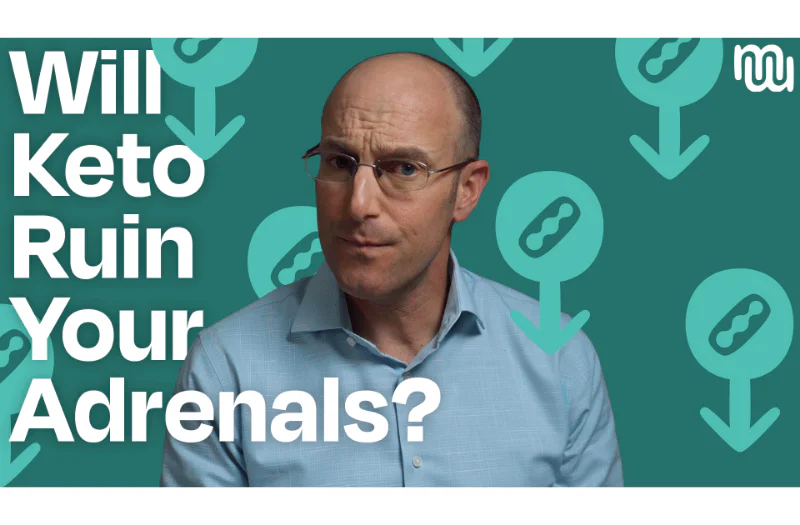
In this video, we delve into a hotly debated topic: Does a ketogenic diet impact cortisol levels and adrenal health? While some claim that sustained ketosis could lead…
Read more

How Ketosis, Metabolism, and Timing Could Shape Your Brain’s Future Right now, nearly 55 million people around the world are living with dementia. In the U.S., Alzheimer’s disease…
Learn more
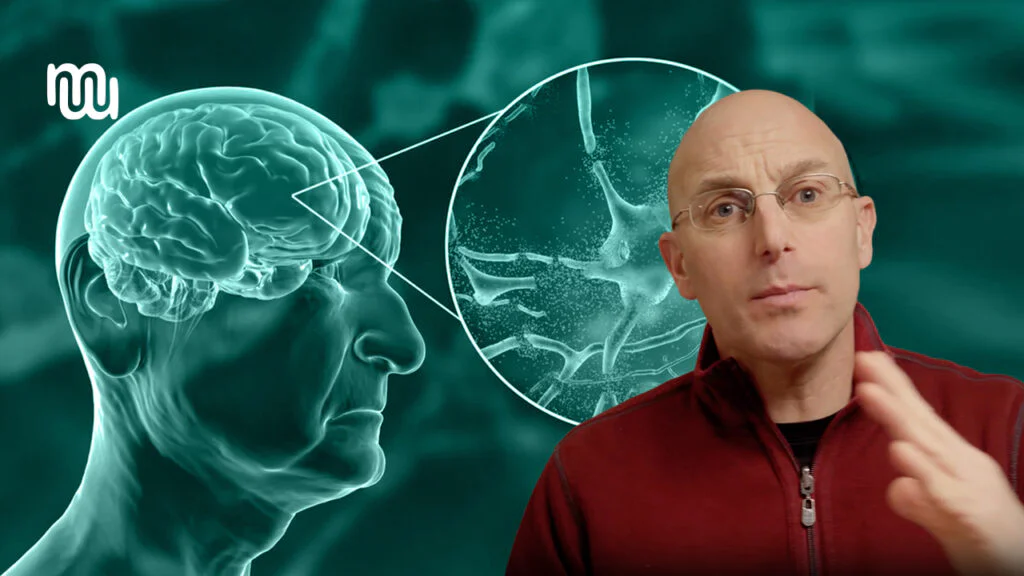
Alzheimer’s and other forms of dementia are among the most feared consequences of aging, impacting nearly 7 million adults in the U.S. today, a number expected to double…
Learn more
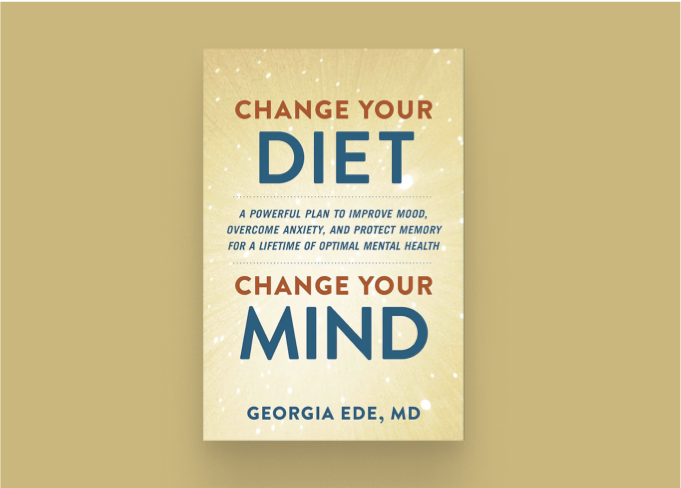
A powerful plan to improve mood, overcome anxiety, and protect memory for a lifetime of optimal mental health.
Learn more
In this video, we delve into a hotly debated topic: Does a ketogenic diet impact cortisol levels and adrenal health? While some claim that sustained ketosis could lead…
Read more
How Ketosis, Metabolism, and Timing Could Shape Your Brain’s Future Right now, nearly 55 million people around the world are living with dementia. In the U.S., Alzheimer’s disease…
Learn more
Alzheimer’s and other forms of dementia are among the most feared consequences of aging, impacting nearly 7 million adults in the U.S. today, a number expected to double…
Learn more
A powerful plan to improve mood, overcome anxiety, and protect memory for a lifetime of optimal mental health.
Learn more