Get the latest on metabolic psychiatry. Subscribe.


Listen, Watch & Subscribe on:



Study Shocks Cardiologists: LDL Didn’t Predict Plaque
Listen
About the host

About the guest


Matt:
We could not see a clean association between rising LDLs or ApoBs and more plaque progressions.
Bret:
Welcome to the Metabolic Mind Podcast. I’m your host, Dr. Bret Scher. Metabolic Mind is a nonprofit initiative of Baszucki Group where we’re providing information about the intersection of metabolic health and mental health and metabolic therapies such as nutritional ketosis as therapies for mental illness.
Thank you for joining us. Although our podcast is for informational purposes only and we aren’t giving medical advice, we hope you will learn from our content and it will help facilitate discussions with your healthcare providers to see if you could benefit from exploring the connection between metabolic and mental health.
If you’re on a keto diet and your LDL goes up, are you at definite risk of heart disease? While new research suggests probably not, and that the ketogenic diet likely does not contribute to progression of plaque within the coronary arteries or the progression of heart disease. So it’s not the keto diet, and according to this study, is not LDL.
So what is while I’m joined by Dr. Matt Budoff, the principle investigator of this study to talk about the details.
Alright, Dr. Matt Budoff, thanks for joining me again at Metabolic Mind.
Matt:
It’s a pleasure. Thanks for having me back.
Bret:
Yeah, so we had you on before to talk about the keto study and the match to the Miami heart and a lot about cholesterol and keto and heart disease. So I highly recommend people go listen and watch that episode.
But now the one year longitudinal study is published, and I’m really excited to talk about the results, talk about what they mean. Just in case this is someone’s first time watching you and listening to you, give us the real brief synopsis of who you are and why we’re talking.
Matt:
Yeah. So I’m Matt Budoff. I’m a preventive cardiologist, a professor of medicine at the David Geffen School of Medicine at UCLA, and I was the principal investigator of this trial. But I’ve done a lot of work historically with serial CT angiography and plaque changes over time.
Bret:
Yeah, and that’s, really yeah, being modest. You’re one of the most preeminent cardiovascular imaging researchers of the day and for the past couple decades, I would say. So it was wonderful that you were the principal investigator on this study. And just to bring everybody up to speed, this was the study that took a hundred people who were, fit this term of lean mass hyper-responders.
They were lean, metabolically healthy, following the ketogenic diet and had dramatically elevated LDL cholesterol. They got CT angiograms at baseline. They were followed for a year and got another CT angiogram a year later. So we’ve talked about the setup in other podcasts. We’ve talked about what this could mean, but now we have the results.
So let me turn it over to you. What were the main findings from this study?
Matt:
Yeah, I think, to some people’s surprise, we had a one, we had perfect follow up. So we started with a hundred patients in the trial. All 100 participants stayed in the study for the full year and came back at the end of one year.
So these were a hundred patients who were ketogenic for years, who had high LDLs and then remained in ketosis for the year, and then came back for a follow-up CT scan. We looked at plaque quantification. We used a Cleerly analysis to look at automated plaque assessment to get exact volumes of plaque, and we could look at the results of plaque volumes and total plaque score in the context of both ApoB, what their LDL was on average during the trial and based on their baseline plaque, or how much plaque they had in their coronary arteries.
Bret:
Yeah, so you talk about LDL and ApoB. So real quick, just to interject, some people aren’t familiar with ApoB. I guess the quick summary is it’s thought of as a better LDL.
It’s more predictive of heart disease than just LDL alone. But yet somewhat similar still to LDL in that it’s a cholesterol-based, lipoprotein-based measurement.
Matt:
Yes, and they go very parallel to each other. Just, yeah, I always tell people B is for bad particles. So ApoB is more of a how many bad lipid particles do you have floating around as compared to just what we would categorize as LDL because some may get miscategorized or not be included in that LDL value. So ApoB is thought to be a little better as far as capturing all of the atherogenic particles or the particles that promote plaque, if you will.
Bret:
So atherogenic particles, bad particles as they’re known, but yet despite that, this study didn’t show much of association or an association at all between LDL and ApoB and the amount of plaque seen in the artery. So, you mentioned previously as a surprise to some, so was that a surprise to you that there wasn’t that correlation between LDL aopB and coronary artery disease?
Matt:
I think I was a little surprised. I came at this very agnostic. I didn’t come in with any skin in the game on either side of this. Look, I was just the independent investigator who looked at the data and I thought there might be a relationship between how high the LDL goes and how much plaque progression there is over the course of a year.
But we looked at LDL, we looked at ApoB, we looked at both particles, we looked at, and we could not see a clean association between rising LDLs or ApoBs and more plaque progression. So LDL did not predict who’s going to have plaque progression, but we did find that the baseline calcium score or the baseline plaque volumes did have a big prediction in who develop more plaque.
So I think it’s a very important finding. And I think it also provides a bit of caution for those people on the ketogenic diet who have these very high LDLs that if they have underlying plaque, they are still at risk of having progression of heart disease and they need to do more about it than just remain on the ketogenic diet as their only treatment of their cardiac status.
Bret:
Yeah. And that brings up a really interesting point though. Obviously, this study was in this patient population, specifically lean metabolically healthy following the keto diet with very high LDL levels that we would only see probably in genetic mutations otherwise. But that statement you just made that if they have plaque, they need to be more cautious and take other measures. Does that apply to the general population as a whole beyond people following a keto diet, or do you think it was specific for people following a keto diet?
Matt:
No, I think it’s exactly the same as a general population.
If I find somebody who has plaque in their coronaries, I’m going to work on drugs and interventions that we know reduce plaque over time and we know the statins reduce plaque. So independent of this LDL hypothesis or this LDL discussion, statins reduce plaque in the coronaries and slow or stop atherosclerosis.
So if they’re on the ketogenic diet, and they have no plaque, they continue on the ketogenic diet. I don’t recommend any specific therapies. I personally don’t care what their LDL value is. If they have plaque in their coronaries, I want to treat them with drugs like a statin, maybe an aspirin tablet, maybe other therapies for their underlying atherosclerosis or coronary artery disease independent of their LDL value of their ketogenic diet or of their other risk factors.
Bret:
Yeah, and I think that’s an important differentiation. So if someone is on a ketogenic diet, they’re using it for as a medical intervention, seeing clinical benefits. Is there any evidence that puts them at a higher, and they have plaque, so let me clarify.
And they have plaque, is there any evidence that being in ketosis, being on a keto diet, puts them at a higher risk for plaque development in the future compared to anybody else with plaque?
Matt:
And that’s what we couldn’t show. We couldn’t show that in that exact population that just being having a elevated plaque and being ketogenic had any difference in their plaque progression or cardiovascular risk, but it also didn’t reverse the heart disease or in any significant way. So it’s not like it’s a cure for plaque in the coronaries either. I think there’s a lot of great benefits and I have a lot of patients who are on these diets who feel better, who lose weight, who have better control of their diabetes, who have better control of their bowel issues and some of their different diseases that this diet has helped them quite a bit on.
But I treat their heart disease independent of their diet.
Bret:
Yeah. Now, when we look at results, results are often presented as a mean, as an average, as a total sum. But then you can look at the individuals as well, and you can see in this study, individuals with LDL cholesterol 500, 600 with no plaque or no plaque progression.
And then, but we can also see that there were, I believe, six patients who had less plaque on follow up despite LDL levels far above 200. Was that surprising? This basically plaque regression in some individuals despite the elevated LDL.
Matt:
I think so, I think that obviously does talk about some individual variability here.
But I I think that’s really interesting to see some of these quote regressors, despite what would most people would say is, really high LDL. Or ApoB levels. I would just, again, there are also some progressors so I don’t want to sell this as a cure for heart disease, but I do think that not all patients, I think some patients, actually did benefit from a cardiovascular perspective being on even despite these high LDL values being on a ketogenic diet.
Bret:
Yeah, and that’s a great point. Someone could take that one example or those few examples of someone having plaque regression and say, see, ketosis cures heart disease. And hang on a second. We can’t overstate that and don’t want to get too aggressive. We’re really not concluding that.
Yeah.
Matt:
Now, I just don’t want people to take the wrong message that a few people regress and that’s great, but we did see some progression as well, and I think we have to individualize it. And if you are a regressor, and you’re getting better, and your coronaries are getting better, then sure you’re on the right track.
And if you’re, if you have plaque on your baselines, if you get your evaluation and you find out that you’re a person who already has athero, I would follow it. And if it’s getting worse, I would do more for it and use this as an informative process to decide, am I on the right track or do I need to do more than I’m doing already?
Bret:
Yeah. So well, so now let’s put ourselves in the shoes of the the general cardiologist, the lipidologist all over the world, where they have a patient who walks in on a ketogenic diet with LDLs and the 2, 3, 4 hundreds. And it makes them very nervous, right? Because they’re not used to necessarily seeing patients with levels this high.
Up until this point, I would say almost uniformly the reaction is stop the keto diet and start a statin or other cholesterol lowering medication. Now that this study is published, do you think that will or should change the way that the cardiologists approach these patients?
Matt:
I would hope so. Our guidelines already talk about if you have a coronary calcium score of zero that you can forego statin therapy.
These patients, theoretically, fall into that category as well. And if they don’t have plaque in their coronaries, if they’re among the patients, and remember in our trial that was not uncommon, half the patients in our study had no plaque at baseline. So it, despite LDLs that would really raise the hair on the back of some cardiologist’s neck. Their median LDL was 237, which is a big number when you think about compared to normal populations. If they have no plaque, I’m very comfortable saying they’re at no cardiovascular risk and can continue the ketogenic diet for other benefits.
And don’t, they don’t need a statin and they don’t need to change their diet. I had a patient the other day who was on the ketogenic diet. He’s felt much better. He looked much better, but he had a lot of plaque on his skin. And I said, you know what? We’re going to have to do more than just continue the diet. And say that LDL is okay because for that person, they have underlying plaque. And that could be multifactorial and have nothing to do with the KD diet, but we can’t ignore heart disease because they’re on the KD diet. It doesn’t protect them from future development of plaque. Another finding that we found in this trial, if they have plaque, they’re still at risk of developing more plaque, and we know that if they’re plaque progressing, they’re at risk of a heart attack, stroke, or cardiovascular death.
So we definitely want to treat them differently based on their score. So I get a CT angio when I see a lean mass hyper-responder to see if they’re in that group that have clean coronaries and continue on. You’re great or you have plaque, maybe from other reasons, maybe from multiple reasons you need to be on some other therapies.
Bret:
Yeah. And that’s such a great point about how to evaluate that. So you mentioned getting to CT angiogram, you mentioned also that more than half of the subjects in the study had a zero calcium score. So the calcium score, the more I guess you could say rudimentary test compared to the CT angiogram, but the CT angiogram with the Cleerly health analysis of the plaque quantification there.
It’s incredibly rare to see zero plaque because they’re looking at very different things. So tell us, do you have a threshold of plaque or how do you interpret that when you’re getting the more sensitive test that’s going to pick up the smallest amounts of plaque in the CT angiogram?
Matt:
Yeah, I’m very comfortable with a calcium score of zero, and or a CT angiogram that looks normal. So I’m not worried about finding that very small amount of noncalcified plaque or low attenuation plaque that is not visible to the naked eye that a machine theoretically can pick up.
I think if I read the study or if I have somebody I know who, if it’s read by a reasonable person or who has experience and they see there’s no plaque present, I think that’s a good place to stop. Medicare pays for these advanced plaque metrics now, but you have to have a 1 to 70% stenosis.
You can’t have normal coronaries and get that test covered by insurance. So, I think I would go along with that and say a score zero calcium score, zero no visible plaque by a human eye is a good enough metric of low risk. You’re good. You don’t need more testing.
Bret:
Now I want to talk about the paper itself. And it was published in JACC: Adavances, as was your previous paper with this cohort, with the baseline data compared to Miami Heart, and that was a pretty popular paper, wasn’t it?
Matt:
Yeah. No, I think we had a very interesting and broad viewership and a lot of response to that manuscript.
Bret:
And wasn’t it the number one read paper in JACC: Adavances for the year?
Matt:
Yeah, and my, they taped my presentation. I presented the initial data at what’s called the World Congress of Insulin Resistance and Cardiovascular Disease.
It’s a local meeting here in Los Angeles, and I gave the presentation, and it was filmed. That YouTube video hit over a million views, where I probably have hit maybe a hundred views on any other video I’ve ever made. Very broad interest, let’s say.
Bret:
Yeah, so interest among the everyday person, the lay community, but also reading the journal article in JACC: Adavances, which is going to be mostly clinicians.
So really strong interest from both sides. Yet there’s still been some resistance and pushback about publishing this type of research in higher tier journals or presenting it in major conferences. And tell us about your feelings about that sort of pushback or resistance that you’ve encountered.
Matt:
Yeah. I think there’s good science and there’s not good science. And when you have good science, even if it doesn’t show what your own predisposition may be or what your own preconceptions may be, I think you should publish that work and let the work stand for itself and the science stand for itself.
And I think we did get some pushback. It wasn’t this meeting. The data wasn’t accepted at the American Heart Association as a late breaking clinical trial, but they did publish a single, an abstract with an N of one showing that somebody on the ketogenic diet who had high LDL got worse.
So they published a single case report but wouldn’t publish a hundred person randomized trial or a hundred person prospective trial. I think the science is good. It was independently evaluated in a blinded manner, not only by my lab, but by the Cleerly people. They were completely blinded to intervention, and they reported the data.
So I think we have excellent science here, and if it doesn’t agree with all of your sensibilities, then we can do more studies and we can continue to see and see if we could replicate this and show it in a larger scale. But, I think you have to accept it as a good scientific study.
Bret:
Yeah, stated as a true scientist, I really appreciate that. And I think you could say it’s dramatic findings to say, look, the ketogenic diet, certainly there’s no evidence that it’s worsening heart disease. And LDL is not the predictor of heart disease, but having plaque by any means is the predictor of future plaque and should be addressed as such regardless of the diet that you were on basically. So I think it’s dramatic findings. I hope it changes the way a lot of people think. And I’m, from what I hear, there are future studies in the works as well to expand upon this and repeat it.
I wish you luck with those studies and I thank you for coming on and I really appreciate your time.
Matt:
All. It’s a pleasure. Thank you for having me again, and I look forward to further discussions.
Bret:
I want to take a brief moment to let our practitioners know about a couple of fantastic free CME courses developed in partnership with Baszucki Group, by Dr. Georgia Ede and Dr. Chris Palmer. Both of these free CME sessions provide excellent insight on incorporating metabolic therapies for mental illness into your practice. They’re approved for a MA category one credits, CNE nursing credit hours, and continuing education credits for psychologists, and they’re completely free of charge on mycme.com.
There’s a link in the description. I highly recommend you check them both out. Thanks for listening to the Metabolic Mind Podcast. If you found this episode helpful, please leave a rating and comment as we’d love to hear from you. And please click the subscribe button so you won’t miss any of our future episodes.
And you can see full video episodes on our YouTube page at Metabolic Mind. Lastly, if you know someone who may benefit from this information, please share it as our goal is to spread this information to help as many people as possible. Thanks again for listening, and we’ll see you here next time at The Metabolic Mind Podcast.
Listen, Watch & Subscribe on:


Is high LDL cholesterol always a red flag for heart disease? New research says… maybe not. Transcript: Keto is bad for the heart, right? Well, new research suggests…
Read more
A cautious, and nuanced editorial about elevated LDL cholesterol while on a keto diet. Read more here!
Learn more

Visit Dr. Georgia Ede's website to help you discover the powerful connection between your psychiatric or medical diagnosis and your diet.
Learn more
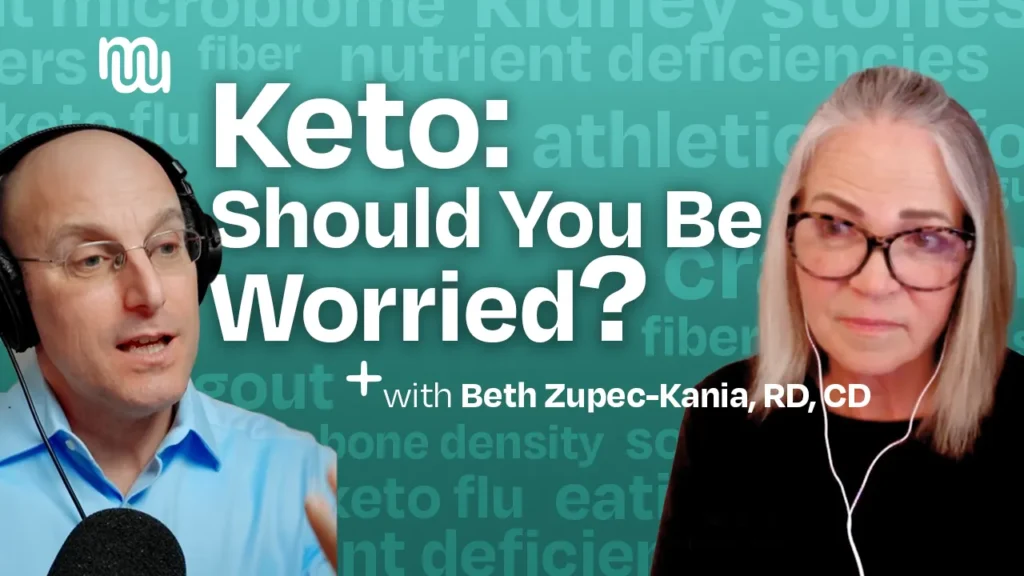
Are ketogenic diets dangerous? What about nutrient deficiencies, gout, gut health, keto rash, bone density loss, or kidney stones? In this video, registered dietitian and ketogenic therapy expert Beth Zupec-Kania, RDN, CD, shares insights from over 30 years of clinical experience to address the most common concerns and misconceptions about ketogenic therapies.
Learn more
Is high LDL cholesterol always a red flag for heart disease? New research says… maybe not. Transcript: Keto is bad for the heart, right? Well, new research suggests…
Read more
A cautious, and nuanced editorial about elevated LDL cholesterol while on a keto diet. Read more here!
Learn more
Visit Dr. Georgia Ede's website to help you discover the powerful connection between your psychiatric or medical diagnosis and your diet.
Learn more
Are ketogenic diets dangerous? What about nutrient deficiencies, gout, gut health, keto rash, bone density loss, or kidney stones? In this video, registered dietitian and ketogenic therapy expert Beth Zupec-Kania, RDN, CD, shares insights from over 30 years of clinical experience to address the most common concerns and misconceptions about ketogenic therapies.
Learn more