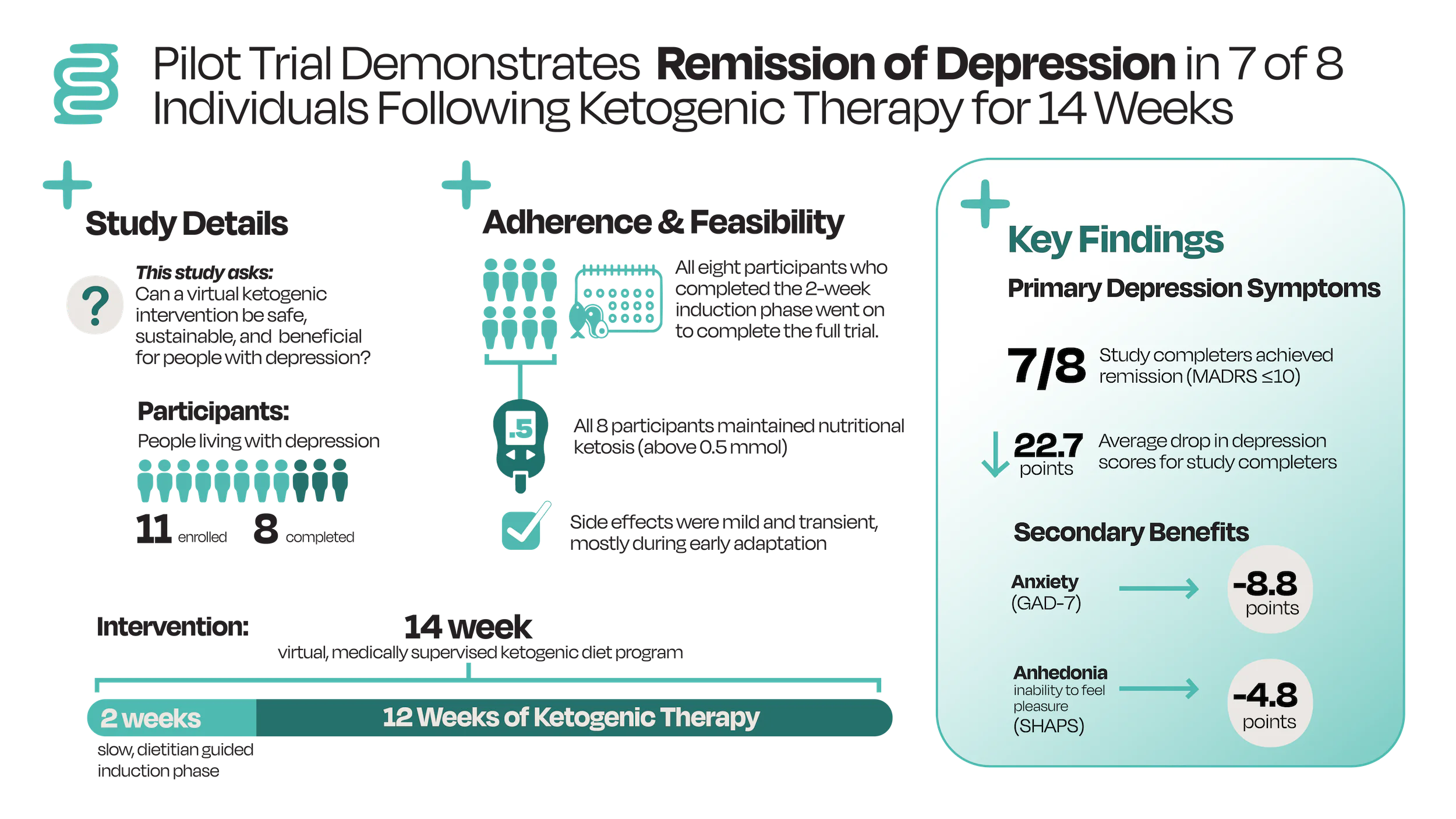
This peer-reviewed pilot trial, published in the Journal of Affective Disorders, tested a 14-week ketogenic diet intervention delivered fully virtually to adults living with moderate to severe depression. Participants received individualized support from a registered dietitian, including a 2-week gradual, stepwise induction protocol followed by 12 weeks focused on maintaining ketosis. Diets were individualized to cultural preferences and financial realities, increasing accessibility and adherence.
Of the 11 individuals who began the study, 8 entered and completed the full 12-week maintenance phase. Seven of the eight participants (87.5%) achieved clinical remission, with an average 23-point reduction on a validated depression scale (MADRS).
Of note, 100% of participants who entered the maintenance phase completed the trial. The three non-completers left the trial during the initial two-week induction phase, suggesting that once participants were in a stable state of ketosis, they were motivated to complete the trial.
Participants also showed improvements in anxiety and anhedonia (difficulty experiencing pleasure), with an average reduction of 8.8 points on the GAD-7 anxiety scale and 4.8 points on the SHAPS anhedonia scale. Side effects were generally mild and limited to the early 2-week induction phase of the intervention, and no serious adverse events occurred.
This study is one of the first to demonstrate that a medically supervised ketogenic diet can be safely and effectively implemented in a remote outpatient setting for people living with depression. The results highlight the benefits of a slow introduction to the diet, the importance of consistent diet support, and the need for further investigation through larger, randomized controlled trials.