New Results: First RCT for Schizophrenia & Bipolar Disorder. Learn more.


Listen, Watch & Subscribe on:



Why Setbacks Can Happen with Ketogenic Therapy for Mental Illness — and How to Respond
Listen
About the host
About the guest
About the guest

About the guest

About the host
About the guest
About the guest
About the guest

Matthew:
It takes a lot of discipline to watch for the carbs and keep this up day after day, week after week.
Lauren:
But I think it was actually ended up being a really good reminder of why it’s so important to remain so diligent and strict really with this as a medical intervention.
Bret:
Welcome to the Metabolic Mind Podcast. I’m your host, Dr. Brett Scher. Metabolic Mind is a nonprofit initiative of Baszucki Group where we’re providing information about the intersection of metabolic health and mental health and metabolic therapies, such as nutritional ketosis as therapies for mental illness.
Thank you for joining us. Although our podcast is for informational purposes only and we aren’t giving medical advice, we hope you will learn from our content and it will help facilitate discussions with your healthcare providers to see if you could benefit from exploring the connection between metabolic and mental health.
Here at Metabolic Mind, we share a lot of stories of people who have transformed their lives and put their psychiatric diagnosis into remission with ketogenic therapies, and they found a treatment success that they couldn’t find with any other treatment. And they’re amazing stories, but it’s not always so clean.
And so, we want to recognize that everybody has their own journey, and people have challenges. People have frustrations. So, I’m joined today with Dr. Georgia Ede, and together, we’re going to have a wonderful discussion with Matthew Baszucki and Lauren Kennedy West, who each have had their own experiences. And they come on our channel today to share their challenges, and how they’ve confronted their challenges.
So, if you are using ketogenic and metabolic therapies or you’re considering doing it, I think this is a really, a really helpful episode to learn the human side of things, right? It’s not all as it’s portrayed on social media. It’s not all perfect, but it’s worth doing for so many people.
And I think that’s the underlying theme that even with the challenges, even with it not being such a straight line, it’s worth doing. Because at the end, you can see some significant benefit. So, please enjoy this interview with myself, Dr. Georgie Ede, Matthew Baszucki, and Lauren Kennedy West.
Many of the interventions we discussed can have potentially dangerous effects have done without proper supervision. Consult your healthcare provider before changing your lifestyle or medications. In addition, it’s important to note that people may respond differently to ketosis, and there isn’t one recognized universal risk.
All right. Welcome back to Metabolic Mind. We have a very special episode today where we’re joined by Matthew Baszucki and Lauren Kennedy West to talk about metabolic and ketogenic therapies, and how it’s not always roses, so to speak. It’s not always a complete straight line, and that there are lots of challenges that people can come across.
So, what those challenges may be, and how to overcome them. So, Georgia, first thanks for joining me again for this. And you’ve been treating people with ketogenic and metabolic therapies for years, decade. How do you see a lot of your patients’ course in terms of their progress and setbacks and so forth?
Georgia:
Yeah, it rarely is a straight line. And there are challenges, and it takes quite a bit of practice for a lot of people in the beginning, and it needs to be personalized. So, it takes people a while to find their rhythm, to find their so find the way of eating and exercising and sleeping the patterns that they need to follow in order to feel like they’ve got it down. And that they can, in many cases, stop testing as frequently and more trust their instincts about how to follow this lifestyle.
Bret:
Yeah, and I guess I should preface this by saying, actually, this episode came about because we have gotten feedback that we share so many amazing stories of people transforming their lives and putting their psychiatric disorder into remission. And we share so many amazing stories. And we don’t want to give the impression that it’s all easy and everybody succeeds all the time. So, it is important to talk about the reality of it.
Matthew Baszucki, thank you for joining, and let’s start with you. And give us just the brief background of who you are, and then, which I’m sure everybody knows, but just in case, and then, tell us what your biggest challenge has been in your journey for ketogenic and metabolic therapies.
Matthew:
Thanks, Bret. My name’s Matthew Baszucki. Hey, everyone. I’m 29. I started a ketogenic diet almost five years ago now in the beginning of 2021, which is crazy. The biggest challenge for me, aside from coming off medication, which is a really hard thing to do, and I was taking off one of my meds too quickly, and I suffered a protracted withdrawal injury.
But besides that, which has been very challenging, keeping my ketones up has been the hardest thing consistently, and it takes a lot of discipline I’ve found because carbohydrates are very sneaky, and they will sneak into many different kinds of foods. And just other things that affect my ketone levels to my stress.
I’ve noticed that when I have stress or protracted withdrawal injuries or just many other things that drop my ketone levels, my ketones levels are not directly related to what I eat only. There are other things, exercise, stress, sleep, that contribute to whether they’re high or not. So, just keeping them up has been a challenge, and I’ve experimented with many things recently. Carnivore diet the last few weeks.
Eating twice a day has been really helpful. And so, for people who are struggling, it takes a lot of discipline to watch the for the carbs and keep this up day after day, week after week. But it is work worth it. And with a lot of practice and time, it becomes easier to identify. My body responds this way to a certain food or a certain situation because everyone’s different, and everyone’s body bodies do respond differently to different diets, different lifestyles, et cetera.
Bret:
Yeah. So, thank you for sharing that. And let me ask you, have you noticed that as your ketones go up and down, it affects your mood or it affects directly how you feel?
Matthew:
I think it affects my cognition, for sure. My ability to think clearly, but I’ve also noticed periods when my ketones have been at 0.4, 0.5, and I felt very good.
So, I think for me, the most important thing is to keep them high as much as possible. Not slip out of ketosis for an extended period of time. That’s what I try to avoid more than anything. Because I found that if I drift out of ketosis for more than a couple weeks and the ketones are low and then I come back in the ketosis, that’s when I can have some mood instability when I’m re-entering ketosis that second time.
I try to keep them up as much as possible, as much as I can by doing low-carb, recently carnivore, fewer meals a day and physical exercise and eating a lot of fat. If I drift down to a little bit lower, it’s not the end of the world for me, personally. That’s not the case for everyone.
Everyone is different. Some people will have psychiatric symptoms re-emerge as soon as the ketones drop. For me, that’s not the case, but I do check up on my CKM to make sure I’m spending as much time in the 1.5 to 2.5 millimolar range, which seems to be where I’m at my best, as much time in that range as possible.
And then, just make sure I’m in that range at least once a day minimum to make sure that I don’t run into that situation where I’m out of ketosis for too long.
Bret:
Yeah, the benefit of a CKM, so maybe we’ll dig into that a little bit later. But this is a perfect start. So, let me jump to you, Lauren, and then, Georgia. I’ll have you weigh-in and talk about how you handle this as a clinician.
Because Lauren, you’re, obviously, very open about your experience on your YouTube channel, and you’ve talked about your ketone levels as well. So, give us your brief intro. And then, tell us about your experience with variable ketone levels, and, how that’s affects you maybe similarly or differently to Matthew.
Lauren:
Sure. So yeah, my name is Lauren. I’m 34 years old and have been sharing about my experience navigating schizoaffective disorder on my YouTube channel for about seven years now. Started using ketogenic therapy at the end of 2023. So, for about two years now. And similar experiences as what Matthew was describing about ketone levels where I can go through periods where I have lower ketone levels, and I’m okay.
I still feel great, but if it’s for any prolonged amount of time, I do start to notice more challenges, particularly around cognitive functioning, and clarity and whatnot, too. But it’s changed a lot throughout the course of using ketogenic therapy. So, in the beginning, I like needed to be at least above three millimoles per liter of ketone levels.
Otherwise, I just wasn’t feeling great. That was where I was feeling my best. But then, it shifted to generally lower ketone levels, which felt okay. And so, it’s definitely a ongoing process of checking in and building insight as to what’s feeling good at what time and adjusting course, as needed, in that regard.
Bret:
Yeah, so Georgia, and my guess is it’s not the first time you’ve heard experiences like this. You probably hear them all the time. So, how do you help someone navigate this type of experience with variable ketone levels? And even not just at different times of the day, but at different times in your course of your, of starting ketogenic therapy that it may be different how it impacts you?
So, how do you help your clients with this?
Georgia:
Really, it’s about supporting them in the process of self-discovery and figuring out what works best for them. And trying to support them as they are learning what their personal therapeutic range is, if they happen to have one. So, there are some people who need you.
You heard really beautifully described how people can feel perfectly well at various different ketone levels depending on how long they, but if they fall out of ketosis for too long, that’s often when you start to see the problem. So, we don’t even have enough research yet to understand what percentage of time people need to be quote in ketosis in order to get the maximum benefits for mental health, or even what the ideal therapeutic range is.
But in clinical experience, it really does seem to be, there does seem to be, a correlation for many people between how consistently the ketone levels are, say, at least maybe above, say 1.0, somewhere between 1.0 and 3.0. Some people feel better if they’re even higher. Some people don’t. It doesn’t really matter where the ketone levels are, as long as they’re not out of ketosis.
And so. People are, people respond differently to different, to these metabolic shifts. The point, the main point is, that metabolism is dynamic. And so, ketones are not going to be steady. They’re going to go up and down, and there’s nothing wrong with that.
And so, it’s normal for them to drop after exercise. It’s normal for them to drop overnight. It’s normal for them to drop after certain types of meals, under stress, that sort of thing. So, it’s not about having them be in a perfectly consistent range all the time. It’s about doing the best you can.
Getting your ketone levels into a range that works well for you and keeping them there as much of the time as you can. And not worrying about the blips. And that, I think, that is something that, especially people who tend to be anxious or maybe more obsessive about things or can worry too much about that.
And really, it’s about the big picture.
Bret:
So, Lauren, we had you start talking about ketones right away, but I didn’t get to ask you what’s your number one challenge that you’ve experienced?
Lauren:
Oh, you know what? There was a lot of unanticipated challenges that came about with this whole process of using ketogenic and metabolic therapies.
I think in the beginning, the main one that really came up that was unanticipated was around medications. And Matthew touched on this, too, the difficulties around tapering. And I wasn’t going to adjust my medications at all to begin with. I wanted to really make sure I knew how this was going to affect me before I even thought about making any adjustments in that regard.
Things that I didn’t even know about, like potentiation, where I started to be overmedicated and had to take action around that came about. And navigating not only the difficult challenges that come with tapering, in terms of withdrawal symptoms and whatnot, but also navigating a kind of general lack of information about deprescribing.
Deprescribing isn’t even a word technically. It is always a red squiggly lying under it, and that’s been, that was a really difficult thing to try to figure out how to navigate, especially because it just involved so much self-research and self-advocacy to know how to do it in a healthy or safe way.
So, that was a big challenge to begin with.
Bret:
Yeah. And just looking at my screen and seeing the three of you, I’m thinking these are probably three of the three people, who are on the cutting edge on the information of tapering and deprescribing when it comes to ketogenic therapy for mental illness because, Lauren and Matthew, you both shared your experiences. And Georgia, you’ve been treating people with this for so long.
So, Matthew, it sounds like you had similar experience and was it, would you describe it the same as sort of potentiation leading to wanting to taper, but then not having maybe the right resources or tell us about that?
Matthew:
Yeah, my tapering journey has been interesting. A lack of resources, for sure, and lack of knowledge about polypharmacy and just a lot of variables interacting with each other in interesting ways. All of these things that affect metabolism, not only different medications interacting with each other.
So, I’ve been on antipsychotics, mood stabilizers, benzos, all of these. But then, doing the keto on top of that and having caffeine, which I’ve had to cut out, and different types of exercise and sleep hygiene and time changes from traveling. So, there are many different variables affecting, that have affected, my type metabolism as I’ve been doing this taper.
So, I’ve been trying to keep everything as consistent and steady as possible, but it still hasn’t been easy. And one of the things I’ve noticed coming off these meds, even with keto, is that my mood is not completely 100% stable all the time. Eat just because I’ve been doing a ketogenic diet. So in March, for example, when a lot of people have manic episodes because the days are becoming longer, very rapidly.
At the times when I’ve been coming off antipsychotic medication in March, specifically coming down on Olanzapine in March, I’ve still had to be cautious and cognizant and watch my mood even though I was on a ketogenic diet because coming off the meds, I had tiny manic responses that were hardly noticeable actually to anyone but myself. But it did impact me, and I noticed I would get revved up for a couple days, maybe take a tiny little bit of extra medication.
So, the journey of watching my illness and watching for hypomania has not ended just because I’ve been on a ketogenic diet for almost five years. I’m still very careful to watch my sleep, to make sure I’m sleeping well, to make sure I’m watching out for all of the normal symptoms of hypomania. Excessive spending, pressured speech and all that, like the laundry list of things that I became intimately familiar with before I was on a ketogenic diet.
So yeah, so just because I’ve been doing it, things are incredible now. I hardly ever have these blips. If I do, it’s a tiny blip for a couple days, and it resolves itself. But I still do have to watch for that stuff.
Bret:
And, Georgia, it sounds like, we’ve had these discussions about the risk of hypomania and about being aware of that. How do you counsel your patients to handle it when, if, and when it happens?
Georgia:
As Matthew was just touching on, there are many different factors that can, it can destabilize somebody. And this can include stress, it can include certain medications, especially if somebody is using, for example, prednisone, another steroid medication that can be very destabilizing for people.
Illness, injury, sleep issues, traveling, especially traveling across time zones. And then, any kind of medical setback and illness and injury, being in the hospital, being on vacation, on holidays. There are many different things that can affect our mental health that have nothing to do with whether or not you’re following a ketogenic diet.
So, you’re following ketogenic diet. There are all still many other variables in life that can come along, and if you’re still, if you still have some vulnerability to, for example, hypomania, you may feel a little bit. A little higher energy during those states, but people who are really paying attention, people who use metabolic therapies for mental health reasons become really good at tuning in to their bodies and their minds.
And they can, they’re so perceptive, and they’re they’re really much more in touch with themselves because they’re not, in many cases, using medications to tamp down symptoms. They’re using their senses to monitor themselves and they’re extremely vigilant and careful and really don’t want to go back to how things were before. And if you can notice these things early. If you’re aware of them, then you can course correct.
Sometimes, you need to experiment with different things, but oftentimes, you’ll know the kinds of things that you need to tighten up or that you need to be more careful with when you’re in those more vulnerable positions.
Bret:
That’s great. And so, Lauren and Matthew, actually, I want to ask you both how you address these setbacks though, or these changes, because there, I could see how you’d be like, oh, I got this.
I’m feeling so good. Everything’s fine, and everything’s great. And then, all of a sudden, you start to feel a little hypomanic or all of a sudden maybe you start to hear, you start to feel a little bit of the psychosis creeping back in or something that you’ve experienced before. And you could be like, ah, here, I thought I had it kicked, and it’s coming back.
This is terrible. Or do you approach it in different ways? And maybe how has that changed from the beginning of your journey to now? So, whole bunch of questions in there. But Lauren, why don’t we start with you and then we’ll jump to Matthew?
Lauren:
Sure, I think it’s been a really interesting journey of like what Georgia was just describing about getting really acquainted with what affects me and how to navigate that and mitigate that.
And I think that, actually just recently, this summer. So, I had been about year and a half into using ketogenic therapy and in a sense kind of forgot why I needed to be so diligent about this because I just wasn’t experiencing symptoms, and I wasn’t experiencing my illness in the way that it had impacted me so profoundly for a decade.
And so, I got a little bit more complacent with taking my supplements. Started to think, maybe I just don’t need them anymore? I’m still doing keto, and I’m still doing the metabolic therapies. And maybe I can loosen the reins a little bit? And it was okay for a while.
A couple months later, I did start to experience those kind of, they weren’t the same symptoms as what I experienced pre-ketogenic and metabolic therapies, but they were definitely similar. And I started to get worried like, oh no, it’s not working anymore or I’m going to have to go back to medications or it’s just not working.
But I think it was actually ended up being a really good reminder of why it’s so important to remain so diligent and strict really with this as a medical intervention. And so I, got back on supplements. I got leveled out on that approach. I stabilized again. And so, it actually ended up being a good reminder about that.
And yeah, I think I just, it’s been two years of really coming to understand what type of stability I need to create in my life and in my environment in order to be able to thrive, especially being off of medications for the last year. It’s been particularly important to create an environment for myself that does foster stability.
Bret:
Yes. So Matthew, when you experience setbacks, has your mindset around the setbacks changed from the beginning of your keto journey to now?
Matthew:
I think maybe a little bit. I’ve seen a lot of evidence of how while this works. So, I try to evaluate the whole recovery, and I try not to become too disheartened from the setbacks. Because just because I have a small setback, and they’re small these days, overall, things are incredible.
Being able to keep up at work and have a relationship in my own place and mood stability and just things that people would kill for. Like people who are suffering in the middle of these serious psychiatric illnesses would do anything to have the recovery I have.
And the only reason I have it is because we found metabolic therapies, ketogenic diet. That’s the only reason I’m here. Things before we were, we thought we were doing everything right. I was very sick. All this life I have now is completely off the table. But over time, Bret, just watching how good things have gotten and how much better I’ve become.
And it just, as a person and having a really fulfilling life, in general, when there’s a small setback, be it a small, tiny bit of mood stuff. And I have to take a little bit of extra antipsychotic medication or I have a protracted withdrawal injury, and I have a tough day from that, and things are difficult from that.
If I look at the whole, the like grand scheme of my life, things are overall amazing, and I have a very fulfilling life. Far more fulfilling than many people who have perfect mental health, just because I place a lot of emphasis on existential purpose and faith and relationships and physical health, right?
These things that are like hugely important and that maybe we should talk about more because they’ve been as essential for me as the metabolic stuff. So, just in terms of the whole picture of my life, even if I have a setback, things are overall really good. So, I try not to worry about it too much.
Bret:
Yeah. So I’m glad you mentioned the physical health.. And you mentioned a lot there that’s super important. But I want to dial in on the physical health a little bit because you know when you’re really sick and you’re in and out of treatment centers and hospitals. And you’re not feeling well, exercise and physical health is probably the last thing from your mind.
But when you’re feeling better, now all of a sudden, you have the opportunity to engage in exercise and physical health. And I know both of you have been very active. So, Matthew, let’s start with you because I know there was a journey where you were increasing your protein and lifting heavy.
And getting more physically active and that had some impact. So, I want to hear about that journey. And then, Lauren, we’ll hear about your triathlons and your running and how that impacted you. So, let’s talk more about the exercise and physical health part.
Matthew:
Yeah, it’s just been an amazing journey.
I did water polo in high school. I’ve been lifting weights for a long time. I started to take it really seriously when I first went on keto and was lifting heavy, and then took a break from lifting super heavy for a period of time. But I’ve just done many things. The two things that I’ve kept consistently in my routine have been hard cardiovascular exercise on a regular basis, at least a few times a week, and lifting weights a few times a week.
So, the cardio has been either swimming or elliptical or running or Peloton cycling. I love the Nordic workouts with four minutes of all out hard cardio followed by three minutes rest on about five repetitions of that. I love the StairMaster. I love StairMaster with the weight vest. I love hard hikes with the weight vest. Skiing, just like hardcore physical exercise.
Bret:
Wow, you’ve got a lot going it up.
There’s a lot of activity you’re doing. But sorry to interrupt, but did you, one thing I’m really curious about though, like when you were lifting heavy or eating more protein or doing something, did you notice any challenges or difficulties with that or how it impacted your mood or anything?
Matthew:
No, I think the one thing to note is that you, people, can gain strength and mass on a keto diet. Just get adapted first. So, getting adapted to the diet, then that’s when the physical exercise becomes a joy.
Bret:
That’s great. That’s great. And how about you, Lauren, with the triathlons and the distance running? Did you, tell us about first being able to experience the joy from it, but also did you experience any setbacks or impacts with your mood with that degree of physical activity?
Lauren:
So, I’ve always been very active, even before using the ketogenic diet. And so, perhaps, that was like inadvertent metabolic therapy that I was already engaging?
Because I knew it helped me. I just didn’t maybe understand the science of why it was helping me. So, it just continued that throughout my ketogenic and metabolic therapies journey. I think though that something that was difficult was actually maintaining like the same level of performance around endurance sport on keto.
And that’s something that I still haven’t really been able to dial in, yet. But I was waiting to be super stable on it before I started tweaking things around that. But that is something that I was a little bit upset about for a while, but really it’s like not a bad trade-off at all to be super stable and not experiencing my mental illness and to just run a little slower, and that’s okay.
But I, actually, broke my foot about a year ago and wasn’t able to do running and biking and whatever. All this other stuff that I was doing on a regular basis, and that definitely did have a marked impact on my mood and my mental health and whatnot. So, even with that, still really made an effort to prioritize different kinds of movements.
So, I’d be sitting, pulling ropes at the gym or doing upper body stuff or whatever. Finding a way to still get that movement in because I really did learn how important it was.
Georgia:
For a lot of people listening, who are skeptical about, not just that ketogenic therapies can be useful even in very serious mental illnesses, but also, and a very common criticism often is, it’s very difficult, and it’s really difficult to sustain.
And so, it may not be as, may not be as effective as medication but also as very difficult. And so, why would you want to put yourself through that? And so, I would really, I would really love to hear from both of you how the challenges because there are challenges in maintaining in eating this way.
There are challenges in living this kind of lifestyle. You can’t eat whatever you want. You do have to, you do have to be more diligent, and vigilant as you were both saying, about how you take care of yourselves and how you live your life. So, how would you compare the challenges of living this lifestyle to the standard, the conventional way of trying to manage mental health issues, medications, psychotherapy, et cetera?
Lauren:
It’s a great question. An interesting part of my experience of navigating this has been sharing it publicly and getting a lot of feedback in return. And I think that is maybe not a personal setback, but like a challenge that is very much worth addressing in terms of, I had a tremendous amount of privilege in my experience of navigating this as a therapeutic intervention.
It was literally my job to commit every day to making these decisions, to making these lifestyle changes, and that was my job. That was what I had to do day in and day out, and share about it and talk about it. But you’re right. It is very difficult. It is time consuming. It is resource-intensive in terms of staying on top of getting the right nutrition and the tools that you may need. And just, the time and energy that it takes to commit to staying on top of this is quite intensive.
And it’s harder for people whose job it is not to do this. They have other things going on, work, family, et cetera. It’s a really hard thing. And I need to take that into consideration with my answer. But for me, this approach has just given me way more of a sense of autonomy and ownership over my own health and well-being. And I always felt this gets talked about a lot that in the current mental healthcare system, there is such a dichotomy of power and just a huge power imbalance where the patient is often just looking to the prescriber or clinician for guidance or you know what to do.
And this kind of flipped that on its head and really empowered me to take a really good look at my own health and my own goals and what I wanted for my life and what it means to me to work toward a place of thriving. And that, in and of itself, was like a huge leap, powerful component of this alternative approach as opposed to traditional psychiatry models.
Georgia:
Right? So, you can take pride of ownership of your mental health, if you will, because nobody can do that for you. And in your case, and I think a lot of cases, and I’ve watched some of your videos on your YouTube channel, which have been really important for helping other people understand what this can look like over time.
I think you may not always get support from the clinicians that you’re working with. You may, in many cases, have more information, knowledge about these interventions than they do. And that can be a lonely and frustrating feeling, too, I imagine. But yeah, it’s pride of ownership.
As a psychiatrist, I can’t change your diet for you. I can’t change your lifestyle. I can’t do any of those things for you. You have to do those things for yourself. And then, but then, you own it. And that’s very different than the conventional care. Thanks. Thanks, by the way, very much for your channel.
And thank you, too, Matthew, for your channel, because both of you have been really instrumental in inspiring other people and showing people what’s possible. And so for Matthew, what is it? What is it like for you? I know that you still do take some medication, but you take so much less than you used to.
What has it been like for you to use, to use these very challenging therapies compared to the way things were for you several years back where you were using higher doses of medication and more in conventional care and hospitalization and other kinds of therapies? Is it worth it to you to live this way?
Matthew:
Of course, it’s worth it. The one thing I will say about conventional care is that conventional psychiatric care completely failed me abysmally. Our family had the resources to talk to every, the best psychiatrist in the country, the best treatment centers in the country. We did exactly what they suggested, and I did not recover.
And I think that’s the case for many people, who go into this system, and it like literally doesn’t help them. It does not help them get well. And a ketogenic diet, when I went on that, when I went on that diet, within three months, I said to my mom, this is unbelievable. I can’t even believe it.
I am not having hypomanic episodes for the first time in many years. So, the payoff of doing these therapies, and it’s not easy. It’s not easy to want to have to eat this way when it’s suddenly becomes clear, like when I went on this diet, just how rampant the carbohydrates are everywhere. And how much people enjoy partaking in food, and the discussions about food.
And I like this food. And have you tried this place? Especially because I quit drinking around the same time. I felt left out of a lot of the culture, a lot of the discussions. And that wasn’t easy for a couple years. It took me a couple years before I really felt grounded in the keto diet, and I didn’t feel the FOMO.
When other people were participating in eating these foods, you go over someone’s house and their mom cooks some amazing dish. And it’s no, I can’t eat that. That’s not a fun experience for anyone. But the rewards for me, personally, have been so unbelievable that, of course, it’s worth it just to have the mood stability.
And for people who are on the fence about this, about trying something like this, especially where traditional psychiatric cares maybe failed you or not giving you the recovery. This could be something to try. And then, of course, like the tandem approach of doing keto with having some medication that can also work for a lot of people.
Bret:
Do you ever wake up though and you’re like, ugh, I don’t want cheesy eggs and avocado? I don want pancakes. Man, I want a big bowl of cereal. Do you get those cravings or at this point, are you, no? You’re at the point where it doesn’t even enter your mind.
Matthew:
I don’t think so, Brett. I look at that.
I think we’re going to have a spiritual awakening as a culture and start to think about these foods like we think about cigarettes. Like we started to think about cigarettes in the nineties when cigarette use declined. So, I think it’s very normalized to give a 6-year-old donuts, pancakes in the morning with orange juice.
I think we’re going to look back in 30 years, and we’re going to say, what the hell were we thinking? That’s crazy. And I think that will become the commonplace opinion. So, I just think of myself as a ahead of the curve, hopefully, a little bit.
Bret:
I like that perspective.
Matthew:
And all of us who are in the metabolic health space, right, who care about this.
Georgia:
If you didn’t have a mental health diagnosis that you needed to address with this diet, would you continue to eat this way?
Matthew:
Totally, a hundred percent. I would not change a thing. I would continue to eat carnivore. Carnivore, just has been incredible for the last few weeks. Just feeling so much better with my mental clarity and my mood, et cetera.
Georgia:
I would love to come back to that in two seconds because I have a question about that. But, Lauren, I was just curious. If you didn’t have to eat this way, would you stop? Would you go back to eating the old way?
Lauren:
I don’t think I would go back to eating the old way.
It’s been interesting because my husband, Rob, started this process with me, and he does not have a diagnosed mental illness. And over the last year, actually, like after about a year and a half has passed, he experimented with reintegrating some carbs. Definitely not like sugar or refined carbs or whatever.
Implementing lentils or rice or more vegetables and fruit and stuff. And I think maybe that is where I would go, perhaps, if I didn’t need to be so diligent about this. But I think, yeah, I have along the lines of what Matthew was describing, become a little bit in shock about what is socially acceptable and normal within our culture and society to eat.
And I have three kids, and I feel not good sometimes about some of the stuff that they eat just because it is a part of our culture and society. And yeah, it’s tough trying to shift this while still wanting to be a part of our social circles and whatnot.
And yeah, it’s hard.
Georgia:
And that, I was curious, you said that, you recently changed to a carnivore diet, experimenting with carnivore diet.
Can you say more about the differences you’ve noticed between eating that way versus how you were eating before?
Matthew:
So far, just seems like easier to manage my protracted withdrawal injury. It’s still there, but I’m able to manage it more easily when it comes on. So, I wonder if, for some people even, eating some vegetables could have some inflammatory stuff going for them?
I don’t know. But this just speaks to, so it’s been useful for me so far, and I’m curious to see what happens as I continue. I haven’t been a hundred percent strict. So, I still had some spices and a couple sauces that might have had olive oil or something like that.
But I’ve tended towards the carnivore direction over the last few weeks and felt better. But it’s just really It speaks to the fact that there is no one-size-fits-all solution, and we just don’t know yet. And so it’s up to individuals patients to experiment and figure out what works. And I’ve been really trying to listen to my body and get, just like you mentioned before, Georgia, like this in touch with how I feel when I do certain things.
When I eat a certain way or exercise a certain way or when I have my medications a certain way, and ultimately, trusting myself rather than some psychiatrist telling me, you’re having this, you’re having that. I intuitively think I know at this point whether I’m having a small blip of hypomania or it’s just a little irritability.
So, just spending a lot of time learning about myself has been a journey of many years, but something that I would encourage other people to take on this journey and do that because that’s where the experience and the education, and you’ll really be able to figure out, what works for yourself.
Bret:
Let’s talk about stigma for a minute because there’s, obviously, there’s a lot of discretion about stigma and mental illness. But what about stigma and just the way you eat, right? Have you gone from being the guy with bipolar to now the guy who eats totally weird?
Or the same for you, Lauren. Like when you meet somebody new, and you’re out to eat and you eat in a certain way and they’re curious, like, how do you explain that? Or how do you feel about needing to explain that?
So yeah, Lauren, let’s start with you, and then we’ll go to Matthew.
Lauren:
I’ve always been uncomfortable with my illness or whatever coming out in my daily interactions. I’ve never come up with a, or sharing what I do for work is always a tricky conversation to have with people in my everyday real life.
Because there is stigma involved with living with an illness like schizophrenia. And in social situations, navigating, trying to explain why I can’t eat the bread they’re offering me or whatever it may be, why I’m saying no to literally everything that is offered in social situations.
Feels tough, but it’s so interesting. Like we, there’s so much to explore around stigma, and how living with a mental illness and all this stuff is so enmeshed with how we view ourselves and how we understand ourselves within the world. That was a really interesting component of this experience.
Sharing and hearing from other people, really getting more acquainted with how living with a mental illness for so many people, I think, myself included. I had a channel title Living Well with Schizophrenia that was a very big part of my identity and how I saw myself, and how I understood my experience of the world.
And so, that’s like another component here, where if that’s taken away or challenged in a way, that can feel really disorienting. Disorienting. And I think that was like a big threat to the community in terms of presenting this new way of managing the illness. Perhaps that’s a little bit away from your original question about dealing with the stigma of now being the person who eats weird. But there’s so many different layers to this type of kind of stigma, or yeah, existing dogma and ways of understanding mental illness and mental health care, and what it means to live with and manage something like this.
Matthew:
Yeah, good question. Stigma is an interesting topic. The one thing I would say to hopefully encourage people, and this is how I think about stigma and what diet is weird, is if I’m eating a ketogenic diet or carnivore diet, someone else is eating a standard American diet. Whose diet is actually the weird one?
Let’s actually ask that as an objective question. Like looking at how sick people in the west are. Alzheimer’s, type II diabetes, heart disease, obesity, like everywhere. And these are reversible. These are metabolic illnesses, and they are preventable. And in many cases, reversible. And you don’t want to get one of those.
So, who is actually eating the weird way? And it’s taken me years of just educating myself to develop, to get a little bit more grounded where I can understand intuitively that I believe I’m doing what is like spiritually aligned with what I want to be doing. So, that makes it easier. Having that as the underlying philosophy makes it easier to deal with any questions from people.
Having said that, it’s still not easy. So, for people who are going through social situations and have to explain this, you also don’t necessarily have to explain anything, if you don’t want to. Like I would often in the early days just say, yeah, I’m on like a low-carb diet. I just prefer it.
And I would make some excuse. I would say, my energy levels are better when I eat this way, or I would just throw out some nonsense like that. So, for people who, obviously, don’t want to drop the mental illness bomb at the dinner party, which you don’t have to, maybe just saying something like that could be the way to go?
What I have found though, and this is the last point I’ll add on this subject. Often times, it was my own insecurity and projecting that onto the world that made me feel like I was under some sort of scrutiny for how I was eating. What I’ve found, as my perception has maybe cleared up a little bit over the last couple years, especially, is that most people actually don’t care at all.
Most people are thinking about themselves. Thinking about their own problems, whatever’s going on. Most people don’t care at all how other people eat, and internalizing that has also been helpful because then it’s just whatever.
Georgia:
I’m curious to know, both of you seem to have a lot of support in your own homes or families for eating this way.
And that’s not the case for a lot of the people that I’ve worked with. And it can be a huge challenge if somebody’s living in a house with other people who are eating very differently from how they are. How important has that been to you being able to eat this way on a daily basis?
Lauren:
So important for me. It was really helpful to have my husband, eating the same way. Our kids never did. Our kids never have really gone full keto or anything. And that’s hard, making meals every day that you’re not going to eat, you can’t eat. And when Rob has, my husband, has dabbled back into off keto.
It becomes way harder to motivate myself to cook for just me if I’m also having to make like a separate meal for my kids or whatever. And so, totally, it was very helpful. And also I’ve heard from people who live with people who maybe don’t understand why they’re doing it or what it means to follow this illness. And I have people who I don’t live with who have often said to me, is it that big of a deal if you just have this one thing?
Or oh, come on. I’m sure it won’t be that big of a deal to have just this and not understanding that. And that kind of pressure can make it a lot harder, especially if you or yourself, are struggling with staying on top of it.
And so yeah, that was a big help, having a support to go through it with me.
Matthew:
Yeah, me too. And I want to just acknowledge the people who are trying to do this in a hostile environment, how challenging that must be. I was fortunate that I didn’t have to do that in my own home. What I will say though is that I didn’t completely escape this sentiment in the world just because I had support at home.
So, it made it much easier, and I do want to acknowledge that. But I still have had plethora of weird questions over the years of people saying, why are you eating this way? Or you can’t just have a little. And the carbs are still going to be there in the grocery store, in the 7-Eleven, at dinner at a friend’s house.
None of us escape this. But at the home without support, it just has to be so difficult. And hopefully, for people who are going through that, I’m hesitant to even give advice or talk about this because I didn’t experience it myself. But connecting with an online community, other people online, who are doing this, watching Lauren’s videos, Metabolic Mind, talking to people, the Reddit group, whatever, like this is probably going to be where you’re going to find your support of people who are also doing this.
And it’s just going to be that much more important to have that support, especially if you have a psychiatrist who’s not a hundred percent on board and a family that doesn’t quite understand it. Probably going to the online communities is just going to be an amazing way to get that support. And to also not let people gaslight you into thinking like, you can just have a little, or does this actually work?
Because it’s a hard thing because you’re almost up against the whole culture that doesn’t make that association. Mental health and diet ,and mental health and mood, that connection, people don’t make that connection in their minds. And I found that people have tried to gaslight me into this, not thinking that.
So, the online community’s probably an excellent resource.
Bret:
Have there been other challenges that have come up that you’ve had to address during this process?
Lauren:
The only other challenges that I had brainstormed of going through were going through, like periods of anger or processing like trauma from navigating the mental healthcare system for like over a decade.
And then, also, going through the growing pains of learning how to be an adult at 34 years old. I was a little bit stunted, in terms of like executive dysfunction, for so much of my adult life that it has been a little bit of a challenge trying to figure out what to do with increased capacity. And how to, yeah, learn the skills that I never really developed because I lived with schizoaffective disorder.
Matthew:
Yeah. There’s one thing I’d like to add, another challenge, which is dealing with the resentment towards the mental health care system, especially when I suffered this protracted withdrawal injury 18 months ago because my doctor took me off an anti-convulsant medication too quickly. Just horrific, 18 months.
Just very hard. It’s been helpful for me to evaluate my experience in the grand scheme of human suffering. And so, this is how I think about things is that, I had something really unfair happen to me for no good reason. But this, that’s the norm. In the history of human experience, that’s what being a human is like.
Bad things happen to good people, and this is just a reality. And so, thinking about all the terrible things that people have gone through and still remained optimistic, and I read Viktor Frankl, Man’s Search for Meaning, about being a concentration camp and having to go through that. And I’m not liking my situation to that.
But if people were able to stay optimistic through that. That just speaks to the power of the human mind and the stoic perception that the way those people interpreted those events. It informed their experience. It actually determined what their experience was. So, how I think about my own journey, I can think about it as something awful that happened to me that just crippled me, that was unfair.
And I can fall into self-pity, which is like tempting and understandable. Or I can think about it as a mechanism for God to strengthen my character, which is how I’ve chosen to interpret it. And it’s actually up to me how I want to interpret the whole situation. It’s not objectively bad, so to speak, if you actually think about it because maybe I’m going to come out of all of this a more come compassionate, more understanding person, which is a good thing.
So, for people going through it or who have gone through it and are dealing with the trauma and the resentment, which is totally understandable. Maybe that’s a helpful reframe? And the one thing, and I’ve started to think this way, but the one thing I’ll add to that, it has been years of contemplation, of meditation, of prayer, therapy, trying to figure out a healthy way to work through this and have a healthy, optimistic, constructive, interpretation of all of this nonsense from the mental healthcare system.
I’m not even there yet. And this has not come overnight for me, but that is that healing process is, in and of itself, its own journey.
Bret:
All right. So, Lauren, do you have more to add? And then we’ll, and then we’ll wrap.
Lauren:
Yeah. Along a similar vein of having to really process, I think, some tough feelings of what it is meant to navigate the existing mental healthcare system for over a decade. And how different my experience now over the last two years has been. And coming to terms with, you could call it, some degree of harm that has happened, but also trying to reconcile that with, Matthew, you said earlier that you felt that the mental healthcare system has failed you.
And I think a lot of people feel that way. But also, there are a lot of people, myself included, whose lives have been saved by medication, by the psychiatric system. Did it ever get me to a place where I could thrive the way I am now? No, but it did serve its purpose, and understanding that it overall has been operating the best it can with the tools it has, but still wanting to bring it forward into a better place and not villainizing where it has been or potential damage that it has done because it has done good and supporting people. Too.
But trying to figure out how to bring those approaches together more cohesively and openly, I think, is a big thing.
Bret:
I think this has been a fantastic discussion, and I really appreciate you both joining and sharing so much of your experience.
So, let’s just wrap. Matthew, any last words, and where can people find you if they want to follow your journey and learn more about you?
Matthew:
You can view my YouTube channel. I’ll keep y’all up to date there. It’s just Matthew Baszucki.
Bret:
All right, and Lauren?
Lauren:
Yeah. There’s so many other aspects of this journey of navigating ketogenic and metabolic therapies and trying to be as honest as possible about the benefits and also the setbacks and challenges involved.
And so, trying to share it all on my YouTube channel, Living Well After Schizophrenia.
Georgia:
Yeah. So, thank you very much Matthew and Lauren, for all the advocacy work and education work you do to inspire people.
And we, as a mental health field, as a mental health practitioners, we need to do better and we need to learn from both of you, from everybody who has found a different way forward and help others to learn more about these therapies, too, so that more people can have these experiences.
Bret:
Georgia, that was a pretty amazing discussion on so many different levels.
And, of course, we know it’s not always a straight line, as you were saying, and that people can confront many challenges. And that discussion went in ways that I didn’t really anticipate about some of their challenges. What are some of your parting thoughts about this discussion?
Georgia:
Yeah, I think, I don’t want people who are listening to, I think it’s really important for us to talk about the challenges.
Not just the benefits, but also the difficulties. And the fact that when you listen to these two remarkable individuals talk about their journeys, you can see that they’re still discovering new things about themselves, about their lifestyles, and they’re still tweaking things to optimize and to course correct.
And I don’t want people out there to think that just sounds like a really long, hard road. Why would I want to do that? And what’s really important is that this is just part of life. It’s really important in life, whether you follow a ketogenic diet or not, to continue to learn and grow and experiment and stay curious.
And that’s really what they’re doing. And these are people who have excelled at optimizing their mental health against many odds that most people would’ve thought were completely insurmountable. And so, what they’re doing is they’re fine tuning. These people have already accomplished a tremendous benefit, accomplished a great deal in terms of improving their quality of life.
These are just tweaks and fine tuning that they’re talking about, but they do have real challenges, but they’re worth working on. So ,anything worth doing is going to be hard. And one of the things that I really encourage people out there who are listening, who are contemplating, if you’re dealing with a mental health issue of any kind, you’re contemplating trying this kind of therapy.
It’s really important to understand that yes, it might, may not be a straight line. You may not feel better in just a few days or a few weeks. Some people do. Some people feel remarkably better within just days to week and have a relatively easy time of it, and other people have a much longer road, but you’re worth it.
It’s worth it to improve not just your mental health potentially, but also your total metabolic health and to be able to increase as, Lauren used the word capacity, right? Increase your capacity. And all of us can benefit from that, whether you have an identified mental health issue or not.
So, I think this, the stories are really, they’re real. But they’re also, I think, just as encouraging as hearing a story where everything just goes right at the very beginning.
Bret:
Yeah. That’s such an important point, and I think another really important point for people out there listening is.
You’re not alone, right? Here’s two examples of people going through this, and those are just two examples, right? There’s so many others. And that you can find solace in other people’s journeys, and you can find help and support in other people’s journeys. So, whether it’s Lauren’s YouTube channel, Matthew’s YouTube channel, or, some groups that are out there, that there are a lot of resources and there are a lot of people for support.
Georgia:
Matthew made that fantastic point about, you know, support is key. And it is. We’re social animals doing things all by ourselves. It is never, it’s never the best way to do anything. And when you feel part of a community where you share some values and you share some goals, it’s so much easier.
And even if you don’t see those people every day, even if you never meet them in real life, you can feel them in your life when you get up in the morning. And you that it really does help to feel part of, to feel part of something bigger than yourself, and to seek support from others. So, if you don’t have the support at home or in your your healthcare team, there are a growing number of places where you can access support for ketogenic diets, whether it’s from mental health or even just for general health.
There a growing number of people around the world who eat this way, who will support you.
Bret:
Yeah. Thank you for joining me, and thank you all who are out there listening for joining us. And let us hear from you. Please leave us a comment. What have some of your struggles and challenges been and what have you done to overcome them?
What are some of the resources, community support that you have found that has been helpful? We want to hear from you and then other people. We’ll be able to learn from your experiences as well. And that’s part of why we have our THINK+SMART platform at Metabolic Mind where we encourage people to go fill out a profile and for the express purpose so everybody can learn from each other.
Because we all have our own journeys. We all have our own experiences. And as you’ve learned through this discussion, it’s never a straight line. Also, if this was helpful, please and subscribe, and that way you’ll get to see all our future content. So, Georgia, thank you so much for joining me.
This has been a wonderful discussion.
Georgia:
Thank you, Brent.
Bret:
Thank you for watching. If you want to see more, check out these recommended videos. Also, if you haven’t already, don’t forget to subscribe to our channel to stay up to date with our content and help us expand the movement. And if you want to sign up for our newsletter, access our resources, read the latest research, or check out the THINK+SMART framework, click here to visit our website.
See you on the next video. Thanks for listening to the Metabolic Mind Podcast. If you found this episode helpful, please leave a rating and comment as we’d love to hear from you. And please click the subscribe button so you won’t miss any of our future episodes. And you can see full video episodes on our YouTube page at Metabolic Mind.
Lastly, if you know someone who may benefit from this information, please share it as our goal is to spread this information to help as many people as possible. Thanks again for listening, and we’ll see you here next time at The Metabolic Mind Podcast.
Listen, Watch & Subscribe on:
Mental health recovery isn’t always a straight path, and setbacks don’t have to mean starting over. Dr. Matt Bernstein shares practical strategies for navigating difficult periods, from recognizing early warning signs and leaning on support systems to creating a plan before a crisis occurs. He explains how approaching setbacks as opportunities to learn can help build greater resilience for the road ahead.
Learn more
Using ketogenic and other metabolic therapies for mental health recovery is powerful. Thousands of people tell stories of suffering for decades without relief, feeling like they’d lost years…
Learn more
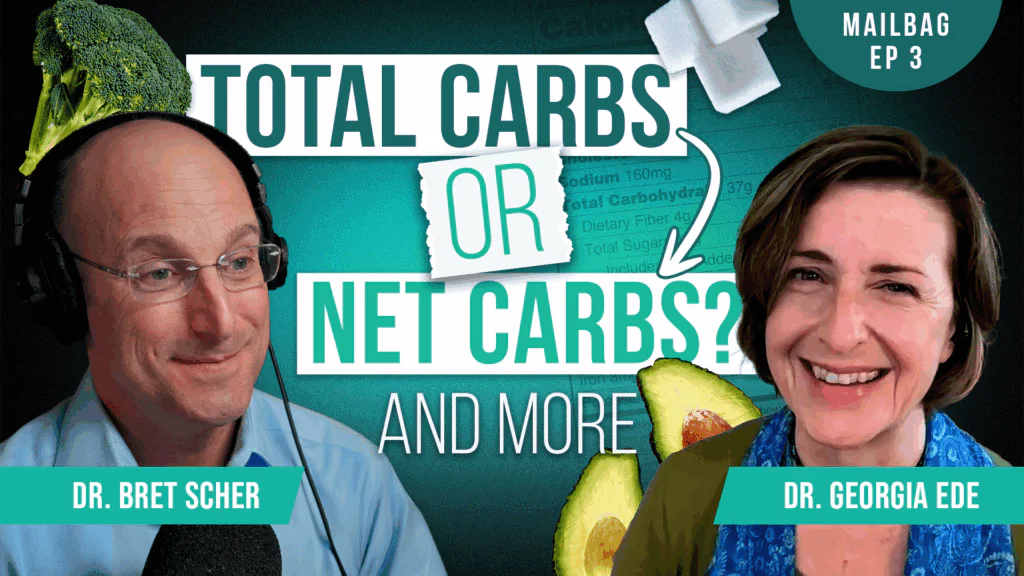
In this Metabolic Mind mailbag episode, Dr. Bret Scher and Dr. Georgia Ede answer listener questions about ketogenic diets, ketone plateaus, and mental health. They explain why blood ketone levels may decrease over time, when it makes sense to aim for higher ketones, and how endogenous ketosis differs from exogenous ketone supplements. The discussion also covers total versus net carbs, hidden carbohydrates in processed keto foods, and practical strategies for managing diet related insomnia during keto adaptation.
Learn more
Worried keto isn’t safe with no gallbladder, gout, kidney issues, bariatric surgery, or high LDL? This Metabolic Mind episode explains why ketogenic therapy is often safe—and sometimes beneficial—when supervised: how to ramp fat without a gallbladder, manage early uric-acid changes, balance protein for kidney health, and individualize plans for cholesterol and heart disease.
Learn more
Mental health recovery isn’t always a straight path, and setbacks don’t have to mean starting over. Dr. Matt Bernstein shares practical strategies for navigating difficult periods, from recognizing early warning signs and leaning on support systems to creating a plan before a crisis occurs. He explains how approaching setbacks as opportunities to learn can help build greater resilience for the road ahead.
Learn more
Using ketogenic and other metabolic therapies for mental health recovery is powerful. Thousands of people tell stories of suffering for decades without relief, feeling like they’d lost years…
Learn more
In this Metabolic Mind mailbag episode, Dr. Bret Scher and Dr. Georgia Ede answer listener questions about ketogenic diets, ketone plateaus, and mental health. They explain why blood ketone levels may decrease over time, when it makes sense to aim for higher ketones, and how endogenous ketosis differs from exogenous ketone supplements. The discussion also covers total versus net carbs, hidden carbohydrates in processed keto foods, and practical strategies for managing diet related insomnia during keto adaptation.
Learn more
Worried keto isn’t safe with no gallbladder, gout, kidney issues, bariatric surgery, or high LDL? This Metabolic Mind episode explains why ketogenic therapy is often safe—and sometimes beneficial—when supervised: how to ramp fat without a gallbladder, manage early uric-acid changes, balance protein for kidney health, and individualize plans for cholesterol and heart disease.
Learn more