New Results: First RCT for Schizophrenia & Bipolar Disorder. Learn more.


Listen, Watch & Subscribe on:



Schizophrenia, Bipolar, and Ketogenic Therapy: What We Learned From Results of New Trial
Listen
About the host


Bret:
This is Metabolic Mind Bitesize. I’m Dr. Bret Scher. If you or someone you love has schizophrenia or bipolar disorder, you probably know that medications can help with the psychosis or the mania. Not always, but frequently. But what about the cognition? What about the emotional flatness or the lack of motivation, the depression that so often comes with these conditions?
Standard of care has very little to offer there. But fortunately, a new study just published in Schizophrenia Bulletin suggests that ketogenic therapy might have something to offer. So, this is the first-ever randomized controlled trial to investigate the effects of ketogenic therapy for people with schizophrenia spectrum disorder and bipolar I.
So, this study was led by Dr. Judy Ford and her colleagues at UCSF. And it adds to the growing shift in mental health care, the shift towards addressing the underlying metabolic and brain energy deficits in serious mental illness. So, here’s how the study worked. Participants were randomized to two groups.
One received ketogenic therapy alongside their standard of care, and the other followed their diet as usual for one month with their standard of care. One thing that makes this study unique is that it’s really two studies in one because it was clear early on that four weeks was not going to be long enough to capture the full clinical benefit of ketosis.
So, additional funding allowed the team to offer a four-month extension to participants in both groups. So, whether they were randomized to keto or control, everyone had the option to continue or begin ketogenic therapy so they were on it for a total of four months. Now, the first standout results is one that often gets overlooked, and the study demonstrated that ketogenic therapy is completely feasible for outpatients with these diagnoses.
This isn’t something that’s only works in sort of a controlled hospital residential setting. It’s something people can successfully implement in their daily lives. So, that alone is an important finding. But after 30 days, compared to the diet as usual group, the participants in the ketogenic therapy group showed significant improvements in metabolic markers, blood sugar, insulin levels, that type of stuff.
Now, on the psychiatric side, both groups showed some symptom improvement with a trend towards greater improvement in the keto group, but that didn’t quite reach statistical significance. But here’s where it gets interesting. Many of these trends at one month became even more pronounced at four months. And that’s why it’s so important that they extended this study past the short term four weeks.
So specifically, participants in the four-month extension demonstrated continued reversal of insulin resistance, meaningful improvements in cognitive performance, like focus and memory processing speed. They found a major reduction in depression and improvements in both positive symptoms, like hallucinations, and negative symptoms, like anhedonia, social withdrawal. The symptoms that medications often don’t help with.
And that point really deserves emphasis. We know that people living with serious mental illnesses like schizophrenia and bipolar disorder, they unfortunately, die prematurely on average 10 to 20 years earlier than the general population, and a large part of that is from metabolic diseases.
And then, we also know that standard psychiatric care does not address the negative symptoms well. In fact, many of the medications can even worsen the symptom of anhedonia. So, to see a treatment that appears to address both the metabolic and the psychiatric side is genuinely encouraging. It points toward the possibility of people returning to their full, vibrant lives. And we have plenty of examples of that at our THINK+SMART page at Metabolic Mind.
Now, it’s worth noting that the four-month phase was an open-label extension without a control group. So, those psychiatric improvements can’t be definitively attributed to the diet alone. Future randomized control trials, which are currently ongoing and most of them lasting 16 weeks or longer, those will be able to more fully capture the effects under controlled conditions.
But the signal is there, and it’s worth paying attention to. So, if you want to go deeper on the study, check out my interview with Dr. Julie Milder, our director of neuroscience here at Baszucki Group, and another with the study authors themselves. And please, stay tuned to Metabolic Mind as we continue to highlight the latest research as it’s getting published.
And you can also, of course, visit us at metabolicmind.org, and go to our science page for all this information.
Listen, Watch & Subscribe on:
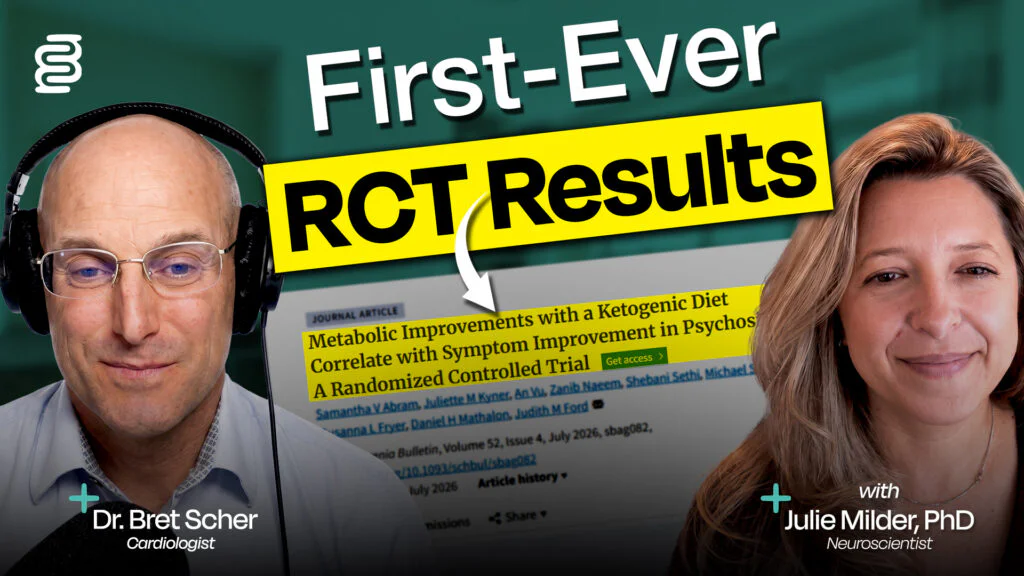
A newly published randomized controlled trial explored whether ketogenic therapy could improve outcomes for people with psychosis spectrum disorders, including schizophrenia, schizoaffective disorder, and bipolar disorder with psychosis. In this interview, Dr. Julie Milder breaks down the study's design, key findings, and why longer-term data suggest ketogenic therapy may improve not only metabolic health, but also psychiatric symptoms and cognition.
Read more
A Nuanced Guide to Understanding Bipolar Mood Disorders, Why They’re Often Misdiagnosed, and How Personalized Treatment Is Reshaping Lives. Bipolar mood disorders are complex and often misunderstood mental…
Learn more
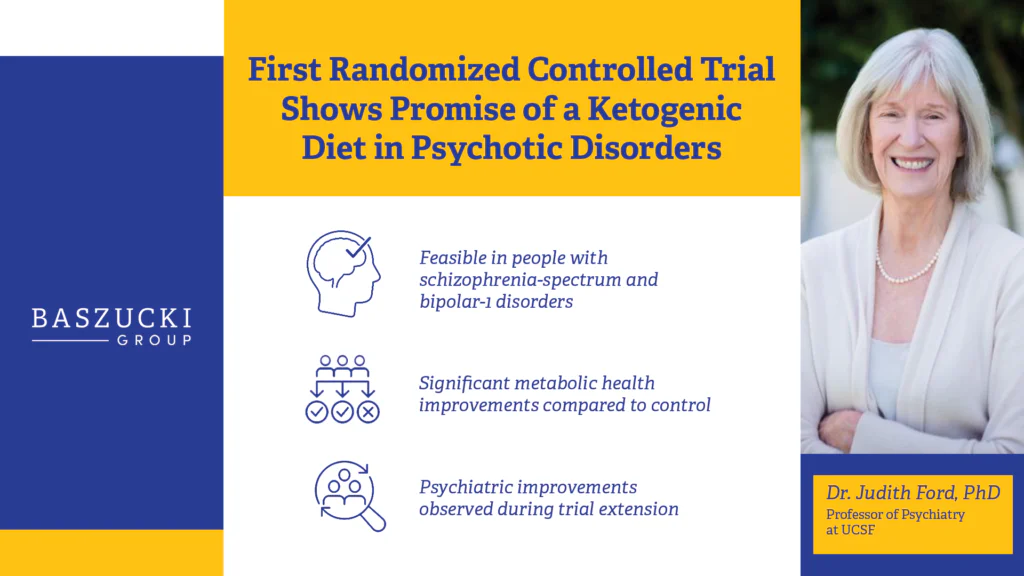
SAN MATEO, Calif.—(BUSINESS WIRE)—Published today in Schizophrenia Bulletin, a first-of-its-kind randomized controlled trial (RCT) from researchers at the University of California, San Francisco (UCSF), and funded in part…
Learn more

In this Metabolic Mind Podcast episode, Dr. Bret Scher speaks with registered nutritional therapist and health coach Moira Newiss about a striking case report: a man with schizophrenia and psychosis who achieved remission through sustained ketogenic therapy while facing homelessness and major socioeconomic barriers. They discuss how fasting first introduced him to ketones, why early keto attempts failed due to carbohydrate cycling, and what changed when he stabilized therapeutic ketosis with a simplified two meal routine and affordable foods like high fat ground beef and tallow. The conversation explores real world implementation, medication system “success” versus patient defined recovery, and why this case challenges assumptions about cost, feasibility, and the potential of metabolic approaches in serious mental illness.
Learn more
A newly published randomized controlled trial explored whether ketogenic therapy could improve outcomes for people with psychosis spectrum disorders, including schizophrenia, schizoaffective disorder, and bipolar disorder with psychosis. In this interview, Dr. Julie Milder breaks down the study's design, key findings, and why longer-term data suggest ketogenic therapy may improve not only metabolic health, but also psychiatric symptoms and cognition.
Read more
A Nuanced Guide to Understanding Bipolar Mood Disorders, Why They’re Often Misdiagnosed, and How Personalized Treatment Is Reshaping Lives. Bipolar mood disorders are complex and often misunderstood mental…
Learn more
SAN MATEO, Calif.—(BUSINESS WIRE)—Published today in Schizophrenia Bulletin, a first-of-its-kind randomized controlled trial (RCT) from researchers at the University of California, San Francisco (UCSF), and funded in part…
Learn more
In this Metabolic Mind Podcast episode, Dr. Bret Scher speaks with registered nutritional therapist and health coach Moira Newiss about a striking case report: a man with schizophrenia and psychosis who achieved remission through sustained ketogenic therapy while facing homelessness and major socioeconomic barriers. They discuss how fasting first introduced him to ketones, why early keto attempts failed due to carbohydrate cycling, and what changed when he stabilized therapeutic ketosis with a simplified two meal routine and affordable foods like high fat ground beef and tallow. The conversation explores real world implementation, medication system “success” versus patient defined recovery, and why this case challenges assumptions about cost, feasibility, and the potential of metabolic approaches in serious mental illness.
Learn more